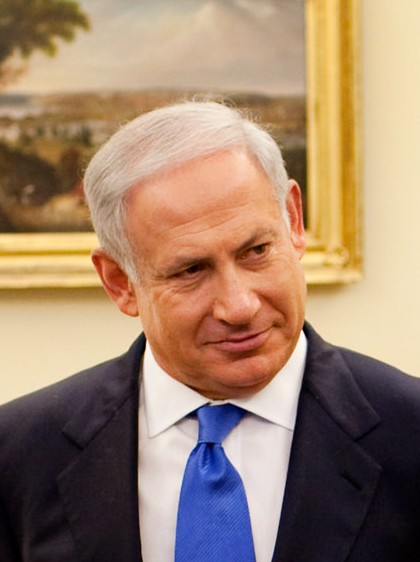
Israeli Prime Minister Benjamin Netanyahu won his fourth election last night in surprising fashion. He outdistanced the polls, including the exit polls in the waning hours of voting and won a decisive victory over the Zionist Union and Isaac Herzog. Here are some quick and initial takeaways from the results.
A huge victory for the Right
Even though the right wing/religious bloc in the Knesset didn’t grow, the right gained considerable power relative to
 the last Knesset. The last government included two centrist parties, Yesh Atid, and Hatnuah. Yesh Atid actually was the biggest single party in it, with Likud having joined with Avigdor Lieberman’s party to gain a decisive lead in the 2013 elections. Hatnuah, though small, was very important to the coalition, as its head, Tzipi Livni was the fig leaf over the right wing that negotiated with the Palestinians.
This coalition is going to have a very different character. It is quite possible that Netanyahu will get the fully right-wing coalition he wants. It is very possible that the most moderate party in it will be Moshe Kahlon’s center-right Kulanu party. Kahlon is at best lukewarm on the two-state solution, although he has been critical of Netanyahu’s refusal to maintain negotiations. He probably described his view best when he said he supported Netanyahu’s 2009 Bar-Ilan speech. That’s the one Bibi just repudiated in the last days of the campaign.
Two States and Where America and American Jews Stand
No doubt, Netanyahu will try to walk back his rejection of a Palestinian state of any kind once he forms his new government. He can’t walk it back too far, given the nature of his coalition, but will seek just enough to allow people to believe that it is still possible under his watch if they so desire.
But given that very few were ever taken in by his Bar-Ilan speech, where he gave the most tepid support he could to two states, anyone who is serious about ending the conflict has to ask themselves where they stand now and what sort of policies must be pursued. The old policy is clearly a round peg for the square hole of Israel’s position.
Three sectors in particular must ask this question: mainstream Republicans who still hold on to George W. Bush’s outline; Democrats across the spectrum; and the mainstream of the International Jewish community.
Republicans have clung virtually as a unit to Bibi. Are they willing to continue to do so if that means, by definition, opposing a two-state solution? In 2012, the Republican National Committee adopted a resolution supporting Israeli rule over all the land between the Mediterranean and the Jordan Rivers. But this had little effect on elected officials, who distanced themselves from it when asked. That won’t be so easy if Bibi is perceived, correctly, as staunchly opposing two states.
Democrats have a starker dilemma. Opposition to a two-state solution, not to mention Netanyahu’s right-wing orientation on many other issues, clearly puts him outside the lines for almost all Democrats. But until Bibi started interfering in American partisan politics, they’ve been able to look past those differences as if they weren’t there. That won’t work now, but they will face considerable domestic pressure to do just that.
The same can be said for the American Jewish community. Divisions within the influential community are growing, and the tactics used by those who still wish to march in lock-step with Israel are becoming increasingly draconian and visible. That process is already underway, and this election will only accelerate it.
The choice before all these groups is not a one- or two-state solution, but whether or not Israel is going to allow Palestinians the basic rights, freedoms, and dignities that all of us expect and take for granted. From the most moderate to most radical analysis of how to resolve this conflict, that is what separates a supporter of peace from an opponent. And that is the question that these communities will have to resolve.
The Stark Choice For the International Community
At this point, there is no alternative in the realm of diplomacy to a two-state solution. The current period is one where new ideas, if they can be sold to the international community, could come to the fore, but so far, despite the attempts of some supporters of a bi-national or single secular state, they have not succeeded in penetrating the international discourse.
If Israel is going to refuse to seriously consider a two-state solution, then, the United States, United Nations, Arab League, European Union and any other international actors have a clear choice in front of them: either pack it in and give up on this issue or press Israel in unprecedented ways to concede on a two-state solution based on the generally recognized parameters (’67 borders with some swaps, shared Jerusalem, an agreed upon resolution of the Palestinian refugee issue).
The Obama Administration
The hostility between Obama and Bibi continues unabated. The White House is waiting until the last possible moment to extend its obviously reluctant congratulations. There is no doubt the relationship will continue to be strained.
On Iran, Bibi’s words to Congress could take on a little more weight in light of his victory, but on the whole very little should change as a result of the election. Obama needs to start making the case to the American public that this is a good deal, and he needs to start doing that now. But that’s no different from before.
It would be easy to be cynical, given the history of U.S.-Israel relations and Obama’s own non-confrontational style, that the United States will really press Israel. But Obama has very little to lose. Democrats will all be distancing themselves from his foreign policy in 2016, and his days as an elected official are done after that. He is certainly going to push hard on Iran. It is true that the American public recognizes Iran as a U.S. security issue. They do not view the occupation in the same way, even though it too presents serious security concerns for the United States.
The reality, however, is that without significant pressure, unprecedented pressure from the US, Israel will not move, not under Bibi. And increasing tensions, especially the possibility of lost exports to Europe, could move the Israeli electorate away from Bibi and even lead to early elections. Obama knows all this. The combination of his second term status and the rift on Israel Netanyahu opened up and later exacerbated by declaring his opposition to two states, puts Obama in an unusually advantageous position to take some bold steps to press Israel that would usually politically unfeasible.
That doesn’t mean he will take those steps. The forces opposing such actions are strong. But the opportunity is as good as it is likely to get in the foreseeable future.
The Overview
This wasn’t a referendum on Netanyahu, as many characterized it. This was a referendum on where the country should go, more centrist or more right. Netanyahu remains an unpopular and vulnerable leader, but he also remains the most popular of an unpopular bunch. In the end, Netanyahu won by waving the Arab boogeyman and saying that “droves” of Arabs were going to vote him out and gutting his right wing opponents by telling their voters that if they didn’t vote for Likud, Labor would rule again.
What the election did show was that the country is deeply divided, but that the trend of a rightward tilt continues. The solid performance of the Joint List was significant, but they drew a lot of voters away from the only fully left-wing Zionist party, Meretz, which barely survived.
Israel’s international isolation will continue to grow, and whether that growth is steady or accelerated will depend on both how much more brazen Netanyahu becomes and how much the U.S. and Europe are willing to tolerate before they take actions Israel will feel. It is not a hopeful scenario on any level.
As a Jew, I would be absolutely appalled to read these sentences: “The Huckabeeans also heard from Muhammed Tamimi, national president of the Arab Organization of America, who explained to the group, according to
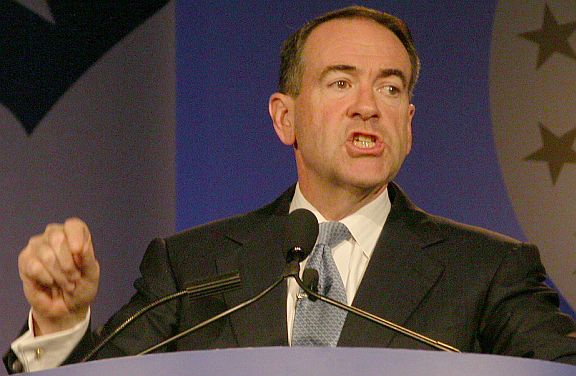
Huckabee, that there’s really no such thing as the ‘Jewish People.’ ‘The idea that they have a long history here, dating back hundreds or thousands of years, is not true,’ Huckabee said.”
In fact, what appeared in the front-page article of today’s Washington Post read, “The Huckabeeans also heard from Morton Klein, national president of the Zionist Organization of America, who explained to the group, according to Huckabee, that there’s really no such thing as the ‘Palestinians.’ ‘The idea that they have a long history, dating back hundreds or thousands of years, is not true,’ Huckabee said.”
Aside from mentioning that prospective GOP presidential candidate Mike Huckabee and his group would not be visiting Ramallah or meeting with any Palestinians, there was no mention of the Palestinians in this piece at all. Can any of us imagine an article in one of America’s most prominent newspapers where such a claim was made about Jews or Israelis without a single quote from a Jewish source in response, or at the very least a challenge to that claim by the author?
Perhaps the author of the article, William Booth, thought the assertion so absurd it needed no rebuttal. But in fact, Huckabee and Klein espoused a view of the Palestinians that a great many Americans hold, and one that even more Americans do not have the knowledge of Palestinian history to judge, and might just accept on faith.
Indeed, such statements are the very definition of “de-legitimization,” a charge Israel and her supporters throw around constantly. It is an offense to Jews when they are told they have no connection to the Land of Israel. It should be no less so for Palestinians to be told they do not exist. Yet somehow, in American discourse, the former is, rightly, treated with disdain while the latter is perfectly acceptable.
Let’s try on another picture. A Muslim cleric, a formerly powerful politician with ambitions of returning to even higher office, leads a tour of his devout followers and fellow travelers to Palestine. He takes them on a tour of the Dome of the Rock, the al-Aqsa Mosque, the Hebron Mosque, and the tombs of a list prophets revered in Islam. They meet no Israeli Jews though they do view the settlement of Har Homa from nearby Bethlehem.
Let’s say this cleric not only denied any Jewish connection to the land, but had another Muslim cleric tell a reporter that “… if you are a friend of Palestine, you are okay. If you’re an enemy, you’re in real trouble. God doesn’t change his mind about this stuff. The Qu’ran is an eternal book.” Would this not send chills down most American and Israeli spines? And wouldn’t this be called incitement to violence?
Well, substitute “Israel” for “Palestine” and the Bible for “the Qu’ran” and those were the words of Rev. Steve Sturgeon, a retired military chaplain and a pastor who was part of Huckabee’s entourage. And let’s not kid ourselves: his words reflect the views of a significant number of Americans. This is not just about Mike Huckabee, a man who is very unlikely to win the race for the White House next year. In part, though, it is about the very significant and influential segment of American society he represents.
Huckabee’s promotion for the Holy Land Tour on his website boasts that pilgrims will get to tour many biblical and historical sites, hear from Huckabee and other famous people about their views and experiences of the Holy Land and Israel’s value to the United States, and will meet with top Israeli officials. Interestingly, and unsurprisingly, there is not a mention anywhere of the Christian Palestinians who actually live in the Holy Land.
It is disturbing enough that these views have influence in the discourse around American policy toward Israel. But perhaps even more disturbing is the Washington Post allowing itself to be turned into a platform for this kind of radicalism.
The byline of the article locates the piece in “Masada, Israel.” The idealized story of Masada permeates the article, and clearly left Huckabee and his crew awestruck. Booth uncritically quotes Huckabee and zealously fills in more details himself about the Sicarii “rebels’” heroic stand at Masada, ending with a Roman siege and the decision by the Sicarii to die rather than live as Roman slaves.
These are the “Jews” these Christians admire, and about whom they beseech God in their prayers to “give us some of their backbone.” In fact, the Sicarii were a band of assassins, named after their long and curved daggers who committed atrocities, often against other Judeans. These included the massacre of 700 women and children in a raid on a Judean village, and, perhaps most tellingly, destroying the food supply in Jerusalem in order to force the people to war rather than the peace they were trying to negotiate with the Romans.
That would seem to describe al-Qaeda a lot more closely than the Huckabeean view of Israelis. But those suicidal assassins who attacked civilians are the “Jews” Huckabee and his crew admire, and why shouldn’t they? The view that was reinforced for them on this trip is one that rejects peace in favor of Israeli domination of another people and offers no sympathy for civilians harmed on a daily basis by the ongoing conflict and occupation.
But the more important question is why the Washington Post delivers their readers the Huckabeean view of Israel, and its concomitant blindness to Palestinians, with no critique and no counter-balance. Supporters of Israel would never tolerate the reverse, and rightly so. For all the activism aimed at protecting Israel’s image in the media, pro-Israel forces never have to contend with something like this on the front page of one of America’s leading dailies. And that tells us a great deal about why Americans have the one-sided view of the conflict that we do.
The idea that the two-state solution to the Israeli-Palestinian conflict is dead has been repeated so many times in the
 past several years that it has taken on the droning sound of a mantra. Yet at the same time, we continue to hear pleas like the one that Palestinian Ambassador to the United Nations, Riyad Mansour made as the Security Council was about to reject the Palestinian resolution calling for an end to Israel’s occupation: “Those eager to save the two-state solution must act and cannot continue to make excuses for Israel and to permit, and thus be complicit in, its immoral and illegal behavior.”
So which is it? Must we abandon the two-state solution and think of other formulations or do we desperately need to revitalize and resuscitate the process we’ve been working on since 1993? Perhaps there is a better answer: a completely different approach to the two-state solution. (more…)