Welcome to FMEP’s Weekly Settlement Report, covering everything you need to know about Israeli settlement activity this week.
To subscribe to this report, please click here.
February 4, 2022
- Israeli Attorney General Approves Retroactive Legalization of the Evyatar Outpost (Final Decision to be Made by Government)
- Another Palestinian Family to Be Forcibly Dispossessed of its home in Jerusalem
- New Tender Issued for Settler Foot Bridge Over Ben Hinnom Valley
- Knesset Committee Recommends Expanding Israel Antiquities Authority Oversight into the West Bank
- Further Reading
Israeli Attorney General Approves Retroactive Legalization of the Evyatar Outpost (Final Decision to be Made by Government)
Haaretz reports that in the final hours of his tenure outgoing Israeli Attorney General Avichai Mandleblit issued a legal opinion that provides a basis for granting retroactive legalization to the Evyatar outpost (which would mean authorizing Evyator as a fully-approved new settlement, “legal” under Israeli law).
As a reminder: the Evyatar outpost was illegally built by settlers on land located just south of Nablus, in the very heart of the northern West Bank. The site of the outpost is known to Palestinians as Mount Sabih, and has historically belonged to the nearby Palestinian villages of Beita, Yatma, and Qablan. With this new opinion, the Israeli Attorney General has decided that enough of the land on which the illegal outpost was built can be declared as “state land,” which means the Israeli government can give the area to the settlers.
As another reminder, this time from Peace Now:
“the declaration of state lands is a procedure that was used by Israel since the 1980’s in order to take over nearly one million dunams in the occupied territories. The declaration is based on a draconian Israeli interpretation of the Ottoman Land Law according to which if land is not cultivated for a certain period it becomes public land and is managed by the state (and in the case of Israeli occupation of the territories, it is managed by the Civil Administration).”
With the legal opinion of the Attorney General, the Bennett government is now in a position to authorize Evyatar as a new settlement. If granted government approval, Defense Minister Benny Gantz can issue a formal declaration of “state land” (more on that process here). In January 2022, reports indicated that Gantz had agreed to the plan to legalize Evyatar.
That said, the Bennett government could, theoretically, still elect to not authorize the outposts, but that outcome is extremely unlikely, to say the least – notwithstanding the fact that Foreign Minister (and alternate Prime Minister) Yair Lapid has reportedly warned Prime Minister Bennett that authorizing Evyatar will damage Israel-U.S. relations. Also, the Israeli Labor and Meretz parties (both part of the governing coalition) oppose the legalization of Evyatar.
Palestinian Authority settlement officer Ghassan Daghlas told Haaretz:
“Israel is trying to establish facts on the ground and the timing of the announcement is not coincidental, a day after the publication of the Amnesty report.”
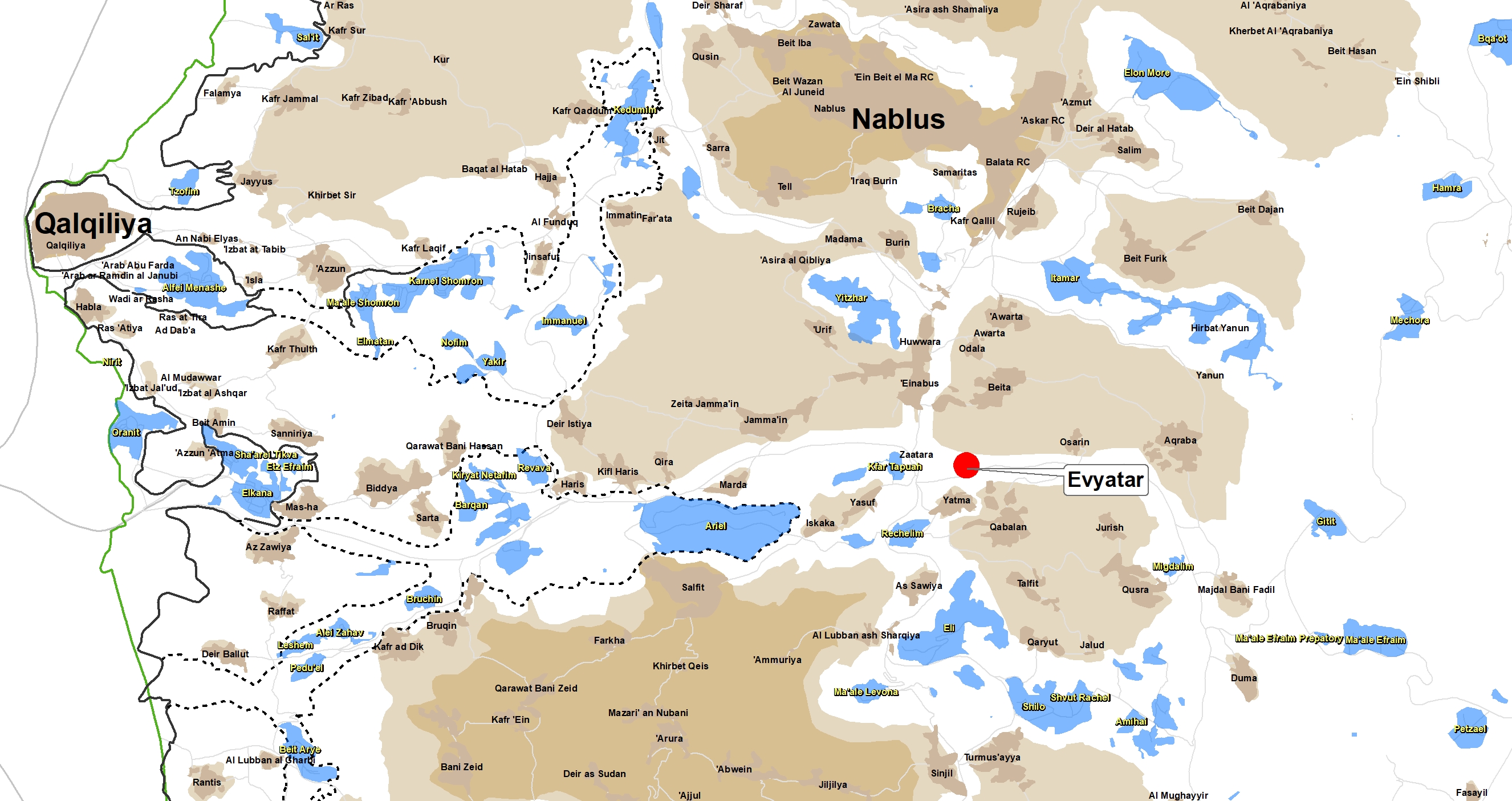
Map by Peace Now
In the very early days of the Bennett-Lapid coalition government, it was decided that the government would undertake an “investigation” into the status of the land on which the outpost was illegally established. That investigation was part of a package deal meant to both appease the settlers who were illegally squatting at the site and their allies. The package was also intended to quell Palestinian protests against the outpost and the international attention they were increasingly gaining – attention linked in larger part to the violent reaction against Palestinians by settlers and IDF soldiers, including most notably in Beita, which saw the death of several protestors, including children.
In addition to the “investigation,” the package also sought to balance bitter divisions within the Bennett government over whether to evacuate the outpost or grant it retroactive legalization. In the end, the government reached a “deal” which saw the settlers (temporarily) voluntarily vacate the outpost on July 2, 2021. In return, the government agreed to leave the settlers’ illegal construction at the site in place (i.e., did not demolish it) — including buildings and roads — while it carried out its investigation into the status of the land. In this way, the “compromise” left the outpost intact and allowed Israel to maintain complete control over the site during the “survey” process, clearly signalling that the government’s objective was never to enforce Israeli law, but, rather, was always about finding a legal and political “solution” to enable them to launder the settlers’ actions and accommodate their demands. Indeed, the terms of the Evyatar “compromise” made clear that the Bennet government was confident that it would find a pretext on which to assert that the land on which the outpost stands is “state land,” which can be used by the state as it sees fit (which nearly 100% of the time means, will be used to benefit the settlers)).
Peace Now said in a statement:
“Instead of stopping the ideological delinquency of a handful of settlers who allow themselves to establish facts on the ground against the law, and contrary to the Israeli interest, the government seeks to encourage them and give them a reward. The establishment of a new settlement in the depths of the West Bank is a security burden, and a threat to the chances for peace. Coalition members who oppose the occupation and support two states must demand that the Defense Minister stop the madness and not approve the settlement in Eviatar.”
Another Palestinian Family to Be Forcibly Dispossessed of its home in Jerusalem
Ir Amim reports that Israeli authorities have officially cleared the way for the Palestinian Salem family to be evicted from its longtime home in Sheikh Jarrah. The eviction can take place at any time between March 1st and April 1st. Once evicted, the Salem family home will be handed over to two settlers, one of whom is Jerusalem Deputy Mayor Aryeh King – suggesting that, at least in this case, the Israel government’s agenda and the settlers’ agenda are one and the same.
The Israeli registrar, in publishing its approval of the eviction window, also ordered the Salem family to pay 5,000 shekels (~$1,500 USD) for legal expenses.
The Salem family told WAFA news that they intend to appeal their eviction to the Israeli High Court, though a member of the family made it clear that the Israeli courts are part of a system designed to dispossess them:
“The Israeli court is biased. It only aims at emptying Jerusalem from Palestinians to give our place to settlers…even if we appeal, we don’t trust the Israeli court system. We depend only on solidarity in Palestine and beyond…We are three brothers living with our families, including seven children and our 74-year-old mother, Fatima Salem, the head of the family…We were all born here and have nowhere else to go. If they do expel us, we will continue to live in the street, right here”.
On the possibility of delaying the Salem family’s forcible displacement, Ir Amim notes:
“Although the Selam family’s legal representation may appeal the Enforcement and Collection Authority’s decision authorizing the family’s eviction and request an injunction to freeze it, there is no guarantee the court will approve such a request. The family’s attorney has hence made it clear that the remaining legal remedies are extremely limited. Therefore the only real effective means of preventing the family’s impending displacement is through state intervention.”
Israeli settlers and police had specifically requested a window in which to carry out the eviction to enable them to carry out the eviction by surprise — thereby (theoretically) making it harder for the family and protesters to prepare and for large crowds to gather. It must be understood that this flexible date is just the latest twist on the cruelty and hardship endured by the Salem family for years. It’s also worth recalling that earlier this month, in the context of a similar approval for the eviction of a Palestinian family living in the same neighborhood (the Salihiya family), Israel chose to implement the eviction in the dead of night, on one of the coldest nights of the year.
For further background on the Salem family’s case (including on the Israeli laws that were expressly designed to enable the eviction of Palestinians in favor of settlers), see reporting by Ir Amim and Peace Now.
New Tender Issued for Settler Foot Bridge Over Ben Hinnom Valley
Ir Amim reports that the Moriah Jerusalem Development Corporation issued a tender for a settler-initiated project to build a new pedestrian footbridge over the Ben Hinnom/Wadi Rababa Valley in Jerusalem. Bidding on the tender is set to close on February 28, 2022. An appeal against the plan, filed in 2018 by Israeli NGOs Peace Now and Emek Shaveh, was rejected by the Courts.
The bridge will serve to connect two settler-operated tourist facilities located on opposite sides of the valley – one in the in the Palestinian Abu Tor neighborhood and the other in the Silwan neighborhood.
On the Abu Tor side of the bridge, the Elad settler organization runs and operates a cultural center and cafe named “House in the Valley,” which opened in 2019 after Elad evicted a Palestinian family and renovated the space. A week after Elad’s new cultural center was opened, the Jerusalem Municipality issued “gardening orders” to take control, for a period lasting 5 years (with the likelihood of extensions after that), of 12 nearby plots of privately owned Palestinian land. “Gardening orders” allow Israel to “temporarily” take over privately owned land for what are ostensibly public purposes (like establishing a parking lot or public garden), based on the argument that the private owners are not presently using the land. In this case, Israel has in effect made rules that guarantee that the latter condition applies: as Emek Shaveh has noted, the 12 plots in question are located in an area declared by Israel to be a national park, meaning that private landowners are legally barred from using their own land.
On the Silwan side – a neighborhood where Elad (alongside other settler organizations, including Ateret Cohanim) is waging a house-by-house campaign to displace Palestinians in favor of settlers and settler-run tourist sites – the bridge will end near the Sambuski cemetery, which until recent years was a relatively unknown, neglected site that even Israel did not recognize as a holy site. Under the Trump “Peace to Prosperity” plan, the Sambuski cemetery suddenly became a place of prime historical and religious importance to Israel. The Israeli NGO Emek Shaveh – which has a special expertise on archaeology and the weaponization of archaeology to serve the political agenda of the settlers and the state – wrote a report on exactly how the Trump “Vision” supports settler efforts to use Jerusalem’s history and antiquities to promote Israeli-Jewish hegemony and control over the city.
Ir Amim writes:
“As part of the intensifying band of settlement around the Old City, the Wadi Rababa/Hinnom valley area is of particular significance as it stretches along the seam between Silwan and West Jerusalem and serves as the main entrance into the neighborhood from this direction. In recent years, there has been an increase of tourism projects in and around this location promoted by the government and the Elad settler organization, which together create a more seamless link between West Jerusalem and Elad’s constellation of settlement sites in Silwan.”
Knesset Committee Recommends Expanding Israel Antiquities Authority Oversight into the West Bank
On January 24th, the Knesset’s Education Committee held a hearing to discuss the alleged destruction of Jewish antiquity sites in the West Bank by Paelstinians and the Palestinian Authority, and what Israel should do to stop it. The Committee made several recommendations, including the suggestion for the government to expand the jurisdiction of the Israeli Antiquities Authority to include Area C, which would amount to yet another act of de facto annexation of some 60% of the West Bank. The Committee also recommended offering formal authorization for settler regional councils to “protect” and manage antiquity sites in Area C, which settlers are already doing on their own accord (with State funding and the help of the IDF in some cases). These archaeologically-focused annexation efforts run in parallel to other ongoing efforts by settlers and their political allies to unilaterally (and openly) annex Area C.
The hearing was based on a report on this very subject authored by a group calling itself the “Guardians of Eternity.” That group is an offshoot of the settler group Regavim. Emek Shaveh – an Israeli NGO focused on archaeology – called the report “highly questionable,” noting that the scientific editor of the report is anonymous, the report did not use acceptable archaeological methodology when surveying different sites, and the data on which the report based its conclusions and recommendations has not been made public.
Emek Shaveh’s Executive Director, Alon Arad, briefly addressed the Knesset Committee, urging the Members to understand the political agenda at play. Arad said:
“The destruction of antiquities should not constitute a pretext for political action and I think we should also refrain from camouflaging the political nature of this discussion as an archaeological act. Blurring the lines between archaeology and heritage on the one hand, and settlement and annexation, on the other endangers the future of archaeology.”
Emek Shaveh later said in a statement:
“There are approximately 6000 antiquity sites in the West Bank. The significance is that practically in every village or town there are archaeological remains of varying scale from a watering hole to a multilayered mound. It follows that there is always a tension between the need for modern development and the safeguarding of heritage sites. It is also clear that the problem of antiquity destruction is used by settlers and right-wing MKs as a justification for displacement…in just two years from 2017-2019, there was a 162% rise in demolition orders citing archaeology…Emek Shaveh believes that the destruction of antiquities should not be used as a justification for settlement expansion nor for promoting actions which advance de facto annexation. The appropriate approach to safeguarding antiquities in Area C must include the following: Israel must respect International Humanitarian Law and conventions which outline its duties vis-à-vis cultural heritage sites as the occupier in occupied territory, including maintaining separation between the IAA and the Staff Officer for Archaeology. Israel should promote cooperation with the Palestinian Authority on all levels: information sharing, oversight, and enforcement – something that was mutually agreed in the Oslo Accords. Israel must outlaw the trade in antiquities which gives impetus to antiquity theft.”
The Knesset Committee’s discussion of this subject comes on the heels of a decision by Israeli Minister of Heritage and Jerusalem Affairs, Ze’ev Elkin, to allocate $1.57 million (5 million NIS) towards “reconstruction” of the Sebastia archaeological site (located in the northern West Bank, near Nablus), pending approval from the Israeli Civil Administration. The Ministry further said that an additional $787,000 will be allocated towards the “rehabilitation” of other archaeological sites in the West Bank, as well as about $470,000 towards the Civil Administration’s ramped up efforts to “protect” West Bank archaeological sites.
As FMEP has chronicled, settlers and their allies are intent upon using claims of Palestinian damage/neglect as a pretext for Israel taking control of archaeological sites and artifacts across the West Bank. For example, in February 2021 settlers used a construction mishap to raise claims to the Mt. Ebal site.
Bonus Reads
- “Israeli soldiers force closure of Palestinian stores in Hebron’s Old City” (Basel al-Adra – +972 Magazine)
- “The purpose of settler terrorism” (Edo Konrad – +972 Magazine)
- THREAD: “During a discussion in the government about settler violence the Chief of Staff stated Israeli soldiers don’t have the authority to detain Israeli settlers who attacked Palestinians…” (Oren Ziv – Twitter)
Welcome to FMEP’s Weekly Settlement Report, covering everything you need to know about Israeli settlement activity this week.
To subscribe to this report, please click here.
January 7, 2022
- E-1 Settlement Reportedly Delayed
- E-1 Settlement Reportedly Delayed, BUT (Part 1): Israel Advances New Settlement Plan in East Jerusalem
- E-1 Settlement Reportedly Delayed, BUT (Part 2): Israel Approves Expansion of French Hill Settlement in East Jerusalem
- E-1 Settlement Reportedly Delayed, BUT (Part 3): An Update on Two Families Facing Displacement in Sheikh Jarrah
- Al-Walajah Hearing Postponed but Remains Likely
- Report: Gantz Intends to Turn Evyatar Outpost Into New “Legal” Settlement
- Settlers Still Pressing Govt to Authorize Homesh Outpost, & Terrorizing Nearby Palestinians
- IDF Evacuates Kumi Ori Outpost, Yitzhar Start Clashes
- IDF Renews Standing Demolitions Orders Against Six Unauthorized Outposts
- Israel Earmarks Millions for Seven New Synagogues in Settlements & Outposts
- Bonus Reads
E-1 Settlement Reportedly Delayed
The Israeli Civil Administration’s High Planning Council has removed consideration of the E-1 settlement plan from the agenda of its scheduled January 10th meeting. Haaretz reports that the plan has been indefinitely postponed due to “the expert opinions of certain officials in the Civil Administration.” No further information regarding the identity of the officials nor their opinions has been made public, and neither Israeli Minister of Defense Benny Gantz (who oversees the Civil Administration and all planning in the West Bank) nor Prime Minister Bennett have made any public comments. Haaretz further notes that the decision to add and remove items – particularly contentious items such as the E-1 plan – requires the approval of political leadership.
The High Planning Council – which is the body within the Israeli Defense Ministry which oversees all construction in the occupied West Bank – was expected to convene on January 10th to hold a third hearing to consider public objections to the E-1 plan. The Council’s previous hearings on public objections to the plan have been riddled with drama. The first was held on October 4th, but Palestinians were effectively denied the ability to participate, as it was held online and was thus inaccessible to the many Palestinians affected by the plan who do not have internet access. The second was held on October 18th; at that hearing three objections were presented (one by the Palestinian village of Anata, a second by the Palestinian village of Al-Azariya, and a third joint submission filed by Ir Amim and Peace Now). Ir Amim reports that there was no substantive discussion of these objections, with the Civil Administration panel offering no questions or comments on them. This third hearing – which was scheduled for January 10th – was set by the Court (originally for November 2021, but delayed) to compensate for the exclusion of Palestinians from the first hearing.
E-1 Settlement Reportedly Delayed, BUT (Part 1): Israel Advances New Settlement Plan in East Jerusalem
 On January 5th, the Jerusalem Municipal Planning Committee advanced a plan – referred to as the “Lower Aqueduct Plan” – to build a new settlement with 1,457 units in East Jerusalemn land located between two already controversial settlements on the southern flank of East Jerusalem: Givat Hamatos and Har Homa. The new settlement is intended to connect the Givat Hamatos and Har Homa, establishing an uninterrupted continuum of Israeli settlements on the southern rim of Jerusalem, and destroying the contiguity of Palestinian land in the West Bank and East Jerusalem. With approval from the municipal planning authority, the plan now goes to the Jerusalem District Planning Committee which will convene on January 17th to consider depositing the plan for public review.
In addition to severing East Jerusalem from the West Bank in the south, the new settlement will impinge on two neighboring East Jerusalem Palestinian villages of Sur Baher and Umm Tuba, and will involve the expropriation by Israel of privately owned Palestinian land. Most notably, in order to pave a new access road for the new settlement, the State will likely expropriate land privately owned by Palestinian residents of Umm Tuba. Ir Amim explains:
“According to the plan, an access road to the new neighborhood will be built over the Green Line on private Palestinian land belonging to residents of Umm Tuba. These lands will likely be expropriated. Despite the probable expropriation, the plan does not offer any development for the remaining privately-owned Palestinian land and will likewise not grant building rights to Palestinian landowners for areas alongside the road not intended for expropriation.”
Adding insult to injury, two years ago the Jerusalem Municipality and the Ministry of Jerusalem Affairs initiated a plan to build a new Palestinian business center in the precise area targeted by the “lower aqueduct” plan, as part of an Israeli government initiative to reduce poverty in East Jerusalem. The Jerusalem Municipality subsequently abandoned the plan for the Palestinian business center under pressure from settlers, specifically from the Har Homa settlement which borders the area. Ir Amim comments:
“Not only is this yet another example of severe planning discrimination, but construction of this new neighborhood will serve to further create Israeli territorial contiguity along East Jerusalem’s southern perimeter while depleting more land reserves for Palestinian development.”
Peace Now notes that the majority of the land on which the new settlement will be built (half of which is in East Jerusalem and half in West Jerusalem) is privately owned, or managed by the Israeli Custodian General. Although recent reporting suggests the Custodian General is moving to advance settlement construction on lands it manages across East Jerusalem, its legal ability to do so is questionable (and doing so has historically not been its practice).
It’s worth recalling that in December 2021, reports surfaced that the Israeli Custodian General is planning to establish a new settler enclave in Sur Baher, and is hoping to add more land in the village to its existing portfolio of 3.3 dunams.
Terrestrial Jerusalem writes:
“This Plan is not promoted in a vacuum, and constitutes yet another significant link the chain of new settlement schemes currently being expedited by Israeli authorities on the southern flank of East Jerusalem. Connecting Har Homa to Givat Hamatos, the Lower Aqueduct Plan joins these other schemes: Givat Hamatos, Har Homa West, Ahuzat Nof Gilo and Har Gilo West. The cumulative impact of these plans is to create a continuous built-up buffer, sealing East Jerusalem off from its sister city, Bethlehem. Viewed in context, the Lower Aqueduct Plan is a significant component in a strategic thrust with the objective of consolidating sole Israeli rule over East Jerusalem, and cutting it off from its environs in the West Bank. The physical detachment of East Jerusalem from Bethlehem will be viewed as unilateral act that causes concern not only among Palestinians and the international community, among the major Christian denominations around the world.”
Peace Now said in a statement:
“As in the case of the Atarot plan, right-wing elements in the government are taking advantage of the lack of coalition agreement on the issue of settlements to advance far-reaching plans that post facts on the ground that undermine the possibility of peace. The plans add to the tension on the ground and highlight the blatant discrimination that the government is building in East Jerusalem for Israelis only, while the hundreds of thousands of Palestinians in the city can build almost nothing. The coalition parties that support the possibility of two states for two peoples must do everything so that these plans are not promoted and do not reach a discussion in the District Committee.”
E-1 Settlement Reportedly Delayed, BUT (Part 2): Israel Approves Expansion of French Hill Settlement in East Jerusalem

Map by Peace Now
On January 5th, the Jerusalem District Planning Committee gave its final approval to several plans that will add a total of 2,092 new units to the French Hill settlement in East Jerusalem, on the edge of Mount Scopus.
Several plans relate to the Hebrew University campus on Mt. Scopus. Notably, while Mt. Scopus is in East Jerusalem, it is not considered by the international community to be occupied territory (reflecting the fact that in 1948 the area was designated as a demilitarized zone). These new plans, which expand the footprint of the Hebrew University campus but on land that is in the French Hill area (i.e. occupied territory), are:
- The “Bronfman Dormitory” plan to build 672 settlement units on land located in the French Hill settlement area (beyond the borders of the Mt. Scopus campus). Ir Amim raises alarm that this plan will completely encircle a Palestinian neighborhood (leaving it as an enclave surrounded by Israeli development), which “will greatly increase the construction in areas marked as Israeli, while blocking any further development of the Palestinian neighborhood.”
- The “Lerner Complex & Lower Resnick Dormitory” plan calls for the construction of 1027 units , the majority of which are designated for land east of the Green Line where there are currently student dormitories for the Hebrew University.
- The construction of 528 settlement units on land just north of the Jerusalem British War Cemetery, on land that is cut in half by the Green Line.
Ir Amim said in a statement:
“Beyond the geopolitical implications of constructing more housing units over the Green Line in Jerusalem, these plans are yet another example of the acute housing discrimination facing East Jerusalem Palestinians. These four plans follow close on the heels of other major housing projects advanced for Israelis in East Jerusalem over the course of 2021. The Israeli authorities continue to promote plans at full force for thousands of housing units for Israelis, while systemically refraining from advancing plans for Palestinians to meet their severe housing needs.”
Peace Now writes:
“it should be noted that some of the plans are adjacent to Palestinian land and houses (a neighborhood considered to be the fringe of Sheikh Jarrah), but all the huge building rights planned in these plans are not given to Palestinian homeowners living adjacent to the planned area. The Israel Land Authority has chosen to plan only the complexes under its control and not to allow the private construction of Palestinians next door. Since 1967, the government initiated and planned approx. 56,000 units for Israelis in East Jerusalem, while for Palestinians the government supported only 600 units, in the 1970’s. The planning of so many units in East Jerusalem for Israelis alongside with the increase in house demolition for Palestinians, raises the frustration and anger in East Jerusalem.”
E-1 Settlement Reportedly Delayed, BUT (Part 3): An Update on Two Families Facing Displacement in Sheikh Jarrah
New details have emerged regarding the delayed forcible displacement of the Salem family from their longtime home in Sheikh Jarrah in favor of settlers. Though the eviction notice stated that the family would be evicted from their home on December 29th, a last minute delay was granted based on a request submitted to the Court by the setters. The settlers requested that the court postpone the evacuation and instead require that it be carried out between January 20 and February 8th.
The settlers’ lawyers’ request was in line with concerns raised by the Jerusalem police, which also submitted a letter to the Court that warned a set date for the eviction, known in advance by the family and the public, “could endanger the forces and foil the evacuation’s success.”
Also in Sheikh Jarrah and in keeping with the police’s warning, the Saliha family received another eviction notice from Israeli authorities warning them that an eviction order against their home can be carried out anytime between January 10 and January 25. There are two households in the Saliha family living on a plot of land that Israel expropriated (in 2017) for “public use”, and on which it now intends to build a school (it is as yet unclear what population the school will serve).
Ir Amim provides essential and comprehensive information on what is going on with regards to the Salhia family case:
“The Jerusalem Municipality is demanding the eviction of the entire Salhia family, comprised of two households and totaling 12 individuals, under the pretext that expropriation of the property is necessary for the construction of a school. Following the court’s dismissal of one petition, one of the households received the aforementioned eviction order. The second household’s petition will be heard tomorrow (January 6) at the Jerusalem District Court.
While the municipality is evicting the family to build an educational institution, in recent years it relinquished a plot of land in Sheikh Jarrah originally designated for a school and transferred it into the hands of an ultra-Orthodox association for the construction of a massive yeshiva. The municipality appears to perceive it as reasonable to dispossess a Palestinian family for the sake of a school rather than utilizing open land initially allocated for such purposes.
When the District Planning Committee discussed the objections to the Ohr Somayach yeshiva plan (TPS 68858) at the end of 2020, the representative of the Jerusalem Municipality’s planning department claimed that there was no shortage of educational institutions nor a lack of space for such buildings in Sheikh Jarrah.
Today, Ir Amim sent an urgent letter to the Director of the Municipality’s Education Administration (MEA) in which it detailed the contradiction in the municipality’s actions and demanded MEA act to retrieve the parcel of land it transferred to the ultra-Orthodox association. Such a measure could in fact obviate the “need” to seize the Salhia family’s land and prevent the violation of their property rights and forced eviction.
Members of the Salhia family are Palestinian refugees who were uprooted from their homes in Ein Kerem in 1948 and now stand to be displaced for a second time. According to the family, their parents purchased the plot of land and have lived in homes they built since before 1967. The property also houses a well-known and thriving garden center called Peace Nursery.
Situated directly across from the British Consulate, the homes are strategically located between Kerem Al’ajoni and the Shepherd Hotel complex where settler groups are acting to establish major settler enclaves (see map below). In Kerem Al’ajoni, Nahalat Shimon is working at the behest of settlers to evict some 30 Palestinian families, while the Ateret Cohanim settler organization has constructed 22 housing units in the Shepherd Hotel complex to house a new settlement. The organization received the compound from the state decades ago after it was declared “absentee property.” There are reports that Ateret Cohanim intends to build additional floors, and therefore the units are not yet occupied.
It should be underscored that this development is taking place in parallel to the impending eviction of the 11-member Salem family from Um Haroun, Sheikh Jarrah (western section) for the benefit of settlers. As reported previously, the family was handed an eviction notice in early December citing that they would be subject to forcible removal as of December 29. That eviction order was cancelled, and an administrative hearing was held on December 30 at the Enforcement and Collection Agency concerning a request for a new eviction order with a flexible implementation date. Although the hearing concluded without a decision nor the issuance of a new eviction order, the family’s legal representation has made it clear that all potential legal channels have been exhausted. Therefore save for government intervention, there appears to be no other means to prevent the family’s displacement. Continued public pressure and concerted engagement with the Israeli government on this matter is hence vital.
A total of some 70 families, numbering over 300 Palestinians, are under threat of eviction from Sheikh Jarrah due to lawsuits filed by settler groups working in close collaboration with state bodies, including the General Custodian. Driven by political and ideological motives, these efforts aim to establish settler enclaves by forcibly uprooting Palestinians and supplanting them with Jewish settlers as a means to Israelize the area and further entrench Israeli control. Such measures carry severe humanitarian and geopolitical ramifications.”
Al-Walajah Hearing Postponed but Remains Likely
The Israeli Supreme Court hearing on the demolition of 38 homes in the beleaguered Palestinian village of al-Walajah, scheduled for December 26th, was ultimately postponed by the Court. The delay followed a new request submitted to the Court by the lawyer representing the Palestinian families facing imminent homelessness, though it’s not clear what the request was exactly. Ir Amim makes it clear that the delay is not cause for celebration, and stems from a technical matter.
The Court has not set a new date for the hearing.
As a reminder, the State of Israel has longstanding demolition orders against 38 Palestinian homes – in which around 300 people live – in the village of Al-Walajah, though the orders have been contested by Palestinians and, until this point, frozen by the Court as the matter is litigated. In December 2021, the State asked the Court to lift a freeze on the demolition orders, arguing (as it had in the past) that the houses – built by Palestinian residents of al-Walajah s on their own land – were illegal, because the were built without the required Israeli permits. This argument points to the Kafkaesque nightmare in which al-Walajah’s residents are trapped.
In point of fact: It is all but impossible for Palestinians to obtain building permits from Israel to build “legally” on their own land in East Jerusalem and in Area C of the West Bank. In the case of al-Walajah, such permits are, literally, impossible to obtain. This is because Israel has actively chosen not to approve an “outline plan” for the area, without which permits are an impossibility. Al-Walajah residents, with the help of planning experts, prepared and proposed an outline plan for the area, and for more than 15 years have worked to get Israel to approve it — to no avail. Israeli authorities have repeatedly (in January 2021 and again in March 2021) refused to approve the resident-backed plan, and have also refrained from initiating their own planning process. Indeed, the Jerusalem District Committee, as part of a January 25, 2021 ruling against the outline plan proposed by residents, deemed the area in question — where Palestinians have lived for decades — an “agricultural area” where no building would ever be permitted. The result: Al-Walajah’s residents have been left with zero hope of obtaining the permits required to build on their own land – or keep their current homes located there.
Report: Gantz Intends to Turn Evyatar Outpost Into New “Legal” Settlement
Over the past few weeks, reports have surfaced indicating the Israeli Defense Minister Benny Gantz is planning to approve the retroactive authorization of the Evyatar outpost, located on a strategic hilltop named Mount Sabih just south of Nablus on land historically belonging to nearby the Palestinian villages Beita, Yatma, and Qablan. This follows Prime Minister Bennett’s November 2021 promise to legalize the outpost.
Map by Peace Now
The decision to authorize Evyatar as a full-fledged, new, and “legal” settlement is supposedly dependent on the outcome of an Israeli-led investigation into the status of the land. If the land is “discovered” to be “state land,” the government will authorize EVyatar. The results of the “investigation” are not public at this time. [map]
The Evyatar outpost has been at the core of sustained settler violence and Palestinian protest over the course of 2021, ever since the government agreed to a deal with settlers to evacuate the outpost temporarily (leaving its structures intact) until the government determines whether it can find a pretext upon which to declare the land to be state land.
Peace Now said in a statement:
“There is no justification in the world for establishing a new settlement in the West Bank, which will be a security burden, a political blow and a reward for outlaws. The small settler group who established the outpost in Evyatar did so illegally, with the aim of dragging Israel to deepen the occupation and prevent its end, and they led to daily risk of IDF soldiers and severe escalation of violence in the area. The government must come to its senses and stop this madness and not be dragged after a small minority.”
In addition to reportedly preparing to grant approval to formally establish the Evyatar settlement, the settler news outlet Arutz Sheva reports that Gantz has suggested making the new settlement the new home for the illegal yeshiva settlers have established as the site of the former Homesh settlement – a yeshiva that has likewise been at the center of ongoing violence (including settler violence targeting Israeli forces). Settlers have come out in opposition to this suggestion – unsurprisingly, given that the explicit objective of the settlers targeting the Homesh site is the re-settlement of that specific area (more below).
As a reminder, the fate of the Evyatar outpost was the first controversy that threatened to divide the fragile Bennett-led government when it was sworn in. Bennet’s partners were bitterly divided on whether to evacuate the outpost or let it be, while the government sought to grant it retroactive legalization. In the end, the government reached a “deal” which saw the settlers (temporarily) vacate the outpost on Friday, July 2nd. In return, the government left the settlers’ illegal construction at the site in place (i.e., did not demolish it) — including buildings and roads — while it “examines” the status of the land to see if it can be declared “state land” and therefore “legally” turned into a settlement (opening the door for the settlers to return). Under the agreement, the outpost is being used as a military base in the interim.
The fact that the “compromise” left in place the settlers’ structures and allowed Israel to maintain complete control over the site during the “survey” process signalled from the start that the government is not concerned with enforcing Israeli law, but rather is focused on finding a political solution that works for the settlers. It was further clear from the terms of the “compromise” that the Bennet government believed it will be succeed in finding a pretext to assert that the land on which the outpost stands is “state land” which can be used by the state as it sees fit (i.e., give it to the settlers). If the state decides, pursuant to the investigation, that it has a basis on which to declare the site to be “state land,” the settlers will be allowed to return and resume the establishment of what would from that point no longer be an illegal outpost, but a new “legal” settlement.
Settlers Still Pressing Govt to Authorize Homesh Outpost, & Terrorizing Nearby Palestinians
There has been continuing fallout and violence surrounding the Homesh oupost and yeshiva following the murder of settler Yehuda Dimentan by a Palestinian in December 2021. Settlers have used Dimentan’s death to press the government to formally reestablish the Homesh settlement (evacuated in 2005 as part of the Gaza disengagement plan, at which time it was declared by Israel to be a closed military zone – but settlers have been allowed to frequent the site and even operate a yeshiva there. That yeshiva, according to Kerem Navot, became one of the West Bank’s “hardcore centers of settler terror”). Settlers have also wreaked terror on nearby Palestinian villages, most notably Burqa. One Israeli politicians even said that settlers are carrying out a pogrom in Burqa.
Most prominently to date, Israeli Justice Minister Gidon Sa’ar (Likud) offered his support for reestablishing the Homesh settlement – directly tying his support to the death of Yehuda Dimentan. On January 1st, Yesha Council leader Yossi Dagan and MK Yuli Edelstein inaugurated a new caucus in the Knesset specifically dedicated to the cause of reestablishing the Homesh settlement along with the other two settlements that were dismantled by the Israeli government in 2005 as part of the Gaza Disengagement Plan.
Since the murder, the IDF has imposed severe movement restrictions on Palestinians living near the Homesh site and the Shavei Shomron settlement (where Dimentan lived). This includes road closures, and IDF-imposed closures of the Palestinian towns of Burqa and Sebastia. In addition, two new Israeli-controlled checkpoints positioned near Shavei Shomron and Homesh in practice now prevent Palestinians from using the roads, while allowing settlers to reach the Homesh site (which, again, is supposedly a closed military zone). The closures have not prevented settlers from regularly attacking Burqa, including “three large scale attacks”. According to the PA’s settlement monitor, Palestinians in Burqa fear a massacre.
In addition to the now-routine closures and movement restrictions on Palestinians, the IDF chose to completely shut down the highway connecting Shavei Shomron and Homesh on December 23rd to allow a massive march led by Dimentan’s widow – estimated to have included 15,000 Israelis (including several elected officials) – following Dimentan’s funeral. The march and the closures resulted in clashes, particularly in Burqa, between Palestinians and IDF forces. The night of the march, settlers raided Burqa where they attacked Palestinian homes and desecrated the village’s cemetary.
The marchers told Ynet that they intend to maintain a presence at the yeshiva to prevent the government from dismantling it. The Dimentan family has personally asked government officials to authorize the Homesh yeshiva in Dimentan’s honor.
Amidst the ongoing violence and political agitation, on January 2, 2022 a delegation of Israeli lawmakers, including several senior members of the Likud party, paid a visit to the illegal yeshiva at the dismantled Homesh settlement site. Their tour of the yeshiva was used to offer support to the settlers’ effort to push for retroactive authorization.
IDF Evacuates Kumi Ori Outpost, Yitzhar Start Clashes
On December 31st, Israeli forces once again removed caravans from the unauthorized “Kumi Ori” settler outpost, which serves as the home of 20 extremist “Hilltop Youth” settlers and is a satellite outpost of the notoriously violent and radical Yitzhar settlement. Dozens of settlers from Yitzhar attacked Israeli forces, resulting in injuries to three soldiers and one settler.
Haaretz reports that despite an order issued two years ago declaring the land to be a “closed military zone,” Israeli border police – who maintain a checkpoint at the entrance of the outpost – have continued to allow settlers to live and visit the area if they had lived there (illegally) prior to the eviction order being issued. The caravan that was removed on December 31st was new, and therefore subject to the eviction order.
Kumi Ori was previously evacuated by the IDF in April 2020 and in January 2020, and also in August 2017 – each time resulting in violence. The battle between the outpost settlers and the Israeli army has played out for many years, and the IDF has demolished the outpost at least 10 times. In one extraordinary attempt by the settlers to preserve the outpost, settlers attempted to convince the court that Israel did not have authority to demolish the structures, because the outpost is not located in Area C (where Israel has complete control), but rather in a Palestinian-administered area (Area A or B) [raising the question, would the settlers recognize/respect the Palestinian Authority’s authority to evict them?]. The Court rejected that argument.
IDF Renews Standing Demolitions Orders Against Six Unauthorized Outposts
The Israeli military recently re-issued standing demarcation orders that allow (should Israeli authorities so choose) for the demolition of the outposts without any legal hoops or holdups. Of course, the orders have been in place for years, and while the IDF has occasionally dismantled the outposts, settlers have been able (or allowed) to reestablish the illegal encampments.
The orders were renewed for the following outposts:
- Ramat Migron outpost, located in the Shiloh Valley in the northern West Bank. The IDF recently dismantled the Ramat Migron settlement in November 2021.
- Oz Zion outpost, located between Jerusalem and Ramallah. The Oz Zion outpost has been demolished by the IDF several times but the settlers have been allowed to reestablish it. The outpost was most recently dismantled by the IDF in June 2021.
- Guelat Zion outpost, located in the Shiloh Valley in the northern West Bank. Guelat Zion was most recently demolished in November 2021. Established in 2011, the outpost is adjacent to the new “Amichai” settlement, which Israel built as a pay-off to settlers it was forced by the courts to remove from the illegal Amona outpost.
- Givat Assaf outpost, located east of Ramallah. The Givat Assaf outpost was rumored to be included in a list of 66 outposts the Knesset sought to retroactively legalize via legislation.
- Givat Tekuma (“Hill 725”) outpost, located near the Yitzhar settlement in the Nablus area of the northern West Bank.
- Shaked farm outpost, located near the Yitzhar settlement in the Nablus area of the northern West Bank
Israel Earmarks Millions for Seven New Synagogues in Settlements & Outposts
Israeli Minister of Religious Services Matan Kahana approved the allocation of millions of shekels (exact figure unknown) for the construction of 30 new synagogues – seven of which will be located in settlements or unauthorized outposts. In addition, Kahana earmarked 25% of his ministry’s aid budget for the construction of mikveh’s (Jewish ritual baths) in the West Bank.
Meretz MK Mossi Raz said in response:
“Kahana has decided to discriminate against residents within the green line, and to build a quarter of the synagogues in his ministry’s budget over the green line. This does not only strengthen the settlement enterprise, which is harmful for Israel’s future, it acts inequitably in allocating resources to every worshiper within Israel’s borders.”
Bonus Reads
- “First Settlers Beat Them Up, Then Ismail and His Family Were Jailed” (Haaretz)
- “Why Palestinian Kids’ Playgrounds Are Such Prime Targets for Israeli Settlers” (Haaretz // Ali Awad)
- “Power struggle: Bill to hook up illegal Arab homes to grid passes in stormy session” (The Times of Israel)
Welcome to FMEP’s Weekly Settlement Report, covering everything you need to know about Israeli settlement activity this week.
To subscribe to this report, please click here.
November 12, 2021
- Settlers Secure Deal for Eventual Eviction of Another Sheikh Jarrah Family
- Increasing Pressure on the Government, Settlers to Operationalize Plan to Increase Control Over Area C
- JNF Stops Funding 18-Year Legal Battle Over Beit Bakri in Hebron
- Demolitions in East Jerusalem Continue, Including in Al-Walaja
- Settler Violence & Expansionism Continue to Escalate in the South Hebron Hills
- Bennett Pledges Evyatar Outpost will be Legalized, Sparking Palestinian Ire & More Coalition Threats
- Government Punts on Outpost Legalization Bill, Knesset Might Move Forward Anyway
- Bonus Reads
Settlers Secure Deal for Eventual Eviction of Another Sheikh Jarrah Family
Israel Hayom reports that a Palestinian family in the Sheikh Jarrah neighborhood has reached a Court-approved “deal” with settlers to recognize settler ownership of their home (where they have lived since 1956), in exchange for being allowed to stay as paying tenants for a period of at least ten years. The “deal” follows the broad outline of a Court-authored compromise that was rejected last week by four other Palestinian families (the cases are separate, but not unrelated).
Israel Hayom additionally speculates:
“The compromise, which was given the force of a legal ruling in the Jerusalem Magistrates Court a few days ago, could serve as a precedent for other local Arab families and is seen as a blow to the Palestinian Authority and Hamas, which are both pressuring Arab residents of Sheikh Jarrah-Shimon HaTzadik to refuse any proposed deals to vacate the properties.”
Increasing Pressure on the Government, Settlers to Operationalize Plan to Increase Control Over Area C
In a closed meeting on November 10th, the heads of settler regional councils met to discuss their ongoing effort to get the Israeli government to annex Area C of the West Bank. According to Arutz Sheva (the settler media outlet), the meeting resulted in significant decisions that create a more unified settler operation on the matter, including the formation of a “joint command center” through which all of the councils will act together, and a commitment by all the regional leaders to form a unified front to pressure the government.
Following the meeting, the participants released a statement saying:
“This struggle is over whether we continue to exist or to fold. This is an existential battle involving the entire Nation of Israel. We are all committed towards working together in order to stop the hostile takeover of our lands and in order to preserve the future of Jewish life in Judea and Samaria.”
An op-ed published in Israel Hayom on November 11th – entitled “In Area C, the time has come to get off the fence” – seemingly making the case for such an effort, the settlement activist Sara Haetzni-Cohen writes:
“Efrat’s dedicated residents have established their own war room. They track every brick and every bit of cement that is spilled and report it to the authorities. They know every demolition order that is issued but not enforced, and they do not give up. But the state quite simply does not exist. The Civil Administration is failing at its task and by choice…We’ve reached a stage where there is no state on which to rely on major issues. Real leadership from leaders who will get off the fence is needed. Local leadership in Judea and Samaria, whether elected or civilian organizations, must get off the fence and protect state lands, settlement lands, our homeland. It should be done intelligently, responsibly, and in a law-abiding manner. We should not resort to violence or vandalism against the Arab population, but rather go about this in a positive way, by planting trees and working the land, by showing our presence on the ground. If we will not be for ourselves, who will be for us? There simply isn’t any choice. We must get off the psychological and physical fence and defend our land.”
As a reminder, under the Oslo Accords, the West Bank was divided into 3 “areas” – Area A, B, and C – pending a permanent status Israeli-Palestinian agreement that would determine final control over all the land (an agreement that was supposed to have been reached by by May 1999). The Oslo Accords gave Israel complete control over Area C, which accounts for around 60% of the West Bank. Throughout the 28 years since the Oslo Accords were signed (and with no peace agreement achieved or in sight), Israel has systematically denied Palestinians in Area C permits that would enable them to build “legally” (under Israeli law) on their own land. As a result, Palestinians have been forced to build without Israeli permits (i.e., “illegally” in the eyes of Israeli authorities), and Israel has responded by issuing wide-scale demolition orders and carrying out frequent demolitions. In recent years, Israel has increasingly treated Area C as indistinguishable from sovereign Israeli territory, effectively extending its laws and regulations to the area and its Israeli settler inhabitants. In parallel, settler groups – most notably the notorious “Regavim” – have lobbied Israeli authorities to crack down on “illegal” Palestinian construction, claiming that Palestinians are trying to “take over Israeli land”.
As part of these ongoing efforts — by settlers and the Israeli government — to entrench and expand Israel’s control over/de facto annexation of the entirety of Area C, in September 2020 the Israeli government allocated 20 million NIS ($6 million USD) for the newly created Settlement Affairs Ministry. That ministry was given the mission of surveying and mapping “unauthorized” (by Israel) Palestinian construction in Area C (the same construction which Israel has been aggressively demolishing). This funding further empowers a domestic Israeli body to exert extraterritorial sovereignty over Area C – in effect, treating the area as land already annexed by Israel.
The Knesset has also repeatedly hosted forums to discuss the alleged (by settlers and their allies/advocates) “Palestinian takeover of Area C” — framing predicated on the assertion that Area C belongs to Israel (an assertion that is not supported by the Oslo Accords) and must be defended against Palestinian efforts to “steal” it. Consistent with this framing, and under pressure from various outside groups, many members of the Knesset have criticized the Israeli government’s alleged failure to robustly “defend” Israel’s rights/ interests in Area C (e.g., failure to prevent/destroy “illegal” Palestinian construction, failure to block foreign government-funded humanitarian projects that support Palestinians’ presence in the area; failure to clear out Palestinians from the area, expand settlements, and consolidate state-built settlement infrastructure; etc.).
JNF Stops Funding 18-Year Legal Battle Over Beit Bakri in Hebron
The Jerusalem Post reports that the Board of the Jewish National Fund in Israel has decided to stop funding the legal costs of a group of settlers battling to win control over a contested home in Tel Rumeida, in the heart of downtown Hebron (and to that end, forging documents). Israeli Courts have ruled against the settlers’ claim to the home twice, most recently in December 2019, in a ruling which affirmed that the Palestinian Bakri family is the rightful owner (the house is known as “Beit Bakri”).
At the request of the settlers, the JNF has agreed to pay installments on a legal guarantee to Israeli courts in order to allow the settlers to avoid eviction while pursuing an appeal against the December 2019 ruling against them. Since 2019, the JNF has paid some $35,000 (110,000 NIS) towards the case.
The Palestinian homeowners – the Bakri family – temporarily fled their home under constant settler harassment during the Second Intifada, a time when Tel Rumeida could have been accurately described as an “urban battlefield.” While the family was gone, settlers broke into the house, damaged it, destroyed the Bakri’s property, and ultimately took up residence there.
The Bakri family has spent the past 18 years petitioning Israeli police and the courts to remove the settlers — cases the Bakri family repeatedly won. The settlers have managed to repeatedly delay their eviction by essentially exploiting every possible legal defense, no matter how absurd or contradictory. For example: At different points over the past 18 years, settlers argued in court that they had a rental agreement; that they purchased the home; that the plot of land was owned by a Jewish trust prior to 1948 and they are “reclaiming” the property; and that because they had invested so much money in improving the land since taking it over, under Ottoman Law it now legally belongs to them, regardless of the means by which they acquired it. When at one point some years ago the courts ruled that the settlers had to evacuate, the settler occupants of the Bakri home did, indeed, leave, only to be immediately replaced by other settlers — at which point the Israeli Attorney General told the Bakri family that they had to start eviction proceedings anew. For a detailed timeline of the Bakri family’s saga, see this report from Peace Now.
Throughout the course of this saga, the settlers’ effort to hold on to the Bakri home was aided by the State’s unwillingness to implement court orders against the settlers. Peace Now said in a statement:
“This is not only a matter of cruelty, deceit and theft of settlers who are not loathe to take control of assets that are not theirs, but also a matter of the lack of government accountability. For 18 years the government did not enforce the law against the invading settlers, and even assisted them and allowed them to continue to steal the house and terrorize their Palestinian neighbors in Tel Rumeida. Furthermore, it should be remembered that Hebron is under Israeli occupation and the Palestinian residents cannot remove the settlers from their homes by appealing to the Palestinian Authority. The power lies in the hands of the Israeli government, which does nothing to fulfill its responsibilities to protect abandoned Palestinian property.”
Demolitions in East Jerusalem Continue, Including in Al-Walaja
Over the past week the Israeli government has moved forward with demolitions in Palestinian neighborhoods across East Jerusalem, including:
- The demolition of three Palestinian homes in the village of Al-Walajah on November 9th. For more on Israel’s systematic campaign to demolish homes in Al-Walajah – including its refusal to approve building plans initiated by Palestinians – see FMEP’s September 9, 2021 settlement report;
- Israeli authorities delivered demolition notices to 10 Palestinian families (70 individuals) living in an apartment building in the al-Tur neighborhood. The notice ordered the families to self-demolish the four-story building within one week, or have Israeli forces demolish the building, with the cost of the demolition billed to the residents. The families reportedly began removing their belongings from the building on November 5th in anticipation of demolition;
- Under coercive Israeli policies, a Palestinian family opted to self-demolish an apartment building in the Beit Hanina neighborhood;
- Under coercive Israeli policies, a Palestinian family opted to self-demolish its house in the Jabel al-Mukaber neighborhood.
As is always the Israeli position, the State asserts that the homes being demolished and under threat of demolition have been built by Palestinians without the required Israeli permits (often on land that even Israel recognizes they privately own). Such permits are generally all but impossible for Palestinians to obtain; in the case of al-Walajah, they are literally impossible to obtain, since the area lacks the required Israeli-approved “outline plan,” without which permits are an impossibility. Facing the reality of having Israel demolish their homes and being required to pay excessive costs and fees associated with such demolitions, Palestinians sometimes choose to self-demolish their homes.
Settler Violence & Expansionism Continues to Escalate in the South Hebron Hills
On Wednesday, November 10th a group of settlers attempting to install a campsite and graze their flocks on land near the Palestinian village of Khilet al-Daba clashed with local Palestinians, who worried that the settlers were making an attempt to take over the land – an understandable concern giving the growing phenomenal of farming outposts as a means for settlement expansion. The clashes – which took place at night after a full day of building tensions – took a violent turn when settlers set a Palestinian agricultural structure on fire. The evening ended with two Palestinians being shot by settlers with live rounds, three Palestinians wounded by settlers throwing rocks, and damage to several cars owned by Palestinians.
The land on which the settlers were grazing their flocks and attempting to install a campsite was declared to be a firing zone by the Israeli government, making it illegal for Palestinians to build there or even enter. According to Haaretz, the Israeli state has plans to evict Palestinians who live in this area (who have ostensibly lived in the area prior to it being declared by Israel to be a firing zone).
The IDF, which had been at the scene intermittently during the day, eventually sought to separate the groups by declaring the area a closed military zone. South Hebron Hills activist Basil Al-Adraa explained how this practice works to allow settlers to accomplish their goals, saying:
“The army arrived, declared it a closed military zone and kicked us out. But they didn’t kick out the settlers or take down the tent they put up today.”
The South Hebron Hills is a hotbed for settler violence, and was the scene of a settler attack – a Jewish pogrom – in September. Earlier this week, settlers from a nearby outpost – aided by the IDF – temporarily blocked Palestinian access to a playground in the village of Susiya. In addition to settler violence, the Israeli government is also acting to significantly expand settlements and retroactively legalize outposts in the South Hebron Hills.
Notably, two U.S members of Congress – Mark Pocan (D, WI-2) and Jamaal Bowman (D, NY-16) – visited the village of Susiya in the South Hebron Hills on November 10th (prior to the outbreak of violence that night). They pair met with local Paelstinian activist where they were told of the violence settlers inflict on the local population.
In an interview with Jewish Currents in October 2021, Basil Al-Adraa explained how violence and land takeovers are two sides of the same coin in the South Hebron Hills,
“Settlers have long been attacking the communities here. The [Israeli] Civil Administration gives them land stolen from the Palestinians: They declared it state land so they can take it by force, for settlers to build settlements and outposts and farms. This year, the settlers have started these new sheep farms around the West Bank, where they bring volunteers to work on these farms. But the settlers aren’t content with the tens of thousands of dunams [one dunam equals 1,000 square meters] they’ve been granted: They bring their animals to our private fields, which the state can’t take from us. They bring them to our orange trees, to drink from our water systems—like the well where we collect rainwater—and to graze on our grass. And what’s been happening recently, especially since May, is they’ve been organizing big attacks on Shabbat and holidays because settlers don’t have much work to do on those days. Dozens of settlers will come masked, with hammers, machine guns, sticks, and stones. The army escorts them two or three kilometers from their settlements to our villages. They burn houses, cut down olive trees. If the army sees some Palestinian trying to defend themselves, then they will shoot at [that Palestinian] with live stun grenades, or tear gas, or rubber bullets. They use all the force. We are under army law as Palestinians in Area C, but the settlers are under civilian law, so the soldiers in the area can’t deal with the settlers, who are under the jurisdiction of the police. But the police take three or four hours to come, only after the attacks have finished. In my community, al-Tuwani, there have been at least seven organized attacks. A lot of people look at these as [isolated] incidents, and this time, there was more media attention to the issue because there was a three-year-old child who was wounded. But it’s part of a policy, in which settlers and the Israeli army don’t want us to feel safe where we live. Like the home demolitions, the blocking of roads, the cutting water and electricity networks, it’s all leading to one goal: They want to kick us out of this land, out of Area C toward Area A [areas under Palestinian administrative and police control, like Ramallah]. But our land is here, our life is here.”
Bennett Pledges Evyatar Outpost will be Legalized, Sparking Palestinian Ire & More Coalition Threats
In a press conference on November 7th, Prime Minister Bennet affirmed his commitment to granting retroactive legalization to the unauthorized outpost of Evyatar – which was built on a strategic hilltop named Mount Sabih, located just south of Nablus on land historically belonging to nearby Palestinian villages Beita, Yatma, and Qablan. Even before Bennett’s most recent statement, several members of his fragile coalition have spoken out to insist that the reestablishment of Evyatar is a redline that, if crossed, could bring down the coalition (FMEP covered a few such statements two weeks ago). In the wake of Bennett’s press conference, more continued to do so, which only adds to the growing public fracture in the coalition over outposts and settlement building more broadly.
Public Security Minister Bar Lev (Labor) pledged to block the legalization of Evyatar, said this week:
“There are enough ways to dissolve this agreement. The Evyatar community [outpost] was illegal and illegal communities should be evacuated.”
The Mayor of Beita predicts that Bennett’s pledge to legalize the outpost (coupled with the end of the olive harvest season, which consumed protestors’ time elsewhere) will spark renewed energy in Palestinian-led protests in the town of Beita. Since settlers struck a deal with the government to temporarily vacate the outpost back in July 2021, Palestinians have staged regular protests against Evyatar outpost, and against the continue denial of access to the land on which the outposts continues to exist (the area is a closed military zone, where Palestinians are denied the ability to access). The protests over the summer were particularly violent, resulting in the killing of at least five Palestinian protestors by Israeli soldiers.
An organizer of the protests, Amal Bani Shamseh, told The New Arab:
“the people in Beita can not stand the idea of a single settler moving back to Mount Sabih and are willing to intensify protests, and women are the first to affirm it.”
As a reminder, the fate of the Evyatar outpost was the first controversy that threatened to divide the fragile Bennett-led government when it was sworn in. Bennet’s partners were bitterly divided on whether to evacuate the outpost or let it be, while the government sought to grant it retroactive legalization. In the end, the government reached a “deal” which saw the settlers (temporarily) vacate the outpost on Friday, July 2nd. In return, the government left the settlers’ illegal construction at the site in place (i.e., did not demolish it) — including buildings and roads — while it “examines” the status of the land to see if it can be declared “state land” and therefore “legally” turned into a settlement (opening the door for the settlers to return). Under the agreement, the outpost is being used as a military base in the interim.
The fact that the “compromise” left in place the settlers’ structures and allowed Israel to maintain complete control over the site during the “survey” process signalled from the start that the government is not concerned with enforcing Israeli law, but rather is focused on finding a political solution that works for the settlers. It was further clear from the terms of the “compromise” that the Bennet government believed it will be succeed in finding a pretext to assert that the land on which the outpost stands is “state land” which can be used by the state as it sees fit (i.e., give it to the settlers). If the state decides, pursuant to the investigation, that it has a basis on which to declare the site to be “state land,” the settlers will be allowed to return and resume the establishment of what would from that point no longer be an illegal outpost, but a new “legal” settlement.
Government Punts on Outpost Legalization Bill, Knesset Might Move Forward Anyway
The Jerusalem Post reports that the Ministerial Committee on Legislation has decided to delay by four months its decision on whether to grant government backing to a bill that would grant retroactive authorization (i.e., legalize) nearly 70 West Bank settlement outposts that Israel has failed to find any other way to legalize (because they are built on land even Israel recognizes is privately owned by Palestinians). As a reminder, the Ministerial Committee on Legislation is composed of government Ministers, and decides whether or not the governing coalition will throw its support behind a bill in the Knesset – ensuring either its passage or defeat.
In response to this news, MK Orit Struck (Religious Zionist Party) — who is also a longtime Hebron settlement leader — said that she intends to bring the bill to the Knesset for an initial reading despite lacking government-backing. Struck believes a strong majority of Knesset Members, regardless of the government’s position, will support the bill. Members of the Knesset attempted to fast-track the passage of this same bill in May 2021, while Bennett and Lapid were in negotiations to form the current governing coalition.
The bill introduced in May 2021 included an explanatory text claiming that the proposed law is in line with a decision the Security Cabinet took in 2017, when it tasked a new committee – headed by notorious settler leader Pinchas Wallerstein – to prepare individualized plans for each outpost to gain retroactive legalization based on the passage of the Regulation Law and the recommendations in the Zandberg Report. Bills similar to this have been filed several times in the past, and the Israeli government has debated granting retroactive authorization to the outposts via a government decision – and came close to doing so in the waning days of the Trump Administration.
Bonus Reads
- “Israeli Settlers Escalate Violence in West Bank” (Foreign Policy)
- “Nearly 20 years on, Israeli barrier shapes Palestinian lives” (AP)
- “Far-right protestors clash with cops in Jerusalem over settler teen’s death” (The Times of Israel)
- “They should have been lawyers. Instead they’re at Israeli construction sites” (Basil al-Adraa in +972 Magazine)
- “How the Occupation Harms Not Only the Palestinians, but the Planet Too” (Haaretz)
- “Palestinians say no to work in settlements” (Al-Monitor)
Welcome to FMEP’s Weekly Settlement & Annexation Report. To subscribe to this report, please click here.
July 9, 2021
- Palestinians Submit Petition Against Settler-Government “Deal” Regarding Evyatar Outpost
- Settlers Take Over House in Wadi Hilweh, Silwan [East Jerusalem]
- In Ongoing Attempt at Erasure, Israel Demolishes Khirbet Humsa for the Sixth Time
- Israel Moves to Dismiss Petitions Delaying Mass Demolitions in Al-Walajah
- Construction to Begin on New Units in Nof Zion Settlement Enclave Inside Jabal Al-Mukaber [East Jerusalem]
- New Israeli Government, Same Settlement Policy, Despite Including the “Left”
- Bonus Reads
Comments or questions? Email Kristin McCarthy – kmccarthy@fmep.org.
Palestinians Submit Petition Against Settler-Government “Deal” Regarding Evyatar Outpost
On July 8th, Palestinians submitted a petition with the Israeli High Court of Justice that challenges key agreements the Israeli government and settlers struck last week regarding the Evyatar outpost – which was built by settlers illegally (even under Israeli law) on land Palestinians know as Jabal Sabih. Under the terms of that deal, settlers agreed to leave the outpost on July 9th while the government examines the legal status of the land; the settler-built structures and roads will remain in place while that examination takes place. If the state decides, pursuant to the investigation, that it has a basis on which to declare the site to be “state land,” the settlers will be allowed to return and resume the establishment of what would from that point no longer be an illegal outpost, but a new “legal” settlement.
The petition against the deal is led by the local councils of Beita, Yatma and Qabalan (whose land is impacted by the outpost) and a group of nine individual Palestinian landowners. The petitioners seeks the demolition of all illegal settler structures and infrastructure at Jabal Sabih, and the lifting of a military seizure order for the land issued by the Israeli army in the early 1980s (in order to build a military base at the site, a strategic hilltop in the middle of Beita, Yamta, and Qablan). The petition further seeks an investigation into the officials and entities that assisted the settlers in establishing the outpost, including Defense Minister Gantz, the Israeli Civil Administration, and the settler regional council governing the area (the Shomron Regional Council).
The petitioners also seek to prove to the Court that they are the rightful owners of the Jabal Sabih land. Since the land was not registered under the Jordanian government at the time Israel took control over the West Bank (after which Israel promptly froze the land registration process, making it impossible for Palestinian to register land), the petitioners are using Ottoman tax records as well as aerial photos to document and demonstrate that they own the land and cultivated it prior to the time the area was seized by the Israeli army in the 1980s – based on Israeli security needs, not on declaring the area “state land.” Though by the 1990s the army no longer used Jabal Sabih as an army base, Israel continued to define the area as a closed military zone and continued to actively prevent Palestinians from accessing and cultivating their land. Now, as Palestinians seek to have Israel recognize their ownership, the fact that Israel has forcibly prevented them from cultivating the land might become the basis for Israel declaring that the land qualifies as “state land”, since it has not been actively cultivated for a period of at least 10 years.
Sliman Shahin, one of the two attorneys representing the petitioners, told Haaretz:
“The new government is continuing its predecessors’ policy with a vengeance, encouraging the culture of taking over Palestinian lands in the West Bank. With this agreement the state is enlisting the army as a trustee for the squatters to protect the illegal structures at the outpost.”
Alaa Mahajna, the second attorney involved, added:
“In Evyatar’s case, the government intervened on behalf of the squatters and forced an unprecedented, corrupt mechanism that spits in the face of the law. The government has signaled to the settlers that it’s possible to act like the West Bank is the Wild West.”
Settlers Take Over New Property in Wadi Hilweh, Silwan
On the night of July 1st, Israeli police accompanied a large group of Israeli settlers as they moved into a Palestinian home in the Wadi Hilweh neighborhood of Silwan, in East Jerusalem. Reports suggest that the large piece of property – including the home, stores, a plot of land, and another building that is currently under construction – was sold by its Palestinian owners to a Palestinian citizen of Israel, who in turn sold it to individuals associated with the Elad settler organization. Those owners had denied selling the home in the days prior to the takeover; the Palestinian citizen of Israel involved as the middle man confirmed buying the house, but claimed he intended to renovate it into a clinic and denied selling it to Elad. The Wadi Hilweh Information Center obtained footage of the Palestinians who lived in the home leaving in a hurry in the early morning hours of July 1st – suggesting that they did indeed sell the home and knew of the transfer of the home to the settlers later that day.

Map by Peace Now
Peace Now, noted the importance of the broader significance of this new settler-controlled site in Silwan, as well as the context in which Palestinians “sell” homes to settlers, writing:
“A settlement within Palestinian neighborhoods in Jerusalem is harmful to Jerusalem and harmful to Israel. Settler houses in the heart of Palestinian neighborhoods make it difficult to reach a future peace agreement and a compromise in Jerusalem, and they severely damage Jerusalem’s delicate fabric and regional stability. The so-called “purchase” of Palestinian properties, is an ugly and despicable matter, almost always involves the exploitation of the structural inequalities and the fact that Palestinian residents are discriminated against in all areas of life in Jerusalem…
“Elad has dozens of properties in Wadi Hilweh in Silwan, and the government has handed over the management of one of the most important and sensitive tourist sites in Israel, the “City of David” site. With the help of archeology and tourism as legitimating mechanisms, Elad association gains control of a vast area of Silwan and hundreds of thousands of visitors a year. For more information, see: Settlement under the guise of tourism.
“These days are very tense days in East Jerusalem. More than a thousand residents in Silwan (Batan Al-Hawa) and Sheikh Jarrah are facing eviction claims by settlers; More than a thousand residents of Bustan in Silwan are under threat of demolition of their homes because of government plans to build the “King’s Garden” park on the site. On Tuesday, the municipality demolished a store in the Bustan neighborhood (about 700 meters from the new house that the settlers entered today), and in protest of the residents after the demolition, several residents were arrested a dozen wounded by police sponge bullets and stun grenades.”
In Ongoing Attempt at Erasure, Israel Demolishes Khirbet Humsa for the Sixth Time
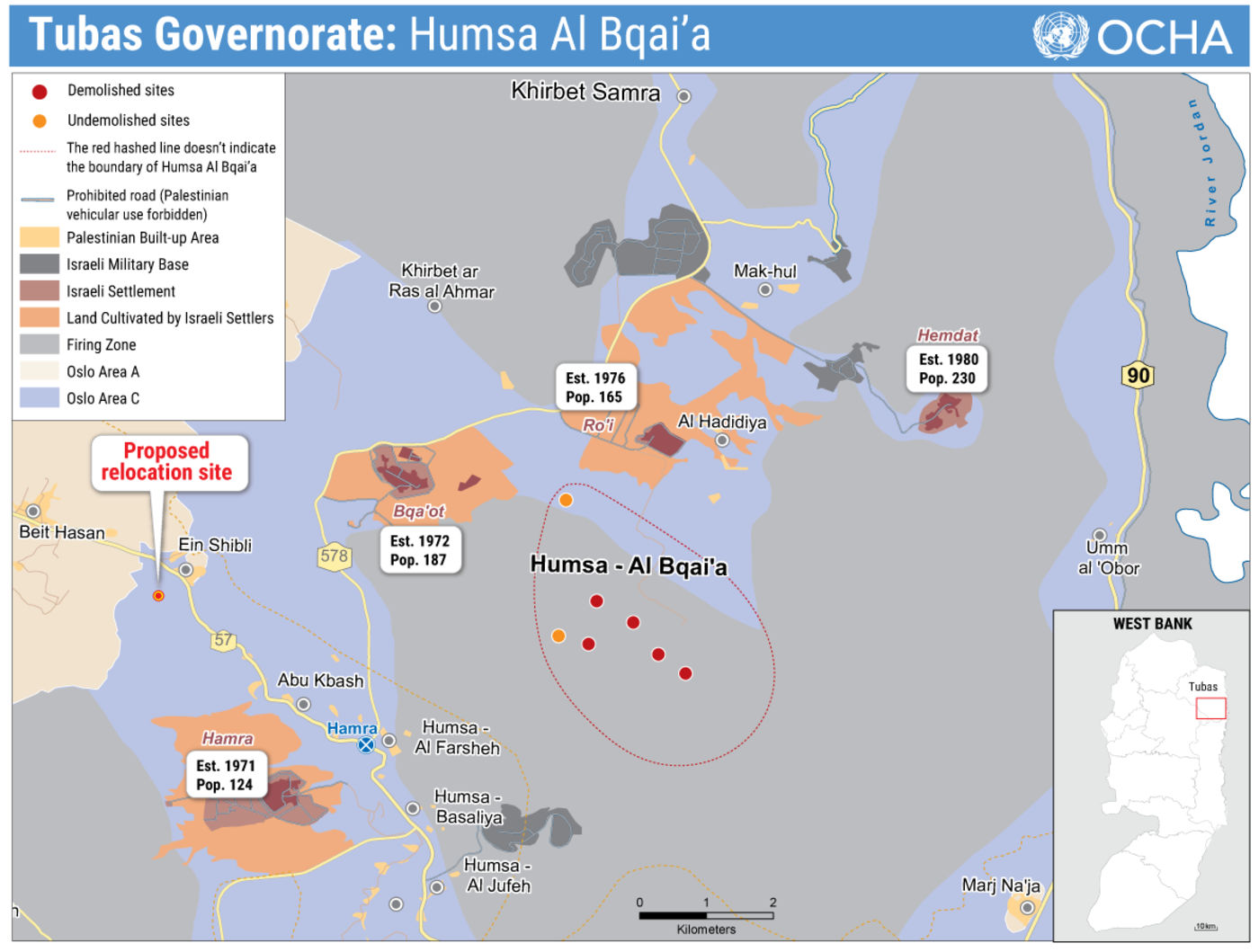
Map by OCHA
On July 7th, Israeli border police demolished the tiny Palestinian village of Khirbet Humsa, located in the northern Jordan Valley. The bulldozers leveled some 27 tent homes in addition to all of the village’s agricultural structures. Israeli forces also seized the remnants of those tents and their residents’ personal belongings, in addition to the community’s water tanks and food parcels. This demolition left 70 Palestinians – including 36 children – homeless, and left them and their livestock without shelter, shade, food, or water in the hot summer heat (expected to reach 102/39 degrees that day). This is the sixth time in less than a year that Israel has demolished Khirbet Humsa, the last time being in February.
The Israeli Civil Administration proceeded to dump the confiscated items at the site where the Israeli government has proposed relocating the Khirbet Humsa community, a place called Ein Shibli. The community has continually rejected and resisted this plan for their forced displacement.
B’Tselem writes:
“House demolitions in this community are part of the policy Israel employs throughout the West Bank in an effort to create unbearable living conditions with the ultimate aim of pushing Palestinians to leave their homes, concentrating them in enclaves and taking over their lands. This policy is an attempted forcible transfer of the residents – a war crime under international humanitarian law. The responsibility for this policy lies primarily with the government, which directs it, the top military command, which implements it, and the justices of the Supreme Court, who lend it legal legitimacy. Israel’s actions are also a badge of shame for the international community, which has absolved itself of the obligation to demand Israel respect the human rights of Palestinians living under its control and allowed itself to be satisfied with empty rebukes lacking any practical consequences.”
Khirbet Humsa is located in Area C of the West Bank, in an area of the Jordan Valley that Israel declared a closed military zone even though Palestinians had been living there for decades, and using the land for agriculture and herding. Israel has long used the pretext of military firing zones to pursue the forcible displacement of Palestinians, while simultaneously ignoring (and in some cases openly assisting) settlers to establish a presence in the very same areas. Firing zones constitute nearly 30% of Area C, including the native lands and current homes of 38 Palestinian Bedouin and herding communities.
Israel Moves to Dismiss Petitions Delaying Mass Demolitions in Al-Walajah
Ir Amim reports that the state of Israel filed a motion seeking the dismissal of appeals that have delayed the demolition of 38 homes — housing around 300 people — in the Palestinian village of al-Walajah, located just south of Jerusalem (a small part of the city actually within the expanded municipal borders of Jerusalem), based on the argument the houses were built without the required Israeli permits. The Court has given the Palestinians until July 11th to file a response to the State’s motion to dismiss.
The state’s motion comes four months after it rejected a proposed outline plan for al-Walajah, which was developed by experts working with the community. The plan would have provided a way for the 38 homes facing demolition to retroactively receive Israeli building permits. Israel rarely issues such permits to Palestinians anywhere in Area C. For residents of al-Walajah the situation is even worse: given the fact that the Israeli government has refused to approve an official outline plan for the area, they have zero hope of obtaining the permits required to build on their own land, as without an outline plan permits simply cannot be issued.
In an effort to overcome this obstacle, Palestinians, with the help of planning experts, initiated their own outline plan for this section of Al-Walajah in the hopes of getting it approved by Israeli authorities — to no avail. Israeli authorities have repeatedly refused to approve the resident-backed plan, and have also refrained from initiating their own planning process. The result: Al-Walajah’s residents were left in limbo – that is, until the Jerusalem District Committee, as part of a January 25, 2021 ruling against an outline plan proposed by residents, deemed the area in question — where Palestinians have lived for decades — an “agricultural area” where no building would ever be permitted.
Construction to Begin on New Units in Nof Zion Settlement Enclave Inside Jabal Al-Mukaber [East Jerusalem]
Peace Now reports that on the evening of July 8th, a cornerstone laying ceremony was scheduled to be held to mark the beginning of construction on hundreds of new units in the settlement enclave called Nof Zion, which is located in the center of the Jabal al-Mukaber Palestinian neighborhood in East Jerusalem. Jerusalem Mayor Moshe Leon was scheduled to partake in the celebration
Preliminary work on the expansion of Nof Zion – a project that will triple its size and make it the largest settlement enclave in East Jerusalem – first began in December 2019. The project will add 182 homes to the existing 91 units that were approved for construction in 1994 (and built in the early 2000s). The Israeli government originally approved plans for a total of 395 units but the first phase of construction bankrupted the developer and the remaining building 304 permits were never issued. A drama ensued over the fate of the project, after a Palestinian-American made a bid to buy the development rights. His winning bid was ultimately blocked by right-wing Israelis [with a key role played by Jerusalem settler impresario Aryeh King], who objected to the sale of the property – in a Palestinian neighborhood – to an Arab. Plans then stalled until settlers were able to recruit Australian billionaire Kevin Braimster and Israeli entrepreneur Rami Levy (read about Levy’s settlement superstore empire here), to fund and acquire the rights to the project — preventing its transfer to Palestinians.
Nof Zion received significant investment from the Israeli government in 2017, when the government approved a plan to build a new synagogue and mikveh on private Palestinian land that was expropriated from the Jabel Mukaber neighborhood in 2016. Then, in September 2017, rumors emerged that the government was set to issue 176 building permits for the already-approved project. According to Ir Amim, those permits were ultimately issued in April 2019.
Peace Now, in its appeal to Mayor Leon to cancel his attendance at the ceremony, writes:
“Nof Zion is a failed settlement project in the heart of the Palestinian neighborhood of Jabel Mukaber. The first incarnation of the settlement proved that the vast majority of Israelis are not interested in buying houses in the heart of Palestinian neighborhoods and the only ones willing to live there are a minority driven by ideological motives. It so happened, as is well known, that in the end the entrepreneurial company of the project went bankrupt. The fact that the current project is funded by philanthropists is the clear proof that the new project has no economic or real estate interest and does not constitute anything in line for the city’s residents, but only another political attempt to prevent the possibility of compromise and coexistence in Jerusalem.”
New Israeli Government, Same Settlement Policy, Despite Including the “Left”
Interior Minister Ayelet Shaked (Yamina) recently told settler leaders that the new Israeli government, led by Prime Minister Naftali Bennett (Yamina) and alternate Prime Minister Yair Lapid (Yesh Atid), will continue the same basic practices of the recent Netanyahu government when it comes to settlement policy. That includes planning to convene the Civil Administration’s High Planning Council (within the Defense Ministry) once per quarter in order to consider settlement construction plans. Israeli Defense Minister, Benny Gantz (Blue & White), publicly criticized Shaked for telling settler leaders about decisions that fall under the authority of his Ministry.
When asked to confirm Shaked’s announcement that the High Planning Council will meet once per quarter, as was the agreed arrangement between Netanyahu and Trump, a spokesperson for the Defense Ministry said:
“We will run things as we see fit. [The council] didn’t meet once a quarter in the previous administration. There has been no decision.”
Shaked and Gantz recently clashed over the fate of the unauthorized Evyatar outpost, with Shaked advocating for the community’s permanent settlement and Gantz pushing for enforcement of Israeli law and, thus, the demolition of the outpost. Shaked ultimately won out (see above for details of the Israeli government’s “compromise” with settlers that likely paves the way for Evyatar to become a brand new, “legal” settlement).
Bonus Reads
- “The draconian law used by Israel to steal Palestinian land” (Al Jazeera)
- “’With God’s Help, We Will Return Legally’: Israeli Settlers Quietly Leave Illegal Outpost” (Haaretz)
- “In order to expand settlement, Israelis fence off tract of Palestinian land southwest of Bethlehem” (WAFA)
- “Apartheid, the Green Line, and the Need to Overcome Palestinian Fragmentation” (EJIL:Talk // Rania Muhareb)
- “US freezes Abraham Fund, as Israel-UAE business ties falter” (Globes)
- “Israeli-UAE investment projects in uncertainty as US indefinitely ends support for Abraham Fund” (The New Arab)
- “How Israel is automating the occupation of Palestine” (The New Arab)
- “U.S. Slams Israel for Razing Home of Palestinian-American Who Murdered an Israeli” (Haaretz)
Welcome to FMEP’s Weekly Settlement & Annexation Report. To subscribe to this report, please click here.
July 2, 2021
- Israel Starts Demolitions in Al-Bustan Section of Silwan [East Jerusalem]
- New Government, Same Outcome – “Compromise” Opens Door for “Legalizing” Illegal Outpost
- Israel Advances Plan for New Settlement Road Through Palestinian Farmland
- Palestine Lays Out Key Issues it Wants the Biden Administration to Engage On
Comments or questions? Email Kristin McCarthy – kmccarthy@fmep.org.
Israel Starts Demolitions in Al-Bustan Section of Silwan [East Jerusalem]
On Tuesday, June 29th, Israeli authorities demolished a Palestinian-owned butcher shop in the al-Bustan section of the Silwan section of East Jerusalem. Palestinians protested the demolition and attempted to stop the bulldozer; in response, Israeli police used live fire, rubber coated bullets, and tear gas to disperse protesters, injuring at least thirteen Palestinians.
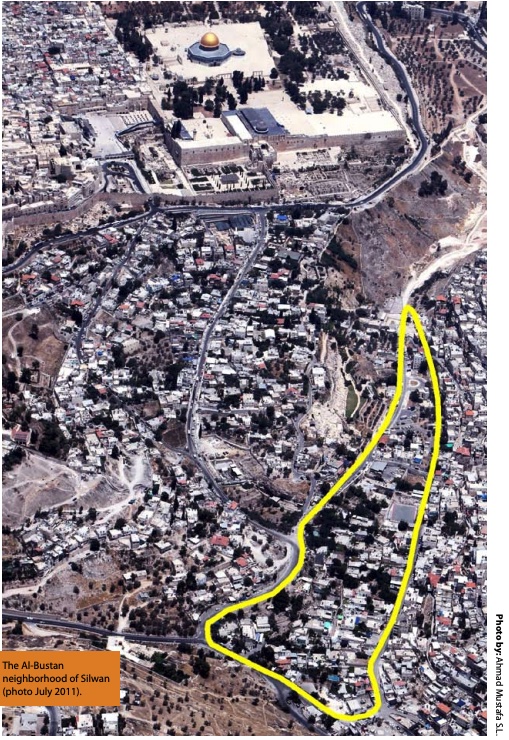 It is widely feared that the demolition of this business presages the imminent implementation of 86 other demolition orders for the same area (housing around 130 families), based on the fact that, like the now-demolished butcher shop, these homes were built without Israel-issued building permits (permits that Israel systematically denies to Palestinians in East Jerusalem). The warning period on demolition orders affecting 14 of those buildings expired on June 27th, meaning bulldozers can appear any day.
The Israeli government has targeted the al-Bustan neighborhood with wide-scale displacement since 2005, when it initiated demolition proceedings on the basis that the buildings do not have Israeli-issued building permits. Israel further declared the area a “green zone” and banned any new construction there. The backdrop to these moves is an Israeli plan to clear al-Bustan of its Palestinian residents in order to make way for an Israeli archaeological park promoted by settlers (the “King’s Garden,” which would be an extension of the settlers’ “City of David” complex).
Residents have until now managed to fight off demolition on the condition that they were engaging with the Israeli government (the Jerusalem Municipality) to develop planning for alternative housing (to which they could be moved). That planning has been ongoing since 2010. Terrestrial Jerusalem explains:
“As noted, in 2017, the Municipality agreed to suspend demolitions while the residents pursue the approval of a statutory Town Plan. The residents’ Town Plan is being drafted by Dr. Yusuf Jabarin, the Dean of Research at Haifa’s prestigious Technion Institute. The plan is working its way slowly through committee, and it is common that plans of this complexity take many years to approve. The plan is based on 11 principles to which the Municipality and the residents both agreed in 2017, and aspires to balance between the housing needs of the residents, the legitimate need for public spaces, in a manner that will serve the residents of al-Bustan, and not the settlers of Silwan. Initially the Municipality viewed the Plan favorably, but, in recent months, that support appears to have been withdrawn.”
New Government, Same Outcome – “Compromise” Opens Door for “Legalizing” Illegal Outpost
In an entirely predictable manner, the new Israeli government led by Naftali Bennet has reached a “deal” with settlers over the fate of the unauthorized Evyatar outpost. Located just south of Nablus, the site of the outpost has become a locus of Palestinian protest and Israeli military violence. Under the terms of the deal, the settlers will (temporarily) vacate the outpost by Friday, July 2nd, with the understanding that the government will leave in place the settlers’ illegal construction at the site — buildings and roads — while it “examines” the status of the land to see if it can be declared “state land” and therefore legally turned into a settlement (opening the door for the settlers to return). In the interim, under the agreement the outpost will be used as a military base while that examination plays out.
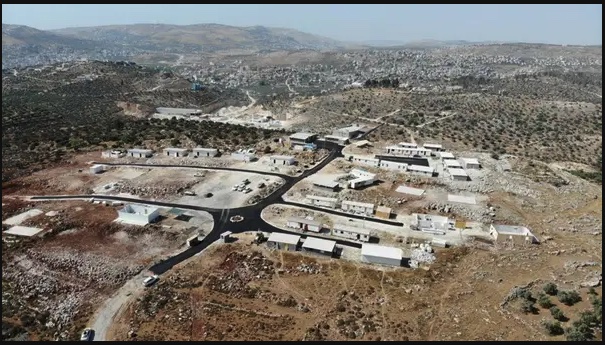 The fact that this “compromise” leaves in place the settlers’ structures and will maintain Israeli control over the site during the “survey” process are clear signals that the government is not concerned with enforcing Israeli law, but rather finding a political solution that works for the settlers. Further, the government of Israel either believes it can, and is determined to, find a pretext to assert that the land on which the outpost stands – known as Jabal Sabih to the Palestinians who have historically cultivated the it – is in fact “state land” which can be used by the state as it sees fit (i.e., give it to the settlers).

In response, the anti-settlement watchdog Yesh Din sent a letter to the Israeli Attorney General outlining exactly how the deal with the settlers contravenes international and Israeli domestic law. In a statement about the letter, Yesh Din says:
“The government’s agreement with the settlers of Evyatar rewards delinquency and grants immunity to those committing offenses, which will act to further embolden violent, lawless settlers to take similar action again in the future, knowing they will, at the very least, face no consequences, and, more likely, be further rewarded with land takeover and settlement expansion. On 1 July 2021, Yesh Din sent a principled letter to Israel’s Attorney General and the Legal Advisor to the Ministry of Defense, denouncing the government’s agreement regarding the outpost of Evyatar as illegal, unconstitutional and morally unacceptable. The letter also demands that an investigation by the police and other relevant authorities be launched into the involvement of the Samaria Regional Council for its part in the outpost’s establishment…
Furthermore, the letter clarifies that the government agreement entails a number of flagrant violations of both local and international laws, including:
In accordance with International Humanitarian Law (IHL), it is prohibited to transfer the civilian population of the occupying power to occupied territory (Article 49, Fourth Geneva Convention), an issue that is now also under investigation of the ICC.
Military presence on lands in occupied territory should only be for urgent security necessity. Safeguarding territory for future Israeli civilian presence cannot be considered an urgent security necessity. The fact that the military did not have permanent military presence in that specific area prior the government agreement reinforces that the military did not discern security justifications.
The decision made in advance to allocate lands for a settlement of Evyatar, providing that they will be declared public lands, without considering the needs of the local population in the area, and especially due to the fact that the outpost is located adjacent to three Palestinian towns, is illegal and unreasonable.
The attempt to disregard planning procedures by issuing a special military order to enable the structures on the site is an abuse of power by the military commander.
The agreement provides no legal basis for not enforcing the law on the illegal structures placed in the area.
It is forbidden to allow political whims to undermine the military commander’s discretion.
According to Israeli law, the decision to establish a new settlement in occupied territory requires a government decision, something that did not transpire in this case.”
Settlers squatting illegally at the site are reportedly not entirely satisfied with the deal. A few are threatening to resist removal from the outpost and are continuing to build permanent structures at the site. Part of the discontent relates to earlier reports that the “compromise” would include a commitment by the government to establish a military yeshiva (religious school associated with the IDF) at the site of the outpost, regardless of the outcome of the land status investigation (or even before the outcome is known). In the final deal, the government agreed to establish a yeshiva at the outpost only after the issue of the land’s status is resolved, and only if that issue is decided in the settlers’ favor. However, the settlers are still asserting that the government has agreed to open a military yeshiva at the site immediately, somewhat of a middle road.
Daniella Weiss, a veteran settler leader who is the leader of the group of settlers who established the Evyatar outpost, believes the land survey will confirm the area is “state land” with only minor adjustments to the boundaries of the outpost. She also said that she expects the yeshiva to be open by September, in time for the Jewish High Holidays. Weiss said:
“This government, which has been so sorely criticized, found the noble and uplifting way to talk with us – without over-powering us, but rather with admiration for pioneer builders of the Land. Our goal is not to force the government’s hand, but rather to uplift it. Our achievement is not in going against the government, but rather in bringing it to the place which it itself wants to be.”
The fate of the outpost has posed an early test for Israel’s new governing coalition. Defense Minister Benny Gantz is on the losing side of this issue (where he is joined by the IDF leadership, which similarly wants the outpost dismantled), having insisted just a few days ago that he is the one in charge of deciding the fate of the outpost and that the outpost will be demolished in accordance with Israeli law. Haaretz explains how the negotiations transpired:
“Gantz looked to his right and to his left, and discovered that he was alone. Prime Minister Naftali Bennett and ministers Ayelet Shaked and Zeev Elkin had negotiated energetically with the settlers on several channels simultaneously. And members of the government’s left wing kept silent. Thus a compromise was reached without the defense minister or the army even being briefed on the talks in real time. Gantz tried to set red lines, already at the outset of the Bennett-Lapid government, in which he is a kind of fifth wheel. He sought to prevent the settlers from creating facts on the ground by taking over land whose legal status is in doubt without any permission from the state or Israel’s Civil Administration in the West Bank. Gantz also sought to prevent the capitulation of the left wing to the right wing in the government. But in reality, it seems that the left has already folded, and the right has laid down its own red line against forcible evictions, which would put Bennett in an uncomfortable situation with what remains of his electoral base. Aside, perhaps, from the new coronavirus outbreak, there probably isn’t an issue in which the government has invested more time during its first two weeks in office than the evacuation of Evyatar. The army doesn’t like the compromise, which defies the original recommendations of its Central Command and the Coordinator of Government Activities in the Territories. Both wanted a full, rapid evacuation of the outpost, which was established in the heart of a group of Palestinian villages south of Nablus. But senior army officers didn’t visit the scene Tuesday morning, and they understand full well the balance of forces there. The moment the prime minister supports the compromise, the army will salute and carry it out.”
The U.S. State Department offered veiled criticism of the deal, saying:
“We believe it is critical to refrain from unilateral steps that exacerbate tensions and undercut efforts to advance equal measures of freedom, security and prosperity and a negotiated two-state solution. This certainly includes establishing new outposts which are illegal even under Israeli law.”
Adding more insight on the U.S. position, the Times of Israel reports:
“The Biden administration is willing to give new Prime Minister Naftali Bennett some time before making asks in the Palestinian arena, but it’s not willing to accept complete paralysis and will speak out clearly against unilateral moves, a source said.”
Israel Advances Plan for New Settlement Road Through Palestinian Farmland
Haaretz reports that the Israel is advancing a plan to pave a new road near the Beitar Illit settlement that will cut through agricultural land belonging to (and actively farmed by) the Palestinian village of Wadi Fukin. If paved, in addition to hemming in Palestinians and closing off their access to their land, it is feared that the projects will restrict the flow of water into natural springs used by Palestinians for farming in the area. This would also be the first road to cut into a wooded area.
Palestinians were not directly informed of this plan, but found out after the plan had been filed with the Civil Administration’s planning authorities. Bimkom, an Israeli NGO, filed an appeal three weeks ago seeking to have the plan frozen until residents of Wadi Fukin can be included in the planning process.
One resident of Wadi Fukin, Mohammed Rabah Sukar, said:
“No one from the Civil Administration talked to us or explained exactly where the road will pass. We don’t know to what extent this will damage our lands and people are very confused and frightened by this road.”

Map by Peace Now
The planned road is connected to two other significant settlement plans in the area, both targeting areas located just south of Bethlehem. One of these plans would expand settlement construction on lands near the Wadi Fukin village. The other plan relates to expansion of the Beitar Illit settlement and the construction of a new settlement – called Gv’aot – on land that historically belonged to five Palestinian villages in the Bethlehem area: Jaba, Surif, Wadi Fukin, Husan and Nahalin. In 2014, the Israeli government issued unilateral, mass expropriation orders for the land (which Israeli officials explictly said was in response to a Palestinian terror attack). At the time, Peace Now reported that the move constituted the largest single expropriation of Palestinian land by the Israeli state in over 30 years. It wasn’t until August 2019 that Israeli planning authorities gave final approval to a plan for a new settlement, including 61 housing units and an educational institute. Today, as it stands, the new units have not been constructed, but a small outpost – which calls itself Gv’aot – has been established…on land not allotted by the Israeli government for future settlement construction.
Palestine Lays Out Key Issues it Wants the Biden Administration to Engage On
Haaretz reports that a new Palestinian negotiation team has asked the Biden Administration to facilitate negotiations with Israel over a series of about 30 issues that it believes can meaningfully improve Palestinian lives – – an approach that has come to define how the Biden Administration is seeking to engage on (but not try to solve) the Israeli-Palestinian situation.
The Palestinian team reportedly included the following proposals related to settlements and annexation in their list:
- Suspension of all settlement construction in the West Bank and East Jerusalem;
- The evacuation of unauthorized outposts;
- The prevention of Israel from controlling land in Area A (where the Palestinian Authority is supposed to have full control, as assigned by the Oslo Accords);.
- The construction of an airport in the West Bank;
- The development of new tourism projects, including religious tourism projects at sites in Area C (the 60% of the West Bank in which, under Oslo, Israel has complete control); and,
- The reopening of Palestinian institutions in East Jerusalem.
An anonymous source with knowledge of the Palestinian initiative told Haaretz:
“Not all of the proposals appearing in the document can be implemented at the present time, but even if it would be possible to advance some of the steps, at least in the civilian field, that would provide achievements to the Palestinian public and improve their day-to-day lives.”
Welcome to FMEP’s Weekly Settlement & Annexation Report. To subscribe to this report, please click here.
June 25, 2021
- Defense Ministry Approves 31 New Projects in Settlements
- Settlers Pressure Bennet Over Fate of (Illegal, even under Israeli law) Evyatar Outpost, Plan to Appeal to the High Court for Protection
- Demolish “Oz Zion” Outpost
- Gantz Orders Construction of Settler-Backed “Accessibility” Project at Tomb of the Patriarchs/al-Ibrahimi Mosque in Hebron
- Settlers Raid Homes of Prominent Activists in Sheikh Jarrah
- Bonus Reads
Comments or questions? Email Kristin McCarthy – kmccarthy@fmep.org.
Defense Ministry Approves 31 New Projects in Settlements
On Wednesday, June 24th – just two weeks after Naftali Bennett became Prime Minister – the Israeli Defense Ministry advanced the construction of 31 settlement zoning plans (with 18 receiving final approval), in settlements across the West Bank. This is the first time this particular subcommittee inside the Defense Ministry – which handles smaller settlement plans, while the Defense Ministry’s High Planning Council considers larger plans – has met since January 2021.
The plans which were advanced provide for the construction of public buildings, including a special needs school in the Elkana settlement, a new shopping mall in the Mishor Adumim settlement, and the Kfar Adumim and Karnei Shomron settlements both received approval for new synagogues and seminaries. As of the time of publication, final details of each plan are not publicly available.
The settler Yesha Council, led by David Elhayani (who had been publicly hopeful about the Bennett-led government), released a statement deriding the government for its failure to advance not just public buildings but also settlement housing units. The statement demands that Bennet convene the High Planning Council in order to issue more approvals.
The Joint List’s Ayman Odeh denounced the new government, including its left-wing members, over the settlement advancements:
“The government has existed for less than two weeks, and already, 31 construction plans have been approved in the settlements…the left is surrendering to the right and setting the diplomatic issue aside, but the right continues to sabotage the chances of peace and to deepen the occupation, repression, and dispossession of millions of Palestinians. Only the end of the occupation and a just peace will bring equality, democracy, and social justice to both peoples.”
Settlers Pressure Bennet Over Fate of (Illegal, even under Israeli law) Evyatar Outpost, Plan to Appeal to the High Court for Protection
New Israeli Foreign Minister (and Prime Minister in waiting) Yair Lapid has told press that the unauthorized outpost of Evyatar, located Palestinian land south of Nablus, will be razed as ordered by the Civil Administration. Yet, the dozens of settler families who are illegally squatting in approximately 50 buildings at the site are hoping to avoid that fate, and have until Monday June 28th to file an appeal with the Israeli Supreme Court or else face removal from the outpost barring political interference from PM Bennett (who is facing pressure from within his own party to save the outpost). The outpost continues to be a central flashpoint of violence in the West Bank over the past month, so far five Palestinians have been killed by IDF fire while protesting the land takeover.
Map by Peace Now
Late last week, the settlers submitted plans – which outlined 100 housing units in addition to land for parks, a synagogue, a daycare center, and a school – to the IDF’s Civil Administration, in hopes of gaining retroactive legalization for the structures they already illegally built on the land. The plan framed the outpost as an extension of the nearby (but not contiguous) Kfar Tapuah settlement. This tactic – issuing retroactive approval to outposts under the premise that they are new neighborhoods of existing settlements – has in the past proven effective, and is a tactic promulgated by the Israeli government. For a few examples, see the following cases: the Adei Ad outpost, the Har Homa E settlement, Shvut Rachel East, and New Migron.
Speaking about the settlers’ hopes of gaining retroactive legalization of Evyatar, prominent settler leader and head of the Samaria settler municipal council, Yossi Dagan, said:
“The Council only submitted a request to authorize construction for the town of Evyatar after establishing beyond doubt that it is not situated on privately held land. Rather, it is situated on state-held land, and only the lack of a clear decision on the part of politicians is preventing its authorization. After going through such a difficult period, the State of Israel should be mobilizing all its forces to take this step, which would be both moral and ethical – it should be strengthening the 50 families who live here and giving Evyatar equal legal status to any other town in the country.”
Nonetheless, the Civil Administration (the arm of the Israeli Defense Ministry responsible for running the West Bank) rejected the settlers’ plans, based on the fact that the outpost was built illegally in blatant violation of Israeli planning laws. The military has also said the outpost undermines “security [and] stability” in the area. Further, the authorities said that the plan was not “properly developed” and that settlers do not have rights to the land. Following the Civil Administration’s rejection of their plans, Evyatar settlers plan to appeal to the Israeli High Court of Justice to stop the demolition, which is set for June 27th.
Notably, the Civil Administration’s rejection of the settlers’ plans for Evyatar does not mean that the IDF recognizes Palestinian ownership of the land, even though aerial photos obtained by the NGO Kerem Navot show that Palestinians cultivated the land at least until 1980. Rather, the IDF is now investigating the status of the land, leaving open the possibility that the land may be declared “state land” – at which point (based on past practice) it is a near certainty it would be allocated for Israeli settlement.
Peace Now also provides a key insight on the settler group which is behind the creation of this new outpost, and why it matters, writing:
“The body behind the establishment of the outpost is the settler organization of Nahala, with the close assistance of the Shomron municipality and its mayor, Yossi Dagan (a central member of the Likud party). The Nahala organization and the main activists of the new outposts are not the mainstream old-guard settlers (like the Amanah organization who is behind many other settlements and outposts and gets much more support from the authorities), however they are not a small fringe. This outpost is an example of a rift that is being created within the Israeli right wing. The more extreme right, which is willing to challenge the system more strongly, and the old-guard settlers who continue the mentality of working ‘with’ the government as much as possible. On the partisan level we see this rift in the creation of two different parties: Yamina, headed by Naftali Bennet, and the Jewish Zionism, headed by Betzalel Smotrich and Itamar Ben Gvir. The challenge of the new outpost puts the new shaky government, which is a coalition of parties which don’t agree about many things, to face its first big political test. The extreme right is signaling that it is planning to continue to challenge the new government, like it had done in the flags march in East Jerusalem, and in yesterday’s settlers’ marches throughout the West Bank.”
Peace Now called for the outpost to be expeditiously demolished, saying:
“A small group of people is creating facts on the ground that effect dramatically Israel’s security and its foreign policy without any authority. The new government must not accept that. This outpost must be evicted not only because it is deepening the occupation of the Palestinians in the West Bank but because it is bad for the security of Israel and bad for the possibility of future peace for Israel”.
IDF Demolish “Oz Zion” Outpost
On June 23rd, the Israel IDF dismantled an illegal outpost – called “Oz Zion” by the settlers – located between Ramallah and Jerusalem. The Times of Israel reports that the IDF removed more than 20 settlers and demolished several structures. Seven settlers were arrested for throwing objects at Israeli soldiers. This particular outpost has been built by settlers, and then demolished by the IDF, several times previously.
Opposition MK Bezalel Smotrich railed against the new government for its demolition of the outpost, saying:
“As we feared, within days of the formation of the government the destruction of communities has begun… Arab construction is out of control in the Negev, Galilee and Judea and Samaria and Bennett and [Justice Minister Ayelet] Shaked are choosing to demolish for Jews.”
As a reminder, Naftali Bennet once served as the head of the settler Yesha Council – which is effectively the main body lobbying the Israeli government on behalf of the settlement movement. That fact does not sit well with Kahanist MK Itamar Ben-Gvir, who said in a statement:
“The person who was once the director of the Yesha Council is now leading the demolition and destruction of the settlements. It is amazing that without blinking, Bennett approved the demolition of a settlement, at a time when he and his friends are making sure that there won’t be demolitions in the Bedouin sector. There is one law for the Bedouin, and a different law for the Jews. What an embarrassment.”
Gantz Orders Construction of Settler-Backed “Accessibility” Project at Tomb of the Patriarchs/al-Ibrahimi Mosque in Hebron
On June 10th, Israeli Defense Minister Benny Gantz gave instructions to COGAT – the body within the Defense Ministry which coordinates civilian affairs in the occupied territories – to issue a building permit and sign a contract for the construction of accessible infrastructure, including an elevator and wheel chair ramp, at the Tomb of the Patriarchs/al-Ibrahimi Mosque in Hebron. The project, which required Israel to seize land that is owned by the Islamic Waqf, strengthens Israeli control over the site and its immediate surrounding area.
The orders from Gantz follow a decision by the Israeli High Court of Justice to dismiss a petition against the plan filed by the Palestinian-run Hebron Municipality. The petition argued that the plan violates agreements, including the Hebron Protocols, signed by Israel specifying that the Palestinian-led municipality has planning authority over the site.
Emek Shaveh – an Israeli NGO with expertise in archaeology and settlement planning – also filed a petition against the plan, describing the plan as “unprofessional” and “a farce.” Emek Shaveh said previously:
“One need not be an archaeologist or architect to review the council’s plan and understand that it is destructive in a manner which is unprecedented. We are convinced that the plan, as approved, would never have been promoted had it not been driven by political motives.”
Emek Shaveh has previously provided critical context as to why this plan is not really, or not fully, being advanced out of humanitarian concerns, explaining:
“Israel’s decision to seize responsibility for the site from the Hebron municipality and the Palestinians sends a clear political message that Israel is reneging on agreements that were signed with the Palestinians in Hebron. Beyond the precedent that will enable the settlers in the future to demand additional changes at the Tomb of the Patriarchs/Ibrahimi Mosque, this is also a precedent that could play out at other sites under the responsibility of the Islamic Waqf. Experience has shown us that what begins in Hebron percolates into other places including Jerusalem. It begins with a seemingly rational demand to benefit the disabled or the general public and evolves into a new status quo. The expected change in Hebron has not escaped the attention of members of the Temple movement and they will know how to present their demands to the government. If Israel can repudiate agreements with the Palestinians in Hebron and expropriate land from the Waqf, it would seem that accepting what appears to be the far more modest demands by the Temple movement to pray or to walk about the Temple Mount complex freely is not so far-fetched. In the reality of Hebron and East Jerusalem, a change involving only several meters at a historic or holy place is not free of political considerations and often it is part of long-term strategy. While it is necessary to tend to the needs and interests of persons with disabilities, the extremists who presume to speak on their behalf must be prevented from forging Israeli policy, even if it is only a matter of a lift and an access path.”
Read Emek Shaveh’s full analysis here: “Humanitarianism Hebron Style.”
Settlers Ramp Up Battle for Area C with Provocative West Bank Marches
In recent years, Israel has increasingly treated Area C as indistinguishable from sovereign Israeli territory. In parallel, settler groups – most notably Regavim – have lobbied Israeli authorities to crack down on “illegal” Palestinian construction, claiming that Palestinians are trying to use “illegal” construction to “take over” Israeli land.
In line with this effort, on June 21st, hundreds of settlers participated in marches throughout friction zones in the West Bank, in an effort to push the newly sworn-in Israeli government to increase their persecution of Palestinian construction in Area C of the West Bank. In advance of the march, settler leaders (excluding Yesha Council head David Elhayani) released a joint statement saying:
“It is our duty to do everything legally passive to stop the savage Arab invasion of Area C to stifle Jewish settlement and establish facts on the ground. Together we will head out to explore the area, to occupy the space with our feet and demand that the authorities enforce the law in the area out of a deep belief that this land is ours.”
Making clear that the settlers have no sense of irony, one of the settler marches was held near the unauthorized Evyatar outpost – which the settlers built illegally and over which they are now engaged in a struggle with the government to prevent Israeli law from being applied to their (Jewish Israeli) illegal construction.
As a reminder, Area C accounts for around 60% of the West Bank. The Oslo Accords gave Israel complete control over Area C, and Israel for years has systematically denied Palestinians in Area C permits that would enable them to “legally” build on their own land. As a result, members of these communities have been forced to build without Israeli permits, and then face Israeli demolition orders, and demolitions, for having done so.
Settlers Raid Homes of Prominent Activists in Sheikh Jarrah
On Tuesday, June 22nd, a group of settlers attempted to force their way into three homes belonging to the El Kurd, Diab, and Qasem families – all of which are living under imminent threat of forced displacement – in the Sheikh Jarrah neighborhood of East Jerusalem. The families were able to prevent their entry.
Israeli MK Bezalel Smotrich and the head of Nahalat Shimon (the settler organization behind the campaign to displace Palestinians from their homes in Shiekh Jarrah) were among the group of settlers who tried illegally invade the homes and threatened the Palestinian occupants. Eventually, Israeli police calmly escorted the settlers away from the homes.
These home invasions followed one of the most violent days Sheikh Jarrah has seen in recent months. During protests against settler takeovers in the neighborhood on June 21st, 21 Palestinians were wounded including three who were hit with live bullets fired by the IDF and three Palestinians who were beaten. As a reminder – a recent investigative report revealed that a New York-based lawyer, Seymour Braun, is financially connected to settler efforts to displace Palestinians in Sheikh Jarrah.
Bonus Reads
- “’Silent intifada’: West Bank is at boiling point” (Ynet)
- “Israeli forces launch violent crackdown on protesters in Beita” (Middle East Eye)
- “Reality of a West Bank Outpost: Four Dead Palestinians and a Drone Spraying Tear Gas” (Haaretz)
- “Ariel University opens medical school in honor of Sheldon Adelson” (Arutz Sheva)
- “ Israel Stops Its Nighttime ‘Mapping’ Raids, but Constant Surveillance of Palestinians Continues” (Haaretz)
- “Amazon’s Investments in Israel Reveal Complicity in Settlements and Military Operations” (The Nation)
- “The Photos Exposing What Israel Is Trying to Hide” (Haaretz)
- “Israel’s Demographic Warfare Rages on Both Sides of Green Line. With One Difference” (Haaretz)
- “The Trilemma of Power, Aid, and Peacebuilding in the Israeli-Palestinian Context” (Middle East Institute/Dr. Carol Kasbari)