Welcome to FMEP’s Weekly Settlement Report, covering everything you need to know about Israeli settlement activity this week.
To receive this report via email, please subscribe here.
June 16, 2017
1. Netanyahu’s Trump-Era Settlement Policy
2. Abbas & Netanyahu Harden Positions on the Future of Settlers
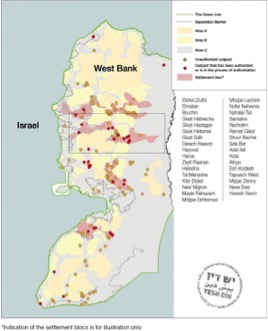
3. Must-Read: “How Many Settlers Really Live in the West Bank?”
4. Shin Bet Moves Against Radical Settler Activists
For questions and comments please contact FMEP’s Director of Policy & Operations, Kristin McCarthy (kmccarthy@fmep.org).
Netanyahu’s Trump-Era Settlement Policy
There is war of words about what Netanyahu’s Trump-era settlement policy actually is. According to settler leaders, Netanyahu is implementing a freeze; according to Netanyahu’s cabinet, he has given settlement construction a green light; and according to the U.S., he is expected to follow a policy of “restraint.” Notably, there has been no official statement by the Trump administration following the last week’s major settlement announcement.
Who is right? Here are the important facts and developments so far with respect to 2017 settlement growth:
- Large #s of Settlement Units Advanced: So far in 2017, plans for 4,909 new settlement housing units have been advanced through the planning process, according to Israel’s Peace Now. Of these, 3,178 were advanced at the June 6-7 meeting of the High Planning Council. And also according to Peace Now, tenders for 2,942 new settlement housing units been issued for imminent construction (meaning there are 2,942 new units actually being built, or about to be). Peace Now, which has tracked settlement growth for decades, based on the Government of Israel’s own officials numbers, notes that these 2017 numbers are “85% more than the housing units promoted during all of 2016 and in half the time.”
- A brand new settlement approved: Earlier this month, Netanyahu’s government has advanced the construction of the first entirely new settlement in 25 years, “Amichai” (a gift to “compensate” settlers who had built/taken up residence illegally in the outpost of Amona, and who were forced to move after the Netanyahu government exhausted all possible means to legalize their illegal acts).
- Illegal outpost legalized: Also earlier this month, the Netanyahu government moved to retroactively “legalize” the illegally-built outpost of “Kerem Reim,” west of Ramallah.
- Jerusalem plans looming but not moving (yet): Despite high profile reports that the government is close to issuing tenders for construction of Givat Hamatos in addition to advancing plans for Ramat Shlomo and Atarot, none of these actions have happened yet. These plans are particularly alarming for the future of Jerusalem and would preclude the contiguity of a future state of Palestine. Likewise, despite similarly high profile reports that the government is going to expedite the advancement of a visitor’s center abutting the Jewish Cemetery on the Mt. of Olives, the government has not yet advanced plans for its approval.
Abbas & Netanyahu Harden Positions on the Future of Settlers
Haaretz is reporting that Netanyahu is now demanding any peace agreement must allow all Israeli settlers to stay where they are, under Israeli rule. This represents a sharp departure from the past Netanyahu demands, as revealed by negotiation documents from the 2014 Kerry effort.
Abbas, on the other hand, is now signaling that he cannot accept a peace deal that leaves even a single settler in the future state of Palestine – also a new position since 2014.
Previously, both Netanyahu and Abbas posited that – at least in principle – some Israeli settlers could be allowed to remain in Palestine under Palestinian jurisdiction – meaning they would become citizens of Palestine (and that their settlements would not remain exclusively Jewish communities). The 2014 policy iterations were (and still are) untenable for both sides, but so too are their new positions.
3. Must-Read: “How Many Settlers Really Live in the West Bank?”

 Haaretz has an investigative report out this week delving deep into the demographics of Israelis living east of the 1967 Green Line, in violation of international law (and in some cases, in violation of Israeli law as well). Highlights from the report:
- There are 380,000 settlers in the West Bank, not including East Jerusalem settlements.
- 178,000 settlers in the West Bank live outside of the major settlement blocs (44% of total); notably, the Haaretz report does not make clear how it defined settlement “blocs” (the term has no formal or legal definition).
- These figures do not include outposts. According to Peace Now, there are 97 outposts with thousands of settlers populating them.
Shin Bet Moves Against Radical Settler Activists
The Israeli Shin Bet appears to be more actively moving to stop the pattern of violence emanating from the Yitzhar settlement, located deep inside the northern West Bank, in connection to the “Hilltop Youth” movement. This week the extremist rabbi and Yitzhar settler Yosef Elitzur was indicted on incitement charges. Elitzur is a prolific writer and teacher known for his religious justification for Jews killing non-Jews. Elitzur is the third Yitzhar settler to be prosecuted in recent weeks for incitement to violence; two others were also convicted because of violent content in articles they published online.
Additionally, nine Israeli teenagers were arrested in Jerusalem this week. There is a gag order in place over the case, but we do know the teenage settlers were arrested while at the house of Yitzhar settler and “Hilltop Youth” movement leader Elkana Pikar. Pikar himself was recently, issued a restraining order requiring him to stay away from the West Bank for four months and banning him from meeting with a list of identified activists for six months. He must also report weekly to Israeli police in the Maale Adumim settlement. Pikar is believed to have been directly involved in a string of recent violent acts perpetrated by Yitzhar extremists in the Nablus area. Notably, the Deputy Speaker of the Knesset rushed to Pikar’s defense following a previous ruling against him, saying that Elitzur is “the only one [who] has managed to get through to the Hilltop Youth and keep them in check a little.”
FMEP has long been a trusted resource on settlement-related issues, reflecting both the excellent work of our grantees on the ground and our own in-house expertise. FMEP’s focus on settlements derives from our commitment to achieving lasting Israeli-Palestinian peace, and our recognition of the fact that Israeli settlements – established for the explicit purpose of dispossessing Palestinians in the West Bank and East Jerusalem of land and resources, and depriving them of the very possibility of self-determination in their own state with borders based on the 1967 lines – are antithetical to that goal.
Welcome to the 2nd edition of FMEP’s Weekly Settlement Report, covering everything you need to know about what is happening this week related to Israeli settlement activity – news, context/background, and why it matters. FMEP has long been a trusted resource on settlement-related issues, reflecting both the excellent work of our grantees on the ground and our own in-house expertise. FMEP’s focus on settlements derives from our commitment to achieving lasting Israeli-Palestinian peace, and our recognition of the fact that Israeli settlements – established for the explicit purpose of dispossessing Palestinians in the West Bank and East Jerusalem of land and resources, and depriving them of the very possibility of self-determination in their own state with borders based on the 1967 lines – are antithetical to that goal.
To receive this report via email, please click here.
April 28, 2017
- Playing with Fire: Two New Settlement Announcements in Jerusalem
- The Violence of Occupation
- Updates: Amona and Adam Outposters
Contact Kristin McCarthy (kmccarthy@fmep.org) for questions and comments.
Playing with Fire: Two Settlement Announcements in Jerusalem
- On April 25th, the Jerusalem Municipality posted a “special plan” to confiscate land on the Mount of Olives, linked to plans for a new “visitors center” to be built adjacent to the Jewish cemetery on the Mount of Olives. The Mount of Olives is an integral part of Jerusalem’s Holy Basin, which is home to major religious, national, and historical sites for Jews, Muslims, and Christians. Israeli construction on the Mount of Olives – especially near the Jewish cemetery, which is only 300 meters from the Temple Mount/Haram Al-Sharif – carries the potential to once again spark violent conflict, as development plans near Jerusalem’s holy sites have in the past.
According to Peace Now, the main beneficiary of the plan is the settler organization known as Elad. Elad is known for its aggressive settlement of Palestinian East Jerusalem neighborhood of Silwan, where it is attempting to establish a new Jewish “City of David.” As part of its efforts, Elad has for years been working to increase Jewish tourism in Silwan and the Mount of Olives, and has been operating its own visitors center out of a trailer immediately next to the Jewish cemetery. The planned new visitors center will likely become the new base of Elad’s touristic activities. For more on how Elad uses “touristic settlements” to alter the character of East Jerusalem, including on the Mount of Olives, read Hagit Ofran’s 2011 piece: Invisible Settlements in Jerusalem.
- The Israeli government is also reportedly reviving plans for a new settlement in East Jerusalem, to be located in the northern part of the city (extending to the southern edge of Ramallah), and to consist of 10,000 units for ultra-orthodox Israelis. Israeli news sources are reporting the final announcement of the units will be made ahead of May 23rd, the Israeli national holiday of “Jerusalem Day,” celebrating the unification of the city in 1967. The location for construction is the abandoned Atarot airport. The plan dates back to 2007; it was pursued by the Israeli government in 2012 but shelved under pressure from the Obama administration. The airport is an important commodity, reportedly promised to the Palestinians for their state’s future international gateway. To develop the airport into a Jewish Israeli settlement would deprive a future Palestinian state of the only airport in the West Bank, will cut through many Palestinian neighborhoods, and will sever East Jerusalem from a Palestinian state on this northern flank of the city (acting like E-1 on Jerusalem’s northeast flank, and like Givat Hamatos on Jerusalem’s southern flank). According to Haaretz, the ultra orthodox Haredi community that this plan is meant to benefit is objecting to the location because of “its distance from the city center and proximity to Palestinian neighborhoods and the separation barrier.”
On April 26th, the Acting Spokesman for the U.S. Department of State was asked about the Atarot plan near Ramallah and replied that Israeli government officials “understand our concerns about this.”
_________________
“The Netanyahu government is deliberately playing with fire in Jerusalem. Plans for the Atarot airport settlement and the visitors center on the Mount of Olives risk inflaming political and religious tensions not only in Israel but across the region.”
– Lara Friedman, President of the Foundation for Middle East Peace
_________________
The Violence of the Settlements
A series of violent settler attacks have ratcheted up tensions between settlers, Palestinians, and the Israeli government. Three of these attacks were allegedly perpetrated by radical settlers from Yitzhar, which is known as the “heartland of settler extremism.”
On Friday, April 21st, 50 extremists from the Yitzhar settlement attacked Palestinian homes in a village called Urif, near Nablus. When IDF soldiers arrived on the scene, the settlers attacked the soldiers, injuring one. The settlers violence against the ID elicited a strong response from Israeli Defense Minister Avigdor Liberman, who failed to note the impetus for the incident; the Yitzhar settlers’ violence against Palestinians.
On April 22nd, Haaretz reported 100 Yitzhar settlers descended from their hill top settlement to attack Urif again, this time throwing stones at the Palestinian villagers. Clashes with Palestinians ensued and the Israeli Defense Forces shot tear gas and rubber bullets at the Palestinians, injuring four and damaging one home.
On April 26th, Palestinian press reported that Yitzhar settlers came into the Palestinian village of Huwwara (near Nablus) and torched a Palestinian vehicle.
Separately, in the Jordan Valley, settlers from the radical Baladim illegal outpost attacked and injured Israeli activists who were accompanying Palestinian farmers to their lands. The attack was captured on video. Though this attack was reported by the Israeli press, Israeli government officials stayed appallingly silent. In contrast, the U.S.-based Anti-Defamation League issued a strong condemnation of the settlers, and asked the Israeli government to hold the perpetrators accountable. This is the second noteworthy attack emanating from Baladim in as many weeks.
The Haaretz Editorial Board issued a strong statement on settler violence, titled “Israel’s Weakness Against Lawbreakers.” In the piece, the Board writes: “While the government is investing huge sums of money in an all-out war against anyone who dares to warn about the creation of ‘apartheid systems,’ it continues to create and preserve two separate law enforcement systems in the territories, one for Arabs and one for Jews, which cannot be described by any other terms.”
Updates: Amona and Adam Outpost-ers
Here are short, but important, updates on settlement news we covered at length in last week’s Settlement Report:
- The pay-off plan for evicted residents of the illegal outpost of Amona by building a new settlement in the Shilo Valley has hit a snag. Apparently the Palestinian hilltop chosen by the illegal settlers to be their future home is not included in the expanded jurisdiction of the local settlement planning council, exposing the lack of intention by the council to build there. This doesn’t preclude changes in the jurisdiction to permit a new settlement on the site, but it frustrated the Amona settlers this week. Meanwhile, the story of the plight of the temporarily displaced Amona law-breakers got sympathetic coverage in a Washington Post human interest story this week.
- Haaretz reports that Israeli police have delivered stop-work orders in the newly established outpost outside of the Adam settlement, near Ramallah. The outpost was first reported last week by Peace Now.
Welcome to the 1st edition of FMEP’s Weekly Settlement Report, covering everything you need to know about what is happening this week related to Israeli settlement activity – news, context/background, and why it matters. FMEP has long been a trusted resource on settlement-related issues, reflecting both the excellent work of our grantees on the ground and our own in-house expertise. FMEP’s focus on settlements derives from our commitment to achieving lasting Israeli-Palestinian peace, and our recognition of the fact that Israeli settlements – established for the explicit purpose of dispossessing Palestinians in the West Bank and East Jerusalem of land and resources, and depriving them of the very possibility of self-determination in their own state with borders based on the 1967 lines – are antithetical to that goal.
In this 1st edition we’re playing catch up, examining the unprecedented shift in U.S. policy regarding settlements that has already occurred under President Trump and looking at recent developments on the ground.
To receive this report via email, please click here.
April 21, 2017
- A New U.S. Policy on Settlement Construction?
- Bibi Announces 1st Official New Settlement in Decades; U.S. Says “Meh”
- About Israel’s New Settlement in the Shilo Valley: Details
- So Much for “Restraint”: Israel’s Newest Outpost
- Recent Court Decisions on Settlement Activities
- Settlements as Flashpoints of Violence
For questions, comments, and inquiries email Kristin McCarthy (Director of Policy & Operations @ FMEP).
_________________________________________________________________________
A New U.S. Policy on Settlement Construction?
President Trump and the Netanyahu government reportedly reached a private agreement on what it will mean for Israel to “hold back on settlements a little bit,” per President Trump’s February 2017 request. Billed as an agreement to curb Israeli settlement growth, media reports indicate that, in fact, President Trump may have given Israel a license to build in “settlements blocs” as well as in “adjacent” areas – opening the door for massive construction so broadly defined as to potentially include every inch of the West Bank other than existing Palestinian built-up areas. Here’s a few choice explainers that highlight why calling this a “curb” is an utter fallacy:
- Peace Now(maps and data): “The New Declared Settlement Policy: Not a Restraint at All”
- B’Tselem: “Unbridled Theft Masquerading as ‘Restrained Construction'”
- Times of Israel: “Billed as self-restraint, Netanyahu’s ‘settlement curb’ actually allows for massive building”
- APN: Settlement Bloc(k)s on the Road to Peace
- Mitchell Plitnick: “Netanyahu’s Settlement Scam”
- Ori Nir: “Settlement Blocs Block Prospects for Peace”
- Terrestrial Jerusalem: “Limiting Settlement Construction to the ‘Blocs’ – Implications for Jerusalem”
“Such a shift in U.S. policy would almost certainly mark the end of the peace effort that began more than two decades ago in Madrid – an effort that sought to make good on the historic promise of trading land for peace.”
– Lara Friedman
President, Foundation for Middle East Peace.
(more from Lara on this here)
Bibi Announces 1st Official New Settlement in Decades – Amichai; U.S. Says “Meh”
As part of the new agreement with the Trump administration, Netanyahu appears to have secured U.S. approval for building the first entirely new settlement announced in the past 20 years. The new settlement being is to be located in the Shilo Valley, the heartland of the northern West Bank, an area that cannot conceivably be retained by Israel in any peace agreement.
This new settlement is being called Amichai and is billed by Netanyahu as an exception to the “settlement curb” deal, with Netanyahu arguing that it must be built in order to provide homes for 40 families evacuated earlier this year from the illegal settlement outpost of Amona. Yes, that’s right: this brand-new, “legal” settlement is a reward to settlers for breaking Israeli law. First they built illegally on land recognized even by Israel as privately-owned by Palestinians; then the Israeli government spared no effort in trying to find a way to legalize that crime; and when those efforts failed, Netanyahu decided to give the law-breakers a brand-new settlement as a pay-off for leaving Amona, despite the fact that they still did not leave voluntarily. This pay-off is in addition to the Israeli government’s approval of thousands of new units in existing settlements in tandem with the evacuation of Amona.
A great summary of the Amona saga is here.
President Trump reportedly “understands” why Netanyahu has to build this new settlement. If these reports were accurate, it would be an unprecedented shift in U.S. policy, representing the first U.S. approval of a new settlement in history.
Less than a year ago, the U.S. Department of State strongly condemned Israel’s promotion of a plan for a new settlement in the same Shilo Valley, warning that this plan “would link a string of outposts that effectively divide the West Bank and make the possibility of a viable Palestinian state more remote” and that “Proceeding with this new settlement is another step towards cementing a one-state reality of perpetual occupation that is fundamentally inconsistent with Israel’s future as a Jewish and democratic state.”
To date, the Trump administration has not issued a statement on the historic announcement of the Amichai settlement in the Shilo Valley.
Senator Dianne Feinstein, however, issued a strong statement condemning the new settlement and warning, “if settlement expansion continues, I’m afraid future Israelis will face a choice between democracy and a Jewish state.”
About Israel’s New Settlement in the Shilo Valley: Details
 Israel’s new settlement – Amichai – will be built deep in the heart of the West Bank’s Shilo Valley, an especially problematic location.
According to Peace Now, the exact location is a hilltop 2.5 kilometers east of the settlement of Shilo. The area is notorious for aggressive settlers who harass and intimidate Palestinian villagers, often violently.
For more maps, data, and analysis of what’s happening in the Shilo Valley, please read:
- “Settlement Blocs that Sever the West Bank: The Shilo Valley as a Case Study” (Yesh Din, November 2016)
- “Between Shilo and Duma: The Valley of Wild Outposts” (Peace Now, 2015)
So Much for “Restraint”: Israel’s Newest Outpost
Peace Now has published evidence of construction of a new settlement outpost. This construction is taking place near the settlement of Adam, southeast of Ramallah, without legally required approvals and permits. This is the first new illegal outpost established since PM Netanyahu’s reported promise in February 2017 to restrain settlement growth.
Recent Court Decisions on Settlements & Outpost
There have been two significant favorable decisions on settlement growth in Israeli courts following the Knesset’s passage of the Legalization Law (or “Regulation Law”) in early February. The law opened the door to retroactively legalize settler activity undertaken in violation of Israeli law, including ~4,000 homes in West Bank settlements and outposts. Here are two key uses of the legalization law thus far:
- In the Shilo Valley, two illegal outposts – Palgei Mayim and Givat Haroeh – have begun the process of being retroactively legalized after a favorable court ruling. (Haaretz)
- The Israeli Civil Administration – the arm of the Israeli army that rules over the West Bank – has interpreted the Regulation Law to protect four illegal structures in the settlement Psagot – east of Ramallah – from demolition. The buildings had been previously slated for demolition because they were built on private Palestinian land. (Jerusalem Post)
The settlement watchdog group Peace Now launched a legal challenge to the Regulation Law. Following Peace Now’s petition, the High Court of Justice issued a stop work order for the illegal outpost Kerem Reim (west of Ramallah). The outpost was a case study for that March 2017 Peace Now report.
The High Court is currently reviewing the legality of the Regulation Law; it’s unclear what that means for cases currently before the courts who continued existence will depend on the law’s retroactive authority.
Settlements as Flash Points for Violence
VIDEO: Club-wielding settlers from the radical Baladim illegal outpost attacked Palestinian shepherds and Jewish Israeli volunteers from the peace NGO “Ta’ayush” (“Coexistence”). Baladim is infamous for the extremist, violent “hilltop youth” who are encamped there. Located on a hilltop in the northern Jordan Valley, Baladim has been evacuated by the IDF and re-occupied by the youth numerous times. It is alleged that settlers from Baladim may have been responsible for the horrific arson attack in the Palestinian village of Duma which killed an infant and both of his parents, and critically wounded his 4-year old brother in July 2015. Background on Jordan Valley settlements and outposts is here.
Attack in Gush Etzion settlement, a Palestinian killed a 70-year old Israeli in car ramming attack. Gush Etzion is a “settlement bloc” located south of Bethlehem inside the West Bank; today it is home to over 75,000 Israeli settlers. In response to the car ramming, the head of the Gush Etzion Regional Council said, “When they shed our blood, every hate monger must know that … the result will be many more houses and settlers throughout the Land of Israel.”