In the ten years since it commenced, the global Boycott, Divestment and Sanctions movement (BDS) has slowly but steadily risen in visibility. Today, both the Israeli government and some in the U.S. are presenting it as an existential threat to Israel. Therefore, it is important to determine exactly what we’re talking about when we discuss BDS and it is equally important that we take a critical look at what its real impact is.
What is BDS?
The movement began in July 2005 with a joint call from a wide array of Palestinian civil society organizations, with  three main demands: An end to the occupation that began in 1967; equal rights for Palestinians citizens within Israel; and protecting and promoting the rights of Palestinian refugees to return to their homes in what is today Israel. The call was issued during the second intifada in part to present a non-violent alternative to what was perceived as the failure of armed struggle to achieve these goals.
The term “BDS” is widely understood to refer to the network of grassroots activists who are part of a global movement responding to this call to encourage boycotts of, divestment from, and ultimately international sanctions against Israel to achieve these goals. Groups and individuals involved in this network hold a variety of views on ultimate solutions to the conflict, but it is fair to say that the most visible leaders of the BDS movement generally support a vision of a single, secular and democratic state in Israel and the Occupied Territories.
This movement – its goals and its activism – is distinct from the many peace activists in Israel, Palestine, the United States and elsewhere, who confine their efforts to calls for boycotts of settlement products and divestment from businesses profiting from the 48-year old occupation of the West Bank, Gaza and East Jerusalem. Those groups take great pains to confine their efforts to Israel’s settlements and its occupation, while avoiding any such actions against Israel within its internationally recognized boundaries.
Crucially, the BDS movement is also distinct from recent actions by the European Union and the governments of many member states to distinguish between Israel within the pre-1967 lines – known as the Green Line – and the occupied territories. A July 2015 report by the European Council on Foreign Relations emphasizes that these actions and policies do not represent a policy shift by the European Union, but simply more faithful adherence to the EU’s existing laws.
Blurring the Green Line: Netanyahu, Congress and BDS working together
The key distinction is between Israel within the Green Line, and the occupied territories. Israel is understandably concerned about the potential consequences of Europe, its largest trading partner, more energetically enforcing their laws that make this distinction. For years, the EU has looked the other way on these regulations in the hope that the occupation would soon end and that the differentiation between Israel and the settlements would become moot.
More recently, as the peace process has stalled, the EU has renewed an effort to begin enforcing their existing laws more aggressively. The labeling of products imported from the settlements, rather than from Israel, is only the first step in this process. These laws are fully consistent with long-standing American policy that similarly does not recognize the legitimacy of Israeli settlements, unless and until their status is redefined in negotiations.
In Washington, the issue of BDS tends to be exaggerated, inflating the threat Israel faces apparently in order to produce legislation that would fundamentally alter the character of US foreign policy. For example, with the ostensible intention of protecting Israel from BDS, a provision was added to the recently passed Trade Promotion Authority bill (the so-called “fast track legislation) that requires the U.S. Trade Representative to discourage European Union countries from boycotting “Israel or persons doing business in Israel or Israeli-controlled territories” as part of free-trade negotiations between the U.S. and the EU.
The amendment treats Israel and the occupied territories as one unit, erasing the Green Line. Israel extends its law over its settlements, and many Israelis, including Prime Minister Benjamin Netanyahu, regard the settlements as Israeli neighborhoods. However, neither the United States nor any other country has ever accepted this, and has always differentiated between the settlements and Israel proper. Blurring this important distinction could set a dangerous precedent for treating Israeli settlements beyond the 1967 lines no differently from the internationally recognized State of Israel. At the very least, it would create confusion amongst the United States’ allies as to what US policy regarding the occupied territories and their ultimate disposition really is.
It is important to recall that U.S. law already protects Israel against boycotts initiated by foreign governments. The Export Administration Act of 1979 and the Ribicoff Amendment to the Tax Reform Act of 1976 were enacted to protect Israel from the Arab League’s boycott against the State of Israel. The amendment to the fast-track bill adds nothing in this regard. Rather, it serves only one purpose: protecting settlements from pressure. This motivated the quiet lobbying the American-Israel Public Affairs Committee (AIPAC) did to push this amendment.
Ironically, this very conflation is precisely what the most radical elements in the BDS movement strive to achieve. Those who believe that the only solution to the conflict is the end of Israel as a Jewish state and the creation of a single state in its place reject any distinction between, for example, the settlement of Ariel in the occupied territories and the city of Tel Aviv. Similarly, those who support a messianic vision of “Greater Israel,” which requires permanent Israeli control of the occupied territories, reject any distinction between Haifa and the settlements inside Hebron. For those who support a two-state solution that includes a secure, democratic and Jewish state of Israel living side by side with a secure, viable and independent Palestinian state, this conflation is extremely problematic.
What is the real impact of the global BDS movement?
There is no evidence that the European Union’s policies and actions regarding settlements are based on the actions of the BDS movement. On the contrary, it is the collapse of the peace process, the deepening of Israel’s occupation and the possible foreclosure of the two-state solution that have motivated these European moves.
In a letter to European Union Foreign Minister Federica Mogherini in April, sixteen European Foreign Ministers urged the labelling of products originating in the settlements, writing that: “European consumers must indeed have confidence in knowing the origin of goods they are purchasing. Green Line Israel and Palestinian producers will benefit from this.” Far from being motivated by the BDS movement, the ministers made it clear that it was the stalled peace process that provided the impetus for their recommendation. The goal was, in their words, “the preservation of the two-state solution.”
Likewise in the United States, the most prominent examples of concrete boycott- and divestment-related activism in the Israeli-Palestinian arena have focused unambiguously not on Israel but on the settlements and the occupation. These developments are the product of frustration with the failure of diplomacy to bring an end to the occupation, and a desire to preserve the possibility of a two-state solution.
As in Europe, the actions involved are distinct from the efforts and goals of the BDS movement. For example, the Presbyterian Church (USA) heard a great deal from the BDS movement over the years in which it debated the decision it eventually adopted in 2014 to divest from companies it believed were profiting from Israel’s occupation. Yet the Church made it clear in its decision that it was not acting in concert with the BDS movement, but from its own principles – and it focused its activism not on Israel, but explicitly on the occupied territories.
After the vote to divest, PC (USA) issued a statement saying, “[O]ur action to selectively divest was not in support of the global BDS movement. Instead it is one of many examples of our commitment to ethical investing. We are pressed and challenged to follow our faith values and commitments in all times and in all areas of our lives. The occupation must end. All peoples in Israel and Palestine should live in security, freedom, and peace. This action is but one aspect of our commitment to work to this end.”
PC (USA) went on to explicitly reiterate its support for the existence of the State of Israel and for the two-state solution, clarifying that, “This action on divestment is not to be construed or represented by any organization of the PC (USA) as divestment from the State of Israel, or an alignment with or endorsement of the global BDS (Boycott, Divest and Sanctions) movement.”
As of today, the BDS movement, in and of itself, is not a threat to Israel, either economically or in terms of security. The main impact of the BDS movement has been in generating an often-divisive debate, on American campuses, among academics faced with campaigns for academic boycotts and in getting a handful of celebrities to cancel or publicly declare their intent not to perform in Israel.
A very unfortunate response to the BDS movement has been the refusal, in many instances, to allow BDS activists to speak their piece in open debate. This attempt at ostracization, however, has backfired. It has provided the basis for the BDS movement to promote itself on free speech grounds, an argument which wins much more widespread sympathy than one that proposes economic action against Israel.
Moreover, the focus on the BDS movement too often ignores the main reason for its continued growth: the failure to end Israel’s occupation that began in 1967 and achieve Palestinian national liberation and sovereignty. The surest way to take the wind out of the BDS sails would be to work diligently to achieve those goals, and act against efforts that prevent them. An independent, sovereign and viable Palestine sharing peace, trade and security with Israel removes the impetus for both BDS and the often overly aggressive tactics being employed against it.
Israeli Prime Minister Benjamin Netanyahu appointed the Likud Party’s Danny Danon, currently the Minister of Science, to the position of United  Nations envoy. Danon, a man who Netanyahu fired only last year because of his “loose cannon” actions, seems an odd choice for a diplomatic position of any kind.
Danon seems particularly ill suited for the role of UN Envoy due to his outspoken and uncompromising opposition to a two-state solution to the Israel-Palestine conflict, something virtually the entire world supports. Danon is not afraid to make this clear either. Here are his own words in recent years. Read them and judge for yourself what message Netanyahu is sending by appointing Danon to this post.
“There is place only for one state on the land of Israel…. I do not believe in a two-state solution.” – Al Jazeera
“I will use my strength and influence to convince as many people as I can within the party and outside the party that a Palestinian state is bad news for Israel.” – The Forward
“Even if there will be a vote [at the UN on a Palestinian state], it will be a Facebook state. They will have a lot of likes in the Facebook, but it will not change the lives of the Israelis, the Jewish pioneers, who live in the hills of Judea and Samaria.” – The New Republic
“An independent Palestinian state in Judea and Samaria would pose a grave threat to Israel.” – Fox News
“There was never a government discussion, resolution or vote about the two-state solution…if you bring it to a vote, you will see the majority of Likud ministers, along with the Jewish Home [party], will be against it.” – Times of Israel
“Enough with the two-state-solution. Land-for-peace is over. We don’t want a Palestinian State. We need to apply Israeli sovereignty over all Jewish communities in Judea and Samaria. It’s been about 20 years since the Oslo Accords. That’s finished and now we’re ready for new ideas…We are a nationalist government and not a government that will establish a Palestinian government on 1967 lines.” – Arutz 7
“If you go to the Arab-populated cities in Judea and Samaria, you will hear them speaking like they do in Jordan. It’s the same with the Arabs of Gaza and their connection to Egypt.” – Arutz 7
“Our goal should be to annex the maximum land with the minimum Arab population,” he said of the West Bank. “We should speak about our rights and not apologize for it. We have biblical rights, historical rights, rights according to international law. We also have common-sense rights: We won the war.” – JTA
On building in E Jerusalem: “The international community can say whatever they want, and we can do whatever we want.” –Times of Israel
Ali Saad Dawabsheh was only 18 months old when Israeli settlers who entered his village of Douma to carry out a so-called “price tag” attack took his life away by setting fire to his home. The crime brought shock and horror to many, regardless of their views of the overall Israel-Palestinian conflict.
But the reality is that this death is very much a part of that conflict. It cannot be understood apart from it. It is not anomalous. Ali was far from the first baby killed in this conflict, on either side.

Graffiti meaning “revenge”
It is no surprise that such a horrifying act leads people to say “something more must be done.” But, of course, the conflict will not end over this incident. In a matter of weeks, Ali’s death will be just one more tragedy in a long list of tragedies in Israel-Palestine.
Is it possible for this tragedy to move us closer to resolving the conflict? Is it possible that, even without ultimately resolving the major political issues we can make it more difficult for an atrocity like this to occur? Perhaps it is, if we ask one important question and make sure we get all the answers to it.
Why is Ali Dawabsheh dead?
Ali and his family were in their home at night when arsonists set it on fire. Ali’s parents and four year-old brother suffered severe burns and Ali died. The attackers spray-painted the word “nekama” in Hebrew on the resident. The word means “revenge.”
Why is Ali Dawabsheh dead?
Until the murderers are caught, we cannot be certain, but it is likely that this “price tag” attack was carried out in response to Israel’s demolition of two structures in the settlement of Beit El on the West Bank. After the High Court in Israel ordered their demolition, the Netanyahu government immediately granted permits for hundreds of new living units in Beit El and the East Jerusalem area. This, however, was apparently not enough compensation for those who carried out this heinous act.
Why is Ali Dawabsheh dead?
Given the shocking nature of the crime, the Israeli government will likely put considerable resources toward identifying and arresting the perpetrators. However, on a day-to-day basis, Palestinians in the West Bank have no protection from settlers. Israeli Defense Forces and Border Police often do not prevent settler attacks on Palestinians. It’s not uncommon to see them protecting settlers as they attack Palestinians.
Moreover, the forces of the Palestinian Authority have no jurisdiction over settlers and cannot protect their own citizens from them. Settlers in general feel they may act with impunity. As the Israeli human rights group, B’Tselem states, “In recent years, Israeli civilians set fire to dozens of Palestinian homes, mosques, businesses, agricultural land and vehicles in the West Bank. The vast majority of these cases were never solved, and in many of them the Israeli Police did not even bother to take elementary investigative actions.”
Why is Ali Dawabsheh dead?
In the wake of Ali’s death, the rush to express outrage was staggering. Israeli politicians across the spectrum vowed that the murderers would be brought to justice. No doubt, they are sincere in their personal outrage and in the desire to show Israelis and the rest of the world that this is something they will not tolerate as leaders.
But their comments are universally directed at the crime itself, implying that this act was an anomalous blot on the Israeli page with no cause other than hate and extremism. The words not only of Benjamin Netanyahu, Naftali Bennett and other leaders of the current government, but also those of opposition leaders Isaac Herzog and Yair Lapid make no connection between Ali’s murder and the occupation, the settlement project or the increasingly anti-Arab tone of many of Israel’s leaders.
There was scant mention of the tolerance shown to the extreme right of the settler movement over the years. As Amos Harel put it in Ha’aretz, “The forgiveness the state has shown over many long years toward the violence of the extreme right – which was also evident this week at Beit El (none of those attacking the police are now in detention) – is also what makes possible the murderous hate crimes like Friday’s in the village of Douma. There is a price for the gentle hand.”
The decision to build hundreds of units in Beit El and East Jerusalem sent a message that the government would find ways to make the rulings of the High Court against illegal building moot in all practical ways. The bigger message that was sent in the wake of protests in Beit El where Israeli soldiers were attacked was this: violence pays, at least for the settlers.
The occupation and settlement program are themselves a form of daily violence that dispossess Palestinians, place them under military rule and deprive them of their basic rights. It may not be easy to end the occupation, but the casual way many in Israel have turned to “managing the conflict” and given up on ending the occupation sends the message that such institutionalized violence by Israel against Palestinians is at least tolerable. Why would anyone be surprised that the more radical elements among settlers would take that a few steps further?
Why is Ali Dawabsheh dead?
In the wake of Ali’s death, Palestinian President Mahmoud Abbas called for the International Criminal Court (ICC) to investigate this act as a war crime. But this was an act of civilian murder, even if the civilian(s) who committed it was living in a settlement deemed illegal under international law. Moreover, the ICC would not act if Israel were legitimately pursuing the perpetrators, which it certainly seems like it is doing. Politicizing Ali’s death in this manner is typical of the conflict, and thoroughly counter-productive.
Indeed, mixed in with his words of outrage, Netanyahu also could not resist politicizing it in his own way by saying that Israel pursues such criminals while Palestinians name streets after them (In reality, Israel celebrates its own terrorists too). This was an opportunity for the two leaders to unite in condemning a crime and calling for justice. Instead, both took it as an opportunity to aggravate the differences between them.
Why is Ali Dawabsheh dead?
While this goes on, members of the United States Congress works to legitimize the settlement enterprise by equating it under the law with Israel itself. The White House is focused on the Iran nuclear deal and it is not yet clear what, if any action the current administration might take to improve the situation in Israel-Palestine before they leave office. In Europe, merely labeling products emanating from settlements is so controversial that the process of setting up an enforcement mechanism for a regulation that already exists in European Union law is dragging along at a snail’s pace.
Without ending the occupation of the West Bank, it is only a matter of time before the next horrifying incident, whether it happens to a Palestinian or an Israeli child. As Noam Sheizaf of +972 Magazine wrote, “…violence is inseparable from the colonial reality in the occupied territories — without putting an end to that reality, there is no chance to properly deal with violence. Even if things cool down temporarily, the situation will only grow worse in the long run. The only solutions are the evacuation of settlements or equal rights for all.”
And ultimately, Sheizaf’s words are the answer to the all important question:
What can we do to prevent more deaths like Ali Dawabsheh’s?
Ultimately, there is no way to stop these incidents without ending the occupation and the daily reality of privileged and protected Israeli settlers living in a Palestinian territory mostly populated by people who live under military occupation.
However, this crime was entirely predictable. Crimes like it can be prevented, at least some of the time, and it does not require an end to the conflict to do so.
Until the conflict is resolved, Israel must meet its responsibilities to protect Palestinian civilians from settlers. Both Israelis and Palestinians can treat incidents like this one as the crimes they are and refrain from politicizing them, allowing both sides to condemn them unreservedly and in unison. Finally, the United States and Europe can stop equivocating and insist that the settlement project stop immediately, and be prepared to put real pressure on Israel to make it happen.
Ali’s death can be a wake up call, or it can be just another horrible story among decades of horrible stories. Which it will be will depend as much on people’s willingness to pressure their own governments in a productive direction as it will on those governments, in Jerusalem, Ramallah, Brussels and Washington, finding the courage to finally act. Some Israeli settlers would condemn Ali’s murder. But until the occupation and the settlement project end, tragedies like this on are inevitable. If there is to be any hope of preventing them, it has to start with people standing up to finally say “NO” to the settlements and to force their governments to do likewise.
Yair Lapid, Israel’s former Finance Minister, told a hawkish “pro-Israel” gathering in New York that the leaders of the Boycott, Divestment and Sanction movement (BDS) are anti-Semites and their followers are “bleeding heart, so-called intellectuals.” Lapid went on to say that European citizens and American students “…are cheering for the people and values that brought 9/11 to this country. You are supporting people that kill gays and suppress women.”
Mutual Demonization
Lapid is far from alone in elevating the movement to a threat on par with Israeli descriptions of Iran. Whether it was Israeli Prime Minister Benjamin Netanyahu placing a high-ranking Likud Member of the Knesset in charge of battling BDS or grandstanding on the issue by prominent members of Congress, the “threat” of BDS has never seemed greater.
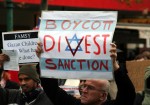
The hyperbole around the issue has never been greater either. All of it is transparently overblown to anyone who actually knows the various players in this game. The BDS movement is not made up, as Netanyahu’s Minister of Justice Ayelet Shaked stated, of radical Islamists, anti-Semites and naïve fellow travelers.
I have known many BDS leaders for many years, as I have also known many of my fellow two-state supporters. I understand their motivations. I disagree often with BDS leaders, but I have never known most of them to wish for violence of any kind, express support for al-Qaeda or ISIL, or express animosity towards Jews as Jews. Many of these folks are, indeed, anti-Zionists, and support a single democratic state in all of what they call “historic Palestine.” I disagree with them on that point, but my disagreement does not mean they hate me, or I them.
That doesn’t mean there are no anti-Semites in the BDS movement. Any pro-Palestinian movement is naturally going to attract those who wish to hide their anti-Semitic agenda under a more acceptable cloak. This small minority within their ranks does not define them.
Unintended Consequences
Israelis, and too many of its supporters, continue to bury their head in the sand about Israel’s diminishing standing in the world. The blame is on Palestinian public relations, the reach of the BDS movement, global anti-Semitism, or their own failure to adequately explain their position to the world. The one thing it never is, according to the Netanyahu government and too many “pro-Israel” groups around the world is Israeli policy.
Part of avoiding the policy debate is presenting Israel as a country constantly facing imminent destruction. While Israel faces very real threats to its citizens, it has not faced an existential threat in a very long time. Iran has never been that, as many Israeli security experts have confirmed. If a deal limiting its nuclear program is finalized, the world is unlikely to buy Israeli complaints that Iran could ever “wipe Israel off the map.” So, BDS is being primed for the role of menacing villain.
For their part, the BDS movement seems to be feeding eagerly on Israeli public relations. Despite having had no discernible impact on Israel’s economy or its determination to maintain its occupation, they are trumpeting their success.
One can understand this, of course. Bibi needs the perception of an existential threat to bolster his politics of fear, while the BDS movement, a grassroots movement with little financial backing, needs to demonstrate its own effectiveness. These tactics, however, are damaging hopes of progress toward a resolution of this vexing conflict.
By avoiding moves to end its 48-year old occupation and exaggerating the BDS threat, Israel is actually proving that only substantive pressure will convince it to end the occupation. This is a point on which the BDS movement and I agree; I have argued for decades that the biggest obstacle to ending the occupation is that Israel, in this regard a country like any other, is expected to take what it perceives as a huge risk without any pressure. The occupation’s  costs are largely covered by the European Union, United States and some Arab states, and despite the terrorist attacks Israel still occasionally endures, almost exclusively in the form of sporadic rocket fire from Gaza, the Palestinians have few means to pressure Israel. This is the logic behind the PLO’s international campaign, which must be understood as distinct from BDS.
Israel is running other risks as well. By conflating so many actors and actions with BDS tactics and movements, it risks galvanizing a much harsher opposition than it has seen in the past. Domestically, this false image of BDS is already being used to push the right wing’s assault on democracy even further, while reinforcing the Israeli sense that the “whole world is against us.”
The Effect of BDS
The fact is that any effect BDS has had on Israel’s economy is imperceptible. The economic issues Israel faces have no connection to any drop in exports or loss of investment. That does not mean it never will, but it does mean that the hysteria about BDS is way out of proportion with its impact to date. So, we are left with the most right-wing government in Israeli history governing a country whose citizens, even the majority that still supports a two-state solution, believe that ending the occupation carries major security risks. That is a country that will not change its policies absent significant pressure.
If we accept that self-evident fact, we confront the fact that many people and groups who do not wish to be associated with the BDS movement, its leadership and some of its specific goals have for years avoided any sort of organized economic action against Israel’s occupation. While one can hardly blame the BDS movement for this (in no way have they acted to prevent more moderate groups from taking actions aimed strictly at the occupation), it is an unintended consequence of their activities.
Netanyahu has taken full advantage of the political void this opens up. When the European Union wants to enforce existing laws that distinguish between products made in Israel and those from the settlements, it is considered a “sanction” against Israel; i.e. the “S” in BDS. As a result, liberal Zionist, centrist and many progressive groups avoid any hint of economic action against the occupation.
Groups like Americans for Peace Now (APN), one of the very few who are standing up to call for boycotting settlement products, are not getting the support they need. Yet the few instances of divestment or refusal to do business in the West Bank (most of which were not attributed to the BDS movement by the organizations that took such actions, some of whom even explicitly stated that they were not acting as part of that movement) have all been firmly rooted in opposition to the occupation. They have not been connected to the other conditions of the BDS movement’s call to action, regarding Palestinian citizens of Israel and the right of return of Palestinian refugees.
The Need for Economic Action
It is unfair, however, to expect the BDS movement to abandon its tactics because they are being used to scare more moderate peace groups away from action. Instead, it is the responsibility of moderates, two-state solution supporters and those who support Israel but loathe the occupation to stand up for our beliefs. Let the BDS movement do what it is doing. If you are really worried that BDS will “de-legitimize” Israel with rhetoric, then counter it with a principled, pro-Israel stand for Palestinian rights and statehood and an end to the occupation.
The distinction that Netanyahu and his cohorts in AIPAC and in Congress are trying to blur must be sharpened instead. The settlements are not Israel. They are an immoral and illegal enterprise that should not be supported — through tax dollars, investment or purchases. From such a position, classifying corporations that are profiting from the occupation, especially American ones as “socially irresponsible” can be supported on a pro-Israel basis. From that position, groups can stand up for Israel and support Israelis who are working to end the occupation, and combat the discrimination against Arabs that has become so bitter in recent years.
That is also a pro-Israel position from which Americans can demand that our government name the settlements the illegal enterprise they are, and treat them accordingly. It is a position from which one can promote a secure Israel within the Green Line that can, at long last, find some peace in that tumultuous region. It just has to stop denying millions of Palestinians their basic rights and any hope for the future. That, not Netanyahu’s demagoguery, is truly pro-Israel.
Benjamin Netanyahu, Prime Minister:
“I think anyone who is going to establish a Palestinian state and to evacuate territory is giving radical Islam a staging ground against the State of Israel.” (Politico, 3/16/15)
“I think the Israeli people understand now what I always say: that there cannot be a situation, under any agreement, in which we relinquish security control of the territory west of the River Jordan.” (Times of Israel, 7/13/14)
Naftali Bennett, Minister of Education:
“I will do everything in my power to make sure they [Palestinians] never get a state.” (New Yorker, 1/21/13)
“We are not going to give up more land. This approach has failed. Now, if it means that the world will penalize us, that is unfair but so be it.” (Times of Israel, 2/17/15)
“Israel cannot withdraw from more territory and cannot allow for the establishment of a Palestinian state in the West Bank.” (New York Times, 11/6/14)
In a 2010 television debate with Palestinian Israeli Ahmed Tibi: “When [Palestinians] were still climbing trees, we had a Jewish state here… We were here long before you.” (972 Mag, 1/1/13)
Yuval Steinitz, Minister of National Infrastructure, Energy, and Water:
“Israel should stop transferring the taxes it collects for the Palestinian Authority and consider dismantling it if it continues to act against Israel in the international arena. Establishing a Palestinian state in the current conditions will bring war, terrorism and a Hamas and Islamic State takeover of Judea and Samaria.” (Jerusalem Post, 12/18/14)
“The demand for Israel to withdraw to the 1967 lines, without holding on to the Jordan Valley, without defensible borders, without security control, and without the demilitarization of Gaza… is a recipe for collective suicide.” (Jerusalem Post, 9/8/14)
Ayelet Shaked, Minister of Justice:
“We should manage the conflict and not give up on any centimeter of land. Yes, it’s not perfect, but it’s better than any other alternative.” (Jewish Telegraphic Agency, 2/3/15)
“Around us in the Middle East there is total chaos. I’m not willing to give up on my land for this chaos.” (The Forward, 5/7/15)
Moshe Ya’alon, Minister of Defense:
“It is time to free ourselves of the concept that everything leads to a framework that is called a state. From my standpoint, they can call it the Palestinian empire. I don’t care. It would basically be autonomy.” (Jerusalem Post, 10/17/14)
“I think we made a mistake with land for peace.” (The Forward, 6/10/14)
Tzipi Hotovely, Deputy Minister of Foreign Affairs:
“This land is ours. All of it is ours. We expect as a matter of principle of the international community to recognize Israel’s right to build homes for Jews in their homeland, everywhere.” (The Guardian, UK, 5/22/15)
“We need to demand sovereignty over all of Judea and Samaria, and nothing less than that.” (Times of Israel, 7/16/12)
Miri Regev, Minister of Culture and Sport:
“The expression Palestinian state should not be used.” (al-Arabiya, 6/11/09)
“The towns in the Jordan Valley are a strategic and security asset of the state of Israel that must stay in our hands.” (The Guardian, UK, 12/31/13)
Silvan Shalom, Vice Prime Minister, Minister of the Interior:
“We are all against a Palestinian state, there is no question about it.” (Ha’aretz, 5/18/15)
“Judea and Samaria are the bulletproof vest of Israel.” (Ha’aretz. 5/18/15)
Danny Danon, Minister of Science, Technology and Space:
“Enough with the two-state-solution. Land-for-peace is over. We don’t want a Palestinian State. We need to apply  Israeli sovereignty over all Jewish communities in Judea and Samaria. It’s been about 20 years since the Oslo Accords. That’s finished and now we’re ready for new ideas…We are a nationalist government and not a government that will establish a Palestinian government on 1967 lines.” (Arutz 7, 10/2/12)
“I understand the importance of political power, so I will use my strength and influence to convince as many people as I can within the (Likud) party and outside the party that a Palestinian state is bad news for Israel.” (The Forward, 7/8/13)
Zeev Elkin, Minister of Jerusalem:
“There is no place for a Palestinian state, not in temporary borders and not in any other configuration.” (Arutz Sheva, 3/25/11)
“Whoever objects to the ‘two state’ solution does not need to present an alternative solution because the basic  situation is that this territory belongs to us.” (Arutz Sheva, 10/24/13)
“For 20 years, we talked about what to give and why. Now the time has come for an entirely different discourse…This is our land, and it’s our right to apply sovereignty over it. Regardless of the world’s opposition, it’s time to do in Judea and Samaria what we did in [East] Jerusalem and the Golan.” (Times of Israel, 7/16/12)
“I certainly think a Palestinian state is no solution. And if I think a Palestinian state is no solution, that means I do want a Jewish presence here. Which raises the question: What do you do with the Palestinian population? And I don’t think the answer to that question can be found right now.” (Times of Israel, 7/29/13)
Uri Ariel, Minister of Agriculture:
“There will be just one state between the Jordan River and the sea, and that is the State of Israel.” (Middle East Monitor, 5/30/14)
“Anyone here today understands that the vision of two states is unrealistic and will never happen.” (Times of Israel, 8/25/13)
Yisrael Katz, Minister of Intelligence and Atomic Energy:
“I will not agree to a Palestinian state. The only practical solution is an autonomous entity in the A and B areas with an affiliation with Jordan and Israeli security control.” (YNet News, 7/10/13)
“Israel needs to take unilateral steps to apply Israeli sovereignty to all of the settlements in Judea and Samaria.” (Jerusalem Post, 5/6/11)
Professor Brent Sasley is an Associate Professor and Graduate Advisor in the Department of Political Science at the University of Texas at Arlington. He studies and teaches the politics of the Middle East and of Israel; the nature of identity formation; and decision-making processes. He is the author of The Cold War in the Middle East, 1950-1991. FMEP asked for his views on some of the current issues concerning Israeli and American policy.
Israel finally has its new governing coalition. The idea that the Zionist Union might join in a national unity government appears to be simmering, and while Benjamin Netanyahu might try to coax them in, for now Israel is going to have a right wing/religious coalition, with the center-right Kulanu representing the only moderate party. Given Netanyahu’s statements in the election regarding the two-state solution and the apparent absence of the Palestinian issue in both the election and the coalition talks, do you see any alternative for Mahmoud Abbas other than continuing to try to internationalize the issue, at the UN, the ICC and perhaps in Europe?
The narrow coalition does indeed appear to be comprised almost entirely of rightist and religious parties, with  Kulanu representing the soft right. Moshe Kahlon’s interests in economic issues means his party is unlikely to pay much attention to settlement building or policy toward the West Bank and peace process. He might serve as a brake on some of Bayit Yehudi’s and Likud’s excesses, but otherwise his silence will serve to facilitate the continuation of the last two governments’ policies.
While Abbas’s own intransigence and fear of finally ending the conflict certainly plays a role in the failure of previous talks, the notion that the PA or Abbas have to do more to show interest in progress, and that if only they had, then Israel would have moved forward with the necessary concessions and agreements, is nonsense. An international legal effort (what some have called “lawfare”) to achieve statehood is not without precedent, including by the Zionist movement.
So if I’m Mahmoud Abbas, I don’t see much hope not only for serious talks, but for serious confidence-building measures such as curbing settlement activity outside the main blocs, ending the harsh rhetoric coming from Israel’s leaders, and distinguishing between Fatah/the PA and Hamas. It makes sense, then, for Abbas to continue working on the effort to change the international legal-diplomatic balance.
Let’s assume for the moment that the P5+1 and Iran do indeed conclude a deal similar to the one the White House described in the framework agreement. While lifting sanctions will give Iran the opportunity to expand its regional influence, a deal and an end of sanctions will also give the Americans, the Saudis and the other Arab states near the Gulf the opportunity to engage Iran and possibly open dialogue to help the whole Middle East start to climb back from the turmoil that has engulfed it in recent years. How do you view a post-nuclear-standoff future in the region and how do you think Israel might respond if there is increased dialogue with Iran?
It is difficult to say what the regional effects and what Israel’s reaction will be, because the success and aftermath of the agreement are both contingent on several other factors. I do not share the optimism that an agreement over Iran’s nuclear program will generate greater cooperation between Iran and the United States or will reduce Iranian ambitions in the Middle East. The Iranian regime’s survival is partly dependent on maintaining its commitment to the revolution. Yet legitimacy based on revolutionary impulses requires that one always strive to enhance or expand that revolution. Normalization of Iran in the region would undermine those impulses, and thus serves as a threat to the regime.
For its part, Israel very much fears Iranian normalization, but I think the fear is overstated, as I mentioned. It’s likely there will be efforts to maintain and expand dialogue between Washington and Tehran, and perhaps other regional states as well. This would be a direct threat to Israel’s position in the region, which in recent years has benefitted from the Sunni Arab states’ competition with and hostility toward Iran. Jerusalem would benefit greatly from getting ahead of the possibility of growing Iranian integration, however unlikely. It can do so by making serious efforts to reduce its presence in the West Bank, and respond constructively to the Arab Peace Initiative, which remains on the table.
Finally, given your responses to the first two questions, and given not only the current tense atmosphere between Obama and Netanyahu but also the new partisan divide over Israel (which AIPAC is desperately trying to reverse while groups like the RJC are working hard to expand it), how do you see the future of US-Israel relations going? We know security cooperation will be unaffected, but what about the “special relationship,” the cover the US gives Israel in the international arena, and other such aspects? In particular, I’d like to know how you see this going in the event of a new Clinton White House.
I’ve long argued that the relationship is far stronger than it seems on the basis of personal tensions between Obama and Netanyahu. These personal problems make the big policy discussions harder, but the relationship is rooted in a variety of other factors—strategic cooperation, shared cultural identity, similar political systems, public sympathy—that have and will overcome the individual-level problems because they are so routinized.
That said, it’s clear that the U.S. and Israel have increasingly divergent perceptions about international politics and put emphasis on different priorities. The settlement enterprise has expanded over time, across all Israeli governments. Netanyahu might have increased building in more isolated areas, but he’s still only the latest representation of a decades-long process. Yet settlements are increasingly problematic for Western publics and countries, including the United States. Similarly, Israel continues to hold a regional perspective on the Iranian nuclear program, the Arab uprisings, conventional threats to the Jewish state, and so on, while the United States has been trying to shift its attention to other issues by adopting a more global perspective.
In both cases, while the Obama Administration has certainly pushed harder for such changes, it seems that American foreign policy has been slowly moving in this direction anyway, partly pushed by external systemic forces. This is not to say that Washington will turn away from the Middle East—even Barack Obama couldn’t, as much as he tried. But if the White House’s attention is further diffused across the globe, Israel’s regional concerns will matter less.
It’s hard to know what a Hillary Clinton White House would do. I suspect the problem of settlements would remain a thorn in the personal relationship with Netanyahu. More broadly, it’s very possible the days of a Democratic president maintaining a Bill Clinton-style closeness with an Israeli leader could well be over. Much also depends on who becomes the next prime minister of Israel, if the current government has only a brief time in office. It’s also possible that this Netanyahu government limps along for a few years, kept in power but also constrained by its domestic political struggles, and therefore doesn’t engage in major policy changes but rather continues along the current path. This will make it harder for Clinton to challenge Netanyahu on the big policy questions.
After Benjamin Netanyahu’s surprising victory in Israel’s national elections in March, he took until the last possible minute to complete the process of forming the government for his fourth term as Israel’s prime minister. For all the time he invested, despite making it just under the wire, Netanyahu ended up with a fragile, ultra-right-wing coalition and more work ahead of him to bring in at least one more party.
The government Netanyahu presented to Israeli President Reuven Rivlin was a bare majority of 61 seats out of the 120-seat Knesset. There are no fig leafs in this coalition, no Tzipi Livni or Ehud Barak for Netanyahu to send to talk fruitlessly with the Palestinians. One might think this would make the coalition more stable, since it consists entirely of the right wing. In this, one would be wrong. Read more at LobeLog.
The shell game is a tried-and-true method of persuading people to give their money to the person running the game. In political terms, it’s also a reliable method of persuading people to buy into the political stance of the man running the game.
Elliott Abrams is a master of the shell game. He provides what seems like a serious and sober analysis, with just enough cherry-picking of facts and omission of detail to convince you of his point of view. That is a big reason why this man, who is responsible for some of the greatest foreign policy fiascos in American history, continues to be considered a legitimate source for foreign policy analysis.
Perhaps it’s not surprising. Despite the enormous catastrophes brought on by the neoconservative school of thought of which Abrams is a part, the philosophy, such as it is, continues to be an influential voice in the foreign policy debate in the United States. This is, however, even more reason to look at an apparent change of course from Abrams with a skeptical eye. Read more at LobeLog
On Wednesday, the Senate adopted an amendment to the Congressional Trade Priorities and Accountability Act of 2015 (TPA) designed to defend Israel against the global “Boycott, Divestment and Sanctions Movement” (BDS). A similar amendment was adopted in the House of Representatives. Whatever one thinks of the bill’s intentions, the actual content of it is troubling enough that it must be opposed, whether or not one opposes the global BDS movement.
Let’s dispense with one point right away. There is no comparison between the sort of actions this bill is targeting and the Arab League boycott of Israel, from which the United States has been defending Israel through legislation since 1977. The Arab League boycott had one purpose and that was to destroy the Israeli economy. It sought no change in policy. What it was protesting was Israel’s very existence.
A similar accusation is often made today against the global BDS movement. Whether one believes that accusation valid or not, there is no justification for barring economic actions which clearly target Israeli policies that are, surely, problematic to say the least. Can we, as Americans, truly justify stigmatizing or even criminalizing a business’ or an individual’s decision not to do business with companies based in Israel’s settlements beyond the Green Line?
This is a distinction that both amendments act to erase. Several times in both bills, the language refers not only to Israel but also to “territories controlled by Israel.” The bills, therefore, erase the distinction between Israel and the settlements it has established in occupied territory – territory that, even according to Israeli law, is not part of Israel.
It is important to remember that Israel has never extended Israeli law or made any official claim to sovereignty to territory beyond the Green Line, except for their claims on East Jerusalem and the Golan Heights, neither of which has been recognized internationally, including by the United States. So how can Congress justify treating the settlements as if they are part of Israel? And what are the implications of it doing so?
As cynical as it may sound, it seems that Congress needs no justification for this crude and short-sighted act beyond the urging of the American-Israel Public Affairs Committee (AIPAC), which strongly supports these amendments. One might understand the desire to shield Israel from BDS, just as the U.S. shields Israel from so many other potential consequences of its nearly half-century old occupation. But to willfully include the settlements, as these bills do, serves no obvious purpose other than to maintain that occupation.
The precedent this sets, and the message it sends, is nothing short of disastrous. Indeed, what it really does is pave the way for a one-state future, with no alternatives. It is ironic that, after the shock and opprobrium that greeted Israeli Prime minister Benjamin Netanyahu’s campaign pledge that there would be no Palestinian state on his watch, the United States Congress would take a step toward closing off the two state option, not with words, but with actual legislation.
That might sound like an overstatement. But consider what this legislation would mean.
True, most of the measures in this legislation deal with reporting, or Congress’ list of points of emphasis in trade negotiations. However, it sets a clear precedent that the settlements and Israel are a single unit. That can have grave implications down the road. For example, while the United States has routinely averted its gaze from the ways in which American aid to Israel helps sustain the occupation, the fact that at least technically, US weapons are not supposed to be used for this purpose and that US funds had to be kept within the Green Line matters. It is something to build on, to try to make a case with for increased stringency in monitoring Israel’s actions and, potentially, a lever to modify those actions.
More than that, the overwhelming majority of actions taken to try to convince Israel that there is an economic incentive for it to change its policies have been scrupulously targeted at the settlements. Two years ago, the European Union, which is the target of the anti-boycott legislation, issued guidelines based on existing EU law, prohibiting funding of any projects beyond Israel’s recognized borders. Several European companies and investment firms have stopped doing certain kinds of business with some of their Israeli counterparts either because the business supported the settlements or because the work involved would actually be in the West Bank. These are not wholesale boycotts of Israel, but are actions targeted specifically to the occupation and the settlements. Is that what Congress is trying to protect Israel from? If it is, that is a much more significant step against a two-state solution than any of Netanyahu’s campaign promises.
One can debate the merits of boycotts, but when a boycott is called due to the grievous policies of a government, it is a legitimate way for individuals, organizations and businesses to protest that policy. Congress should not be interfering with the choice of individuals and businesses as to how they might wish to use their dollars or euros to express their politics, as long as it is a political expression and not one, like the Arab League boycott, designed to bring all of Israel down because of its very existence.
What Congress is doing with this amendment is putting to paper the view that the West Bank is Israel. What does that imply?
First, it means that Congress is saying that Israel is an apartheid state. After all, in the West Bank there are millions of Palestinians who live under military law while the settlers live under civil law. Two peoples living under different laws administered by the same government is the textbook definition of apartheid. This is the very argument that truly anti-Israel forces use, and now Congress is making it for them.
Second, Congress is standing in clear and undeniable opposition to the vision, first articulated by none other than President George W. Bush over a decade ago, of two states living side by side in peace and harmony. After all, the entire premise of the two-state solution has always been that Israel is occupying territory that is not part of the sovereign state of Israel. This has been the view of not only the international community, but the High Court in Israel, and every Israeli government from 1967 until now.
Thus, Israel would be ending its occupation and de facto allowing a Palestinian state to come into existence. But if this is all one sovereign unit, as the new legislation implies, then we are talking about dividing an existing sovereign state when we mention a two-state solution. That has never been the argument for two states, and it is a much more difficult one to credibly make.
As JJ Goldberg correctly describes it in the Forward, “Proponents (of the global BDS movement) are divided on whether or not they seek to eliminate the independent existence of the state of Israel.” Congress, in a very bi-partisan fashion, is siding with the most anti-Israel elements of the BDS movement who also see the West Bank, Israel and Gaza as a single state, under Israeli rule and therefore an apartheid state.
Congress is also siding with the most radical elements of the settler movement, who see the West Bank and Israel as all part of one, holistic Greater Israel. Many of those settlers do not recognize the authority of the Israeli government, and frequently clash with the government and security forces.
Those are Congress’ fellow travelers in this sort of view, true opponents of the State of Israel. It could not be clearer: support for this legislation is about as far from being pro-Israel as one can get.
You can download a PDF version of this article here.
The Framework Agreement between the P5+1 and Iran announced on April 2[1] was an important step toward ending the long standoff over Iran’s nuclear program. Not surprisingly, it has already come under fierce attack by hawks in Washington and Iran.
On the U.S. side, opposition to the deal is rooted in a desire to see Iran’s complete capitulation, if need be at 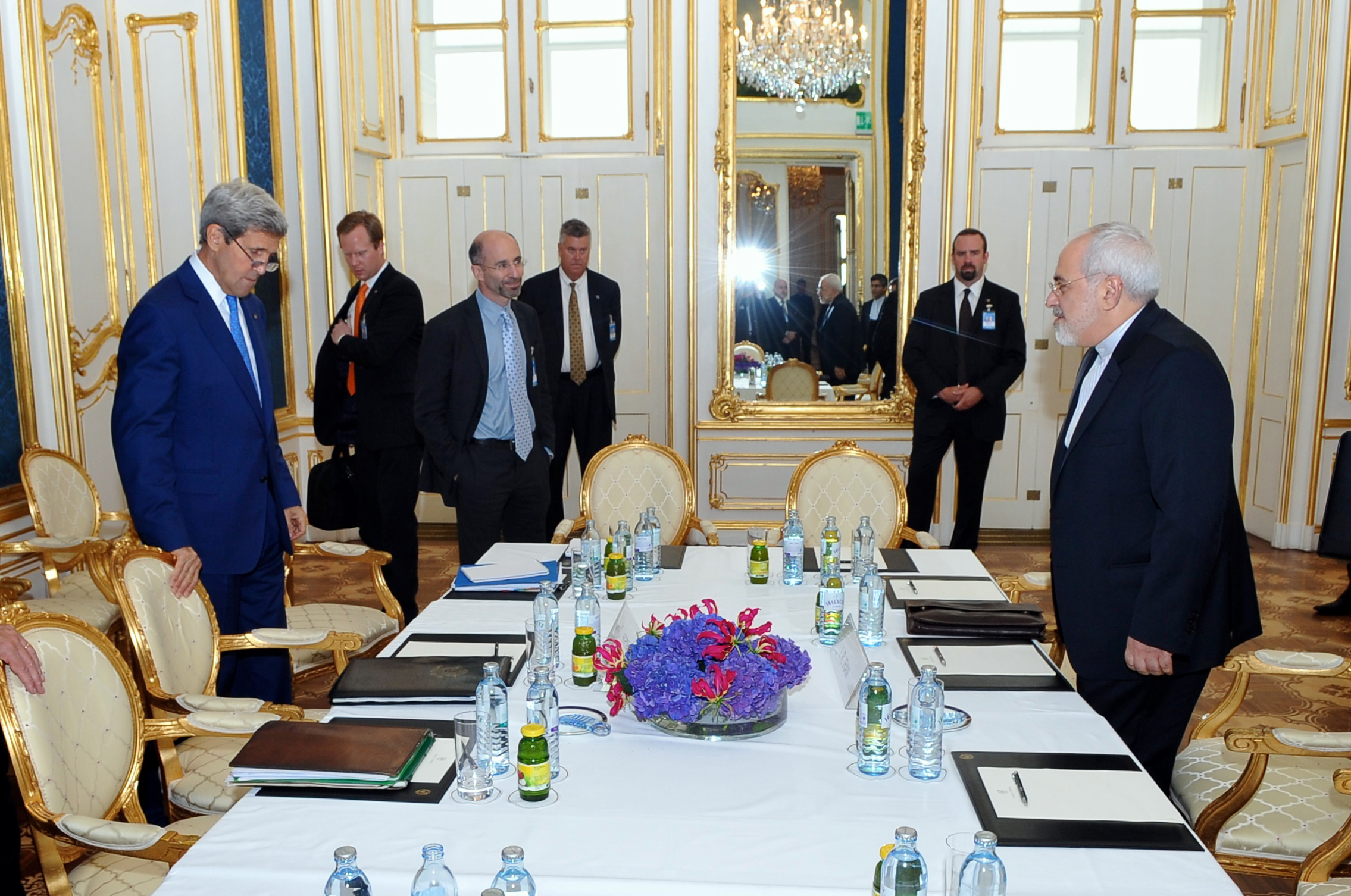 gunpoint. But negotiation requires compromise; and compromise, by definition, means no one gets exactly what they want.
Ultimately, here are the questions at hand: Can a deal based on this framework prevent Iran from obtaining a nuclear weapon? Will the U.S. and its allies be more secure because of it? The answer to both is yes.
While some difficult details still need to be worked out, nuclear experts and analysts have overwhelmingly praised the April 2 framework[2] as establishing a strong basis for reaching a final agreement. The fact is the case against the framework is very weak. Because opponents of a deal with Iran understand that they cannot sell a stance that risks another war in the Middle East, they have backed off total opposition and stated that what they want is a “better deal.” Insisting on this better deal, however, makes the perfect the enemy of the good, and would very likely scuttle negotiations — leaving the U.S. and its allies in a far worse position to address the problem.
Because the Iranian concessions were much stronger than previously rumored, opponents are trying to build opposition by selecting pieces out of context or suggesting dubious interpretations.
The American –Israel Public Affairs Committee (AIPAC) opposes the framework and backs a position articulated by Israeli Prime Minister Benjamin Netanyahu and other critics of diplomacy with Iran. They recently issued[3] an information sheet identifying seven key concerns about the April 2 framework.
Let’s break them down one by one.
Dismantlement: “Apart from the core at Arak, Iran will not dismantle its nuclear infrastructure.”
That’s true. What AIPAC fails to mention is what the agreement does include: Iran has agreed to convert its facility at Fordow so it can no longer be used to enrich uranium. Enrichment will only occur at one site, Natanz, and even there, Iran will only enrich uranium to 3.75% (90% is the standard for weapons-grade uranium). Iran also agrees not to build any new enrichment facilities for 15 years. And importantly, all of what remains will be open to inspection by the International Atomic Energy Agency (IAEA).
Centrifuges: “Iran will be allowed to operate over 6,000 centrifuges, and can continue research and development on more advanced centrifuge models.”
At Iran’s one enrichment facility, it will only use 5,060 old-model centrifuges. That is less than one-third of the number of centrifuges (some 19,000) they have today, many of which are newer and more efficient, and can enrich uranium much faster, than the ones Iran will now be using exclusively for the next ten years. Another 944 centrifuges will be used for research and development, not for enrichment, and for this they can use more up-to-date centrifuges. This represents an enormous reduction from the current situation. It also represents a huge walk back from Iranian Supreme Leader Ayatollah Ali Khamenei’s previous public demands[4] on Iran’s enrichment capacity.
Secret Enrichment Site: “Iran will not close its illicit underground facility at Fordow, and will be allowed to develop enrichment technology.”
True, Iran won’t close the Fordow facility. But it will convert it to a research center. The research performed there cannot be associated with uranium enrichment for the next 15 years, nor will Iran have any fissile material there for that same period. And, again, adherence isn’t based on trust, it’s based on verification. The facility will be closely monitored by the IAEA.
It’s also important to note that, in exchange for the face-saving measure of keeping the Fordow facility open, Iran actually agreed to reduce its uranium enrichment capacity even further – from 6000 to 5000 centrifuges.
Inspections: “It is unclear if inspectors will have access to all suspect nuclear sites.”
In fact, this is perhaps the clearest, most detailed part of the Framework Agreement. The Agreement specifically states that Iran agrees to grant access to all nuclear facilities. Inspectors will also have access to Iran’s supply chain for materials to ensure that Iran cannot easily violate the agreement. Inspectors will have access to uranium mines, and “…continuous surveillance at uranium mills, where Iran produces yellowcake, for 25 years.” Additionally:
- Continuous surveillance of Iran’s facilities for the manufacture of centrifuges will be in place for 20 years;
- Supply of certain nuclear-related materials will be monitored and approved on a case-by-case basis;
- Iran agreed to implement the Additional Protocol, which requires it to provide unprecedented access to its nuclear program, something the United States and its allies have been demanding for years;
- Iran also agreed to grant access to “suspicious sites,” should there be any suspicion that they are clandestinely producing any of the materials required for weapons.
There is nothing unclear here. This agreement does not give carte blanche to inspectors to go anywhere they want in Iran, any time they want. That is what some opponents of a negotiated deal with Iran have been demanding, but no country would ever agree to such a condition. The bottom line is that, according to the framework, inspectors will have unprecedented access to all of Iran’s nuclear sites as well as any other sites where there are substantive suspicions that violations of the agreement have taken place.
Possible Military Dimensions: “The proposed framework is ambiguous about how and when Iran will address its past weaponization efforts.”
Indeed, this is a crucial issue, and the framework only says that “Iran will implement an agreed set of measures to address the IAEA’s concerns.” Legitimate questions about Iran’s past weapons-related work exist based on its record of secrecy, and the international community has a right to expect that these questions will be satisfactorily addressed.
However, we must keep in mind that this is a difficult issue for Iran. The Iranians are well aware that they will have to detail at least some of their covert channels and activities in order to create sufficient confidence in the eventual deal. On the other hand, the Iranian Supreme Leader has repeatedly stated not only that Iran has never pursued a nuclear weapon, but that nuclear weapons are forbidden in Islam. The Iranian government must strike a balance between reversing their position and saving face.
Undoubtedly, the P5+1 and Iran are each aware of these issues for the other, and in fact, the very ambiguity on this point in the framework demonstrates that they understand the gravity of the matter. The fact that Iran agreed to address the IAEA’s concerns demonstrates that Iran understands the need for disclosure regarding its past activities. It also implies that the P5+1 recognize the difficulties Iran faces in doing so. That is a promising basis for the ongoing negotiations, where the modalities of Iranian disclosure can be worked out.
Fortunately, we don’t need to merely trust that the Possible Military Dimensions (PMD) of Iran’s nuclear program—past, present, and future – are being addressed. Even under the publicly revealed aspects of the framework, the international community will have unprecedented transparency at every stage of Iran’s nuclear supply and development chain, creating a multilayered system of tripwires that will sound the alarm should Iran try to sneak toward a nuclear weapon.
Sanctions: “It is uncertain how quickly sanctions would be lifted over time, or re-imposed if Iran violates an agreement.”
It is true that there is some ambiguity about how these mechanisms would work. However, remember that the current agreement is a framework, not a final deal. That’s why negotiations continue through the end of June. The framework makes it clear that U.S. and E.U. sanctions connected to the nuclear issue will be lifted once the IAEA verifies that “…Iran has taken all of its key nuclear-related steps.” Sanctions return if, after that, Iran fails to maintain compliance.
Prior UN Security Council resolutions will be replaced with a new one endorsing the agreement and creating the verification mechanisms and an adjudication process to address disputes over compliance. Again, there’s a reason it’s called a “framework.”
Duration: “When nuclear restrictions are lifted in 10-15 years, Iran could have the capacity to produce weapons-grade uranium for a bomb within days.”
What’s more likely is that Iran would need considerably more time to assemble the materials and reassemble the infrastructure necessary to do this. Moreover, as we have seen, Iran agreed to enhanced inspections for a much longer period of time, and even after that, it would still be a signatory to the Non-Proliferation Treaty and subject to the inspection requirements in that agreement (with inspectors having had over a decade of unprecedented access to every aspect of Iran’s nuclear infrastructure). It would be exceedingly difficult for Iran to rush to a bomb as soon as the agreement expired without anyone noticing. This kind of statement is intended to frighten people into opposing the deal. It is strictly true, but has little connection to reality.
In conclusion, a close examination of the arguments against the April 2 framework shows them to be, at best, threadbare. “The individuals who say that this deal provides a pathway for Iran to a bomb are being wholly disingenuous, in my view, if they know the facts and understand what is required for a program,” CIA Director John Brennan said[5]. “I certainly am pleasantly surprised that the Iranians have agreed to so much here.” Brennan’s view has been echoed[6] by other intelligence and military officials, including Israelis and Americans[7].
It is true that an agreement with Iran carries some risk. But moving on without a deal is riskier by far. It would mean no inspections, no restrictions on Iran’s actions, increasing tensions, and quite possibly, a series of escalations toward another Middle East war. The April 2 framework represents the best option for addressing this challenge, and for advancing the shared security of the U.S., its allies and partners in the region.
[1] Gordon, Michael R. and Sanger, David E. Iran Agrees to a Detailed Nuclear Outline, First Step Toward a Wider Deal, New York Times, April 2, 2015, Web April 14, 2015
[2] Toosi, Nahal and Nather, David, The Iran deal’s cheerleaders, Politico, April 6, 2015, Web April 14, 2015
[3] AIPAC, What’s the Deal? April 2015, Web April 14, 2015
[4] Dehghan, Saeed Kamali and Borger, Julian, Iran needs greater uranium enrichment capacity, says Ayatollah Ali Khamenei, The Guardian, July 8, 2014, Web April 14, 2015
[5] Malone, Scott, Critics of Iran nuclear deal ‘disingenuous,’ CIA’s Brennan says, Reuters, April 7, 2015 Web April 14, 2015
[6] Caspit, Ben, Former Israeli General Says Iran Deal Isn’t a Bad Agreement, US News and World Report, April 6, 2014, Web April 14, 2015
[7] Singh, Vikram, Katulis, Brian, deLeon, Rudy, Lang, Hardin, Korb, Lawrence J., Brom, Shlomo, and Sofer, Ken, Getting to a Final Agreement: Nuclear Negotiations with Iran and Congressional Action, Center for American Progress, April 13, 2014, Web April 14, 2014