Over the weekend new broke that the Trump Administration was closing the PLO mission in Washington, DC. To help people understand the laws that led up to this crisis, FMEP has compiled the relevant laws, below.
1. The 1987 Law that Started it All
In 1987, Congress passed legislation barring the PLO from operating in the United States (Sec. 1003 of PL 100-204; aka 22 USC 5202: Prohibitions regarding PLO). That section states:
It shall be unlawful, if the purpose be to further the interests of the Palestine Liberation Organization or any of its constituent groups, any successor to any of those, or any agents thereof, on or after the effective date of this chapter-
(1) to receive anything of value except informational material from the PLO or any of its constituent groups, any successor thereto, or any agents thereof;
(2) to expend funds from the PLO or any of its constituent groups, any successor thereto, or any agents thereof; or
(3) notwithstanding any provision of law to the contrary, to establish or maintain an office, headquarters, premises, or other facilities or establishments within the jurisdiction of the United States at the behest or direction of, or with funds provided by the Palestine Liberation Organization or any of its constituent groups, any successor to any of those, or any agents thereof.
When President Ronald Reagan signed PL 100-204 into law on Dec. 27, 1987, he issued a signing statement declaring Sec. 1003 unconstitutional. He wrote:
Section 1003 of the Act prohibits the establishment anywhere within the jurisdiction of the United States of an office “to further the interests of” the Palestine Liberation Organization. The effect of this provision is to prohibit diplomatic contact with the PLO. I have no intention of establishing diplomatic relations with the PLO. However, the right to decide the kind of foreign relations, if any, the United States will maintain is encompassed by the President’s authority under the Constitution, including the express grant of authority in Article II, Section 3, to receive ambassadors. I am signing the Act, therefore, only because I have no intention of establishing diplomatic relations with the PLO, as a consequence of which no actual constitutional conflict is created by this provision.
2. The Middle East Peace Facilitation Act (1993-1997)
After the signing of the Olso Accords, Congress chose not to repeal 1003 of PL 100-204 (or any other anti-PLO legislation). It instead passed legislation giving the president authority to temporarily suspend key anti-PLO laws. That legislation was called the Middle East Peace Facilitation Act, PL 103-125, signed into law Oct. 28, 1993. This law permitted the establishment of the PLO mission in Washington in 1994.
Congress let MEFPA expire in 1997.
3. The Era of the National Security Waiver (1997-2011)
In 1997, Congress replaced the broad suspension authority granted to the president in MEPFA with a waiver provision – specific to 1003 of PL 100-204 – quietly inserted into the FY98 Foreign Operations Appropriations Act (Sec. 539d of PL 105–118, signed into law on Nov. 26, 1997). This provision read:
(1) The President may waive the provisions of section 1003 of Public Law 100–204 if the President determines and certifies in writing to the Speaker of the House of Representatives and the President pro tempore of the Senate that it is important to the national security interests of the United States.
(2) PERIOD OF APPLICATION OF WAIVER.—Any waiver pursuant to paragraph (1) shall be effective for no more than a period of six months at a time and shall not apply beyond twelve months after enactment of this Act.
Congress included a similar waiver in annual Foreign Operations legislation every year from 1997-2011.
4. Conditioning the Waiver on Palestinian Actions at the UN
In 2011, the Palestinians were admitted as members in UNESCO. In response, in the FY12 Foreign Operations Appropriations Act (PL 112–74, signed into law on Dec. 23, 2011), Congress deleted the national security waiver of the 1987 law, and replaced it with a waiver conditioned on the president certifying that the Palestinians not being admitted to any additional UN agencies. According to the provision, if the president cannot make the certification, he must wait at least 90 days (during which it would be illegal for the mission to remain open), and then he can waive the 1987 ban if, and only if, he can certify that the Palestinians have entered into “direct and meaningful negotiation with Israel.”
The provision – Sec. 7086(b) of that bill – reads in full:
(1) The President may waive the provisions of section 1003 of Public Law 100–204 if the President determines and certifies in writing to the Speaker of the House of Representatives, the President pro tempore of the Senate, and the Committees on Appropriations that the Palestinians have not, after the date of enactment of this Act, obtained in the United Nations or any specialized agency thereof the same standing as member states or full membership as a state outside an agreement negotiated between Israel and the Palestinians.
(2) Not less than 90 days after the President is unable to make the certification pursuant to subsection (b)(1), the President may waive section 1003 of Public Law 100–204 if the President determines and certifies in writing to the Speaker of the House of Representatives, the President pro tempore of the Senate, and the Committees on Appropriations that the Palestinians have entered into direct and meaningful negotiation with Israel: Provided, That any waiver of the provisions of section 1003 of Public Law 100–204 under paragraph (1) of this subsection or under previous provisions of law must expire before the waiver under the preceding sentence may be exercised.
(3) Any waiver pursuant to this subsection shall be effective for no more than a period of 6 months at a time and shall not apply beyond 12 months after the enactment of this Act.
At the time it was being considered and passed, this new provision was highlighted as ” ********IMPORTANT************” and explained in detail, repeatedly, in my weekly Legislative Round-Up, including in the editions published July 29, 2011 and October 4, 2011.
5. Conditioning the Waiver on Palestinian Actions at the UN + on Palestinian Actions at the ICC
In 2015, the Palestinians joined the International Criminal Court (ICC), sparking consternation and concern in Israel and among supporters of Israel in Congress. In response, in the FY16 Consolidated Appropriations Bill (PL 114–113, signed into law Dec. 18, 2015) [which included the FY16 Foreign Operations Appropriations Act], Congress imposed an additional condition that the president must satisfy in order to waive the 1987 law, requiring that he certify that the Palestinians are not promoting, supporting, or endorsing action against Israel at the ICC. Like the previous UN-only version of the waiver language, according to the provision, if the president cannot make either certification (regarding the UN or the ICC), he must wait at least 90 days (during which it would be illegal for the mission to remain open), and then he can waive the 1987 ban if, and only if, he can certify that the Palestinians have entered into “direct and meaningful negotiation with Israel.”
The relevant provision, Sec. 7041(j)(2)(B), reads in full:
(i) The President may waive the provisions of section 1003 of the Foreign Relations Authorization Act, Fiscal Years 1988 and 1989 (Public Law 100–204) if the President determines and certifies in writing to the Speaker of the House of Representatives, the President pro tempore of the Senate, and the appropriate congressional committees that the Palestinians have not, after the date of enactment of this Act—
(I) obtained in the United Nations or any specialized agency thereof the same standing as member states or full membership as a state outside an agreement negotiated between Israel and the Palestinians; and
(II) taken any action with respect to the ICC that is intended to influence a determination by the ICC to initiate a judicially authorized investigation, or to actively support such an investigation, that subjects Israeli nationals to an investigation for alleged crimes against Palestinians.
(ii) Not less than 90 days after the President is unable to make the certification pursuant to clause (i) of this subparagraph, the President may waive section 1003 of Public Law 100–204 if the President determines and certifies in writing to the Speaker of the House of Representatives, the President pro tempore of the Senate, and the Committees on Appropriations that the Palestinians have entered into direct and meaningful negotiations with Israel: Provided, That any waiver of the provisions of section 1003 of Public Law 100–204 under clause (i) of this subparagraph or under previous provisions of law must expire before the waiver under the preceding sentence may be exercised.
(iii) Any waiver pursuant to this subparagraph shall be effective for no more than a period of 6 months at a time and shall not apply beyond 12 months after the enactment of this Act.
At the time it was being considered and passed, this new provision was highlighted as ” ********IMPORTANT************” and explained in detail, repeatedly, in my weekly Legislative Round-Up, including in the editions published June 5, 2015, July 17, 2015, Dec. 23, 2015, and Dec, 31, 2015.
On July 21, Omar el-Abed, a 19-year-old Palestinian from the West Bank village of Khobar, brutally murdered three Israeli civilians inside the settlement of Halamish. Three days later, Israel’s ambassador to the United Nations, Danny Danon, spoke about the attack in an address to the Security Council. In his remarks, Danon insinuated that money was a prime factor motivating el-Abed to attack: “The terrorist who murdered this family did so knowing that the PA [Palestinian Authority] will pay him thousands of dollars a month.”
Danon’s comment was another salvo in the ongoing—and exceptionally successful—campaign to stoke outrage against PA President Mahmoud Abbas and the Palestinian program providing financial support to families of those imprisoned or killed by Israel. The program has existed for decades and some of the funding in question may actually end up in the Israeli prison system, since it enables Palestinian prisoners to purchase goods in prison commissaries. Yet it only recently became a point of contention, with critics like Danon now arguing that these payments incentivize terror, nicknaming the program, “pay-to-slay.” Today, a chorus of voices on Capitol Hill, in the US media, and from Israel demands that the United States cut off assistance to the Palestinians, unless and until the program ends.
That is one side of the argument. The other side holds that even as terrorism is wholly unacceptable, the root cause of Palestinian violence is Israel’s now 50-year-long military occupation of the West Bank, East Jerusalem, and Gaza Strip, implemented through policies that are intrinsically violent, and that stoke popular misery, despair, and outrage. Such sentiments echo in the Facebook post el-Abed published immediately before committing his heinous crime: “I am young, I have not yet reached the age of 20, I have many dreams and aspirations. But what life is this, in which they murder our wives and our youth without any justification. They desecrate the Al-Aqsa mosque and we are asleep, it’s a disgrace that we sit idly by.”
It is a fact that Israeli military forces detain an extraordinary number of Palestinians, often for long periods without any due process. Many are convicted in military courts that have nearly a 100 percent conviction rate. According to Palestinian sources, Israel has arrested 40 percent of the male Palestinian population since 1967. This is in addition to Palestinians killed while attacking, or accused of attacking, Israeli targets.
Most Israelis sees these men as terrorists; most Palestinians view them as martyrs and political prisoners. This is the brutal, zero-sum ethos of national struggle—something that will change only after the conflict ends. In the meantime, given this rate of arrests, funding for families of those killed or imprisoned by Israel represents a critical social safety net. Removing it would amount to collective punishment, illegal under international law and viewed by most of the world as immoral.
Read the rest of the article at The Nation.
Alaa Tartir from Al-Shabaka has a new policy brief on how the Palestinian Authority’s security forces are subcontractors for Israel’s occupation of the West Bank:
Security collaboration between Israel and the PA has fulfilled the Oslo Accords’ objectives of institutionalizing security arrangements and launching a peace process that is tightly controlled by the security sector in order to enable Israel to fulfil its colonial ambitions while claiming to be pursuing peace. This process of “securitized peace” is manifested in a number of ways, including the PA security forces’ arrest of Palestinian suspects wanted by Israel (as in the recent case of Basil Al-‘Araj who was arrested and released by the PA only to be chased and eventually assassinated by the Israelis); the suppression of Palestinian protests against Israeli soldiers and/or settlers; intelligence sharing between the Israeli Defense Forces (IDF) and the PA security forces; a revolving door between Israeli and PA jails through which Palestinian activists cycle for the same offenses; and regular joint Israeli-Palestinian meetings, workshops, and trainings.
Not surprisingly, they aren’t very popular:
Multiple surveys over the years have shown that the majority of Palestinians in the West Bank and Gaza Strip (between 60% and 80%) oppose security coordination with Israel. And in a March 2017 Palestinian Center for Policy and Survey poll, two-thirds of respondents demanded Abbas’s resignation, with 73% expressing the belief that Abbas is not serious in his threat to suspend security coordination with Israel. In a 2010 Maan News Agency poll, 78% of respondents said they believe that the PA security forces are engaged in surveillance, monitoring activities, and intervening in people’s privacy. Finally, according to Visualizing Palestine, 67% of West Bank Palestinians said they feel that they are living in an undemocratic system that cracks down on freedoms in large part as a result of the security realm.
Read the rest of Al-Shabaka’s brief to see Alaa’s suggestions for how the Palestinian security forces could be reformed to be more responsive to the needs and concerns of ordinary Palestinians.
The passing of former Israeli president Shimon Peres, the last of Israel’s founding generation of statesmen, has prompted an avalanche of eulogies from the international community. Remembering him as a “dear friend,” a “great man of the world,” and Israel’s “biggest dreamer,” world leaders and dignitaries from 70 countries gathered in Jerusalem for his funeral on Friday, among them Palestinian President Mahmoud Abbas. It was the first time Abbas had stepped foot in Israel since 2010.
The domestic backlash to Abbas’s attendance reveals that Peres is remembered quite differently among many Palestinians, and highlights Abbas’s increasing isolation at home. In Palestine, Peres is reviled for his early support of Israeli settlements, his 1996 military campaign in southern Lebanon that resulted in the Qana massacre, and his failure to deliver on promises of peace made in the Oslo Agreements.
Within hours of the announcement that Abbas would be at the funeral, pressure against his visit to Israel began to build. Members of the Joint Arab List, a political party representing Palestinian citizens of Israel, had already declined to join the funeral, and refused even to express condolences. Joint List chair Ayman Odeh explained that despite Peres’s peace efforts in the 1990s, “we have fierce opposition to his security stances of the occupation and building settlements, bringing nuclear weapons to the Middle East, and unfortunately, as president, he chose to support [Israeli Prime Minister Benjamin] Netanyahu and his policies.” That Abbas was the only Arab head of state attending was another indication of his isolation. (Representatives from Jordan, Oman, Morocco, and Bahrain, as well as Egyptian Foreign Minister Samih Shoukry, were also present.)
According to a report from Palestinian daily Ma’an News, unnamed officials attending the ongoing annual meeting of the Fatah Revolutionary Council complained about the optics of the visit, claiming that it would undermine Fatah’s base of support and hand Islamist groups a public relations victory.
Palestinian social media also mobilized against Abbas, with the hashtag “Condolences for Peres’s death are treason” beginning to trend soon after the announcement of the visit. Rumors swirled that Israeli culture minister Miri Regev had attempted to snub the Palestinian President by denying him a first row seat at the funeral, until Peres’s family intervened. Users reacted with consternation as a screenshot of Abbas on television was claimed to show him shedding tears. “This won’t help his [political] position,” one commentator said:
محمود عباس رئيس فلسطين يبكي في وفاة شمعون بيريز رئيس اسرائيل السابق .. مشهد يصعب استيعابه pic.twitter.com/Feo9tjG6lI
— مسمار (@mesmmarr) September 30, 2016
Footage also showed a smiling Abbas shaking hands with Benjamin and Sara Netanyahu, and speaking with Zionist Union MK Tzipi Livni.
High-placed Fatah officials defended Abbas’s move, saying that it would send a message to the world that the Palestinian people were serious about peace. They did not mention if Israel had committed to any reciprocal steps. Netanyahu had not acknowledged Abbas’s presence in his remarks at the funeral.
The backlash against the visit expresses the despair many ordinary Palestinians feel with the status quo. More than twenty years after the signing of the Oslo Peace Accords, Israel’s occupation of the West Bank and the settlement enterprise continue apace, while Palestinian statehood seems more distant than ever. That frustration is often directed at Abbas, who is sometimes seen as an obstacle to change. His decision to attend Peres’s funeral seems unlikely to alter that perception.
Philip Sweigart is program director at the Foundation for Middle East Peace. He holds an M.A. in International Affairs from American University’s School of International Service, and received a B.A. in Foreign Affairs and Middle East Studies from the University of Virginia, where he wrote his thesis on the role of ethno-sectarian identity and class differences in the 2011 Arab uprisings.
The United Nations Human Rights Council’s (UNHRC) report on last summer’s fighting between Israel and Hamas came out on June 15. Before the ink on it was even dry, the Israeli government was condemning it as biased, and accusing the UN of trying to prevent Israel from defending itself.
The allegations, both against Israel and by Israel against the report, are very familiar and very serious. We need to consider soberly the points raised by the UNHRC report as well as the rebuttals Israel has made.
Is there bias regarding Israel at the United Nations Human Rights Council?
It would be wholly disingenuous of anyone to deny that Israel has a legitimate gripe about its treatment at the UNHRC. The Council is, as one would expect, a highly politicized body. The issue of human rights is particularly easy to politicize; any country can be called out for human rights violations. Depending on the point of view of the accuser, it might be the United States, Saudi Arabia, Cuba, Venezuela, Kenya, Russia, China, Bolivia, or the United Arab Emirates that seem undeserving of the seats they currently hold on the Council.
That being said, Israel is the only country that “merits” a permanent spot on the UNHRC’s agenda and Israel has been condemned there far more often than any other single country. There is no calculus that can justify singling Israel out in such a manner. Worse, this singling out of Israel undermines the Council’s legitimacy when it tries to exercise its mandate in Israel, the West Bank and Gaza.
Some argue, with good reason, that this type of bias against Israel is a sort of “balance” to the near-immunity Israel gets from the Security Council thanks to the United States’ repeated use of its veto power in that body. It is certainly true that both the use and threat of the US veto has prevented dozens of Security Council resolutions. But rather than balance things for Israel, this only exacerbates the problem.
What Israel needs, and what most Israelis want, is for Israel to be treated like any other country, and particularly like other Western democracies. The occupation is the major obstacle to this, of course, but Israel is done no favors by this tit for tat game at the UN. The HRC should judge and treat Israel no differently from any other country. It should remove Israel from unique status in the Council’s agenda. By the same token, Israel must be held accountable for its actions, especially considering the fact that it has held millions of people without basic rights and freedoms for nearly half a century.
The United States says the process for selecting the investigative committee was flawed. True?
The Council appointed the investigators. The one real expert on International Humanitarian Law (IHL) was the original head of the committee, William Schabas. He was a controversial figure and, while the issue over which he was forced to resign (he had done some minor consulting work for the Palestine Liberation Organization for which he was paid a small fee) was very thin, he had stated two years earlier that he believed that Israeli Prime Minister Benjamin Netanyahu should be “in the dock of an international court.”
In truth, Schabas had also expressed concern about Israel’s survival and very likely could have investigated the Gaza war impartially. However, it should have been obvious from the beginning that Schabas was vulnerable and would provide an easy target for the United States and Israel to attack the commission’s work. The remaining commission members, while fine jurists, were not specifically IHL experts. While the report adheres religiously to IHL and was as well-documented as was possible, these realities left the report vulnerable to attacks on its credibility.
So was the report credible?
The report is not flawless; it never could be, given the fact that neither Israel nor Hamas cooperated with the investigation. The report, for example, places blame on Israeli commanders who were forbidden by their government to testify as to what information they did or did not have regarding conditions on the ground in Gaza. The conclusions, based on the information the investigators were granted, were strong, but the absence of the testimonies of Israeli commanders obviously compromises the conclusions.
However, given these limitations, the report has a great deal of credibility. Conclusions were supported by the evidence, and despite the reticence of Israel and Hamas, the investigators had enough evidence to reach credible conclusions. Accusations by Israel of bias are based on the history of the UNHRC or other factors, but not on the actual contents of the report. When one reads the full report, it is impossible to conclude that there is bias present. Hamas’ crimes are treated with all the severity they deserve. The Palestinian Authority, which was not a direct antagonist in the fighting and which was the only body to cooperate with the investigation is also taken to task for having “consistently failed to prosecute” people under its jurisdiction who have committed war crimes.
The report does not state that war crimes definitely occurred, but it lays out evidence of them having been committed by both Israel and Palestinian armed groups, including Hamas. Israel’s complaint that since those are designated terrorist groups they should not be judged by the same standard as Israel is simply not consistent with the law. Under IHL, combatants, whether state actors or militant groups, are expected to adhere to the same rules. When Hamas fires rockets they cannot aim with any precision, they fail to meet the standard of IHL, just as Israel does when it uses highly imprecise artillery. Part of Israel’s discomfort at this reality surely is that it, unlike any Palestinian group, has a more than ample supply of much more precise weapons. The report also raises serious and disturbing questions about why the level of civilian casualties and damage in Gaza was so high when Israel did use weapons that are more precise.
The report discomfits Israeli leaders even more by suggesting that there are serious questions of policy, including the policy of the civilian government in the conduct of the war raised by the Gaza war. However, Israel does itself no favors by trying to bury the report rather than confront these questions. If the conduct of this war was defensible, Israel is more than capable of working with its allies to establish that fact in a transparent and credible investigation. That Israel chooses not to do so and that the United States helps it avoid such important questions only diminishes Israel’s standing in the world, and continues the erosion of the values that most Israelis hold dear.
What should happen now?
The United States has blocked any possibility of the Security Council acting on the report. That is a terrible mistake. The Council need not accept the report whole cloth, but there are other options.
Israel, as a sovereign state, has a right and responsibility to protect its citizens. Israeli and Palestinians civilians, no matter the grievances that exist, are entitled to the protection of IHL equally. As the report reflects, Hamas and other Palestinian groups stated their intention to target Israeli civilians, and the weapons they used could not be controlled to offer civilians any protection. In the event, Israeli civilians were clearly under fire.
In Gaza, the civilian impact was massive and tragic. The report raises many questions about Israeli rules of engagement and strongly suggests that these fall well short of IHL requirements. However, while acknowledging that Gaza is very small and densely populated, the report also strongly suggests that there were more than a few incidents where Hamas used civilian areas to launch attacks at Israel as a tactic, not out of sheer necessity.
Military forces fighting guerilla groups in urban areas are increasingly characterizing warfare, not only in Israel and Gaza but also around the world. The questions raised in the Gaza war, therefore, are not only important for accountability there, but to begin to ask the question of how countries should defend their citizens against such tactics. Can there be a clearer responsibility for the Security Council than to ask and answer that question?
Dealing with that question could be a small bit of good that comes out of the horrific suffering in Gaza that is still going on today. The preponderance of reports from NGOs in Israel and internationally as well as this latest piece, strongly suggest that Israel and Hamas both committed war crimes. Simply moving on and burying this report will only ensure it will happen again. An investigation that involves Israel, the United States and the international community can be seen as credible, and can begin to address these questions.
Israel, and any other country involved in asymmetrical warfare needs a clearer set of rules for what it can do as well as for what it cannot. IHL was written at a time where regular militaries fighting each other defined most warfare. That is no longer the case. Consideration of modern conflicts as well as monitoring and enforcement mechanisms is a crucial next step. Gaza is an opportunity to take that step. We should not let it be buried.
With all eyes on the framework agreement for a nuclear deal with Iran, and on the looming Capitol Hill battle to defend it, it is easy to forget that Israel is still in the process of forming its new government. With much of the drama playing out offstage, many observers are sitting back and waiting for the political wrangling over ministries and Knesset committee chairs to be over.
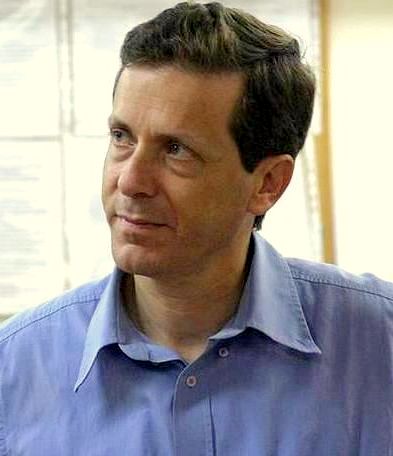
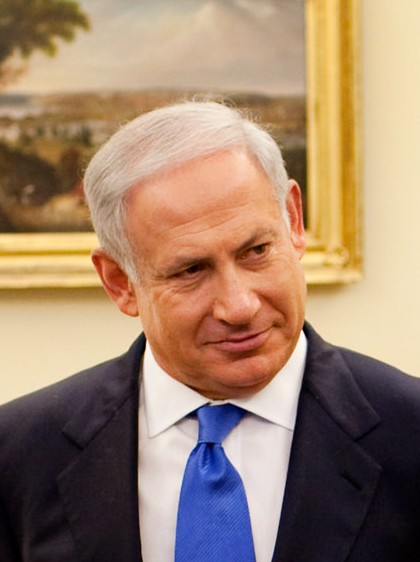 But some are making the case that there is more brewing than the doling out of prestige appointments to the leaders of the parties expected to be part of the fourth Benjamin Netanyahu government. A unity government, at one time thoroughly rejected by both Netanyahu and Zionist Union leader Isaac Herzog, has emerged again as at least a theoretical possibility.
The notion of a unity government seemed to have dissipated after both Netanyahu and Herzog initially rejected the idea, but of course, politicians say many things and decide better of it later, as circumstances change and political winds shift. Such changes are common in forming Israeli coalitions, something the selected candidate might have as much as six weeks to do after the announcement of election results.
Two factors have contributed to the revival of the possibility of a government of national unity. One is the central role the new Kulanu party will play in any new government. The party is center-right, and that makes it the most moderate of the parties that are projected by most to constitute the next coalition. Kulanu’s leader, Moshe Kahlon, is primarily interested in social welfare issues and wishes to address growing economic concerns like rising housing prices, increasing gaps between rich and poor in Israel and declining social services. This makes Kulanu, which would also prefer not to be the party farthest to the “left” in the government, naturally supportive of bringing the Labor Party into the government (Labor makes up the overwhelming bulk of the Zionist Union coalition).
 Kulanu controls ten seats in the 120-seat Knesset. Netanyahu’s 67-seat right wing majority is therefore vulnerable to Kulanu. Kahlon has clearly stated that he prefers a national unity government.
By itself, Kulanu does not explain why rumors are starting to circulate in Israel that Netanyahu is trying to woo Herzog into the government. However, combined with the new framework agreement between the P5+1 and Iran on the nuclear issue, we have a very clear motivation for Netanyahu to bring Herzog into the government.
Gary Rosenblatt of the Jewish Week lays out the reasoning well: “The prime minister is well aware that if he forms [a narrow, right-wing] coalition, the crisis in relations with the White House will only deepen. And now that the U.S. and other Western powers have signed a preliminary deal with Iran, it is all the more reason for him to be able to work with Obama in the hopes of toughening up the final agreement in the next three months — and, if all else fails, getting tacit permission from the White House to strike out at Iran if it violates the deal…In a unity government, Herzog most likely would serve as foreign minister, presenting a friendly face to the world in his international role.”
The very slight possibility that some parties from the right would not join a unity government is not a threat, as the Zionist Union brings 24 seats with it, so with them and Kulanu alone, Netanyahu would have 64 seats. It all makes sense, so why wouldn’t Netanyahu do it?
The answer is that he would, if it is a real option. True, a unity government would mean there would be significant opposition from within his own coalition to settlement policy, once again. Other policies would not be as smooth as they would under an all right wing government as well. But in the post-election cool-down, it is reasonable to think that Netanyahu has assessed the damage his scorched earth campaign for re-election caused Israel and decided he must try to repair some of it.
On the surface, the notion of a unity government is good for Israel. It should allow Israel to mend fences with the Obama Administration and the Democrats and it should forestall European pressure at the United Nations and other international fora. The reality is, however, that if Isaac Herzog does agree to the unity government, it will be a disaster for his party and have deeply negative consequences in the end for Israel, the Palestinians and American policy in the region.
A Bad Idea for Labor
The Labor Party once dominated Israeli politics, but has long since fallen off its perch. For a while, Labor was able to win support by being the party of peace, representing the Israel the world could work with and admire. But in recent years, it all too often played the role of fig leaf for center-right or right-wing leadership in power in Israel. With the failure of the Oslo Accords, which were distinctly identified with Labor, it lost its credibility as a “pragmatic peace” party.
This last election brought Labor back to some semblance of relevance, but if it once again plays the role of fig leaf for expanding settlements and continued intransigence from Netanyahu, it will lose a lot of it. The campaign itself demonstrated that Labor is still dogged by many of its old problems. A lot of the increase in support for Labor was the result of voters who were disillusioned with other center-left parties, but did not want to support Netanyahu.
Labor has much to do if it hopes to make further gains in the Israeli electorate. It will move in the opposite direction if it is again perceived as a fig leaf for Netanyahu, and especially so because the best thing Labor currently has going for it is that it is the vehicle to vote against Bibi.
A Bad Idea for Israel
National unity governments in Israel are notoriously clunky machines. The junior partner is always endeavoring to show it is moderating the policies of the senior, and the party of the Prime Minister is trying to get the most out of the other side while giving it as little as possible in terms of both policy and positioning for the next election.
On the international stage, a unity government will, at best, keep Israel from facing increased pressure to end its occupation of the Palestinians. Netanyahu will still need to appease his own party and will be very fearful of giving his rival, Naftali Bennett, the means to increase his support and position himself to challenge Likud from the right. Herzog will be under constant pressure to modify Netanyahu’s positions, but won’t have enough leverage to do much.
It’s a recipe for dysfunction, both domestically and internationally for Israel.
Dangerous for the Palestinians
The one thing a unity government might be able to do is to restart bilateral negotiations with the Palestinian Authority. Under current conditions, such talks are likely to be harmful, not helpful, for Palestinian aspirations.
Herzog will do nothing to convince Netanyahu to change his position on the Palestinian transitional government. Hamas remains political anathema in Israel. Nor is he likely to mollify the current Israeli policy view of the issue of Jerusalem. All he will be able to do is restore the status quo ante, which means talks that have no hope of success.
But the very existence of such talks will present serious problems for the Palestinians. At the very start, Palestinian President Mahmoud Abbas will likely be under pressure from the United States and Europe to re-engage. But without some assurances that things would be different in this round, he will face intense domestic pressure to stay away from that process. If he refuses, it will give Netanyahu’s allies in the United States plenty of fodder, and if he agrees to talks that produce nothing but more settlements, he will give his domestic opposition ammunition.
Herzog is a moderate, and if he were Prime Minister, it is not impossible that the right combination of pressures and incentives could get him to pursue an end to the occupation. But in a Likud-led government, he cannot be more than a fig leaf, putting a kinder face on Netanyahu’s intransigence. Without him, the Palestinians have more support, at least in Europe, for pursuing their case in international fora, and the potential for more pressure on a distinctly rejectionist, right wing Israeli government. With him, they have the worst of both worlds: less pressure on an Israel with a more reasonable image but whose policies are little different from those that have caused so much international frustration of late.
A Bad Road for US Policy
Although the two-state solution and bilateral talks to get there are still American policy, the current conditions have to change if such a goal is ever to be attained. Some way of unifying the West Bank and Gaza again, some sense of incentive for Israel to make difficult decisions, a clear vision of how to resolve difficult issues like Palestinian refugees and Jerusalem needs to be presented, etc. Simply forcing talks again will work no better today than it did in 2013, John Kerry’s last attempt which ended in disaster.
Herzog does not help change the current conditions. Instead, his presence in the government makes it easier for Netanyahu to accede to meaningless negotiations. No matter how cynically one may view American policy on this, more of the same is clearly not preferable. It is just turning up the heat on the pressure cooker.
On Iran, Herzog’s presence is even more problematic. He would be the one doing the outreach to the United States and Europe, a much less abrasive voice than Netanyahu’s. But his views on Iran are fairly close to Bibi’s. He may disagree with Netanyahu’s approach and belligerent attitude; he certainly disagrees with Bibi having played partisan politics in America on this issue. But substantively, he shares Netanyahu’s concerns about any nuclear agreement with Iran. His objections will not only be presented more effectively and diplomatically than Bibi’s, they will have the added weight of coming from “the other side” of Israeli politics, demonstrating that the country is united on this point and strengthening Republican arguments.
In the end, a unity government remains the far less likely outcome of the Israeli coalition talks. While a far-right coalition, the much more likely outcome, will increase Israel’s isolation in the short term, the possibility that Israel will end up owing more accountability to the world for its policies is good for its long term interests, however counter-intuitive that might seem. As ugly as the next few years might be, they will be similarly better for Palestinian and American interests as well than a kinder, gentler face on the same policies would be.
When a federal court jury in New York reached a verdict last week on a lawsuit brought by American victims of terror attacks during the Second Intifada, holding that the Palestinian Authority could be held responsible, reactions were as quick as they were predictable.
The case involved ten families whose family members had been killed or severely injured by terrorist attacks during the Second Intifada. The Palestinian Authority was accused of indirect responsibility for these attacks. The decisive issue for the jury in the case seems to have been the fact that the PA continues to pay salaries to the families of the jailed terrorists who carried them out.
There is little doubt that the trial raises troubling issues. The first is the use of violence against civilians, which we unequivocally condemn. Another is how to address the very real suffering of the victims of terrorism and armed conflict, whether they be American, Israeli or Palestinian. But we must also consider how to do this in a practical manner that resists the use of victims’ suffering for political gains and contributes, rather than detracts from the prospects of resolving the conflict. In this regard, the verdict must be seen as a step in the wrong direction.
Benjamin Netanyahu added the verdict to his ongoing campaign to demonize Mahmoud Abbas and the Palestinian Authority. Supporters of a two-state solution fretted over the impact such a massive financial blow could have to the already feeble Palestinian economy. Palestinian solidarity activists saw one more example of how the American deck is stacked against the Palestinians.
The Palestinian Authority (PA) and the Palestine Liberation Organization (PLO) are sure to appeal this verdict, so it will likely be years before it is finally resolved. That, however, should not stop us from considering the difficult questions this case raises.
The most emotional of these questions regards the real human cost of ongoing conflict and how we, as a society both within the United States and in the larger global community address this. Those of us who believe that this verdict is unhelpful to the cause of peacemaking need to provide those families with a very good reason for why we would question these efforts at hitting back at those they deem responsible for their suffering.
Those families need to know that we are not ignoring their pain; on the contrary, we are acting in response to it, and working to ensure that it never happens to anyone else. This part of the equation must have nothing to do with which side the victims are on. Whatever differences and imbalances there may be between Israelis and Palestinians, the suffering of those who have lost loved ones, or have been traumatized or permanently injured by the violence is the same.
We are also presented here with an opportunity, however, to address one of the more vexing, if subtle, issues in this conflict, and that is the very fundamental power differences between Israelis and Palestinians. Those differences are historic and they are dictated on a daily basis by the gulf between occupier and occupied. But they play out in ways that can obscure the road to resolution.
The decisive point in this case seems to have been the fact that the plaintiffs were able to demonstrate that many of the perpetrators of the violence that killed and injured Americans in Israel were employees of the Palestinian Authority. Those perpetrators who are in Israeli jails often remained employees of the PA. Families of terrorists who died in the attacks continue to be compensated by the PA.
To the jury, and it’s probably safe to say, to most Americans, this is compelling evidence of PA complicity. Most Israelis would no doubt agree. An editorial in The Forward, which called the verdict “…a serious challenge to anyone…who still stubbornly believes that the current Palestinian leadership is capable of implementing a two-state solution,” saw this point as damning and suggested that the practice of paying families of terrorists must stop.
“What a powerful gesture it would be if Abbas stopped these payments,” read the Forward’s editorial. “It would remove one more piece of ammunition from the hands of Israeli leadership uninterested in solving the conflict. It would honor the victims of terror and acknowledge the rule of law. And — here we are probably being unduly optimistic — it would be a bold step to restore trust and prove, again, that this Palestinian leadership is willing to break from its violent past.”
Those points are all quite fair. And yet, the evidence of Abbas’ actions for over a decade overwhelmingly shows him to be a leader who eschews violence in favor of diplomacy and is willing to go farther than any Palestinian leader we know of to accommodate Israel’s security concerns and reach a two-state solution. Why, then, does he not stop those payments?
The answer lies in the day-to-day realities of Palestinian life, and in the harsh realities of occupation and the bitter conflict that has ebbed and flowed, but never ceased for so many decades.
At the time of the crimes in question, the intifada was raging and Israeli forces had responded quite harshly in the West Bank. The people, Israelis and Palestinians, across the political spectrum felt they were at war, under attack and they wanted the “bad guys” from the other side to stop endangering them and their children.
Israelis, quite correctly, feel that the brutal attacks on civilians in those years cannot be justified by Palestinians’ experiences under the occupation. Indeed, they cannot. International law does give an occupied people the right to resist their occupiers, but that right does not extend to attacking civilians in the occupying power’s territory. Such an act is nothing less than murder.
Palestinians, however, look at the years of the intifada quite differently. They see a massive Israeli incursion into the West Bank. According to the Israeli human rights group, B’Tselem, the intifada saw some 2,200 Palestinians killed who were not taking part in hostilities, as opposed to 239 such Israelis. They wonder why, when the Palestinian figure is nearly ten times bigger than the Israeli one, it is the Palestinians alone who are now being held to account.
Indeed, this is a question we should all ask.
For Palestinians, many of those engaged in violence are often the sole breadwinners of their families or at least a major source of income. For many Palestinians, however wrong we might consider it to be, these militants are seen as fighting for the independence of Palestine, for an end to the daily abuses of occupation, and ultimately, for the very lives of the people of Palestine.
If Abbas were to simply abandon those families, poverty would increase across the West Bank and so would popular opposition to the Palestinian President and his government. Even Palestinians who oppose such acts of violence, and there are a great many, would not advocate abandoning the women, elders and children who depend on the fighting-age men to the perils of increased poverty.
Cutting off these payments would be overwhelmingly unpopular among Palestinians, and that opposition is likely to undo many of the gains the Forward envisions. While it’s fair to ask what more the Palestinians can do, we should also ask what we in the United States can do, and what we might recommend to our ally, Israel, which, after all, remains the sovereign power in the territory.
The Palestinian leadership in the PA and the PLO has come a long way in their attempts to find common ground with Israel and end the occupation under which they’ve lived for almost fifty years. No one seriously believes that they were the ones leading the fight in the second intifada, nor was that the verdict reached in Federal Court this week.
Penalizing the PA because it sustains the families of convicted terrorists implies that the threat of economic ruin will dissuade terrorists from acting. Does anyone really believe that to be true? Even the plaintiffs’ case did not make the claim that the terrorists were acting under the PA’s direction, but with its tacit support, demonstrated through these payments. Militant groups are not seeking Abbas’ approval for their actions. On the contrary, Abbas has endured enormous political criticism over his security cooperation with Israel, for many years now, as they work to prevent such attacks. Both American and Israeli officials have repeatedly praised the PA’s efforts in this regard. Indeed, last year the head of Israel’s Shin Bet went so far as to publicly contradict Netanyahu’s effort to blame Abbas for rising violence in Jerusalem.
No amount of money or vengeance is going to erase a victim’s trauma, replace a lost limb, or, certainly, bring back a loved one killed by terrorism. It’s hard to see how a US civil court can play a constructive role here. Only a more forceful US, European and international policy, which presses for an end to violence on all sides and is willing to push both the parties into a reasonable agreement can do that. This is the only course that respects the blood and pain of all those who have suffered, and continue to suffer, in this conflict.
The idea that the two-state solution to the Israeli-Palestinian conflict is dead has been repeated so many times in the
 past several years that it has taken on the droning sound of a mantra. Yet at the same time, we continue to hear pleas like the one that Palestinian Ambassador to the United Nations, Riyad Mansour made as the Security Council was about to reject the Palestinian resolution calling for an end to Israel’s occupation: “Those eager to save the two-state solution must act and cannot continue to make excuses for Israel and to permit, and thus be complicit in, its immoral and illegal behavior.”
So which is it? Must we abandon the two-state solution and think of other formulations or do we desperately need to revitalize and resuscitate the process we’ve been working on since 1993? Perhaps there is a better answer: a completely different approach to the two-state solution. (more…)
On December 31, Palestinian President Mahmoud Abbas closed out a year of stinging defeats by signing on to 18
 international accords. Included among these was the Rome Statute, the treaty that established the International Criminal Court (ICC). The reaction in Jerusalem and Washington was apoplectic.
The United States rebuked Abbas, and Israel immediately vowed harsh reprisals. Shortly thereafter, Israeli Prime Minister Benjamin Netanyahu announced that although Israel would not increase settlement growth—a routine method of punishing the Palestinians—it would withhold the tax and tariff revenues it collects for the Palestinians. The Obama administration also announced that it was reviewing the annual U.S. aid package to the Palestinian Authority. Read the rest of this article at LobeLog.

Palestinian representative to the UN, Riyad Mansour
The Palestinian Authority (PA) has now moved a step closer to making good on its threat to go to the International Criminal Court (ICC) and bring charges against Israel. There is little doubt that this was a move Palestinian President Mahmoud Abbas tried desperately to avoid. In the end, he was forced to do it by a combination of U.S.-Israeli rejectionism, Palestinian desperation to do something to try to end Israel’s occupation, and his own many missteps.
Abbas signed on to 18 international agreements after the quixotic attempt to pass a resolution at the United Nations Security Council (UNSC) predictably failed. Among them was the 1998 Rome Statute, which established the ICC and took formal effect in 2002. This is the step that the U.S. and Israel have warned Abbas against most strongly. Among all the “unilateral steps” the Palestinians could take (which, one should note, is no more “unilateral” than any number of actions taken by Israel on a routine basis), this is the one Israel worries about most. Read more at LobeLog