On the 50th anniversary of the 1967 Six Day War the Anti-Defamation League (ADL) BICOM and Fathom Journal compiled a compendium of contributions from prominent thinkers, activists, security professionals, politicians, and artists to discuss and debate the implications of the 50th anniversary of the War, it’s legacy for Israel and Zionism and prospects for peace in the region.
FMEP President Lara Friedman was 1 of the 50 voices who participated in the conversation. You can read Lara’s piece below, the 49 other contributions are available online: https://www.50voices50years.com/50-voices
by Lara Friedman
In 1968, Israeli philosopher Yeshayahu Leibowitz warned what the legacy of the 1967 War would be for Israel, if it held on to the newly-occupied territories:
“A state ruling over a hostile population of 1.5 to 2 million foreigners would necessarily become a secret-police state, with all that this implies for education, free speech and democratic institutions. The corruption characteristic of every colonial regime would also prevail in the State of Israel…the Israel Defense Forces, which has been until now a people’s army, would, as a result of being transformed into an army of occupation, degenerate, and its commanders, who will have become military governors, resemble their colleagues in other nations.”
Fifty years later, this legacy is on stark display. The post-1967 fantasy that Israel can simultaneously exist as a liberal democracy and as a state ruling over millions of disenfranchised Palestinians is collapsing under the weight of its own contradictions.
The collapse of this fantasy is evident in “united” Jerusalem, which is more divided and undemocratic than at any time since 1967. It is on view in policies in the West Bank that Israel no longer bothers to pretend are temporary, like the two legal regimes it has for 50 years maintained in this single territory: one for Israelis, one for Palestinians, separate and unequal. Earlier this year, Israeli legislation removed even the veneer of respect for this occupation-version of rule of law, in order to launder settler law-breaking.
Within Israel’s recognized borders, an illiberal wave threatens Israeli society and the foundations of Israeli democracy. The most right-wing government and Knesset in history today govern Israel, and have declared war on Israeli civil society. Working hand-in-hand with reactionaries, they are using legislation and intimidation to try to silence those who challenge the pro-occupation, pro-settlements agenda. Peace and human rights activists live under threat; the courts and even military leaders are assailed for any perceived failure to defend the pro-occupation line. Free speech – on campuses, in the media, the arts, and the public square – is under assault.
Internationally, the Israeli government is demanding that the world cease talking about “occupation” and accept a new definition of “Israel,” updated to mean, “Israel-plus-settlements.” Carrying this logic to its most cynical conclusion, it brands opposition to occupation and settlements as “anti-Israel” or even anti-Semitic, and works to enlist other countries in its effort to quash free speech and activism critical of its policies. In doing so, Israel is on a collision course not only with the governing body of world soccer, but with its closest allies, like Germany; Israel’s leaders are also risking relations with Jews in the Diaspora, and especially the United States, as, for the sake of settlements, they align themselves with illiberal forces in other countries.
Israel has realized many achievements in the past fifty years, but all of them are overshadowed by five decades of policies that have allowed those who prioritize keeping the land occupied in 1967 over all else – including over peace, security, democracy – to determine Israel’s future. This is the disastrous legacy of the 1967 War.
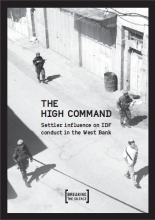 Settler involvement in operational activities
- Failure to enforce the law on settlers harming Palestinians or their property
- Settler violence against IDF soldiers
- IDF soldiers guarding settlers’ events and recreational activities
- Proximity and close personal ties between settlers and soldiers
- Integrating settlers and their political ideologies into IDF educational activities
Speaking at a national security conference in Tel Aviv last month, Israeli opposition leader Isaac Herzog announced a new plan to “separate” from the Palestinians. Declaring a two-state solution unachievable in the foreseeable future, Herzog said that Israel should take a set of unilateral steps in the occupied West Bank and Jerusalem while still keeping the two-state option open for the future. Those steps include limiting settlement growth to the so-called “blocs,” expanding areas of Palestinian Authority political and economic control (while still retaining full Israeli security control), completing the security fence, and separating some Palestinian neighborhoods from Jerusalem.
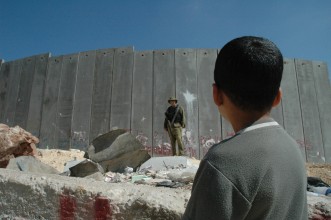
In an analysis (which I encourage you to read) of Herzog’s plan as outlined in the speech, my colleague Mitchell Plitnick observed that it “seems more tailored for domestic political gains than for actually resolving the vexing problems Israel faces.” Mitchell concluded that while Herzog’s plan “has some points that might be worked with, it is not, on balance, sound policy. It has little chance of achieving the quiet Herzog envisions; on the contrary, it is likely to further enflame the conflict.”
Herzog’s announcement caught a lot of people by surprise, including members of his own party. Hilik Bar, the Labor Party’s secretary general and head of the Knesset’s Two-State Caucus, was overheard slamming Herzog’s shift as a lame political maneuver. “If he [Herzog] is going to be a pathetic copy of [Prime Minister Benjamin] Netanyahu, the people will run from him,” Bar said.
Nevertheless, days later Herzog successfully managed to get Labor to endorse the plan, including Bar, who assented out of a stated interest in party unity. Shelly Yachimovich, Herzog’s predecessor and main rival for Labor leadership, pointedly refused to speak at the Labor gathering, and has stated her opposition to the plan. Yariv Oppenheimer, the head of Peace Now, also criticized the plan. “If we want mandates, we need to differentiate ourselves from the Likud,” he said. “Whoever copies Netanyahu will be irrelevant.”
My friend Michael Koplow, policy director of Israel Policy Forum, wrote of the plan that, while it has flaws, it’s better than nothing. “One can take the Netanyahu approach, which is to sit on one’s hands and do nothing, or one can try to advance an alternative that is highly suboptimal but that beats the status quo,” Koplow wrote. “I would rather see the latter option be tried rather than continuing to sacrifice the good on the altar of the perfect.”
I’m a big admirer of Michael’s work, but I think there are some problems with this. It’s really not the case that Netanyahu is “sitting on his hands and doing nothing.” As multiple U.S. administration officials have warned over the past few months, Netanyahu’s government has been doing a lot of things to shape the environment in the West Bank – none of them good. The occupation’s system of radical inequality has become even more entrenched, settlements continue to grow at a rapid clip, Palestinian lands continue to be expropriated and homes demolished, and the Palestinian Authority continues to be politically undermined and weakened to a point just short of collapse. This isn’t the absence of a plan from Netanyahu. This is the plan.
Koplow wrote that “Herzog’s measure can theoretically be a good initial step if it is done right,” and identifies a set of questions need to be answered: How are the settlement blocs defined? What steps will be taken to facilitate Palestinian economic growth? What exactly will this separation of Palestinian neighborhoods from Jerusalem look like? These are, of course, hugely important questions. Each of them is potentially politically explosive, for both Israelis and Palestinians. The fact that Herzog does not even address them affirms Plitnick’s (and Bar’s) argument that this is simply a political maneuver and not a serious policy alternative.
The problem is that even political maneuvers have consequences. The effect here is to remove any political pressure on Netanyahu by essentially affirming his diagnosis of the situation (and unfortunately adopting his racist language, which is particularly disappointing from a self-identified progressive like Herzog), and to reward the settlement movement for decades of law breaking, and incentivize even more, by legitimizing the blocs. Meanwhile, the plan offers nothing to arrest the decline of the Palestinian Authority and enable the Palestinian economic growth that is absolutely necessary for the security of both sides.
A number of left-leaning Israeli analysts have strongly criticized the plan. “Even politically, its unilateralism makes no sense,” wrote journalist Noam Sheizaf in +972 Magazine. ”All the difficult steps Israel refuses to take in negotiations — in order to build trust or as a temporary solution (such as a settlement construction freeze) — it is now supposed to implement without receiving anything in exchange, without anyone taking responsibility on the other side. In short: it’s unclear what Labor’s plan is supposed to achieve, since it is neither meant to be a permanent solution nor a temporary one. So why bother?”
“It is impossible to separate from the Palestinians without a Palestinian state. There cannot be a vacuum,” wrote Mikhael Manekin, executive director of the Israeli think tank Molad. “Either we (Israel) are the sovereign or the Palestinians are. If there is no Palestinian state, we will be forced to continue to dominate the territory (the airspace, imports, exports, currency, and other matters). In other words, we separate from the Palestinians, but we still keep our military reservists in the Territories.”
“The most problematic point in Herzog’s document,” Manekin concluded, “is that his worldview is identical to Netanyahu’s — ‘We will forever live by the sword.’ All we can do is buy time between one boxing round and another. It will never be possible to live a normal life in Israel. And the best we can aspire to is a better fence.”
Herzog’s plan is an alternative to Netanyahu’s only in the sense that smoking one pack of cigarettes a day is an alternative to smoking two. Sure, one is better than two, but you probably shouldn’t expect your doctor to congratulate you. Herzog’s plan, at least as currently outlined, leads us to the same place that Netanyahu’s does: Palestinians confined to what are essentially Bantustans, with nothing on the horizon to address the hopelessness that many, including Israeli security chiefs, have identified as a key driver of violence. It’s hard to imagine that this is a recipe for more security and stability rather than less.
Matthew Duss is the president of the Foundation for Middle East Peace. Previously, he was a policy analyst at the Center for American Progress, where his work focused on the Middle East and U.S. national security, and director of the Center’s Middle East Progress program.
Throughout his tenure as Secretary of State, John Kerry has repeatedly explained his commitment to an Israeli-Palestinian peace agreement partly in terms of what could happen in the absence of such an agreement. Speaking Saturday at the Brookings Institution’s Saban Forum, Kerry offered his starkest warning yet over where the situation is headed:
I ask people to answer this question as honestly as possible. And this is not an abstract issue that you can put off for some distant day. The status quo is simply not sustainable. And the fact is that current trends including violence, settlement activity, demolitions, are imperiling the viability of a two-state solution. And that trend has to be reversed in order to prevent this untenable one-state reality from taking hold. I can’t stress this enough. The terrorist attacks are devastating the hopes of Israelis who want to believe that peace is possible, and the violence must stop. Yes.
But Palestinian hopes are also being dashed by what they see happening every day. They’re focused on a reality that few others see, that the transition to greater Palestinian civil authority contemplated by the Oslo process has in many ways been reversed. In fact, nearly all of Area C which comprises 60 percent of the West Bank is effectively restricted for any Palestinian development, much of it claimed for Israeli state land or for settlement councils. We understand there was only one Palestinian building permit granted for all of Area C all of last year. And settler outposts are regularly being legalized while demolition of the Palestinian structures is increasing. You get it? At the same time the settler population in the West Bank has increased by tens of thousands over just the past five years including many in remote areas.
This is a reality that has been pretty clear to U.S. and EU officials for years, but the first time that a U.S. official has stated it so clearly: The Israeli government is pursuing a series of policies in the West Bank that reverse the Oslo process. As Kerry importantly clarifies, this is not in any sense an excuse for violence, but it is important to understand how it creates the environment from which violence arises: Hopelessness, humiliation, weakening of Palestinian voices favoring non-violence and diplomacy, no opportunity for economic development, and no realistic prospect of it ever really changing.
Which raises the question: Why should we expect it to change? Kerry’s description of the current reality is welcome, but he and other U.S. officials, including President Obama, have offered similar warnings before, to little effect. It’s not hard to understand why. In the absence of any consequences for Israel’s efforts to roll back Oslo, why should they cease those efforts? Having repeatedly stated that a two-state solution is in the U.S. interest, what steps is the U.S. willing to take to create real disincentives for policies that threaten — indeed, are designed — to foreclose that solution? If the answer is “none,” then we shouldn’t expect much to change.
The Israeli-Palestinian peace process — the one that is supposed to end with a two-state solution — is on life support. Both sides in the conflict have made their share of missteps, but Benjamin Netanyahu, Israel’s prime minister, all but pulled the plug earlier this month by pledging during his reelection campaign that Palestine would never become a state on his watch. He reaffirmed the sentiment even as he dialed back the rhetoric after the vote. This position runs directly counter to U.S. national security goals.
A two-state soluti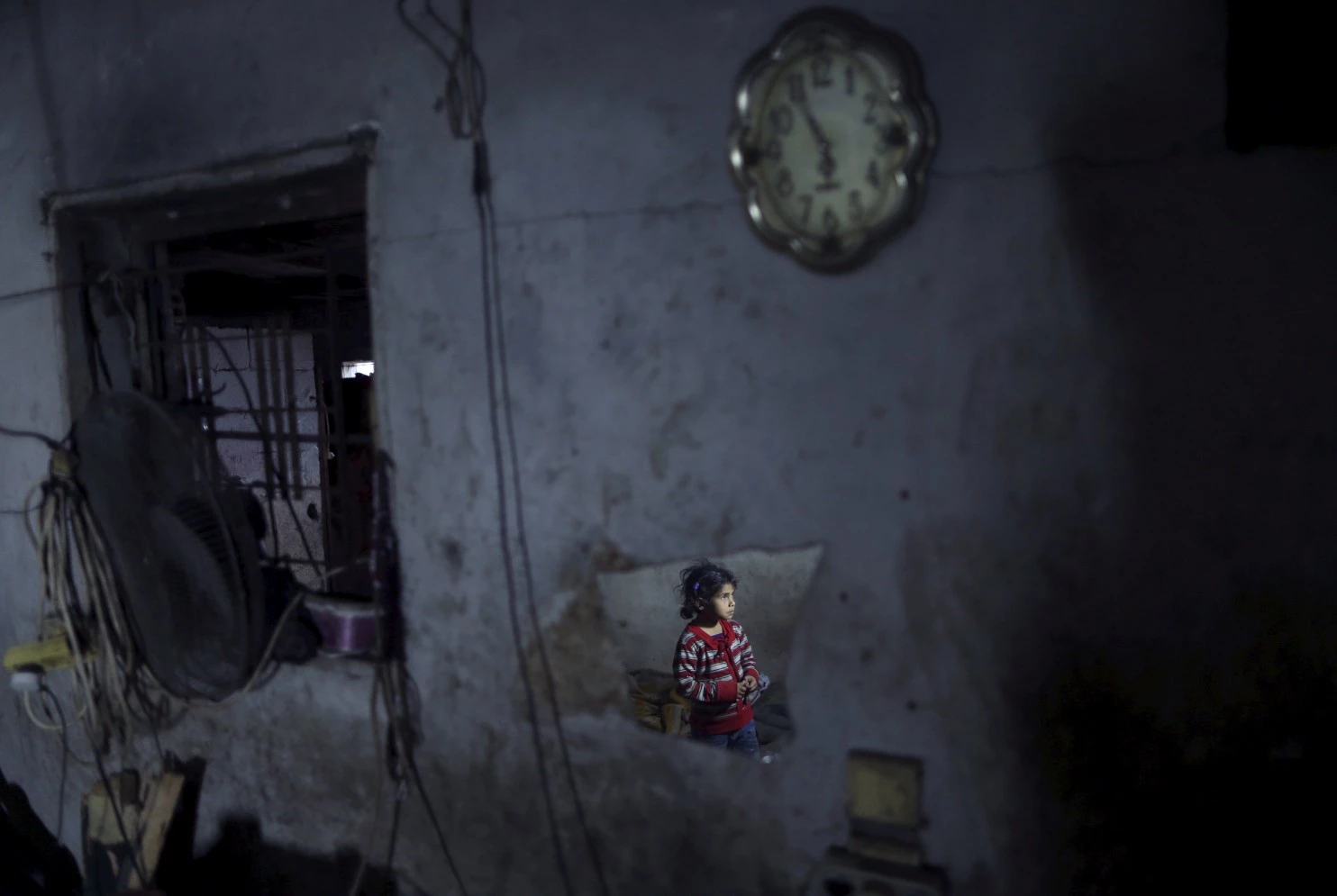 on has been an American goal for nearly two decades. Ina 2002 speech, George W. Bush became the first president to explicitly call for the creation of an economically sustainable, demilitarized Palestinian state. “The establishment of the state of Palestine is long overdue,” he saidin 2008. “The Palestinian people deserve it. And it will enhance the stability of the region, and it will contribute to the security of the people of Israel.” Today, virtually all American politicians, on both sides of the aisle, publicly support this outcome. But with Netanyahu standing in its way, how can the United States advance this goal?
By recognizing the state of Palestine.
>>Read the full article in the Washington Post>>
When a federal court jury in New York reached a verdict last week on a lawsuit brought by American victims of terror attacks during the Second Intifada, holding that the Palestinian Authority could be held responsible, reactions were as quick as they were predictable.
The case involved ten families whose family members had been killed or severely injured by terrorist attacks during the Second Intifada. The Palestinian Authority was accused of indirect responsibility for these attacks. The decisive issue for the jury in the case seems to have been the fact that the PA continues to pay salaries to the families of the jailed terrorists who carried them out.
There is little doubt that the trial raises troubling issues. The first is the use of violence against civilians, which we unequivocally condemn. Another is how to address the very real suffering of the victims of terrorism and armed conflict, whether they be American, Israeli or Palestinian. But we must also consider how to do this in a practical manner that resists the use of victims’ suffering for political gains and contributes, rather than detracts from the prospects of resolving the conflict. In this regard, the verdict must be seen as a step in the wrong direction.
Benjamin Netanyahu added the verdict to his ongoing campaign to demonize Mahmoud Abbas and the Palestinian Authority. Supporters of a two-state solution fretted over the impact such a massive financial blow could have to the already feeble Palestinian economy. Palestinian solidarity activists saw one more example of how the American deck is stacked against the Palestinians.
The Palestinian Authority (PA) and the Palestine Liberation Organization (PLO) are sure to appeal this verdict, so it will likely be years before it is finally resolved. That, however, should not stop us from considering the difficult questions this case raises.
The most emotional of these questions regards the real human cost of ongoing conflict and how we, as a society both within the United States and in the larger global community address this. Those of us who believe that this verdict is unhelpful to the cause of peacemaking need to provide those families with a very good reason for why we would question these efforts at hitting back at those they deem responsible for their suffering.
Those families need to know that we are not ignoring their pain; on the contrary, we are acting in response to it, and working to ensure that it never happens to anyone else. This part of the equation must have nothing to do with which side the victims are on. Whatever differences and imbalances there may be between Israelis and Palestinians, the suffering of those who have lost loved ones, or have been traumatized or permanently injured by the violence is the same.
We are also presented here with an opportunity, however, to address one of the more vexing, if subtle, issues in this conflict, and that is the very fundamental power differences between Israelis and Palestinians. Those differences are historic and they are dictated on a daily basis by the gulf between occupier and occupied. But they play out in ways that can obscure the road to resolution.
The decisive point in this case seems to have been the fact that the plaintiffs were able to demonstrate that many of the perpetrators of the violence that killed and injured Americans in Israel were employees of the Palestinian Authority. Those perpetrators who are in Israeli jails often remained employees of the PA. Families of terrorists who died in the attacks continue to be compensated by the PA.
To the jury, and it’s probably safe to say, to most Americans, this is compelling evidence of PA complicity. Most Israelis would no doubt agree. An editorial in The Forward, which called the verdict “…a serious challenge to anyone…who still stubbornly believes that the current Palestinian leadership is capable of implementing a two-state solution,” saw this point as damning and suggested that the practice of paying families of terrorists must stop.
“What a powerful gesture it would be if Abbas stopped these payments,” read the Forward’s editorial. “It would remove one more piece of ammunition from the hands of Israeli leadership uninterested in solving the conflict. It would honor the victims of terror and acknowledge the rule of law. And — here we are probably being unduly optimistic — it would be a bold step to restore trust and prove, again, that this Palestinian leadership is willing to break from its violent past.”
Those points are all quite fair. And yet, the evidence of Abbas’ actions for over a decade overwhelmingly shows him to be a leader who eschews violence in favor of diplomacy and is willing to go farther than any Palestinian leader we know of to accommodate Israel’s security concerns and reach a two-state solution. Why, then, does he not stop those payments?
The answer lies in the day-to-day realities of Palestinian life, and in the harsh realities of occupation and the bitter conflict that has ebbed and flowed, but never ceased for so many decades.
At the time of the crimes in question, the intifada was raging and Israeli forces had responded quite harshly in the West Bank. The people, Israelis and Palestinians, across the political spectrum felt they were at war, under attack and they wanted the “bad guys” from the other side to stop endangering them and their children.
Israelis, quite correctly, feel that the brutal attacks on civilians in those years cannot be justified by Palestinians’ experiences under the occupation. Indeed, they cannot. International law does give an occupied people the right to resist their occupiers, but that right does not extend to attacking civilians in the occupying power’s territory. Such an act is nothing less than murder.
Palestinians, however, look at the years of the intifada quite differently. They see a massive Israeli incursion into the West Bank. According to the Israeli human rights group, B’Tselem, the intifada saw some 2,200 Palestinians killed who were not taking part in hostilities, as opposed to 239 such Israelis. They wonder why, when the Palestinian figure is nearly ten times bigger than the Israeli one, it is the Palestinians alone who are now being held to account.
Indeed, this is a question we should all ask.
For Palestinians, many of those engaged in violence are often the sole breadwinners of their families or at least a major source of income. For many Palestinians, however wrong we might consider it to be, these militants are seen as fighting for the independence of Palestine, for an end to the daily abuses of occupation, and ultimately, for the very lives of the people of Palestine.
If Abbas were to simply abandon those families, poverty would increase across the West Bank and so would popular opposition to the Palestinian President and his government. Even Palestinians who oppose such acts of violence, and there are a great many, would not advocate abandoning the women, elders and children who depend on the fighting-age men to the perils of increased poverty.
Cutting off these payments would be overwhelmingly unpopular among Palestinians, and that opposition is likely to undo many of the gains the Forward envisions. While it’s fair to ask what more the Palestinians can do, we should also ask what we in the United States can do, and what we might recommend to our ally, Israel, which, after all, remains the sovereign power in the territory.
The Palestinian leadership in the PA and the PLO has come a long way in their attempts to find common ground with Israel and end the occupation under which they’ve lived for almost fifty years. No one seriously believes that they were the ones leading the fight in the second intifada, nor was that the verdict reached in Federal Court this week.
Penalizing the PA because it sustains the families of convicted terrorists implies that the threat of economic ruin will dissuade terrorists from acting. Does anyone really believe that to be true? Even the plaintiffs’ case did not make the claim that the terrorists were acting under the PA’s direction, but with its tacit support, demonstrated through these payments. Militant groups are not seeking Abbas’ approval for their actions. On the contrary, Abbas has endured enormous political criticism over his security cooperation with Israel, for many years now, as they work to prevent such attacks. Both American and Israeli officials have repeatedly praised the PA’s efforts in this regard. Indeed, last year the head of Israel’s Shin Bet went so far as to publicly contradict Netanyahu’s effort to blame Abbas for rising violence in Jerusalem.
No amount of money or vengeance is going to erase a victim’s trauma, replace a lost limb, or, certainly, bring back a loved one killed by terrorism. It’s hard to see how a US civil court can play a constructive role here. Only a more forceful US, European and international policy, which presses for an end to violence on all sides and is willing to push both the parties into a reasonable agreement can do that. This is the only course that respects the blood and pain of all those who have suffered, and continue to suffer, in this conflict.
The Gaza Strip is the most silenced issue in the current election campaign. Silenced? Apart from certain politicians vying for credit for discovering the tunnel threat, Gaza is completely absent from this election – erased, along with this summer’s unpleasant war. Gaza is gone. Its residents do not exist. Our future, our suffering, isn’t interlinked with theirs. The Gazan neighbors of Sderot, Ashkelon, Nahal Oz, and Tel Aviv are invisible.
Only six months ago, and for 51 days, Gaza was the hot topic. Countless talking heads on television chattered incessantly between one rocket attack alert and the next, until, suddenly, everything fell silent. Only the suffering of those who lost loved ones and the pain of those wounded and left disabled haven’t died down, even if no one is listening.
One might imagine that in an election that takes place so soon, not even six months, after a national trauma like this, there would be at least some politicians who insist on addressing it. You might imagine that even if all politicians tried to distance themselves from it, the public wouldn’t just take it and would insist on getting explanations for what happened and information about what’s to come. Why did we kill more than two thousand people? Why have more than seventy Israelis been killed? What are those who seek our trust planning other than the cruel inevitability of the next war in two years’ time? How many dead are planned for the summer of 2016?
If we’re not going to demand that Gaza be front and center in this election because of the hundreds of children we killed in Gaza this summer, then maybe we should for 4-year-old Daniel Tragerman’s sake. If we’re not going to talk about Gaza because of the tens of thousands still living in tents, schools or on the street, then maybe because of the 51 days of rocket attack alerts? If we don’t demand our politicians address Gaza in this election campaign because of the poverty and anguish, the eternal closure and the despair in the Strip, then at least let’s demand it because of the next round of violence, which is getting closer by the day.
Whether we think about Gaza or not when we go to the polls, Gaza isn’t going anywhere. The Israeli power, of which we are citizens, will continue to neighbor Gaza and the residents of the impoverished piece of land that is internally controlled by Hamas and externally controlled by Israel will continue to be our neighbors. Their future is our future is their future.
The fact that this future is inextricably bound together by the chains of history, geography, politics and violence is out of our control. What is under our control, ours and theirs, is how this future plays out. It’s difficult, complicated even, to imagine a different future for Gaza and Israel, but those who avoid imagining it and taking action to make it happen, are sentencing us all to more loss and suffering, to a future of more bloodshed for both Israelis and Gazans.
Israelis aren’t fools. Those who have had to run to shelter with their small children time and time again have a better understanding, a better recollection, of what their decisions rally mean, certainly more than silent, deceitful or cowardly politicians. Gaza is the most silenced issue in this election, and the silence speaks volumes. But things that are repressed reverberate with much more force than ones that are objects of constant banter. Every time they talk to us about the cost of living, our subconscious is thinking about Gaza, the rocket attack alerts, the shelter… the next time. Politicians will keep doing what they’re doing, but it doesn’t matter. When we go to the polls, we’ll take Gaza with us.
Because Gaza is the most talked about issue in this election.
 Hagai El-Ad is the Executive Director of B’Tselem – the Israeli Information Center for Human Rights in the Occupied Territories. This is the English version of an op-ed originally published in Hebrew, on the Walla! Elections channel.
Israeli Prime Minister Benjamin Netanyahu’s headline-grabbing plans to address Congress have dominated the news cycle for nearly a month. But there’s a far more consequential and unnoticed development taking place in Israel/Palestine right now: the slow-motion collapse of the Palestinian Authority (PA), driven by Netanyahu’s refusal to release PA customs revenues.
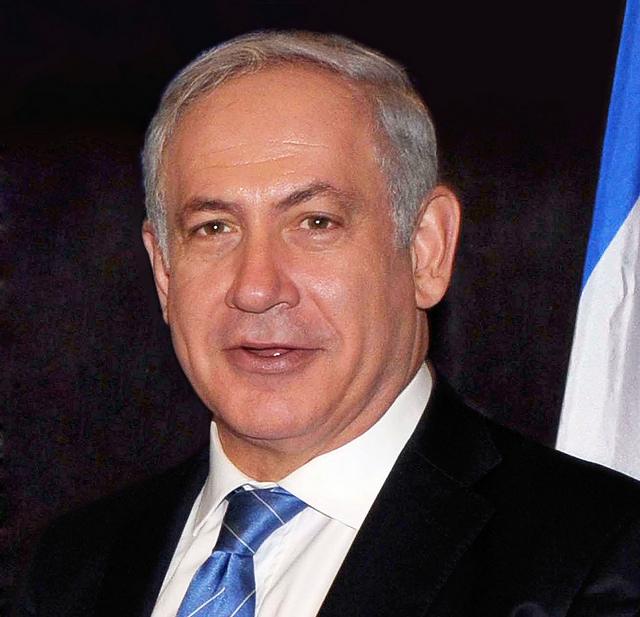
Expressing concerns on Saturday about the PA’s “continued viability,” U.S. Secretary of State John Kerry is the latest in a growing chorus of voices that are warning of dire consequences if the PA dissolves. He is joined by the Israeli military, which raised the alarm that the PA’s imminent collapse could allow terrorist groups to gain a foothold in the West Bank.
For its part, the PA has reported a 70 percent drop in its income, and warned Sunday that the PA soon might not be able to purchase fuel for police cars and other public security vehicles. Coming on the heels of five years of recession, not to mention ongoing and tightening Israeli restrictions on many economic-related aspects of life on the West Bank, this latest cutoff of funds threatens to be a mortal blow to the PA.
Netanyahu and his ministers have been silent on the issue of PA insolvency, even as they remain adamant about withholding the PA’s customs revenues, which Israel collects on its behalf. The financial blockade was originally meant to punish Palestinian President Mahmoud Abbas for joining the International Criminal Court, where Israel fears it could face prosecution for war crimes.
Maybe removing the PA and Mahmoud Abbas would be in line with Netanyahu’s long-term strategy, which might include various plans for direct Israeli rule over the entire West Bank. But a more frightening possibility is that Israel’s moves against the PA are the result of short-term calculations intended to maximize Netanyahu’s chances in the upcoming Israeli election.
Netanyahu’s Likud party is locked in a tight race against his bitter rivals on the center-left, the Zionist Camp coalition, with each predicted to win 22-24 seats in the next parliament. If he releases the tax funds now, Netanyahu is concerned that he could look soft and indecisive on the Palestinian issue and may lose votes to the more right-wing Jewish Home party. That would undermine his power base, increasing the chance that the Zionist Camp would emerge as the largest party in the Knesset, and therefore be asked to form the next government.
In this context, as the PA moves closer to collapse and the West Bank begins to heat up, Netanyahu might calculate that a steadfast position on withholding tax revenue and a muscular response to any West Bank unrest better protects his political position than taking steps to diffuse the tension – a calculation that might extend for weeks beyond election day on March 17th, as Israeli parties begin the process of horse-trading to form a coalition. That’s a recipe for more escalation and possibly bloodletting.
This is not the first time that an Israeli politician’s pandering to the right wing has made an escalation in the conflict with the Palestinians more likely. Before the 2000 elections, future Israeli prime minister Ariel Sharon visited the Temple Mount under armed guard, in a provocative move that inflamed Palestinian passions. From a national perspective, Sharon’s move was a disaster, contributing to the outbreak of the Second Intifada in which hundreds of Israelis and thousands of Palestinians were killed. But from an electoral perspective it was a success, galvanizing right-wing support behind Sharon.
Predicting the next intifada is a fool’s errand, and there may be limits to the extent to which Netanyahu can ignore the Palestinian issue, even in the midst of a political campaign. But so far, those limits have not materialized, and the more Netanyahu’s political position weakens, the greater the danger that his brinkmanship with right-wing parties on the Palestinian issue will spill over into catastrophe.
Philip Sweigart is a Policy Analyst at the Foundation for Middle East Peace.
The idea that the two-state solution to the Israeli-Palestinian conflict is dead has been repeated so many times in the
 past several years that it has taken on the droning sound of a mantra. Yet at the same time, we continue to hear pleas like the one that Palestinian Ambassador to the United Nations, Riyad Mansour made as the Security Council was about to reject the Palestinian resolution calling for an end to Israel’s occupation: “Those eager to save the two-state solution must act and cannot continue to make excuses for Israel and to permit, and thus be complicit in, its immoral and illegal behavior.”
So which is it? Must we abandon the two-state solution and think of other formulations or do we desperately need to revitalize and resuscitate the process we’ve been working on since 1993? Perhaps there is a better answer: a completely different approach to the two-state solution. (more…)