Over the weekend new broke that the Trump Administration was closing the PLO mission in Washington, DC. To help people understand the laws that led up to this crisis, FMEP has compiled the relevant laws, below.
1. The 1987 Law that Started it All
In 1987, Congress passed legislation barring the PLO from operating in the United States (Sec. 1003 of PL 100-204; aka 22 USC 5202: Prohibitions regarding PLO). That section states:
It shall be unlawful, if the purpose be to further the interests of the Palestine Liberation Organization or any of its constituent groups, any successor to any of those, or any agents thereof, on or after the effective date of this chapter-
(1) to receive anything of value except informational material from the PLO or any of its constituent groups, any successor thereto, or any agents thereof;
(2) to expend funds from the PLO or any of its constituent groups, any successor thereto, or any agents thereof; or
(3) notwithstanding any provision of law to the contrary, to establish or maintain an office, headquarters, premises, or other facilities or establishments within the jurisdiction of the United States at the behest or direction of, or with funds provided by the Palestine Liberation Organization or any of its constituent groups, any successor to any of those, or any agents thereof.
When President Ronald Reagan signed PL 100-204 into law on Dec. 27, 1987, he issued a signing statement declaring Sec. 1003 unconstitutional. He wrote:
Section 1003 of the Act prohibits the establishment anywhere within the jurisdiction of the United States of an office “to further the interests of” the Palestine Liberation Organization. The effect of this provision is to prohibit diplomatic contact with the PLO. I have no intention of establishing diplomatic relations with the PLO. However, the right to decide the kind of foreign relations, if any, the United States will maintain is encompassed by the President’s authority under the Constitution, including the express grant of authority in Article II, Section 3, to receive ambassadors. I am signing the Act, therefore, only because I have no intention of establishing diplomatic relations with the PLO, as a consequence of which no actual constitutional conflict is created by this provision.
2. The Middle East Peace Facilitation Act (1993-1997)
After the signing of the Olso Accords, Congress chose not to repeal 1003 of PL 100-204 (or any other anti-PLO legislation). It instead passed legislation giving the president authority to temporarily suspend key anti-PLO laws. That legislation was called the Middle East Peace Facilitation Act, PL 103-125, signed into law Oct. 28, 1993. This law permitted the establishment of the PLO mission in Washington in 1994.
Congress let MEFPA expire in 1997.
3. The Era of the National Security Waiver (1997-2011)
In 1997, Congress replaced the broad suspension authority granted to the president in MEPFA with a waiver provision – specific to 1003 of PL 100-204 – quietly inserted into the FY98 Foreign Operations Appropriations Act (Sec. 539d of PL 105–118, signed into law on Nov. 26, 1997). This provision read:
(1) The President may waive the provisions of section 1003 of Public Law 100–204 if the President determines and certifies in writing to the Speaker of the House of Representatives and the President pro tempore of the Senate that it is important to the national security interests of the United States.
(2) PERIOD OF APPLICATION OF WAIVER.—Any waiver pursuant to paragraph (1) shall be effective for no more than a period of six months at a time and shall not apply beyond twelve months after enactment of this Act.
Congress included a similar waiver in annual Foreign Operations legislation every year from 1997-2011.
4. Conditioning the Waiver on Palestinian Actions at the UN
In 2011, the Palestinians were admitted as members in UNESCO. In response, in the FY12 Foreign Operations Appropriations Act (PL 112–74, signed into law on Dec. 23, 2011), Congress deleted the national security waiver of the 1987 law, and replaced it with a waiver conditioned on the president certifying that the Palestinians not being admitted to any additional UN agencies. According to the provision, if the president cannot make the certification, he must wait at least 90 days (during which it would be illegal for the mission to remain open), and then he can waive the 1987 ban if, and only if, he can certify that the Palestinians have entered into “direct and meaningful negotiation with Israel.”
The provision – Sec. 7086(b) of that bill – reads in full:
(1) The President may waive the provisions of section 1003 of Public Law 100–204 if the President determines and certifies in writing to the Speaker of the House of Representatives, the President pro tempore of the Senate, and the Committees on Appropriations that the Palestinians have not, after the date of enactment of this Act, obtained in the United Nations or any specialized agency thereof the same standing as member states or full membership as a state outside an agreement negotiated between Israel and the Palestinians.
(2) Not less than 90 days after the President is unable to make the certification pursuant to subsection (b)(1), the President may waive section 1003 of Public Law 100–204 if the President determines and certifies in writing to the Speaker of the House of Representatives, the President pro tempore of the Senate, and the Committees on Appropriations that the Palestinians have entered into direct and meaningful negotiation with Israel: Provided, That any waiver of the provisions of section 1003 of Public Law 100–204 under paragraph (1) of this subsection or under previous provisions of law must expire before the waiver under the preceding sentence may be exercised.
(3) Any waiver pursuant to this subsection shall be effective for no more than a period of 6 months at a time and shall not apply beyond 12 months after the enactment of this Act.
At the time it was being considered and passed, this new provision was highlighted as ” ********IMPORTANT************” and explained in detail, repeatedly, in my weekly Legislative Round-Up, including in the editions published July 29, 2011 and October 4, 2011.
5. Conditioning the Waiver on Palestinian Actions at the UN + on Palestinian Actions at the ICC
In 2015, the Palestinians joined the International Criminal Court (ICC), sparking consternation and concern in Israel and among supporters of Israel in Congress. In response, in the FY16 Consolidated Appropriations Bill (PL 114–113, signed into law Dec. 18, 2015) [which included the FY16 Foreign Operations Appropriations Act], Congress imposed an additional condition that the president must satisfy in order to waive the 1987 law, requiring that he certify that the Palestinians are not promoting, supporting, or endorsing action against Israel at the ICC. Like the previous UN-only version of the waiver language, according to the provision, if the president cannot make either certification (regarding the UN or the ICC), he must wait at least 90 days (during which it would be illegal for the mission to remain open), and then he can waive the 1987 ban if, and only if, he can certify that the Palestinians have entered into “direct and meaningful negotiation with Israel.”
The relevant provision, Sec. 7041(j)(2)(B), reads in full:
(i) The President may waive the provisions of section 1003 of the Foreign Relations Authorization Act, Fiscal Years 1988 and 1989 (Public Law 100–204) if the President determines and certifies in writing to the Speaker of the House of Representatives, the President pro tempore of the Senate, and the appropriate congressional committees that the Palestinians have not, after the date of enactment of this Act—
(I) obtained in the United Nations or any specialized agency thereof the same standing as member states or full membership as a state outside an agreement negotiated between Israel and the Palestinians; and
(II) taken any action with respect to the ICC that is intended to influence a determination by the ICC to initiate a judicially authorized investigation, or to actively support such an investigation, that subjects Israeli nationals to an investigation for alleged crimes against Palestinians.
(ii) Not less than 90 days after the President is unable to make the certification pursuant to clause (i) of this subparagraph, the President may waive section 1003 of Public Law 100–204 if the President determines and certifies in writing to the Speaker of the House of Representatives, the President pro tempore of the Senate, and the Committees on Appropriations that the Palestinians have entered into direct and meaningful negotiations with Israel: Provided, That any waiver of the provisions of section 1003 of Public Law 100–204 under clause (i) of this subparagraph or under previous provisions of law must expire before the waiver under the preceding sentence may be exercised.
(iii) Any waiver pursuant to this subparagraph shall be effective for no more than a period of 6 months at a time and shall not apply beyond 12 months after the enactment of this Act.
At the time it was being considered and passed, this new provision was highlighted as ” ********IMPORTANT************” and explained in detail, repeatedly, in my weekly Legislative Round-Up, including in the editions published June 5, 2015, July 17, 2015, Dec. 23, 2015, and Dec, 31, 2015.

-
Secretaries Jack Lew, Ernest Moniz and John Kerry defend the JCPOA before the Senate Foreign Relations Committee
AIPAC recently issued a memorandum to congressional members and staff with respect to the future of the Iran sanctions regime should Congress reject the Joint Comprehensive Plan of Action (JCPOA). This memorandum notes that, if a joint resolution of disapproval for the JCPOA were to be passed by both houses of Congress and President Obama’s inevitable veto overridden by a two-thirds vote again of both houses, the U.S. sanctions regime would remain legally in place. It is on this basis that AIPAC argues there will be no deterioration of the international sanctions regime facing Iran, at least until it completes the nuclear steps it committed to take in the JCPOA. Consequently, AIPAC considers there will be ample time to renegotiate the text of the JCPOA before Iran has finished its work.
AIPAC is certainly correct that U.S. sanctions can be maintained as a matter of law should Congress reject the JCPOA. But, it is there that AIPAC’s analysis parts company with several important realities.
Maintaining the sanctions regime if the JCPOA falls apart is about more than the letter of U.S. law.
AIPAC’s main argument appears to be that since U.S. law will not change if the JCPOA is rejected, we have nothing to fear from a post-JCPOA-rejection world. This assertion ignores the fundamental reality that the U.S. sanctions with teeth require foreign participation in order to work. This is because U.S. law is structured to present an “us or them” choice to international businesses and banks therefore have to elect to follow the U.S. lead (and U.S. law) in order to prevent transactions from taking place with Iran.
Certainly, as AIPAC has noted, there is fear of the consequences of U.S. sanctions on foreign businesses to motivate them. No one likes paying multi-billion dollar fines and many of the most important international corporations and financial institutions will shy away from doing business with Iran until the status of U.S. sanctions is resolved. But, cooperation with U.S. sanctions has also been about a common aim and pursuit by the governments of those corporations and banks. European, East Asian, and Indian firms have declined to do business in Iran – even if their exposure to U.S. sanctions was limited – because there was a common understanding that sanctions were needed to prevent Iran’s acquisition of nuclear weapons. This common sense of purpose will be lost if the United States walks away from the JCPOA. Instead, the only motivating force will be the threat of U.S. penalties. But, for those without U.S. exposure – or prepared to risk it – this may not be enough to stop business with Iran.
Moreover, foreign governments can take steps to preclude corporate cooperation with U.S. sanctions. AIPAC takes it as a given that if the U.S. Congress passes new sanctions, foreign cooperation is assured. But, let us remember a time in which there was a significant difference between the United States and Europe on Iran sanctions: 1996’s Iran-Libya Sanctions Act, which prompted – among other things – passage of European legislation that explicitly forbade companies from complying with U.S. law, deemed by the EU to be extraterritorial. This law is still on the books, as is a European policy decision in 1997 to bring the United States to the World Trade Organization should it impose sanctions on a European company pursuant to ILSA. Fortuitously, this situation has been avoided to date because of cooperation between the United States and EU. But, should that cooperation lapse, this challenge could once again be met with infighting between the EU and United States, hardly a propitious scenario for building a unified diplomatic front to get a better nuclear deal.
Even with cooperation, there won’t be support for new sanctions.
Let us assume for a moment that rejection of JCPOA and resumption of U.S. sanctions does not lead to immediate legal conflict between the United States and its sanctioning partners. This is still a far cry from an environment conducive to the imposition of new sanctions to strengthen the U.S. negotiating hand with Iran.
No one in the opposition camp has laid out a clear strategy for how to secure such pressure, other than to threaten the imposition of sanctions against our partners directly. This is understandable, because there is no credible strategy for doing so. The United States has secured cooperation with its sanctions efforts before on the basis of a plan to get a negotiated settlement of the nuclear issue. But, that plan would be largely out of the window as a result of the rejection of the JCPOA.
Skeptics doubtless would bristle at this idea, stridently noting that they only wish to “improve” the deal, not destroy it. But, considering that AIPAC argued that the JCPOA could only be a good deal if it required “Iran to dismantle its nuclear infrastructure and relinquish its uranium stockpile,”[1] it is unlikely that this is the kind of condition Iran could plausibly accept. Other skeptics have also argued that the provision of sanctions relief is itself a problem because of the potential for destabilizing activities and terrorism being funded by Iran. Taken together, the “improved” nuclear deal would require a wholesale rewrite, with terms involving the termination of Iran’s nuclear program and absence of sanctions relief until it has fully resolved any outstanding concerns with its regional foreign policy.
Such a deal would, of course, be to the U.S. advantage. But, it is also thoroughly implausible and it is doubtful that U.S. partners (aside from Israel) would sign on to such a construct because it has no hope of being accepted by Iran. It is worth noting, for example, that Russia and China have long maintained that Iran has a right under the NPT to an enrichment program and that during negotiations, Russia indicated that it would accept no language – even if Iran was amenable – that appeared to abridge this NPT right. And, it is also worth noting that – though some have tried to suggest that it is merely Administration spin – the Ambassadors of the European-3 countries (France, Germany and the UK) have all apparently made it quite clear to interested Congressional interlocutors that they see no chance of resuming talks if Congress torpedoes the JCPOA.[2]
Radical, dramatic escalation of sanctions pressure would be necessary
It is unfortunate that the international community would probably not join willingly in an escalation of sanctions pressure against Iran because, if there is any hope of using sanctions to force Iranian nuclear capitulation, then it would have to come on the back of a such a massive escalation.
To be clear, I do not believe that more sanctions would force Iran to jettison its nuclear program. Sensible, respected skeptics of the nuclear deal have agreed with this general conclusion (such as Juan Zarate during testimony before the Senate Foreign Relations Committee on July 30[3]). Moreover, the history of the Iranian nuclear experience is that when faced with new sanctions, Iran responds with its own escalation by installing thousands of new centrifuges.
But, assuming that sanctions could create such a scenario, then it certainly would not be with the tools in place to date. Iran’s economy has rebounded from its recession in 2012-2013 that sanctions helped to create. Iran’s economy is still weak and it requires comprehensive sanctions relief to truly recover. But, this also suggests that keeping the sanctions at status quo levels would also not be enough to tip Iran back into crisis and certainly sufficient crisis so as to get Iran to go even farther past the redlines established for the negotiation by the Supreme Leader.
But, without international support, this would not be achievable. The best that could be hoped for is spotty cooperation and compliance, and the use of penalties to punish those who transgress U.S. sanctions. But, let us not forget that the imposition of sanctions penalties is itself an admission of failure: failure of the deterrence and prevention strategy that sanctions are actually meant to effectuate. For penalties to be imposed, it means that the bad guys have gotten the materials, technology or money that was to be denied by sanctions. Penalties being imposed are not victories – they are compensation for the victims.
Penalties also hurt the United States, both in short-term and long-term ways. First and foremost, the imposition of sanctions against particular targets means that they cannot do business in the United States. This does not matter when Iranian individuals and entities are involved. But, it does when major international banks or corporations are. Denying access to these institutions also means that U.S. persons cannot do business with them, harming U.S. economic competitiveness. The argument that our economy is so large that it can sustain such damage only works if sanctions are imposed in a small-scale fashion. But, if the United States were to threaten the imposition of sanctions on major foreign financial institutions – and go beyond penalties to the punishment of cutting off correspondent banking relationships, as several statutes require – we could find our own economic position suffering. Imagine, for example, a decision to impose such sanctions on major Chinese banks should China refuse to make significant reductions in its purchases of Iranian oil once the sanctions mandating reductions come back into place. It is not just the Chinese businesses that would suffer but anyone who does business in China. China is the U.S. second largest trading partner. Combined with India, Japan and Korea (the top four importers of Iranian oil), and those we would have to threaten with sanctions account for a quarter of all U.S. international trade (according to June 2015 year-to-date data from the Census Bureau).[4]
Long-term, another demonstration of the risk of reliance on the U.S.-led international financial system would further incentivize moves away from it. I have written about this extensively and the risk both to the U.S. economy and to the ability of the United States to use sanctions as a foreign policy tool.[5] I’m not alone: JCPOA skeptics Mark Dubowitz and Jonathan Schanzer similarly warned of the risk of alternative financial systems emerging and the threat this would pose to the United States from both financial and national security perspectives.[6] It is this threat that Secretary Kerry was referencing in a recent interview when he said that the use of the U.S. dollar as a reserve currency was at risk if the Iran deal were to be jettisoned.
And Iran is hardly likely to sit around waiting for more pressure
Even more fundamentally, AIPAC misses the boat when it suggests that Iran’s response to U.S. rejection of the JCPOA will be placid understanding and even continuation of its steps under the JCPOA (!) rather than an escalation of its nuclear program. To be sure, Iran would seek to take advantage of the situation by holding steady with its nuclear activities provided the JPOA’s sanctions relief would remain in place; this would further its ability to sow dissention in the international community and poison the U.S. ability to get partners for maintaining, much less escalating, sanctions.
But, the Iran Nuclear Agreement Review Act (INARA) would ensure that is impossible. The terms of that Act require the President to stop providing sanctions relief under the JPOA in addition to not moving forward with relief under the JCPOA. This means that oil sanctions would once again be fully in-force, with significant reductions mandated every 180 days. International oil prices suggest that such reductions would be possible without creating a market crisis, but it strains credulity to believe that China and India would undertake 20% reductions of their imports of Iranian crude oil in the aftermath of a U.S.-aborted nuclear deal. And then, a real U.S. choice would be needed whether to impose sanctions on associated banks and oil companies – which would ironically free them to engage in however much oil they might wish to purchase from Iran, knowing that they face no further penalty – or to pass on such sanctions at the risk of hollowing out the sanctions regime.
In response to concerns that the resumption of this sanctions campaign would also prompt Iran to start installing thousands of centrifuges, enriching tons of uranium, and completing the Arak reactor (capable of producing 1-2 weapons worth of weapons-grade plutonium per year), some outside observers have suggested either that the President could use his “prosecutorial discretion” to not enforce the law vigorously or that he could rewrite U.S. law unilaterally with Executive Orders to keep providing sanctions relief. No one in the Administration has made such a claim and it is doubtful they would, as this could prompt legal challenge and constitutional crisis…from which Iran would surely benefit. Moreover, it is questionable logic to assert that a better deal is achievable while also arguing that, in order to keep the nuclear situation from escalating, the United States ought to hold back on sanctions enforcement.
Boiling things down
AIPAC is probably right that the international sanctions regime will not collapse on Day 1 if the JCPOA dies in the halls of the U.S. Congress. Iran will have to evaluate what it chooses to do in response, as will U.S. partners. But, at best, the sanctions regime will be mauled, having lost its credibility in the international community and place as part of a diplomatic endeavor. The proposed alternative deals suggest either that the Iranians are just waiting to accept worse terms after the U.S. fumbles the ball or that far more pressure would be needed than the international market would likely bear. Having lost its international credibility, the United States will be in no place to secure such international pressure on a voluntary basis and will face some important, unenviable real world problems as a result. Iran will reap the rewards of U.S. diplomatic failure, either waiting out the sanctions campaign in its death throes or expanding its nuclear program to ensure that any future negotiation starts with a better Iranian bottom-line. Either way, the United States (and its partners at greatest risk of an Iranian nuclear weapon) would be worse off.
[1]http://www.aipac.org/~/media/Publications/Policy%20and%20Politics/AIPAC%20Analyses/One%20Pagers/Negotiating%20with%20Iran_5%20Requirements_Cover%20Sheet.pdf
[2] https://www.washingtonpost.com/world/national-security/ambassadors-press-case-for-iran-nuclear-deal-in-congress/2015/08/06/9f46cae8-3c70-11e5-b3ac-8a79bc44e5e2_story.html
[3] https://www.washingtonpost.com/world/national-security/the-limitations-of-sanctions-on-iran/2015/08/03/3be62170-37a1-11e5-9739-170df8af8eb9_story.html
[4] https://www.census.gov/foreign-trade/statistics/highlights/top/top1506yr.html
[5] https://gallery.mailchimp.com/20fec43d5e4f6bc717201530a/files/Issue_Brief_The_Future_of_Economic_Sanctions_in_a_Global_Economy_May_2015.pdf
[6] http://www.wsj.com/articles/mark-dubowitz-and-jonathan-schanzer-the-fragility-of-the-global-financial-order-1425423520
 Richard Nephew is the Program Director, Economic Statecraft, Sanctions and Energy Markets, for the Center on Global Energy Policy. Nephew joined the Center February 1, 2015 directly from his role as Principal Deputy Coordinator for Sanctions Policy at the Department of State, a position he held since February 2013. Nephew also served as the lead sanctions expert for the U.S. team negotiating with Iran. From May 2011 to January 2013 Nephew served as the Director for Iran on the National Security Staff where he was responsible for managing a period of intense expansion of U.S. sanctions on Iran. Earlier in his career he served in the Bureau of International Security and Nonproliferation at the State Department and in the Office of Nonproliferation and International Security at the Department of Energy. Nephew holds a Masters in Security Policy Studies and a Bachelors in International Affairs, both from The George Washington University.
Statement by Matthew Duss
President, Foundation for Middle East Peace, Washington, D.C.
Presented to Subcommittee on National Security, Committee on Oversight and Government Reform
“Impact of the Boycott, Divestment, and Sanctions Movement”
Mr. Chairman, Members of the Oversight Committee, thank you for inviting me to testify today on this important and timely issue.
In the ten years since it commenced, the global Boycott, Divestment and Sanctions movement, or BDS as it is called, has slowly but steadily risen in visibility. I’d like to focus today on the role that the BDS movement has been playing recently in the U.S, particularly with regard to recent Congressional action.
In order to do that, I first want to take a moment to identify just what we’re talking about when we refer to BDS. The movement began in July 2005 with a joint call from a number of Palestinian civil society organizations, with three main demands: An end to the occupation that began in 1967; equal rights for Palestinians citizens within Israel; and protecting and promoting the rights of Palestinian refugees to return to their homes in what is today Israel. The term “BDS” is widely understood to refer to the network of grassroots activists who are part of a global movement to encourage boycotts, divestment from, and ultimately international sanctions against Israel to achieve these goals.
This movement – its goals and its activism – is distinct from the many peace activists in Israel, Palestine, the United States and elsewhere, who, in their effort to preserve the possibility of a two-state solution to the Israeli-Palestinian conflict, call for boycotts of settlement products and divestment from businesses profiting from the 48-year old occupation of the West Bank, Gaza and East Jerusalem.
Crucially, this movement is also distinct from actions and policies of the European Union and the governments of some member states that distinguish between Israel within the pre-1967 lines – known as the Green Line – and the occupied territories. A recent report by the European Council on Foreign Relations emphasizes that these actions and policies do not represent a policy shift by the European Union, but simply more faithful adherence to the EU’s existing laws.
The report states, in part, “The EU has never recognized the legality of Israeli settlements in the occupied territories (including those in East Jerusalem and the Syrian Golan Heights that have been formally annexed by Israel) and consequently does not consider agreements signed with Israel to also apply to Israeli settlement-based entities.” The report also cites a February 2010 ruling from the European Court of Justice (ECJ) stating that agreements reached with Israel must be interpreted in light of the EU’s agreements with the Palestinians, which stipulate that only Palestinian authorities can issue origin certificates for goods from the West Bank, including from Israeli settlements. As a result, the report states, “The European Commission and the EEAS have gradually been compelled to take greater care in ensuring the EU’s correct adherence to European law in its bilateral relations with Israel.”
The key distinction here is between Israel within the Green Line, and the occupied territories. Israel is understandably concerned about the potential consequences of Europe, its largest trading partner, more energetically enforcing these laws. The EU has, for years, looked the other way on these regulations in the hope that the occupation would soon end and that the differentiation between Israel and the settlements would become moot. As the ECFR report states, “[D]ue to the fact that as cooperation with Israel expanded in the 1990s, the EU treated Israel’s occupation as temporary in the belief that the imminent success of the Oslo peace process would make added clarifications a moot point. The EU therefore avoided implementing a legal regime of differentiation (between Israel and the occupied territories) during this period.”
But in recent years, as the peace process has stalled, most recently with the collapse of Secretary of State Kerry’s effort in April of last year, the EU has renewed an effort to begin more aggressively enforcing their existing laws. It is important here to point out that these laws are fully consistent with long-standing American policy that similarly does not recognize the legitimacy of Israeli settlements, unless and until their status is redefined in negotiations.
This is where we come to the recent action by Congress and the response from the State Department. With the stated intention of protecting Israel from BDS, a provision was recently added to the Trade Promotion Authority bill– a provision that implied a significant shift in the policy of the United States since 1967. The provision requires the U.S. Trade Representative to discourage European Union countries from boycotting “Israel or persons doing business in Israel or Israeli-controlled territories” (emphasis added) as part of free-trade negotiations between the U.S. and the EU. In doing so, the amendment conflates Israel and the occupied territories. By blurring this important distinction, a dangerous precedent could be set for treating Israeli settlements beyond the 1967 lines no differently from the internationally recognized State of Israel. At the very least, it would create confusion amongst our allies with regard to U.S. policy regarding the occupied territories and their ultimate disposition.
In addition, conflating Israel and the settlements for the purposes of U.S. trade negotiations represents a clear threat to the two-state solution itself, undermining the our country’s ability to effectively broker a peace agreement between the Palestinians and Israelis.
This is why it was important and appropriate for the State Department to offer a clarification as it did upon passage of the trade bill. State Department spokesman John Kirby noted that, “The United States government has … strongly opposed boycotts, divestment campaigns, and sanctions targeting the State of Israel, and will continue to do so. However, by conflating Israel and ‘Israeli-controlled territories,’ (this) provision of the Trade Promotion Authority legislation runs counter to longstanding U.S. policy towards the occupied territories, including with regard to settlement activity.” Mr. Kirby went on to state that, “The U.S. government has never defended or supported Israeli settlements and activity associated with them and, by extension, does not pursue policies or activities that would legitimize them.”
It is important to recall that U.S. law already protects Israel against boycotts initiated by foreign governments. The Export Administration Act of 1979 and the Ribicoff Amendment to the Tax Reform Act of 1976 were enacted to protect Israel from the Arab League’s boycott against the State of Israel. The amendment to the fast-track bill adds nothing in this regard. Rather, it serves only one purpose: protecting settlements from pressure.
Ironically, this very conflation is precisely what the most radical elements in the BDS movement strive to achieve. Those who believe that the only solution to the conflict is the end of Israel as a Jewish state and the creation of a single state in its place reject any distinction between, for example, the settlement of Ariel in the occupied territories and the city of Tel Aviv. Similarly, those who support a messianic vision of “Greater Israel,” which requires permanent Israeli control of the occupied territories, reject any distinction between Haifa and the settlements inside Hebron. For those who support a two-state solution that includes a secure, democratic and Jewish state of Israel living side by side with a secure and independent Palestinian state, this conflation is extremely problematic.
There is another conflation here that is also of concern. When questions arise about the possible impact of BDS, there is often no distinction made between the effects of the BDS movement and the actions taken by European or other trading partners of Israel. This ends up overstating the impact of the BDS movement, both for its supporters and detractors.
There is no evidence that the European Union’s policies and actions with regard to settlements are based on the actions of the BDS movement. On the contrary, it is the collapse of the peace process, the deepening of Israel’s occupation and the possible foreclosure of the two-state solution that have motivated these European moves. In a letter to European Union Foreign Minister Federica Mogherini in April, sixteen European Foreign Ministers urged the labelling of products originating in the settlements, writing that: “European consumers must indeed have confidence in knowing the origin of goods they are purchasing. Green Line Israel and Palestinian producers will benefit from this.” Far from being motivated by the BDS movement, the ministers made it clear that it was the stalled peace process that provided the impetus for their recommendation. The goal was, in their words, “the preservation of the two-state solution.”
Likewise in the United States, the most prominent examples of concrete boycott- and divestment-related activism in the Israeli-Palestinian arena have fact been focused unambiguously not on Israel but on the settlements and the occupation. These developments are the product of frustration with the failure of diplomacy to bring an end to the occupation, and a desire to preserve the possibility of a two-state solution. As in Europe, the actions involved are distinct from the efforts and goals of the BDS movement. For example, the Presbyterian Church (USA) heard a great deal from the BDS movement over the years in which it debated the decision it eventually adopted in 2014 to divest from companies it believed were profiting from Israel’s occupation. Yet the Church made it clear in its decision that it was not acting in concert with the BDS movement, but from its own principles – and it focused its activism not on Israel, but explicitly on the occupied territories.
In a statement made after the vote to divest, PC (USA) issued a statement saying, “[O]ur action to selectively divest was not in support of the global BDS movement. Instead it is one of many examples of our commitment to ethical investing. We are pressed and challenged to follow our faith values and commitments in all times and in all areas of our lives. The occupation must end. All peoples in Israel and Palestine should live in security, freedom, and peace. This action is but one aspect of our commitment to work to this end.”
PC (USA) went on to explicitly reiterate its support for the existence of the State of Israel and for the two-state solution, clarifying that, “This action on divestment is not to be construed or represented by any organization of the PC (USA) as divestment from the State of Israel, or an alignment with or endorsement of the global BDS (Boycott, Divest and Sanctions) movement.”
As of today, the BDS movement, in and of itself, is not a threat to Israel, either economically or in terms of security. The main impact of the BDS movement has been in generating an oftendivisive debate, on American campuses, among academics faced with campaigns for academic boycotts and in getting a handful of musicians to cancel or publicly declare their intent not to perform in Israel.
To the extent that one sees BDS actions as part of an effort to “de-legitimize” Israel, they should certainly be addressed, but not through legislation. Israel has the protection it needs and deserves under existing U.S. law. The arguments raised by the BDS movement in academic and other civil society institutions should be addressed, in the American tradition, with thoughtful, considered and ethical counter-arguments.
I would also suggest that it is a mistake to focus on the BDS movement while ignoring the main reason for its continued growth, which is the failure to end the occupation that began in 1967 and achieve Palestinian national liberation and sovereignty. If one is genuinely concerned about the impact of the BDS movement, the surest way to take the wind out of its sails would be to work diligently to achieve those goals, and act against efforts which prevent them.
Moreover, it would be hugely counterproductive to give BDS an unearned win by cooperating in any way with the conflation of Israel and the occupied Palestinian territories. We must recognize legitimate actions, whether we agree with them or not, by European governments as well as civil society actors that draw a distinction between the settlements and the State of Israel. We can and must support Israel in defending herself against actions that genuinely threaten its security and legitimacy. This has been a consistent American position since Israel’s birth.
Another position in which America has been consistent has been in opposing the creation of Israeli settlements beyond the Green Line, which have been deemed illegitimate and an obstacle to peace by every U.S. president since 1967. Efforts to blur that distinction are just as dangerous to Israel’s existence as a Jewish and democratic state as attacks on Israel’s legitimacy itself. It is entirely consistent with longstanding U.S. policy, and indeed necessary to preserve the ultimate goal of a two-state solution, to continue to preserve that distinction in U.S. policy and law.
I thank you, Committee members, for your time and attention.
On Wednesday, the Senate adopted an amendment to the Congressional Trade Priorities and Accountability Act of 2015 (TPA) designed to defend Israel against the global “Boycott, Divestment and Sanctions Movement” (BDS). A similar amendment was adopted in the House of Representatives. Whatever one thinks of the bill’s intentions, the actual content of it is troubling enough that it must be opposed, whether or not one opposes the global BDS movement.
Let’s dispense with one point right away. There is no comparison between the sort of actions this bill is targeting and the Arab League boycott of Israel, from which the United States has been defending Israel through legislation since 1977. The Arab League boycott had one purpose and that was to destroy the Israeli economy. It sought no change in policy. What it was protesting was Israel’s very existence.
A similar accusation is often made today against the global BDS movement. Whether one believes that accusation valid or not, there is no justification for barring economic actions which clearly target Israeli policies that are, surely, problematic to say the least. Can we, as Americans, truly justify stigmatizing or even criminalizing a business’ or an individual’s decision not to do business with companies based in Israel’s settlements beyond the Green Line?
This is a distinction that both amendments act to erase. Several times in both bills, the language refers not only to Israel but also to “territories controlled by Israel.” The bills, therefore, erase the distinction between Israel and the settlements it has established in occupied territory – territory that, even according to Israeli law, is not part of Israel.
It is important to remember that Israel has never extended Israeli law or made any official claim to sovereignty to territory beyond the Green Line, except for their claims on East Jerusalem and the Golan Heights, neither of which has been recognized internationally, including by the United States. So how can Congress justify treating the settlements as if they are part of Israel? And what are the implications of it doing so?
As cynical as it may sound, it seems that Congress needs no justification for this crude and short-sighted act beyond the urging of the American-Israel Public Affairs Committee (AIPAC), which strongly supports these amendments. One might understand the desire to shield Israel from BDS, just as the U.S. shields Israel from so many other potential consequences of its nearly half-century old occupation. But to willfully include the settlements, as these bills do, serves no obvious purpose other than to maintain that occupation.
The precedent this sets, and the message it sends, is nothing short of disastrous. Indeed, what it really does is pave the way for a one-state future, with no alternatives. It is ironic that, after the shock and opprobrium that greeted Israeli Prime minister Benjamin Netanyahu’s campaign pledge that there would be no Palestinian state on his watch, the United States Congress would take a step toward closing off the two state option, not with words, but with actual legislation.
That might sound like an overstatement. But consider what this legislation would mean.
True, most of the measures in this legislation deal with reporting, or Congress’ list of points of emphasis in trade negotiations. However, it sets a clear precedent that the settlements and Israel are a single unit. That can have grave implications down the road. For example, while the United States has routinely averted its gaze from the ways in which American aid to Israel helps sustain the occupation, the fact that at least technically, US weapons are not supposed to be used for this purpose and that US funds had to be kept within the Green Line matters. It is something to build on, to try to make a case with for increased stringency in monitoring Israel’s actions and, potentially, a lever to modify those actions.
More than that, the overwhelming majority of actions taken to try to convince Israel that there is an economic incentive for it to change its policies have been scrupulously targeted at the settlements. Two years ago, the European Union, which is the target of the anti-boycott legislation, issued guidelines based on existing EU law, prohibiting funding of any projects beyond Israel’s recognized borders. Several European companies and investment firms have stopped doing certain kinds of business with some of their Israeli counterparts either because the business supported the settlements or because the work involved would actually be in the West Bank. These are not wholesale boycotts of Israel, but are actions targeted specifically to the occupation and the settlements. Is that what Congress is trying to protect Israel from? If it is, that is a much more significant step against a two-state solution than any of Netanyahu’s campaign promises.
One can debate the merits of boycotts, but when a boycott is called due to the grievous policies of a government, it is a legitimate way for individuals, organizations and businesses to protest that policy. Congress should not be interfering with the choice of individuals and businesses as to how they might wish to use their dollars or euros to express their politics, as long as it is a political expression and not one, like the Arab League boycott, designed to bring all of Israel down because of its very existence.
What Congress is doing with this amendment is putting to paper the view that the West Bank is Israel. What does that imply?
First, it means that Congress is saying that Israel is an apartheid state. After all, in the West Bank there are millions of Palestinians who live under military law while the settlers live under civil law. Two peoples living under different laws administered by the same government is the textbook definition of apartheid. This is the very argument that truly anti-Israel forces use, and now Congress is making it for them.
Second, Congress is standing in clear and undeniable opposition to the vision, first articulated by none other than President George W. Bush over a decade ago, of two states living side by side in peace and harmony. After all, the entire premise of the two-state solution has always been that Israel is occupying territory that is not part of the sovereign state of Israel. This has been the view of not only the international community, but the High Court in Israel, and every Israeli government from 1967 until now.
Thus, Israel would be ending its occupation and de facto allowing a Palestinian state to come into existence. But if this is all one sovereign unit, as the new legislation implies, then we are talking about dividing an existing sovereign state when we mention a two-state solution. That has never been the argument for two states, and it is a much more difficult one to credibly make.
As JJ Goldberg correctly describes it in the Forward, “Proponents (of the global BDS movement) are divided on whether or not they seek to eliminate the independent existence of the state of Israel.” Congress, in a very bi-partisan fashion, is siding with the most anti-Israel elements of the BDS movement who also see the West Bank, Israel and Gaza as a single state, under Israeli rule and therefore an apartheid state.
Congress is also siding with the most radical elements of the settler movement, who see the West Bank and Israel as all part of one, holistic Greater Israel. Many of those settlers do not recognize the authority of the Israeli government, and frequently clash with the government and security forces.
Those are Congress’ fellow travelers in this sort of view, true opponents of the State of Israel. It could not be clearer: support for this legislation is about as far from being pro-Israel as one can get.
Israeli Prime Minister Benjamin Netanyahu won his fourth election last night in surprising fashion. He outdistanced the polls, including the exit polls in the waning hours of voting and won a decisive victory over the Zionist Union and Isaac Herzog. Here are some quick and initial takeaways from the results.
A huge victory for the Right
Even though the right wing/religious bloc in the Knesset didn’t grow, the right gained considerable power relative to
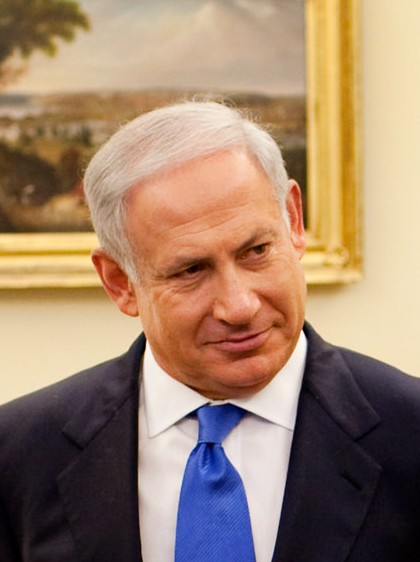 the last Knesset. The last government included two centrist parties, Yesh Atid, and Hatnuah. Yesh Atid actually was the biggest single party in it, with Likud having joined with Avigdor Lieberman’s party to gain a decisive lead in the 2013 elections. Hatnuah, though small, was very important to the coalition, as its head, Tzipi Livni was the fig leaf over the right wing that negotiated with the Palestinians.
This coalition is going to have a very different character. It is quite possible that Netanyahu will get the fully right-wing coalition he wants. It is very possible that the most moderate party in it will be Moshe Kahlon’s center-right Kulanu party. Kahlon is at best lukewarm on the two-state solution, although he has been critical of Netanyahu’s refusal to maintain negotiations. He probably described his view best when he said he supported Netanyahu’s 2009 Bar-Ilan speech. That’s the one Bibi just repudiated in the last days of the campaign.
Two States and Where America and American Jews Stand
No doubt, Netanyahu will try to walk back his rejection of a Palestinian state of any kind once he forms his new government. He can’t walk it back too far, given the nature of his coalition, but will seek just enough to allow people to believe that it is still possible under his watch if they so desire.
But given that very few were ever taken in by his Bar-Ilan speech, where he gave the most tepid support he could to two states, anyone who is serious about ending the conflict has to ask themselves where they stand now and what sort of policies must be pursued. The old policy is clearly a round peg for the square hole of Israel’s position.
Three sectors in particular must ask this question: mainstream Republicans who still hold on to George W. Bush’s outline; Democrats across the spectrum; and the mainstream of the International Jewish community.
Republicans have clung virtually as a unit to Bibi. Are they willing to continue to do so if that means, by definition, opposing a two-state solution? In 2012, the Republican National Committee adopted a resolution supporting Israeli rule over all the land between the Mediterranean and the Jordan Rivers. But this had little effect on elected officials, who distanced themselves from it when asked. That won’t be so easy if Bibi is perceived, correctly, as staunchly opposing two states.
Democrats have a starker dilemma. Opposition to a two-state solution, not to mention Netanyahu’s right-wing orientation on many other issues, clearly puts him outside the lines for almost all Democrats. But until Bibi started interfering in American partisan politics, they’ve been able to look past those differences as if they weren’t there. That won’t work now, but they will face considerable domestic pressure to do just that.
The same can be said for the American Jewish community. Divisions within the influential community are growing, and the tactics used by those who still wish to march in lock-step with Israel are becoming increasingly draconian and visible. That process is already underway, and this election will only accelerate it.
The choice before all these groups is not a one- or two-state solution, but whether or not Israel is going to allow Palestinians the basic rights, freedoms, and dignities that all of us expect and take for granted. From the most moderate to most radical analysis of how to resolve this conflict, that is what separates a supporter of peace from an opponent. And that is the question that these communities will have to resolve.
The Stark Choice For the International Community
At this point, there is no alternative in the realm of diplomacy to a two-state solution. The current period is one where new ideas, if they can be sold to the international community, could come to the fore, but so far, despite the attempts of some supporters of a bi-national or single secular state, they have not succeeded in penetrating the international discourse.
If Israel is going to refuse to seriously consider a two-state solution, then, the United States, United Nations, Arab League, European Union and any other international actors have a clear choice in front of them: either pack it in and give up on this issue or press Israel in unprecedented ways to concede on a two-state solution based on the generally recognized parameters (’67 borders with some swaps, shared Jerusalem, an agreed upon resolution of the Palestinian refugee issue).
The Obama Administration
The hostility between Obama and Bibi continues unabated. The White House is waiting until the last possible moment to extend its obviously reluctant congratulations. There is no doubt the relationship will continue to be strained.
On Iran, Bibi’s words to Congress could take on a little more weight in light of his victory, but on the whole very little should change as a result of the election. Obama needs to start making the case to the American public that this is a good deal, and he needs to start doing that now. But that’s no different from before.
It would be easy to be cynical, given the history of U.S.-Israel relations and Obama’s own non-confrontational style, that the United States will really press Israel. But Obama has very little to lose. Democrats will all be distancing themselves from his foreign policy in 2016, and his days as an elected official are done after that. He is certainly going to push hard on Iran. It is true that the American public recognizes Iran as a U.S. security issue. They do not view the occupation in the same way, even though it too presents serious security concerns for the United States.
The reality, however, is that without significant pressure, unprecedented pressure from the US, Israel will not move, not under Bibi. And increasing tensions, especially the possibility of lost exports to Europe, could move the Israeli electorate away from Bibi and even lead to early elections. Obama knows all this. The combination of his second term status and the rift on Israel Netanyahu opened up and later exacerbated by declaring his opposition to two states, puts Obama in an unusually advantageous position to take some bold steps to press Israel that would usually politically unfeasible.
That doesn’t mean he will take those steps. The forces opposing such actions are strong. But the opportunity is as good as it is likely to get in the foreseeable future.
The Overview
This wasn’t a referendum on Netanyahu, as many characterized it. This was a referendum on where the country should go, more centrist or more right. Netanyahu remains an unpopular and vulnerable leader, but he also remains the most popular of an unpopular bunch. In the end, Netanyahu won by waving the Arab boogeyman and saying that “droves” of Arabs were going to vote him out and gutting his right wing opponents by telling their voters that if they didn’t vote for Likud, Labor would rule again.
What the election did show was that the country is deeply divided, but that the trend of a rightward tilt continues. The solid performance of the Joint List was significant, but they drew a lot of voters away from the only fully left-wing Zionist party, Meretz, which barely survived.
Israel’s international isolation will continue to grow, and whether that growth is steady or accelerated will depend on both how much more brazen Netanyahu becomes and how much the U.S. and Europe are willing to tolerate before they take actions Israel will feel. It is not a hopeful scenario on any level.
Rancor over a possible Iran nuclear deal reached a new level this week with a letter from Senate Republicans, initiated by freshman Arkansas Senator Tom Cotton, telling Iran that a future U.S. government would not necessarily abide by such a deal. While it’s good that many Republicans have now recognized that the letter was a pretty dumb stunt, it’s worth taking a step back and considering the issue that has everyone so worked up.
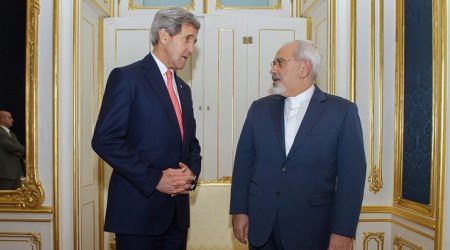
Let’s take a breath on Iran, everybody.
Here’s where we are: The U.S. and its partners in the P5+1 (the five permanent members of the UN Security Council plus Germany) have been negotiating a deal with Iran that would limit Iran’s nuclear program and place it under intrusive inspections for at least a decade. Critics of the deal insist that this is insufficient, and that any deal that leaves open the possibility of Iran someday obtaining a nuclear weapon is too dangerous. Republican Speaker of the House John Boehner invited Israeli Prime Minister Benjamin Netanyahu to address Congress last week to make the latter case.
In a recent piece on the controversy over Netanyahu’s speech to Congress, and the policy differences at its core, I suggested the comparison of Democrats inviting French President Jacques Chirac to deliver a speech in 2003 against the impending Iraq invasion. I think it’s pretty obvious that supporters of the Bush administration would have flipped out over it. The same people who praised the Netanyahu speech, and who are now praising the Cotton letter, would have been screaming “TREASON!” from Washington’s rooftops.
Clearly, such a speech would have been a violation of political norms, just as were the Netanyahu speech and the Cotton letter. But, as Brian Beutler asks in a smart piece on the Cotton contretemps, wouldn’t such a violation have been worth it for the chance of the US avoiding such a huge mistake in Iraq?
To be sure, there’s a bit of the comical in the plaintive cries from Senate hawks that they just want to “have a role” in Iran policy. The reality is that the Obama administration has actually spent a considerable amount of time engaging with Congress on the issue of Iran. And no one can seriously deny that opposition to a deal with Iran is at least partly rooted in opposition to, and hatred of, Obama himself. Conservatives have said since the first days of his administration that their overriding concern was to make sure his presidency was a failed one.
Furthermore, many Congressional critics of the deal have been quite clear that they are opposed to diplomacy with Iran, period. Sen. Cotton has made no secret of his view that the goal of new sanctions is not to get a better deal, as so many sanctions supporters have insisted, but to scuttle the deal entirely.
So Obama has some valid reasons for wanting to minimize Congress’s role in the negotiations.
Still, the legislative branch does have an important role to play in interrogating the executive’s foreign policy initiatives, especially one as potentially far-reaching as an Iranian nuclear deal. If they’re interested in playing that role in a serious and responsible way, and not simply using it as opportunity for grandstanding, they should be able to play it. And, given how lax Congress’s oversight of foreign policy in general has been in recent years, Americans should welcome it. And so should President Obama.
In many ways, Obama’s Iran policy is the mirror image of Bush’s Iraq policy, offering a very different vision of the use of American power, one that advances American security through diplomacy and the cultivation of international consensus rather than invasion and occupation. Rather than spin intelligence, cobble together a “coalition of the willing” and then go in guns blazing (literally), as Bush did in Iraq, with Iran Obama has carefully articulated and executed a two-track policy of economic sanctions pressure and negotiations. It was only when the former began to bite that the latter came into seriously play. But it’s also true that the offer of the latter acted as an important force multiplier for the former. While the president and his team have explained this approach many, many times over the past years, including in front of various Congressional committees, I think our country would benefit from hearing from them more.
Barack Obama was correct in opposing the Iraq war. He was correct in conceiving an Iran policy that is, in many ways, its opposite. But part of that has to be a willingness to engage in the open and rigorous debate that we never got on Iraq. If an Iran deal is the anti-Iraq war, let’s have it be that in every way, including the time we spend discussing it. Given the significant impact that an Iran nuclear deal could have on U.S. security and that of our partners, I think President Obama owes the American people that discussion, just as his Congressional critics owe the American people more than attention-getting stunts.
Israeli Prime Minister Benjamin Netanyahu did President Obama an enormous favor Tuesday. Given the opportunity, on perhaps the world’s biggest political stage, to articulate the best possible case against the nuclear deal currently being negotiated with Iran, Netanyahu came up empty. He whiffed. His shot sailed so wide of the rim that it went up into the bleachers and struck a small child in the face.
Given how much buildup the speech received—and how much of America’s time has been wasted with the controversy surrounding it—it’s simply amazing that Netanyahu didn’t use the chance to offer any new or interesting ideas, any viable path to achieving the prevention of an Iranian nuclear weapon—which he insists is a shared goal with the United States—other than the one we are on now. Read more at Slate.com

Best buddies, Bibi and Boehner
In his State of the Union address Tuesday night, U.S. President Barack Obama stated once again, and quite firmly, that he would veto any new sanctions bill against Iran. Apparently, Republican Speaker of the House of Representatives John Boehner was not going to take that lying down. Less than twelve hours after Obama finished his speech, Boehner announced that he has invited Israeli Prime Minister Benjamin Netanyahu to address a joint session of Congress on February 11. White House Spokesman Josh Earnest expressed President Obama’s displeasure at the invitation, of which the White House was not informed until Boehner’s announcement. Earnest called it a “departure from protocol” whereby the two leaders normally coordinate such visits. The soft words are thin cover for what is surely white-hot anger in the White House. Read more at LobeLog

Palestinian representative to the UN, Riyad Mansour
The Palestinian Authority (PA) has now moved a step closer to making good on its threat to go to the International Criminal Court (ICC) and bring charges against Israel. There is little doubt that this was a move Palestinian President Mahmoud Abbas tried desperately to avoid. In the end, he was forced to do it by a combination of U.S.-Israeli rejectionism, Palestinian desperation to do something to try to end Israel’s occupation, and his own many missteps.
Abbas signed on to 18 international agreements after the quixotic attempt to pass a resolution at the United Nations Security Council (UNSC) predictably failed. Among them was the 1998 Rome Statute, which established the ICC and took formal effect in 2002. This is the step that the U.S. and Israel have warned Abbas against most strongly. Among all the “unilateral steps” the Palestinians could take (which, one should note, is no more “unilateral” than any number of actions taken by Israel on a routine basis), this is the one Israel worries about most. Read more at LobeLog