On January 19, at the annual Institute for National Security Studies (INSS) conference, the leader of Israel’s opposition and head of the Zionist Union party, Isaac Herzog, unveiled an alternative approach to the issue of Israel’s nearly 49-year old occupation of the West Bank, Gaza and East Jerusalem. It has some points that clearly distinguish his policy from Israeli Prime Minister Benjamin Netanyahu’s. But it is short on detail, and includes some ideas that could make the situation even worse.
Upon examination, Herzog’s plan seems likely to garner support among the centrist, center-left and even parts of the center-right Israeli voter base. Given recent polls which show the Yesh Atid party garnering as many seats as Herzog’s Zionist Union and reflect more public confidence in Yair Lapid, the head of Yesh Atid, as a potential Prime Minister than Herzog, this plan must be read, at 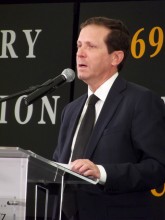 least in part, as an attempt to bolster Herzog’s position as opposition leader.
The main points of Herzog’s plan, as reported in the Israeli media, are these:
- While there is no current possibility for a two-state solution, Israel will not annul the possibility either diplomatically or geographically for the future
- Hamas will face “harsh” measures for any attacks from Gaza, including targeting their leaders, and eliminating their ability to communicate over television and internet.
- Israel will complete the security barrier around the major settlement blocs. “We will be here and you, Palestinians, will be there,” Herzog said. “Live your lives, improve your economy, create employment. The blocs under Israeli sovereignty will be part of the permanent solution. They will serve as recipients of settlers from outside the major blocs.”
- The barrier through Jerusalem will cut off Palestinian villages from the city. The Defense Ministry would be charged with granting permits to Palestinians who wish to enter the city to work.
- Palestinians would have full civil authority, but not security authority in the West Bank. This would, presumably, remove the regime of building permits in many Palestinian areas, but the Israeli military will remain present throughout the entire West Bank.
- Finally, Israel would help convene a regional security conference with “moderate” Arab states (like Saudi Arabia and Egypt, for example) to deal with ISIL and other regional security issues, presumably including Iran.
Politically, this is a shrewd plan for Herzog. The “us here, them there” idea harkens back to Yitzhak Rabin, who used that as a campaign slogan in 1992. More recently, former Prime Minister Ehud Olmert proposed a similar unilateral separation in the West Bank. This part of Herzog’s plan will probably be seen as a familiar, moderate and practical solution by many in Israel who don’t consider themselves part of the far right.
One major concern in Herzog’s proposal is the fact that he would complete the separation barrier in a manner which would cut most Palestinians off from Jerusalem. He makes no mention of the holy sites, but it seems safe to assume that his plan would provide Muslim and Christian Palestinians access to the sites in some manner. Still, with a barrier cutting Jerusalem off from nearby Palestinian towns, it will inevitably be even more difficult to gain that access, and in every other way, most Palestinians would be cut off from the city they envision as the future capital of their state. Herzog does not explain how he expects such an act to lead to greater quiet and security for Israeli Jews, but no matter—such an outcome is not conceivable given the rage that will ensue if Jerusalem is inaccessible to Palestinians.
Herzog’s plan has the benefit of removing the outlying settlements, which will not only eliminate some of the most radical settlements, it will remove many of them from close proximity to Palestinians, whom they often terrorize. Without any details, we cannot be certain, but it is possible that the removal of outlying settlements could lead to much greater freedom of movement for Palestinians. This is especially so if Herzog is serious when he urged, in his INSS speech, that Palestinians build their economy and communities.
But absorbing those settlers into the large settlement blocs will cause a significant spike in construction in those blocs. As I have detailed elsewhere, the blocs are already threatening the viability and contiguity of any potential Palestinian state, and this idea will make matters much worse.
While it is certainly true that most Israelis already see the large blocs (as well as the settlements in East Jerusalem) as part of Israel, the rest of the world, including the United States, as a matter of policy, does not, although it is seen as likely that the blocs will be annexed to Israel in a future agreement. Herzog’s plan would reinforce this fact on the ground, and would make it much harder for Palestinians to get the sort of negotiated land swap they would need to agree to the annexation. This is a running theme in Herzog’s proposal: Palestinian concerns are often glossed over and Palestinian input is not only invisible, it is seen as undesirable.
Recent Israeli history shows that unilateral actions like this do not bring peace, but instead entrench the conflict even more deeply. The lesson of Gaza is not, as many say, that Israel cannot withdraw from territory lest it face increased terrorism. Rather, it is that when Israel undermines moderate Palestinians with unilateral moves, it creates a power vacuum that is filled by more militant factions.
By simply taking the land it wants, Israel would undermine the basis for negotiating over borders between it and a Palestinian state. By cutting off Jerusalem, it would undermine the basis for negotiations for the city that both Israelis and Palestinians see as their capital. Herzog is proposing a change to the framework of any possible negotiations, and if the international community lets this happen, the notion of outside moderation of talks is lost. In fact, it would leave the Palestinians to choose between the meek acquiescence to Israeli diktats or the path of violence. Even an increasingly developed Palestinian economy, if that should also result from this plan, would not be enough to alter that equation.
Herzog’s idea that under such circumstances a regional security conference that includes Israel could possibly be convened only reflects how out of touch he is with political realities in the Middle East. In fact, this plan would make it impossible for any Arab state to upgrade its relations with Israel. And his approach to Gaza sounds more like bluster than a strategy, and certainly does nothing to address the miserable conditions Israel’s blockade of the Strip has created, conditions that much of Israel’s defense establishment has repeatedly urged be improved.
This plan has some points that might be worked with, but it is not, on balance, sound policy. It has little chance of achieving the quiet Herzog envisions; on the contrary, it is likely to further enflame the conflict.
Herzog’s plan, while preferable to Netanyahu’s status quo and certainly to the vision of those even farther to the right, falls well short of a structure that gives either Israel or the international community a framework to move toward an end to Israel’s occupation. Indeed, it seems more tailored for domestic political gains than for actually resolving the vexing problems Israel faces. That might help him push back against Lapid and Netanyahu, but the price would be further complicating diplomacy and the situation on the ground. That price is too high.
Recently, the right wing Israeli group Im Tirtzu created a highly inflammatory video singling out leaders of four leading Israeli human rights groups as “plants” by foreign powers seeking to undermine the State of Israel and supporting terror attacks. The video has been widely condemned as incitement to violence against these individuals and their organizations. The Foundation for Middle East Peace quickly moved to support our Israeli colleagues, as did many other organizations.
The groups – B’Tselem, Breaking the Silence, Hamoked, and the Public Committee Against Torture In Israel – are among the many peace and human rights NGOs that are increasingly targeted by hateful rhetoric and even by anti-democratic legislation in the Knesset, much of which has been spurred by Im Tirtzu and their allies in the Likud and Jewish Home parties, the two largest parties in Israel’s governing coalition.

Still from Im Tirtzu’s video showing mock “files” on Israeli human rights leaders
Defenses of these human rights workers and condemnations of Im Tirtzu have come not only from the Israeli left and its supporters, but also from key officials in the Israeli government, military and intelligence communities.
Opposition Leader Isaac Herzog, to Netanyahu: “Take responsibility, tell Im Tirtzu that its video is beyond the ‘separation wall’ of what is acceptable in our democratic society… Stop those who stain your (Netanyahu’s) whole camp with hate.”
Former Foreign Minister Tzipi Livni: “I will oppose any attempt to paint people or entire communities as collaborators with the enemy.”
MK Zehava Gal-On, Chair of the Meretz Party: “This is an explicit call to action for these people’s blood. The public atmosphere of violence assisted in spreading this material like wildfire, and is further encouraged by politicians’ blazing hatred and populist appeals. I am afraid for their safety.”
Yuval Diskin, Former Director General of the Shin Bet: “[Israeli human rights groups] provide another, important mirror to our actions. Even if they can make us angry, even if they are sometimes inaccurate or not doing their jobs correctly – their contribution is very important.”
Amiram Levin, former IDF General and former Deputy Director of the Mossad: “’Breaking the Silence’ strengthens the IDF and its moral code…‘Breaking the Silence’ guards IDF soldiers in the impossible place in which politicians have abandoned them.”
Ami Ayalon, former head of the Shin Bet: “As a former soldier and commander of the army and who is today a private citizen who believes that the IDF is a moral army only when its fighters are reporting what they saw with their own eyes, I break the silence.”
J Street: “It is time for American Jewry to make its voice heard loudly and clearly. Whether we personally agree with the work of Breaking the Silence or the other NGOs targeted or not, we hope there can be near unanimous consensus across the political spectrum that [Im Tirtzu’s] behavior is outside the bounds of our community’s values and standards.”
The Anti-Defamation League: “Im Tirtzu’s highly disturbing video employs fear tactics to accuse Israeli human rights activists and organizations of being culpable in the ongoing wave of Palestinian terrorism. This is a form of incitement which clearly crosses over into hate speech.”
Religious Action Center of Reform Judaism, letter to Prime Minister Benjamin Netanyahu: “A particular concern is that the violent rhetoric doesn’t come only from the extremes, but is echoed by public figures, members of your government, and the media. That is why it is essential that you exercise your leadership to set the tone of civil discourse – preventing incitement and violence – regardless of any disagreements you may have with the views of the human rights NGOs. We have seen the horrors that occur when words of incitement turn to acts of violence; such incitement cannot go unchecked.”
Joint Statement of the Worldwide Conservative/Masorti Movement: “We must hold leaders and neighbors alike accountable for a society in which issues are debated based on facts, people are treated with respect regardless of their beliefs, and tolerance and acceptance drown out the noise of hate.”
New Israel Fund: “The new campaign by the extremist Im Tirtzu group, naming and inciting against four human rights leaders, is designed to further delegitimize the proper work of human rights organizations while endangering the personal safety of these leaders who are our friends and allies. Not for nothing did an Israeli judge deem Im Tirtzu to have “fascist attributes.”
Americans for Peace Now: “American Jewish leaders have, with good reason, long pointed to Israel’s vibrant civil society and freedom of speech as evidence of the robustness of Israeli democracy in an un-democratic region. Today, these same leaders must recognize that burgeoning attacks on Israeli progressive civil society are a threat to Israel’s democracy and feed the kind of extremism that has already led to attacks and the murder of an Israeli prime minister.”
T’Ruah: The Rabbinic Call for Human Rights: “This hateful rhetoric is all too reminiscent of the time when the walls of Jerusalem displayed posters of Prime Minister Yitzchak Rabin z”l in a Nazi uniform, and when crowds chanted “Death to Rabin” at rallies.”
B’Tselem USA: “This crude attempt to gin up support for silencing human rights activists by publicly attacking them for political gain is nothing short of sickening. This attack may come in Im Tirtzu’s voice but the hands are those of the current Israeli government.”
Ameinu and ARZA: “Im Tirtzu’s actions are a direct threat to Israel and a desecration of the Zionist Dream of Israel’s founders…this video adds to a growing culture of incitement within Israel and the Palestinian territories — one that is strengthened by divisive and irresponsible statements by government ministers and Members of the Knesset — which has already lead to violence…Im Tirtzu, the racist Lehava movement, the Tag Mechir (Price Tag) vigilantes and other foes of Israeli democracy must be denounced without reservation.”
Peace Now ad: “Whoever finances Im Tirtzu also supports Jewish terrorism”
Partners for Progressive Israel: “These are the tactics that resulted in the assassination of YItzhak Rabin twenty years ago; and these are the same tactics used by totalitarian parties of the right in Europe in the inter-war period in their successful campaigns to destroy democracy in Italy and Germany.”
Jewish Voice for Peace: “This video is just the latest, and perhaps most egregious, example of the climate of hate and violence directed at anyone who stands up for the rights of Palestinians.”
Foundation for Middle East Peace: “FMEP’s support for these groups is based on shared values of democracy, equality, and tolerance. Hateful attacks like the one launched by Im Tirzu undermine those values. The activists named in the video represent the best of an open, democratic civil society, something of which all Israelis should be proud, just as we at FMEP are proud to share in the common work of advancing human rights in our societies.”
Hagai El-Ad, Executive Director of B’Tselem: The Israeli Information Center for Human Rights in the Occupied Territories: “I’m not afraid of Im Tirtzu. I’m afraid of the occupation, of indifference to injustice, sanctimoniousness and passing shock.”
HaMoked: The Center for the Defense of the Individual: “There can be no doubt that this campaign which targets private individuals falls outside the protection of freedom of speech. It constitutes unbridled incitement and dangerous provocation that put at risk the personal wellbeing and safety of the organizations’ employees who “star” in it.”
After Benjamin Netanyahu’s surprising victory in Israel’s national elections in March, he took until the last possible minute to complete the process of forming the government for his fourth term as Israel’s prime minister. For all the time he invested, despite making it just under the wire, Netanyahu ended up with a fragile, ultra-right-wing coalition and more work ahead of him to bring in at least one more party.
The government Netanyahu presented to Israeli President Reuven Rivlin was a bare majority of 61 seats out of the 120-seat Knesset. There are no fig leafs in this coalition, no Tzipi Livni or Ehud Barak for Netanyahu to send to talk fruitlessly with the Palestinians. One might think this would make the coalition more stable, since it consists entirely of the right wing. In this, one would be wrong. Read more at LobeLog.
With all eyes on the framework agreement for a nuclear deal with Iran, and on the looming Capitol Hill battle to defend it, it is easy to forget that Israel is still in the process of forming its new government. With much of the drama playing out offstage, many observers are sitting back and waiting for the political wrangling over ministries and Knesset committee chairs to be over.
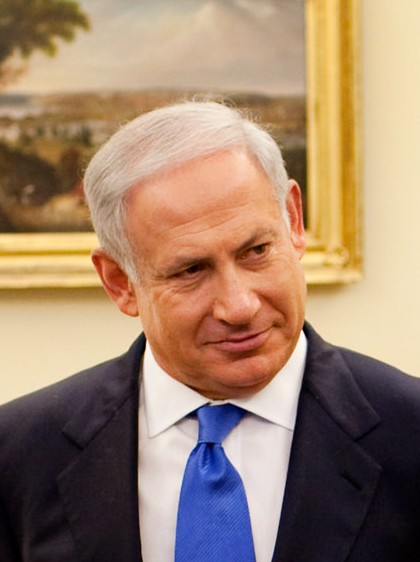 But some are making the case that there is more brewing than the doling out of prestige appointments to the leaders of the parties expected to be part of the fourth Benjamin Netanyahu government. A unity government, at one time thoroughly rejected by both Netanyahu and Zionist Union leader Isaac Herzog, has emerged again as at least a theoretical possibility.
The notion of a unity government seemed to have dissipated after both Netanyahu and Herzog initially rejected the idea, but of course, politicians say many things and decide better of it later, as circumstances change and political winds shift. Such changes are common in forming Israeli coalitions, something the selected candidate might have as much as six weeks to do after the announcement of election results.
Two factors have contributed to the revival of the possibility of a government of national unity. One is the central role the new Kulanu party will play in any new government. The party is center-right, and that makes it the most moderate of the parties that are projected by most to constitute the next coalition. Kulanu’s leader, Moshe Kahlon, is primarily interested in social welfare issues and wishes to address growing economic concerns like rising housing prices, increasing gaps between rich and poor in Israel and declining social services. This makes Kulanu, which would also prefer not to be the party farthest to the “left” in the government, naturally supportive of bringing the Labor Party into the government (Labor makes up the overwhelming bulk of the Zionist Union coalition).
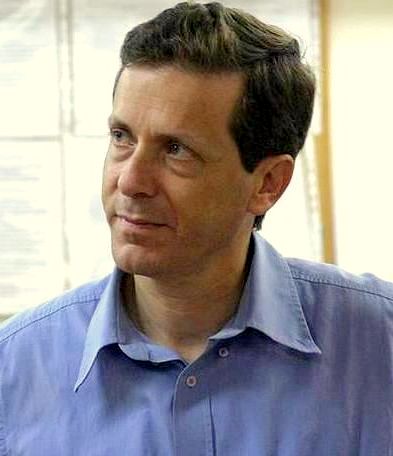 Kulanu controls ten seats in the 120-seat Knesset. Netanyahu’s 67-seat right wing majority is therefore vulnerable to Kulanu. Kahlon has clearly stated that he prefers a national unity government.
By itself, Kulanu does not explain why rumors are starting to circulate in Israel that Netanyahu is trying to woo Herzog into the government. However, combined with the new framework agreement between the P5+1 and Iran on the nuclear issue, we have a very clear motivation for Netanyahu to bring Herzog into the government.
Gary Rosenblatt of the Jewish Week lays out the reasoning well: “The prime minister is well aware that if he forms [a narrow, right-wing] coalition, the crisis in relations with the White House will only deepen. And now that the U.S. and other Western powers have signed a preliminary deal with Iran, it is all the more reason for him to be able to work with Obama in the hopes of toughening up the final agreement in the next three months — and, if all else fails, getting tacit permission from the White House to strike out at Iran if it violates the deal…In a unity government, Herzog most likely would serve as foreign minister, presenting a friendly face to the world in his international role.”
The very slight possibility that some parties from the right would not join a unity government is not a threat, as the Zionist Union brings 24 seats with it, so with them and Kulanu alone, Netanyahu would have 64 seats. It all makes sense, so why wouldn’t Netanyahu do it?
The answer is that he would, if it is a real option. True, a unity government would mean there would be significant opposition from within his own coalition to settlement policy, once again. Other policies would not be as smooth as they would under an all right wing government as well. But in the post-election cool-down, it is reasonable to think that Netanyahu has assessed the damage his scorched earth campaign for re-election caused Israel and decided he must try to repair some of it.
On the surface, the notion of a unity government is good for Israel. It should allow Israel to mend fences with the Obama Administration and the Democrats and it should forestall European pressure at the United Nations and other international fora. The reality is, however, that if Isaac Herzog does agree to the unity government, it will be a disaster for his party and have deeply negative consequences in the end for Israel, the Palestinians and American policy in the region.
A Bad Idea for Labor
The Labor Party once dominated Israeli politics, but has long since fallen off its perch. For a while, Labor was able to win support by being the party of peace, representing the Israel the world could work with and admire. But in recent years, it all too often played the role of fig leaf for center-right or right-wing leadership in power in Israel. With the failure of the Oslo Accords, which were distinctly identified with Labor, it lost its credibility as a “pragmatic peace” party.
This last election brought Labor back to some semblance of relevance, but if it once again plays the role of fig leaf for expanding settlements and continued intransigence from Netanyahu, it will lose a lot of it. The campaign itself demonstrated that Labor is still dogged by many of its old problems. A lot of the increase in support for Labor was the result of voters who were disillusioned with other center-left parties, but did not want to support Netanyahu.
Labor has much to do if it hopes to make further gains in the Israeli electorate. It will move in the opposite direction if it is again perceived as a fig leaf for Netanyahu, and especially so because the best thing Labor currently has going for it is that it is the vehicle to vote against Bibi.
A Bad Idea for Israel
National unity governments in Israel are notoriously clunky machines. The junior partner is always endeavoring to show it is moderating the policies of the senior, and the party of the Prime Minister is trying to get the most out of the other side while giving it as little as possible in terms of both policy and positioning for the next election.
On the international stage, a unity government will, at best, keep Israel from facing increased pressure to end its occupation of the Palestinians. Netanyahu will still need to appease his own party and will be very fearful of giving his rival, Naftali Bennett, the means to increase his support and position himself to challenge Likud from the right. Herzog will be under constant pressure to modify Netanyahu’s positions, but won’t have enough leverage to do much.
It’s a recipe for dysfunction, both domestically and internationally for Israel.
Dangerous for the Palestinians
The one thing a unity government might be able to do is to restart bilateral negotiations with the Palestinian Authority. Under current conditions, such talks are likely to be harmful, not helpful, for Palestinian aspirations.
Herzog will do nothing to convince Netanyahu to change his position on the Palestinian transitional government. Hamas remains political anathema in Israel. Nor is he likely to mollify the current Israeli policy view of the issue of Jerusalem. All he will be able to do is restore the status quo ante, which means talks that have no hope of success.
But the very existence of such talks will present serious problems for the Palestinians. At the very start, Palestinian President Mahmoud Abbas will likely be under pressure from the United States and Europe to re-engage. But without some assurances that things would be different in this round, he will face intense domestic pressure to stay away from that process. If he refuses, it will give Netanyahu’s allies in the United States plenty of fodder, and if he agrees to talks that produce nothing but more settlements, he will give his domestic opposition ammunition.
Herzog is a moderate, and if he were Prime Minister, it is not impossible that the right combination of pressures and incentives could get him to pursue an end to the occupation. But in a Likud-led government, he cannot be more than a fig leaf, putting a kinder face on Netanyahu’s intransigence. Without him, the Palestinians have more support, at least in Europe, for pursuing their case in international fora, and the potential for more pressure on a distinctly rejectionist, right wing Israeli government. With him, they have the worst of both worlds: less pressure on an Israel with a more reasonable image but whose policies are little different from those that have caused so much international frustration of late.
A Bad Road for US Policy
Although the two-state solution and bilateral talks to get there are still American policy, the current conditions have to change if such a goal is ever to be attained. Some way of unifying the West Bank and Gaza again, some sense of incentive for Israel to make difficult decisions, a clear vision of how to resolve difficult issues like Palestinian refugees and Jerusalem needs to be presented, etc. Simply forcing talks again will work no better today than it did in 2013, John Kerry’s last attempt which ended in disaster.
Herzog does not help change the current conditions. Instead, his presence in the government makes it easier for Netanyahu to accede to meaningless negotiations. No matter how cynically one may view American policy on this, more of the same is clearly not preferable. It is just turning up the heat on the pressure cooker.
On Iran, Herzog’s presence is even more problematic. He would be the one doing the outreach to the United States and Europe, a much less abrasive voice than Netanyahu’s. But his views on Iran are fairly close to Bibi’s. He may disagree with Netanyahu’s approach and belligerent attitude; he certainly disagrees with Bibi having played partisan politics in America on this issue. But substantively, he shares Netanyahu’s concerns about any nuclear agreement with Iran. His objections will not only be presented more effectively and diplomatically than Bibi’s, they will have the added weight of coming from “the other side” of Israeli politics, demonstrating that the country is united on this point and strengthening Republican arguments.
In the end, a unity government remains the far less likely outcome of the Israeli coalition talks. While a far-right coalition, the much more likely outcome, will increase Israel’s isolation in the short term, the possibility that Israel will end up owing more accountability to the world for its policies is good for its long term interests, however counter-intuitive that might seem. As ugly as the next few years might be, they will be similarly better for Palestinian and American interests as well than a kinder, gentler face on the same policies would be.
Israeli Prime Minister Benjamin Netanyahu won his fourth election last night in surprising fashion. He outdistanced the polls, including the exit polls in the waning hours of voting and won a decisive victory over the Zionist Union and Isaac Herzog. Here are some quick and initial takeaways from the results.
A huge victory for the Right
Even though the right wing/religious bloc in the Knesset didn’t grow, the right gained considerable power relative to
the last Knesset. The last government included two centrist parties, Yesh Atid, and Hatnuah. Yesh Atid actually was the biggest single party in it, with Likud having joined with Avigdor Lieberman’s party to gain a decisive lead in the 2013 elections. Hatnuah, though small, was very important to the coalition, as its head, Tzipi Livni was the fig leaf over the right wing that negotiated with the Palestinians.
This coalition is going to have a very different character. It is quite possible that Netanyahu will get the fully right-wing coalition he wants. It is very possible that the most moderate party in it will be Moshe Kahlon’s center-right Kulanu party. Kahlon is at best lukewarm on the two-state solution, although he has been critical of Netanyahu’s refusal to maintain negotiations. He probably described his view best when he said he supported Netanyahu’s 2009 Bar-Ilan speech. That’s the one Bibi just repudiated in the last days of the campaign.
Two States and Where America and American Jews Stand
No doubt, Netanyahu will try to walk back his rejection of a Palestinian state of any kind once he forms his new government. He can’t walk it back too far, given the nature of his coalition, but will seek just enough to allow people to believe that it is still possible under his watch if they so desire.
But given that very few were ever taken in by his Bar-Ilan speech, where he gave the most tepid support he could to two states, anyone who is serious about ending the conflict has to ask themselves where they stand now and what sort of policies must be pursued. The old policy is clearly a round peg for the square hole of Israel’s position.
Three sectors in particular must ask this question: mainstream Republicans who still hold on to George W. Bush’s outline; Democrats across the spectrum; and the mainstream of the International Jewish community.
Republicans have clung virtually as a unit to Bibi. Are they willing to continue to do so if that means, by definition, opposing a two-state solution? In 2012, the Republican National Committee adopted a resolution supporting Israeli rule over all the land between the Mediterranean and the Jordan Rivers. But this had little effect on elected officials, who distanced themselves from it when asked. That won’t be so easy if Bibi is perceived, correctly, as staunchly opposing two states.
Democrats have a starker dilemma. Opposition to a two-state solution, not to mention Netanyahu’s right-wing orientation on many other issues, clearly puts him outside the lines for almost all Democrats. But until Bibi started interfering in American partisan politics, they’ve been able to look past those differences as if they weren’t there. That won’t work now, but they will face considerable domestic pressure to do just that.
The same can be said for the American Jewish community. Divisions within the influential community are growing, and the tactics used by those who still wish to march in lock-step with Israel are becoming increasingly draconian and visible. That process is already underway, and this election will only accelerate it.
The choice before all these groups is not a one- or two-state solution, but whether or not Israel is going to allow Palestinians the basic rights, freedoms, and dignities that all of us expect and take for granted. From the most moderate to most radical analysis of how to resolve this conflict, that is what separates a supporter of peace from an opponent. And that is the question that these communities will have to resolve.
The Stark Choice For the International Community
At this point, there is no alternative in the realm of diplomacy to a two-state solution. The current period is one where new ideas, if they can be sold to the international community, could come to the fore, but so far, despite the attempts of some supporters of a bi-national or single secular state, they have not succeeded in penetrating the international discourse.
If Israel is going to refuse to seriously consider a two-state solution, then, the United States, United Nations, Arab League, European Union and any other international actors have a clear choice in front of them: either pack it in and give up on this issue or press Israel in unprecedented ways to concede on a two-state solution based on the generally recognized parameters (’67 borders with some swaps, shared Jerusalem, an agreed upon resolution of the Palestinian refugee issue).
The Obama Administration
The hostility between Obama and Bibi continues unabated. The White House is waiting until the last possible moment to extend its obviously reluctant congratulations. There is no doubt the relationship will continue to be strained.
On Iran, Bibi’s words to Congress could take on a little more weight in light of his victory, but on the whole very little should change as a result of the election. Obama needs to start making the case to the American public that this is a good deal, and he needs to start doing that now. But that’s no different from before.
It would be easy to be cynical, given the history of U.S.-Israel relations and Obama’s own non-confrontational style, that the United States will really press Israel. But Obama has very little to lose. Democrats will all be distancing themselves from his foreign policy in 2016, and his days as an elected official are done after that. He is certainly going to push hard on Iran. It is true that the American public recognizes Iran as a U.S. security issue. They do not view the occupation in the same way, even though it too presents serious security concerns for the United States.
The reality, however, is that without significant pressure, unprecedented pressure from the US, Israel will not move, not under Bibi. And increasing tensions, especially the possibility of lost exports to Europe, could move the Israeli electorate away from Bibi and even lead to early elections. Obama knows all this. The combination of his second term status and the rift on Israel Netanyahu opened up and later exacerbated by declaring his opposition to two states, puts Obama in an unusually advantageous position to take some bold steps to press Israel that would usually politically unfeasible.
That doesn’t mean he will take those steps. The forces opposing such actions are strong. But the opportunity is as good as it is likely to get in the foreseeable future.
The Overview
This wasn’t a referendum on Netanyahu, as many characterized it. This was a referendum on where the country should go, more centrist or more right. Netanyahu remains an unpopular and vulnerable leader, but he also remains the most popular of an unpopular bunch. In the end, Netanyahu won by waving the Arab boogeyman and saying that “droves” of Arabs were going to vote him out and gutting his right wing opponents by telling their voters that if they didn’t vote for Likud, Labor would rule again.
What the election did show was that the country is deeply divided, but that the trend of a rightward tilt continues. The solid performance of the Joint List was significant, but they drew a lot of voters away from the only fully left-wing Zionist party, Meretz, which barely survived.
Israel’s international isolation will continue to grow, and whether that growth is steady or accelerated will depend on both how much more brazen Netanyahu becomes and how much the U.S. and Europe are willing to tolerate before they take actions Israel will feel. It is not a hopeful scenario on any level.
Based on the current polls, it is unlikely that the left and center in Israel will be capable of forming the next government after the National election in March. It appears that Labor Leader Isaac Herzog and his partner, Tzipi Livni realize this and have set their sights on something less: a “national unity government” featuring a rotation in leadership between current Prime Minister Benjamin Netanyahu and Herzog.

MK Haneen Zouabi
The cruel fact is that “the Zionist Camp” (the name taken for the joint ticket between Labor and Livni’s small HaTnuah party) and the left-wing Meretz party are just too far from the 60 Knesset seats required to form a government to seriously entertain the possibility of an actual victory. That is the case even if they would agree to include and could persuade the United Arab List (with a projected 12 seats in the Knesset) to join their coalition.
Dramatic evidence for this calculation by Herzog and Livni is their declaration of support for barring Arab Knesset Member Haneen Zoabi from running for national office. By joining the Likud in this tactic, the Zionist Camp seeks to position itself as eligible for sharing power with Netanyahu’s party. That may make short-term political sense for the leaders of the “main opposition party.”
But, it is a move that exposes the realities that politics in the “Jewish state” imposes on Jewish moderates. It appears certain, and it appears that Herzog and Livni know this, that in the kind of political arena currently constituted by the State of Israel no governing coalition in Palestine/Israel can arise which is capable of addressing the Jewish-Palestinian problem.
Demographic and cultural changes have transformed the Jewish electorate in Israel into a polity incapable of producing a left or even center-left government. The current election campaign shows that the painful implications of this state of affairs have not yet been absorbed by the remains of what used to be called “beautiful Israel.” To do so would mean recognizing that any serious strategy for bringing Jewish moderates back into power will require an alliance with non-Jews, campaigns to achieve extremely high turnout rates by non-Jews, and even extension of political rights to Arabs in East Jerusalem (perhaps to Arabs in the rest of the West Bank). Support for Zoabi’s political ostracism slams the door in the face of that strategy. At best it delays real movement toward it and at worst indicates a fundamental refusal to face the country’s deepest challenges and the realities that produce them. One of those realities is the impossibility that the country will once again ever be governed by an Ashkenazi-liberal dominated, Jewish-only, coalition.
Two instructive comparisons come to mind, one with the United States and one with France. Compared to Arabs in Israel, who comprise 15% of eligible voters, African Americans make up only 12% of the American electorate. Yet, elections in the United States have come to turn on African American participation. On average, Republican Presidential candidates receive about 57% of the white vote. Indeed, it is agreed among all observers that without a strong turnout by African Americans, Democrats simply cannot win Presidential elections in the United States. That they have done so repeatedly in recent years (including winning the popular vote in the disputed 2000 election) when African American turnout has been high, while suffering severe setbacks in off-year congressional elections (when that turnout has been low), proves the point.
Perhaps a better, though less well known, comparison is the predicament of the Socialist government of Guy Mollet in France in early 1956. The Socialists were already aware of the disastrousness of the war in Algeria. In January 1956, Mollet outlined a “Republican Coalition” that would include supporters of Pierre Mendez-France and other advocates of French withdrawal from Algeria—a coalition that would save the Fourth Republic by extricating France from the mess in Algeria forced upon the country by an alliance among right-wing and ultranationalist parties, settlers, and key elements in the military. But Mollet’s plan failed. He could not achieve a stable majority without allying with the Communists, who controlled a significant portion of the French legislature. Mollet refused to risk his “anti-communist” credentials by allowing communists in his coalition. Instead he turned to the equivalent of a “national unity government,” thereby winning power. But by joining with the right on a platform of Algerie Française, he prolonged the war, and, ultimately, destroyed the Fourth Republic. Whether the Fourth Republic could have been saved is unclear but by refusing to ally with the communists on the fateful question of staying in or leaving Algeria, Mollet sealed its doom.
There is a saying in politics—that it makes strange bedfellows. Usually that shows itself by the appearance of unexpected and even unprecedented alliances. But sometimes it shows itself by the fate of those who defy it. By refusing to face the newness of the world that must be made, the leaders of the “Zionist Camp” are deepening the crisis of the world as it is.
 Professor Ian Lustick is the Bess W. Heyman Professor of Political Science at the University of Pennsylvania. He is a past president of the Politics and History Section of the American Political Science Association and of the Association for Israel Studies, and a member of the Council on Foreign Relations.