On July 21, Omar el-Abed, a 19-year-old Palestinian from the West Bank village of Khobar, brutally murdered three Israeli civilians inside the settlement of Halamish. Three days later, Israel’s ambassador to the United Nations, Danny Danon, spoke about the attack in an address to the Security Council. In his remarks, Danon insinuated that money was a prime factor motivating el-Abed to attack: “The terrorist who murdered this family did so knowing that the PA [Palestinian Authority] will pay him thousands of dollars a month.”
Danon’s comment was another salvo in the ongoing—and exceptionally successful—campaign to stoke outrage against PA President Mahmoud Abbas and the Palestinian program providing financial support to families of those imprisoned or killed by Israel. The program has existed for decades and some of the funding in question may actually end up in the Israeli prison system, since it enables Palestinian prisoners to purchase goods in prison commissaries. Yet it only recently became a point of contention, with critics like Danon now arguing that these payments incentivize terror, nicknaming the program, “pay-to-slay.” Today, a chorus of voices on Capitol Hill, in the US media, and from Israel demands that the United States cut off assistance to the Palestinians, unless and until the program ends.
That is one side of the argument. The other side holds that even as terrorism is wholly unacceptable, the root cause of Palestinian violence is Israel’s now 50-year-long military occupation of the West Bank, East Jerusalem, and Gaza Strip, implemented through policies that are intrinsically violent, and that stoke popular misery, despair, and outrage. Such sentiments echo in the Facebook post el-Abed published immediately before committing his heinous crime: “I am young, I have not yet reached the age of 20, I have many dreams and aspirations. But what life is this, in which they murder our wives and our youth without any justification. They desecrate the Al-Aqsa mosque and we are asleep, it’s a disgrace that we sit idly by.”
It is a fact that Israeli military forces detain an extraordinary number of Palestinians, often for long periods without any due process. Many are convicted in military courts that have nearly a 100 percent conviction rate. According to Palestinian sources, Israel has arrested 40 percent of the male Palestinian population since 1967. This is in addition to Palestinians killed while attacking, or accused of attacking, Israeli targets.
Most Israelis sees these men as terrorists; most Palestinians view them as martyrs and political prisoners. This is the brutal, zero-sum ethos of national struggle—something that will change only after the conflict ends. In the meantime, given this rate of arrests, funding for families of those killed or imprisoned by Israel represents a critical social safety net. Removing it would amount to collective punishment, illegal under international law and viewed by most of the world as immoral.
Read the rest of the article at The Nation.
Alaa Tartir from Al-Shabaka has a new policy brief on how the Palestinian Authority’s security forces are subcontractors for Israel’s occupation of the West Bank:
Security collaboration between Israel and the PA has fulfilled the Oslo Accords’ objectives of institutionalizing security arrangements and launching a peace process that is tightly controlled by the security sector in order to enable Israel to fulfil its colonial ambitions while claiming to be pursuing peace. This process of “securitized peace” is manifested in a number of ways, including the PA security forces’ arrest of Palestinian suspects wanted by Israel (as in the recent case of Basil Al-‘Araj who was arrested and released by the PA only to be chased and eventually assassinated by the Israelis); the suppression of Palestinian protests against Israeli soldiers and/or settlers; intelligence sharing between the Israeli Defense Forces (IDF) and the PA security forces; a revolving door between Israeli and PA jails through which Palestinian activists cycle for the same offenses; and regular joint Israeli-Palestinian meetings, workshops, and trainings.
Not surprisingly, they aren’t very popular:
Multiple surveys over the years have shown that the majority of Palestinians in the West Bank and Gaza Strip (between 60% and 80%) oppose security coordination with Israel. And in a March 2017 Palestinian Center for Policy and Survey poll, two-thirds of respondents demanded Abbas’s resignation, with 73% expressing the belief that Abbas is not serious in his threat to suspend security coordination with Israel. In a 2010 Maan News Agency poll, 78% of respondents said they believe that the PA security forces are engaged in surveillance, monitoring activities, and intervening in people’s privacy. Finally, according to Visualizing Palestine, 67% of West Bank Palestinians said they feel that they are living in an undemocratic system that cracks down on freedoms in large part as a result of the security realm.
Read the rest of Al-Shabaka’s brief to see Alaa’s suggestions for how the Palestinian security forces could be reformed to be more responsive to the needs and concerns of ordinary Palestinians.
The passing of former Israeli president Shimon Peres, the last of Israel’s founding generation of statesmen, has prompted an avalanche of eulogies from the international community. Remembering him as a “dear friend,” a “great man of the world,” and Israel’s “biggest dreamer,” world leaders and dignitaries from 70 countries gathered in Jerusalem for his funeral on Friday, among them Palestinian President Mahmoud Abbas. It was the first time Abbas had stepped foot in Israel since 2010.
The domestic backlash to Abbas’s attendance reveals that Peres is remembered quite differently among many Palestinians, and highlights Abbas’s increasing isolation at home. In Palestine, Peres is reviled for his early support of Israeli settlements, his 1996 military campaign in southern Lebanon that resulted in the Qana massacre, and his failure to deliver on promises of peace made in the Oslo Agreements.
Within hours of the announcement that Abbas would be at the funeral, pressure against his visit to Israel began to build. Members of the Joint Arab List, a political party representing Palestinian citizens of Israel, had already declined to join the funeral, and refused even to express condolences. Joint List chair Ayman Odeh explained that despite Peres’s peace efforts in the 1990s, “we have fierce opposition to his security stances of the occupation and building settlements, bringing nuclear weapons to the Middle East, and unfortunately, as president, he chose to support [Israeli Prime Minister Benjamin] Netanyahu and his policies.” That Abbas was the only Arab head of state attending was another indication of his isolation. (Representatives from Jordan, Oman, Morocco, and Bahrain, as well as Egyptian Foreign Minister Samih Shoukry, were also present.)
According to a report from Palestinian daily Ma’an News, unnamed officials attending the ongoing annual meeting of the Fatah Revolutionary Council complained about the optics of the visit, claiming that it would undermine Fatah’s base of support and hand Islamist groups a public relations victory.
Palestinian social media also mobilized against Abbas, with the hashtag “Condolences for Peres’s death are treason” beginning to trend soon after the announcement of the visit. Rumors swirled that Israeli culture minister Miri Regev had attempted to snub the Palestinian President by denying him a first row seat at the funeral, until Peres’s family intervened. Users reacted with consternation as a screenshot of Abbas on television was claimed to show him shedding tears. “This won’t help his [political] position,” one commentator said:
محمود عباس رئيس فلسطين يبكي في وفاة شمعون بيريز رئيس اسرائيل السابق .. مشهد يصعب استيعابه pic.twitter.com/Feo9tjG6lI
— مسمار (@mesmmarr) September 30, 2016
Footage also showed a smiling Abbas shaking hands with Benjamin and Sara Netanyahu, and speaking with Zionist Union MK Tzipi Livni.
High-placed Fatah officials defended Abbas’s move, saying that it would send a message to the world that the Palestinian people were serious about peace. They did not mention if Israel had committed to any reciprocal steps. Netanyahu had not acknowledged Abbas’s presence in his remarks at the funeral.
The backlash against the visit expresses the despair many ordinary Palestinians feel with the status quo. More than twenty years after the signing of the Oslo Peace Accords, Israel’s occupation of the West Bank and the settlement enterprise continue apace, while Palestinian statehood seems more distant than ever. That frustration is often directed at Abbas, who is sometimes seen as an obstacle to change. His decision to attend Peres’s funeral seems unlikely to alter that perception.
Philip Sweigart is program director at the Foundation for Middle East Peace. He holds an M.A. in International Affairs from American University’s School of International Service, and received a B.A. in Foreign Affairs and Middle East Studies from the University of Virginia, where he wrote his thesis on the role of ethno-sectarian identity and class differences in the 2011 Arab uprisings.
In recent weeks, an upsurge in violence in Jerusalem has brought the embattled city back into the headlines. According to Danny Seidemann, founder of Terrestrial Jerusalem and one of the leading experts on the city, this violence, boiling at a level unseen in Jerusalem since 1967, actually began over a year ago, and it is not just another spoke in the “cycle of violence.”
“Usually there’s a tendency to overstate the instability of Jerusalem,” Seidemann said at a meeting of journalists and analysts in Washington this week. “But Jerusalem is normally a far more stable city than its reputation. What we are seeing now are significant developments that go well beyond tomorrow’s headlines.”
Seidemann described a dangerous confluence of factors, with the political stalemate creating an atmosphere of despair in which the conflict, which has always been political, will finally become the religious conflict that many have believed, until now incorrectly, that it is. The current conflict centered on the Temple Mount is only the tip of the iceberg. According to Seidemann, “The entire fabric of this conflict has changed.”
“The fighting over the Temple Mount indicates the establishment of a biblical narrative which is already fanning the flames of a religious conflict,” Seidemann said. “It is planting the seeds of the transformation of a political conflict, which can be solved, into a religious conflict which cannot be solved. We are seeing the ascendancy of those faith communities that weaponize faith. We are seeing the marginalization of traditional religious bodies who understand that Jerusalem is best served by the faiths working together.
“Nothing guarantees the outbreak of violence as much as the real or perceived threat to sacred spaces,” Seidemann continued. “But the Temple Mount is the detonator, not the explosive device. Violence is sustained by the perceived loss of the two-state solution.”
As Seidemann pointed out, the two-state solution has lost a great deal of its credibility. This is true for both sides, but it is especially impactful for the Palestinians. While observers, politicians, academics and activists debate whether or not the two-state solution is still feasible, that loss of hope for ending the occupation is the key factor in creating despair among the Palestinians. Recent statements by Israeli leaders, indicating that they have no intention of ever leaving the West Bank, and by Palestinian President Mahmoud Abbas that the Palestinians no longer consider themselves bound by previous agreements may have brought doubts about the two-state solution into sharper relief, but it is the reality on the ground that convinces Palestinians of the solution’s failure.
The result is despair, and that is not at all confined to Jerusalem. Israel might have escalated the tensions in September by granting access to the Temple Mount to hundreds of the most extremist Jewish radicals, but all that did was raise the temperature on an already burning flame.
That flame, however, could burn high for some time. The increasing influence of religious forces among Palestinians has been well-documented in the Western media. Less obvious, but just as important, has been the dramatic increase in the influence radical religious forces have in Israel. Formerly, the Israeli government sought to contain such forces, and particularly to keep messianic radicals away from the Temple Mount. As Netanyahu demonstrated last month, this has changed.
The reporting in the United States has largely focused on incidents of assault or murder of Israeli civilians. In covering the leaderships of the two sides, much of the debate has been over whether or not Abbas has been “inciting” the violence, as Netanyahu accuses him of (and which the IDF refuted today). The theoretical discussion has been about whether this is the beginning of a “Third Intifada.”
All of these are missing the mark. While many, in and out of Israel, may have relegated last summer’s devastation of Gaza to historical memory, in the West Bank, Palestinians saw it as yet another confirmation of the low value the world, not only Israel, places on their lives. That despair, the despair of occupation, rather than any of Abbas’ words, is what incites violence. This is the atmosphere that leads to more protests and more violence, as Palestinians are forced to confront a reality where they have nothing to lose. It is not an “Intifada,” and it is not any sort of organized uprising. It is simply the inevitable result of an occupation that seems to have no end.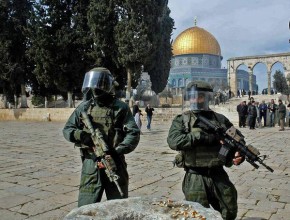
While Abbas’ faltering position as the head of the Palestinian Authority and the aggressive attitude of the Netanyahu government are major factors in creating this hopeless atmosphere, Seidemann pointed out that the problem is not limited to those bodies.
Referring to the announcement the same day of Israel having demolished homes of two terrorists who carried out deadly attacks last year, Seidemann said, “Demolishing of these houses make Palestinians wonder when the Abu Khdeir terrorists and Duma terrorists will be dealt with.”
This refers to two cases of Jewish terrorism that sparked global outrage. But the way Israel has dealt with them demonstrates why Palestinians feel so devalued. Muhammed Abu Khdeir was murdered in July of 2014. The culprits have been arrested and are still on trial at this time in Israel’s criminal court system. In contrast, Palestinians accused of terrorism are tried by Israeli military courts. And where the families of Palestinians convicted in those courts see their homes demolished in a type of collective punishment, it is the Abu Khdeir family, not those of the confessed murderers, that have been spat upon outside the court. Even the US State Department has accused the Israeli government of harassing the Abu Khdeir family.
The Duma murderers are even more immediate and galling to Palestinians. The arson in the Palestinian village of Duma in the West Bank killed an 18-month old baby and both his parents. Yet, despite the fact that Defense Minister Moshe Ya’alon has publicly stated that Israel knows who the murderers are, they have not been arrested. “This creates a feeling that Palestinian lives don’t matter, and that is not only directed at Israel, but also to the Palestinian Authority and much of Arab world,” Seidemann said.
Seidemann is one of the growing body of serious analysts who contend that the model of bilateral talks brokered by the United States that grew out of the Oslo Accords can never produce an end to Israel’s occupation. His message was that outside intervention was going to be necessary, even as he understood how difficult it would be to make that happen.
“There has been no action on Israel since collapse of Kerry initiative (in 2014),” Seidemann said. “Many in the Obama administration are making compelling arguments for simply walking away. Taking any action on this issue would require expending political capital and still may not be successful. These are strong arguments.
“But the implications of walking away are startling. It is very likely that the two-state solution, if it is not lost already, will be clearly lost before January 2017. If that happens, it will have died under this president.”
Seidemann pointed out that, in some ways, the two state solution is being lived now in Jerusalem, with Israeli Jews rarely entering Palestinian areas and Palestinians avoiding the Jewish parts unless they have work or other business there. Settlers in East Jerusalem, however, are living a one state reality, with soldiers accompanying convoys in and out of their enclaves, constant tension and very different standards of living between the two isolated communities. Seidemann described it as “Belfast at its worst.”
Seidemann said that the level of cooperation between Israel and the Palestinian Authority on security remains good. But that won’t last in the current climate. Regardless of Abbas’ commitment to non-violence, Netanyahu continues to accuse him of incitement – “Netanyahu plays on Israeli fears and anxieties like a virtuoso plays on a Stradivarius,” said Seidemann — and the security cooperation is becoming more and more of a political liability for Abbas. Eventually, those things will combine to break that cooperation. This was one of the implications of Abbas’ speech at the United Nations last week. In any case, Seidemann said, that cooperation is insufficient to deal with destabilizing forces at play.
In what has almost become an annual ritual, an upsurge in violence has again put Jerusalem on edge. Originally centered on the Haram al-Sharif/Temple Mount area in Jerusalem’s Old City, the clashes have now spread beyond, into the West Bank.
Israeli journalist Amos Harel wrote yesterday that Israeli-Palestinian security coordination, which both Israeli and American officials have repeatedly credited with reducing violence in the past years, could now be breaking down. “It’s possible… that the current model is nearing its end,” wrote Harel. “One of the reasons is the Palestinian sense of despair with respect to the diplomatic process, which has been expressed in Abbas’ recent speeches.”
Speaking at a symposium at the Washington Institute for Near East Policy, Lt. Gen. Keith Dayton — who as United States Security Coordinator oversaw the training of Palestinian security forces — warned that, in the absence of meaningful progress toward ending the occupation and creating a Palestinian state, Israeli-Palestinian security cooperation was in danger. “There is perhaps a two-year shelf life on being told that you’re creating a state, when you’re not,” he said. This was in 2009. Since then, the Palestinians have received little in return except for a more entrenched occupation, and the relentless growth of settlements.
In the absence of a genuine political process that can conceivably deliver any change, both sides are engaging in provocative behaviors designed to appeal to their respective political bases. Whether it is Palestinian President Mahmoud Abbas declaring that the Palestinians are no longer bound by signed agreements; the head of Israel’s Foreign Ministry, Tzipi Hotovely, bluntly stating that Israel will not leave the West Bank no matter what the Palestinians do; or the inflammatory rhetoric on both sides about Jerusalem’s holy sites, there is a real danger of the violence escalating even further out of control. The international community must demand an end not only to violence, but also to the occupation that drives it, and back that demand up with action.
While both Israeli and Palestinian leaders continue to engage in unhelpful rhetoric, it’s important to recognize that the occupation itself is the most effective form of incitement there is. This reality is often overlooked in the day-to-day news coverage of the conflict, in which violence often tends to be reported as a problem only when it impacts Israelis.
The spread of violence, with the loss of civilian lives on both sides, is unavoidable as long as Palestinians live under a system in which they are denied basic rights, and no political process to give them a hope for a better future. The Israeli and Palestinian leadership, as well as the United States and its international partners, have all failed to provide that hope. All of these parties share responsibility to stem the tide of violence, and all of them have to work together to resolve this conflict, end the occupation and bring peace and security to Israelis and Palestinians.
To this end, it is particularly important for the United States, as Israel’s key ally and patron, to begin articulating consequences for Israel’s continued occupation and settlement construction, which violate both international law and specific commitments Israel has made to the U.S. In the absence of such consequences, we should only expect more of the same: a deepening occupation, more settlements, and periodic upsurges in violence year after year after year.

Israeli Prime Minister Benjamin Netanyahu made his appearance at the United Nations General Assembly today, one day after a speech by Palestinian President Mahmoud Abbas. Nothing of substance is going to change as a result of these speeches. But Netanyahu’s in particular offered a good picture of the current state of affairs and why they are what they are.
Netanyahu’s speech was clearly aimed not at the international audience he was addressing, but at constituent
audiences in Israel and the United States. Indeed, his very cadence was rehearsed to allow for bursts of applause of the kind he’s grown accustomed to in Congress. After a few of those silent pauses, a small portion of the audience recognized the need to fill them with polite applause, but for the most part, Netanyahu’s speech was received with stony silence.
If there was anything remarkable about the speech, it was Netanyahu’s hostile, condescending tone. Already, his “44-second pause” has become infamous. This pause, after Netanyahu accused the United Nations of tolerating genocidal threats from Iran, was accompanied by Netanyahu’s scowl at the entire assembly.
The moment was emblematic of Netanyahu’s scolding approach. The message he intended to convey to those gathered in the room and watching was highlighted when he discussed the “unshakeable” bond between Israel and the United States. Netanyahu was telling the world that as long as he has America, he really doesn’t care what the rest of the world thinks.
In the wake of the very public arguments between the Netanyahu government and the Obama Administration over the agreement on Iran’s nuclear program, many observers have been speculating about the future of the US-Israel relationship and if it is as “unshakeable” as Netanyahu contends it is. The contours of where that relationship might go from here were also apparent in another piece of Netanyahu’s UN Speech.
“President Obama and I have both said that our differences over the nuclear deal are a disagreement within the family,” Netanyahu declared. “But we have no disagreement about the need to work together to secure our common future.”
There should be no doubt among anyone trying to promote an end to the Israel-Palestine conflict that the experience of the Obama Administration proves that, however rocky the politics may be, the United States will not falter in ensuring that Israel remains the dominant military power in the region. Despite repeated episodes of friction and tension between President Obama and Prime Minister Netanyahu, American largesse in military support of Israel has only increased.
But even if we adopt Netanyahu’s family analogy, it’s worth keeping in mind that, while family members will generally keep each other safe, they don’t necessarily always support every endeavor of the other family members.
That notion was highlighted by a revelation in Politico the very morning of Bibi’s speech at the UN. The report says that Senate Minority Leader Harry Reid has twice requested that the President publicly state that the United States would veto any UN Security Council Resolution calling for a Palestinian state and that both times, the President has declined to agree to such an action.
The possibility of such a UN resolution is real, and if the Obama Administration is open to allowing is to pass, that would mark a significant shift in U.S. posture at the UN. Most pointedly, it brings to mind the 2011 incident where the United States vetoed a resolution on settlements that was virtually identical to America’s stated policy.
Some might see this as an effect of the mutual dislike between Obama and Netanyahu, but in reality it is more than that. No doubt, when Obama’s term in office ends, his successor is likely to be at least somewhat more to Israel’s liking. But there are real differences in policy in play here, and those differences are not limited to Iran.
In explaining why Obama was not more responsive to Reid’s requests, National Security Council spokesperson, Ned Price reminded us that the United States supports a two-state solution. He pointed out that Palestinian efforts in the international arena were not welcomed by the administration, but the implication was clear: the Obama Administration was not going to promise to veto a resolution that might serve to save the dimming possibility of a Palestinian state alongside Israel.
That is a policy that could well continue into the next administration, and it puts political daylight between the US and Israel.
That daylight might matter in the near future. Netanyahu repeated his stock line about being willing to meet Palestinian President Mahmoud Abbas “with no precondition,” the day after Abbas made his empty statement about the Palestinians no longer abiding by “previous signed agreements.” While Abbas did not actually annul a single agreement with Israel, Netanyahu will certainly want to use this as yet another obstacle in the way of any action toward ending Israel’s occupation. Obama seems intent, however, on preserving some hope for a two-state solution.
Netanyahu’s belligerence to everyone but America in his speech was palpable. He made no effort to hide his disdain. While there will be some humor to be gleaned from his glaring 44-second pause and his trumpeting of cherry tomatoes as an Israeli accomplishment, the speech will only increase Israel’s isolation on the world stage. It will also make it even more embarrassing for the United States to continue to shield Israel from the consequences not only of its policies but also of Netanyahu’s hubris.
Thumbing his nose at the entire international community will play well in Israel and among Israel’s more militant supported in the United States. But it will sharpen the divide between those who want to secure Israel by utterly defeating the Palestinians and those who want to see Israel’s occupation end with peace and security for all.
The latter group includes the Obama Administration and most American Jews. Netanyahu has made it clear that he is an ideological opponent of that group. It’s time to accept him at his word on that and stop pretending he can be won over.
On Saturday, local and international media outlets reported that Palestinian President Mahmoud Abbas had formally announced his resignation from another organization he heads: the Palestine Liberation Organization (PLO). Specifically the reports said Abbas had quit his role as chairman of the Executive Committee, the highest decision-making body in the PLO.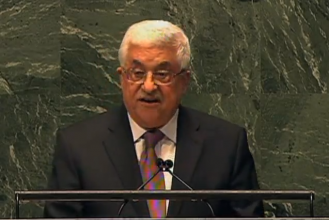
Palestinians living in the West Bank over the past decade have witnessed two constants: ubiquitous, ever-expanding Israeli settlements straddling the hilltops, and persistent rumors of Abbas’s resignation as the Palestinian Authority (PA) president.
Therefore, as with any report coming out of the Muqat’a (the presidential headquarters), one must read the fine print when examining reports of Abbas’ resignation. Did he, and ten committee members, many of them representing PLO factions other than his own Fatah party, actually quit? Like most matters of Palestinian politics, the answer is largely composed of both speculation and fact.
The PA’s official WAFA news agency made no reference to the resignations, and Sa’eb Erekat, a long-time Abbas loyalist and chief peace negotiator who was recently elected PLO Secretary General, denied they took place. Ma’an, the main Palestinian news service affiliated with the ruling Fatah party, said the resignations were not valid until the Palestinian National Council, the Palestinian parliament in exile, holds a meeting.
Essentially, this means that Abbas and the other ten Executive Committee members submitted their resignations, but only the PNC can decide whether to accept or reject them. This move paves the way for the convening – possibly as early as September – of an extraordinary meeting of the PNC, where new Executive Committee elections can be held. Convoluted details aside, Abbas and the rest of the members continue to function in their original official capacities until those new elections.
This maneuver is widely seen as an attempt to consolidate power by Abbas. Confronted by political foes both within his own party and outside, the aging president has decided to take matters into his own hands in the face of widespread domestic criticism and an ongoing political stalemate, both in the peace process with Israel and the reunification process with Hamas. Analysts and observers in Palestine generally see this decision as political jockeying designed to boost Abbas’ control of the PLO’s Executive Committee, under the guise of infusing the decrepit institution with new blood.
Hani al-Masri, a Ramallah-based political analyst, said this can only be interpreted as an attempt to recalibrate the Executive Committee to Abbas’ favor. The Palestinian president is certain to be reinstated in a month, only to re-emerge stronger after having shed some of his rivals of their seats.
“These are not real resignations,” al-Masri explained. “They just want to use the resignations to call for an extraordinary meeting of the Palestinian National Council in accordance with Article 14 of the Palestinian Basic Law.”
Abbas is hoping that by submitting these resignations to the PNC, new Executive Committee elections will be held, wherein he can effectively get rid of the likes of Yasser Abed Rabbo, a longtime ally turned foe, and other members who have been less than supportive of Abbas.
In the past Abbas has singled out three men (two of whom are not part of the PLO): Abed Rabbo, former Gaza strongman Mohammad Dahlan, and former premier Salam Fayyad, all of whom have been mentioned as possible successors to Abbas. Abed Rabbo, a close associate of the late Palestinian leader Yasser Arafat, was a former cabinet minister who was heavily involved in peace talks with Israel. Mohammad Dahlan, once a close ally of Abbas’, headed the security forces in Gaza until Hamas took control of the strip in 2007. Fayyad, an internationally renowned economist, who worked at the World Bank and IMF, previously held positions as finance and prime minister for the PA.
On December 4, a Palestinian journalist with close ties to Abbas claimed that these senior Palestinian figures secretly met with U.S. Secretary of State John Kerry in the United Arab Emirates. This alleged meeting, which the men denied had taken place, was perceived as an attempt to chip away at Abbas’ power, with some even going as far as interpreting it as part of a coup.
In 2011, Dahlan was expelled from Fatah and more recently, Abbas ordered a probe and froze the assets of Future for Palestine, a foundation established by Fayyad. The former prime minister, who had retreated from the political limelight since resigning in 2013, founded the non-profit organization, funded by Gulf and European governments, to help marginalized communities in the West Bank and Gaza.
Abbas’ has recently moved to strip Abed Rabbo of his authority. On July 4, Abbas replaced him with Saeb Erekat, making Erekat the PLO’s second-in-command. On August 18, Abbas also ordered the closure of the Palestinian Peace Coalition, an NGO co-founded by Abed Rabbo and funded by the Swiss government to support a two-state solution.
Abbas has come under renewed pressure of late, and likely feels cornered by a slew of opposing forces: he is constrained by the international community, which supports his government, while also facing a rising tide of anger in the streets by those unsatisfied with a lack of political strategy and vision. Further, the 80-year-old president has yet to reveal a successor, prompting a scramble amongst his inner circle in anticipation of his eventual exit.
Abbas needs Salim al-Zanoun, the head of the PNC, to call for a new session. Technically, the positions vacated by these supposed resignations are the only ones that can be replaced. But Zanoun can use the resignations as a pretext to call for a dissolution of the entire Executive Committee, thereby giving Abbas the chance to rid it of his foes.
The PNC is expected to hold a meeting next month, a decision that does not guarantee members outside of the West Bank enough time to secure the necessary Israeli permits to enter the Territories. And holding the session in Ramallah also excludes those based in Gaza, thereby ensuring that only West Bank members, who are more likely to vote in favor of Abbas’ choices, can attend.
Throughout almost two decades, both Palestinian Territories have slowly become geographically and politically severed from one another as both parties ruling each territory blamed the other for this schism. There have been attempts to reconcile the two, but on the ground, Fatah and Hamas have been paying lip service to a reconciliation process for the last two years, and these developments could further the rift between them.
A day after the resignations took place, Hamas slammed the move as “invalid” because it did not address the issue of reconciliation and excluded Islamic Jihad and Hamas, both of which are not part of the PLO. “The collective resignations came to pave the way ahead of electing a new executive empty of all rivals,” said senior Hamas official Mousa Abu Marzouk. “This act is well-planned by Abbas,” Abu-Marzouk said. “Abbas likes to be alone and without rivals.”

Ali Saad Dawabsheh was only 18 months old when Israeli settlers who entered his village of Douma to carry out a so-called “price tag” attack took his life away by setting fire to his home. The crime brought shock and horror to many, regardless of their views of the overall Israel-Palestinian conflict.
But the reality is that this death is very much a part of that conflict. It cannot be understood apart from it. It is not anomalous. Ali was far from the first baby killed in this conflict, on either side.

Graffiti meaning “revenge”
It is no surprise that such a horrifying act leads people to say “something more must be done.” But, of course, the conflict will not end over this incident. In a matter of weeks, Ali’s death will be just one more tragedy in a long list of tragedies in Israel-Palestine.
Is it possible for this tragedy to move us closer to resolving the conflict? Is it possible that, even without ultimately resolving the major political issues we can make it more difficult for an atrocity like this to occur? Perhaps it is, if we ask one important question and make sure we get all the answers to it.
Why is Ali Dawabsheh dead?
Ali and his family were in their home at night when arsonists set it on fire. Ali’s parents and four year-old brother suffered severe burns and Ali died. The attackers spray-painted the word “nekama” in Hebrew on the resident. The word means “revenge.”
Why is Ali Dawabsheh dead?
Until the murderers are caught, we cannot be certain, but it is likely that this “price tag” attack was carried out in response to Israel’s demolition of two structures in the settlement of Beit El on the West Bank. After the High Court in Israel ordered their demolition, the Netanyahu government immediately granted permits for hundreds of new living units in Beit El and the East Jerusalem area. This, however, was apparently not enough compensation for those who carried out this heinous act.
Why is Ali Dawabsheh dead?
Given the shocking nature of the crime, the Israeli government will likely put considerable resources toward identifying and arresting the perpetrators. However, on a day-to-day basis, Palestinians in the West Bank have no protection from settlers. Israeli Defense Forces and Border Police often do not prevent settler attacks on Palestinians. It’s not uncommon to see them protecting settlers as they attack Palestinians.
Moreover, the forces of the Palestinian Authority have no jurisdiction over settlers and cannot protect their own citizens from them. Settlers in general feel they may act with impunity. As the Israeli human rights group, B’Tselem states, “In recent years, Israeli civilians set fire to dozens of Palestinian homes, mosques, businesses, agricultural land and vehicles in the West Bank. The vast majority of these cases were never solved, and in many of them the Israeli Police did not even bother to take elementary investigative actions.”
Why is Ali Dawabsheh dead?
In the wake of Ali’s death, the rush to express outrage was staggering. Israeli politicians across the spectrum vowed that the murderers would be brought to justice. No doubt, they are sincere in their personal outrage and in the desire to show Israelis and the rest of the world that this is something they will not tolerate as leaders.
But their comments are universally directed at the crime itself, implying that this act was an anomalous blot on the Israeli page with no cause other than hate and extremism. The words not only of Benjamin Netanyahu, Naftali Bennett and other leaders of the current government, but also those of opposition leaders Isaac Herzog and Yair Lapid make no connection between Ali’s murder and the occupation, the settlement project or the increasingly anti-Arab tone of many of Israel’s leaders.
There was scant mention of the tolerance shown to the extreme right of the settler movement over the years. As Amos Harel put it in Ha’aretz, “The forgiveness the state has shown over many long years toward the violence of the extreme right – which was also evident this week at Beit El (none of those attacking the police are now in detention) – is also what makes possible the murderous hate crimes like Friday’s in the village of Douma. There is a price for the gentle hand.”
The decision to build hundreds of units in Beit El and East Jerusalem sent a message that the government would find ways to make the rulings of the High Court against illegal building moot in all practical ways. The bigger message that was sent in the wake of protests in Beit El where Israeli soldiers were attacked was this: violence pays, at least for the settlers.
The occupation and settlement program are themselves a form of daily violence that dispossess Palestinians, place them under military rule and deprive them of their basic rights. It may not be easy to end the occupation, but the casual way many in Israel have turned to “managing the conflict” and given up on ending the occupation sends the message that such institutionalized violence by Israel against Palestinians is at least tolerable. Why would anyone be surprised that the more radical elements among settlers would take that a few steps further?
Why is Ali Dawabsheh dead?
In the wake of Ali’s death, Palestinian President Mahmoud Abbas called for the International Criminal Court (ICC) to investigate this act as a war crime. But this was an act of civilian murder, even if the civilian(s) who committed it was living in a settlement deemed illegal under international law. Moreover, the ICC would not act if Israel were legitimately pursuing the perpetrators, which it certainly seems like it is doing. Politicizing Ali’s death in this manner is typical of the conflict, and thoroughly counter-productive.
Indeed, mixed in with his words of outrage, Netanyahu also could not resist politicizing it in his own way by saying that Israel pursues such criminals while Palestinians name streets after them (In reality, Israel celebrates its own terrorists too). This was an opportunity for the two leaders to unite in condemning a crime and calling for justice. Instead, both took it as an opportunity to aggravate the differences between them.
Why is Ali Dawabsheh dead?
While this goes on, members of the United States Congress works to legitimize the settlement enterprise by equating it under the law with Israel itself. The White House is focused on the Iran nuclear deal and it is not yet clear what, if any action the current administration might take to improve the situation in Israel-Palestine before they leave office. In Europe, merely labeling products emanating from settlements is so controversial that the process of setting up an enforcement mechanism for a regulation that already exists in European Union law is dragging along at a snail’s pace.
Without ending the occupation of the West Bank, it is only a matter of time before the next horrifying incident, whether it happens to a Palestinian or an Israeli child. As Noam Sheizaf of +972 Magazine wrote, “…violence is inseparable from the colonial reality in the occupied territories — without putting an end to that reality, there is no chance to properly deal with violence. Even if things cool down temporarily, the situation will only grow worse in the long run. The only solutions are the evacuation of settlements or equal rights for all.”
And ultimately, Sheizaf’s words are the answer to the all important question:
What can we do to prevent more deaths like Ali Dawabsheh’s?
Ultimately, there is no way to stop these incidents without ending the occupation and the daily reality of privileged and protected Israeli settlers living in a Palestinian territory mostly populated by people who live under military occupation.
However, this crime was entirely predictable. Crimes like it can be prevented, at least some of the time, and it does not require an end to the conflict to do so.
Until the conflict is resolved, Israel must meet its responsibilities to protect Palestinian civilians from settlers. Both Israelis and Palestinians can treat incidents like this one as the crimes they are and refrain from politicizing them, allowing both sides to condemn them unreservedly and in unison. Finally, the United States and Europe can stop equivocating and insist that the settlement project stop immediately, and be prepared to put real pressure on Israel to make it happen.
Ali’s death can be a wake up call, or it can be just another horrible story among decades of horrible stories. Which it will be will depend as much on people’s willingness to pressure their own governments in a productive direction as it will on those governments, in Jerusalem, Ramallah, Brussels and Washington, finding the courage to finally act. Some Israeli settlers would condemn Ali’s murder. But until the occupation and the settlement project end, tragedies like this on are inevitable. If there is to be any hope of preventing them, it has to start with people standing up to finally say “NO” to the settlements and to force their governments to do likewise.
Professor Brent Sasley is an Associate Professor and Graduate Advisor in the Department of Political Science at the University of Texas at Arlington. He studies and teaches the politics of the Middle East and of Israel; the nature of identity formation; and decision-making processes. He is the author of The Cold War in the Middle East, 1950-1991. FMEP asked for his views on some of the current issues concerning Israeli and American policy.
Israel finally has its new governing coalition. The idea that the Zionist Union might join in a national unity government appears to be simmering, and while Benjamin Netanyahu might try to coax them in, for now Israel is going to have a right wing/religious coalition, with the center-right Kulanu representing the only moderate party. Given Netanyahu’s statements in the election regarding the two-state solution and the apparent absence of the Palestinian issue in both the election and the coalition talks, do you see any alternative for Mahmoud Abbas other than continuing to try to internationalize the issue, at the UN, the ICC and perhaps in Europe?
The narrow coalition does indeed appear to be comprised almost entirely of rightist and religious parties, with  Kulanu representing the soft right. Moshe Kahlon’s interests in economic issues means his party is unlikely to pay much attention to settlement building or policy toward the West Bank and peace process. He might serve as a brake on some of Bayit Yehudi’s and Likud’s excesses, but otherwise his silence will serve to facilitate the continuation of the last two governments’ policies.
While Abbas’s own intransigence and fear of finally ending the conflict certainly plays a role in the failure of previous talks, the notion that the PA or Abbas have to do more to show interest in progress, and that if only they had, then Israel would have moved forward with the necessary concessions and agreements, is nonsense. An international legal effort (what some have called “lawfare”) to achieve statehood is not without precedent, including by the Zionist movement.
So if I’m Mahmoud Abbas, I don’t see much hope not only for serious talks, but for serious confidence-building measures such as curbing settlement activity outside the main blocs, ending the harsh rhetoric coming from Israel’s leaders, and distinguishing between Fatah/the PA and Hamas. It makes sense, then, for Abbas to continue working on the effort to change the international legal-diplomatic balance.
Let’s assume for the moment that the P5+1 and Iran do indeed conclude a deal similar to the one the White House described in the framework agreement. While lifting sanctions will give Iran the opportunity to expand its regional influence, a deal and an end of sanctions will also give the Americans, the Saudis and the other Arab states near the Gulf the opportunity to engage Iran and possibly open dialogue to help the whole Middle East start to climb back from the turmoil that has engulfed it in recent years. How do you view a post-nuclear-standoff future in the region and how do you think Israel might respond if there is increased dialogue with Iran?
It is difficult to say what the regional effects and what Israel’s reaction will be, because the success and aftermath of the agreement are both contingent on several other factors. I do not share the optimism that an agreement over Iran’s nuclear program will generate greater cooperation between Iran and the United States or will reduce Iranian ambitions in the Middle East. The Iranian regime’s survival is partly dependent on maintaining its commitment to the revolution. Yet legitimacy based on revolutionary impulses requires that one always strive to enhance or expand that revolution. Normalization of Iran in the region would undermine those impulses, and thus serves as a threat to the regime.
For its part, Israel very much fears Iranian normalization, but I think the fear is overstated, as I mentioned. It’s likely there will be efforts to maintain and expand dialogue between Washington and Tehran, and perhaps other regional states as well. This would be a direct threat to Israel’s position in the region, which in recent years has benefitted from the Sunni Arab states’ competition with and hostility toward Iran. Jerusalem would benefit greatly from getting ahead of the possibility of growing Iranian integration, however unlikely. It can do so by making serious efforts to reduce its presence in the West Bank, and respond constructively to the Arab Peace Initiative, which remains on the table.
Finally, given your responses to the first two questions, and given not only the current tense atmosphere between Obama and Netanyahu but also the new partisan divide over Israel (which AIPAC is desperately trying to reverse while groups like the RJC are working hard to expand it), how do you see the future of US-Israel relations going? We know security cooperation will be unaffected, but what about the “special relationship,” the cover the US gives Israel in the international arena, and other such aspects? In particular, I’d like to know how you see this going in the event of a new Clinton White House.
I’ve long argued that the relationship is far stronger than it seems on the basis of personal tensions between Obama and Netanyahu. These personal problems make the big policy discussions harder, but the relationship is rooted in a variety of other factors—strategic cooperation, shared cultural identity, similar political systems, public sympathy—that have and will overcome the individual-level problems because they are so routinized.
That said, it’s clear that the U.S. and Israel have increasingly divergent perceptions about international politics and put emphasis on different priorities. The settlement enterprise has expanded over time, across all Israeli governments. Netanyahu might have increased building in more isolated areas, but he’s still only the latest representation of a decades-long process. Yet settlements are increasingly problematic for Western publics and countries, including the United States. Similarly, Israel continues to hold a regional perspective on the Iranian nuclear program, the Arab uprisings, conventional threats to the Jewish state, and so on, while the United States has been trying to shift its attention to other issues by adopting a more global perspective.
In both cases, while the Obama Administration has certainly pushed harder for such changes, it seems that American foreign policy has been slowly moving in this direction anyway, partly pushed by external systemic forces. This is not to say that Washington will turn away from the Middle East—even Barack Obama couldn’t, as much as he tried. But if the White House’s attention is further diffused across the globe, Israel’s regional concerns will matter less.
It’s hard to know what a Hillary Clinton White House would do. I suspect the problem of settlements would remain a thorn in the personal relationship with Netanyahu. More broadly, it’s very possible the days of a Democratic president maintaining a Bill Clinton-style closeness with an Israeli leader could well be over. Much also depends on who becomes the next prime minister of Israel, if the current government has only a brief time in office. It’s also possible that this Netanyahu government limps along for a few years, kept in power but also constrained by its domestic political struggles, and therefore doesn’t engage in major policy changes but rather continues along the current path. This will make it harder for Clinton to challenge Netanyahu on the big policy questions.
With all eyes on the framework agreement for a nuclear deal with Iran, and on the looming Capitol Hill battle to defend it, it is easy to forget that Israel is still in the process of forming its new government. With much of the drama playing out offstage, many observers are sitting back and waiting for the political wrangling over ministries and Knesset committee chairs to be over.
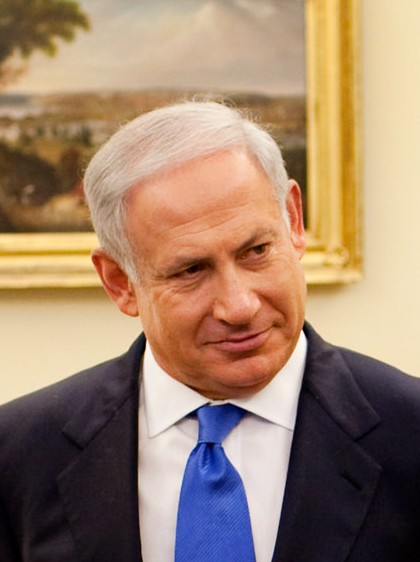 But some are making the case that there is more brewing than the doling out of prestige appointments to the leaders of the parties expected to be part of the fourth Benjamin Netanyahu government. A unity government, at one time thoroughly rejected by both Netanyahu and Zionist Union leader Isaac Herzog, has emerged again as at least a theoretical possibility.
The notion of a unity government seemed to have dissipated after both Netanyahu and Herzog initially rejected the idea, but of course, politicians say many things and decide better of it later, as circumstances change and political winds shift. Such changes are common in forming Israeli coalitions, something the selected candidate might have as much as six weeks to do after the announcement of election results.
Two factors have contributed to the revival of the possibility of a government of national unity. One is the central role the new Kulanu party will play in any new government. The party is center-right, and that makes it the most moderate of the parties that are projected by most to constitute the next coalition. Kulanu’s leader, Moshe Kahlon, is primarily interested in social welfare issues and wishes to address growing economic concerns like rising housing prices, increasing gaps between rich and poor in Israel and declining social services. This makes Kulanu, which would also prefer not to be the party farthest to the “left” in the government, naturally supportive of bringing the Labor Party into the government (Labor makes up the overwhelming bulk of the Zionist Union coalition).
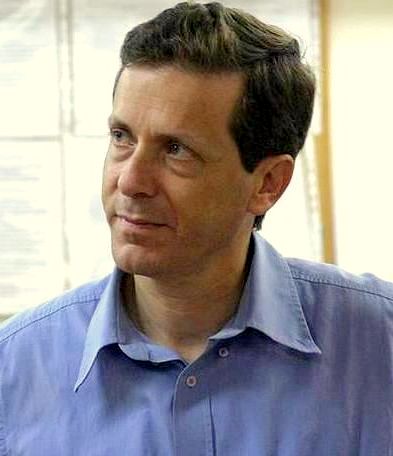 Kulanu controls ten seats in the 120-seat Knesset. Netanyahu’s 67-seat right wing majority is therefore vulnerable to Kulanu. Kahlon has clearly stated that he prefers a national unity government.
By itself, Kulanu does not explain why rumors are starting to circulate in Israel that Netanyahu is trying to woo Herzog into the government. However, combined with the new framework agreement between the P5+1 and Iran on the nuclear issue, we have a very clear motivation for Netanyahu to bring Herzog into the government.
Gary Rosenblatt of the Jewish Week lays out the reasoning well: “The prime minister is well aware that if he forms [a narrow, right-wing] coalition, the crisis in relations with the White House will only deepen. And now that the U.S. and other Western powers have signed a preliminary deal with Iran, it is all the more reason for him to be able to work with Obama in the hopes of toughening up the final agreement in the next three months — and, if all else fails, getting tacit permission from the White House to strike out at Iran if it violates the deal…In a unity government, Herzog most likely would serve as foreign minister, presenting a friendly face to the world in his international role.”
The very slight possibility that some parties from the right would not join a unity government is not a threat, as the Zionist Union brings 24 seats with it, so with them and Kulanu alone, Netanyahu would have 64 seats. It all makes sense, so why wouldn’t Netanyahu do it?
The answer is that he would, if it is a real option. True, a unity government would mean there would be significant opposition from within his own coalition to settlement policy, once again. Other policies would not be as smooth as they would under an all right wing government as well. But in the post-election cool-down, it is reasonable to think that Netanyahu has assessed the damage his scorched earth campaign for re-election caused Israel and decided he must try to repair some of it.
On the surface, the notion of a unity government is good for Israel. It should allow Israel to mend fences with the Obama Administration and the Democrats and it should forestall European pressure at the United Nations and other international fora. The reality is, however, that if Isaac Herzog does agree to the unity government, it will be a disaster for his party and have deeply negative consequences in the end for Israel, the Palestinians and American policy in the region.
A Bad Idea for Labor
The Labor Party once dominated Israeli politics, but has long since fallen off its perch. For a while, Labor was able to win support by being the party of peace, representing the Israel the world could work with and admire. But in recent years, it all too often played the role of fig leaf for center-right or right-wing leadership in power in Israel. With the failure of the Oslo Accords, which were distinctly identified with Labor, it lost its credibility as a “pragmatic peace” party.
This last election brought Labor back to some semblance of relevance, but if it once again plays the role of fig leaf for expanding settlements and continued intransigence from Netanyahu, it will lose a lot of it. The campaign itself demonstrated that Labor is still dogged by many of its old problems. A lot of the increase in support for Labor was the result of voters who were disillusioned with other center-left parties, but did not want to support Netanyahu.
Labor has much to do if it hopes to make further gains in the Israeli electorate. It will move in the opposite direction if it is again perceived as a fig leaf for Netanyahu, and especially so because the best thing Labor currently has going for it is that it is the vehicle to vote against Bibi.
A Bad Idea for Israel
National unity governments in Israel are notoriously clunky machines. The junior partner is always endeavoring to show it is moderating the policies of the senior, and the party of the Prime Minister is trying to get the most out of the other side while giving it as little as possible in terms of both policy and positioning for the next election.
On the international stage, a unity government will, at best, keep Israel from facing increased pressure to end its occupation of the Palestinians. Netanyahu will still need to appease his own party and will be very fearful of giving his rival, Naftali Bennett, the means to increase his support and position himself to challenge Likud from the right. Herzog will be under constant pressure to modify Netanyahu’s positions, but won’t have enough leverage to do much.
It’s a recipe for dysfunction, both domestically and internationally for Israel.
Dangerous for the Palestinians
The one thing a unity government might be able to do is to restart bilateral negotiations with the Palestinian Authority. Under current conditions, such talks are likely to be harmful, not helpful, for Palestinian aspirations.
Herzog will do nothing to convince Netanyahu to change his position on the Palestinian transitional government. Hamas remains political anathema in Israel. Nor is he likely to mollify the current Israeli policy view of the issue of Jerusalem. All he will be able to do is restore the status quo ante, which means talks that have no hope of success.
But the very existence of such talks will present serious problems for the Palestinians. At the very start, Palestinian President Mahmoud Abbas will likely be under pressure from the United States and Europe to re-engage. But without some assurances that things would be different in this round, he will face intense domestic pressure to stay away from that process. If he refuses, it will give Netanyahu’s allies in the United States plenty of fodder, and if he agrees to talks that produce nothing but more settlements, he will give his domestic opposition ammunition.
Herzog is a moderate, and if he were Prime Minister, it is not impossible that the right combination of pressures and incentives could get him to pursue an end to the occupation. But in a Likud-led government, he cannot be more than a fig leaf, putting a kinder face on Netanyahu’s intransigence. Without him, the Palestinians have more support, at least in Europe, for pursuing their case in international fora, and the potential for more pressure on a distinctly rejectionist, right wing Israeli government. With him, they have the worst of both worlds: less pressure on an Israel with a more reasonable image but whose policies are little different from those that have caused so much international frustration of late.
A Bad Road for US Policy
Although the two-state solution and bilateral talks to get there are still American policy, the current conditions have to change if such a goal is ever to be attained. Some way of unifying the West Bank and Gaza again, some sense of incentive for Israel to make difficult decisions, a clear vision of how to resolve difficult issues like Palestinian refugees and Jerusalem needs to be presented, etc. Simply forcing talks again will work no better today than it did in 2013, John Kerry’s last attempt which ended in disaster.
Herzog does not help change the current conditions. Instead, his presence in the government makes it easier for Netanyahu to accede to meaningless negotiations. No matter how cynically one may view American policy on this, more of the same is clearly not preferable. It is just turning up the heat on the pressure cooker.
On Iran, Herzog’s presence is even more problematic. He would be the one doing the outreach to the United States and Europe, a much less abrasive voice than Netanyahu’s. But his views on Iran are fairly close to Bibi’s. He may disagree with Netanyahu’s approach and belligerent attitude; he certainly disagrees with Bibi having played partisan politics in America on this issue. But substantively, he shares Netanyahu’s concerns about any nuclear agreement with Iran. His objections will not only be presented more effectively and diplomatically than Bibi’s, they will have the added weight of coming from “the other side” of Israeli politics, demonstrating that the country is united on this point and strengthening Republican arguments.
In the end, a unity government remains the far less likely outcome of the Israeli coalition talks. While a far-right coalition, the much more likely outcome, will increase Israel’s isolation in the short term, the possibility that Israel will end up owing more accountability to the world for its policies is good for its long term interests, however counter-intuitive that might seem. As ugly as the next few years might be, they will be similarly better for Palestinian and American interests as well than a kinder, gentler face on the same policies would be.