The past months have witnessed an unprecedented series of attacks on Israel progressive, peace and human rights groups. Right-wing organizations, many with close ties to the Netanyahu government, have worked to paint these groups as “plants” for foreign powers, or even as traitors. Back in December, the Foundation for Middle East Peace issued a statement in support of these groups, and we reaffirm that support today.
No group has faced more frequent or aggressive attacks than Breaking the Silence. This group of veterans who served in the Israeli Defense Forces (IDF) in the West Bank and Gaza gathers 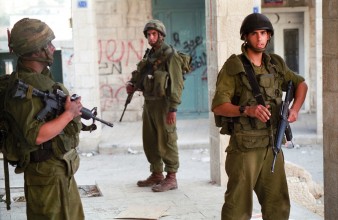 testimony from other soldiers, goes to enormous lengths to corroborate those testimonies, clears them all with Israel’s military censor before publishing and then uses those testimonies to explain to Israeli citizens what the occupation is and what their sons, daughters, brothers, sisters, and parents do when they serve there.
Breaking the Silence opposes the occupation, and their purpose in gathering and publicizing these testimonies is to make Israelis understand both the human rights violations that occur as a result of the occupation and experiences of the soldiers whose job it is to maintain it. Because they are IDF veterans, and all of their testimonies are gathered from other veterans (including many who do not share the views of BtS), they are special targets of the right.
On March 17, Israeli Channel 2 aired a report based on information gathered by Ad Kan, an organization of right-wing settlers with a history of using deceptive methods to build their cases against progressive Israeli groups. Yet Channel 2 aired their charges unquestioningly. According to Breaking the Silence:
“The report showed footage of members of BtS, filmed with hidden cameras by moles of Ad Kan who infiltrated our organization. Among the false claims in the report was the argument that BtS collects confidential information that could potentially endanger the security of the state. Another grave claim was that we persuade pre-military youth to enlist in specific IDF units to collect intelligence and spy on the IDF from within. The implications of such claims led to public turmoil and accusations that BtS members are guilty of treason, in the words of Defense Minister Moshe (Boogie) Ya’alon. Needless to say, both of these claims are false. They are also malicious and slanderous and it is highly disturbing that they come from the highest political echelons.”
In response to these attacks, Breaking the Silence has published a response, and answers to some of the questions that these accusations have raised:
How does Breaking the Silence collect testimonies?
Since the founding of Breaking the Silence in 2004, we have interviewed over 1,000 Israeli soldiers who testified about their service in the occupied territories. These testimonies serve as the basis for our public outreach. We’re very proud of our thorough, meticulous research methods, for which our researchers, all former soldiers who broke their silence, undergo an extensive professional training process. Each testimony undergoes a rigorous process of corroboration and is examined by both our legal advisors and the Israeli military censor.
To date not a single testimony has been disproven, which attests to our reliable and professional verification process. In fact, there have been four unsuccessful instances in which the right-wing settler organization Ad Kan attempted to submit false testimonies to BtS through four different moles: Amir Beit Aryeh, Oren Hazan, Haim Fremd and Roy Peled. None of their testimonies successfully passed our corroboration process, thus none were ever published.
Does BtS plant soldiers in the IDF to spy for the organization?
Of course not. BtS does not “plant” soldiers in the IDF, nor do we send anyone to covertly collect information in any forum. The vast majority of the over 1,000 soldiers who have broken their silence testified after having been released from the IDF.
BtS explicitly does not collect classified information. Prior to conducting an interview with IDF soldiers, we always forewarn them not to discuss classified information or military secrets. Everything BtS publishes is sent to the military censor prior for approval. Nothing has ever been, nor will ever be published without undergoing this process.
Did BtS urge a young female solder to serve in a specific unit of the IDF?
Ad Kan attempted to stigmatize a young woman, who sincerely wished to serve the country in a meaningful framework of her own volition, as a spy for BtS. The woman in question is a recently hired employee of BtS. She was secretly filmed by an Ad Kan mole. Their conversation was reduced to a shallow sound bite by Channel 2.
The following is a summary of her heartfelt account, regarding her deliberations prior to enlisting in the IDF. Having studied in a modern Orthodox high school and pre-military academy, she could have easily received an exemption from the IDF. However, she felt compelled to serve the country through truly meaningful service.
Prior to enlisting she was offered a wide variety of roles. She struggled with that choice. As a young woman with a strong political awareness, she wondered whether it would be possible to serve as a “good soldier” within the complex reality of occupation and whether she could contribute to the best of her ability.
While deliberating what to do, she conducted an earnest discussion with a former member of BtS who she had met during a tour. She expressed that she was considering whether or not to serve in the civil administration in the occupied territories, or rather in a position within the education corps, like the majority of her friends did. Seeking guidance regarding her own doubts, she asked the former BtS member whether he believed it to be possible to change the occupation from within. He advised her to serve where she believed she would have the most meaningful service and joked that she should not simply serve in the occupied territories in order to be able to testify later before BtS. After further consultations with additional people, she decided to enlist in the civil administration, so that she may pursue a humane path in improving, even if not changing, the process from within. Even if merely through warmth, generosity and professionalism, she preferred to confront the reality of occupation, rather than avoid it. Years later, she indeed returned to provide testimony before BtS, completely on her own accord.
Does BtS collect classified information?
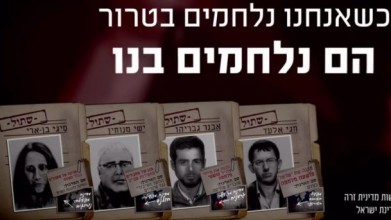
Still from Im Tirtzu’s video showing mock “files” on Israeli human rights leaders
BtS explicitly does not collect classified information. Prior to conducting an interview with IDF soldiers, we always forewarn them not to discuss classified information or military secrets. Everything BtS publishes is sent to the military censor prior for approval. Nothing has ever been, nor will ever be published without undergoing this process.
In the recent Channel 2 report, through manipulative editing, one of the primary claims made was that two of Ad Kan’s moles were asked by BtS researchers to share classified information:
- The first mole, Haim Fremd, was interviewed regarding remotely operated weaponry on the Gaza border. Channel 2 claimed that the information was classified. However, not only did the military censor approve it, but Channel 2 had published a piece in January 2016 on the topic, aptly titled “The Unmanned Vehicles that Protect the Southern Border.”
- The second mole, Roy Peled, continually insisted on sharing classified information relating to his service on the border with Syria, even though that is out of the realm of BtS’s scope, as was revealed in a news item by Raviv Drucker on Channel 10. His testimony was not published by BtS.
In interviews with testifiers do you ask questions that are out of the realm of your research?
The Channel 2 report accused BtS of asking broad questions that aren’t directly related to the IDF’s activities in the occupied territories before a civilian population. Moreover, they claimed that we gather tactical intelligence about how the army functions.
As most good researchers are aware, holistic research requires comprehension of the broader context at hand. By asking questions about the broader circumstances in which testimonies take place, we’re able to gauge whether the individual was indeed present during the instances he/she describes and better equipped to verify testimonies case-by-case based on specific details.
A prime example of this is indicated by one of the moles who tried to provide fabricated testimonies to BtS, MK Oren Hazan. The gaps in his interview made it clear that he was fabricating elements of his story, and thus his testimony was not publicized. This story was revealed months ago in a news item by Raviv Drucker on Channel 10.
What is BtS’ response to Prime Minister Netanyahu’s call for an investigation of the organization by the Israeli Security Agency?
Unfortunately, Prime Minister Netanyahu has decided to turn Israel’s security services into a political tool, in order to silence soldiers who oppose the occupation and thereby challenge his political agenda. Not only did he call for an investigation of BtS, but Defense Minister Ya’alon went so far as to accuse us of treason, furthering the government’s campaign of incitement against us. We’re not afraid of being investigated, as it would only prove that we work strictly according to the law. Threats to investigate BtS are merely political manipulations intended to divert the public’s attention from the government’s failures.
Who is “Ad Kan”?
Ad Kan is a right-wing organization affiliated with the (Israeli government co-funded) Samaria Settlers’ Committee, along with both the Jewish Home and Likud parties. They have been planting moles in various human rights NGOs over the past three years, to secretly document them with the purpose of “exposing” their work to the Israeli public. Their work is part of a larger campaign of incitement being conducted against Israeli human rights NGOs in general and BtS in particular.
As part of a campaign to support segregation of buses in the West Bank, Ad Kan fabricated alleged documentation of the sexual harassment of female bus passengers by Palestinians in the West Bank. This footage was later exposed to be fake in an investigation conducted by Haaretz journalist, Chaim Levinson. The woman who claimed to have been harassed had not been, and was in fact an Ad Kan operative working with another operative who was wringing out sexually-related statements from a Palestinian passenger on the bus. All this was done for the sake of promoting the separation of Jews and Palestinians on public transportation in the West Bank. This is typical of the way Ad Kan operates.
In the aftermath of the horrific terrorist attacks in Paris last week, Israeli Defense Minister Moshe Ya’alon remarked on the tension between security and liberty. “In the United States until the events of September 11, the balance between security and human rights favored human rights on the issue, for example of eavesdropping on potential terrorists,” he said. “In France and other countries in Europe, [a shift toward security] hasn’t yet happened. Countries fighting terrorism have no alternative in this other than shifting in the direction of security. I assume that we will see a large number of steps [to carry out] inspections: passport inspections, inspections at the entrance to public places.”
As in the U.S. this dichotomy between security and human rights is at the very heart of the debate in Israel. ”We believe not only are these not contradictory, but that human rights provides  security,” said Hagai El-Ad, the Executive Director of B’Tselem, Israel’s leading human rights groups monitoring its occupation of the West Bank and Gaza Strip, on a recent press call. “Indeed, we think that human rights are the reasons for which we have security, they are why people have a society that must be protected. So one has to wonder what kind of society do we end up with (in Ya’alon’s framework) and would that society be worth defending if you take Ya’alon’s idea to extremes. I hope that idea will work differently in France. Time will tell.”
The last several months have seen an increase in attacks on civilians in Israel and the West Bank, and it is natural that such attacks test the resolve of any society to maintain its commitment to human rights. Terrorist groups count on the idea that their attacks will erode that resolve, as it did in the United States after September 11, and as it has in Israel over many years, and especially in the past six years under a right wing government.
The diminished regard for human rights is particularly evident in the Israeli practice of punitive house demolitions, in which the homes of accused terrorists’ families are destroyed, often leaving dozens of people homeless for a crime in which they played no part. El-Ad points out that, “In 2004, a military commission reviewed the procedure, found the practice is not effective, and recommended abandoning it.”
In 2005, Israel’s Defense Ministry did indeed order a halt to the procedure, based on evidence that, rather than deterring attacks, punitive house demolitions inflamed Palestinian anger.
“We should not call them punitive, but vindictive,” El-Ad said. “They are carried out against families who are not charged with anything. This is [a violation of] the Geneva Conventions, which forbids collective punishment, and against basic morality.”
El-Ad says that reviving the practice had been discussed for some time, and that last year, after the kidnapping and murder of three Israeli youths that sparked a summer of horrific violence and the war in Gaza, the practice was revived.
While Israeli leaders like Ya’alon argue that these demolitions deter terrorism, Israel’s own research has shown they do no such thing. This is a clear example where disregard for human rights has a distinctly negative impact on security.
But house demolitions are not the only example. In recent weeks, the upsurge in violence between Israelis and Palestinians has been centered in two areas: Jerusalem and Hebron. The tensions in Jerusalem have been well-documented, but the situation in Hebron garners less international attention. Yet those tensions have repeatedly resulted in attacks on both Israeli settlers and soldiers as well as against Palestinian civilians.
The situation in Hebron is extremely difficult. As Musa Abu Hashhash, B’Tselem’s Hebron District field researcher, points out, “Hebron has had half of the casualties in the last few weeks. It is the only Palestinian town where settlers live inside the town itself.
“The 1997 Hebron Agreement divides Hebron into H1 and H2. [H1 is the Palestinian portion of Hebron. H2, approximately 20% of the city, is controlled by Israel.] H2 has seventeen checkpoints and restricted movement, which leads to deserted streets. B’Tselem did a survey in 2007 and found that 1007 homes are empty and 1400 shops have been closed. These are the long term effects of the settlers’ presence.”
It remains to be seen how France and other European countries will respond in the long term to the horrors we all witnessed in Paris. One can only hope that they reject Moshe Ya’alon’s notion that security must mean de-emphasizing human rights. Instead, they can opt for the more nuanced view that El-Ad expressed, in which security is enhanced by preserving human rights, while the denial of those rights puts innocent civilians at greater risk.
“We at B’Tselem have an uncompromising position against violence against innocent civilians,” he said. “But the government in Israel imagines that the recent violence came out of nowhere, and if there is any context, it is only Palestinian incitement and anti-Semitism. We also reject that notion. The context of what we are witnessing is the occupation.”
In recent weeks, an upsurge in violence in Jerusalem has brought the embattled city back into the headlines. According to Danny Seidemann, founder of Terrestrial Jerusalem and one of the leading experts on the city, this violence, boiling at a level unseen in Jerusalem since 1967, actually began over a year ago, and it is not just another spoke in the “cycle of violence.”
“Usually there’s a tendency to overstate the instability of Jerusalem,” Seidemann said at a meeting of journalists and analysts in Washington this week. “But Jerusalem is normally a far more stable city than its reputation. What we are seeing now are significant developments that go well beyond tomorrow’s headlines.”
Seidemann described a dangerous confluence of factors, with the political stalemate creating an atmosphere of despair in which the conflict, which has always been political, will finally become the religious conflict that many have believed, until now incorrectly, that it is. The current conflict centered on the Temple Mount is only the tip of the iceberg. According to Seidemann, “The entire fabric of this conflict has changed.”
“The fighting over the Temple Mount indicates the establishment of a biblical narrative which is already fanning the flames of a religious conflict,” Seidemann said. “It is planting the seeds of the transformation of a political conflict, which can be solved, into a religious conflict which cannot be solved. We are seeing the ascendancy of those faith communities that weaponize faith. We are seeing the marginalization of traditional religious bodies who understand that Jerusalem is best served by the faiths working together.
“Nothing guarantees the outbreak of violence as much as the real or perceived threat to sacred spaces,” Seidemann continued. “But the Temple Mount is the detonator, not the explosive device. Violence is sustained by the perceived loss of the two-state solution.”
As Seidemann pointed out, the two-state solution has lost a great deal of its credibility. This is true for both sides, but it is especially impactful for the Palestinians. While observers, politicians, academics and activists debate whether or not the two-state solution is still feasible, that loss of hope for ending the occupation is the key factor in creating despair among the Palestinians. Recent statements by Israeli leaders, indicating that they have no intention of ever leaving the West Bank, and by Palestinian President Mahmoud Abbas that the Palestinians no longer consider themselves bound by previous agreements may have brought doubts about the two-state solution into sharper relief, but it is the reality on the ground that convinces Palestinians of the solution’s failure.
The result is despair, and that is not at all confined to Jerusalem. Israel might have escalated the tensions in September by granting access to the Temple Mount to hundreds of the most extremist Jewish radicals, but all that did was raise the temperature on an already burning flame.
That flame, however, could burn high for some time. The increasing influence of religious forces among Palestinians has been well-documented in the Western media. Less obvious, but just as important, has been the dramatic increase in the influence radical religious forces have in Israel. Formerly, the Israeli government sought to contain such forces, and particularly to keep messianic radicals away from the Temple Mount. As Netanyahu demonstrated last month, this has changed.
The reporting in the United States has largely focused on incidents of assault or murder of Israeli civilians. In covering the leaderships of the two sides, much of the debate has been over whether or not Abbas has been “inciting” the violence, as Netanyahu accuses him of (and which the IDF refuted today). The theoretical discussion has been about whether this is the beginning of a “Third Intifada.”
All of these are missing the mark. While many, in and out of Israel, may have relegated last summer’s devastation of Gaza to historical memory, in the West Bank, Palestinians saw it as yet another confirmation of the low value the world, not only Israel, places on their lives. That despair, the despair of occupation, rather than any of Abbas’ words, is what incites violence. This is the atmosphere that leads to more protests and more violence, as Palestinians are forced to confront a reality where they have nothing to lose. It is not an “Intifada,” and it is not any sort of organized uprising. It is simply the inevitable result of an occupation that seems to have no end.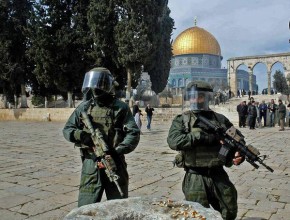
While Abbas’ faltering position as the head of the Palestinian Authority and the aggressive attitude of the Netanyahu government are major factors in creating this hopeless atmosphere, Seidemann pointed out that the problem is not limited to those bodies.
Referring to the announcement the same day of Israel having demolished homes of two terrorists who carried out deadly attacks last year, Seidemann said, “Demolishing of these houses make Palestinians wonder when the Abu Khdeir terrorists and Duma terrorists will be dealt with.”
This refers to two cases of Jewish terrorism that sparked global outrage. But the way Israel has dealt with them demonstrates why Palestinians feel so devalued. Muhammed Abu Khdeir was murdered in July of 2014. The culprits have been arrested and are still on trial at this time in Israel’s criminal court system. In contrast, Palestinians accused of terrorism are tried by Israeli military courts. And where the families of Palestinians convicted in those courts see their homes demolished in a type of collective punishment, it is the Abu Khdeir family, not those of the confessed murderers, that have been spat upon outside the court. Even the US State Department has accused the Israeli government of harassing the Abu Khdeir family.
The Duma murderers are even more immediate and galling to Palestinians. The arson in the Palestinian village of Duma in the West Bank killed an 18-month old baby and both his parents. Yet, despite the fact that Defense Minister Moshe Ya’alon has publicly stated that Israel knows who the murderers are, they have not been arrested. “This creates a feeling that Palestinian lives don’t matter, and that is not only directed at Israel, but also to the Palestinian Authority and much of Arab world,” Seidemann said.
Seidemann is one of the growing body of serious analysts who contend that the model of bilateral talks brokered by the United States that grew out of the Oslo Accords can never produce an end to Israel’s occupation. His message was that outside intervention was going to be necessary, even as he understood how difficult it would be to make that happen.
“There has been no action on Israel since collapse of Kerry initiative (in 2014),” Seidemann said. “Many in the Obama administration are making compelling arguments for simply walking away. Taking any action on this issue would require expending political capital and still may not be successful. These are strong arguments.
“But the implications of walking away are startling. It is very likely that the two-state solution, if it is not lost already, will be clearly lost before January 2017. If that happens, it will have died under this president.”
Seidemann pointed out that, in some ways, the two state solution is being lived now in Jerusalem, with Israeli Jews rarely entering Palestinian areas and Palestinians avoiding the Jewish parts unless they have work or other business there. Settlers in East Jerusalem, however, are living a one state reality, with soldiers accompanying convoys in and out of their enclaves, constant tension and very different standards of living between the two isolated communities. Seidemann described it as “Belfast at its worst.”
Seidemann said that the level of cooperation between Israel and the Palestinian Authority on security remains good. But that won’t last in the current climate. Regardless of Abbas’ commitment to non-violence, Netanyahu continues to accuse him of incitement – “Netanyahu plays on Israeli fears and anxieties like a virtuoso plays on a Stradivarius,” said Seidemann — and the security cooperation is becoming more and more of a political liability for Abbas. Eventually, those things will combine to break that cooperation. This was one of the implications of Abbas’ speech at the United Nations last week. In any case, Seidemann said, that cooperation is insufficient to deal with destabilizing forces at play.
Benjamin Netanyahu, Prime Minister: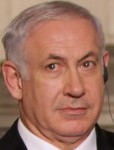
“I think anyone who is going to establish a Palestinian state and to evacuate territory is giving radical Islam a staging ground against the State of Israel.” (Politico, 3/16/15)
“I think the Israeli people understand now what I always say: that there cannot be a situation, under any agreement, in which we relinquish security control of the territory west of the River Jordan.” (Times of Israel, 7/13/14)
Naftali Bennett, Minister of Education:
“I will do everything in my power to make sure they [Palestinians] never get a state.” (New Yorker, 1/21/13)
“We are not going to give up more land. This approach has failed. Now, if it means that the world will penalize us, that is unfair but so be it.” (Times of Israel, 2/17/15)
“Israel cannot withdraw from more territory and cannot allow for the establishment of a Palestinian state in the West Bank.” (New York Times, 11/6/14)
In a 2010 television debate with Palestinian Israeli Ahmed Tibi: “When [Palestinians] were still climbing trees, we had a Jewish state here… We were here long before you.” (972 Mag, 1/1/13)
Yuval Steinitz, Minister of National Infrastructure, Energy, and Water:
“Israel should stop transferring the taxes it collects for the Palestinian Authority and consider dismantling it if it continues to act against Israel in the international arena. Establishing a Palestinian state in the current conditions will bring war, terrorism and a Hamas and Islamic State takeover of Judea and Samaria.” (Jerusalem Post, 12/18/14)
“The demand for Israel to withdraw to the 1967 lines, without holding on to the Jordan Valley, without defensible borders, without security control, and without the demilitarization of Gaza… is a recipe for collective suicide.” (Jerusalem Post, 9/8/14)
Ayelet Shaked, Minister of Justice:
“We should manage the conflict and not give up on any centimeter of land. Yes, it’s not perfect, but it’s better than any other alternative.” (Jewish Telegraphic Agency, 2/3/15)
“Around us in the Middle East there is total chaos. I’m not willing to give up on my land for this chaos.” (The Forward, 5/7/15)
Moshe Ya’alon, Minister of Defense:
“It is time to free ourselves of the concept that everything leads to a framework that is called a state. From my standpoint, they can call it the Palestinian empire. I don’t care. It would basically be autonomy.” (Jerusalem Post, 10/17/14)
“I think we made a mistake with land for peace.” (The Forward, 6/10/14)
Tzipi Hotovely, Deputy Minister of Foreign Affairs:
“This land is ours. All of it is ours. We expect as a matter of principle of the international community to recognize Israel’s right to build homes for Jews in their homeland, everywhere.” (The Guardian, UK, 5/22/15)
“We need to demand sovereignty over all of Judea and Samaria, and nothing less than that.” (Times of Israel, 7/16/12)
Miri Regev, Minister of Culture and Sport:
“The expression Palestinian state should not be used.” (al-Arabiya, 6/11/09)
“The towns in the Jordan Valley are a strategic and security asset of the state of Israel that must stay in our hands.” (The Guardian, UK, 12/31/13)
Silvan Shalom, Vice Prime Minister, Minister of the Interior:
“We are all against a Palestinian state, there is no question about it.” (Ha’aretz, 5/18/15)
“Judea and Samaria are the bulletproof vest of Israel.” (Ha’aretz. 5/18/15)
Danny Danon, Minister of Science, Technology and Space:
“Enough with the two-state-solution. Land-for-peace is over. We don’t want a Palestinian State. We need to apply  Israeli sovereignty over all Jewish communities in Judea and Samaria. It’s been about 20 years since the Oslo Accords. That’s finished and now we’re ready for new ideas…We are a nationalist government and not a government that will establish a Palestinian government on 1967 lines.” (Arutz 7, 10/2/12)
“I understand the importance of political power, so I will use my strength and influence to convince as many people as I can within the (Likud) party and outside the party that a Palestinian state is bad news for Israel.” (The Forward, 7/8/13)
Zeev Elkin, Minister of Jerusalem:
“There is no place for a Palestinian state, not in temporary borders and not in any other configuration.” (Arutz Sheva, 3/25/11)
“Whoever objects to the ‘two state’ solution does not need to present an alternative solution because the basic  situation is that this territory belongs to us.” (Arutz Sheva, 10/24/13)
“For 20 years, we talked about what to give and why. Now the time has come for an entirely different discourse…This is our land, and it’s our right to apply sovereignty over it. Regardless of the world’s opposition, it’s time to do in Judea and Samaria what we did in [East] Jerusalem and the Golan.” (Times of Israel, 7/16/12)
“I certainly think a Palestinian state is no solution. And if I think a Palestinian state is no solution, that means I do want a Jewish presence here. Which raises the question: What do you do with the Palestinian population? And I don’t think the answer to that question can be found right now.” (Times of Israel, 7/29/13)
Uri Ariel, Minister of Agriculture: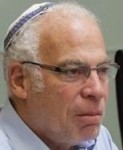
“There will be just one state between the Jordan River and the sea, and that is the State of Israel.” (Middle East Monitor, 5/30/14)
“Anyone here today understands that the vision of two states is unrealistic and will never happen.” (Times of Israel, 8/25/13)
Yisrael Katz, Minister of Intelligence and Atomic Energy:
“I will not agree to a Palestinian state. The only practical solution is an autonomous entity in the A and B areas with an affiliation with Jordan and Israeli security control.” (YNet News, 7/10/13)
“Israel needs to take unilateral steps to apply Israeli sovereignty to all of the settlements in Judea and Samaria.” (Jerusalem Post, 5/6/11)