Welcome to FMEP’s Weekly Settlement & Annexation Report. To subscribe to this report, please click here.
January 15, 2021
- Tender for Givat Hamatos Settlement Construction Delayed
- Israel Expected to Advance Plans for (At Least) 684 Settlement Units, Grant Retroactive Approval to Outposts
- Netanyahu Promises to Boost Funds for “Sovereignty Road”
- Settlers Escalate Campaign for Outposts Legalization
- Israel Sets Up New Hotline to Assist Settler Surveillance of Palestinian Construction in Area C
- Key Quotes from U.S. Amb. Friedman on His Way Out the Door
- Bonus Reads
by Kristin McCarthy (kmccarthy@fmep.org)
Tender for Givat Hamatos Settlement Construction Delayed
On January 15th, the Jerusalem District Court issued a temporary injunction against the issuance of the tender for construction of 1,257 units in the Givat Hamatos settlement, slated to be built in East Jerusalem. Givat Hamatos has long been regarded as a doomsday settlement by parties interested in preserving the possibility of a two-state solution, assuming that Jerusalem will need to be divided and shared. If the Givat Hamatos settlement is built, the Palestinian neighborhood of Beit Safafa in East Jerusalem will be completely surrounded by Israeli construction, severing its connection to the West Bank.
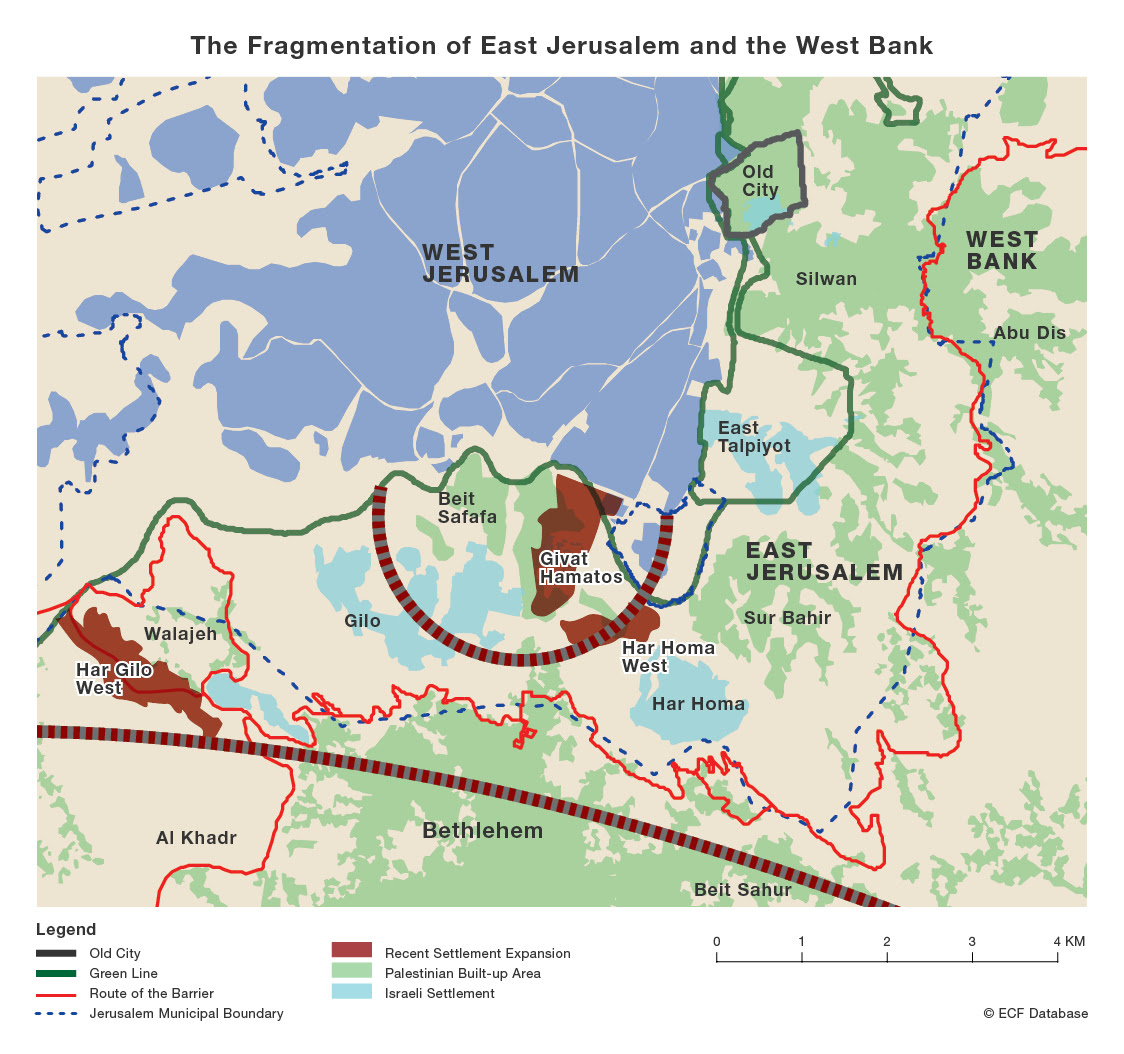
Map by Terrestrial Jerusalem
The injunction comes in response to an emergency petition submitted on January 14th by 25 Palestinian residents of East Jerusalem with the assistance of the Israeli NGO Ir Amim. The petition argues that the conditions of the tender represent “severe housing discrimination” in that non-Isareli citizens are ineligible for the government subsidized housing planned for Givat Hamatos. Rather than seeking to stop the construction of Givat Hamatos, the petition asks the government to correct these discriminatory conditions so that Palestinian residents are also welcome to purchase homes in Givat Hamatos.
The tender was scheduled to be published on January 18th (2 days before the inauguration of Joe Biden as the new U.S. president). The injunction delays that publication and orders the government to respond to Ir Amim’s petition by January 21st.
Ir Amim explains the petition’s claims in detail:
“40% of the homes [planned for Givat Hamatos] will be allocated to individuals who are eligible for a government subsidized housing scheme. To qualify, individuals must be a non- homeowner and an Israeli citizen, which entirely precludes EJ Palestinians, as the vast majority do not hold citizenship but rather permanent residency. Not only are they excluded from an affordable subsidized housing option, but only 60% of the apartment supply offered to an Israeli citizen is available to a Palestinian resident, which discriminates on two planes. The petition therefore calls for the following remedies:
1 – to grant Palestinian residents eligibility to qualify for the subsidized apartments on Givat Hamatos,
2 – Instruct the state to consider equitably allocating a significant number of affordable apartments to Palestinian residents of Jerusalem,
3 – Postpone the apartment marketing process for a period of no less than six months to allow for interested Palestinian Jerusalem residents to apply for eligibility for the subsidized housing scheme, or
4 – To cancel the subsidized housing scheme and rather sell all apartments on the free market, making them accessible to all…
East Jerusalem Palestinians already suffer from acute housing shortages and suppression of residential development stemming from long-standing discriminatory planning and building policies. Since East Jerusalem’s annexation in 1967, not one neighborhood has been built for Palestinians, while only 8.5 % of Jerusalem is zoned for their residential use despite them constituting nearly 40% of the city’s population. 1/3 of the land in East Jerusalem was confiscated to build Israeli neighborhoods/settlements. If and when residential outline plans are approved for existing Palestinian neighborhoods, they only allow for a few hundred housing units versus thousands of housing units in Israeli neighborhoods across the city.”
Terrestrial Jerusalem’s Daniel Seidemann comments:
“This is far from over, and one can never estimate the life expectancy of an injunction like this, but this is very good news. As matters stand the tender process regarding Givart Hamatos will NOT end on January 18, and the bids will not open.”
Israel Expected to Advance Plans for (At Least) 684 Settlement Units, Grant Retroactive Approval to Outposts
The Israeli Defense Ministry’s Higher Planning Council (which oversees all construction in the occupied West Bank) is expected to meet on January 17th to advance plans for at least 684 – but potentially 850 or more – settlement units across the West Bank, while also advancing the retroactive legalization of two outposts. These approvals will come only days before the inauguration of Joe Biden as the new President of the United States, a changing of the guards expected to temper U.S. support and approval for settlement construction.
An additional report by Middle East Eye reports that on January 13th the Israeli planning authorities in Jerusalem advanced plans for 400 units in the Gilo settlement and 130 units in the Ramat Shlomo settlement, both located in East Jerusalem. FMEP will provide more details when those reports are confirmed.
FMEP will confirm the details of the Civil Administration’s High Planning Council meeting in next week’s Settlement Report. Based on what is known today, the settlement units expected to receive final approval include:
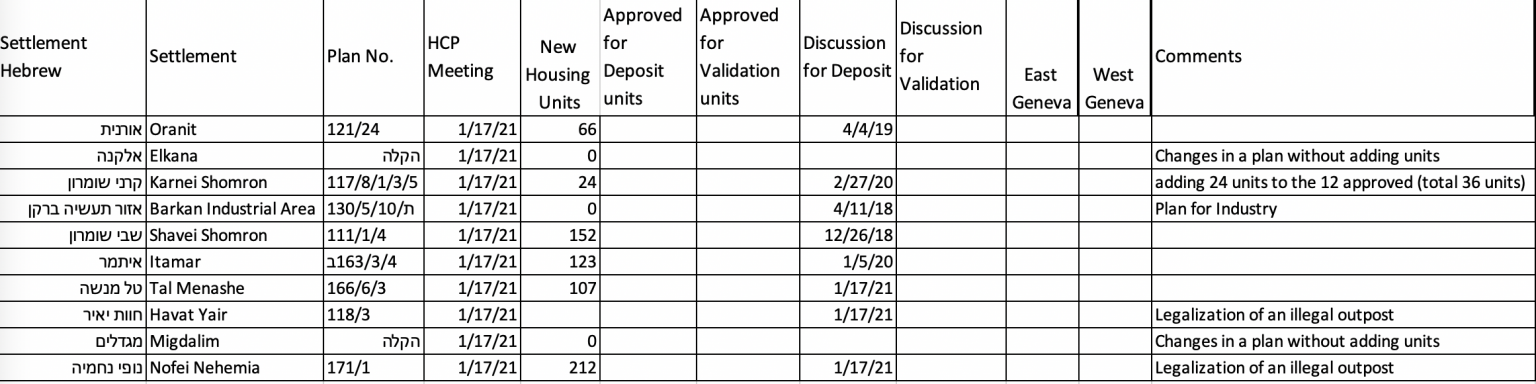
- 152 new units in the Shavei Shomron settlement, located in the northern West Bank – northwest of Nablus;
- 123 new units in the Itamar settlement, located southeast of Nablus in a cluster of notoriously violent settlements and outposts;
- 66 new settlements units in the Oranit settlement, located in the northern West Bank, in the “seam zone” between the 1967 Green Line and the Israel separation barrier (constructed along a route designed to keep as many settlements as possible on the Israeli side of the wall/fence);
- 24 new units in the Karnei Shomron settlement, located in the northern West Bank east of the Palestinian village of Qalqilya. Israel is planning to continue expanding Karnei Shomron with the stated goal of bringing 1 million settlers to live in the area surrounding the settlement;
- Expansion of the Barkan Settlement Industrial Zone, located in the northern West Bank and a part of a strand of settlements leading from Israel proper all the way to the Ariel settlement in the very heart of the northern West Bank, reaching literally to the midpoint between the Green Line and the Jordan border. The future of Ariel and the settlements between Ariel and Israel proper have long been one of the greatest challenges to any possible peace agreement, since any plan to connect Ariel to Israel will cut the northern West Bank into pieces. For background on this industrial zone and others, see here.
The settlement units slated to be advanced to the planning stage of depositing for public review include:
- The retroactive legalization of 212 existing units in the Nofei Nehemia outpost, which if implemented would have the effect of retroactively legalizing the outpost as a neighborhood of the Rehelim settlement. The Nofei Nehemia outpost is a fair distance from the Rehelim settlement and is not contiguous with the built up area of Rehelim, making Nofei Nehemia – if authorized – more properly understood as a brand new settlement rather than an expansion of an existing settlement (as the Israeli government would want one to believe). The Nofei Nehemia outpost is located east of the Ariel settlement in the very heart of the northern West Bank.
- 107 new units in the Tal Menashe settlement, located on the tip of the northern West Bank. Tal Menashe is technically a neighborhood of the Hinanit settlement, though the built up areas do not connect. Notably, the plans for 107 units would, if implemented, “dramatically increase” the size of the Tal Menashe settlement, which is the settlement where Esther Horgan – who was murdered by a Palestinian in late December 2020 – lived. Israeli government officials have made it a clear policy to advance settlement construction in response to deadly attacks on settlers by Palestinians, an approach publicly endorsed by current U.S. Ambassador David Friedmam. Tal Menashe is situated in the “seam zone” between the 1967 Green Line and the Israel separation barrier, which was constructed along a route designed to keep as many settlements as possible on the Israeli side of the wall/fence.
- An unknown number of units in the Havot Yair outpost with the intention of granting retroactive legalization (under Israeli law) to the entire outpost. The Havat Yair outpost is located near the Karnei Shomron settlement in the northern West Bank, east of the Palestinian village of Qalqilya.
Wasel Abu Youssef, a member of the Executive Committee of the Palestine Liberation Organization told Reuters:
“[Israel’s advancement of settlement construction] is an attempt to race against time and benefit from the last days of the current U.S. administration.”
Peace Now said in a statement:
“By promoting hundreds of settlement units, Prime Minister Netanyahu is once again putting his personal political interests over those of the country. Not only will this settlement activity erode the possibility for a conflict-ending resolution with the Palestinians in the long-term, but in the short-term it needlessly sets Israel on a collision course with the incoming Biden administration. For eight years as vice president, Biden and the rest of the Obama administration gradually became more irritated and willing to spar with Israel over settlements, and for the past four years Biden has watched Netanyahu stroke Trump’s ego to promote policies meant to undermine the very foundations for a two-state solution. Although supporting more settlement activity may be a shrewd way to attract votes over the increasing number of rivals to his right, Netanyahu is gambling with Israel’s all-important relationship with its US ally.”
It’s worth noting that current Israeli Defense Minister (and increasingly disgraced Blue & White party leader) Benny Gantz, following the publication of the High Planning Council’ agenda for settlement construction, announced that his office had taken “preliminary steps” towards the approval of Palestinian construction plans in communities located in Area C of the West Bank (some 60% of the West Bank which Israel exercises unilateral civil and security control over, and which is the focus of the most intense settler campaigns for de jure annexation). The Times of Israel reports that those plans include: the expansion of the Palestinian village of Al-Walaja (located south of Jerusalem and surrounded on three sides by the Israeli separation barrier), the expansion of Hizma (located on the northern border of the Jerusalem municipal boundary), approval of a new hotel in the Bethlehem area (note: Bethlehem itself is not in Area C), a hearing on plans for a hotel in Beit Jala (located on the eastern border of Bethlehem, 75% of land belonging to Beit Jala was designated as Area C under the Oslo Accords), and a hearing on the retroactive legalization of farming buildings in al-Fara (located in the northern West Bank). Commenting on Gantz’s announcement of these Palestinian plans, Bimkom researcher Alon Cohen-Lifshitz told told The Times of Israel:
“This is like mocking the poor. Most of the plans are from 2012. They’re all very small in terms of their land use and do not allow for [further] development.”
Predictably, settlers responded with vitriol to the rumor of plans to regulate (i.e., post-facto legalize) Palestinian construction in Area C. A spokesman for the Young Settlements Forum (“young settlements” is a new euphemism for illegal outposts that has been catching on in Israeli politics) said:
“There is no limit to this cynicism. The defense minister and the prime minister want to legitimize the illegal Palestinian takeover of Area C in violation of political agreements, and remove from the agenda the regulation of Israeli settlements that have been built on state land.”
Netanyahu Promises to Boost Funds for “Sovereignty Road”
According to the Jerusalem Post, Prime Minister Netanyahu has promised to allocate an additional $4 million USD (NIS 14 million) or more to the construction of the so-called “Sovereignty Road.” The road is a key element in Israel’s plan to build the E-1 settlement east of Jerusalem and its larger ambition to annex (de facto or de jure) a huge area of West Bank territory located between Jerusalem and Jericho.
According to the Jerusalem Post, Netanyahu met with Benny Kashriel, mayor of the Ma’ale Adumim settlement (located adjacent to the E-1 site), along with Transportation Minister Miri Regev and Finance Minister Israel Katz to discuss the matter this week. During the meeting, Bibi made the verbal commitment to allocating additional funds to see that the road is built.
Peace Now responded to the news:
“Netanyahu’s election campaign is costing Israel a very heavy price. Once again, he is using the election period to try to impress key Likud supporters by promoting a plan that could eliminate the possibility of a two-state solution. The planned road will allow Israel to cut the West Bank in two, build E1 and the separation barrier, and close the door on the possibility of developing a sustainable Palestinian state.”
For decades, construction of the E-1 settlement – which is now actively advancing through the planning process – has been adamantly opposed by the international community. A key criticism of the plan is that it would effectively cut the West Bank in half — thereby preventing any two-state solution. The “Sovereignty Road” has long been Israel’s answer to that criticism, with Israel arguing that it will replace territorial contiguity with limited “transportational continuity” – via a sealed road that is under Israel’s total control (meaning they can cut off passage through it at any time).
If built, a section of the Palestinian-only road is projected to run under the separation barrier (which is not currently built in this area). The rest of the road will run relatively adjacent to the route of the planned separation barrier, in order – in the words of former Defense Minister Bennet – to prevent Palestinian traffic from coming “near Jewish communities.” This new section of road connects to the infamous “apartheid road” (aka, the Eastern Ring Road) which has a high wall down the middle dividing Israeli and Palestinian traffic, and which was opened for Palestinian traffic in January 2019.
In March 2020, then Defense Minister Naftali Bennet gave final approval for the “Sovereignty Road” plan, at the time giving lip service to the idea that the plan will benefit Palestinians (even as it further cuts them off from Jerusalem, takes more land, and cuts the West Bank in half). At the same time, he made clear his real objective. stating:
“[the road] will improve the quality of life for residents in the area, avoid unnecessary friction [for Israelis] with the Palestinian population and most importantly — allow for continued [settlement] construction. We’re applying sovereignty [to the West Bank] in deeds, not in words.”
Peace Now has previously explained the issue with Israel’s design:
“The new road is intended to allow Palestinians to pass under the route of the separation barrier, and to travel ‘inside’ the Adumim Bloc along a wall without entering the ‘Israeli’ side, as in a kind of tunnel. Once the road is paved, Israel can then claim that construction in E1, and the construction of the barrier around the Adumim bloc does not sever the West Bank because the Palestinians have an alternative transport route. This argument is preposterous. A thin line of road connecting separate territorial sections–transportational contiguity–does not meet the needs for territorial viability for the development and livelihoods of Palestinians in the critical Ramallah-Jerusalem-Bethlehem metropolitan area. Without actual territorial contiguity, an independent Palestinian state cannot be established and prosper, and therefore a two-state solution cannot be reached.”
Settlers Escalate Campaign for Outposts Legalization
Kan radio reported that Defense Minister Benny Gantz told settlers that he remains opposed to issuing retroactive authorization to dozens of outposts in one fell swoop, but will instead prefers that each outpost go through a legal process individually in order to gain legalization.
Settlers have been encamped in front of the Prime Minister’s office for nearly two weeks demanding for the passage of a government decision for large scale retroactive legalization of as many as 70 outposts. That decision has been drafted but has been held up by Defense Minister Gantz; In December 2020, Knesset introduced a bill to circumvent Gantz’s opposition and grant authorization to 65 outposts.
Some of the protesting settlers began a hunger strike in hopes of escalating their demands for outpost authorization. Numerous politicians and officials have visited the encamped settlers to show solidarity, including aspiring Prime Minister Naftali Bennett visited the encamped hunger strikers, saying:
“Netanyahu, authorize the young settlements [outposts] now in these coming 10 days. If you don’t do it, when I am the prime minister, I will do it.”
Israel Sets Up New Hotline to Assist Settler Surveillance of Palestinian Construction in Area C
Haaretz reports that in November 2020 the Israeli Civil Administration (the body within the Israeli Defense Ministry tasked with coordinating all civilian affairs in the occupied West Bank) created a new hotline for settlers wishing to report their suspicions of “illegal” Palestinian construction in the West Bank (on the Kochav Ya’akov settlement website, the new phone service is called a “snitch line”).
Amira Hass reports in Haaretz that the Civil Administration’s announcement of the “snitch line” said:
“Have you seen Palestinian construction work that looks to you to be suspicious and unauthorized? Have you encountered a sanitation hazard created by Palestinians who disdain the law? From now on you have a ‘snitch-line’ of your own. Call at any hour of the day and submit a complaint about it. Every day there will be a summary of the complaints and a display of what was examined and what was confiscated in the event that there was improper conduct. Good luck.”
Testing whether the new hotline was exclusively for Israeli settlers reporting on Palestinians, the Palestinian-led NGO Haqel tried reporting illegal construction by the settlers. In response, the Civil Administration said that the “coordination office representatives sent someone to check what’s going on.”
The new hotline is yet another victory in the campaign by settlers to stop Palestinian construction in Area C, and push Palestinians out altogether. In November 2020, in addition to razing an entire Palestinian community, Khirbet Humsa, and tightening the noose on Khan Al-Ahmar – the Israeli government advanced plans to begin a land registration process in Area C as a means by which the state can declare more West Bank land to be “state land,” a way to retroactively legalize unauthorized settlement construction there (as well as put more land off limits to Palestinain construction and even render some existing Palestinian construction illegal).
Additionally, on September 10th the Israeli government allocated $6 million USD (20 million NIS) for the newly created Settlement Affairs Ministry to survey and map unauthorized (by Israel) Palestinian construction in Area C of the West Bank, which Israel – egged on by settlers – has been aggressively demolishing in an effort to rid the area of Palestinians. Haaretz reports that this is the first time that the state budget has included funds specifically for a land survey in the West Bank. The state also allocated an additional $2.8 million (9.5 million NIS) to an existing grant program specifically for settlement municipalities to cash in on. As a reminder, virtually all Palestinian construction in Area C of the West Bank is “unauthorized,” because Israel almost universally refuses to give Palestinians permission to build in Area C even on land that Israel recognizes as owned by Palestinians.
The Settlement Affairs Ministry is a new creation of the current coalition government, and is headed by Tzachi Hanegbi (Likud). The funding for the Settlement Affairs Ministry to conduct a survey of unauthorized Palestinian construction in Area C further empowers a domestic Israeli body to exert extraterritorial sovereignty over Area C – in effect, treating the area as land already de facto annexed by Israel. While technically the occupied territories are administered by the Israeli Civil Administration (a body within the Defense Ministry), Israel has spent decades bringing the administration of the territories (specifically the settlements and Area C) ever more directly under direct Israeli law (de facto annexation).
The Knesset has also repeatedly hosted forums to discuss “the Palestinian takeover of Area C.” Consistent with this framing (which is predicated on the idea that Area C belongs to Israel), and pushed by outside groups, many members of the Knesset have criticized the Israeli government’s allegedly lackadaisical approach to defending Israel’s rights/ interests in Area C (i.e., preventing “illegal” Palestinian construction, preventing foreign projects that support Palestinians’ presence in the area, clearing out Palestinians, expanding settlements, consolidating state infrastructure). Reportedly, Foreign Affairs Minister Gabi Ashkenazi (Blue & White) sent a letter to the committee in October 2020 specifically addressing the Knesset’s outrage over European humanitarian assistance projects for Palestinians in Area C. In the letter, Ashkenazi not only celebrated the reduction of European projects over the past year, but validated settlers’ insinuations regarding the nefarious nature of European assistance for Palestinians, saying that any European activity in the West Bank lacking Israeli permission is “an attempt to define a border.”
At one Knesset hearing, MK Bezalel Smotrich (Yamina) suggested that a solution could be to empower the settlements with the ability to demolish Palestinian construction they believe to be unauthorized. Smotrich’s partymate Ayelet Shaked (former Justice Minister) suggested that the government should appoint a project manager tasked with preventing a “Palestinian takeover” of Area C.
As noted above, Israel has long denied Palestinians the ability to build in Area C, resulting in many Palestinian structures (including homes, schools, farms, etc) being built without the required Israeli-issued permits. To fully understand what is happening, see B’Tselem’s excellent explainer.
Key Quotes from U.S. Amb. Friedman on His Way Out the Door
Please read the New York Times feature on David Friedman in its entirety, and the two separate threads (one and two) journalist David Halbfinger tweeted with supplemental material from the interview. A few key quotes regarding U.S. settlement and annexation policy over the past four years are copied below.
On internal Israeli annexation negotiations between Netanyahu and his government coalition partners:
“I was invited.”
On the future of Israel’s de jure annexation of West Bank land:
“They [Israel] can act unilaterally. It’s suboptimal, but at some point, it’s just sort of necessary just to move on.”
On how the U.S. settlement policy over the past four years:
“he agreed with the Israelis that they should build ‘from the inside out’ — to expand settlements ‘with the least amount of damage to the overall footprint. And that’s how they’ve been operating over the last four years’.”
On the opposition to settlement construction by previous U.S. administrations:
“just to kind of virtue-signal that we think the Palestinians should have something more, made no sense to me…[What Israel does inside or outside the settlements is] an internal decision.” And also on the idea of asking for a settlement freeze: “for them [Israel], I think a freeze of construction is the acknowledgment that the land doesn’t belong to them.”
On criticisms of the Trump Plan map:
“We spent months working on ways to achieve contiguity. You can drive from Hebron to Nablus and never see an Israeli. “I used to take the Midtown Tunnel to work every day. If you tell me that there’s a river, that I go under a river, I don’t know that. I never saw the river once. I drove under that thing for 30 years, never saw a river. So I take it on faith that there’s an East River. I’m just saying that we created enough contiguity so that Palestinians could go throughout the West Bank without ever coming face-to-face with the Israelis.”
On the role Israelis played in creating the Trump Plan and map:
“The editorial control was always ours. This was entirely authored by us and almost entirely conceptualized by us.”
On how to get Israelis to buy into future peace talks:
“Peace talks would only gain traction with the Israeli right, he ‘without the accusation that somehow it’s a thief and being asked to return things that it stole. Israel will not and should not come to the table on the basis of being an illegal occupier of stolen land’”
On the current status quo (in which Israel occupies the West Bank and blocakes the Gaza Strip):
“the status quo is not unsustainable, but I think the status quo is suboptimal and should be.”
On the dangers posed to Israeli democracy by permanent occupation:
“I don’t think it has anything to do with Israel’s democracy because Israel’s democracy is the function of the citizens, and these are not citizens of Israel.”
Friedman confirmed that the Trump Plan and normalization deals between Israel and the UAE and Bahrain held out the “aspiration” of a massive change to the status quo on the Temple Mount in which non-Muslim prayer would be allowed at all areas except Al Aqsa Mosque.
Dismissing any remaining doubt that normalization deals between Israel and Arab countries were contingent on Israel’s permanent suspension of annexation:
“I don’t think it would’ve been appropriate for Israel to, especially without the consensus of the Israeli population, to just give up territory permanently for any agreement with another country,”
He blamed the Israeli left for a tense moment in 2010 between then Vice President Biden and the Israeli government, when Biden arrived in Israel on the same day Isreal announced settlement construction plans:
“The reality here is whenever under the last administration somebody of significance came to visit, the Israeli left would immediately publicize whatever they could find in terms of settlement expansion, to create that friction,”
On his future plans:
“I’m going to stay American-only for at least four years. I want to give myself every opportunity to return to government.” And later, “Finally, there’s talk of his forming an Israel-based pro-settlement group. He hinted: ‘I will stay in the space somehow, but I just don’t know how,’ he said. ‘I’ll try to maintain a voice. I mean, it’s a huge drop-off when you no longer have access to the president’.”
Bonus Reads
- “[Webinar] ‘Raided and Razed’: West Bank Education under Attack” (FMEP & NRC)
- “‘Does someone have to die for West Bank outposts to be legalized?’” (Jerusalem Post)
- “Land of wine and honey? Israeli settlers export to UAE, to Palestinian chagrin” (Reuters)
Welcome to FMEP’s Weekly Settlement & Annexation Report. To subscribe to this report, please click here.
December 11, 2020
- Israel Expected to Advance Plan for Yeshiva at Entrance to Sheikh Jarrah
- Gantz Weighing Vote in Cabinet to Legalize 40+ Outposts
- MK Planning to Call Vote on Bill to Prevent Future Evacuation of Any/All Settlements & Outposts (De Facto Annexation West Bank)
- Annexation via Internet
- Annexation via Roads & Infrastructure
- Bahrain Backtracks On Annexation Recognition…As UAE Openly Embraces Settlers
- Bonus Reads
Israel Expected to Advance Plan for Yeshiva at Entrance to Sheikh Jarrah
Ir Amim reports that at the next meeting of the Jerusalem District Planning Committee the Committee, scheduled for December 16, is expected to advance a highly inflammatory plan to build a Jewish religious school (a yeshiva) and dormitory at the entrance of the East Jerusalem neighborhood of Sheikh Jarrah.
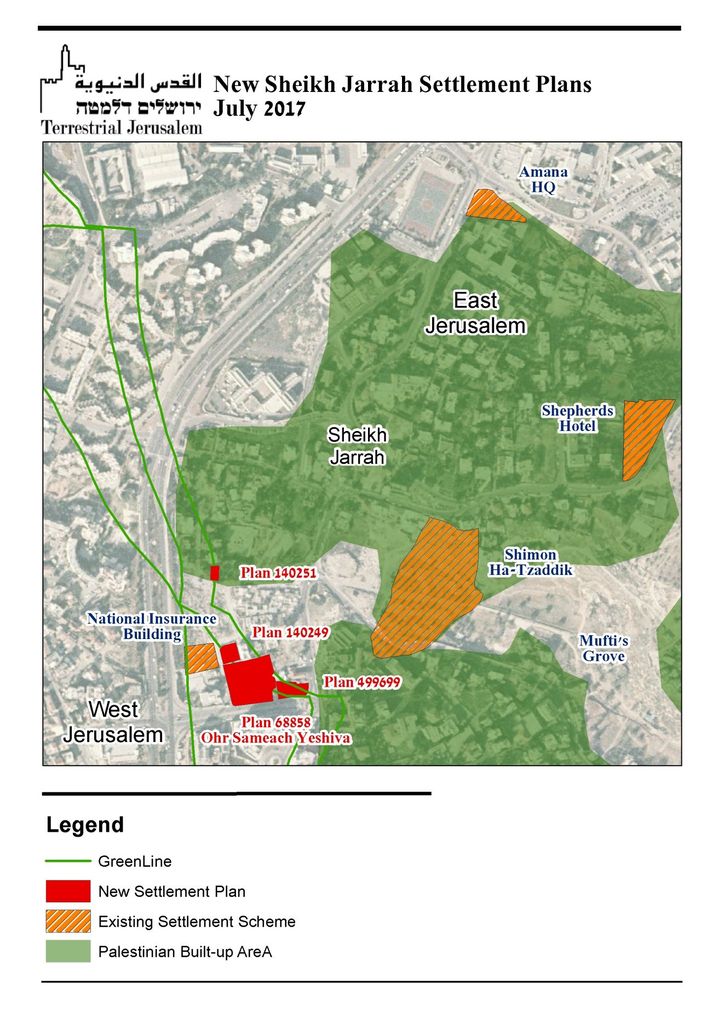 The District Planning Committee was expected to grant approval to this plan in July 2020, but – based on data submitted by Ir Amim – unexpectedly ordered a new survey on the needs of the Sheikh Jarrah community. It is unclear at this time whether that survey has been completed, and if it has been completed, what the conclusions/findings were and if the Committee is now satisfied. The December 16th Committee meeting is closed to the public.
The plan to build the yeshiva and dormitory, which would house dozens of young religious settlers, as well as another project for a 6-story building in the same area, aims to strengthen Israeli settlers’ hold on the neighborhood. Once built, settlements will literally flank both sides of the road leading into Sheikh Jarrah, advancing the settlers’ goal of cementing the presence of the settlement enclaves inside of Sheikh Jarrah and connecting them more seamlessly to the neighborhood’s periphery and to West Jerusalem.
Ir Amim writes:
“If approved, the construction of the yeshiva will significantly bolster the efforts of state-sponsored settler organizations to transform large portions of Sheikh Jarrah into a large Israeli settlement through evictions of Palestinians and settler takeovers of their homes. Over the past few months, the Israeli courts have upheld eviction demands against 12 Palestinian families, including the Sabbagh family, from the Kerem Al’ajoni section of Sheikh Jarrah, ruling on behalf of settler groups. Various appeals and legal proceedings have only temporarily halted the families forced removal from their homes.”
Just this week, FMEP hosted a webinar on Sheikh Jarrah and the impending dispossession of Palestinians from their longtime homes.
Gantz Weighing Vote in Cabinet to Legalize 40+ Outposts
The Jerusalem Post reports that Defense Minister Benny Gantz (Blue & White) is holding up – for unreported reasons – the Security Cabinet’s consideration of a draft decision to grant authorization to dozens of Isareli outposts across the West Bank. Gantz has not (yet) issued his approval for the draft text to be discussed and voted on at the Cabinet level, though he has allowed a senior Defense Minister, Michael Biton, to work with Settlement Minister Tzachi Hanegbi (Likud) on crafting that text over the past several weeks.
Speaking to the Knesset Foreign Affairs and Defense subcommittee on December 9th, Hanegbi said that a draft decision is “almost 100% complete,” and that he expects it to provide for the retroactive authorization of 40-45 outposts. Hanegbi said he had hoped to craft a decision that could apply to 69 outposts, but his negotiations with Biton limited its scope. Last week, Biton and Gantz made it clear that the party would support granting authorization to outposts which were built on “state land,” but not outposts which have a more complicated land status, including private Palestinian ownership claims.
According to Peace Now, there are a total of 124 outposts in the West Bank. There is a new urgency around granting a sweeping government authorization to outposts as Israel anticipates a closing window of opportunity to do so with the looming exit of President Trump and his openly pro-settlement, pro-outpost, pro-annexation policy.
The push to grant retroactive legalization to all of the outposts is nothing new, nor is the more limited goal of granting authorization to outposts that were built on land that has been declared by Israel to be state land – a status which the Israeli government regards as less complicated than cases where the outposts were built on land that have recognized ownership claims from Palestinians. In addition to the myriad problems with how Israel has used its authority as an occupier to declare land as “state land” and subsequently designates that land for the sole use of settlers, the fact remains that outposts built on that land were built illegally even under Israeli law (though in many cases with the tacit support or active encouragement of the government). For years, Israel has openly sought to find creative bureaucratic and legal means to grant retroactive “legal” status to as many outposts as possible.
In 2012, a government-commissioned report – called the “Levy Report” (after its author, retired High Court Justice Edmund Levy) declared Israeli’s occupation of the West Bank to be legal and recommended that outposts built on state land can be easily authorized (legalized) through the planning process without a government decision (i.e., outside of the influence of political or diplomatic considerations). The Israeli government, though it did not formally adopt the report, has nonetheless proceeded to implement its recommendation to grant retroactive legalization to many of these outposts. According to a 2019 Peace Now report – 15 outposts have since been legalized and 35 are in the process of being legalized between 2012 and 2019. At the same time, 32 new outposts have been established.
The outposts that, to this point, have not been legalized have spurred new legal thinking in Israel – like the Regulation Law and the “market regulation” principle – to find new bases by which to legalize the outposts under Israeli law (aka, to suspend the rule of law to deprive Palestinians of recognized land ownership and legalize illegal actions).
MK Planning to Call Vote on Bill to Prevent Future Evacuation of Any/All Settlements & Outposts (De Facto Annexation West Bank)
MK Tzvi Hauser (Derech Eretz) announced that he intends to bring to a vote in the Knesset a bill that would amount to the de facto annexation of the West Bank. The bill aims at preventing the Israeli government from ever evacuating any settlements or outposts, and it does so by expanding the application of an existing Israeli law to include the West Bank. That law, passed in 2014, requires that any proposed withdrawal/evacuation of territory in Jerusalem or the Golan Heights be approved in a national referendum or receive a supermajority of 80 votes in the Knesset. The logic behind this effort is that even if political leaders some day were interested in negotiating a two-state agreement with the Palestinains, the law would make implementation of any agreement politically difficult if not impossible (a situation which would in effect tell the Palestinians, formally, that they have no hope of ever ending the occupation via negotiations).
The bill was submitted to the Knesset in August, and can be brought up for a vote by a member at any time.
Various versions of this same bill have been repeatedly introduced to the Knesset, but not yet called up for a vote. For details, see Yesh Din’s handy database of annexation legislation here. Explaining a 2017 version of the bill introduced by MK Yehuda Glick (then a Likud party member), Yesh Din wrote:
“The bill addresses the West Bank territory as part of the State of Israel, and seeks to equate the legal standing of sovereign Israel and territories not subject to Israeli sovereignty.”
Annexation via Internet
On December 8, Israeli Communications Minister Yoaz Hendel (Derech Eretz Party) accompanied settler leaders on a tour of the Etzion settlement bloc region in the southern West Bank. Speaking to reporters, Hendel reiterated his promise to deliver modern communications infrastructure, including high speed internet and fiber optics, to settlers living in the area.
Perfectly explaining why this is part of Israel’s entrenchment of the settlements and de facto annexation of the West Bank, Shlomo Ne’em (head of the settler Gush Etzion Regional Council) said:
“Adding communications infrastructure in Gush Etzion is equivalent to de facto sovereignty. Until we bring full national sovereignty, the residents here can live on par with 21 century standards.”
Annexation via Roads & Infrastructure
Breaking the Silence and the Israeli Centre for Public Affairs this week issued a new report entitled “Highway to Annexation: Israeli Road and Infrastructure Development in the West Bank.” The report lays out how Israel has, for decades, been implementing de facto annexation of the West Bank not only through the growth of the settlements, but through the construction of roads, water, electricity, and other infrastructure in the West Bank which in turn allows for the growth of the settlements.
In addition to providing a history lesson on Israel’s construction of infrastructure in the West Bank from the earliest days of the occupation, the report provides analysis of ongoing and likely infrastructure projects that are a key part of the ongoing annexation-through-infrastructure reality. Those projects, which are designed solely with the interest of the settlements in mind (though the GOI says that Palestinians will be able to use them as well), include:
-
- Expanding Lateral Roads, including: Highway 55 (running from Israel to the Kedumim settlement), Highway 5/505 (running from Israel through the Ariel settlement and on to the Jordan Valley), Highway 456 (running between Ramallah and Salfit), Highway 367 (in the western Etzion bloc). As explained in the report, lateral roads in the West Bank serve two goals: connecting settlements to Israel proper and restricting the growth potential of Palestinian communities.
- Expanding and renovating roads in the Jerusalem Metropolis, including the following –
- To Jerusalem’s south: doubling the size of Highway 60 (the “Tunnels Road”) as an entrance to Jerusalem from the south;
- To Jerusalem’s east: extending the Eastern Ring Road (aka the “Apartheid Road”), building an underpasses for the Talpiot and French Hill settlements and an overpass for the Ramat Shlomo settlement – all of which will allow settlers to more directly (without hitting a single traffic light) enter Jerusalem.
- To Jerusalem’s north: tunneling under the Qalandiya checkpoint (for settlers only) and connecting that tunnel via a new sections of several highways in the area (Highway 45, Highway 443, Highway 935). This will allow settlers (only) to bypass the notoriously congested Hizma checkpoint.
- And, expanding the Jerusalem light rail to service East Jerusalem settlements.
- Building the “Sovereignty Road” near Ma’ale Adumim. This road would be for Palestinians, designed to divert Palestinian traffic around the Maale Adumim and E1 settlement areas in preperation for massive settlement growth. This road has emerged as the Israeli government’s defense for its plans to build the E-1 settlement, which critics say will sever the West Bank in two. Israel, via this road plan, argues that Palestinians will continue to have “transportational contiguity” despite losing territorial contiguity.
For a full reporting on all of the infrastructure projects being advanced by Israel in the West Bank, see the full report.
The authors write:
“ The ultimate vision of the road and transportation projects currently planned and underway in the West Bank involve entrenching the segregation between Israeli settlers and Palestinians. These infrastructure projects, of course, do not provide for “separate but equal” development but are rather guided primarily by the interests of the settler population and come at the expense of Palestinian development… West Bank road and transportation development creates facts on the ground that constitute a significant entrenchment of the de facto annexation already taking place in the West Bank and will enable massive settlement growth in the years to come. By strengthening Israel’s hold on West Bank territory, aiding settlement growth, and fragmenting Palestinian land, this infrastructure growth poses a significant barrier to ending the occupation and achieving an equitable and peaceful solution to the Israeli-Palestinian conflict.“
Bahrain Backtracks On Annexation Recognition…As UAE Openly Embraces Settlers
This week, Bahrain clarified that it will not import goods produced in Israeli settlements in the West Bank or Golan Heights (making the question of how such products are labeled moot). The policy clarification reverses comments made by a Bahraini trade official late last week that seemed to offer Bahrain’s de facto recognition of Israeli sovereignty over the settlements, and follows significant backlash for those comments.
Taking a different approach, this week the UAE — which previously welcomed a high-profile visit by a settler delegation — doubled down on its approach of actively embracing commercial ties with settlements. On December 8th, the Jerusalem Post reported that the UAE-based FAM Holding company has signed a deal with a settlement vineyard – the first time such a deal has been made between a UAE business and the settlements. The deal provides for the UAE to import goods from the Tura Winery (in the Rehelim settlement), the Har Bracha Winery (in the Har Bracha settlement), and the Arnon Winery (near the Itamar settlement), as well as Paradise Honey.
Yossi Dagan, the head of the settler Samaria Regional Council, called the deal “a national-strategic achievement for the State of Israel” saying it is a:
“significant part of a strategic process to strengthen Samaria — in the number of residents, in infrastructure and culture. We’re working hard, consistently, and in any location, to turn Samaria into an economic powerhouse — another glass ceiling shattered!”
Discussing/rationalizing the deal, the head of Dubai’s Chamber of Commerce and Industry adopted longstanding hasbara talking points that paint doing business with settlements as a way of helping the Palestinians. According to the Times of Israel, he:
“noted that Israeli factories provide work for tens of thousands of Palestinians and said the hope is to assist the Palestinians economy rather than harm it.”
As a reminder, “benevolent occupation” is an old hasbara argument founded on the view that Palestinian should appreciate the opportunities settlements provide for employment, even as those same settlements and the occupation deny them dignity, human and civil rights, freedom of movement and access to their own lands, and self-determination –and in parallel, deny them any chance to develop a productive Palestinain economy that could provide them employment and economic opportunities. For a an examination of this old hasbara line, see: Sodastream, ScarJo, and the Myth of Benevolent Occupation
Along these same lines, Avi Zimmerman – leader of the “Judea and Samaria Chamber of Commerce & Industry” – is once again touting the fiction that the success of settlement businesses benefits Palestinians. According to the Times of Israel’s reporting, Zimmerman said that, “in the spirit of symmetry” he is working to:
“find opportunities for Palestinian businesses to benefit from the accords as well, in the short term through partnerships with Israeli businesses and in the long term through large-scale environmental and infrastructure projects that incorporate both populations.”
Again, as a reminder, economic “coexistence” initiatives like the “Judea and Samaria Chamber of Commerce & Industry” are, in fact, efforts to normalize, entrench, and reward Israeli settlements while perpetuating Israel’s economic exploitation of occupied territory (including the local workforce, land, and other natural resources). Labelling such initiatives as “coexistence” programs or suggesting that Palestinians should welcome the benefits of settlement economies is perverse.
Bonus Reads
- “Israel’s Tony Soprano Policies in the West Bank“ (Haaretz // Michael Sfard)
- “Firing zones, Highway 10 to open to hikers on Hanukkah” (Jerusalem Post)
- “Highways to Annexation: Across the West Bank, Israel Is Bulldozing a Bright Future for Jewish Settlers” (Haaretz)
- “Peace for Peace? Israel-Morocco Deal Is Occupation in Exchange for Occupation” (Haaretz)
Welcome to FMEP’s Weekly Settlement & Annexation Report. To subscribe to this report, please click here.
October 23, 2020
- Following Wave of New Settlement Approvals, Israel Advances Plans for New Settler Bypass Roads
- Settler Violence (Predictably) Spikes During Olive Harvest, IDF (Predictably) Fails to Intervene
- Settlers Establish New Outpost in Jordan Valley to Expand Maskiyot Settlement
- Israel Increasing Demolitions of Palestinian Construction in Second Half of 2020
- The Return of Economic “Peace” Schemes: Judea and Samaria Business Council Holds Virtual Summit, Praises Abraham Accords as Model for “Peace”
- CONFIRMED: Tekoa Settles Illegally Built on Palestinian Land
- Friedman Reiterates Trump Admin Support for Settlements & Outposts
- Bonus Reads
Comments/questions? Contact Kristin McCarthy (kmccarthy@fmep.org)
Following Wave of New Settlement Approvals, Israel Advances Plans for New Settler Bypass Roads
This week Israeli authorities advanced plans for the construction of three new settler bypass roads. The advancement of the plans comes just a week after the High Planning Council advanced plans for the construction of 4,948 new settlement units (in addition to the retroactive legalization of hundreds of existing units and approval of 4 major non-residential settlement construction projects).
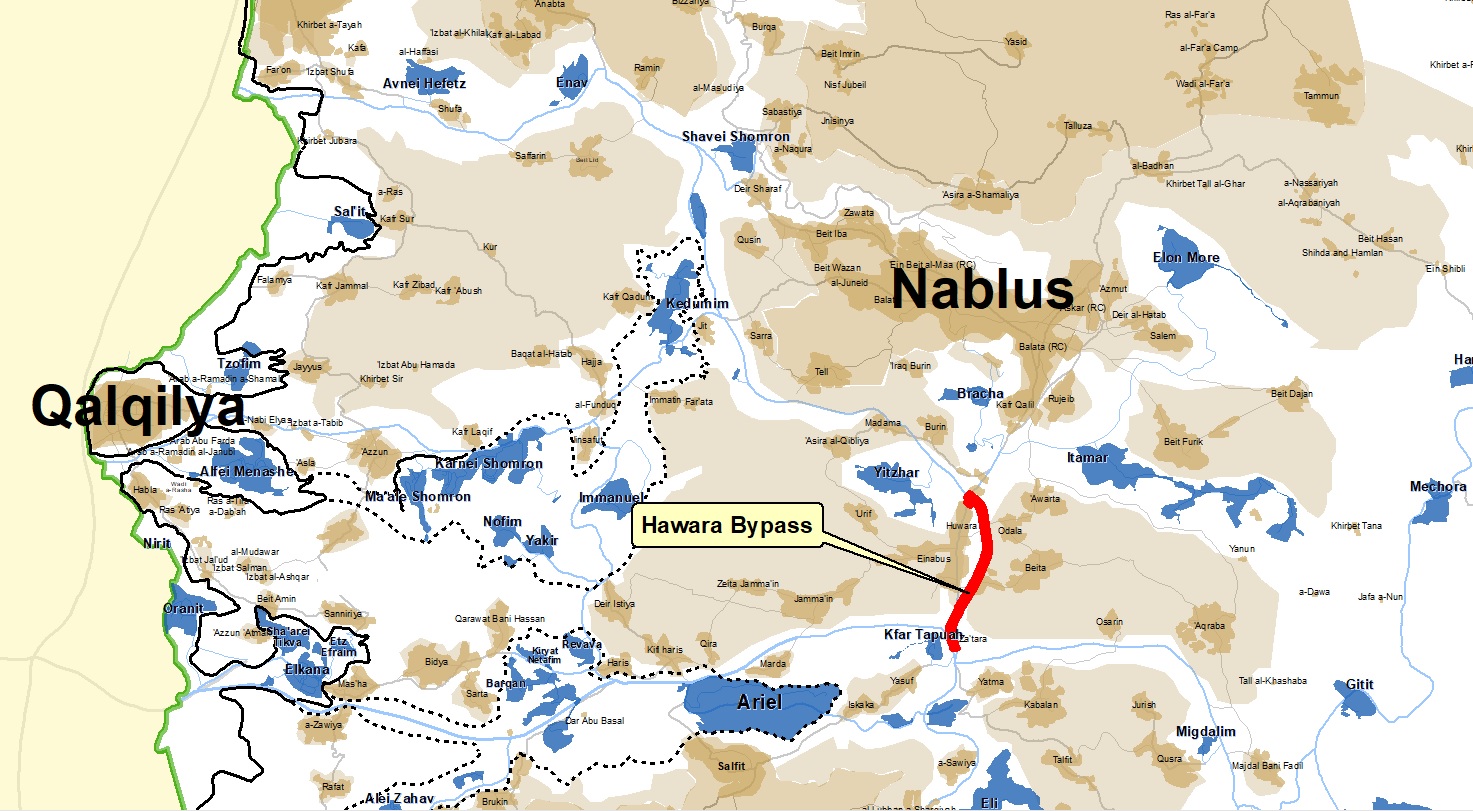
Map by Peace Now
Specifically, a special committee within the Israeli Finance Ministry approved a tender for the construction of the Huwwara Bypass Road, a new road designed to enable settler traffic from the Nablus area to bypass the the Palestinian village of Huwwara (which is an area with heavy traffic congestion from daily commuters) in order to more easily/directly access Jerusalem. This bypass road has long been a top priority for the settlers, who have complained about the long commute to Jerusalem and the limit this puts on the potential for growth of Nablus-area settlements; the radical/violent Yitzhar settlement will benefit from the bypass road, along with the settlements of Har Bracha, Itamar, and Elon Moreh. Building the road also gained urgency for the settlers after the release of the Trump Plan’s conceptual map, which left the area where the road is slated to be built within the borders a future Palestinian “state.”
Peace Now told FMEP via email:
“This bypass road was primarily built for the far-flung Israeli settlements around Nablus. As we see throughout the West Bank, when road infrastructure is improved for settlements, they grow rapidly, sometimes even doubling in size in the space of a decade. This bypass road will entrench the occupation, not to mention violate Palestinian rights as protected rights holders under international law.”
In addition to the Huwara bypass road, Ir Amim reports that the Israeli Civil Administration deposited for public review two plans for the construction of settler bypass roads in the Greater Jerusalem area (plans “YOSH-938” and “YOSH-926”). Now that plans have been deposited for public review, a 60-day public comment period has opened, after which the Civil Administration can grant final approval for the construction of these two new settler bypass roads.
The first of the Jerusalem-area plans deposited for public review this week relates to the area south of Jerusalem. This plan will enable the permanent legalization of an existing bypass road – Road 385 – which connects the Har Gilo settlement to the area south of Bethlehem area, by bypassing the Palestinian village of Al-Walaja, located just south of Jerusalem (part of Al-Walajah is in fact inside the expanded Jerusalem Municipality border). That road is built on privately-owned Palestinian land that Israel seized 25 years ago via a military confiscation order. In order for the road to become a legal (in the eyes of the Israeli planning law) access road to the site of the future Har Gilo West settlement, the plan for which was approved for deposit last week, the land on which the road was built needs to be permanently seized by Israel. This plan, along with the construction of Har Gilo West and Givat Hamatos, will leave Al-Walaja completely encircled by Israeli settlements and settlement infrastructure. Ir Amim reports how Israel plans to justify and carry out this land seizure, and its impacts:
“the Israeli Civil Administration wishes to justify its confiscation of Palestinian private lands needed for the construction of the road by claiming that it will also serve Palestinian traffic. This claim would clearly be false as the road only leads into Jerusalem along a route from which Palestinian traffic is blocked by Israeli checkpoints. Furthermore, as previously reported by Ir Amim, Israel is planning to relocate the checkpoint on this road farther away from Jerusalem and closer to Walaja. The planned expansion of Har Gilo by 560 housing units – an addition which will more than double the current size of Har Gilo – is located adjacent to Al-Walaja from the west and will result in the village’s complete isolation. Israel constructed the Separation Barrier in a route that surrounds Al-Walaja on three sides very close to the built-up area of the village; this has left the village only with the possibility to develop westwards where the barrier is not built. These lands on the west side of Al-Walaja are now targeted for the new settlement which, along with the Separation Barrier, will complete the encirclement of Al-Walaja in all directions. The village has already lost more than a thousand dunams of land which were cut off by the Separation Barrier and declared by Israel as the Nahal Rephaim National Park. The Separation Barrier, National Park, and planned settlement combine to turn Al-Walaja into an isolated enclave cutoff from the Bethlehem area while they serve as a connection between Jerusalem and the settlements to its south.”

Click to expand
The second of the Jerusalem-area plans deposited for public review this week relates to the area north and east of Jerusalem. It is designed to enable settler traffic bypass the Palestinian villages of Al-Ram, Qalandiya, and Ramallah (including a new tunnel under the Qalandiya checkpoint which Palestinians must pass through on foot to access Jersusalem) in order to more easily access Jerusalem. This plan specifically serves a cluster of settlements, located deep inside the West Bank, that Netanyahu has dubbed a “fourth settlement bloc” in an effort to designate the area as one over which Israel will never relinquish control. This “bloc” includes the settlements of Adam, Kochav Yaakov, Ofra, and Beit El – almost all of which received construction approvals last week (as a reminder, Beit El is the settlement which Ambassador David Friedman has long supported, serving as the head of the US organization supporting Beit El until just before he was named ambassador).
In order to construct this new bypass road, Israel will need to expropriate privately owned Palestinian land, and justifies doing so on the patently false claim that the road will provide a benefit both to Palestinians and to settlers. Ir Amim explains:
“…the Civil Administration claims that the road will also serve Palestinian traffic and for that purpose an interchange nearby Qalandia will connect it to the road to Ramallah. But when examining the schedule for construction of the road, it is clear that this interchange is scheduled to be operational only in the year 2040 – many years after the road serving settler traffic is scheduled to open. The fact that Israel is advancing large scale plans for 20 years into the future demonstrates Israeli intentions regarding its control of the area for decades to come.”
Regarding even further consequences of this new bypass road, Ir Amim writes:
“The planned road will also cut through the A-Ram and Qalandia area between A-Ram and Ramallah. Today there are no settlements in this area nor is settler traffic passing through it. It is telling that during the discussion the planners explained that the route of the road was designed to pass a distance away from the Kochav Yaakov settlement and close to the town of A-Ram. As in many other cases, this means that the road leaves a large area next to the settlements enabling its future expansion, while its construction will serve to limit the possibility of A-Ram’s future development.”
Settler Violence (Predictably) Spikes During Olive Harvest, IDF (Predictably) Fails to Intervene
As has become the norm, Israeli settlers have stepped up their violent aggression against Palestinians and their property during the current olive harvest season (which comes in January and October each year). Yesh Din has documented 25 violent incidents since the beginning of the harvest season, with Haaretz reporting on data that shows 5 violent assaults against Palestinians and the destruction of 62 olive trees during the first week of harvest alone.
Ghassan Daglas, who monitors settlement activity for the Palestinian Authority, told Haaretz:
“This year we are seeing larger groups, sometimes dozens at a time, entering the groves, causing damage and attacking while the army looks on. From year to year they only reduce the territory where Palestinians are allowed to harvest, and at the same time the settlements grow larger and during harvest time this leads to violent confrontations. It’s intolerable, we don’t have the tools to handle this. If you’re looking for a key sign of what occupation is about, it’s what’s happening in the olive groves.”
To closely follow the violent incidents, here are the key groups to follow:
- Yesh Din’s Facebook page, and staff on Twitter:
- Lior Amihai (@lioramihai);
- Sharona Weiss (@sharona_weiss).
- B’Tselem’s website and newsletter;
- OCHA oPt’s essential newsletter.
Settlers Establish New Outpost in Jordan Valley to Expand Maskiyot Settlement
WAFA news reports that settlers from the Maskiyot settlement in the Jordan Valley have built a new structure just west of the settlement in order to keep and tend to their livestock. Aref Daraghmeh, a local activist, called this practice of unauthorized settlement construction a “silent policy of eating up more Palestinian land”.
Last week FMEP covered a separate report concerning yet another new settler outpost in the Jordan Valley. This illegal – but as of yet un-demolished – settler construction stands in sharp contrast to Israel’s escalating policy of demolitions against unauthorized Palestinian construction (undertaken by Palestinians on their own lands), discussed in the next section.
Israel Increasing Demolitions of Palestinian Construction in Second Half of 2020
In a new report, the Palestinian human rights organization Al-Haq notes how the monthly average number of Israeli demolitions of Palestinian property in the occupied Palestinian territory has nearly doubled – from a monthly average of 31 demolitions from January to June to a monthly average of 58 demolitions from July through September. Both figures are much higher than previous years – which saw an monthly average of 30 demolitions in 2019 and 22 in 2018.
Al Haq writes:
“this policy of unlawfully demolishing Palestinian buildings and structures, taken alongside many other similarly unlawful policies and actions, reveal Israel’s intention to forcibly transfer Palestinian communities from their homes. Settlement construction and expansion, exploitation of natural resources, restricting movement and access, the application of a discriminatory planning policy, and the virtual impossibility of obtaining building permits create a coercive environment for Palestinians, which amounts to direct and indirect forcible transfer, prohibited under the Fourth Geneva Convention and which may constitute a war crime and a crime against humanity. [2] Moreover, having their properties demolished and destroyed, the Palestinian people are deprived of their right to develop their resources, and are ultimately denied from exercising their right to self-determination.”
The Return of Economic “Peace” Schemes: Judea and Samaria Business Council Holds Virtual Summit, Praises Abraham Accords as Model for “Peace”
The Judea and Samaria Chamber of Commerce (JSCC) – a settler-creeated, settler-led body that promotes itself as a joint Israeli-Palestinian model for advanceing economic peace (despite lacking any meaningful buy-in from the Palestinian business community) – recently co-hosted a virtual conference entitled the “Israeli-Palestinian Economic Forum” (IPEF 2020). During the conference, the JSCC’s President Avi Zimmerman announced that two companies were selected to receive $150,000 in kick-start funds (one is an Israeli-run renewable energy company and the second is a Palestinian-run digital health company). Zimmerman further announced plans to launch a “Israeli-Palestinian business accelerator” in early 2021.
The last time FMEP covered the JSCC was in December 2019 when Ashraf Jabari — the Chamber’s only Palestinian member apparently willing to speak publicly — was in Washington lobbying Congress to fund economic peace projects. As a reminder, economic “coexistence” initiatives like the JSCC are in fact efforts to normalize, entrench, and reward Israeli settlements while perpetuating Israel’s economic exploitation of occupied territory (including the local workforce, land, and other natural resources). Congressional support for such initiatives could mean U.S. taxpayer dollars going directly (and publicly) to the settlements.
In addition to the new projects and funding, Zimmerman and many speakers at the summit hailed the Abraham Accords, which were recently signed between Israel, the UAE, and the US. According to reports, as part of the new accords, a joint fund will soon be launched and is expected to finance the renovation of Israeli operated checkpoints throughout the West Bank — in effect, bringing the UAE into the game of financing and normalizing permanent occupation..
Connecting the Abraham Accords to the JSCC’s work, Zimmerman told the JNS news outlet:
“there is a window of opportunity for Israeli-Palestinian economic partnerships to flourish following the monumental Abraham Accords.”
Appearing at the virtual conference, Israel’s Minister of Regional Cooperation Ofir Akunis said:
“peace through economic strength is the right formula for true peace in the Middle East.”
Ashraf Jabari – who even today is still one of the very few (and the most public-facing) Palestinian businessmen to join the projfect – said:
“this is the next stage of Palestinian-Israeli economic cooperation. There are countless opportunities for our neighboring communities to create business partnerships, but there are some who don’t want our shared success to be public. Fortunately, market forces are stronger than politics. Our growing relationships will continue to lead the way.”
CONFIRMED: Tekoa Settlers Illegally Built on Palestinian Land
Kerem Navot reports that the Civil Administration finally published an updated map of the Tekoa settlement definitively showing that settlers have been illegally (and knowingly) developing land located beyond the settlement’s legal (according to Israel) boundaries. The land in question was confirmed to be outside of Tekoa’s borders in 2000, when the Israeli Blue Line team issued its maps; nonetheless, Tekoa settlers went ahead and built on it anyway.
Kerem Navot contends that the Civil Administration delayed publication of the new map since February 2019, in the hopes that the Knesset’s passage of the Regulation Law would offer the State an avenue for granting retroactive legalization to the illegal construction on private Palestinian land, which amounts to 80 houses, located on 27 plots of land which were widely known by the settlers to fall outside of the settlement’s borders. The Regulation Law was overturned by the High Court of Justice in June 2020, and Israel’s alternative to that law – utilizing the “market regulation” principle, which enables the legalization of illegal construction undertaken by settlers “in good faith” – cannot, in any reasonable interpretation of the concept, be applied to the Tekoa case, since the buildings were constructed by the settlers with full knowledge that the land was not allotted to the settlement.
Kerem Navot writes:
“And what about the settlers who will soon tell everyone that this was, once again, only a mistake, made in “good faith”? What did they know before the work began? Note the answer that the Civil Administration gave in response to an article that was published by a resident of the settlement Tekoa, Yehuda Yifrach, who also serves as Israeli newspaper Makor Rishon’s ‘legal commentator’ (without, of course, properly disclosing that he lives in Tekoa): ‘As for the case mentioned in Tekoa–we emphasize that the council has long known what the correct boundaries are for the declared state land where the settlement is located, and in spite of this, has been granting exceptional building permits for these areas over the last two years.’ “In other words, the Civil Administration basically said that the Gush Etzion Regional Council (which the Tekoa settlement is part of) knew all along that construction was being done on private property that is forbidden to build upon, and chose to build in that area anyway.”
Friedman Reiterates Trump Admin Support for Settlements & Outposts
In what should be news to no one, this week U.S. Ambassador to Israel David Friedman once again made it clear that the Trump Administration supports the permanency of all of Israel’s settlements and outposts in the West Bank. Friedman said:
“The position of the United States is that Jewish communities in Judea and Samaria will never be evacuated. We will never ask any community in Judea and Samaria to ever disband.”
Addressing why the Trump Administration has delayed recognizing Israel’s sovereignty over the settlements in favor of normalization deals with the UAE and others, Friedman said:
“there are Israeli flags flying in Hebron, Shiloh, Gush Etzion, Eli, and under our plan they will be flying there forever, so it is not an immediate concern.”
Friedman made the comments at a conference convened by the Kohelet Policy Forum, the Shiloh Forum, and Israel Hayom – a triumvirate of organizations leading the fight for “Greater Israel” — to discuss (read: celebrate) the signing of the “Abraham Accords” between the UAE, Israel, and the United States.
Bonus Reads
- “Exclusive: Documents reveal decades of close cooperation between JNF and Elad“ (+972 Magazine)
- “Israeli construction plans for West Bank raise tensions with Europe.” (Media Line)
- “Republicans in Israel chair: I hope Trump will formalize West Bank outposts” (Jerusalem Post)
Welcome to FMEP’s Weekly Settlement & Annexation Report. To subscribe to this report, please click here.
August 14, 2020
- Bibi (Temporarily) “Suspends” Annexation as Part of UAE-Israel Normalization Agreement
- Forging Ahead with De Facto Annexation: Israel Starts Construction on Two New Settlement Projects
- Israel Advances Plans for More Bypass Roads for Jerusalem-Area Settlements
- Settlers Continue to Escalate Terror Campaign Against Palestinians, Israeli Police
- Bonus Reads
Comments/questions? Contact Kristin McCarthy (kmccarthy@fmep.org)
Bibi (Temporarily) “Suspends” Annexation as Part of UAE-Israel Normalization Agreement
On August 13th, the United Arab Emirates and Israel announced the signing of a U.S.-brokered “peace deal” that will fully normalize relations between the two countries – in effect bringing barely hidden secretive relations between the two nations out into the open. In a statement on the deal tweeted by President Trump, the countries have agreed to pause the implementation of Trump’s “Deal of the Century,” with Israel committing – at the request of President Trump – to suspend its plans to annex the West Bank. However (and predictably), Netanyahu quickly clarified that annexation is still very much on his agenda, saying during a televised address:
“There is no change to our plans to apply sovereignty over Judea and Samaria, in coordination with the US. I remain committed to that” and that he will “never give up on our rights in our land.””
U.S. Ambassador David Friedman – who travelled to Washington this week to participate in talks – quickly backed Netanyahu’s refusal to shelve annexation. The Jerusalem Post reports the following:
“US Ambassador to the US David Friedman clarified that the word which had been chosen to describe the [annexation] situation was “suspended” and that word had been chosen “very carefully” because it means a temporary halt. Sovereignty, Friedman said was “off the table” not but not “off the table permanently.” But at an earlier stage in the conference Friedman noted that the application of sovereignty to West Bank settlements was incompatible with the overall goal of normalized ties between Israel and the Arab world. Friedman has been one of the strongest supporters of Jewish communities in Judea and Samaria. On Thursday night, as he spoke with Trump in Washington, he said, however, “we are putting our eggs into the basket of peace. The US Ambassador explained that, “we have an agreement with the Emirates. We are going to nail all the details, embassies, overflights, commercial. Then we are going to extrapolate that to the rest of the region. “How long that takes, I cannot tell you. But we have prioritized peace over the sovereignty movement. It’s not off the table, it’s just something that has been deferred until we have given peace every single chance.” When asked if a deal with the UAE could have been reached without Netanyahu’s decision to suspend annexation. “I think you can’t do both at the same time,” Friedman said. “Prioritize peace. Sovereignty after peace is given every opportunity.”
The Palestinian Authority denounced the UAE-Israel agreement, stating that “The UAE is not entitled to speak on behalf of the Palestinian people,” and calling for an urgent meeting of the Arab League. PLO Executive Committee member Hanan Ashrawi tweeted:
“Israel got rewarded for not declaring openly what it’s been doing to Palestine illegally & persistently since the beginning of the occupation. The UAE has come out in the open on its secret dealings/normalization with Israel. Please don’t do us a favor. We are nobody’s fig leaf!”
For more reaction from Palestinian factions, see this helpful Twitter thread from Ben White.
The UAE-Israel normalization deal serves many, many purposes for the three parties involved – the Trump Administration, the UAE government, and Netanyahu. For the U.S., it gives Donald Trump a foreign policy “victory” heading into the November elections. For the UAE, it is presented as a political “victory” that stops Israeli de jure annexation (even if only temporarily), while simultaneously allowing for the expansion of security and diplomatic cooperation (not to mention dividends from the U.S. that may become known later). And for Israel, it allows Netanyahu to claim a significant foreign policy victory, at a moment when he is facing the possibility of another election, while also providing a new rationale for why he has not yet advanced annexation of the settlements.
Notably, none of these purposes has anything to do with the rights and future of the Palestinian people. To the contrary, the deal facilitates the continuation of the current situation, in which Israel continues with settlement expansion, de facto annexation of the West Bank, and denial/violation of Palestinian rights, and at best temporarily delays the move by Israel toward formal, de jure annexation.
Al-Shabaka analyst and expert Tareq Baconi explained:
“This is not a “historic peace agreement” but a repackaging of an ongoing reality of normalisation between the UAE and Israel against the backdrop of de facto annexation and occupation of Palestinian territories. Repackaging reality and selling it as a diplomatic breakthrough is a show we’ve seen from the Trump administration before. Deal of the century to sell apartheid anyone? It’s not diplomacy, its marketing spin. But, this is also not inconsequential business as usual. The UAE’s decision to proceed in this way is a dangerous precedent in the post-Arab Peace Initiative era, where official normalization has become possible despite continued Palestinian subjugation. Bahrain next? This is the latest in a long history of Arab leaders selling the Palestinian issue or manipulating the Palestinian struggle to further their own interests, from the very inception of the PLO on. Sadat? Two ways to read Bibi. 1. Annexation may have always been a house of mirrors. Now he can be rewarded for not annexing: peace for occupation. 2. This is an admission of defeat; he was unable to annex, and needs a shiny new object to detract attention…Two things are certain. First, this agreement is one more step in the effort to formalise a new vision for the Middle East that is even further away from the calls of the Arab street that resonated in 2011. Second, this is another indication that the Palestinian leadership remains a spectator to events that determine their fate, unable to influence the unfolding trends. And finally, after a whole lot of fanfare around annexation, where are we now? Everyone breathing a sigh of relief that Israel continues to control the same territory.”
Adding to that analysis, FMEP’s Lara Friedman noted:
“…3rd option: annexation temporarily “suspended” for sake of normalization w/ UAE (& others?), but still on table. Given Trump Admin Greater Israel predilections & Evangelical voters, expect some concrete move before Nov elex.”
Palestinian expert Omar Baddar of the Institute for Middle East Understanding tweeted:
“ 1) There is nothing “historic” or “groundbreaking” about this agreement: Israel & the UAE have been strong allies under the table for many years! This is merely making that friendship public (which is still interesting). Israel didn’t “halt” the annexation for the West Bank (annexation is ALREADY a de facto reality on the ground). Israel merely “suspended” its announcement of a reality it has already illegally imposed on Palestinians. It is FALSE to say Israel suspended it at the UAE’s request. Israel suspended (put off) its annexation announcement after realizing it was going to be costly to Israel, with many US Democrats threatening for the first time to cut off military aid to Israel. The suspension came long before this UAE deal was reached. The claim that the UAE deal is responsible for halting Israel’s annexation announcement is merely a PR stunt for the UAE government, which knows full well that normalization with Israel WHILE Israel continues to brutalize Palestinians is extremely unpopular in the region. The Arab Peace Initiative already promised full normalization of relations between Israel and all Arab countries in exchange for ending Israel’s illegal occupation of the Palestinian territories to allow a tiny Palestinian state to exist. Israel rejected this generous offer. Some Arab governments see “the Palestinian cause” as a burden, feigning concern for their human rights while secretly working with Israel on “more important” partnerships: economic, intelligence, undermining Iran’s influences in the region…etc. Israel may be able to normalize w/these dictatorial governments w/out treating Palestinian like human beings who deserve basic rights, but Israel will never be truly accepted by the PEOPLE of the region so long as Palestinians live without freedom under the boot of occupation.”
Former Vice President and current Democratic presidential nominee Joe Biden released a statement praising the deal, and reiterating his opposition to annexation (conspicuously not acknowledging occupation and ongoing de facto annexation):
“Annexation would be a body blow to the cause of peace, which is why I oppose it now and would oppose it as president. It would virtually end any chance of a two-state solution that would secure Israel’s future as a Jewish and democratic state and uphold the right of Palestinians to a state of their own. By forestalling that possibility and replacing it with the hope of greater connection and integration in the regions, the UAE and Israel have pointed a path toward a more peaceful, stable Middle East.”
U.S. Congresswoman Rashida Tlaib tweeted:
“We won’t be fooled by another Trump/Netanyahu deal. We won’t celebrate Netanyahu for not stealing land he already controls in exchange for a sweetheart business deal. The heart of the issue has never been planned, formal annexation, but ongoing, devastating apartheid. The focus needs to be on promoting solidarity between Palestinians & Israelis who are joining together in struggle to end an apartheid system. We must stand with the people. This Trump/Netanyahu deal will not alleviate Palestinian suffering—it will further normalize it.”
Former Obama Administration official Ben Rhodes commented:
“This agreement enshrines what has been the emerging status quo in the region for a long time (including the total exclusion of Palestinians). Dressed up as an election eve achievement from two leaders who want Trump to win.”
B’Tselem Director Hagai El-Ad tweeted:
“Now that Israel has magnanimously agreed to “suspend declaring sovereignty”, all can calmly get back to underwriting Israel’s tried-and-tested perpetual oppression of Palestinians: arbitrary killings, land theft, controlling every aspect of an entire people’s life. Biz-as-usual.”
Netanyahu is already receiving criticism from staunch pro-annexation forces to his right, which largely feel betrayed by Netanyahu.
Yamin MK Naftali Bennet (whose popularity is soaring), said:
“it’s sad [Prime Minister Benjamin] Netanyahu missed a once-in-a-century opportunity to extend Israeli sovereignty over the Jordan Valley… and the rest of Israeli settlements [in the West Bank]. It’s tragic Netanyahu hasn’t seized the moment and hasn’t had the courage to extend sovereignty even over an inch of the Land of Israel.”
Israeli Transportation Minister Miri Regev said:
“This is a historic agreement on every level, security, economic, business — but it can’t come at the expense of sovereignty that the prime minister and all of us have committed to.”
David Elhayani, head of the Yesha Council of settlers said:
“He [Netnayahu] deceived us. He has deceived half a million residents of the area and hundreds of thousands of voters.”
Notably, Egypt, Oman, and Bahrain came out with statements welcoming the agreement.
Forging Ahead with De Facto Annexation: Israel Starts Construction on Two New Settlement Projects
Over the past week, Palestinian media has documented the start of the construction on two significant new settlement projects.
On August 12th, Wafa News reports that Israeli construction crews began leveling land near the Palestinian villages of Iskaka and Yasuf in preparation for expanding the nearby unauthorized outpost of Nofei Nehemia. The area is located east of the Ariel settlement in the heart of the northern West Bank. ActiveStills documented this construction project as it continued on August 13th.
On August 13th, Wafa News reports that Israel began construction on a new settler bypass road near the Kafr al-Labad village, located east of Tulkarm in the northern West Bank.
Israel Advances Plans for More Bypass Roads for Jerusalem-Area Settlements
Ir Amim reports that the High Planning Council recently advanced a massive outline plan for expanding the road infrastructure for settlers in the West Bank, with the goal of more seamlessly integrating the settlements into the Jerusalem metropolitan area. Ir Amim detailed the plans for three new bypass roads in the Greater Jerusalem area, which were deposited for public review on July 3rd:
1 – A new road that will allow settler traffic to bypass the Qalandiya checkpoint via a new tunnel. This plan specifically serves a cluster of settlements – located deep inside the West Bank, in an area that under any reasonable sense of a two-state solution cannot become part of Israel — that Netanyahu has recently dubbed a “fourth settlement bloc.” In so doing, Netanyahu is in effect defining these settlements as forming an area over which Israel will never relinquish control. This “bloc” includes the settlements of Adam, Kochav Yaakov, Ofra, and Beit El. Ir Amim writes:
“The planned road will create a quick and smooth connection for settler traffic entering Jerusalem from the northeast… it will enhance the contiguity between Jerusalem and the so called ‘fourth settlement bloc’ and enable the expansion of settlement construction. The planned road will also cut through the A-Ram and Qalandia area between A-Ram and Ramallah. Today there are no settlements in this area nor is settler traffic passing through it. It is telling that during the discussion the planners explained that the route of the road was designed to pass a distance away from the Kochav Yaakov settlement and close to the town of A-Ram. As in many other cases, this means that the road leaves a large area next to the settlements enabling its future expansion, while its construction will serve to limit the possibility of A-Ram’s future development. For the construction of the road, private Palestinian land will have to be expropriated. According to rulings of the Israeli courts based on International Law, private Palestinian land cannot be seized for the purpose of settlements and settler traffic, therefore the Civil Administration claims that the road will also serve Palestinian traffic and for that purpose an interchange nearby Qalandia will connect it to the road to Ramallah. But when examining the schedule for construction of the road, it is clear that this interchange is scheduled to be operational only in the year 2040- many years after the road serving settler traffic is scheduled to open. The fact that Israel is advancing large scale plans for 20 years into the future demonstrates Israeli intentions regarding its control of the area for decades to come.
2 – Expansion of an existing bypass road leading from the Adam settlement into Jerusalem. This plan will likewise serve settler traffic connecting the “fourth settlement bloc” to Jerusalem. This project will also require the expropriation of privately owned Palestinian land. Ir Amim writes: “The committee claims to justify the expropriation by stating that the road serves Palestinian traffic as well, yet it is doubtful if there is any significant Palestinian public transportation on the road.”
3 – A new bypass road near the Palestinian village of al-Walajeh, connecting the Etzion settlement block to Jerusalem. Ir Amim notes that this road is a prerequisite for Israel’s expansion of the Har Gilo settlement. This plan will require the expropriation of privately owned Palestinian land. Ir Amim writes: “the Israeli Civil Administration wishes to justify its confiscation of Palestinian private lands needed for the construction of the road by claiming that it will also serve Palestinian traffic. This claim would clearly be false as the road only leads into Jerusalem along a route from which Palestinian traffic is blocked by Israeli checkpoints…The planned expansion of Har Gilo by 560 housing units – an addition which will more than double the current size of Har Gilo – is located adjacent to Al-Walaja from the west and will result in the village’s complete isolation.”
Commenting on the plans as a whole, Ir Amim notes:
“These plans for road infrastructure are part of the huge investments of the Israeli government into the de-facto annexation of Greater Jerusalem through furthering large-scale, unilateral, facts on the ground. If realized, these projects will dramatically change the landscape around Jerusalem and deep into the West Bank, allowing for rapid settlement expansion and further fragmentation of the Palestinian space. These moves will deal a death blow to the prospect of a two state solution and lay the ground for the formal annexation of Greater Jerusalem whether through a ‘minor’ or ‘major’ scope of annexation.”
Settlers Continue to Escalate Terror Campaign Against Palestinians, Israeli Police
Rights groups and media outlets have documented several instances of settler-perpetrated violence in the vicinity of the Yitzhar settlement over the last week:
- On August 11th, B’Tselem reports that settlers threw stones at Palestinians in two separate incidents.
- On August 12th, dozens of masked settlers violently clashed with Israeli police while the police attempted to dismantle the unauthorized Shevach Haaretz outpost near Yitzhar, located just south of Nablus. The settlers deployed pepper spray, threw paint cans, and punctured car tires during the incident. One police officer needed medical attention, and additional forces were deployed to the area before the riot was dispersed. No arrests were reported.
- On August 13th, Yesh Din reports that a group of settlers set a bulldozer on fire at a Palestinian quarry in the Nablus region, near the radical Yitzhar settlement (home of the Hilltop Youth settler movement).
- The Palestinian villages of Asira al Kabalia and Urif were vandalized with hateful graffiti spray painted in the villages and damage to vehicles.
Bonus Reads
- “Normalization Deal Between Israel and the UAE Signals a Shift in the Region” (Foreign Policy)
- “These Settler Farmers Are All About Peace and Love – Just Don’t Mention Land Theft” (Haaretz)
- “’The Left Made Israel More Moral, but Their Mistakes Made Them Irrelevant’” (Haaretz)