Welcome to FMEP’s Weekly Settlement Report, covering everything you need to know about Israeli settlement activity this week.
To subscribe to this report, please click here.
April 19, 2024
- Israeli Courts Order Two Significant Evictions in East Jerusalem, Presaging Mass Forced Displacement in Sheikh Jarrah, Silwan
- Supreme Court Green Lights Eviction of Shehadeh Family from Batan Al-Hawa Home
- Israeli Court Orders Eviction of the Diab Family from Sheikh Jarrah Home
- Lower Aqueduct Settlement Plan Published Tender
- Ir Amim & Bimkom: Israel Has Accelerated East Jerusalem Settlement Building Since Oct 7th
- Ben Gvir Seizes Authority Over East Jerusalem Housing Demolitions
- New Plan to Massively/Strategically Expand the Ariel Settlement Industrial Zone
- Smotrich Designates Symbols for Four Outposts Previously Approved for Retroactive Legalization
- The U.S. & E.U Unveil New Sanctions Targeting Settlers & Settler Entities
- Bonus Reads
Israeli Courts Order Two Significant Evictions in East Jerusalem, Presaging Mass Forced Displacement in Sheikh Jarrah, Silwan
Over the past week – on the eve of Passover and in days after the end of Ramadan, while genocide continues in Gaza and violence escalates in the West Bank – two separate Israeli courts have ordered the eviction of Palestinian families from their longtime homes in East Jerusalem in favor of Israeli settlers; both cases set a terrifying precedent for dozens more Palestinian families fighting against settler groups on the same basis of argumentation. The mass dispossession and displacement of Palestinians from East Jerusalem is advancing. These cases put on full display the tight cooperation between settler entities and the Israeli state in advancing the displacement of Palestinians from East Jerusalem, and their replacement with Israeli Jews.
Ir Amim explains:
“Although the Israeli government often characterizes these cases as private real estate disputes, they are rather part and parcel of a systematic campaign to further entrench Israeli control of the most politically sensitive areas in East Jerusalem. The eviction claims are filed on the basis of a discriminatory Israeli law (see more below) by settler groups working in collaboration with the state to expand Jewish settlement in the heart of Palestinian neighborhoods. This thereby serves to foil any possibility of East Jerusalem serving as a future Palestinian capital.
…A common thread between these cases is that the eviction lawsuits were filed by settler groups based on the 1970 Legal and Administrative Matters law. Article 5 of this law exclusively affords Jews with land restitution rights for assets allegedly owned by Jews in East Jerusalem before 1948 despite many of these properties now inhabited by Palestinians. No parallel legal mechanism exists for Palestinians to recover pre-1948 assets on the Israeli side of the Green Line, many of which are now inhabited by Jews. To the contrary, the 1950 Absentee Property Law enshrines that Palestinians who were forced to abandon their homes and lands in what became Israel after the war of 1948 can never retrieve them…Settler organizations aided by state bodies act to secure ownership rights of these assets despite having no relation to the previous Jewish owners or occupants. Acquisition of these rights provides settler groups with the legal platform to “retrieve” the property from the General Custodian and initiate eviction lawsuits against Palestinian families through application of the 1970 law. A department within the Ministry of Justice, the General Custodian is the Israeli body responsible for managing abandoned property, including alleged pre-1948 Jewish assets in East Jerusalem until “reclaimed.” Between 1948-1967, these properties were administered by the Jordanian Custodian of Enemy Property and then transferred into the management of the Israeli General Custodian in 1967 following Israel’s occupation and annexation of East Jerusalem.”
Supreme Court Green Lights Eviction of Shehadeh Family from Batan Al-Hawa Home
On April 11th, the Israeli Supreme Court Justice Noam Sohleberg dismissed a final petition in the case of the Palestinian Shehadeh family, who has spent years fighting against their eviction from their home of 60 years in the Batan Al-Hawa section of Silwan at the behest of the Ateret Cohanim settler organization. Justice Sohlberg ordered the Shehadeh family to leave by June 1st or face forced eviction by Israeli authorities, and also ordered the family to pay legal fees for the settler group. The case has been ongoing since 2021, and the Supreme Court’s ruling last week marks the end of any potential avenues of further appeal. Ir Amim writes that only state intervention can halt the eviction.
The Shahadeh family is one of 85 families (700 people) in Batan al-Hawa facing displacement at the behest of Ateret Cohanim, a settler organization which has waged a years-long eviction campaign against Palestinians living in Silwan, on property the settler NGO claims to own. The group’s claim is based on having gained control of the historic Benvenisti Trust, which oversaw the assets of Yemenite Jews who lived in Silwan in the 19th century. In 2001 the Israeli Charitable Trust Registrar granted Ateret Cohanim permission to revive the trust and become its trustees, (following 63 years of dormancy). In 2002, the Israeli Custodian General transferred ownership of the land in Batan al-Hawa to the Trust (i.e., to Ateret Cohanim). Since then, Ateret Cohanim has accelerated its multi-pronged campaign to remove Palestinians from their homes, claiming that the Palestinians are illegal squatters.
The Supreme Court ruling ignores ongoing litigation initiated in 2020 by Ir Amim that challenges the legitimacy and legality of Ateret Cohanim’s control of the Benvenisti Trust. In response to the filing, the Israeli Registrar of Trusts (department within the Justice Ministry) announced that it will open an investigation into the allegations. Ir Amim is still awaiting news on the investigation.
Israeli Court Orders Eviction of the Diab Family from Sheikh Jarrah Home
On April 15th, the Jerusalem Magistrate’s Court ruled that the Palestinian Diab family (30 people) can be evicted from their home of 70 years in the Kerem al-Jaouni area of Sheikh Jarrah at the behest of the Nahalat Shimon settler group. The Court ruled that Nahalat Shimon owns the land based on the claim that it was owned by Jews before 1948, which Israeli law allows Jews to “reclaim.” The Diab family was ordered to leave by July 15th, or face forcible displacement by Israeli authorities. The family, who was also ordered to pay the legal fees of the settler group, can appeal this ruling to the Jerusalem District Court.
The Diab family is one of 30 Palestinian families in the Kerem al-Jaouni area of Sheikh Jarrah fighting against the settler group Nahalat Shimon, which is seeking their dispossession. Peace Now explains the

current context of evictions across all of Sheikh Jarrah:
“In 1948, the land, which was then without structures, came under Jordanian rule. The Jordanians designated the land for the rehabilitation of dozens of Palestinian refugee families, who exchanged their refugee status for homes in the newly built neighborhood in Sheikh Jarrah. After 1967, the Jewish associations recovered the ownership rights of the land based on the Legal and Administrative Matters Law (see below), and began to demand that the refugee families vacate their homes. To that extent, the associations were exercising the “right of return” of Jews to properties taken in 1948 (a right not afforded to Palestinians).
The [Israeli] settlement in Karem Ja’uni in Sheikh Jarrah began in 2008 when the al-Kurd family was evicted from their home, and in 2009 the Rawi, Hanoun and part of (another) al-Kurd families were evicted. Since then, settlers have filed at least 14 eviction cases against dozens of families of hundreds of people in Karem Ja’uni in Sheikh Jarrah. On the western side of the Sheikh Jarrah neighborhood, in Um Haroun, there are another few dozens of families facing eviction lawsuits by settlers, and in Batan Al-Hawa in Silwan there are almost 100 families at risk of eviction.
About two years ago, the Supreme Court ruled with regard to four of the Karem Ja’uni families, that they will be able to stay in their homes at least until the land registration procedure in the area is completed. Following this ruling, the Magistrate’s Court applied the same arrangement to two of the eviction cases. The cases of seven additional families is still pending in the Supreme Court, while the cases of the rest of the families are still ongoing in the Jerusalem Magistrate’s Court.”
Peace Now said in a statement:
“This is a heinous injustice based on a discriminatory system of laws. The story here is not legal but political. The court is only the tool by which settlers use with the close assistance of state authorities to commit the crime of displacing an entire community and replacing it with settlement. The Israeli government and settlers have no problem to displace thousands of Palestinians in the name of “the Right of Return” to properties before 1948, while they strongly claim that the millions of Israelis living in Palestinian properties before 1948 cannot be evicted. This injustice can and should be stopped by the government”.
Lower Aqueduct Settlement Plan Published Tender
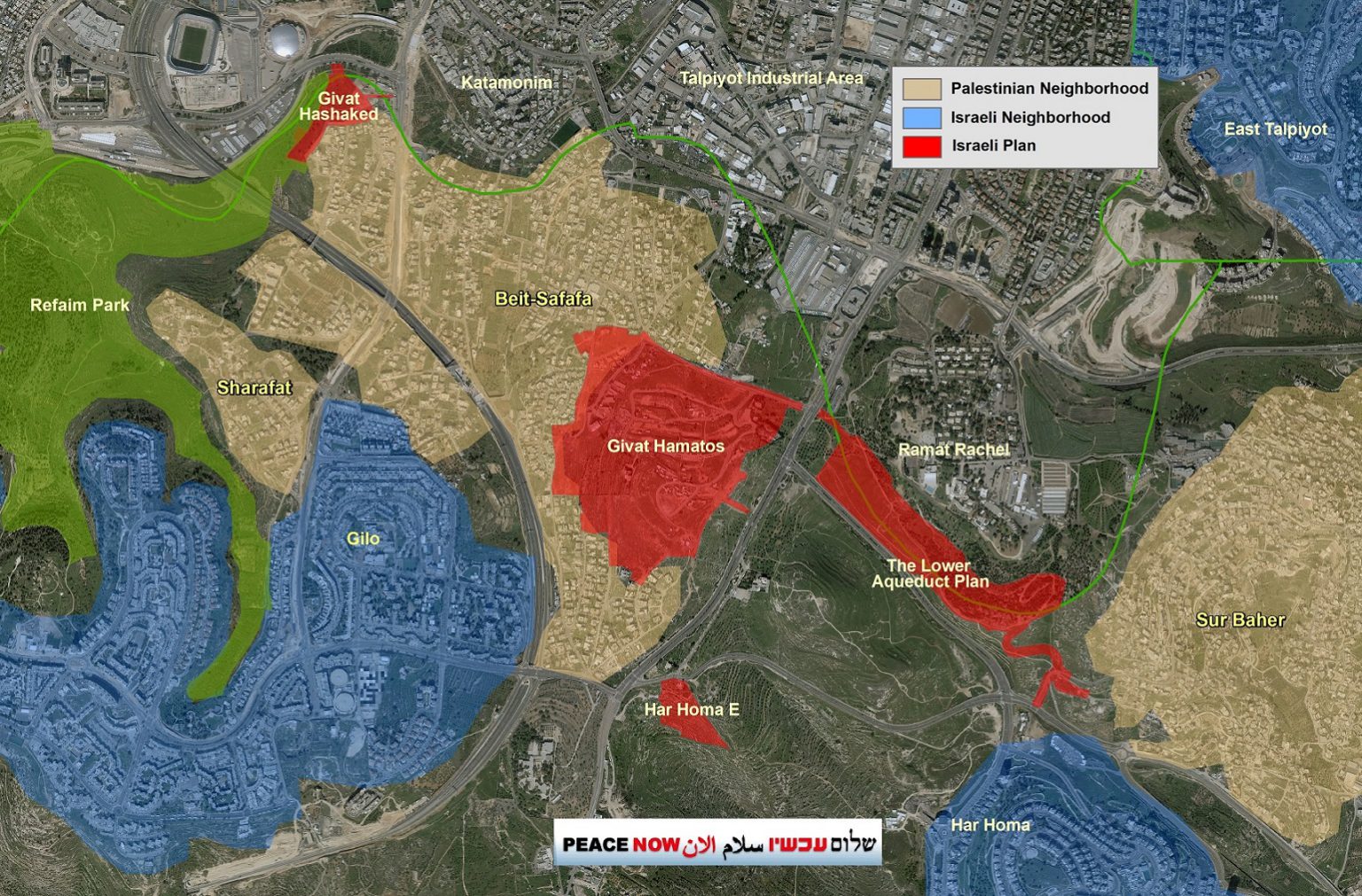 Peace Now reports that the Israeli Housing Ministry has published a tender for the construction of 1,047 settlement units constituting a new settlement in East Jerusalem called the Lower Aqueduct” plan. The settlement will be located on a sliver of land located between the controversial settlements of Givat Hamatos and Har Homa in East Jerusalem, adjacent to the Palestinian neighborhood of Umm Tuba and fall on both sides of the 1967 Green Line. The settlement is designed to connect the two settlements and seal East Jerusalem off from Bethlehem, and in so doing establish a huge, uninterrupted continuum of Israeli settlements on the southern rim of Jerusalem. According to Ir Amim, this is the first major new East Jerusalem settlement established by Israel since 2012.
Peace Now writes:
“The plan was promoted at an unprecedented speed from its inception to the tender issue: it was placed on the table of the District Planning Committee in July 2021, discussed in January 2022 by the District Committee which ordered revisions to the plan, and was approved for deposit in July 2022. That is, the tender was issued less than three years after the plans were submitted.
Politically, this is a strategic plan that will severely impact the possibility of a continuous urban Palestinian connection in East Jerusalem. In practice, the plan blocks the last corridor remaining for connecting Beit Safafa and Sur Baher with other parts of East Jerusalem. It should be noted that although about half of the plan’s area is beyond the Green Line, and half within it, its strategic location between Givat HaMatos and Har Homa makes it particularly problematic politically.”
Ir Amim has previously written:
“This plan carries serious ramifications on the political future of Jerusalem. If constructed, it will extend the Israeli settlement wedge along East Jerusalem’s southern border, further creating a sealing-off effect of East Jerusalem from the southern West Bank, while fracturing the Palestinian space and depleting more vacant land for Palestinian development….Beyond its geopolitical ramifications, the advancement of this plan underscores the systematic discrimination implicit in Israeli planning and building policy in Jerusalem. Since the beginning of 2023, over 18,500 housing units have been advanced for new or existing Israeli settlements in East Jerusalem, while residential development for Palestinians has been all but neglected. This is despite the fact that Palestinians constitute nearly 40% of Jerusalem’s population. 2023 is slated to join 2022 as being the two years with the highest number of settlement units advanced in the last decade in East Jerusalem. Such inequitable urban planning policy has long served as a driver of Palestinian displacement in service of solidifying a Jewish demographic majority in Jerusalem and further cementing Israeli territorial control to foil prospects for a just political resolution.”
Ir Amim & Bimkom: Israel Has Accelerated East Jerusalem Settlement Building Since Oct 7th
The Israeli anti-settlement NGOs Bimkom and Ir Amim have released a joint report reviewing the Israeli government’s wartime policies and how they have led to the acceleration of both settlement activity and home demolitions, posing an ever increasing threat to the rights and futures of Palestinian residents.
The report reads:
“Since the outbreak of the war six months ago, there has been a major surge in the promotion and fast-tracking of new settlement plans in East Jerusalem and a dramatic spike in the rate of demolitions of Palestinian homes. The Israeli government is clearly exploiting the war to create more facts on the ground to predetermine the final status of Jerusalem and thwart all prospects for a negotiated political agreement, while forcibly displacing Palestinians from their homes and the city.
Measures are being taken to establish eight brand-new settlements in East Jerusalem within or adjacent to Palestinian neighborhoods with a total of over 12,000 housing units. For details and analysis of these plans, click here or above for the full policy brief.
In juxtaposition to this major uptick in the advancement of new settlements, demolitions of Palestinian homes have reached unparalleled levels since the start of the war. This serves as a form of collective punishment and part of a series of repressive measures currently being employed by Israel against Palestinians under its control. Between October 7, 2023—March 10, 2024, 98 homes were demolished, which marks a nearly two-fold monthly increase compared to the period preceding the war. (Demolitions were halted during the month of Ramadan as in the past).”
Ben Gvir Seizes Authority Over East Jerusalem Housing Demolitions
On April 8th, the Israeli Cabinet decided to hand extremist minister Ben Gvir power over demolitions and housing enforcement in East Jerusalem. The CAbinet’s decision moved the Real Estate Enforcement Division from the Finance Ministry to the Ministry of National Security, which is controlled by Ben Gvir. The Real Estate Enforcement Division has the power to enforce against illegal construction in East Jerusalem and conducts demolitions and imposes fines alongside the Jerusalem municipality’s Building Supervision Department. It is important to note that the rate of demolitions in East Jerusalem during the Gaza war and in 2023 overall was higher than in other months or years, and it seems that transferring authority to Ben Gvir will only exacerbate this trend.
Daniel Seidemann, founder of Terrestrial Jerusalem, explained on X:
“In the eyes of the Palestinians in East Jerusalem, home demolitions are the most brutal & egregious manifestations of Israeli occupation. W/the exception of real or perceived threat to Al Aqsa, no issue in Jerusalem is more volatile & more incendiary than home demolitions. As per yesterday’s Cabinet Resolution, very broad powers will now be vested in Ben Gvir and an Authority or which he is responsible. these include administrative demolition orders, cease work orders, execution of judicial demolition orders, and much more. Ben Gvir has repeatedly declared his intent to carry out large scale home demolitions, particularly in E. Jerusalem. He then was opposed by the Police Chief, who now does his bidding. Ben Gvir has already expedited demolitions. However Ben Gvir had a problem: he had absolutely no statutory power in relation to demolitions. The role of the Police was to secure the demolitions ordered by the Jerusalem Municipality or Government of Israel (incl. judicial bodies). Bravado aside, he was a spectator.All that changed yesterday by means of the Cabinet Resolution. Having declared his intent “to show the Arabs of East Jerusalem who’s boss” by carrying out large scale demolitions. He will now have all the statutory powers and resources necessary to make good on his promise.”
Peace Now said in a statement:
“It has been unequivocally proven that law enforcement authorities under the responsibility of Itamar Ben Gvir exacerbate tension, violence, and hatred between the state and its citizens. The Real Estate Enforcement Division should operate with integrity and profound sensitivity to our political and social reality. However, it is highly doubtful that this will occur under the authority of Itamar Ben Gvir, the Minister of National Insecurity, who has previously been convicted of inciting racism and supporting a terrorist organization.”
New Plan to Massively/Strategically Expand the Ariel Settlement Industrial Zone
Peace Now reports that the Israeli Civil Administration’s High Planning Council convened on April 10th to consider 26 settlement plans, the most consequential of which is a plan to significantly expand the Ariel settlement industrial zone. This plan proposes to significantly expand the industrial zone eastward toward the new Ariel West settlement, which just began construction, connecting the two for all practical purposes.
Peace Now further explains the consequences of this plan:
“Expanding the industrial area eastward, on the one hand, and the establishment of the planned settlement of Ariel West, which infrastructure works for its establishment have recently begun, on the other hand, are intended to create a territorial continuum of settlements that will effectively block any possibility of development for Palestinian communities in the vicinity, including Salfit, Harres, and Kifl Harres. The plan essentially disconnects Salfit – the district town from the surrounding villages it serves.”
It’s worth revisiting the role settlement industrial zones play in perpetuating ISraeli occupation, annexation, and apartheid. For decades Israel has used industrial zones as another tool to expand and deepen control over West Bank land and natural resources. Industrial zones are part of Israel’s economic exploitation of occupied territory (including the local workforce, land, and other natural resources). Presented as benefiting both Israelis and Palestinians, it is in fact Orwellian to label such initiatives as “coexistence” programs, or to suggest that they offer the Palestinians benefits they should welcome. Importantly, jobs in industrial zones – often the only jobs available for Palestinians living under an Israeli occupation that prevents the development of any normal Palestinian economy – are widely viewed by Palestinians as a double-edged sword. The NGO Who Profits explained:
“Israeli Industrial Zones constitute a foundational pillar of the economy of the occupation. They contribute to the economic development of the settlements, which are in violation of international law and the Fourth Geneva Convention, while relying on the de-development of the Palestinian economy and the exploitation of Palestinian land and labor…The Industrial Zones in the oPt form part of a practice of ‘financial annexation’ which is an essential component of the broader policy of annexation taking place.”
Peace Now said in a statement:
“The government of Israel continues to build at an unprecedented pace in the Occupied Territories. Expanding an industrial area in the heart of the West Bank is not an Israeli interest, and certainly not a Palestinian interest. The industrial area west of Ariel does not promote economic growth, but rather harms both the Israeli and Palestinian economies alike.”
Smotrich Designates Symbols for Four Outposts Previously Approved for Retroactive Legalization
On April 6th, Finance Minister Smotrich (who also heads the Settlement Administration and a minister in the Defense Ministry) issued a statement announcing that he has designated “locality symbols” to four outposts that the government has previously approved to be retroactively legalized as new settlements: Mitzpe Yehuda, Beit Hogla, Shacharit, and Asa’el.
Peace Now explains:
“A ‘locality symbol’ is a serial number assigned by the Ministry of Interior to each official Israeli locality. For the government to allocate funds and resources for settlement development or to prepare construction plans, a settlement must have a “locality symbol.” Smotrich’s announcement aims to bolster his standing among his supporters as someone who does a lot for the settlements. Therefore, he exploits a bureaucratic maneuver and tries to present it as a new achievement.
The significance of assigning locality symbols to these four new settlements is that the government bureaucracy has already begun working to promote these settlements. It should be noted that since the government’s decision in February to establish nine new settlements, the commander of the military’s Central Command, Maj. Gen. Yehuda Fuchs has issued orders in recent months defining the jurisdictional areas of six of them: Mishmar Yehuda, Givat Haroeh. Apparently, defining the jurisdictional area of the remaining three settlements is delayed due to land ownership issues.”
The U.S. & E.U Unveil New Sanctions Targeting Settlers & Settler Entities
On April 19th the United States Department of State announced a third round of sanctions targeting one Israeli settler and two settler entities. The European Union announced sanctions on the same day, against four settlers and two settler entities. This round of sanctions is particularly notable because it expands the sanctions’ targets to include entities which fund settlers involved in violence, and because it targets a prominent political ally and confidant of Itamar Ben Gvir.
The U.S. sanctions target:
- Ben Zion (Bentzi) Gopstein – founder of the radical, violent Lehava settler organization, and “one of the closest confidants” of Kahanist Minister Itamar Ben Gvir. The U.S. State Department says that Lehava and its members “have been involved in acts or threats of violence against Palestinians, often targeting sensitive or volatile areas.” Gopstein was convicted in early 2024 for incitement to racism
- The Mount Hebron Fund – an organization leading a fundraising campaign for Yinon Levi, an Israeli settler previously sanctioned by the U.S. The U.S. group DAWN writes that the crowdfunding campaign had the declared intention of bypassing US sanctions. The AP reports the fundraising effort raised $140,000.
- Shlom Asiraich – an organization leading a fundraising campaign for David Chai Chasdai, an Israeli settler previously sanctioned by the U.S.. The AP reports the fundraising effort raised $31,000.
The European Union sanctions target:
- Lehava – the organization run by Ben Zion Gopstein (who the U.S. sanctioned as an individual, but did not sanction Lehava).
- The Hilltop Youth settler organization – a notoriously violent group based out of the Yitzhar settlement and involved in establishing illegal outposts throughout the West Bank. The Hilltop Youth have been called “the Jewish ISIS,” and regularly engage in violence against Palestinians, Israeli authorities, and activists.
- Neriya Ben Pazi – who was previously sanctioned by the U.S..
- Yinon Levi – who was previously sanctioned by the U.S..
- Meir Ettinger – who is the grandson of the late, extremist rabbi Meir Kahane, and a well-known leader of the Hilltop Youth leader.
- Elisha Yered – who previously served as a spokesperson for MK Limor Son Har-Melech, an ally of Ben Gvir.
Itamar Ben Gvir responded to the new sanction, saying:
“The harassment of the Lehava organization and dearest settlers, who never engaged in terrorism or harmed anyone, are the result of a blood libel by Israel-hating, antisemitic elements who for years have openly supported Hamas, Fatah, and other anarchist organizations that harm IDF soldiers.”
Bonus Reads
- On Settler Terrorism:
- “West Bank sees biggest settler rampage since war in Gaza began as Israeli teen’s body is found” (AP)
- “Al-Haq, Al Mezan and PCHR Urge the International Community to Intervene as Israeli Forces and Settler Violence Intensifies Across the West Bank” (read)
- “Homes burned, animals killed: Palestinians describe Israeli settler rampage” (Washington Post)
- “Israel Responsible for Rising Settler Violence” (Human Rights Watch)
- “Opinion | Dear President Biden, Are You Okay With Israeli Settlers Using American Weapons?” (Amira Hass in Haaretz)
- “Blinken Is Sitting on Staff Recommendations to Sanction Israeli Military Units Linked to Killings or Rapes” (Pro Publica)
- “Blinken says he’s made ‘determinations’ linked to human rights accusations against Israel” (The Times of Israel)
- “Ben Gvir forms police team targeting left-wing activists in the West Bank” (The Times of Israel)
- “Editorial | Goodbye, Green Line: The Israeli Government Goes All Out to Boost West Bank Settlements” (Haaretz Editorial Board)
- “Housing, Showers, Electricity: These Are the Outposts the Israeli Army Is Building in the Heart of Gaza” (Haaretz)
Welcome to FMEP’s Weekly Settlement Report, covering everything you need to know about Israeli settlement activity this week.
To subscribe to this report, please click here.
February 17, 2023
- Israeli Government Announces Massive Settlement Expansion/De-Facto Annexation, Part 1: The Big Picture
- Israeli Government Announces Massive Settlement Expansion/De-Facto Annexation, Part 2: “Legalization” of Outposts
- Israeli Government Announces Massive Settlement Expansion/De-Facto Annexation, Part 3: Thousands of New Settlement Units
- Israeli Government Announces Massive Settlement Expansion/De-Facto Annexation, Part 4: International Responses
- Cabinet & Knesset Advance Bill to Repeal Parts of 2005 Disengagement, Reestablish Four Settlements Including Homesh
- Smotrich’s Plans to Take Over the West Bank
- Settler Olive Orchard & New Outpost Are Dismantled by Government, Causing Coalition Fight
- Settler Groups Convene Workshop on Jordan Valley Annexation
- Bonus Reads
Israeli Government Announces Massive Settlement Expansion/De-Facto Annexation, Part 1: The Big Picture
On February 12th, the Israeli Cabinet announced the single largest batch of settlement approvals in the past decade (and the first settlement announcement in more than a year). In announcing this huge wave of settlement activity, the Cabinet said it was doing so in response to a recent spate of Palestinian attacks on Israelis, most recently a car ramming attack in East Jerusalem.
As detailed below, the numbers of new settlement units and newly legalized outposts involved in this announcement are huge, but those numbers only tell a part of the entire story. With these approvals Israel is also laying the groundwork for massive infrastructure projects for the benefit of settlers and further entrenchment of Israeli security to protect these investments.
Moreover, there is no reason to believe this massive announcement is the end of the story with respect to new settlement approvals; it should be recalled that key members of the Security Cabinet – specifically Ben Gvir and Smotrich – reportedly pressed for an even bigger batch of settlement advancements, including the legalization of 77 outposts and approval of 14,000 new settlement units. The February 12th approvals will only whet the appetite of these ministers for more – and given the ongoing escalation of violence on the ground, there is every likelihood that future attacks against Israelis will be used as pretexts for meeting their demands.
Israeli Government Announces Massive Settlement Expansion/De-Facto Annexation, Part 2: “Legalization” of Outposts
In its Feb 12th decision, the Israeli Cabinet directed the relevant ministries to carry out the necessary steps to grant retroactive legalization to ten outposts located across the West Bank. In order to be fully legalized under Israeli law (but not under international law, according to which it is illegal for an occupying power to establish any civilian settlement/colony in any territory it is holding under military occupation is illegal) these outposts will need to have the status of the land clarified, then have a building plan completed, and then go through a 5-step approval process. Finance Minister Bezalel Smotrich made clear he intends to radically simplify and speed up this process when/if he is able to take control over West Bank planning bodies.
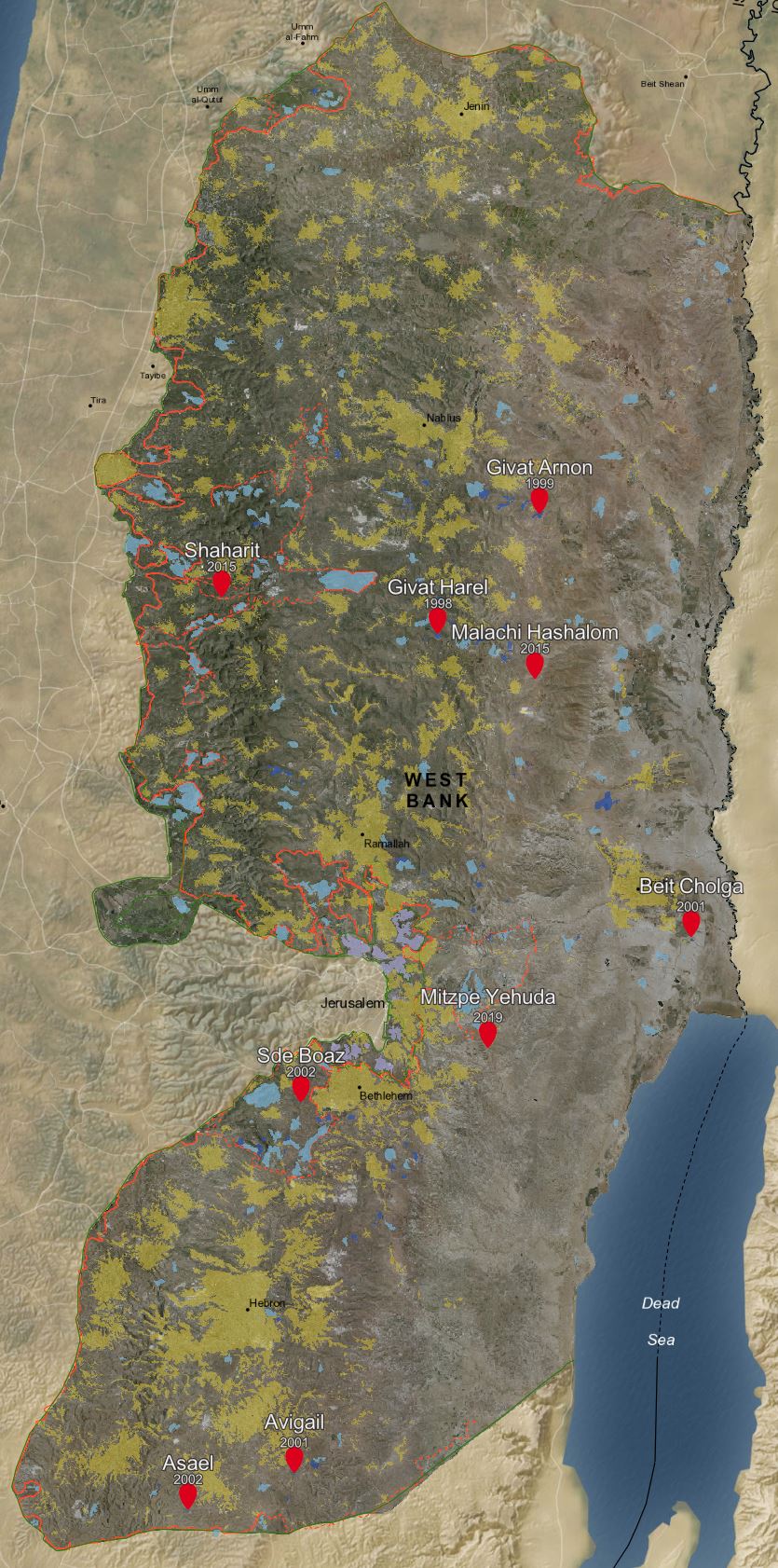
Importantly, Haaretz reports that a source said the Cabinet chose these outposts for authorization specifically because they are all located in remote or isolated locations — meaning they cannot be “legalized” via expanding the borders of a nearby settlement and declaring the outposts to be merely neighborhoods of those “legal” settlements (a legal maneuver Israel has repeatedly used to expand settlements and retroactively legalize settlements). This means, among other things, that legalization of these 10 new settlements will likely lead to additional land seizures for related infrastructure work (work that was not legally possible until now).
With respect to the remaining outposts that remain not-yet-legalized, the Cabinet approval included a clause that makes them eligible – right away, even as they remain illegal – to receive Israeli municipal services like water and electricity. Defense Minister Galant only has to sign an electricity order that was crafted under the previous government. If implemented, connecting illegal outposts to state infrastructure amounts to the de facto legalization of these outposts, even without a formal act to declare them legal.
The ten outposts slated to become official, “legal” new settlements are: Avigail, Asael, Shaharit, Givat Arnon, Givat Harel and Givat Haro’eh (which will be combined into one new settlement), Malachei Hashalom, Mitzpe Yehuda, Beit Hogla, and Sde Boaz. For further details on these outposts, please see Peace Now’s report.
Of note:
- Six of the outposts are located partially on land privately owned by Palestinians (Avigail, Givat Haroeh, Givat Harel, Givat Arnon, Mitzpe Yehuda, Malachei Hashalom).
- Three of the outposts (Avigail, Givat Arnon, and Malachei Hashalom) are located within Israel-designated firing zones, where under Israeli law any civilian presence, much less illegal civilian construction, is prohibited.
- Of particular note: the Avigail outpost is located in Firing Zone 918 in the South Hebron Hills. This is the same firing zone that is home to the Palestinian communities of Masafer Yatta — whose existence pre-dates Israel’s declaration of the area as a firing zone. Those communities are today in the process of being ethnically cleansed by Israel, based on the same law that Israel is ignoring in its legalization of the Avigail outpost.
- Two of the outposts (Avigail and Asael) have, illegally, built access roads on privately owned Palestinian land. Legalization of the outposts will undoubtedly also include the theft of the Palestinian-owned land these roads were illegally built on.
- Three of the outposts (Schacharit, Mitzpe Yehuda, and Malachei Hashalom)- are so-called “farming outposts.” That means they include very few buildings (3, 4, and 10, respectively), but a lot of land. The phenomenon of farming outposts, which have proven to be an incredibly efficient way for settlers to take over large areas of the West Bank with minimal investment in buildings and the involvement of very few people. This has been documented by the Israeli NGO Kerem Navot, which called the tactic “Israel’s most significant mechanism for dispossessing Palestinian communities.”
Minister Smotrich celebrated the announcement of the legalization of the 10 outposts and promised that there is more to come:
“That is what we as a government and as a people must do. Settlements thrive thanks to the pioneers, with much love and determination…We’ve authorized 10 outposts and we have the means to authorize more if required. My coalition partners understand this is the logical move. We’re also committed to removing all restrictions on settlement expansion in Judea and Samaria. This area must be managed in accordance with the Israeli law applicable in all parts of Israel.”
The Minister of the Negev, the Galilee and National Resilience, Yitzhak Wasserlauf, also celebrated the announcement as the start of things to come:
“Congratulations to the Security Cabinet that accepted Minister Ben-Gvir’s request and approved the communities. The dedicated settlers deserve to receive water, electricity, and public buildings. However, we will not be satisfied with just nine settlements, they are only the beginning, on the way to training more settlements, on the way to the fulfillment of the Zionist vision.”
As a reminder, Yitzhak Wasserful (a member of Ben Gvir’s Otzma Yehudit part) was granted an expanded portfolio as the Minister of the Negev and Galilee. He will now also oversee a new “young settlement department” (“young settlement” is a euphemism used by settlers for illegal outposts) that will be engaged in preparatory work for the legalization of outposts, and will also work on plans to deliver infrastructure to the outposts.
Israeli Government Announces Massive Settlement Expansion/De-Facto Annexation, Part 3: Thousands of New Settlement Units
As a result of the February 12th Israeli Security Cabinet meeting, the Civil Administration’s High Planning Council – the body that currently oversees all planning/building in the occupied West Bank – will convene in the coming days to advance plans for over 7,000 new settlement units (Minister Smotrich says 10,000 units will be advanced).
Of that total, Haaretz reports that 1,943 units are expected to immediately receive final approval for construction (including some units which have already been built but will be legalized); another 5,089 units are expected to be advanced in the planning process.
While there is no comprehensive list of all of the plans involved in these approvals and advancements, Haaretz reports that the plans expected to receive final approval will include new units in the following settlements: Rahelim, Neriya, Dolev, and Elon Moreh, Mevo’ot Yericho, and Elazar. Arutz Sheva further reports that 210 units in the Mevo Horon settlement will receive final approval, 100 of which were built illegally already.
Of particular note is a plan for 443 units in the Elazar settlement. This is, effectively, the reestablishment of the Netiv Ha’avot outpost, where five years ago the Israeli government demolished 17 structures because they were partially built on privately-owned Palestinian land (as compensation for those demolitions, the Israeli government built the evacuees an entirely new outpost near the Alon Shvut settlement, and then went about expanding the borders of the settlement to include the new buildings).
The plans not yet ready for final approvals but that are expected to be advanced in the planning process include plans for new construction in the Adam-Geva Binyamin settlement (356 units), the newly established Tel Zion settlement (627 units), the Kochav Yaakov settlement (160 units), and the Mitzpe Yericho settlement (350 units).
Israeli Government Announces Massive Settlement Expansion/De-Facto Annexation, Part 4: International Responses
Key members of the international community were quick to come out in (rhetorical) opposition to Israel’s massive settlement announcement. The U.S., U.K, France, Germany, and Italy released a joint statement “strongly opposing” the announcement saying they are “deeply troubled” by it – but none suggested they were entertaining any thoughts of imposing consequences.
The Palestinian Authority is reportedly pressing the United Nations Security Council to hold a vote in the coming days on a resolution calling on Israel to “immediately and completely” halt settlement activities. The U.S. has called the draft resolution “unhelpful” and is reported to be working against it (while also issuing public statements of dismay). Axios reports that Israeli officials believe the Palestinians are likely to secure enough support for such a resolution to pass if it is brought up for a vote, which would put the U.S. in the position of having to decide whether to vote in favor (inconceivable), abstain (improbable), or veto (likely). The U.S. is reportedly trying to convince the Palestinians to accept a statement from the Security Council in lieu of a vote.
Cabinet & Knesset Advance Bill to Repeal Parts of 2005 Disengagement, Reestablish Four Settlements Including Homesh
On February 14th, the Ministerial Committee for Legislation (a body of Ministers who decide whether to give government-backing to bills prior to their introduction to the Knesset) voted to give its approval to a bill that would repeal specific clauses of the 2005 Disengagement Law. These are the clauses that prohibit Israelis from living in the area of four settlements in the northern West Bank that were evacuated under Disengagement. If passed by the Knesset, the repeal of those clauses will allow the government to proceed with its plans to reestablish the Homesh settlement and retroactively legalize the yeshiva located there (as well as, in theory, allowing the reestablishment of the other three evacuated settlements).
Quickly following the Cabinet’s vote, the bill passed its preliminary reading in the Knesset on February 15th. It will need to pass three more readings before becoming law.
Peace Now explains the implications:
“From a human rights perspective, this will lead to a massive stealing of Palestinian land alongside increased settler violence and real danger to Palestinian lives. Homesh was primarily built on private Palestinian lands registered in the tabu (the Land Registration Office). Thus, this law will drive a final nail in the honest attempt of Palestinians to recover the massive land grab that was taken from them, and from the landowners in particular. In addition, although the Homesh settlement was evicted, a small Yeshiva located there has since been a source of violence from settlers who receive protection from the army while preventing Palestinian farmers from reaching their land. The lifting of the legal ban on the presence of Israelis in the area will provide an incentive for the arrival of more Israelis in the area. As a result, Palestinian lands will continue to be, at least de facto, expropriated.”
As a reminder, the retroactive legalization of the Homesh outpost was agreed to in coalition agreements that enabled the formation of the current Israeli government. Repealing the relevant parts of the 2005 Disengagement Law is the first step to implementing this commitment.
Also as a reminder: The government is currently facing a deadline from Israel’s High Court of Justice to submit its position on the court-ordered evacuation of the illegal yeshiva settlers built at the site of the dismantled Homesh settlement. The State has for nearly three years delayed its response to a 2019 petition filed by Yesh Din seeking both the removal of the illegal outpost and yeshiva at the site, as well as the site’s return to its Palestinian landowners. Despite Homesh being dismantled in 2005, Israel never permitted Palestinians to regain access to or control of the land, declaring it a closed military zone. That status has prevented Palestinians from entering the area, even as the IDF permitted settlers to routinely enter the area, to live (illegally, under Israeli law) at the site, and to illegally establish a yeshiva there. That yeshiva, according to the Israeli NGO Kerem Navot, has become one of the West Bank’s “hardcore centers of settler terror”. Settlers have also wreaked terror on nearby Palestinian villages, most notably Burqa and Sebastia. One Israeli politician even went so far as to say that settlers are “carrying out a pogrom” in Burqa.
Smotrich’s Plans to Take Over the West Bank
Haaretz obtained a draft government decision detailing plans to create a proposed “Settlement Administration” within the Defense Ministry. This plan would give Bezalel Smotrich – a minister in the Defense Ministry – authority, either directly or through his appointee, over the entire Civil Administration and, ipso facto, all civilian affairs in the West Bank. Smotrich proposes his new “ministry within a ministry” receive an initial budget of at least 80 million shekels.
The draft proposal was circulated to Ministers this week, but still faces opposition, including from Defense Minister Gallant – at whose expense Smotrich’s power grab would come. According to Haaretz, the proposed draft includes a carve-out for Gallant to overrule Smotrich’s authority over civil matters “in exceptional circumstances subject to the defense minister’s decision to change a specific decision or action in exceptional cases, with appropriate justification and subject to hearing the position of the other minister.”
The proposal is also opposed by IDF Chief of Staff Herzi Halevi, who reportedly told Prime Minister Netanyahu fears the plan would lead to a breakdown in the IDF chain of command.
Settler Olive Orchard & New Outpost Are Dismantled by Government, Causing Coalition Fight
A series of enforcement actions against illegal settlement activity in the West Bank has further driven a wedge between members of Netanyahu’s far-right coalition.
First, on February 12th Israeli forces dismantled a new outpost – dubbed “Gofna” by settlers – located in the northern West Bank. Six settler families arrived the previous night in an organized effort to quickly build several structures. Those buildings were demolished by the Israeli Border Police; settlers attempted to prevent the police from carrying out the evacuation. The Gofna outpost was previously established (and quickly dismantled) in July 2022 as part of a massive campaign led by the Nachala Movement to set up new outposts across the West Bank.
Then, on February 15th the Civil Administration uprooted over 800 olive trees that a settler illegally planted on land that the Israeli High Court has recognized as privately-owned Palestinian land, located near the Shilo settlement. The 2023 Court ruling concluded 15 years of litigation, but its enforcement has been repeatedly postponed. Dozens of settlers clashed violently with Israeli Border Police carrying out the tree removal; some of the settlers climbed the trees in hopes of stopping the bulldozers, and even some Knesset Members angrily tried to stop the officers from carrying out the law. Forty settlers/settler supporters were temporarily detained for their part in the violence; four Border Police officers were suspended after video footage captured them attacking one of the protestors.
Reports of the removal of the trees caused an immediate crisis in the government. Smotrich claimed that he had previously issued an order that vacated the court-ordered evacuation (in effect, Smotrich asserting the power to personally overrule the Israeli High Court). Any such order Smotrich may have issued was apparently overruled by Defense Minister Gallant – – with whom Smotrich is engaged in a power struggle (discussed above). Smotrich then wrote an urgent letter to Prime Minister Nentanyahu, who ordered the Civil Administration to halt the demolition hours after it began, though only a few trees remained in the ground at that point.
Smotrich later rehashed the turmoil, saying:
“To my astonishment, Defense Minister [Yoav Gallant] grossly violated the coalition agreement and reversed my decision…And, instead of implementing a settlement security policy, Gallant chose to continue the left-wing policy of former minister Benny Gantz and uproot the grove even though the claims against the grove were proven to be false in the legal proceedings…..violation of the [coalition] agreements will make it very difficult for the government and the coalition to conduct themselves properly.”
Later, on Twitter, Smotrich continued:
“Defense Minister Gallant’s denial of the unambiguous agreements and the prime minister’s foot dragging on the matter are unacceptable and they cannot continue…if Gallant has a problem, he’s welcome to hand in the keys. I’m sure there are lots of people in Likud who would be glad to take his place at the Defense Ministry.”
Minister Ben Gvir also vented his anger over law enforcement against illegal settler activities, saying:
“This isn’t what we signed up for when we agreed to join the Netanyahu government…We were promised a full-on right-wing government that can’t not evacuate Kahn al-Ahmar or avoid tearing down illegal buildings in East Jerusalem. A right-wing government doesn’t go only after Jews.”
Settler Groups Convene Workshop on Jordan Valley Annexation
Settler groups are continuing their push for Israel to annex the Jordan Valley. On February 12th, two settler advocacy groups held an event for lawmakers and security leaders in the Jordan Valley, starting with a tour of the region and a workshop to “discuss the challenges of sovereignty in the Valley and ways to deal with them.”
Yehudit Katsover and Nadia Matar, co-chairwomen of the Sovereignty Movement, and Nili Naouri, who heads the Israel Forever movement, who together hosted the event, said in a statement:
“sovereignty in the Jordan Valley is a necessary step for both the security, strategic and internal security aspects of the future of Israel, as expressed by prime ministers over the years, leaders of both Right and Left, which illustrates the broad national consensus behind taking the step of sovereignty in this area. Sovereignty in the Valley also does not constitute a demographic threat to the Jewish character of the State of Israel.”
MK Sharen Haskel, who attended the event and who has previously introduced annexation bills in the Knesset, said:
“The message that we’re trying to send is that this is the place where we have to apply sovereignty first. This is not just a question of sovereignty, this is also a question of security and defense of our country and of our people…We are here seeing the mountains on both sides from Jordan and the areas of Judea and Samaria, and we understand that this ground is a tactic ground that is meant to guard our security need of the state of Israel.”
Bonus Reads
- “Israel is Annexing the West Bank. Don’t be Misled by its Gaslighting” (Just Security)
- “Go West Bank: Israel Is Using the Housing Crisis to Lure Israelis Into Becoming Settlers” (Haaretz)
- “The Kohelet Tentacles: Inside the Web Surrounding the Right-wing Think Tank” (Haaretz)
- “Pompeo: Israel has Biblical claim to the land so it can’t be an occupier” (MEMO)
Welcome to FMEP’s Weekly Settlement Report, covering everything you need to know about Israeli settlement activity this week.
To subscribe to this report, please click here.
February 28, 2020
- Fuel on the Fire: Netanyahu Advances E-1 Settlement Plans
- Making Good On Bibi’s Promise, Israel Issues Tenders for Givat Hamatos Settlement – And Plans for More
- High Planning Council Advances Plans for 1,739 Settlement Units, Including a New Industrial Zone
- Netanyahu Orders 12 Outposts Hooked Up to Israeli Infrastructure, with More to Follow
- Israel is Planning New West Bank Electricity Grid to Serve the Settlements
- Deputy Israeli AG Bemoans “Alarming Accumulation” Of Cases in Which Political Echelon Stops Outpost Evacuations
- Joint U.S.-Israeli Annexation Mapping Team Begin Work in Ariel
- Bonus Reads
Comments or questions – email Kristin McCarthy (kmccarthy@fmep.org).
Fuel on the Fire: Netanyahu Advances E-1 Settlement Plans
On February 26th, the High Planning Council of the Israeli Civil Administration deposited for public review two separate plans (for a combined total of 3,401 units) for the construction of the infamous E-1 settlement. This move sets in motion a 60-day public commenting period, after which the committee can grant final approval for construction. Long called a “doomsday” settlement by supporters of a two-state solution, construction of the E-1 settlement would sever the West Bank effectively in half, foreclosing the possibility of drawing a border between Israel and Palestine in a manner which preserves territorial contiguity between the northern and southern parts of the West Bank. It would likewise consolidate the isolation of Palestinian neighborhoods in East Jerusalem from the West Bank. In combination with the recent advancements on Givat Hamatos and new tenders for Har Homa, Prime Minister Netanyahu’s Greater Jerusalem settlement construction announcements – leading up to the third round of Israeli elections – have crossed red lines (in the eyes of the international community) that Netanyahu didn’t dare cross in the past.
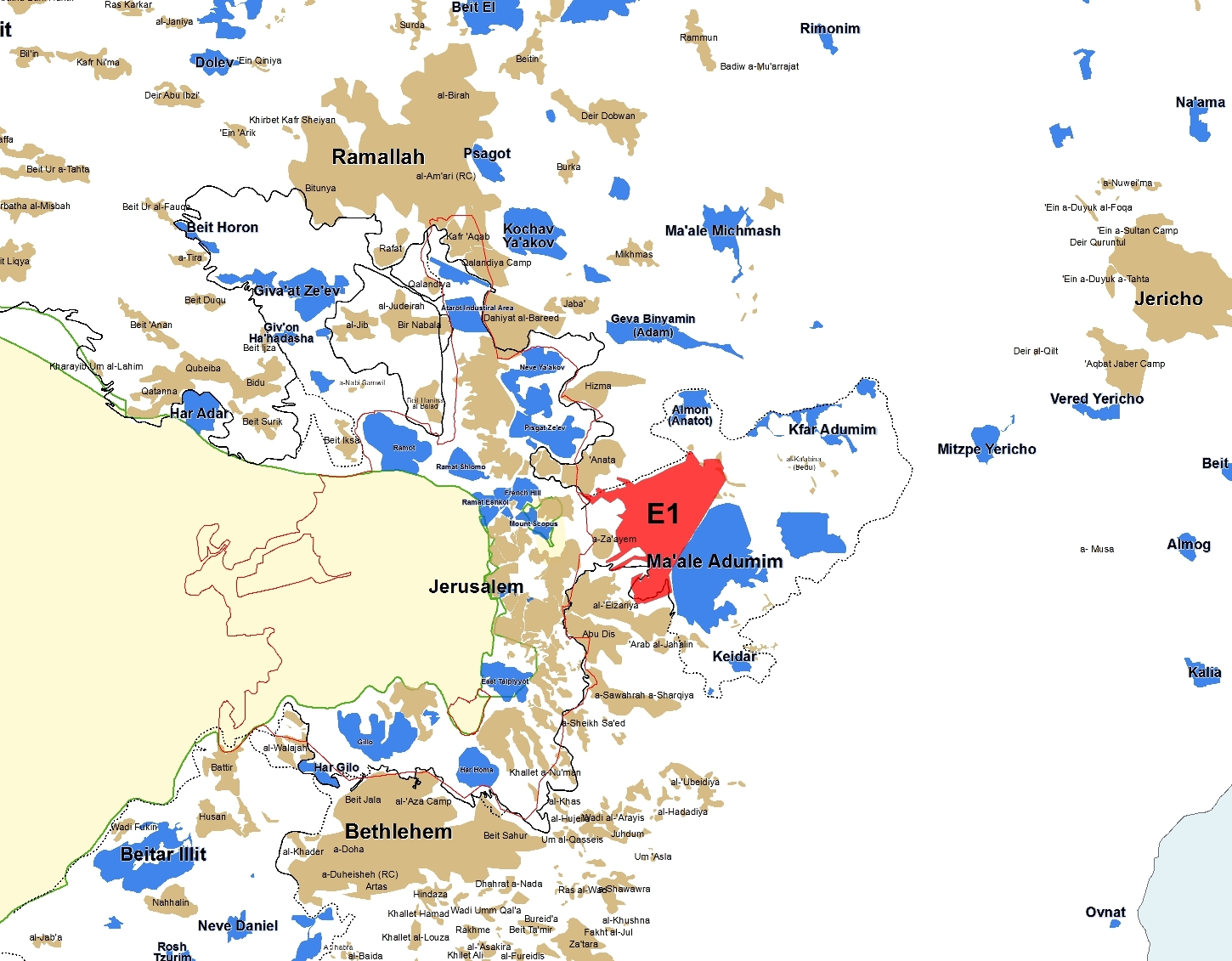
Map by Peace Now
The day before the High Planning Committee’s decision to deposit the plans, Netanyahu announced that he had lifted the freeze on E-1 that his government has imposed since 2012. Though the plans were approved for deposit in 2012, the administrative act of actually depositing the plans (which requires the plans to be published in at least three newspapers to inform the public) never occurred, largely as a result of intense international opposition to E-1. Under the recently released Trump Plan, the area where E-1 is located is slated to become part of Israel, meaning the long-held U.S. opposition to E-1 has transformed into apparent support.
Peace Now explains important context to Netanyahu’s flood of East Jerusalem settlement approvals:
“This move to promote settlement units in E1 should be understood in the context of government actions to promote settlement construction in Givat Hamatos and Har Homa to sever the Bethlehem-Jerusalem continuum, and the early promotion of a plan to turn the decommissioned Atarot Airport into a new Jerusalem settlement that would work toward severing the Ramallah-Jerusalem continuum. With E1 added to the mix, the pattern of severing the East Jerusalem and the West Bank is a clear policy direction of this government. While this announcement may be connected to the upcoming election, Netanyahu should be taken at his word and his comments should not be written off as campaign bluster. Indeed just this week he fulfilled a promise he made the week prior to publish tenders in Givat HaMatos, another area that was seen as a red line by the international community. It is likely that if moving on E1 is not met with deterring action domestically or abroad then it will further encourage settlement activity, seeing as E1 is the most recognized red line on settlement construction. The US, which has traditionally played a large role in deterring activity in E1, will likely not do so now with its current administration. Indeed, the Trump Plan envisions E1 as part of Israel, and allows for Israeli annexation pending coordination with the US and not negotiations with the Palestinians.”
Ir Amim adds:
“Although these advancements have taken place against the backdrop of the upcoming Israeli elections, they should also be seen as an alarm bell in the context of a new reality which has been created with the publication of the US Peace Plan. Carte blanche has essentially been given to Netanyahu and the Israeli government to further carry out unilateral measures in the Jerusalem area with little to no resistance. An acute exemplification of this major shift is the spate of new settlement plans (Atarot, Har Homa E, Givat Hamatos) being advanced over the Green Line in East Jerusalem, and now within the E1 area. After years of restraint due to international opposition, Israel is now set to advance construction in some of the most controversial areas in Jerusalem and along its perimeter. The realization of these plans will serve as an immense obstacle towards the future establishment of a Palestinian capital in the city and the prospect of a negotiated agreement based on a viable two-state framework.”
PLO Executive Committeewoman Hanan Ashrawi said in a statement:
“With the active participation and support of the current US administration, Israel is unilaterally and illegally annexing Palestinian territory and trampling on the Palestinian people’s most basic rights. These announcements are the practical translation of an extremist, ideologically-driven, and dangerous right-wing agenda that trounces Palestinian human rights and threatens to unravel the international order in favor of unilateralism, exceptionalism and political bullying.”
UN Special Coordinator for the Middle East Peace Process, Nikolay Mladenov, said:
“I am very concerned about Israel’s recent announcements regarding the advancement of settlement construction in Giv’at Hamatos and Har Homa, as well as the worrying plans for 3,500 units in the controversial E1 area of the occupied West Bank. All settlements are illegal under international law and remain a substantial obstacle to peace. If the E1 plan were to be implemented, it would sever the connection between northern and southern West Bank, significantly undermining the chances for establishing a viable and contiguous Palestinian state as part of a negotiated two-state solution. I urge the Israeli authorities to refrain from such unilateral actions that fuel instability and further erode the prospects for resuming Palestinian-Israeli negotiations on the basis of relevant UN resolutions, international law and bilateral agreements.”
Making Good On Bibi’s Promise, Israel Issues Tenders for Givat Hamatos Settlement – And Plans for More
As expected, on February 24th the Israeli Lands Authority published a tender for the construction of 1,077 housing units in the Givat Hamatos settlement. Haaretz reports that the tender relates to plans for “state land” and are intended to be sold as part of the the Treasury Ministry’s subsidized housing plan for young Jewish couples. Private companies will invited to bid on the project starting March 5th, with bidding set to close on June 22nd.
In addition to issuing tenders, the Jerusalem District Planning Committee met on February 27th to discuss the possibility of creating a new master plan for Givat Hamatos, in order to allow for more construction in the area. Ir Amim reports that the committee is considering a plan allowing for 6,500 residential units – which nearly doubles the total outlined in the current plan.
Ir Amim writes:
“This is the first time since the late 1990’s that Israel is constructing a new neighborhood/settlement in East Jerusalem. Furthermore, the location of Givat Hamatos means that its consturction will have dire consequences: It will serve to detach Bethlehem and the south of the West Bank from East Jerusalem while isolating the Palestinian neighborhood of Beit Safafa. For several years Netanyahu has abstained from publishing the Givat Hamatos tenders, serving as a source of frustration among rightwing parties. Netanyahu’s announcement therefore constitutes a break in the longstanding restraint. This dramatic change of policy should be seen in the context of his re-election campaign and against the backdrop of the formal release of the US Peace Plan.”
In announcing his support for the construction of the Givat Hamatos settlement last week, Netanyahu also mentioned plans to build 1,000 new homes for Palestinian residents of Beit Safafa – an East Jerusalem neighborhood which will be completely encircled by Israeli construction if/when the Givat Hamatos and Har Homa West settlement plans are implemented. According to Haaretz, the plan was/is to build 1,000 units on “Arab-owned” land — and that plan, in fact, is frozen.
In reaction to the tender for construction of the Givat Hamatos settlement, European Union High Representative Josep Borrell said in a statement:
“The Israeli authorities have announced an imminent decision regarding settlement construction in the Givat Hamatos and Har Homa neighbourhoods in East Jerusalem. Such steps would be deeply detrimental to a two-state-solution. As set out clearly on numerous occasions by the European Union, including in Council conclusions, such steps would cut the geographic and territorial contiguity between Jerusalem and Bethlehem, isolate Palestinian communities living in these areas, and threaten the viability of a two-state solution, with Jerusalem as capital of both states. Settlements are illegal under international law. The EU will not recognise any changes to the pre-1967 borders, including with regard to Jerusalem, other than those agreed by the parties. We call on Israel to reconsider these plans.”
High Planning Council Advances Plans for 1,739 Settlement Units, Including a New Industrial Zone
On February 27th, the High Planning Council – a body within the Israeli Civil Administration responsible for regulating all construction in the West Bank – approved the advancement of plans for 1,739 settlement units in the West Bank. These advancements come on the heels of the publication of tenders to build the E-1 settlement , the initiation of plans to massively expand the Har Homa settlement, and the recommitment of Israel to build a new massive new settlement in East Jerusalem, at the site of the disused Atarot airport. All of these plans deal with construction on the edges of Jerusalem and serve collectively to sever the connection between Palestinian neighborhoods of East Jerusalem and the West Bank (consolidating Israel’s uncontested sovereignty over “Greater Jerusalem”).
Of the total, 703 units received final approval, including:
- Plans to grant retroactive legalization to 620 units in the Eli settlement, a move which had been frozen by the High Court of Justice for the past 5 years while the Court considered a petition filed by Palestinians (with the assistance of Yesh Din and Bimkom) claiming to own the land. Last week, the High Court ruled against the Pallestinian petition and removed the injunction against the plans. The Eli settlement is located south of Nablus and southeast of the Ariel settlement in the central West Bank
- 48 units in the Har Bracha settlement, located just south of Nablus
- 35 units in the Givat Ze’ev settlement, located south west of Ramallah (north of Jerusalem).
Of the total, 1,036 units were approved for deposit for public review, including:
- A new industrial zone – called “Shaar Hashomron” – to be located south of the Palestinian village of Qalqilya (a town which is literally surrounded on three sides by the Israeli separation barrier – which in this area is, indeed, a massive wall). Peace Now reports: “[the new industrial zone is] close to Green Line, east of Salfit and South of Qalqilya, near the planned Nahal Rabah cemetery. In the area of Nahal Rabah, there existed a firing zone for years that prevented the use of the land. The land’s designation as a firing zone was lifted a few years ago, and the government’s Blue Line team set new boundaries for the state lands that comprised this area, all in preparation for a plan to build a new industrial zone. Industrial zones are a type of settlement in of themselves, and the planned cemetery is likely to be the first component toward establishing the new industrial zone. The plan for this new industrial park is separate from the 1,739 housing units advanced in the HPC announcement.”
- A winery in the Kiryat Arba settlement, located on the border of Hebron.
- 534 units in the Shvut Rachel settlement, located near the Shilo settlement in the central West Bank. Shvut Rachel only recently became an authorized settlement area when Israel extended the jurisdiction of the Shiloh settlement to include it as a “neighborhood” (along with three other outposts).
- Two plans for a total of 156 units in the Tzofim settlement, located just north of the Palestinian village of Qalqilya, a town completely encircled by Israel’s seperation barrier (except for a single road connecting it to the rest of the West Bank) – in the northern West Bank.
- 110 units in the Alon Shvut settlement, located south west of Bethlehem.
- 106 units in the Ma’aleh Shomron settlement, located east of the Palestinian village of Qalqilya.
- 105 units in Kfar Eldad (formally a part of the Nokdim settlement), located south of Bethlehem.
- 24 units in the Karnei Shomron settlement, located in the northern West Bank east of the Palestinian village of Qalqilya. Israel is planning to continue expanding Karnei Shomron with the stated goal of bringing 1 million settlers to live in the area surrounding the settlement.
The Times of Israel notes that this is the second time the High Planning Council has convened in as many months, marking an uptick in the frequency of such meetings, which until now have taken place quarterly (4x/year) since the Trump Administration came into power.
Peace Now said in a statement:
“The caretaker government, without a public and moral mandate, sets facts on the ground for a small and extreme minority, against the will of the majority. In the battle over the settler right-wing vote, Bennett and Netanyahu are dragging Israel to invest in thousands of harmful and unnecessary settlement units. This is how a cynical and irresponsible leadership that is willing to abandon the Israeli interest for its political survival behaves.”
Netanyahu Orders 12 Outposts Hooked Up to Israeli Infrastructure, with More to Follow
On February 23rd, Prime Minister Netanyahu announced that he had ordered 12 unauthorized outposts to be connected to Israeli infrastructure, and that his government was working to formally legalize over 100 outposts. Connecting outposts to Israeli water, sewer, power, garbage collection, and other municipal services entrenches the permanence of these outposts and furthers the de facto annexation of Palestinian land. It also copiously rewarding settlers for breaking Israeli law (by illegally building outposts), incentivizing further lawbreaking by Israel’s most radical and ideological settlers. 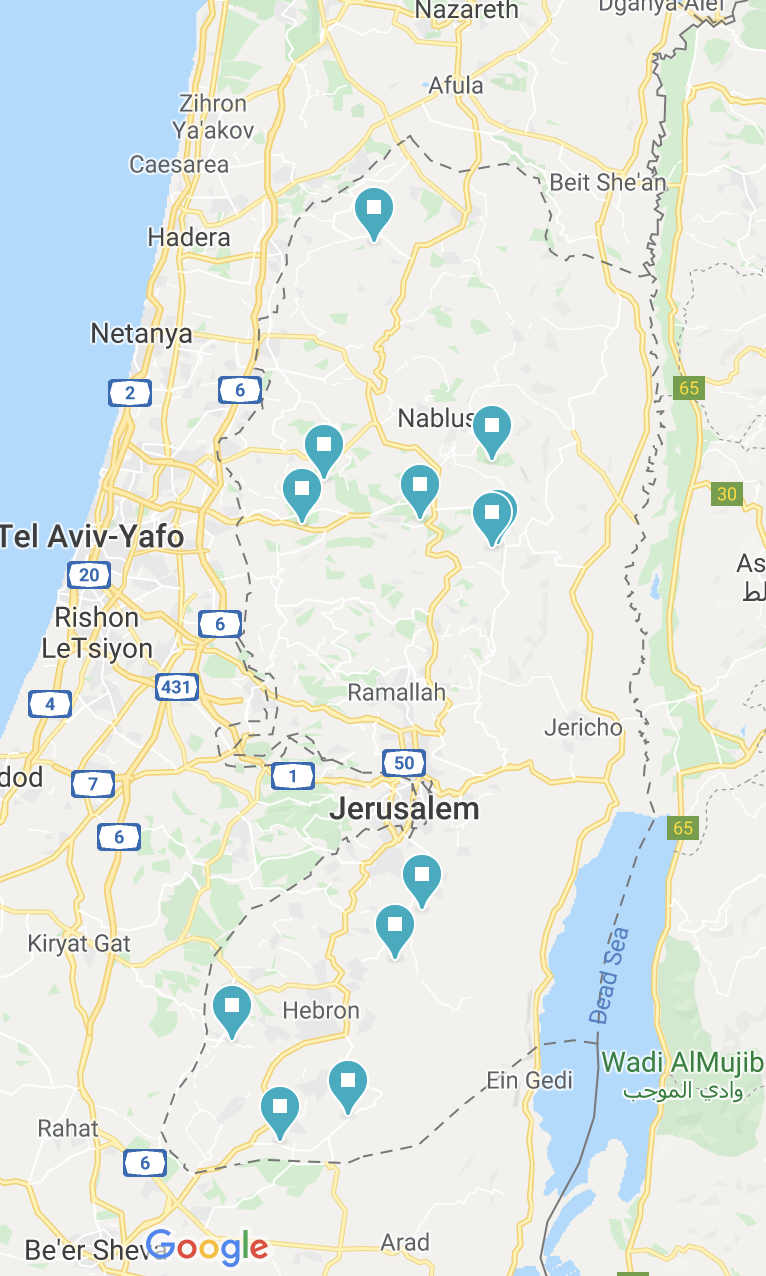
According to a letter from Netanyahu’s office, the 12 unauthorized outposts that will be connected to Israeli infrastructure were all built with “government encouragement” (though not formal approval or permits). In a perversion of the very notion of the “rule of law,” this unofficial encouragement for illegal actions is now treated by Israel as a valid legal basis for granting those outposts authorization.
The outposts slated for connection to Israeli municipal services are:
- The Nofei Nehemia outpost, located east of the Ariel settlement in the heart of the West Bank.
- The Havot Yair (Yair Farm) outpost, located west of Nablus.
- An outpost called “Hill 851”, located south east of Nablus in the central West Bank.
- The Maoz Zvi outpost, located in the northern West Bank.
- The Shaharit outpost, located in a string of settlements stretching from Israel proper to the Ariel settlement in the central West Bank, and going on to the Jordan Valley.
- The Pnei Kedem Farm outpost, located halfway between Bethlehem and Hebron in the southern West Bank.
- The Tekoa D outpost, located southeast of Bethlehem.
- The Negohot Farm outpost, located west of Hebron.
- The Avigayil outpost, located in the South Hebron Hills near the village of Susya.
- The Asa’el outpost, located east of the Palestinian village of Susiya in the southern tip of the West Bank.
- The Esh Kodesh outpost, located east of the Ariel and Shilo settlements, in a string of settlements stretching to the Jordan Valley.
- Ahiya, located in the Shilo Valley in the central West Bank.
David Elhayani, head of the umbrella settlement body called the Yesha Council, cheered Netanyahu’s announcement, saying:
“This is an important step for the benefit of young communities that have been suffering from electricity problems for years, and will now be able to receive electricity, just like any other citizen in the country.”
Since the passage of the Regulation Law in February 2017 and the invention of the “market regulation” principle by the Israeli Attorney General, the Netanyahu government has undertaken an energetic effort to grant retroactive legalization to outposts for which the Israeli government has not yet found a means to grant retroactive approval (though it has tried). The obstacle in all of these cases has been the fact that the outposts were built on privately owned Palestinian land. Following passage of the Regulation Law, Netanyahu immediately formed a committee tasked with finding a way to suspend the property rights of Palestinians; that committee produced the Zandberg Report in May 2018 — a report that, indeed, offers several justifications for the government to expropriate privately owned Palestinian land (one of the Report’s recommendations is to connect the outposts to Israeli municipal services). Following the publication of the Zandberg report, Netanyahu formed another committee tasked with implementing the report’s recommendations, by preparing individualized plans for each outpost to gain retroactive legalization. That taskforce, headed by notorious settler Pinchas Wallerstein. helped secure Cabinet approval for another bill to grant authorization to 66 outposts. All but two of the outposts named by Netanyahu this week (Hill 851 & Negohot) were part of a December 2018 bill to regulate 66 outposts – a fact that has drawn the wrath of settler leaders who bemoan Netanyahu’s delayed implementation.
FMEP tracks all events related to Israeli annexation and the drive to authorize outposts in its regularly updated Annexation Policy Tables.
Israel is Planning New West Bank Electricity Grid to Serve the Settlements
Haaretz reports that the Israeli government is close to approving a Master Plan for a new electricity grid in the West Bank, which will service Israel’s settlements. It may also serve Palestinian villages but only if — and it is a big if — the Palestinian Authority agrees to jointly implement the project. The plan is in the hands of Israel’s National Infrastructure, Energy and Water Ministry, which seeks to “provide a blueprint for the electricity market in the West Bank through 2040 and to develop infrastructure for Israeli settlements as well as for the Palestinians residing there.” However, the Israel-conceived plan calls upon the the Palestinian Authority to take responsibility over the Palestinian side of the equation, and the PA has refused to play that role and has condemned the plan.
In a statement, the Palestinian Authority’s Energy Authority said that the plan is designed:
“to establish Israeli sovereignty in the West Bank and to support the brutal presence of the settlements on our land.”
Settler leaders concurred with the PA’s assessment. Gush Etzion Regional Council chairman Shlomo Ne’eman told Haaretz:
“All moves point to sovereignty, and when we build infrastructure, there is also a basic understanding that the State of Israel is the sovereign. We are pleased that more and more government ministries have realized that this sovereignty is the reality.”
The plan, as reported by Haaretz, would see the Israeli Electric Company build a vast network of power lines across the West Bank. Israel will build six substations in Area C of the West Bank to distribute the high voltage power to settlements. Palestinians, if they are willing, are called upone to build eight substations in order to distribute power to Palestinian homes. The project is expected to cost between $870 million to $1.2 billion. The integration of settlements into Israel’s domestic planning schemes and the construction of massive infrastructure in the West Bank to service the settlements are significant advancements in Israel’s ongoing, de facto annexation of land in the West Bank.
Deputy Israeli AG Bemoans “Alarming Accumulation” Of Cases in Which Political Echelon Stops Outpost Evacuations
Haaretz reports that the Israeli Civil Administration planned to evacuate the unauthorized Mitzpe Yehuda outpost, located east of Jerusalem, in September 2019, but was directed to cancel the evacuation by one of Netanyahu’s personal aids in the Defense Ministry – Avi Roeh. The political interference was revealed in a High Court case filed by Palestinians claiming to own the land upon which the outpost was illegally constructed. The Palestinians are seeking to have the outpost immediately evacuated. Settlers claim to have purchased the land, and even submitted an application to have the outpost retroactively legalized by the government.
At the time of the scandal, Deputy Attorney General Erez Kaminitz wrote to Ronen Peretz, acting director of the Prime Minister’s Office, criticizing Roeh’s role in the Mitzpe Yehuda case, as well as the recurrence of political interference on behalf of the outposts. Citing several cases in which such interference occurred (Sde Ephraim, Givat Assaf, and Havat Negohot), Kaminitz wrote:
“This is a very alarming accumulation of cases that raises the specter of the emergence of a highly problematic trend that undermines the rule of law. It’s important to make clear that, as a rule, the political echelon is not authorized to intervene in decisions related to law enforcement.
Joint U.S.-Israeli Annexation Mapping Team Begin Work in Ariel
On February 24th, members of the U.S.-Israeli team tasked with mapping Israel’s annexation of West Bank land under the Trump Plan met for the first time to “explore the terrain.” At a vista near the Ariel settlement, Netanyahu underscored the significance of the project:
“The joint mapping process of the Israeli team and the American team is underway here in Ariel. This is a major mission. The area has an 800-km. perimeter. There is serious work, but we will work as quickly as possible to get it done…[the mapping process will] allow for the application of Israeli law [sovereignty] on these areas and later American recognition as well…[once complete] sovereignty can happen immediately.”
U.S. Ambassador David Friedman said:
“In Israel rain is a blessing, and I hope that our efforts should be blessed as much as the rain is coming down right now,” Friedman declared before the meeting started, the US Embassy in Jerusalem said in a statement. “We have our team here, and we’re going to get to work right away. We hope to complete it as soon as possible, and complete it the right way for the State of Israel.”
Ariel Mayor Eli Shaviro – one of the few settler leaders who publicly supports the Trump Plan – praised the mapping team, saying:
“The sovereignty ship is under way. As I have said in the past, I believe that the prime minister will advance the ‘Deal of the Century’ with President Trump and US officials. believe that the application of Israeli law in the Jordan Valley and in the communities of Judea and Samaria is closer than ever.”
Shaviro recently resigned from the settler Yesha Council over the group’s disavowal of the Trump Plan.
Bonus Reads + Resources
- “An Alternative Guide to City of David Archeological Park” (Emek Shaveh)
- “The Trump plan threatens the status quo at al-Haram al-Sharif” (Al Jazeera)
- “50 ex-European leaders and FMs condemn Trump plan, cite apartheid similarities” (The Times of Israel)
- “Planned Western Wall Train Will Threaten Historic Jerusalem Spring, Report Says” (Haaretz)
- “The Israelis fighting to keep the Jordan Valley Palestinian” (Al-Monitor)