Welcome to FMEP’s Weekly Settlement & Annexation Report. To subscribe to this report, please click here.
July 2, 2021
- Israel Starts Demolitions in Al-Bustan Section of Silwan [East Jerusalem]
- New Government, Same Outcome – “Compromise” Opens Door for “Legalizing” Illegal Outpost
- Israel Advances Plan for New Settlement Road Through Palestinian Farmland
- Palestine Lays Out Key Issues it Wants the Biden Administration to Engage On
Comments or questions? Email Kristin McCarthy – kmccarthy@fmep.org.
Israel Starts Demolitions in Al-Bustan Section of Silwan [East Jerusalem]
On Tuesday, June 29th, Israeli authorities demolished a Palestinian-owned butcher shop in the al-Bustan section of the Silwan section of East Jerusalem. Palestinians protested the demolition and attempted to stop the bulldozer; in response, Israeli police used live fire, rubber coated bullets, and tear gas to disperse protesters, injuring at least thirteen Palestinians.
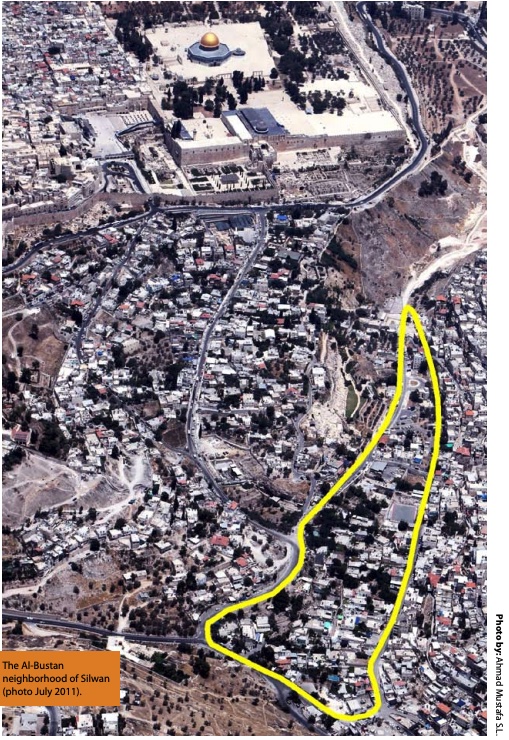 It is widely feared that the demolition of this business presages the imminent implementation of 86 other demolition orders for the same area (housing around 130 families), based on the fact that, like the now-demolished butcher shop, these homes were built without Israel-issued building permits (permits that Israel systematically denies to Palestinians in East Jerusalem). The warning period on demolition orders affecting 14 of those buildings expired on June 27th, meaning bulldozers can appear any day.
The Israeli government has targeted the al-Bustan neighborhood with wide-scale displacement since 2005, when it initiated demolition proceedings on the basis that the buildings do not have Israeli-issued building permits. Israel further declared the area a “green zone” and banned any new construction there. The backdrop to these moves is an Israeli plan to clear al-Bustan of its Palestinian residents in order to make way for an Israeli archaeological park promoted by settlers (the “King’s Garden,” which would be an extension of the settlers’ “City of David” complex).
Residents have until now managed to fight off demolition on the condition that they were engaging with the Israeli government (the Jerusalem Municipality) to develop planning for alternative housing (to which they could be moved). That planning has been ongoing since 2010. Terrestrial Jerusalem explains:
“As noted, in 2017, the Municipality agreed to suspend demolitions while the residents pursue the approval of a statutory Town Plan. The residents’ Town Plan is being drafted by Dr. Yusuf Jabarin, the Dean of Research at Haifa’s prestigious Technion Institute. The plan is working its way slowly through committee, and it is common that plans of this complexity take many years to approve. The plan is based on 11 principles to which the Municipality and the residents both agreed in 2017, and aspires to balance between the housing needs of the residents, the legitimate need for public spaces, in a manner that will serve the residents of al-Bustan, and not the settlers of Silwan. Initially the Municipality viewed the Plan favorably, but, in recent months, that support appears to have been withdrawn.”
New Government, Same Outcome – “Compromise” Opens Door for “Legalizing” Illegal Outpost
In an entirely predictable manner, the new Israeli government led by Naftali Bennet has reached a “deal” with settlers over the fate of the unauthorized Evyatar outpost. Located just south of Nablus, the site of the outpost has become a locus of Palestinian protest and Israeli military violence. Under the terms of the deal, the settlers will (temporarily) vacate the outpost by Friday, July 2nd, with the understanding that the government will leave in place the settlers’ illegal construction at the site — buildings and roads — while it “examines” the status of the land to see if it can be declared “state land” and therefore legally turned into a settlement (opening the door for the settlers to return). In the interim, under the agreement the outpost will be used as a military base while that examination plays out.
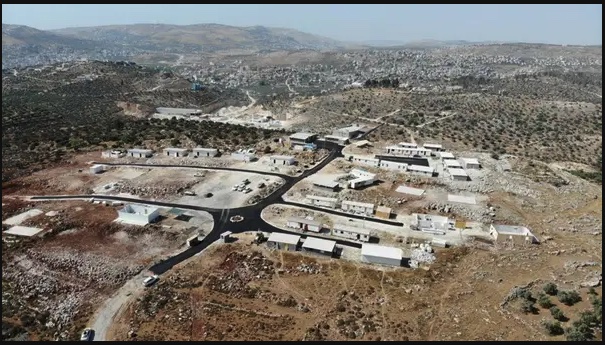 The fact that this “compromise” leaves in place the settlers’ structures and will maintain Israeli control over the site during the “survey” process are clear signals that the government is not concerned with enforcing Israeli law, but rather finding a political solution that works for the settlers. Further, the government of Israel either believes it can, and is determined to, find a pretext to assert that the land on which the outpost stands – known as Jabal Sabih to the Palestinians who have historically cultivated the it – is in fact “state land” which can be used by the state as it sees fit (i.e., give it to the settlers).

In response, the anti-settlement watchdog Yesh Din sent a letter to the Israeli Attorney General outlining exactly how the deal with the settlers contravenes international and Israeli domestic law. In a statement about the letter, Yesh Din says:
“The government’s agreement with the settlers of Evyatar rewards delinquency and grants immunity to those committing offenses, which will act to further embolden violent, lawless settlers to take similar action again in the future, knowing they will, at the very least, face no consequences, and, more likely, be further rewarded with land takeover and settlement expansion. On 1 July 2021, Yesh Din sent a principled letter to Israel’s Attorney General and the Legal Advisor to the Ministry of Defense, denouncing the government’s agreement regarding the outpost of Evyatar as illegal, unconstitutional and morally unacceptable. The letter also demands that an investigation by the police and other relevant authorities be launched into the involvement of the Samaria Regional Council for its part in the outpost’s establishment…
Furthermore, the letter clarifies that the government agreement entails a number of flagrant violations of both local and international laws, including:
In accordance with International Humanitarian Law (IHL), it is prohibited to transfer the civilian population of the occupying power to occupied territory (Article 49, Fourth Geneva Convention), an issue that is now also under investigation of the ICC.
Military presence on lands in occupied territory should only be for urgent security necessity. Safeguarding territory for future Israeli civilian presence cannot be considered an urgent security necessity. The fact that the military did not have permanent military presence in that specific area prior the government agreement reinforces that the military did not discern security justifications.
The decision made in advance to allocate lands for a settlement of Evyatar, providing that they will be declared public lands, without considering the needs of the local population in the area, and especially due to the fact that the outpost is located adjacent to three Palestinian towns, is illegal and unreasonable.
The attempt to disregard planning procedures by issuing a special military order to enable the structures on the site is an abuse of power by the military commander.
The agreement provides no legal basis for not enforcing the law on the illegal structures placed in the area.
It is forbidden to allow political whims to undermine the military commander’s discretion.
According to Israeli law, the decision to establish a new settlement in occupied territory requires a government decision, something that did not transpire in this case.”
Settlers squatting illegally at the site are reportedly not entirely satisfied with the deal. A few are threatening to resist removal from the outpost and are continuing to build permanent structures at the site. Part of the discontent relates to earlier reports that the “compromise” would include a commitment by the government to establish a military yeshiva (religious school associated with the IDF) at the site of the outpost, regardless of the outcome of the land status investigation (or even before the outcome is known). In the final deal, the government agreed to establish a yeshiva at the outpost only after the issue of the land’s status is resolved, and only if that issue is decided in the settlers’ favor. However, the settlers are still asserting that the government has agreed to open a military yeshiva at the site immediately, somewhat of a middle road.
Daniella Weiss, a veteran settler leader who is the leader of the group of settlers who established the Evyatar outpost, believes the land survey will confirm the area is “state land” with only minor adjustments to the boundaries of the outpost. She also said that she expects the yeshiva to be open by September, in time for the Jewish High Holidays. Weiss said:
“This government, which has been so sorely criticized, found the noble and uplifting way to talk with us – without over-powering us, but rather with admiration for pioneer builders of the Land. Our goal is not to force the government’s hand, but rather to uplift it. Our achievement is not in going against the government, but rather in bringing it to the place which it itself wants to be.”
The fate of the outpost has posed an early test for Israel’s new governing coalition. Defense Minister Benny Gantz is on the losing side of this issue (where he is joined by the IDF leadership, which similarly wants the outpost dismantled), having insisted just a few days ago that he is the one in charge of deciding the fate of the outpost and that the outpost will be demolished in accordance with Israeli law. Haaretz explains how the negotiations transpired:
“Gantz looked to his right and to his left, and discovered that he was alone. Prime Minister Naftali Bennett and ministers Ayelet Shaked and Zeev Elkin had negotiated energetically with the settlers on several channels simultaneously. And members of the government’s left wing kept silent. Thus a compromise was reached without the defense minister or the army even being briefed on the talks in real time. Gantz tried to set red lines, already at the outset of the Bennett-Lapid government, in which he is a kind of fifth wheel. He sought to prevent the settlers from creating facts on the ground by taking over land whose legal status is in doubt without any permission from the state or Israel’s Civil Administration in the West Bank. Gantz also sought to prevent the capitulation of the left wing to the right wing in the government. But in reality, it seems that the left has already folded, and the right has laid down its own red line against forcible evictions, which would put Bennett in an uncomfortable situation with what remains of his electoral base. Aside, perhaps, from the new coronavirus outbreak, there probably isn’t an issue in which the government has invested more time during its first two weeks in office than the evacuation of Evyatar. The army doesn’t like the compromise, which defies the original recommendations of its Central Command and the Coordinator of Government Activities in the Territories. Both wanted a full, rapid evacuation of the outpost, which was established in the heart of a group of Palestinian villages south of Nablus. But senior army officers didn’t visit the scene Tuesday morning, and they understand full well the balance of forces there. The moment the prime minister supports the compromise, the army will salute and carry it out.”
The U.S. State Department offered veiled criticism of the deal, saying:
“We believe it is critical to refrain from unilateral steps that exacerbate tensions and undercut efforts to advance equal measures of freedom, security and prosperity and a negotiated two-state solution. This certainly includes establishing new outposts which are illegal even under Israeli law.”
Adding more insight on the U.S. position, the Times of Israel reports:
“The Biden administration is willing to give new Prime Minister Naftali Bennett some time before making asks in the Palestinian arena, but it’s not willing to accept complete paralysis and will speak out clearly against unilateral moves, a source said.”
Israel Advances Plan for New Settlement Road Through Palestinian Farmland
Haaretz reports that the Israel is advancing a plan to pave a new road near the Beitar Illit settlement that will cut through agricultural land belonging to (and actively farmed by) the Palestinian village of Wadi Fukin. If paved, in addition to hemming in Palestinians and closing off their access to their land, it is feared that the projects will restrict the flow of water into natural springs used by Palestinians for farming in the area. This would also be the first road to cut into a wooded area.
Palestinians were not directly informed of this plan, but found out after the plan had been filed with the Civil Administration’s planning authorities. Bimkom, an Israeli NGO, filed an appeal three weeks ago seeking to have the plan frozen until residents of Wadi Fukin can be included in the planning process.
One resident of Wadi Fukin, Mohammed Rabah Sukar, said:
“No one from the Civil Administration talked to us or explained exactly where the road will pass. We don’t know to what extent this will damage our lands and people are very confused and frightened by this road.”

Map by Peace Now
The planned road is connected to two other significant settlement plans in the area, both targeting areas located just south of Bethlehem. One of these plans would expand settlement construction on lands near the Wadi Fukin village. The other plan relates to expansion of the Beitar Illit settlement and the construction of a new settlement – called Gv’aot – on land that historically belonged to five Palestinian villages in the Bethlehem area: Jaba, Surif, Wadi Fukin, Husan and Nahalin. In 2014, the Israeli government issued unilateral, mass expropriation orders for the land (which Israeli officials explictly said was in response to a Palestinian terror attack). At the time, Peace Now reported that the move constituted the largest single expropriation of Palestinian land by the Israeli state in over 30 years. It wasn’t until August 2019 that Israeli planning authorities gave final approval to a plan for a new settlement, including 61 housing units and an educational institute. Today, as it stands, the new units have not been constructed, but a small outpost – which calls itself Gv’aot – has been established…on land not allotted by the Israeli government for future settlement construction.
Palestine Lays Out Key Issues it Wants the Biden Administration to Engage On
Haaretz reports that a new Palestinian negotiation team has asked the Biden Administration to facilitate negotiations with Israel over a series of about 30 issues that it believes can meaningfully improve Palestinian lives – – an approach that has come to define how the Biden Administration is seeking to engage on (but not try to solve) the Israeli-Palestinian situation.
The Palestinian team reportedly included the following proposals related to settlements and annexation in their list:
- Suspension of all settlement construction in the West Bank and East Jerusalem;
- The evacuation of unauthorized outposts;
- The prevention of Israel from controlling land in Area A (where the Palestinian Authority is supposed to have full control, as assigned by the Oslo Accords);.
- The construction of an airport in the West Bank;
- The development of new tourism projects, including religious tourism projects at sites in Area C (the 60% of the West Bank in which, under Oslo, Israel has complete control); and,
- The reopening of Palestinian institutions in East Jerusalem.
An anonymous source with knowledge of the Palestinian initiative told Haaretz:
“Not all of the proposals appearing in the document can be implemented at the present time, but even if it would be possible to advance some of the steps, at least in the civilian field, that would provide achievements to the Palestinian public and improve their day-to-day lives.”
Welcome to FMEP’s Weekly Settlement Report, covering everything you need to know about Israeli settlement activity this week.
To receive this report via email, please click here.
February 1, 2018
- Minister to Vote on Havat Gilad Legalization this Weekend
- De Facto Annexation Proceeds: Bill Will Extend Israeli Sovereignty to Settlement Universities
- Israeli Army to Take Control Over East Jerusalem Neighborhoods Cut Off by the Barrier
- New West Bank Bypass Road Opens “New Era in Settlement”
- European Union Says Israel is Using Tourism to Legitimize Settlements
- Israeli Expansion Plan Threatens Flood Out (Literally) Palestinian Town
- Yesh Din Report Slams the Israeli Civil Administration
- Bonus Reads
Comments, questions, or suggestions? Email Kristin McCarthy at kmccarthy@fmep.org.
Ministers to Vote on Havat Gilad Legalization this Weekend
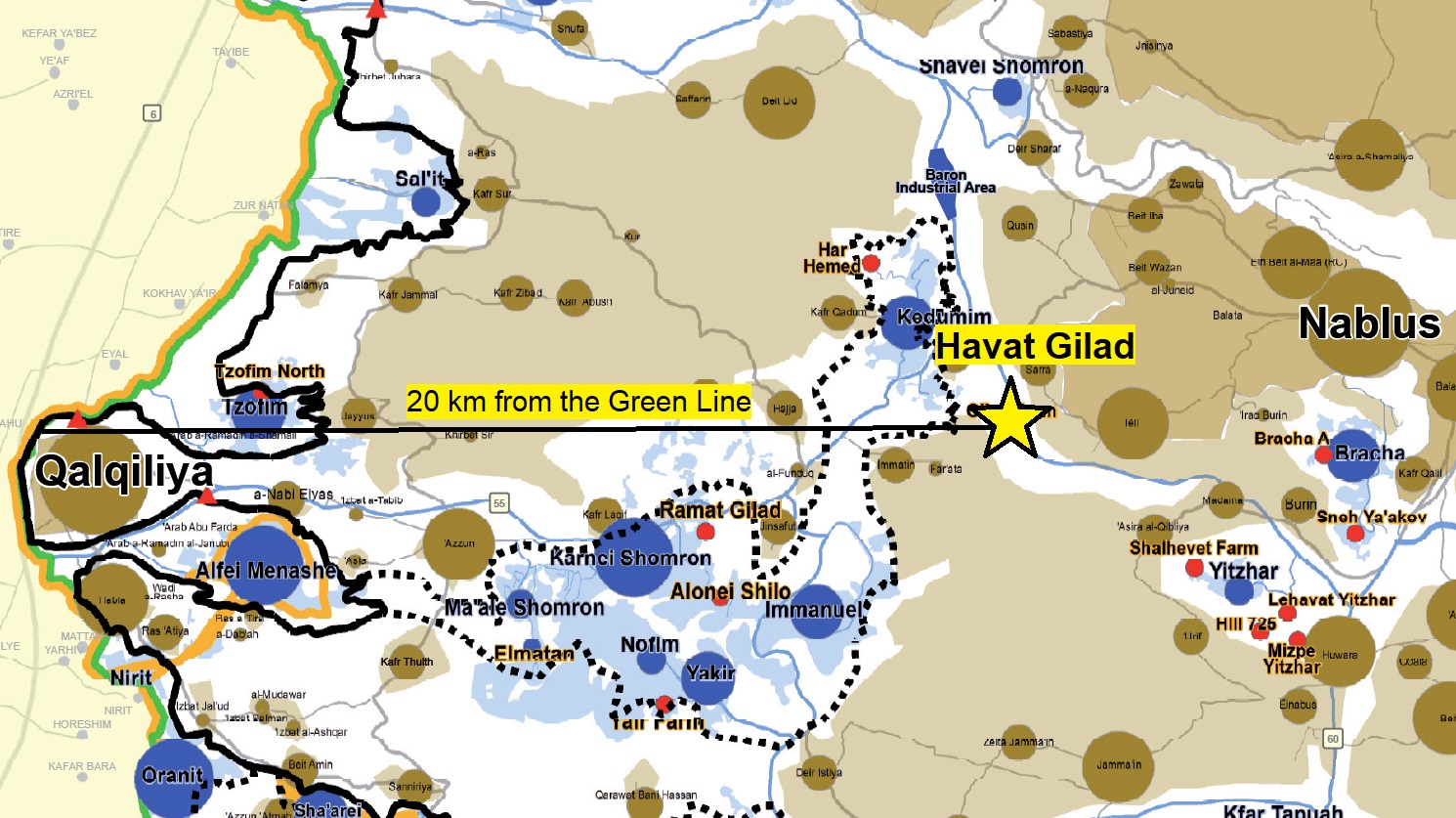
Prime Minister Netanyahu announced that the Israeli Cabinet will vote on a resolution declaring the government’s intention to retroactively legalize the Havat Gilad outpost at their next weekly Cabinet meeting, scheduled for February 3rd.
Map by Peace Now
At the last such meeting on January 28th, Netanyahu declined to put Havat Gilad on the agenda. He blasted a number of his own ministers who have criticized him in the press for the delay, which Netanyahu called “tactical.” Netanyahu’s Likud Party even issued a harsh statement in response to Defense Minister Liberman’s public statements, saying:
This is Bayit Yehudi’s [Jewish Home’s] well-known method once again at play – demanding the prime minister to do something they know he is going to do anyway, so they could later present it as their achievement. The bill will be raised next week, just as it was agreed with the bill’s sponsor, Defense Minister Lieberman.
The Jerusalem Post notes that this will be the fourth time since 2009 that Netanyahu’s government has retroactively legalized an outpost, the first three outposts being Bruchin, Rehalim, and Sansana. FMEP has previously reported on efforts by the Defense Ministry to retroactively legalize an additional 70 outposts, and FMEP has also covered the battle over the Netanyahu government’s “Regulation Law,” which was passed in early 2017 to pave the way for legalization of 55 unauthorized outposts and 4,000+ illegal settlement structures, by appropriating thousands of dunams of Palestinian private land.
Peace Now published a comprehensive case for why it would be a grave mistake for the government to legalize the Havat Gilad outpost. They write:
The legalization of the outpost would signal that the government does not intend to advance a final peace agreement, but rather only to extend Israel’s hold on the West Bank and to prevent the possibility of establishing a Palestinian state alongside an Israel with secure, internationally recognized borders. By working to authorize the outpost, the government is encouraging violations of the law, as well as sending a clear message to the settlers that such criminal acts pay off.
De Facto Annexation Proceeds: Bill Will Extend Israeli Sovereignty to Settlement Universities
On January 29, a bill to bring settlement universities under Israeli domestic law passed its first reading in the Knesset’s Education, Culture and Sport Committee. The bill aims to extend the authority of Israel’s Council of Higher Education to include schools located in settlement, which currently fall under a separate authority, as required by the norms of occupation. While Israeli policies are often extended to the settlements on an ad hoc basis through military orders issued by the Civil Administration, which is the arm of the IDF that is for all intents and purposes the sovereign ruler over the occupied territories, this bill capitalizes on the momentum created by a new Knesset policy that formalizes the process by which Israeli domestic law is extended over the settlements, in affect extending Israeli sovereignty over the West Bank and therefore annexing it.

Map by the New York Times
The authors of the policy have unabashedly stated that their goal is to annex the settlements, and even all of Area C, to Israel. One of the authors, MK Shuli Mualem Rafaeli (Jewish Home) said, “Alongside the academic importance of the law there is also a clear element of imposing sovereignty, and I am proud of both.”
The new bill is specifically connected to the opening of a state-of-the-art medical school in the Ariel settlement, funded in part by billionaire American financier Sheldon Adelson. As FMEP reported last June, Ariel University became an accredited Israeli university in 2012, following significant controversy and opposition, including from Israeli academics. It has since been the focus of additional controversy, linked to what is a clear Israeli-government-backed agenda of exploiting academia to normalize settlements. Ariel is located in the heart of the northern West Bank, reaching literally to the midpoint between the Green Line and the Jordan border. The future of Ariel has long been one of the greatest challenges to any possible peace agreement, since any plan to attach Ariel to Israel will cut the northern West Bank into pieces.
Israeli Army to Take Control Over East Jerusalem Neighborhoods Cut Off by the Barrier

Map by Haaretz
The Israeli army announced that it plans to take full security control over two East Jerusalem neighborhoods that have been walled out of the city of Jerusalem by the Israeli separation barrier. The move was justified by saying that there has been in increase in terror attacks carried out by Palestinians with Israeli identification cards (Palestinian residents of East Jerusalem carry Israeli ID cards).
Peace Now slammed the army’s move, noting:
The government insists that East Jerusalem should be part of Israel’s capital, yet it walls off 140,000 residents–1/2-2/3 of which are Israeli citizens–and brings in the army after the radicalization brought on in no small part by years of neglect and discrimination bear fruit. Once again the government has deceived the public by talking about “United Jerusalem” while practicing segregation
Until now, the the Israeli police department was the only permitted security presence in Shuafat refugee camp and Kafr Aqab, both of which are legally parts of Jerusalem, even though they were left on the West Bank side of the separation barrier. The Palestinian Authority is not allowed to operate in East Jerusalem (including these neighborhoods), which Israel annexed following the 1967 war. Israel’s isolation and systematic neglect of these East Jerusalem neighborhoods has come at an extraordinarily high cost for Palestinian residents.
New West Bank Bypass Road Opens “New Era in Settlement”
Israeli officials joined together for the opening of a new bypass road for Israeli settlers in the West Bank, the first major new bypass road opened in 20 years. And this is only the start: the road is the first of five new bypass roads that Netanyahu promised to build under pressure from settlers, who pushed the Prime Minister to expedite funds for projects the settlers claimed were needed for their security. The new Israeli-only road will link several settlements located deep inside the northern West Bank to cities inside Israel (i.e., within the Green Line), while bypassing Palestinian towns.
Prime Minister Netanyahu was clear about the importance of the road and what it means for the future of Israeli settlement construction. Netanyahu said,
Returning to our homeland – that’s what we’re doing here, in the heart of the Land of Israel … This is a festive day. It’s a festive day for Samaria, a festive day for the State of Israel.This bypass road is part of the system of bypass roads that we are building throughout Judea and Samaria that serves the residents of Judea and Samaria and the residents of the entire State of Israel
Not to be outdone, Yossi Dagan, the head of the Samaria Regional Council, a municipal body for settlements in the West Bank, put it even more bluntly saying that this is,
the beginning of a new era in settlement…It is impossible to overstate the importance of these bypass roads and the importance of transportation routes for settlement. They are the keys to the development of settlement.
At the ceremony, Deputy Defense Minister Eli Ben Dahan announced that the government will begin paving two more bypass roads in the coming weeks.
[2/2/2018 Update] Last year, B’Tselem documented Israeli construction of the bypass road Netanyahu christened this week. In order to build the road, Israel uprooted olive trees belonging to the Palestinian city of Qalqilya. Documenting the olive tree destruction, B’Tselem wrote in January 2017:
This work is being carried out as part of the decision made by the military and the Civil Administration to build a bypass road to replace the section of Route 55 that runs through a-Nabi Elyas. Route 55 originally served as the main link between Nablus and Qalqilya and was one of the major traffic arteries in the West Bank. Over time, as settlements expanded, it also became essential to settlers, as it connects several large settlements with Israel’s coastal plains and central region.
The decision to build the bypass road was first made in 1989, with the goal of sparing settlers the need to drive through the village of a-Nabi Elyas. However, it was not pursued until September 2013, when the Civil Administration planning institutions began the planning process. In October 2015, the project was expedited due to pressure by the settler leadership: According to Israeli media reports , Prime Minister Netanyahu promised the heads of the settlement local councils that the road would be built after they had set up a protest tent in October 2015, following the attack that killed Naama and Eitam Henkin.
On 21 December 2015, the head of the Civil Administration issued an expropriation order for 10.4 hectares of land earmarked for the bypass road. The order noted that the new road will “serve the public good” and improve mobility between Nablus and Qalqilya. In March 2016, the Palestinian village councils and landowners petitioned Israel’s High Court of Justice (HCJ) against the expropriation, on the grounds that the road will not serve all residents of the area but only settlers. On 16 November 2016, the HCJ denied the petition after accepting the state’s claim that the road is intended to serve the entire population of the area.
The seizure of the land and uprooting of olive trees have severely harmed the landowners, who have lost a source of income and a major financial asset, as well as an open space that served all local residents for leisure and recreational activities.
The state argued that the road is meant to serve Palestinians in the area, too, in order to comply with the provisions of international law, which allow the occupying power to expropriate land within the occupied area in two circumstances only. The first is a specific military need related to the occupied territory itself, and the second is promoting the wellbeing of the residents of the occupied territory.
European Union Says Israel is Using Tourism to Legitimize Settlements
In a leaked report, European Union officials said that Israeli archaeological and tourism projects in East Jerusalem are “a political tool to modify the historical narrative and to support, legitimacy and expand settlements.”
The Guardian, which saw the annual report written by the EU Heads of Mission in Jerusalem, lists settler-run excavation sites, the proposed cable car project (which FMEP has reported on repeatedly), and national parks in East Jerusalem as part of Israel’s mission to change facts on the ground.
The report covers activity of Israeli settler groups in Silwan (called the “City of David” by settlers and the Israeli government, both of which seek to assert exclusive Jewish heritage there). It is in this area that the Israeli government approved the Kedem Center, a huge tourism complex proposed by the settler group Elad, as the final stop of the Jerusalem cable car project. Silwan is home to 450 hardline settlers, guarded by government-funded private security, living amongst 10,000 Palestinians. The Palestinian population of this area faces home demolitions, land and property seizures, evictions, intense settlement building, and devastating property damage resulting from massive underground excavation projects run by settler-aligned groups with the financing of the Israeli government.
Of the cable car project and the Silwan stop in particular, the report says:
Critics have described the project as turning the World Heritage site of Jerusalem into a commercial theme park while local Palestinian residents are absent from the narrative being promoted to the visitors
[2/2/2018 Update] Emek Shaveh, an Israeli NGO who has been raising concern about archeological settlement activity in Jerusalem since 2009, issued a statement elaborating on the extent of the threat posed by the type of activity the EU report highlights. They wrote,
Archaeological tourism projects are favored by the settlers as a means of winning the hearts of minds of the Israeli, Jewish and evangelical publics. The EU now recognizes how archaeological sites in East Jerusalem are being used as a political tool to “modify the historical narrative and to support, legitimise and expand settlements”. The City of David in Silwan, the new cable car project, the national parks in Palestinian neighborhoods compliment evictions and house demolitions in marginalising and disenfranchising the East Jerusalem Palestinian public. The difference between “cultural projects” such as the national parks or the City of David and house demolitions is that in addition to the physical displacement, the former also expropriate the narrative, dispossessing the Palestinians from their historical and cultural contexts. When it comes to Jerusalem, narrative is not an abstract issue because in Jerusalem history and questions of present-day sovereignty are intertwined. And when it will come to determining the final status of the city, the question of who “owns” the history of the city will be crucial.
Israeli Expansion Plan Threatens Flood Out (Literally) Palestinian Town
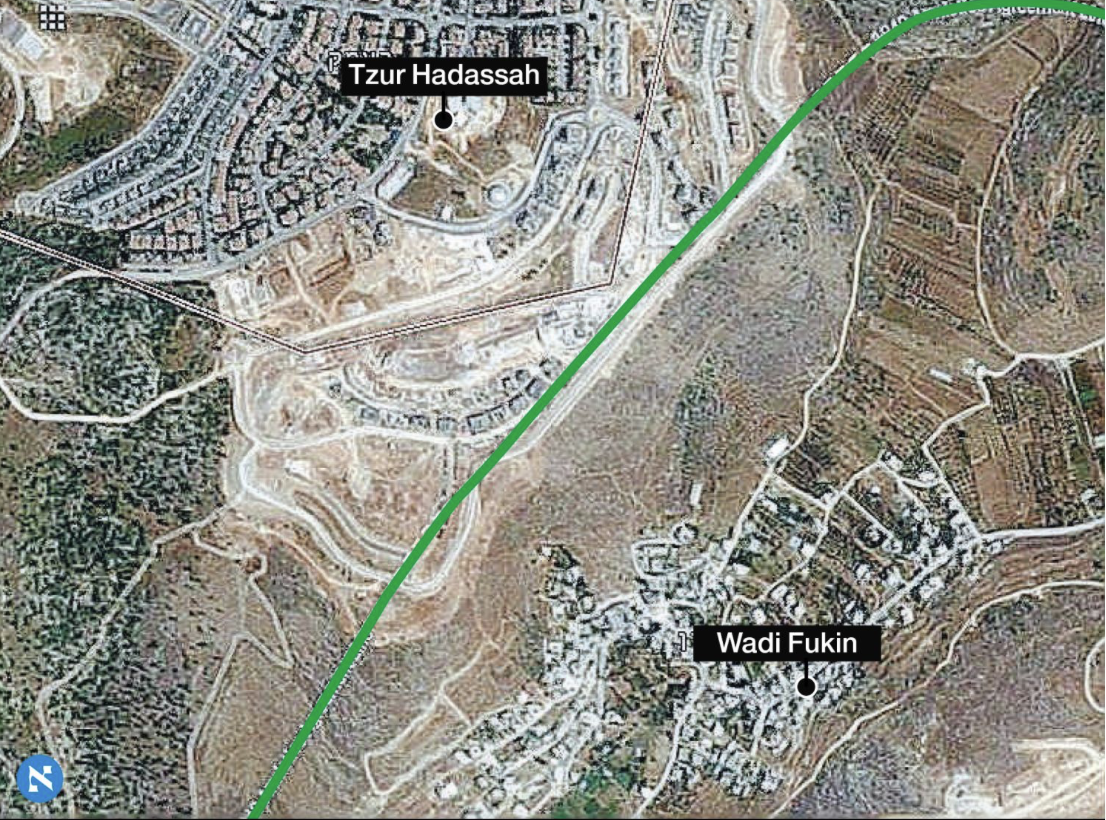
Palestinian residents of Wadi Foquin, a West Bank village located in a valley along the 1967 Green Line, west of Bethlehem, are chronicling how nearby construction in Israel has resulted in unprecedented flooding and the severe depletion of their 11 historic natural springs.
Map by Haaretz
A victim of its location on the Green Line and its lush lands, Wadi Foquin sits between the Israeli city Tzur Haddassah to its west and the ever-growing mega-settlement pf Beitar Illit, to its east. Last year, the Israeli government approved an expansion plan for Tzur Hadassah that extends the city past the Green Line into the West Bank, as reported by the Israeli settlement watchdog Kerem Navot. Wadi Foquin residents say Tzur Hadassah and Beitar Illit, both of which look down on the valley town, have already created something akin to concrete water slides, shooting rainwater straight into Wadi Foquin and flooding their homes, streets, and businesses, while also preventing the water from replenishing the springs. The expansion is only making matters worse. The Israeli government, for its part, claims that all the proper and required ecological studies have been completed and the plan passes muster and will move forward.
Yesh Din Report Slams the Israeli Civil Administration
The Israeli NGO Yesh Din released a new report, “Through the Lense of Israel’s Interests: The Civil Administration’s Role in the West Bank.” The report is an in-depth look at the main functions of the Civil Administration, the arm of the Israeli military which is the de facto sovereign in the West Bank. The Civil Administration regulates virtually every aspect of Palestinian life, including travel permits, roads, land, resource extraction, archeology, and of course settlement-related issues. The report examines the role of the Civil Administration and the ways in which its authorities have become a “means of oppression and domination over Palestinians.”
Yesh Din concludes:
The Civil Administration, established to serve “the welfare and benefit of the population” and “for the purpose of operating and providing public services”, betrays its professed role. Instead of ensuring public order and safety in a temporary trusteeship, as required by international law, the Civil Administration uses administrative tools to effect long-term, irreversible changes in the OPT and to impose restrictions and bans on the protected persons, in a severe, systemic and widespread abuse of the human rights of Palestinians in the West Bank.
Bonus Reads
- “More than 200 companies have Israeli settlement ties: U.N.” (Reuters)
- INFOGRAPHIC “50 Years of Occupation: The Security Burden Continues” (Peace Now)
- “After Netanyahu Summons Ambassador, Irish Senate Postpones Debate on Bill Blocking Israeli Settlement Goods” (Haaretz)
- “Ireland to vote on settlement trade sanctions bill” (+972 Magazine)
FMEP has long been a trusted resource on settlement-related issues, reflecting both the excellent work of our grantees on the ground and our own in-house expertise. FMEP’s focus on settlements derives from our commitment to achieving lasting Israeli-Palestinian peace, and our recognition of the fact that Israeli settlements – established for the explicit purpose of dispossessing Palestinians in the West Bank and East Jerusalem of land and resources, and depriving them of the very possibility of self-determination in their own state with borders based on the 1967 lines – are antithetical to that goal.