West Bank
Israel Expropriates Nabi Samwil Antiquity Site Currently Managed by the Muslim Waqf
The Israeli Civil Administration issued an expropriation order to seize the Nabi Samwil antiquity site, located just north of Jerusalem’s municipal boundary in the Palestinian village of Nabi Samwil. The seizure order affects a mosque that is currently managed by the Palestinian Authority’s Muslim Waqf, marking the first time Israel has unilaterally taken control of a holy site owned by the Waqf. In addition to the mosque, Israel has expropriated the archaeological site around the mosque, a spring, agricultural lands, and access roads leading to the area – a total of 109.79 dunams (27 acres).
The Civil Administration explained it was seizing the site “for the public benefit, for the purposes of undertaking a development project to preserve the archaeological site of the Prophet Samuel’s tomb,” claiming that there are safety issues in the compound. Israel is advancing development plans for several other significant antiquity sites that have been under Palestinian control across the West Bank, most notably Sebastia.
Peace Now said in a statement:
“Once again, we find ourselves confronting decisions by the Civil Administration, operating under Minister Smotrich, that are intended to expand and deepen annexation. From plans to expand settlements and unprecedented declarations of ‘state land,’ the Civil Administration has moved on to taking control of heritage sites and is now appropriating religious sites, creating tension in some of the most peaceful and sensitive places in the West Bank. The messianic agenda of the Israeli government should have been stopped long ago. Instead, each passing day appears to further endanger us and create the conditions for transforming a political conflict into a religious war.”
The Palestinian village of Nabi Samwil is located on a strategic and highly prized hilltop (inside of an area Israel post-facto declared a national park) just outside of the municipal borders of Jerusalem but on the Israeli side of the separation barrier — placing residents (who have West Bank ID cards) in a Kafka-esque situation wherein they are cut off from both Jerusalem and the West Bank (legally they are forbidden from taking the one road out of the village into Jerusalem, since they are West Bankers, and the West Bank is accessible only via a circuitous route that passes through an Israeli checkpoint – for background see: The Palestinian village where Israel forbids everything). The suffocation of Nabi Samwil is in line with Israel’s long-time ambitions to completely de-populate the village and take control of the land.
Israel Takes Another Step Towards Forcible Transfer of Khan Al-Ahmar
Ir Amim reports the Civil Administration issued a seizure order for a strip of land running through the Khan al-Ahmar bedouin community’s land to enable the construction of a new water line between two nearby settlements, Mishor Adumim and Kfar Adumim. The seizure order was issued the same day, May 19th, that Finance Minister Bezalel Smotrich vowed to move forward with the long-stalled forcible transfer of Khan al-Ahmar.
Ir Amim further details:
“Moreover, the water line is clearly not intended to serve Khan al-Ahmar or other Palestinian communities in the area. It is rather designed to upgrade infrastructure for the settler population in the E1/Maaleh Adumim area. Since Kfar Adumim is already connected to water infrastructure, the new line likely indicates preparations for the expansion of Kfar Adumim and/or other nearby settlements.”
Bibi Requests Review of Annexation via Antiquities Bill
The Times of Israel reports that Prime Minister Netanyahu has directed his Cabinet Secretary to prepare a comprehensive review of a bill to annex antiquity sites in the West Bank and Gaza. Bibi’s request might be intended to delay or scuttle the bill, which has faced heavy international criticism in addition to opposition by Israeli legal advisors and defense experts. Just this week the Knesset Education, Culture and Sports Committee Legal Adviser Tami Sela wrote a position paper criticizing the bill saying that it “contradicts” international law, specifically with regard to the bill’s application to Areas A & B in the West Bank and to Gaza. The Israeli army has also expressed opposition.
In addition to fast-tracking a bill to create an Israeli civilian authority to control antiquity sites in all areas of the West Bank and Gaza, the Israeli government is simultaneously proceeding with the appointment of a new head of the Israel Antiquities Authority that is both unqualified and clearly political. A group of 60 archaeologists petitioned the Knesset this week to block the appointment.
Israel Launches Online West Bank Land Registration System
On May 27th the Israeli government launched an electronic registration system for the “Land Registry and Settlement of Rights” for Area C of the West Bank. The online system is an instrument for the implementation of a February 2026 decision by the Israeli Security Cabinet to publish the West Bank land registry and to revive a “State Land Acquisition Committee.” These moves are best understood as a way to annex the West Bank, to help facilitate settler claims over disputed and/or unregistered land, and to spur the proactive government purchases of West Bank land for the purpose of settlement expansion.
The Palestinian Authority urged Palestinians to withhold information from Israeli entities working on the registration system, which Birzeit University’s Institute of Law argues consolidates Israeli dominance, marginalizes the Palestinian Authority, legitimizes settlement expansion, and creates irreversible facts on the ground.
Following the Security Cabinet’s February 2026 decisions, the full Israeli Cabinet quickly approved the decisions and allocated a four-year, $78 million (NIS 244.1 million) budget to establish a mechanism (with up to 35 employees) for updating the records in Area C of the West Bank. The Israeli Justice Ministry is tasked with carrying out the land registration process, effectively transferring sovereignty over Area C from the Israeli military to Israeli civilian governance, clear annexation. According to Peace Now, the process of land registration in Area C carried out will lead to the wide scale dispossession of Palestinians from the area. The Cabinet set a target goal of completing the land registration process for 15% of Area C within the next five years.
Yara Asi explains for the Arab Center DC:
“Israel’s February 2026 decisions mark a turning point in the governance of the West Bank. While presented as administrative measures, they collectively restructure land, authority, and law in ways that extend beyond the logic of temporary occupation. Through land registration, control is converted into ownership; through governance reforms, Israeli authority is extended across territorial lines; and through judicial changes, the limited constraints on these processes are further weakened. Together, these developments reflect a shift from managing occupied territory to integrating it into Israel.
This transformation carries significant legal and political implications. By embedding control within legal and institutional frameworks, these measures reduce the prospect of reversal and reshape the conditions for any future political settlement. In this sense, they illustrate a broader strategy of annexation through law—one that proceeds without formal declaration yet produces many of its defining effects.”
Itay Epshtain posted on X:
“The system, codenamed “Grenade”, was launched this morning and openly endorsed by Ministers Smotrich and Strook as “a central pillar in applying sovereignty in the territory and strengthening our hold and roots in Judea and Samaria.”
The candor is striking. What was once advanced incrementally, is now pursued through digitized cadastral engineering. A land registry presented as bureaucratic modernization is, in substance, an instrument for the consolidation of unlawful territorial acquisition.
International law is neither ambiguous nor silent. An occupying Power is prohibited from annexing occupied territory, permanently appropriating public or private property outside the strict limits of military necessity, or altering the legal status of the territory under occupation. Yet this is precisely what is now occurring, in broad daylight, through administrative and technological means designed to render unlawful presence increasingly irreversible.”
As a reminder, only one-third of West Bank land was registered and titled (under the British Mandatory government and then continued by Jordan) when Israel seized control of the West Bank and froze land registration proceedings. The publication of the West Bank land registry is something the settlement movement has pushed for in order to be able to identify landowners in all areas of the West Bank and approach them for purchase, which – with the repeal of the ban on the sale of land to non-Arabs – settlers can now do outright. Opening the land registry will help facilitate settler claims over disputed and/or unregistered lands, making Palestinians vulnerable to further settler harassment regarding the sale of land.
As reported by Israel Hayom in 2020, the Israeli land registration process would first require a survey of the land, after which time anyone claiming ownership could present documents to the Israeli government seeking to prove their ownership. In the case of land where Israel recognizes no valid ownership claims – including cases where Palestinians do not have documentation that Israel will accept – Haaretz has previously reported that the process gives heavy weight to whomever currently controls the land (e.g., if a settler has built illegally on Palestinian land and lived there, under the protection of the IDF, the process will give weight to their claim absent overwhelming documentation, accepted by Israel, from the Palestinian owner). The registration decisions can be appealed, but once the claims are resolved by an Israeli official appointed to oversee the process, no further appeal is possible. Moreover, all “unclaimed” land – that is, land over which Israel does not recognize any legal ownership, will automatically become “state land.
Shlomo Zacharia, a land lawyer working with Yesh Din, further explained how the process of Israeli-controlled land registration will dispossess Palestinians, saying:
“If a village has 30 plots, with [specific, documented] ownership claims on only 20 of those, the other ten automatically transfer to the state. If you haven’t filed a claim of ownership, it goes to the state. Period. The arrangement will primarily benefit the Civil Administration and the settlers, since most of the land allocated by the state goes to settlers, and because the arrangement process (in Israel and the West Bank) favors the person holding the land in practice.”
Israel Seizes Area A Land Inside Jenin for Army Base
972 Magazine reports the Israeli army seized land inside of the Palestinian village of Jenin, on a hilltop overlooking the Jenin refugee camp, in order to establish an army base. Dror Etkes (Kerem Navot) reports the seizure order coupled with newly paved military roads nearby suggest Israel has plans to establish a large military base there, marking the first time since the signing of the Olso Accords that Israeli seized land in Area A for a military base. Etkes ties the move to the broader Israeli government move to expand settlements around the Jenin area. Etkes says:
“There are more than 100 new settlements [including outposts] in the West Bank, and 15 in the Jenin area alone,” he said. “This is not just going back to the four settlements dismantled in 2005. It is something much larger. This is [Israel] reestablishing a military presence in the Jenin area, The only reasonable interpretation is that it is directly related to the biggest settlement boom in the West Bank…The aim is to strengthen the settlements that already exist along these routes, effectively surrounding Jenin and disconnecting it from its immediate rural surroundings. These are methods that we recognize from settlement expansion patterns elsewhere.”
Bonus Reads
- “Humanitarian Situation Report | 25 May 2026” (OCHA)
- “Pastoral Settlement: Dispossession, Forced Displacement and the Erosion of Livestock-Based Livelihoods in the Context of Eid al-Adha” (Balasan Initiative, 5/26/26)
- “The Four Steps Israel Is Taking to Clear Palestinians From West Bank’s E1 Area” (Haaretz, 5/27/26)
- “’They stole our sheep, killed my son’: Israeli settlers, soldiers attack and loot West Bank villages” (Middle East Eye, 5/27/26)
- “In West Bank, Latest Victim of Israeli Settler Violence Shocks in a New Way” (New York Times, 5/22/26)
- “Likud minister says resettlement of Gaza should be on party’s official election platform” (The Times of Israel, 5/26/26)
- “Smotrich’s Bid for Political Survival Relies on Bribing Israeli Settlers” (Haaretz, 5/28/26)
- “Israel Has Physically Divided Gaza With Over 25 Kilometers of Earthen Barriers” (Drop Site, 5/25/26)
- ANNEXATION: Cabinet OKs, and Funds West Bank Land Registry
- EAST JERUSALEM: Israel to Expand Jerusalem Borders, plus News & Analysis
- WEST BANK: Settlers Takeover Five Hebron Houses, plus News & Analysis
- GAZA: MK Joins Gaza Breach
- SETTLER TERRORISM: American Teen Killed By Settlers in Latest Attack on Mukhmas, plus News & Analysis
ANNEXATION
Cabinet Authorizes, Funds Publication of West Bank Land Registry
On February 15th, the full Israeli Cabinet approved the publication of the West Bank land registry and allocated a four-year, $78 million (NIS 244.1 million) budget to establish a mechanism (with up to 35 employees) for updating the records in Area C of the West Bank. The Israeli Justice Ministry is tasked with carrying out the land registration process, effectively transferring sovereignty over Area C from the Israeli military to Israeli civilian governance, clear annexation. According to Peace Now, the process of land registration in Area C carried out will lead to the wide scale dispossession of Palestinians from the area. The Cabinet set a target goal of completing the land registration process for 15% of Area C within the next five years.
Defense Minister Israel Katz, Justice Minister Yariv Levin and Finance Minister Bezalel Smotrich issued a joint statement saying:
“The decision means, among other things, the registration of extensive areas in Judea and Samaria that belong to the state in the name of the state.”
Israeli Justice Minister Levin said further:
“The resolution constitutes a real revolution in Judea and Samaria…The Land of Israel belongs to the people of Israel. The Israeli government is committed to deepening its grip on all parts [of the land], and this decision is an expression of that commitment.”
Peace Now said in a statement:
“The government’s decision on land settlement in the West Bank is a mega land grab of Palestinian property. Land registration will result in the transfer of ownership of the vast majority of Area C to the state, leaving Palestinians with no practical ability to realize their ownership rights. It is no coincidence that international law prohibits land settlement in occupied territory, and Israel itself issued an order prohibiting it after 1967.”
The move has been criticized internationally, including by the UN and other Arab nations some of which have normalized ties with Israel.
As a reminder, only one-third of West Bank land was registered and titled (under the British Mandatory government and then continued by Jordan) when Israel seized control of the West Bank and froze land registration proceedings. The publication of the West Bank land registry is something the settlement movement has pushed for in order to be able to identify landowners in all areas of the West Bank and approach them for purchase, which – with the repeal of the ban on the sale of land to non-Arabs – settlers can now do outright. Opening the land registry will help facilitate settler claims over disputed and/or unregistered lands, making Palestinians vulnerable to further settler harassment regarding the sale of land.
As reported by Israel Hayom in 2020, the Israeli land registration process would first require a survey of the land, after which time anyone claiming ownership could present documents to the Israeli government seeking to prove their ownership. In the case of land where Israel recognizes no valid ownership claims – including cases where Palestinians do not have documentation that Israel will accept – Haaretz has previously reported that the process gives heavy weight to whomever currently controls the land (e.g., if a settler has built illegally on Palestinian land and lived there, under the protection of the IDF, the process will give weight to their claim absent overwhelming documentation, accepted by Israel, from the Palestinian owner). The registration decisions can be appealed, but once the claims are resolved by an Israeli official appointed to oversee the process, no further appeal is possible. Moreover, all “unclaimed” land – that is, land over which Israel does not recognize any legal ownership, will automatically become “state land.
Shlomo Zacharia, a land lawyer working with Yesh Din, further explained how the process of Israeli-controlled land registration will dispossess Palestinians, saying:
“If a village has 30 plots, with [specific, documented] ownership claims on only 20 of those, the other ten automatically transfer to the state. If you haven’t filed a claim of ownership, it goes to the state. Period. The arrangement will primarily benefit the Civil Administration and the settlers, since most of the land allocated by the state goes to settlers, and because the arrangement process (in Israel and the West Bank) favors the person holding the land in practice.”
EAST JERUSALEM
Israel to Expand Settlement & Jerusalem Borders
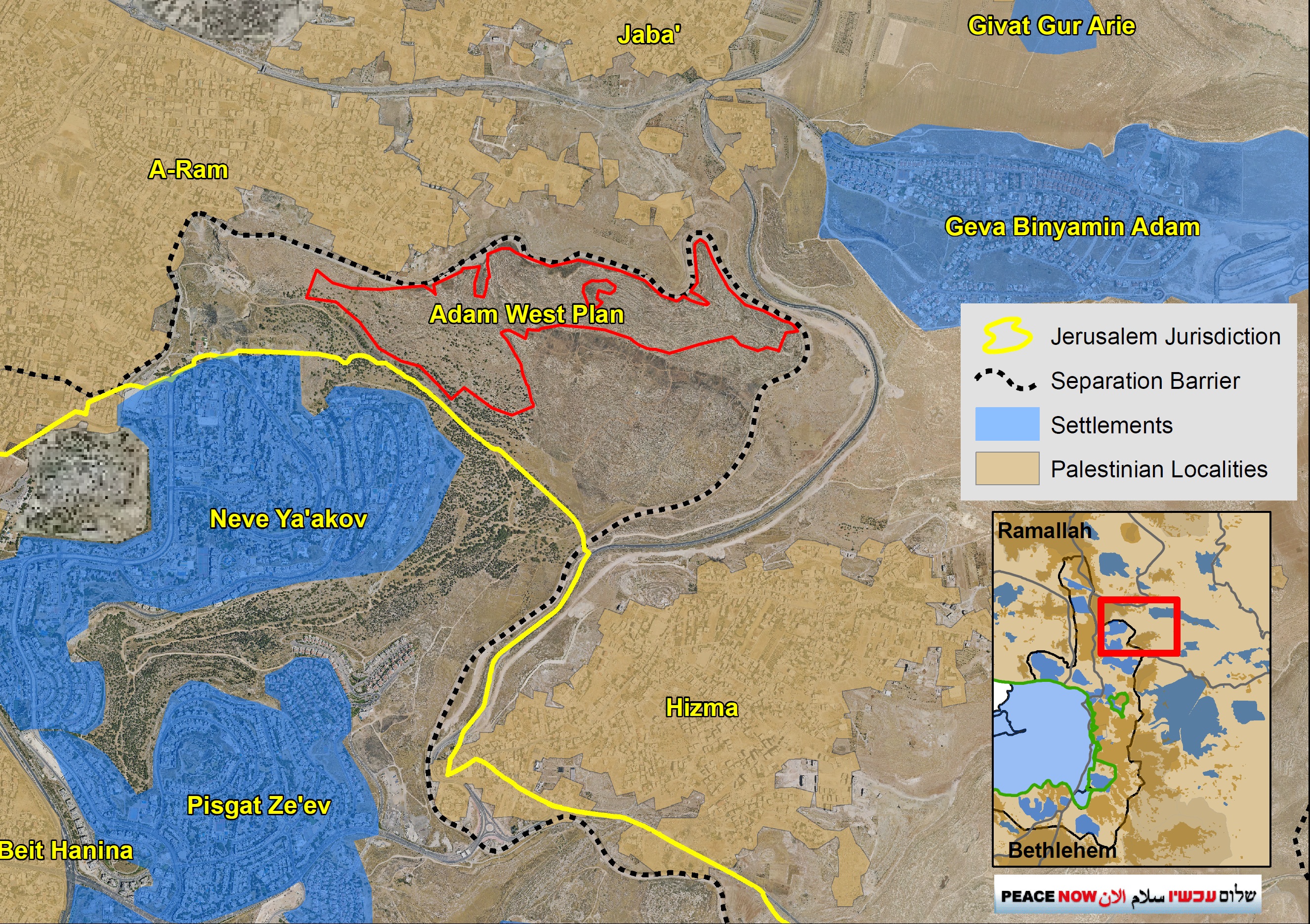 Peace Now reports that Israel is advancing a plan that will, for the first time since 1967, effectively expand the borders of Jerusalem into the West Bank by building a new “neighborhood” or the Adam settlement. The plan to build a 6,000 unit new “neighborhood” of the Adam settlement is nothing but a run-around attempt to expand the East Jerusalem settlement of Neve Ya’akov onto West Bank land. While the Adam settlement is on the West Bank side of the Israeli Separation Barrier, the new “neighborhood” is planned for land on the Israeli side of the Barrier, closer to and more functionally a part of the Neve Yaakov settlement in East Jerusalem, rather than the Adam settlement under which the plan is being put forth. Peace Now reports that, in order to accomplish the same goal with less hassle and criticism, the construction is being framed as an expansion of a Wset Bank settlement towards Jerusalem rather than the expansion of an East Jerusalem settlement into the West Bank (i.e. annexation of West Bank land).
Peace Now explained in a statement:
“This is the first time since 1967 that Jerusalem is being expanded into the West Bank. Under the guise establishing a new settlement, the government is carrying out de facto annexation through the back door. The new settlement will function in every way as a neighborhood of Jerusalem, and its designation as a “neighborhood” of the Adam settlement is merely a pretext intended to conceal a move that effectively applies Israeli sovereignty to areas of the West Bank.”
The plan has been submitted to the Higher Planning Council and can be scheduled for discussions at any time. The government clearly supports the plan, as just one week ago the Israeli Ministry of Construction and Housing signed a development agreement with the Adam settlement which committed government funding forth te construction of the new neighborhood.
More East Jerusalem News & Analysis
- “The Palestinians stuck in the no-man’s-land of Jerusalem and the Israeli settlement plan to expel them” (Mondoweiss, 2/19/2026)
- “Ahead of Ramadan: New Policy Paper on Escalating Israeli Policy at Al-Aqsa and Growing Harm to Muslim Freedom of Worship” (Ir Amim, 2/16/2026)
WEST BANK
Settlers Takeover Five Homes in Hebron
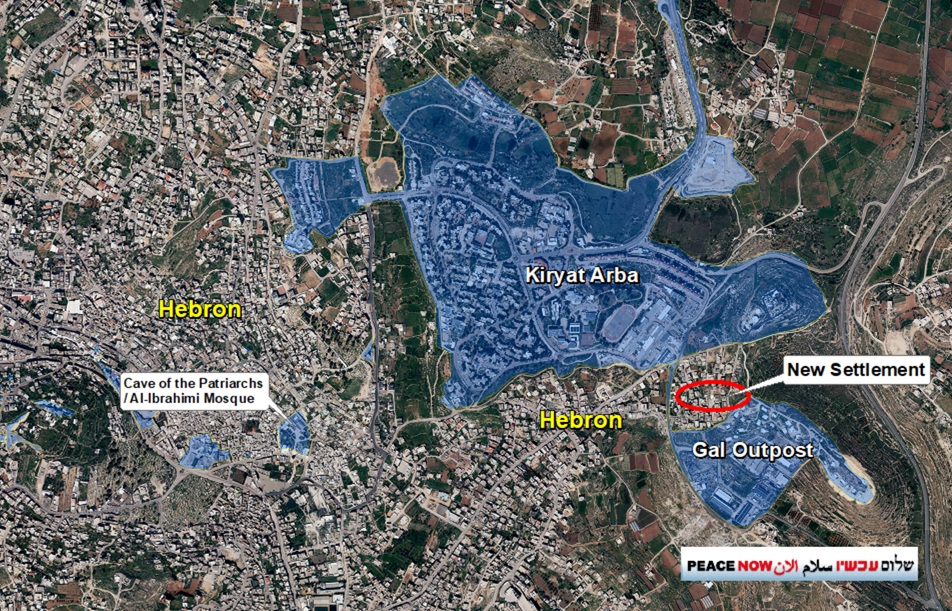 Peace Now reports that settlers have taken over five homes in Hebron, claiming to have purchased them, effectively establishing new settlement enclaves in the Jabal Jalles neighborhood of Hebron. In advance of the settlers’ entrance into the homes, the IDF carried out an arrest operation in the Jabal Jalles neighborhood.
Peace Now said in a statement:
“We are seeing here an alarming example of the consequences of the government’s new policy regarding land purchases in the West Bank. A handful of real estate–hungry settlers will in the future be able to determine many more such facts on the ground, with far-reaching political and security implications. This is what annexation looks like!”
More West Bank News & Analysis
- “Israel’s new separation wall will sever Jordan Valley from rest of West Bank” (+972 Magazine, 2/16/2026). Also see:
- “Palestinians see Israel’s new West Bank security wall cutting off their farmland” (NPR, 2/18/2026)
- “Smotrich: Next government should ‘encourage migration’ of West Bank Palestinians” (The Times of Israel, 2/18/2026)
- “Palestinians see Israel’s new West Bank security wall cutting off their farmland” (NPR, 2/18/2026)
- “Exclusive: Judea, Samaria Jewish population grew at twice Israel’s overall rate in 2025” (JNS, 2/20/2026)
- “’Apartheid now exists’: In the West Bank, new Israeli regulations stoke Palestinian fears of annexation” (NBC News, 2/18/2026)
- “Israel’s annexation drive has sped up – because the world allows it” (Middle East Eye, 2/18/2026)
- “Meet the settlers of Instagram, the photogenic West Bank women documenting pastoral life” (The Times of Israel, 2/15/2026)
- “Settler to Be Prosecuted for Fatal Shooting of Palestinian Activist in West Bank” (Haaretez, 2/15/2026)
GAZA
MK Joins Settlers in Breaching Gaza Fence
One far-right Israeli MK joined the Nahala settler movement in its latest organized breach of the Gaza fence, a repeated act that is intended to continue pressuring the government to reestablish Israeli civilian settlements in Gaza. MK Limor Son Har-Melech joined a group of a dozen or so settlers in crossing the fence to plant trees, saying: “Gaza will always be ours.” The IDF removed the settlers from Gaza, and issued a statement condemning the group for risking the safety of its members and the IDF.
SETTLER TERRORISM
Settlers, IDF Raid Mukhmas, Shoot/Kill Palestinian American Teen
A group of 30 masked settlers were accompanied by IDF troops during a violent raid on the Palestinian village of Mukhmas. The settlers stole 380 head of livestock and when Palestinians tried to prevent the theft, settlers attacked – shooting and killing one Palestinian, 19-year old Nasrallah Abu Siam who held American citizenship, and wounding many more. Despite IDF presence, there have been zero reports of arrests.
The Palestinian village of Mukhmas has come under intense settler violence over the past several weeks, with repeated and increasingly violent settler attacks.
News & Analysis on State-Backed Settler Terrorism
- “10 settler rabbis warn against ‘violence of any sort,’ amid attacks on Palestinians” (The Times of Israel, 2/17/2026)
- “Humanitarian Situation Update #358 | West Bank” (OCHA OPT, 2/19/2026)
- “If an Outpost Isn’t ‘Illegal’ in the Eyes of an Israeli, Does the Crime Even Exist?” (Haaretz, 2/20/2026)
Welcome to FMEP’s Weekly Settlement & Annexation Report. To subscribe to this report, please click here.
February 13, 2026
- ANNEXATION: Cabinet Approves Annexation, Gov’t OKs “West Bank Heritage Authority”
- EAST JERUSALEM: Demolitions in al-Bustan
- WEST BANK SETTLEMENTS & OUTPOSTS: Settlers Bulldoze Houses, Land Seizure Near Qalqilya for New Settlement
- SETTLER & STATE TERRORISM: 54 Injured in Wave of Attacks
- BONUS READS
ANNEXATION
Cabinet Announces Sweeping Annexation Moves
On February 8th, the Israeli Security Cabinet approved seven new measures that result in the annexation of the entire West Bank, stripping powers from the Palestinian Authority and paving the way for massive settlement expansion and the continued ethnic cleansing of Palestinians from all areas of the West Bank. With the Security Cabinet decisions made and support from the Attorney General, the Israeli military is expected to quickly issue military orders duplicating the decisions in order for them to be a matter of law in the West Bank. In announcing the decisions, Israeli Ministers Katz and Smotrich issued a joint statement saying the moves are intended:
“to remove decades-old barriers, repeal discriminatory Jordanian legislation, and enable accelerated development of settlement on the ground,” the two ministers said in a joint statement.”
The seven significant acts of annexation are:
- LEGALIZING SETTLER LAND PURCHASES – The Cabinet decided to repeal a Jordanian-era law that restricted the sale of land in the West Bank to the local Palestinian population (individuals and companies), effectively legalizing the sale of West Bank land to Israelis. Now, settlers will be able to purchase land anywhere in the West Bank including in major Palestinian cities – possibly creating new enclaves that bring Israeli security installments with it, a reality that has transformed Hebron into an apartheid dystopia.
- REMOVING KEY OVERSIGHT OF LAND PURCHASES – The Security Cabinet repealed a law that requires individuals to obtain a special land purchase “transaction permit” from the Israeli Civil Administration, a law that was aimed at establishing oversight on to stem fraudulent claims of land purchases, which offered Palestinians some level of protection.
- PUBLISHING THE LAND REGISTRY – The Cabinet approved the publication of the West Bank land registry, something the settlement movement has pushed for in order to be able to identify landowners in all areas of the West Bank and approach them for purchase, which – with the repeal of the ban on the sale of land to non-Arabs – settlers can now do outright. Opening the land registry will help facilitate settler claims over disputed and/or unregistered lands, making Palestinians vulnerable to further settler harassment regarding the sale of land.
- REVIVING A “STATE LAND ACQUISITION COMMITTEE” – The Cabinet revived a “state land” acquisition committee to expand settlements. The revival of the committee is meant to facilitate the proactive government purchases of West Bank land for the purpose of settlement expansion and “to secure land reserves for settlement for generations to come.”
- EXTENDING ISRAELI CONTROL TO AREAS A & B – The Cabinet extended Israeli oversight and enforcement in Areas A & B with regard to water issues, archaeological sites, and environmental concerns. This means that the Israeli military will be able to demolish Palestinian homes and property if it determines the Palestinian presence interferes with the concerns under their purview – water, archaeology, and environment. Now, Areas A & B will be subject to the same weaponization of the planning code that is currently being used by the Civil Administration to clear Palestinians
- SEIZING HERITAGE SITE IN BETHLEHEM – The Cabinet voted to create a new municipal body to take control over the Rachel’s Tomb religious site, located within the municipal boundaries of Bethlehem. Seizing control over the site will allow the Israeli government to allocate state funds to renovating the site as well as a Jewish yeshiva next to it. Rachel’s Tomb is located just close to the heart of the city of Bethlehem, and with Israeli settlers in control over the space Mondoweiss reports that area is likely to be developed into a new settler enclave.
- SEIZING PLANNING POWERS IN HEBRON – The Security Cabinet stripped planning and building authorities from the Palestinian Municipal Authority in Hebron and transferred it to the Israeli Civil Administration. Now, the Israeli military will exercise full control over settlement construction and planning for the Cave of the Patriarchs/Il-Ibrahimi Mosque.
Finance Minister Smotrich celebrated, saying:
“We are deepening our roots in all parts of the Land of Israel and burying the idea of a Palestinian state.”
The settlement Yesha Council, which oversees all settler municipalities, said in a statement:
“The government of Israel announced today, in practice, that the Land of Israel belongs to the Nation of Israel,” the council said, adding that the decisions “rectified an injustice of many years and are entrenching Israeli sovereignty on the ground, de facto.”
Peace Now said in a statement:
“Netanyahu promised to topple Hamas in Gaza, but in practice he chose to topple the Palestinian Authority, cancel agreements that Israel signed, and impose de facto annexation on us—completely against the will of the public, Israel’s interests, and the clear position of President Trump. The cabinet’s decision shows that this is not about deepening annexation in Area C, but about dangerous and irresponsible sovereignty measures also in Areas A and B, and about breaking every possible barrier on the path to massive land theft in the West Bank. This is an extreme and irresponsible government dragging us toward disaster. All democratic forces in Israel must act now, in every possible way, to stop this!””
Palestinian analyst Nour Odeh warns:
“These Israeli decisions are not administrative or bureaucratic. They’re transformative. The only logical next steps would be dismantling Palestinian political representation & mass ethnic cleansing. The only remaining obstacle to greater Israel are the remaining Palestinians.”
Government Endorses Bill to Establish West Bank Heritage Authority
On February 8th, in addition to the seven decisions to annex the West Bank as described above the Ministerial Committee on Legislation decided to throw the governing coalition’s support behind a bill in the Knesset that create a statutory body within the Israeli government that would exercise broad authority over heritage sites in “the area” of the West Bank — an act of de facto annexation.
Emek Shaveh, Peace Now, and the Geneva Initiative highlight that, if passed, this would be the first instance of Israel applying domestic Israeli law to territory (land) rather than persons (settlers) in the West Bank. The coalition further warns that the bill does not currently provide a definition of what area the new body would have jurisdiction over, as Emek Shaveh details in its latest update:
“Previous iterations of the bill explicitly stated the intention to bring antiquities sites in Areas A, B and C under the Authority’s jurisdiction, and even included an express reference to extending its jurisdiction to Gaza. In the current version of the bill, however, following a closed-door committee session, all references to Areas A, B, C and Gaza were removed, and the question of defining the territorial scope of “the Area” was deferred to a committee discussion after the bill’s first reading in the plenum. Nevertheless, yesterday’s cabinet decision may render any future discussion concerning the definition of “the Area” in the bill redundant, as the legislation provides for the transfer of all powers and responsibilities currently vested in the Staff Officer for Archaeology within the Civil Administration (ICA) to the new statutory authority (see section 2 in annex 1 below).
Taken together, these developments constitute a fundamental turning point. Empowering an Israeli civilian authority to carry out enforcement measures, expropriations, and excavations deep inside Palestinian Authority Areas B and A effectively dismantles the framework established under the Oslo II Accords. Under that framework, responsibility for antiquities and archaeological sites in Areas A and B rests with the Palestinian Authority’s Ministry of Tourism and Antiquities, which operates pursuant to the Palestinian Authority’s Antiquities Law of 2018.”
EAST JERUSALEM
Large Scale Demolitions in al-Bustan, Silwan
Peace Now reports the Israeli government carried out extensive demolitions in the al-Bustan area of Silwan. The municipality destroyed walls between houses, a construction supply business site, and a parking structure. The demolition notices were delivered just minutes before the bulldozers arrived, depriving Palestinians of the chance to challenge the actions and/or remedy the issues cited on the notices. Residents filed an emergency injunction, and the Jerusalem District Court issued an injunction stopping the demolitions after three hours. While no homes were demolished in this instance, Israel recently issued demolition notices to 15 Palestinian homes in al-Bustan.
Peace Now explains how these demolitions are a part of a much larger scheme to replace Palestinians with Israeli settlers and tourist attractions which erase Palestinian heritage:
“Since the demolition of the Mughrabi Quarter in 1967 to make way for the Western Wall Plaza, Israel has not carried out the expulsion of an entire neighborhood. Now, the municipality, backed by the government and the police, is advancing the displacement of a whole neighborhood in order to establish a tourist-settlement park. This policy, which on the one hand virtually prevents Palestinians in Jerusalem from building homes and on the other hand demolishes their houses, is a cruel, settlement-driven policy with no limits. For years Israel has claimed that Jerusalem is a ‘united’ city, but its policy toward the Palestinian population shows that this is not ‘unity,’ but occupation.”
WEST BANK SETTLEMENTS & OUTPOSTS
Settlers Bulldoze 15 Palestinian Homes Near Jericho
Haaretz reports a group of about 30 settlers accompanied by IDF protection arrived in the village of Ein a-Duyuk a-Tahta, located near the Hasmonean Palaces antiquity site near Jericho, and proceeded to attack Palestinian residents and bulldoze 20 structures, including 15 homes. The IDF told Haaretz that the demolitions were not carried out by Israeli authorities (though eye witnesses said IDF troops were on site the whole time providing security), and said that the IDF is opening an investigation into the incident.
Israeli Heritage Minister Amichay Eliyahu said during a live video posted on X:
“We will destroy any [home] built on Jewish people’s heritage. We will return here, pave roads and make the place flourish. “We do not apologize for holding onto our land. Through hard work and the investment of millions, we are reclaiming our heritage sites and deepening our historical hold on the land of our forefathers for the sake of our children’s future…Here at the Hasmonean Palaces in Jericho, the gateway to the Land of Israel, we are raising the flag of our sovereignty.”
Israel Seizes Land Near Qalqilya
Peace Now reported that in early January 2026 the Civil Administration declared 694 dunams adjacent to the Wadi Qana nature reserve (east of Qalqilya in the central West Bank) as “state land.” The seizure, along with the purchase of land near the area by an Israeli developer, appears to indicate a new settlement, called “Dorot”, is being planned for the area.
Peace Now explains:
“In 2020, an outpost known as Nahal Qana Farm (sometimes referred to as “Dorot Farm”) was established in the area and began exerting pressure on nearby Palestinian residents and farmers. Those operating the farm grazed cattle inside Palestinian orchards and cultivated fields and forcibly prevented Palestinians from accessing hundreds of dunams in the vicinity of the outpost.
In recent years, private developers have begun marketing building plots to the public for a future city called “Dorot Illit,” intended for the ultra-Orthodox community, despite the absence of a government decision to establish a settlement in the area or an approved construction plan. As part of the land marketing, the development company presents a rendering of the planned settlement that includes all nearby Israeli settlements, while the surrounding Palestinian villages are effectively erased and are absent from the promotional materials.
It has now emerged that the government is joining the settlement planning effort: the Civil Administration has labeled the land declaration adjacent to the developers’ holdings as “Dorot.” This is not the first settlement to be established at the initiative of private developers claiming to have purchased land from Palestinians. In February 2023, the government formally approved the establishment of the settlement of Mishmar Yehuda, where state land was likewise designated adjacent to plots acquired by developers. Other settlements established in a similar manner in the past include Modi’in Illit, Revava, Avnei Hefetz and others.”
STATE-BACKED SETTLER TERRORISM
Mass Attack Leaves 54 Wounded
On Friday February 13th settlers and Israeli troops carried out a wave of attacks on Palestinians concentrated in the area south of Nablus but extending across the West Bank, leaving at least 54 wounded.
Al Jazeera reports the following attacks:
- Settlers fired live ammunition and tear gas at Palestinians near Talfit and Qusra, south of Nablus, shooting at least one man.
- Settlers stormed the Khillet as-Sadrah gathering near the town of Mikhmas, northeast of occupied Jerusalem.
- Near Ramallah in Turmus Aya, settlers cut down roughly 300 olive trees and bulldozed agricultural land, while military forces raided homes in the village and arrested multiple people.
- In the same area, the military stormed Deir Ghassaneh and Beit Rima, while forces also descended upon several towns near Jenin, including Jaba, Siris and Meithalun.
- In the Jordan Valley, settlers set fire to a building
In West Bank, Israel’s Goal is Expulsion
Israeli government policy facilitates and augments the continued settler terrorism that is resulting in the mass expulsion of Palestinians from the West Bank – a reality that is now regularly in the headlines. Now, the Israeli Shin Bet is criticizing the Israeli Police’s refusal to allocate needed police force to confront the rampant settler terrorism that is only escalating as settlers face zero consequences to their violent criminality.
Haaretz columnist Amira Hass writes in the West Bank:
“Israel has only one goal: not maintaining quiet but fomenting military and socioeconomic explosions that will encourage emigration or allow a forcible population transfer. The line separating expulsions from mass slaughter is thin to the point of invisibility, as the army has taught us in Gaza. This isn’t a prophecy but another desperate cry for the world to wake up.”
BONUS READS
- “2 settler activists cross into Lebanon to plant trees, are returned to Israel by IDF” (The Times of Israel, 2/12/2026)
- “PODCAST: Documenting the settler takeover of the West Bank” (+972 Magazine, 2/13/2026)
- “PODCAST: Entire Communities Fled: ‘The West Bank’s Area C Is Almost Completely Ethnically Cleansed‘” (Haaretz, 2/11/2026)
- “Bezalel Smotrich’s long struggle to annex the West Bank for Israel” (Al Jazeera, 2/12/2026)
- “Israel Escalates its Settlement Expansion in the Heart of a UNESCO World Heritage Site in Bethlehem: Battir” (Balasan Initiative, 2/5/2026)
- “Settlers Violence Doesn’t End With Palestinians in the West Bank” (Haaretz, 2/13/2026)
Welcome to FMEP’s Weekly Settlement Report, covering everything you need to know about Israeli settlement and annexation activity this week.
To subscribe to this report, please click here.
January 17, 2025
- Settlement Advancement Continue on Weekly Basis
- Judge Rules on Five Cases, All in Favor of Settlers Claims in Batan al-Hawa
- New Bimkom-Ir Amim Report: Planning in East Jerusalem Completely Halted by New Protocol
- New Data Confirms: Settlers Face Virtually NO Accountability for Crimes Against Palestinians & Their Property
- Al-Haq and Partners File Additional Info on Booking.Com Settlement Business
- Trump Invites Settler Leaders to Attend Inauguration
- Bonus Reads
Settlement Advancement Continue on Weekly Basis
Peace Now reports the High Planning Council was scheduled to convene on January 15th to advance plans for 372 new settlement units, all planned for the Beitar Illit settlement. This is the seventh week in a row the HPC has met to approve settlement construction.
The HPC is scheduled to meet again next week, on January 22nd, for the eighth consecutive week. At that meeting, the HPC is expected to give final approval to a plan for the construction of 184 new settlement units in the Migdalim settlement.
Peace Now writes:
“Since the current Netanyahu government took office, record numbers of housing units have been advanced in the West Bank. In 2023, the HPC approved 12,349 housing units—a record high. In 2024, 9,884 housing units were approved. The transition to weekly planning approvals is the result of policy changes introduced by the Netanyahu-Smotrich government. One key decision, made in June 2023, abolished the requirement for the Defense Minister’s approval at every stage of advancing settlement plans. Previously, settlement construction plans required prior approval from the Defense Minister. In recent years, the Defense Minister limited settlement planning sessions to approximately four times a year, resulting in the approval of thousands of units in each session.
In recent weeks, however, a significant change has occurred, with the HPC convening every week to approve a few hundred housing units in each meeting. This systematic approach aims to normalize settlement planning and attract less public and international attention and criticism.”
Judge Rules on Five Cases, All in Favor of Settlers Claims in Batan al-Hawa
Peace Now reports that the Jerusalem Magistrate’s Court has ruled in favor of Israeli settlers in four cases (with a fifth ruling expected soon), resulting in the impending eviction of Palestinians from their longtime homes in the Batan al-Hawa section of the Silwan neighborhood in East Jerusalem in favor of the settlers. The five cases will result in 27 Palestinian families (131 individuals, mostly children) being forcibly displaced from their homes. The Court gave the families a six month deadline.
 The Court’s ruling accepts settlers’ claim to own the land on which the Palestinians’ homes are located, homes which the Court recognized were legally purchased by Palestinians in the 1960s. Regardless of the validity of the home ownership, the Court recognized the settler’s ownership of the land under a discriminatory Israeli law that allows Jews to “reclaim” property and land that was owned by Jews prior to 1948. This law is being used by settlers to achieve mass displacement of Palestinians across East Jerusalem.
Peace Now writes:
“This is an injustice and a crime against a vulnerable population living under occupation in East Jerusalem. The dispossession of Palestinians from their homes in Silwan, enabled by the application of the Jewish ‘right of return,’ represents an indelible stain on the State of Israel. The Israeli judicial system has failed to protect the fundamental rights of Palestinians to their homes, effectively endorsing the racist and messianic policies of the current Israeli government. A responsible government would halt the forced expulsions of this community. Tragically, our government demonstrates anything but responsibility in any regard. The International Court of Justice has explicitly addressed the discriminatory legal framework and Israel’s settlement policy in East Jerusalem in its advisory opinion, declaring these practices a violation of international law.”
Ir Amim writes:
“Since the outbreak of the war, there has been a dramatic spike in the number of court decisions authorizing evictions of Palestinian families in favor of settler groups. Over the past several months, the courts have ruled to evict a total of 17 families (households), numbering some 100 individuals–the majority of whom are from Batan al-Hawa.”
New Bimkom-Ir Amim Report: Planning in East Jerusalem Completely Halted by New Protocol
Ir Amim and Bimkom have released a new report examining the recent intensification of Israel systematical denial of the ability for Palestinians to plan for construction in East Jerusalem. In 2023 Israel replaced the traditional “Muktar Protocol” with a new process which has resulted in a near total freeze on planning for Palestinians on unregistered private property.
The report explains:
“In comparison to the “Mukhtar Protocol,” the new protocol has had a detrimental impact on private residential planning (and building) in East Jerusalem4. According to the new protocol, planning and building submissions are required to include Jordanian property tax certificates from the early 1960s or earlier (or Israeli property tax until the year 2000) along with records detailing the historical chain of ownership up to the present. These requirements, usually demanded only as part of SOLT procedures– which are problematic in themselves– are new to the planning process. Additionally, the new protocol requires that the District Planning Bureau approach state authorities, such as the Custodian of Absentee Property (CAP), the General Custodian (GC), the Israel Land Authority (ILA), the Municipality, and the SOLT registrar to check whether they have claims on the same land. In the past, the SOLT registrar was not on this list, and the Planning Bureau often did not wait for responses from the other entities to proceed.
Now, the SOLT registrar has been in effect given the right of veto within the planning process. The added requirements present East Jerusalem Palestinians with two difficulties – a bureaucratic and a fundamental one. The bureaucratic difficulty is related to the challenge of obtaining the necessary documents. The fundamental difficulty is the real danger of losing land under the Absentee Property Law, which is applied through the new protocol, as it is via SOLT.”
New Data Confirms: Settlers Face Virtually NO Accountability for Crimes Against Palestinians & Their Property
Yesh Din’s newly updated tracking shows that 94% of criminal investigations into ideological offenses committed by Israelis against Palestinians in the West Bank in the past 20 years have been closed without indictments. Further, Yesh Din has found insufficient investigations into 81% of the cases, displaying “a longstanding systemic and deliberate failure in law enforcement responses to ideologically motivated crime against Palestinians in the West Bank.”
Yesh Din further explains that the larger context of this data paints an even more dire picture. They find 66% of Palestinian victims chose not to file complaints against Israeli offenders at all – meaning the data does not tell the full story. Palestinians victims of Israeli violence routinely cite a lack of faith in the Israel Police and trust that the Israeli authorities in their decision not to file a complaint.
The picture is clear: violence is a policy. Settler violence is part of a systematic approach aimed at expanding control over West Bank territory by making Palestinian lives unbearable and pushing them off their lands.
Yesh Din writes:
“This reflects the ongoing failure of Israeli authorities to enforce the law against Israeli citizens who commit serious crimes against Palestinians and their property. For two decades, we have monitored this phenomenon and provided legal assistance to Palestinian victims. The new data underscores the lack of deterrence and the lenient policies of Israeli law enforcement toward ideological crimes. Most investigations are closed on grounds such as “unknown perpetrator” or “lack of evidence,” highlighting negligent and ineffective investigations. Only 3% of cases resulted in convictions, giving offenders a sense of immunity from accountability for their actions while Palestinians whose rights are violated remain unprotected by the law.”
Al-Haq and Partners File Additional Info on Booking.Com Settlement Business
Al-Haq and partners have filed additional evidence against Booking.com accusing the travel company of profiting from stolen land through its decision to promote rentals located in settlements in East Jerusalem and the West Bank. The new evidence, which was submitted to a court in the Netherlands where the case was filed in 2023, accuses Booking.com of adding to the number of listings it hosts in settlements – from 13 rentals to 39 rentals in East Jerusalem over the past year.
The complainants write:
“In our complaint, we argue that by promoting and listing properties in illegal settlements, Booking.com directly supports the normalisation and economic sustainability of these unlawful practices. The company provides financial backing to settlers and their enterprises, furthering the displacement of Palestinians and solidifying settlement expansion. This conduct sustains Israel’s settler-colonial regime and violations of international law, including the Fourth Geneva Convention, which prohibits population transfer into occupied territories. We have substantiated our claims thoroughly. For instance, the additional evidence builds on the July 2024 Advisory Opinion of the International Court of Justice, which reaffirmed the illegality of Israeli settlements and underscored the responsibility of states to prevent economic activities that perpetuate them.”
Trump Invites Settler Leaders to Attend Inauguration
Settlers leaders from the powerful Yesha Council are gleefully celebrating their invitation to attend the inauguration of Donald Trump, who is being sworn into office on January 20th. Yesha Council Chairman and Binyamin Regional Council Head Israel Ganz, Samaria Regional Council Head Yossi Dagan, Oranit Council Head Or Piron-Zomer, and Yesha Council CEO Omer Rahamim all plan to attend as official guests.
The Times of Israel reports the delegation plans to deliver a letter thanking Trump for “redeeming” Jerusalem and recognizing Israel’s annexation of the Golan Heights during his previous presidency.
Speaking about the delegations plans, a Yesha Council official told Israel Hayom:
“Our objective is to strengthen existing connections and forge new ones. Washington’s attention is elsewhere at present. Trump is focused on Greenland sovereignty matters, not Israel’s concerns in Judea and Samaria. Timing is crucial. We must proceed strategically and appropriately.”
In a statement to Israel Hayom, Yesha Council Chairman Israel Ganz said:
“We represent Judea and Samaria residents in standing with our allies and President-elect Trump at this historic moment. The administration’s invitation reflects our shared Biblical values with the US. We face a common moral challenge against global threats, with Judea and Samaria settlements serving as the frontline defense for Israel, America, and the free world. We envision achieving transformative progress that will ensure global stability for generations, and we support Trump’s leadership in this endeavor. Our ongoing dialogue with senior administration officials continues to advance these goals.”
Samaria Regional Council Head Yossi Dagan told Israel Hayom:
“Our delegation brings the blessing of the communities in Judea and Samaria to the new administration. Years of relationship-building with our newly elected American friends have created this pivotal opportunity for Israel, particularly its government, to achieve significant advances in strengthening our presence in the Land of Israel. Our unified approach underscores the importance of maintaining strong ties with the incoming American administration and bolstering support for the communities in Judea and Samaria, both internationally and among US Jewish communities.”
Bonus Reads
- “Defense Chief Cancels Detention Without Trial for Settlers Ahead of ‘Terrorists’ Release in Gaza Hostage Deal” (Haaretz)
- “Humanitarian Situation Update #256 | West Bank” (OCHA)
- “Israeli minister asks PM to back plan for a million Jews in Samaria” (JNS)
Welcome to FMEP’s Weekly Settlement Report, covering everything you need to know about Israeli settlement activity this week.
To subscribe to this report, please click here.
July 14, 2023
- Settlers Move In After Israel Forcibly Evicts Ghaith-Sub Laban Family
- Israel Starts Planning New East Jerusalem Settlement Enclave Via Weaponization of the Land Registration Process
- Settlers Takeover Another Palestinian Home on Shuhada Street in Hebron, Potentially with IDF Help
- Settlers Lead State-Backed Archaeological “Excavation” in Area B
- Government Admits it Deliberately Permitted Illegal Construction at Homesh Outpost
- Bonus Reads
Settlers Move In After Israel Forcibly Evicts Ghaith-Sub Laban Family
On the early morning of July 11th, a large contingent of Israeli police arrived at the home of Nora Ghaith and Mustafa Sub Laban to forcibly remove the elderly couple from their apartment in the Muslim Quarter of the Old City of Jerusalem. The apartment was handed over to settlers, who moved in as soon as the Ghaith-Sub Labans were removed.
Twelve human rights activists were arrested by Israeli police during protests held in solidarity with the Gaith-Sub Laban family. The eviction was widely panned by the international community.
The Ghaith-Sub Laban family has spent more than 45 years in a legal battle against settlers (and the State) over their home in the Muslim Quarter of the Old City of Jerusalem. This family’s story is not unique, and the broader, systemic processes behind the forcible dispossession of Palestinians in Jerusalem is also discussed. In March 2023, FMEP hosted Rafat Sub Laban and Ir Amim’s Amy Cohen on a podcast – “‘We Are Determined to Stay”: One Palestinian Family’s Story of Dispossession in Jerusalem” – to discuss the Sub Laban case and how it relates to broader State-back settler efforts to dispossess Palestinians across Jerusalem.
Ir Amim explains the Israeli legal system which aids settlers in taking possession of Palestinian properties across East Jerusalem, including the Sub Laban home:
“… lawsuits were filed by settler groups on the basis of the 1970 Legal and Administrative Matters law. This discriminatory law exclusively affords Jews with land restitution rights for assets allegedly owned by Jews in East Jerusalem prior to 1948 despite many of these properties now inhabited by Palestinian refugees. No parallel legal mechanism exists for Palestinians to recover pre-1948 assets on the Israeli side of the Green Line now inhabited by Jews. To the contrary, the 1950 Absentee Property Law enshrines that Palestinians who were forced to abandon their homes in what became Israel due to the war of 1948 cannot retrieve them.
Settler organizations aided by state bodies act to secure ownership rights of these assets through various means despite having no relation to the previous Jewish owners or occupants. Acquisition of these rights provides settler groups with the legal platform to then “retrieve” the property from the General Custodian and initiate eviction lawsuits against Palestinian families through application of the 1970 law.
A department within the Ministry of Justice, the General Custodian is the Israeli body responsible for managing pre-1948 Jewish assets in East Jerusalem until “reclaimed.” It should be noted that the General Custodian has become one of the leading state institutions who works in cooperation with settler groups to facilitate evictions of Palestinians and seizure of their homes in East Jerusalem. Many of the families facing eviction are Palestinian refugees who lost homes on the Israeli side of the Green Line in 1948 and now stand to be displaced for a second or even third time.”
For a comprehensive overview of the Sub Laban family’s legal battle, as well as other East Jerusalem eviction cases, please see Ir Amim’s report.
Israel Starts Planning New East Jerusalem Settlement Enclave Via Weaponization of the Land Registration Process
Ir Amim and Bimkom report that Israel has initiated the planning process on a new settlement enclave in the Umm Lysoon neighborhood in East Jerusalem, and in order to facilitate the new enclave the State is simultaneously carrying out land registration for the land where the enclave will be built. The plans for the settlement enclave call for the construction of 450 settlement units, on an open piece of land between Umm Lysoon and the adjacent neighborhood of Jabal Mukkhaber, one of the only open land reserves in the area where Palestinians face a severe housing Crisis. Unsurprisingly, some of the same settlers who are pushing the Umm Lysoon plan not only live in Jabal Al-Mukaver, but have already succeeded in massively expanding the Nof Zion/Nof Zahaf settler enclave in that neighborhood.
 The plan for the new Umm Lysoon enclave hinges on the settlers’ work with the State to transfer ownership of the land into the hands of settlers using the land registration process – – which Ir Amim and Bimkom have shown to be a politically-driven tool used by the State to fuel the expansion of settlements across the city.
The land where the new enclave is being planned for has been managed by the Israeli Custodian General, the State body which acts as a caretaker for property abandoned by Israeli Jews as a result of the 1948 war, with the idea that the property will be returned to its original owners. Settlers have worked with the state to secure ownership rights to East Jerusalem land despite having no relation to the previous Jewish owners. Such is the case with the Umm Lysoon land, where the Israeli Custodian General is submitting the plans (even though it does not own the land, just manages it) for the new enclave alongside Topodia LTD, a settler-linked construction company. Topodia managed to acquire ownership of a very small percentage of the land within the enclaves planned borders, but the planning requires the willing participation of the Israeli Custodian General.
The plan for Umm Lysoon is the third settlement plan in the last 1.5 years that has been promoted not only on lands managed by the General Custodian, but also with its direct involvement – the others being the Givat HaShaked and Kidmat Zion settlement plans.
Ir Amim and Bimkom write:
“If constructed, it would constitute a major settlement within the heart of Umm Lysoon, which until now has remained untouched from the threat of setter presence or encroachment. As with other East Jerusalem neighborhoods, Umm Lysoon continues to suffer from a severe shortage in housing, public buildings, infrastructure, and basic services. Instead of promoting residential development and urban planning to meet the needs of local residents, the plan is rather being advanced to establish a new Jewish settlement inside a Palestinian neighborhood on land marked in policy documents for the community’s development.”
Settlers Takeover Another Palestinian Home on Shuhada Street in Hebron, Potentially with IDF Help
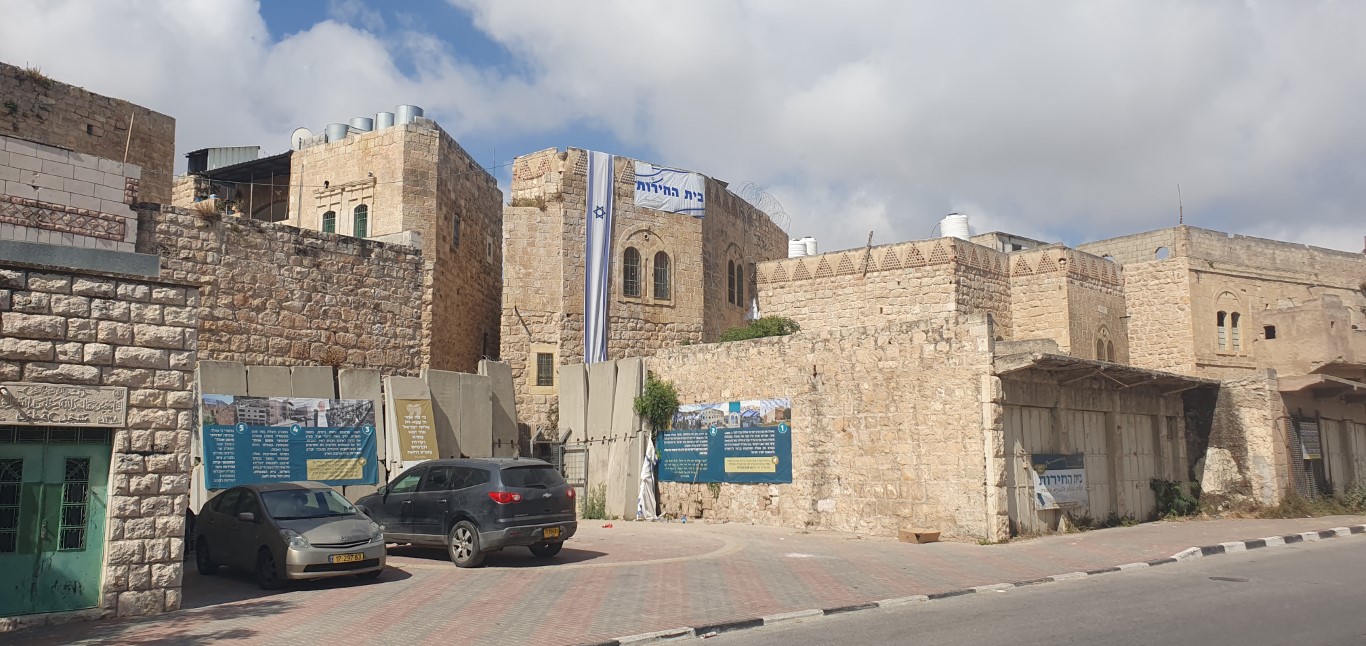 Peace Now reports that settlers have illegally moved into a Palestinian-owned property in the heart of Hebron on Shuhada Street, just south of the Cave of the Patriarchs, in an area of downtown Hebron where no other Israeli settlers live. The settlers appear to have accessed the home, which until recently was blockaded by concrete barriers, with the assistance of the IDF and further claim to have purchased the home. This location – and the alleged purchase of the home – is hugely significant both on the ground and in the Israeli government’s brazen support facilitation of settlement expansion, as explained by Peace Now:
“Hebron is perhaps the most scattered city in the West Bank. Any change in ownership of a store, courtyard, and especially a structure means establishing a new settlement in the city. Many houses and properties in the part of the city controlled by Israel have remained vacant and abandoned over the past decades and serve as a target for settlers’ takeover. Until recently, approvals for the settlement of new houses by the settlers required the approval of the Minister of Defense and the Prime Minister. As part of the transfer of civilian authority to Bezalel Smotrich, it was decided that in Hebron, the approval of settlement would be in the hands of Smotrich in coordination with Minister Yoav Gallant. The settlers’ entry into the house openly indicates that both ministers agreed to establish the new settlement. The new settlement is located on Shuhada Street (the settlers changed its name to King David Street), between the Pool of Siloam and the neighborhood of Avraham Avinu. This is an area populated by Palestinians and far from the existing settlements in the city. The new settlement is, in fact, an entry into a new area in the city.”
Years ago, the IDF installed concrete barriers preventing anyone from accessing the house, and evicted settlers from the home last year when they used a ladder to climb over the barriers. Those concrete barriers were recently removed (which can only be done with heavy equipment), suggesting that the IDF is planed to allow the settlers to enter (and likely remain) in the house.
The home is owned by the Palestinian Jariwi family, which petitioned the Israeli High Court of Justice to evict the settlers. The state initially responded to the petition saying that the settlers had already been evicted (clearly not true), and the State is now facing a July 30th deadline with the Court to submit an updated response given that the settlers are still squatting in the house illegally.
Photo of the new enclave found at: https://peacenow.org.il/en/a-new-settlement-was-established-in-hebron-with-the-return-of-settlers-to-a-house-that-the-idf-evicted-a-year-ago
Settlers Lead State-Backed Archaeological “Excavation” in Area B
Emek Shaveh reports that a triad composed of settlers, an American Christian evangelical organization, and the Israeli army collaborated on a recent unlicensed excavation on Mount Ebal – located north of Nablus near the Palestinian town of a-Sira al-Shaliya in Area B of the West Bank (where Israel does not have civilian authorities, according to the Oslo Accords). The excavation was approved by the Israeli Civil Administration under pressure from settlers, but given the location of the site in Area B and the lack of any license to carry out the excavation – Emek Shaveh states that this could be considered antiquity theft.
The groups transferred some 80 cubic meters of soil from Mount Ebal to the Shavei Shomron settlement, where settlers then promoted an opportunity for members of the public to join the archaeologists in sifting through the materials (thereby promoting tourism to the settlements). Haaretz called the excavation “is mainly used as a tourist attraction to the West Bank and is of little scientific significance.”
Emek Shaveh’s explained the significance of what is happening on Mount Ebal:
“The archaeological site at Mount Ebal is becoming a watershed in Israeli archaeology. The activity on the site has turned from a pirate operation led by a group of Messianic Jews and Christians into a state sponsored operation under the auspices of the Civil Administration led by Minister Bezalel Smotrich.This is yet another violation of the Oslo Accords and suspected violation of domestic and international law that is whitewashed by Israeli authorities and intended to serve as a method for advancing the annexation of the West Bank to Israel.In addition to the alleged violation of the law, the excavation constitutes an ethical failure by the entire archaeological community in Israel whose silence continues to grant legitimacy to such projects. A comprehensive and immediate investigation is required by all the relevant parties as well as independently by the Israeli Archaeological Association.”
Government Admits it Deliberately Permitted Illegal Construction at Homesh Outpost
In response to a petition submitted by Yesh Din, the Israel state formally confirmed reports Defense Minister Yoav Gallant ordered the Israeli army to stand down when it arrived in May 2023 to stop settlers’ attempt to relocated the Homesh outpost onto a small sliver of “state land” in the area of the former Homesh settlement in the northern West Bank. Gallant’s intervention only served to confirm the unapologetic determination of the Israeli government to reestablish the Homesh settlement on the “state land,” despite the fact that the land is surrounded by privately owned Palestinian property belonging to the nearby village of Burqa. (spoiler: In 2018, Israel established basis in its legal books for violating the private property rights of Palestinians in order to build an access road to the Haresha outpost).
In the weeks since settlers were permitted to illegally move into the area, the outpost has been connected to the state water grid.
On July 7th, a group of ~400 Israeli, Palestinian, and international activists attended a Peace Now protest march intended to start in Burqa and end at the Homesh outpost, in an effort to call on the government of Israel to stop the establishment of a settlement there. Though the marchers had requested and received a permit to hold the march, the IDF used force to stop the march from approaching Burqa. One marcher was detained and later released.
As a reminder – the legalization of Homesh was explicitly agreed to in the coalition deals which formed the current Israeli government. And despite the message to the U.S. behind closed doors, Israeli lawmakers and settler leaders hailed the Israeli government’s moves on Homesh as concrete steps toward the realization of this commitment. Otzma Yehudit MK and settlement activist Limor Son Har Melech hailed the news and said that the real goal is to reestablish all four settlements located near the Homesh outpost which were dismantled by the Israeli government in 2005 (the order issued by the IDF Commander on May 18th that allows Israelis to enter to the Homesh area did not extend to the areas of the other three settlements – Sa-Nur, Ganim, and Kadim).
Bonus Reads
- “Four Palestinians said wounded in settler attack in West Bank” (The Times of Israel)
- “Smotrich wants one million West Bank settlers. That’s not so far-fetched” (+972 Magazine)
- “Senate Foreign Relations Committee set for debate over Biden guidance on Israeli cooperative funding” (Jewish Insider)
- “Israeli Human Rights Violations in the Occupied Palestinian Territory – Weekly Update: 06-12 July 2023” (PCHR)
Welcome to FMEP’s Weekly Settlement Report, covering everything you need to know about Israeli settlement activity this week.
To subscribe to this report, please click here.
June 30, 2023
- Israel Advances Plans for 5,700 New Settlement Units, Making 2023 (after just 6 months) A Record Year for Settlement Growth
- In the Midst of Settler Rampages, Six New Outposts Established Last Week
- New “Youth Center” Planned for East Jerusalem Settler Enclave
- Terrestrial Jerusalem on The Big Picture of Jerusalem Settlement Activities
- Ir Amim & Bimkom Warn of Potential for Mass Dispossession Via East Jerusalem Land Registration
- Bonus Reads
Israel Advances Plans for 5,700 New Settlement Units, Making 2023 (after just 6 months) A Record Year for Settlement Growth
As anticipated, the Israeli High Planning Council convened on June 26th and advanced plans for nearly 5,700 new settlement units. These include plans that, if given final approval, would grant retroactive legalization to three outposts, in the process massively expanding the Eli settlement (plans publicly announced by the Israeli government as retaliation for the recent killing of four Israeli settlers near that settlement). With these latest moves to advance new construction in settlements and legalize illegal construction, Peace Now reports that just in the first half of 2023 the Israeli government has advanced plans for more than 13,000 new settlement units — more than three times as many as were advanced in all of 2022 and more than in any year since 2012 when Peace Now began systematically tracking such things.
Peace Now said in a statement:
“The Israeli government is pushing us at an unprecedented pace towards the full annexation of the West Bank. The approval of nearly 5,700 housing units today and over 13,000 in the first half of this year alone should make it clear that the government is rushing headlong towards an annexation coup, turning Israel into an apartheid state.”
Of the total, 818 new settlement units received final approval and 4,915 settlement units were approved for deposit for public review (a key step in the approval process).
Final approvals were given to 818 settlement units, including:
- Carmel – 42 units. These units are part of expansion of construction in the settlement towards the southeast. This settlement is located in the South Hebron Hills, where Palestinians are facing ongoing displacement and forcible relocation.
- Elkana – 359 housing units. Elkana is located in the northern West Bank in an area where the Israeli separation barrier cuts deeply into the land in order to keep settlements on the Israeli side of the barrier.
- Givat Ze’ev – 29 units. Givat Ze’ev is located north of Jerusalem (viewed by Israelis as part of Greater Jerusalem).
- Revava – 381 housing units. Revava is located west of the Ariel settlement in the heart of the northern West Bank.
- Hermesh – 7 settlement units. Hermesh is located in the northern West Bank, west of the Palestinian city of Jenin. Back on May 30, 2023, a settler from Hermesh was killed in an attack claimed by the Al Aqsa Martyrs Brigades.
The Council approved for deposit a total of 4,915 units, including plans that would transform three illegal outposts – Palgei Maim, HaYovel, and Nof Harim – into so-called “neighborhoods” of the Eli settlement, regardless of the fact that the outposts are not contiguous with the built-up area of the settlement. For more details on the settlement plans advanced through this earlier stage of the planning process, please refer to Peace Now’s reporting.
In the Midst of Settler Rampages, Six New Outposts Established Last Week
In the midst of the settler rampages in the West Bank last week, Peace Now reports that overnight on June 20th into the morning of June 21st, settlers succeeded in establishing six new outposts (illegal even under Israeli law). These new outposts come in addition to the re-occupation/re-establishment of the Evyatar outpost by settlers on the same day.
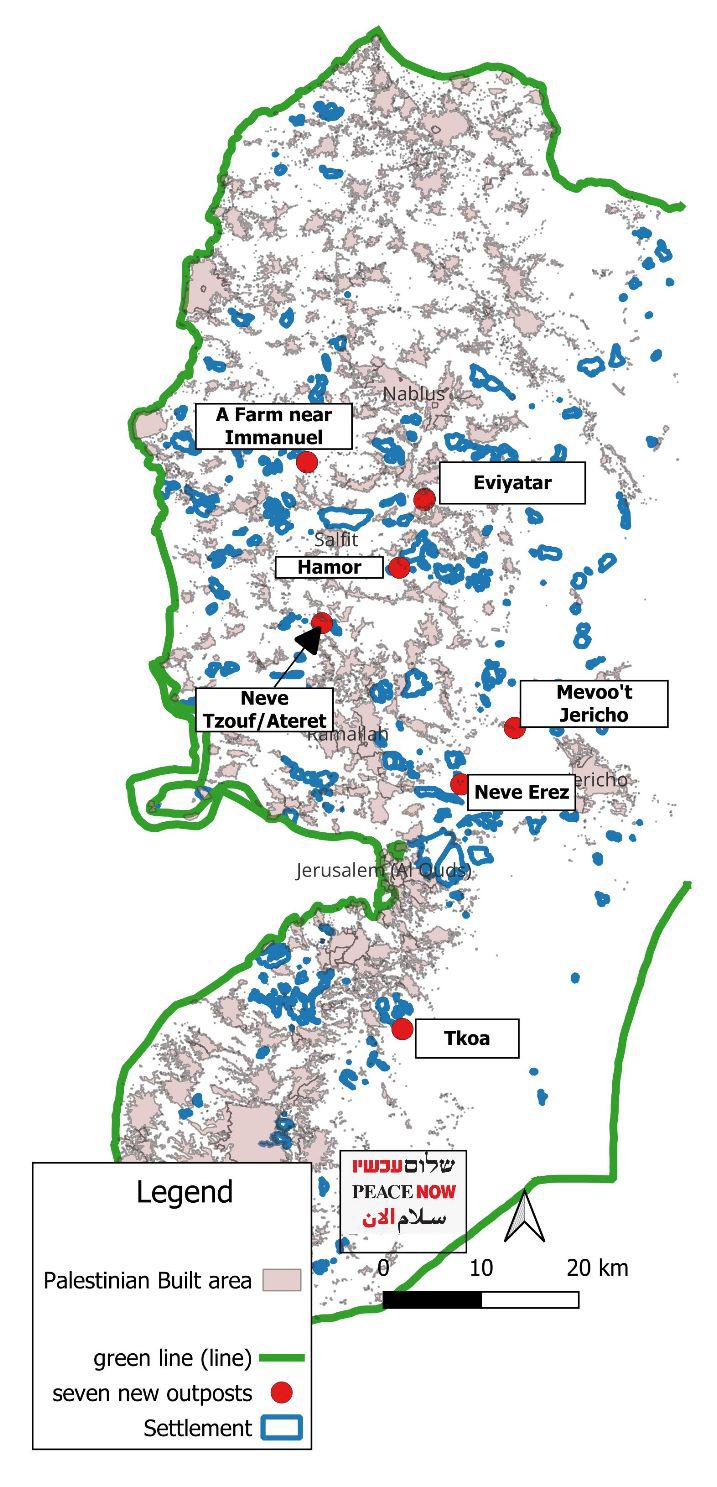 As of publication, two of the new outposts have been removed by the IDF, and a third – called “HaMor” – is the latest focus of the ongoing power struggle between Bezalel Smotrich (who has angrily worked to prevent the demolition of one of the new outposts) and Defense Minister Gallant (who signed off on the outposts’ evacuation). As has been the case in the past, Smortich appears to have won this battle, and the petition seeking the removal of the outpost has been withdrawn. Smotrich argued that he, in his role as a minister within the Defense Ministry and head of the new “Settlement Administration,” has authority over all building enforcement in the West Bank, and he was not properly informed of (nor did he approve of) the decision to evacuate the outpost
Peace Now said in a statement:
“Violating the law, destroying the possibility of a future Palestinian State, creating further points of friction between settlers and Palestinians and rewarding settler violence has become the official policy of the State of Israel in the West Bank. The establishment of seven new outposts disregards not only international law but also the Israeli legal system itself. Beyond the devastating consequences that these outposts will have, first and foremost on Palestinians, the government of Israel is also destroying the possibility of a life of dignity and peace between Israelis and Palestinians.”
Peace Now reports the following details on the six new outposts:
- A new outpost settlers call “HaMor” is located on the land of the Palestinian villages of Luban al-Sharqiya and Sinjil, near the Givat Levona settlement and the Givat HaRoeh outpost – though settlers claim it was built on “state land”. The outpost is by far the most organized and serious effort to establish a permanent presence. While the rest are singular tents and unprofessional building, this outpost currently consists of five caravans, a newly created access path, electricity poles, and the land had been leveled by heavy equipment. On the morning of June 29th, IDF forces arrived at this outpost to enforce a military evacuation order, but were stopped (literally as IDF forces were onsite and prepared to begin removing settlers and their belongings) by an temporary injunction freezing the evacuation issued by the Jerusalem Municipal Court. On June 30th, the petition seeking the removal of this outpost was withdrawn, suggesting that the settlers have been successful in establishing a permanent new outpost.
- A new outpost is located near the Tekoa settlement (located south of Bethlehem), which appears to consist of a tent and a trailer. This outpost is located on lands belonging to the Palestinian village of Tuqu’.
- A new outpost is located near the Mevo’ot Yericho settlement in the Jordan Valley, built on the lands of the Palestinian village of Taybeh. This outpost was removed by the IDF on June 29th.
- A new outpost was set up east of the Neve Erez settlement, on the lands of the Palestinian village of Mukhmas, located north of Jerusalem. This outpost was removed by the IDF on June 29th.
- A new outpost, consisting of a single tent, was established west of the Halamish and Atarot settlements, on lands of the Palestinian village of Umm Safa. Peace Now reports: “the establishment of the outpost led to clashes between Palestinians and settlers as well as to settler violence inside the Palestinian village over the weekend. The settlement Watch Team observed that on Tuesday, June 27, 2023, the tent was not in place, and it is possible that the outpost has been abandoned or removed.”
- A new outpost was established near the Emanuel settlement, on lands of the Palestinian village of Deir Istiya, located southwest of Nablus
New “Youth Center” Planned for East Jerusalem Settler Enclave
Haaretz reports that the Jerusalem Municipality has allocated nearly $1 million (NIS 3.5 million) to build a youth center in the Ma’ale Hazeitim settlement enclave, located in the middle of the Palestinian East Jerusalem neighborhood of Ras Al-Amud. Around 120 settler families live in the enclave, in the midst of some 23,000 Palestinians living in Ras Al-Amud, and another 26,000 Palestinians living in the nearby A-Tor neighborhood. Notably, there is no state-funded youth center in either Ras Al-Amud or A-Tor, notwithstanding the fact that there are far more youths living in these neighborhoods than in the settlement enclave. Indeed, of the 20 youth clubs funded by the Israeli government in Jerusalem since 1967, only four are located in Palestinian neighborhoods of East Jerusalem.
Not coincidentally, Jerusalem Deputy Mayor Aryeh King — a driving force behind settlement across East Jerusalem — lives in the Ma’ale Hazeitim settlement enclave. Laura Wharton – a member of the Jerusalem City Council – told Haaretz:
“The person involved [in the project] and who’s pushing for its promotion is the deputy mayor, Aryeh King, who lives in the settlement inside the neighborhood. Promoting this plan reflects no public interest, but a personal and settler-oriented interest alone.”
The Ma’ale Hazeitim settlement has a peculiar history of receiving large government investments – including the 2015 construction of a $3 million (NIS 11 million) ritual bath (mikveh) – built at a time when the tiny enclave already had 2 mikvehs. Earlier this year, in March 2023, it was reported that King is also pushing plans to build 140 new settlement units in the Ma’ale Hazeitim enclave – which would double its current capacity.
In a 2011 paper describing the Ma’ale Hazeitim settler enclave, Ir Amim wrote:
“In addition to the government construction, another policy, of building ideological settlements in the midst of Palestinian neighborhoods, has also been pursued in East Jerusalem, especially since the early 1990s. The settlements are usually promoted by private right wing organization and focus on the area of the historic basin of the Old City. Their goal is to break up the Palestinian homogeneity of those neighborhoods and prevent territorial contiguity between the Palestinian core of Jerusalem and the surrounding Palestinian areas. Although these projects are initiated by private organizations, they enjoy the clear and sweeping support of the relevant official and public bodies, including the planning authorities, which routinely grant these settlement plans all of the necessary permits and allow them high building densities….the largest of those settlements [is] Maale Zeitim”
Terrestrial Jerusalem on The Big Picture of Jerusalem Settlement Activities
Terrestrial Jerusalem has issued a sweeping new report on settlement activity in East Jerusalem. The report lays out how current Israeli policies and actions constitute “fundamental changes in the trajectory and nature of the conflict gripping Jerusalem, some of which pose threats not only to the potential of any future political agreement, but to the unique character of the city of Jerusalem.”
The report covers the following areas of settlement activity (as excerpted from the Executive summary):
- The Southern Flank: A critical mass of settlement construction is underway on the border between East Jerusalem and its sister city of Bethlehem towards creating a buffer between the two. In addition to the devastating impact that this may have on a future political agreement, it is yet another blow to the already vulnerable Christian presence in the Holy Land.
- The Eastern Flank: In addition to the currently suspended threats of the approval of E-1 and the demolition of Khan al Ahmar, a third threat is emerging: the completion of a segregated road system in the Ma’aleh Adumim salient, with one set of roads designated for Israelis and another for Palestinians.
- Settlement Enclaves in East Jerusalem, Unprecedented GOI Construction: Since 1967, the Gol has refrained from directly building settlements inside Palestinian neighborhoods in East Jerusalem. Today, and for the first time, it is planning to construct six such settlements, under the auspices of the Ministry of Justice’s Custodian General. The first such scheme in Sharafat provides for the construction of more than 700 units and is in the advanced planning stages in the run-up to statutory approval.
- The Fragmentation of the East Jerusalem-Ramallah Corridor: To date, the unimpeded urban corridor from the northern half of East Jerusalem to Ramallah, the integrity of which is essential for the integration of East Jerusalem into any future Palestinian State, has remained intact. However, there is a major plan being advanced for the construction of a new 9,000-unit settlement neighborhood in Atarot.
- The Government-Sponsored Encirclement of the Old City: For years, and under the radar, the GoI has been engaged in an ambitious project to ring the Old City with Biblically-inspired settlements and settlement-related projects. To date, more than 1.1 billion shekels have been invested in the project. The most acute manifestation is the plan to create a national park on the Mount of Olives, which would place major Christian holy sites under the authority of the Biblically-driven East Jerusalem settlers. The plan poses a threat to the religious, historical and cultural integrity of Jerusalem, and to its character as a city of universal significance.
For a detailed explanation of each of these six areas, read the report.
Ir Amim & Bimkom Warn of Potential for Mass Dispossession Via East Jerusalem Land Registration
Ir Amim and Bimkom have issued a succinct new analysis of how Israel’s effort to impose new land registration requirements in East Jerusalem – known as the Settlement of Land Title Process, aka SOLT – is advancing settlers’ takeover of East Jerusalem properties and has the potential to result in the mass displacement and dispossession of Palestinians from the city. The numbers and data show that the land registration process is being operationalized by Israel, often in a secretive manner, in order to advance a pro-settlement agenda. The report concludes by calling on Israel to bring these land registration procedures to an immediate end.
The report, entitled “The Grand Theft,” explains the history of land registration in East Jerusalem. It unpacks how the entire legal land ownership situation Palestinian residents of East Jerusalem find themselves in today is an Israeli-imposed “Catch-22”, resulting directly from Israel’s annexation of East Jerusalem in 1967. The report explains:
“Although the lack of settlement of land title procedures has had detrimental consequences for Palestinian communities in East Jerusalem, its renewal carries far worse repercussions. After five years of monitoring the implementation of SOLT [settlement of land title] in East Jerusalem, its alarming nature has become clear. SOLT is being exploited as a new and potent tool of land theft, under the guise of a legitimate legal process to establish Palestinian property rights. It appears to have become the State of Israel’s main method to appropriate more land in East Jerusalem and advance the displacement and dispossession of Palestinians from areas of strategic interest to the State. SOLT is almost exclusively being initiated to finalize ownership rights in existing or planned Israeli settlements, settler enclaves in the heart of Palestinian neighborhoods, areas with state-deemed ‘Absentee Property,’ or property allegedly owned by Jews pre-1948.”
Read the report to learn more about the legal basis by which Israel is carrying out land registration in East Jerusalem.
Bonus Reads
- “Israel Poisoned Palestinian Land to Build West Bank Settlement in 1970s, Documents Reveal” (Haaretz)
- “Jerusalem’s Armenian community fears erasure after controversial land deal” (Mondoweiss)
- “Can’t or won’t? IDF fails to prevent settler attacks, and that’s unlikely to change” (The Times of Israel)
- “Israel’s Push to Expand West Bank Settlements, Explained” (New York Times)
Welcome to FMEP’s Weekly Settlement Report, covering everything you need to know about Israeli settlement activity this week.
To subscribe to this report, please click here.
April 20, 2023
- Israel Introduces Second Plan to Expand Givat Hamatos Settlement in East Jerusalem
- After 15 Yrs of Work, Jerusalem Govt Withdraws Support for Private Plan to Build First new Palestinian Neighborhood in East Jerusalem since 1967
- Following Repeal of Disengagement Law, Israel Dismisses Cases Against Settlers Who Violated It
- On the Potential for Mass Expulsion of Palestinians via West Bank Land Registration
- Bonus Reads
Israel Introduces Second Plan to Expand Givat Hamatos Settlement in East Jerusalem
Ir Amim reports the Jerusalem Municipality recently initiated a new plan – called “Tzmerot” – to massively expand the current construction outline for the Givat Hamatos settlement in East Jerusalem. The new plan would add an additional 1,200 units to the existing plan, bringing the total number of settlement units to be built in Givat Hamatos to 3,810 (assuming, conservatively, an average family size of 5, this means housing for an additional nearly 20,000 Israelis). Israel issued tenders for more than 2,000 units in Givat Hamatos in January 2021, just before Trump left the U.S. presidency, and preparations for construction have started (actual construction has not).
This is the second plan the Israeli government has initiated so far this year to significantly expand the plan for Givat Hamatos. The first – known as the “East Talpiyot Hill” plan – was introduced in January 2023 and provides for the construction of 3500 units and 1300 hotel rooms on a strip of land adjacent to the land alloted to Givat Hamatos.
Collectively, the East Talpiyot Hill plan would increase the size of Givat Hamatos by 40%, expanding it eastward and connecting it with another new settlement plan – the “Lower Aqueduct Plan.”
Taken together — this latest Givat Hamatos expansion plan (Tzmerot), combined with the the East Talpiyot Hill plan, the Lower Aqueduct Plan, and the plan for a new settlement known as “Givat HaShaked” to the north of Givat Hamatos — these plans ultimately would create an unbroken string of settlements spanning from Gilo to Har Homa, in the process completely encircling the East Jerusalem Palestinian neighborhood of Beit Safafa with Israeli settlement construction. For this reason, Givat Hamatos has long been regarded as a doomsday settlement for parties interested in a negotiated two-state solution.
Ir Amim explains:
“The Tzmerot plan calls for four high-rise apartment buildings – two of which will include 12 floors, while the other two will include 42 and 35 floors. This stands in stark contrast to the surrounding Palestinian neighborhoods which face strict building restrictions, including those that preclude the construction of residential buildings beyond four-six levels. The municipality’s willingness to expand building rights for residential development when it is Israeli construction further exemplifies the extent of planning and housing discrimination in Jerusalem.
The initiative for the new plan came as part of an agreement between the Jerusalem municipality and Shikun & Binui against the backdrop of a conflict concerning the company’s construction rights in a West Jerusalem neighborhood known as Kiryat HaYovel. Residents of the neighborhood strongly opposed the planned construction, compelling the municipality to intervene. According to the agreement, Shikun & Binui will give up construction in Kiryat HaYovel in exchange for receiving increased construction rights for residential development beyond the Green Line in Givat Hamatos.”
After 15 Yrs of Work, Jerusalem Govt Withdraws Support for Private Plan to Build First New Palestinian Neighborhood in East Jerusalem since 1967
Haaretz reports that the Jerusalem Municipality has retracted its support for a private, Palestinian-led project to build a new neighborhood in East Jerusalem, after signaling its support for the plan for the past 15 years. The project would have been the first new neighborhood developed specifically for Palestinians since Israel annexed East Jerusalem in 1967 (reminder: during the nearly 56 years since it gained control over East Jerusalem, Israel has undertaken massive, government-backed construction of new neighborhoods, aka settlements, throughout East Jerusalem). Sources told Haaretz that Jerusalem Mayor Moshe Leon withdrew his support out of concern that approval of the project could become a political liability for him in local elections to be held later this year.
Ir Amim comments:
“While the Israeli authorities continue to deplete all vacant land in East Jerusalem to promote new Israeli settlements, they refrain from initiating residential projects for Palestinian areas and effectively obstruct the advancement of Palestinian-initiated plans. One recent example is the municipality’s withdrawal of support for the first planned new Palestinian neighborhood since 1967 in an area known as Tel Adsa, adjacent to Beit Hanina along the northern perimeter of East Jerusalem. Initiated by private Palestinian landowners from Beit Hanina, the plan had originally received support from the municipality. After enormous funds had been invested in the plan’s preparation, when the time came for discussion of the plan’s approval, the municipality withdrew their backing, citing claims that the plan did not comply with new planning policy for open spaces.
Yet, such claims contradict the fact that a myriad of similar plans are being promoted for Israeli settlements in such spaces. Not only does this reveal the baseless nature of the claims, but also underscores the rampant planning and housing discrimination leveled against Palestinians in Jerusalem.
Despite Palestinians constituting nearly 40% of the city’s population, not one new neighborhood has been approved or constructed for Palestinians since 1967, while existing Palestinian neighborhoods face major building restrictions. Such a reality serves as a major impediment for Palestinians to remain in the city, which ultimately becomes a mechanism of forced displacement. These policies and practices enable Israel to seize more land in East Jerusalem while also acting as form of population control in service to Israel’s longstanding territorial and demographic goals. Such measures deprive Palestinians of basic rights to housing and shelter and constitute a severe violation of International Law while undermining any potential for an agreed political future.
The Israeli government must be held accountable to afford equal rights to all populations in Jerusalem.”
Following Repeal of Disengagement Law, Israel Dismisses Cases Against Settlers Who Violated It
The Petah Tikva Magistrates Court has tossed out several indictments of settlers who illegally entered the site of the former Homesh settlement and illegally established a yeshiva there. The settlers were banned from entering the area as part of the 2005 Disengagement Law, which among other things legislated the evacuation of four settlements in the northern West Bank and banned Israelis from entering the area. The Israeli Knesset recently repealed the clauses in the Disengagement Law relating to those four settlements, effectively ending the ban on Israeli entry to the area, and providing a pretext for the Court to drop the cases (notwithstanding the fact that the settlers’ actions brazenly violated the law at the time).
Yesh Din – an Israeli organizations which has fought for years to have the illegal outpost known to settlers as the Homesh yeshiva removed and for the land to be returned to its Palestinian owners – responded that the dismissal of these criminal cases:
“[sends] a clear message that the State of Israel encourages stealing from and banishing Palestinians.”
As a reminder, the Homesh settlement was built almost entirely on land that belongs to (and is recognized by Israel as registered as belonging to) Palestinian owners. Yet, after the Homesh settlement was dismantled in 2005, control over the land was never returned to its owners. The area was instead declared by the Israeli army to be a closed military zone, with Palestinains, including the owners of the land, barred from access. The Palestinians owners have been fighting for the right to access their own land since 2009, with no success. At the same time, the Israeli army allowed Jewish Israeli settlers to access the area regularly, and even permitted the settlers to illegally (under Israeli law) establish a religious school and settlement outpost at the site. Rather than enforce Israel’s own laws against the settlers, the current Israeli government has agreed to grant retroactive approval to the settlers’ illegal presence, the first step towards doing so being the aforementioned repeal of clauses in the Disengagement Law that make any Israeli presence there illegal. As Yesh Din has noted, repealing the West Bank-related clauses in the Disengagement Law does not change the legal status of the land, which Israel has recognized as privately owned by Palestinians. This means, according to Yesh Din, that Israel still has “no legal option for legalizing the [Homesh] outpost.” Based on the commitments made by this new government, it seems probable that this legal “problem” will be just one more challenge to be overcome.
Shmuel Wendy, a settler who participated in establishing the illegal yeshiva at Homesh, told the Times of Israel:
“Along with our happiness over the cancellation of the Disengagement Law, we still expect the yeshiva to soon be approved.”
On the Potential for Mass Expulsion of Palestinians via West Bank Land Registration
Writing in Jewish Currents, FMEP non-resident fellow Peter Beinart argues (agreeing with decades of Palestinian warnings) that the mass expulsion of Palestinians by Israel – a second Nakba – is not a far-fetched worry but an idea with deep roots and currency amongst Israeli lawmakers. Beinart posits that, “It’s impossible to know how mass expulsion might occur. But one clue lies in the coalition agreements that lay out the current government’s agenda. The agreements call on the government to launch a process of land registration in the West Bank.”
In the West Bank, successive Israeli governments have already laid the groundwork for re-starting the process of land registration with the urging and fervent backing of settlers who see the process as a massive opportunity for the state to declare more land to be “state land” and take control over it. Only one-third of West Bank land was registered and titled (under the British Mandatory government and then continued by Jordan) when Israel seized control of the West Bank and froze land registration proceedings.
Some key pieces of that groundwork that have already been laid – not only to restart the land registration process but to utilize it as a means for the seizure of massive amounts of West Bank land – include:
- In September 2021, the Jewish National Fund (JNF) announced that it had approved funds for an effort to systematically register West Bank lands that it claims to have purchased from the Israeli Custodian General. Ir Amim warned that the JNF’s land registration effort could result in land takeover of an “alarming magnitude.” As a reminder, the JNF, established in 1901, devoted itself to buying land for Jews. Today, the JNF owns about 15% of all the land inside the Green Line (a figure which stands to increase if the review process leads to more properties being registered to the JNF). In addition, the JNF has used two subsidiary companies – both called Himanuta – to purchase land in the West Bank, even though the stated JNF policy did not support such purchases. Peace Now reports that the JNF, via Himanuta, has already purchased over 16,000 acres (65,000 dunams) across the West Bank.
- In December 2020, the Israeli High Court of Justice issued a ruling in favor of the Kochav Yaakov settlement, signaling the Court’s willingness to sidestep Ottoman and Jordanian land registration practices when deciding land ownership claims (which since 1967 Israel has recognized as applicable in the West Bank and East Jerusalem). The Court appeared to accept the settlers’ argument that the Court should care about what has happened on the land since the Jordanian land registration process was frozen, not about what existed at the moment the law was frozen. This argument, by design, favors the settlements and the settlers, who since 1967 have been able – with the backing of the state and the permission of the Courts – to illegally establish settlements and outposts while also preventing Palestinians from accessing their land.
- In November 2020, the Israeli Attorney General offered support to a recommendation by COGAT to re-start land registration across the West Bank, a recommendation which was the result of a campaign by the far right-wing Israeli NGO known as Regavim (which today has deep ties in the current government) to push the government to seize more land in the West Bank via declarations of state land.
- In August 2020 the Israeli State Comptroller issued a report that criticized the Defense Ministry for having an incomplete land registry of the West Bank.
By contrast, in East Jerusalem (which Israel annexed in 1967) the Israeli government announced its intention to start land registration in 2018 and to complete the process by 2025 (which the government framed as an effort to “Reduce Socio-Economic Gaps and Advance Economic Development in East Jerusalem”). Since then, the government has carried out land registration mostly in secret and for the exclusive benefit of settlers, including in Abu Dis, Sheikh Jarrah, near Al-Aqsa, and possibly with regard to the Sharafat neighborhood and the Givat HaShaked settlement.
The Israel-run process of registering ownership of land in East Jerusalem land will have far-reaching consequences for Palestinians, who have not had a formal legal avenue for registering land ownership since East Jerusalem was annexed by Israel in 1967. Palestinians who wanted/needed to prove their land ownership were forced to rely on the “mukhtar protocol” — a procedure in which Palestinians in East Jerusalem document/prove ownership by collecting signatures from local Palestinian leaders acknowledging that the land in question does, indeed, belong to them. This policy was developed by the Israeli government as an alternative to the formal land-registration process.
In 2019, a mini-saga over the “mukhtar protocol” revealed the uphill battle facing Palestinians if formal registration proceeds. In March 2019, the Jerusalem Planning & Building Committee, at the urging of the Regavim settler group (acting with the clear goal of preventing Palestinian development and undermining Palestinian land ownership claims to land in the city), annulled the mukhtar protocol as a legally acceptable basis for establishing land ownership in the eyes of the Israeli government, putting Palestinian land ownership in East Jerusalem in limbo. The result: having no recognized means to prove their land ownership, Palestinians were prevented from building in East Jerusalem. One month later, the Israeli authorities reversed the decision and again recognized the mukhtar protocol, reportedly following appeals to Jerusalem Mayor Moshe Leon by a city council member. The incident highlights how precarious Palestinian land ownership in East Jerusalem is.
Key resources on land registration (aka “Settlement of Title”) are:
- “Settlement of Land Title in East Jerusalem: A Means of Dispossessing Palestinians from their Lands and Homes” (Ir Amim, March 2022)
- “Ill Gotten Gains: Theft of Palestinian land – declaring “state land” where settlement of title was halted when Israel occupied the West Bank” (Yesh Din, March 2021)
- “A Settler Tool & A Catch-22 for Palestinians: Land Registration in East JerusalemA Settler Tool & A Catch-22 for Palestinians: Land Registration in East Jerusalem” (Podcast w/ Amy Cohen/Ir Amim and Kristin McCarthy/FMEP, September 2022)
- “The registration of Palestinian properties is aimed at transferring them to Israeli authorities” (Miftah, October 2021)
Bonus Reads
- “How the ‘Poor People of Galicia’ Defeated an Elderly Palestinian Couple” (Haaretz)
Welcome to FMEP’s Weekly Settlement Report, covering everything you need to know about Israeli settlement activity this week.
To subscribe to this report, please click here.
September 30, 2022
- 150+ Palestinians (30 Families) Face Imminent Displacement Following Secret Land Registration in East Jerusalem
- In Major Step Towards Authorization (Under Israeli Law), Israel to Provide Security to Outposts
- Bonus Reads
150+ Palestinians (30 Families) Face Imminent Displacement Following Secret Land Registration in East Jerusalem
Ir Amim reports that, as a result of Israel’s secret registration of land in East Jerusalem, 30 Palestinian families received eviction notices instructing them to leave their homes by September 1, 2022. Since the deadline has passed, the Israeli General Custodian can open a legal case to pursue their eviction at any moment. The eviction notices appear to be premised on Israel’s secret registration of land between near Abu Dis and Jabal al-Mukhaber, which was made public in August 2022.

There are two significant problems to this pretext. First, Ir Amim reports that only 3 of the 30 families which received eviction notices actually live on the parcel of land which State seized control of – the 27 other families live nearby but not within the borders of the parcel of land.
Secondly – and perhaps more significantly – Ir Amim has new evidence that forty years ago Israel examined the ownership of the same exact parcel of land and determined that it was privately owned by Palestinians, not Jews, prior to 1948. This new finding completely delegitimizes the premise on which the State seized control of the land this year. Ir Amim writes:
“Beyond the fact that most of the families facing eviction do not even reside on the respective plot, according to Ir Amim’s examination, there is no evidence to corroborate claims of Jewish ownership of the land designated as bloc 31735. This calls into question the means in which the General Custodian registered the land under its management. Due to the fact that the procedure was carried out in a covert manner and authorized in a closed court proceeding—likely at the behest of the General Custodian—it is impossible to ascertain the basis of its claims. While the Israeli media reported that the Custodian registered the land under its management based on proof affirming Jewish land ownership from the early 20th century, the documents Ir Amim acquired refute those claims.”
To learn more about Israeli land registration – and how it is being used as another tool to dispossess Palestinians in East Jerusalem – listen to FMEP’s recent podcast episode on this topic featuring Amy Cohen of Ir Amim.
In Major Step Towards Authorization (Under Israeli Law), Israel to Provide Security to Outposts
On September 29th, the Israeli military announced that, for the first time, it will provide security for illegal/unauthorized outposts, which will include equipping these outposts with surveillance and warning systems, lighting, public address systems, and firefighting equipment. The army’s announcement touted this as a “major change in policy,” and further, “the army’s job is to protect any place where Israeli citizens and residents are found. This important and necessary change will enable us to bolster the region’s layers of defense.”
Underscoring the absurdity of the situation, the Israeli army plans to only provide outposts with portable equipment – – because permanent construction in the outposts is illegal under Israeli law. The State has tried for years to correct that fact, having commissioned several councils and task forces to examine the legal status of each outpost and plot legal paths towards authorization. That work is still ongoing. By providing military protection to the outposts, Israel is undertaking a significant step towards retroactively authorizing the outposts and in fact proceeding with the de facto annexation of the outposts.
The Forum for Young Settlements (which is a euphemism for outposts) celebrated that military’s decision as a big step towards authorization, saying:
“[the IDF’s decision is] an important step towards full authorization…We are happy that two years after Defense Minister Benny Gantz toured ‘young settlements’ and after our hard work and repeated requests, he has finally decided that it is not possible to endanger our lives and the lives of our children any longer,” the forum said in response to the decision.”
The Israeli anti-settlement NGO Yesh Din said that, with this new decision:
“the army will provide protection to the lawbreakers, and has thereby turned itself and its soldiers into partners in crime. Granting protection to the outposts is a reward for the criminals who live in these illegal outposts and a continuation of the policy of creeping annexation of the West Bank that is being pushed by extremists under the auspices of the Israeli government.”
Peace Now said in response:
“Illegal outposts need to be dismantled, not secured.”
Bonus Reads
- “Israel installs remote-controlled weapons system at Hebron checkpoint, alarming Palestinians” (The New Arab)
- “Israel green lights use of drones to assassinate Palestinians in West Bank: Report” (Middle East Monitor)
- “Regavim Field Coordinator comes under fire near Kiryat Arba” (Arutz Sheva)
Welcome to FMEP’s Weekly Settlement Report, covering everything you need to know about Israeli settlement activity this week.
To subscribe to this report, please click here.
August 19, 2022
- Ir Amim on East Jerusalem Land Registration & State Land Seizures
- Israel Advances Plan to Build New Settlement “Ariel West”
- IDF Razes “Ramat Migron” Outpost for Second Time in a Week
- Ultra-Orthodox Settlers Establish Their First-Ever Outpost
- Israel Pauses to “Rethink” Plan to Build on Historic Site of Lifta
- Bonus Reads
Ir Amim on East Jerusalem Land Registration & State Land Seizures
In an alert issued August 11th, Ir Amim adds important information and analysis of Israel’s seizure of a plot of land in East Jerusalem last week. Importantly, Ir Amim explains how Israel is using the process of land registration to (sometimes covertly) take control over more and more land in the most sensitive areas in East Jerusalem.
Ir Amim writes:
“The area between Jabal Mukkaber and Abu Dis has long been targeted by the state and settlers due to its strategic location…Upon investigation, Ir Amim discovered that 12 dunams of land (bloc 31735) situated in the same location referred to in the article were recently registered under the management of the General Custodian in the Land Registration Office…Rights, bloc 31735 recently underwent settlement of land title procedures (formal land registration). Initiated on May 31, 2021, the settlement of land title process was swiftly completed in just over a year with little to no transparency and formally registered in the Tabu (land record) on July 14, 2022. The official order transferring the respective plot of land into the management of the General Custodian was issued on June 8, 2021—a mere days after the announcement of the settlement of title process on the same bloc of land. It should be underscored that the General Custodian is one of the state institutions formally and integrally involved in the settlement of title process. The timing is certainly not coincidental, and it was clearly carried out as a means to assert Jewish ownership claims of the land. In contrast, the process has yet to be initiated on the adjacent thousands of dunams of land owned by Palestinians in the same area.
Such a move constitutes yet another cynical exploitation of the settlement of land title procedures which are being conducted in the framework of Government Decision 3790—a decision aimed at ostensibly improving the well-being of Palestinians in East Jerusalem. As reported previously, an examination of the locations where the procedures have been completed or currently underway reveals the driving rationale: settlement of land title is largely being promoted in areas where the state and/or settlers have a particular interest and have some capacity to lay claim to the land in the framework of the proceedings. As such, these procedures are being used as yet another mechanism to seize more territory in East Jerusalem under the guise of a decision and budgets earmarked for Palestinians.”
Israel Advances Plan to Build New Settlement “Ariel West”
On August 18th, the Israeli Civil Administration discussed an amended plan to build an access road leading to an area of land where Israel is intending to build a new settlement, dubbed “Ariel West.” At the time of publication, it is unclear the outcome of the discussion is not yet known. We do know that Israel was forced to amend its original plan to build the access road to the new settlement site when it was proven that the route went through privately owned Palestinian land belonging to the village of Salfit.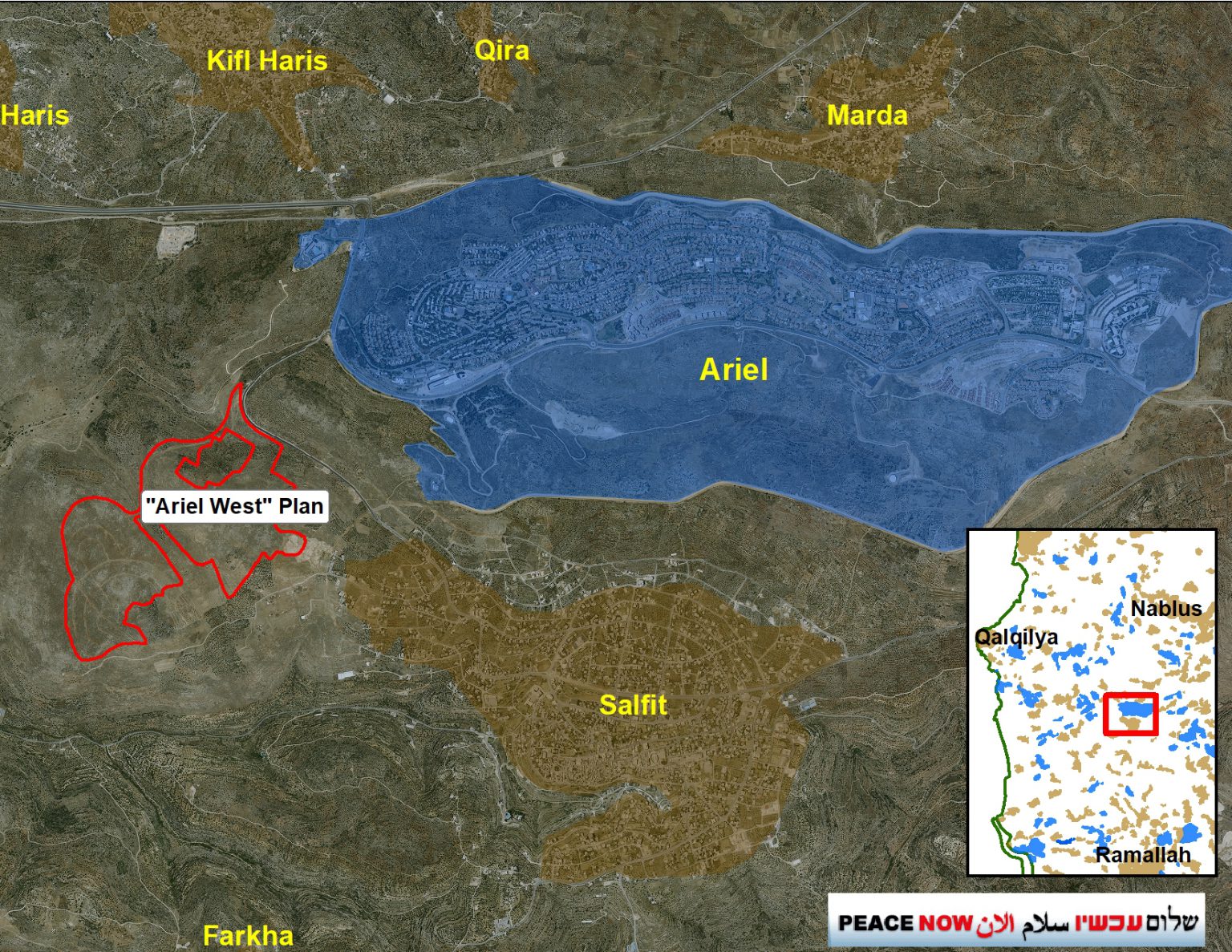
The plan for “Ariel West” was first discovered in November 2021, after the Israeli Ministry of Construction issued tenders (on October 24, 2021) for the new settlement, under the guise of a plan to “expand” the Ariel settlement, located south of Bethlehem. Under the plan, 731 new settlement units will be built on a hilltop located 1.2 miles away from Ariel, in an area that is non-contiguous with the built-up area of the current Ariel settlement.
Peace Now said in a statement:
“The government has been given another opportunity here to stop the establishment of the new settlement. After the Ministry of Housing rushed to issue tenders for the sale of the building rights, construction can still be halted if the defense minister stops the planning process. The “Ariel West” plan is not just a plan for thousands of housing units, but it is a new settlement designed to block the town of Salfit and prevent the development of Palestinian space in the area. Road comprise the infrastructure of the occupation, and the undercurrents of apartheid in the occupied West Bank. This dangerous plan must be stopped.”
“Ariel West” is one of many clear illustrations of how Israel systematically rewards unauthorized/illegal construction undertaken by settlers. In this case, settlers established an unauthorized outpost (i.e., illegal even under Israeli law) called “Nof Avi”on the hilltop where the new settlement is slated for construction. The Israeli government has allowed that outpost to remain in place for the past year, and thereby restrict Palestinians’ access to agricultural lands they rightfully own.
The hilltop and the Nof Avi outpost is located on land declared by Israel to be “state land” inside of the jurisdictional boundaries of the Ariel settlement, as authorized by the Israeli government. The jurisdictional boundaries of Ariel include several non-contiguous land areas — due to the fact that the area is dotted with land that even Israel recognizes to be legally owned by Palestinians (de facto annexing private Palestinian land to the settlement by leaving it in some places nearly completely surrounded by land controlled by the settlement).
The new settlement will further exacerbate the limitations that the settlements inflict on Palestinian agricultural workers, in addition to the future development of the nearby Palestinian town of Salfit, as illustrated in this video by Peace Now. Even before the “expansion” plan, Ariel’s jurisdictional area was identified as a direct hindrance on the future development of Salfit.
With news of the new settlement in October 2021, the Mayor of Salfit – Abdullah Kamil – explained to Haaretz:
“Salfit is slated for expansion. It has a university and there are plans to add 10,000 students over the next few years. The city’s master plan will have to be enlarged, and the site where the new settlement is planned is exactly the direction toward which we wanted to expand. This situation will explode. We also told the Israelis this; it will open a new front and it will harm Israeli security. It’s clear that part of the plan’s purpose is to eliminate any chance of a political solution.”
IDF Razes “Ramat Migron” Outpost for Second Time in a Week
On August 14th Israeli forces once again cleared settlers and their property off of a hilltop where the settlers are attempting to establish a permanent outpost, which the settlers call Ramat Migron. Israeli forces cleared the site just four days prior, but settlers quickly re-occupied the area.
As a reminder, in 2012 an illegal outpost known as Migron was dismantled by the Israeli government when the Israeli High Court ruled the land is privately owned by Palestinians. Since then settlers have continually sought to reestablish a settlement there. Israeli forces have razed outposts at the site at least 10 times in the past 10 years — all the while denying Palestinians the ability to reclaim control over land that an Israeli court affirmed they own.
In addition to the IDF retaining control over the Migron outpost site, Israel rewarded the settlers it forcibly removed from the Migron outpost by promising to establish two new official settlements: “New Migron” as well as 184 housing units to be built east of the settlement of Adam (aka, Geva Binyamin). Construction of the “New Migron” settlement was completed in July 2020. All said, the two new settlements and temporary housing for the evicted settlers cost Israeli taxpayers millions of dollars – sending a clear message that settler law-breaking pays.
Ultra-Orthodox Settlers Establish Their First-Ever Outpost
On August 16th, a group of 15 settler families announced the establishment of a new outpost near the settlement of Metzad, located in the southern West Bank. The settlers, notably, are ultra-orthodox Jews – making this the first outpost established by ultra-orthodox settlers. The settlers, who are calling the outpost “Derech Emunah,” have built 15 makeshift structures already at the site, which they are using as a yeshiva, synagogue, and homes.
A leader of the group, Moshe Rotman, said:
“The establishment of Derech Emunah is designed to increase awareness within the ultra-Orthodox community of the religious commandment of settling the land, as well as showing that the housing crisis in the community can be resolved through settlement construction in Judea and Samaria.”
The Ultra-Orthdox have long been viewed as distinct from religious-nationalistic settlers. Most ultra-Orthodox settlers moved to homes in the settlements for cheap housing (and their desire to live in homogenous communities) rather than out of a religious or nationalistic belief that Israel has a right and/or obligation to reclaim all of the land between the river and the sea. The establishment of this outpost challenges that understanding. Rotman called the Ultra-Orthodox a “dormant volcano,” insisting that the new outpost was established not merely by members from the fringe of the ultra-Orthodox community, and suggesting that many more ultra-Orthodox settlers will follow suit.
Peace Now said in response:
“Security forces must demonstrate zero tolerance to the outpost criminals, whether they are ultra-Orthodox, Zionist ultra-Orthodox or just criminals. Defense Minister Benny Gantz is avoiding evacuating the Homesh outpost. We call on him to instruct today, to demolish the new outpost. Any minute that the outpost is still standing shows that all he (Gantz) cares about is pleasing [right-wing Justice Minister Gideon] Saar and [right-wing Knesset member] Matan Kahana. It shows that he tries pleasing the ultra-Orthodox parties at the expense of the State of Israel.”
It’s also worth noting that Rotman said that the outpost was established in response to what his group perceives as the Israeli government’s selective enforcement against illegal construction by Israelis and the Palestinians in Area C of the West Bank. As FMEP has routinely covered, settlers and their allies in the Israeli government have perpetuated a false narrative – which at this point is deeply held by settler leadership – that the Israeli government is failing to thwart an alleged campaign by the Palestinian Authority to take over land in Area C via “illegal” construction – referring to construction by Palestinians on their own land, but without Israeli-required permits that Israel systematically refuses to issue. Settlers are using this story to push the government to more swiftly and systematically demolish any/all Palestinian construction in Area C.
Playing on this narrative, settler leader Tzvi Succot, who plans to run for the pro-settler Religious-Zionist (Orthodox) party Knesset list primaries, said:
“It is very exciting to see how members of the ultra-Orthodox community join with dedication to the holy mission of settling the land of Israel, breaking through the choking ring placed on the settlement enterprise in the West Bank. I hope the state of Israel won’t play a discrimination game and won’t demolish the new community, while all around it are hundreds of Arab-constructed illegal buildings that are not subjected to the law.”
Israel Pauses to “Rethink” Plan to Build on Historic Site of Lifta
The Times of Israel reports that the Jerusalem Municipality and the Israel Lands Authority have agreed to “rethink” their plans to build a luxury housing development on the ruins of the historic Palestinian village of Lifta, located in West Jerusalem. Lifta is the last Palestinian village in West Jerusalem to remain partially intact. Israel has prevented Palestinian refugees and landowners from returning to it, but has not yet demolished all the original structures (55 out of the original 400 structures still remain). In 2017 the ruins of Lifta were named by the World Monuments Fund as one of 25 at-risk sites around the world, and Lifta on the list of UNESCO’s tentative World Heritage Sites for bearing “unique testimony of the traditional village life.”
The Times of Israel further reports that after visiting the site, Israel’s Mayor of Jerusalem Moshe Leon is considering a plan to “preserve the village and turn it into a World Heritage Site.” However, in commenting on the Mayor’s new directive, the Israeli Municipality erased Palestinians, their history and their culture, from the story of Lifta. In a statement, the Jerusalem Municipality said:
“[Lifta] serves as an important heritage symbol for Jerusalemites, Israelis and all those who come to Jerusalem. In the past, a plan to build housing units on the site was approved. The mayor discovered that this plan does not consider the preservation needs to the proper degree and in his opinion, is not appropriate at all. Therefore, in coordination with the ILA, it was decided not to market [the project] and to have a rethink. At the heart of the new thinking is the preservation of Lifta and its transformation into a world heritage site.”
Israel’s plans to build on top of Lifta’s ruins surfaced In May 2021, when Israel announced it planned to open bidding on a tender for the construction of 259 luxury housing units, commercial buildings, and a hotel. The announcement spurred a strong reaction, including daily protests on the land and several legal petitions. A lawyer representing a group of Palestinians refugees from Lifta submitted a petition against the plan in August 2021. In addition, the Israeli NGO Emek Shaveh submitted a petition against the plan, including three expert opinions with its submission, one from a civil engineer, a second from an ecologist, and a third written by a team of five architects and conservation planners.
While FMEP’s settlement and annexation report focuses on settlement building in areas located over the 1967 Green Line, the story of Lifta – and of other Palestinian villages forcibly depopulated by Israeli forces in the 1948 – is another facet of the Israeli government’s policy of erasure of Palestinians via the establishment of Jewish Israeli communities. You can read one Palestinian’s account of forced her forced displacement from Lifta, here.
Bonus Reads
- “Jerusalem girls school repaints iconic Homesh water tower” (Arutz Sheva)
- “Israel recovers rare findings from alleged antiquities traffickers in West Bank” (The Times of Israel)
- “Peace Now is taking direct action against settler outposts. Can it succeed?” (+972 Magazine)
- “Why did the army shut down a Palestinian village? So settlers could pray in it” (+972 Magazine)
- “Extreme left opposes Mosh Ben Ari’s performance in the Hinnom Valley in Jerusalem“ (Arutz Sheva)
Welcome to FMEP’s Weekly Settlement Report, covering everything you need to know about Israeli settlement activity this week.
To subscribe to this report, please click here.
November 5, 2021
- Sheikh Jarrah Families Reject Court-Proposed “Deal” with Settlers; Eviction Orders Expected Soon
- Supreme Court Rules Sheikh Jarrah Businesses – Built on Privately-Owned Palestinian Land But Near Settler Sites – Will Be Demolished
- Israel Demolishes East Jerusalem Muslim Cemetery, In Order to Make Way for Public Garden (& Increase Israeli Control Over Old City Perimeter
- Israeli Court OKs Refusal of Israeli Custodian of Absentee Properties to Disclose Extent of Control Over Palestinian Properties
- New Report from HaMoked: The ‘Seam Zone’ & Israel’s Ongoing Dispossession/Annexation
- Bonus Reads
Sheikh Jarrah Families Reject Court-Proposed “Deal” with Settlers; Eviction Orders Expected Soon
On Tuesday, November 2nd, four families facing imminent eviction from their longtime homes in Sheikh Jarrah in favor of settlers released a statement rejecting a Court-authored “compromise” that would have allowed the families to temporarily remain in their homes as “protected tenants” paying rent to settlers, whose ultimate ownership over the properties would be made official (but technically – though not realistically – still open to legal challenge by the Palestinians). You can review the full terms of the deal here.
The Court ordered both parties to respond to the “deal” by November 2nd. It was only after the Palestinians put forth their statement that we learned that the settlers reportedly accepted the terms, as relayed by Jerusalem Deputy Mayor Arieh King, a staunch supporter and prolific financier of settlements in East Jerusalem, to the AP (this information remains unconfirmed, as the settler-submitted position has not been published).
It’s important to point out — as the Palestinian families note in their statement — that the Court’s handling of the case neatly constructed a lose-lose scenario for the Palestinians. If they had accepted the deal they would have been painted as legitimizing the theft of their property and the claims of the settlers. When they instead refused it, they were immediately painted as rejectionists, in contrast to the settlers who — having waited for Palestinians to reject the deal — positioned themselves as the “reasonable” party in the eyes of the Court.
Both parties were under pressure from the Court to accept the deal. According to Terrestrial Jerusalem, the Court has previously indicated that if either party rejects the deal, the Court would move to swiftly issue a final decision on the cases. Peace Now’s analysis of the Supreme Court’s position predicts that the Court will now rule in favor of the settlers (leading to the eviction of the Palestinian families), like lower Courts have done.
Jerusalem expert Daniel Seidemann also predicts that the Court will rule against the settlers, further speculating:
“There will likely be an eviction verdict [against] the Palestinians soon. Bennett/Lapid will say “we won’t carry out the eviction”. They will likely be sincere – and wrong. One coalition crisis, one terror attack and they will be evicted. This is very bad indeed.”
The statement of rejection from the Palestinians families (the El Kurd, Jaouni, Abu Hasna, and Askafi families) is worth reading in full:
“We reject the ‘proposal’ by the ‘Israeli Supreme Court’ which would have rendered us ‘protected tenants’ at the mercy of settler organizations. We stand firm in our refusal to compromise on our rights despite the lack of institutional guarantees that would protect our presence as Palestinians in occupied Jerusalem.
The Israeli justiciary is circumventing its duty to adjudicate the case and is forcing us instead to choose between our own dispossession or submitting to an oppressive agreement. Naturally, we refuse to commit someone else’s crimes.
Such ‘compromises’ create the illusion of the ball in our court, fabricating a farming in which we reject a ‘generous deal,’ in a situation where our dispossession would still be imminent and our homes would still be regarded as someone else’s. Such ‘deals’ distract from the crime at hand: ethnic cleansing perpetrated by a settler-colonial judiciary and its settlers.
The international community has long maintained that settler expansion and forced expulsion in Sheikh Jarrah are war crimes. Thus it must respond to grave international law violations with real diplomatic and political repercussions. The culture of inaction and impunity must not be maintained.
It is time for our Nakba to end. Our family deserve to live in peace without the looming ghost of imminent dispossession.”
On November 10th, Ir Amim is hosting a briefing with MK and lawyer Gaby Lasky on the Sheikh Jarrah and Silwan cases. RSVP here.
Supreme Court Rules Sheikh Jarrah Businesses – Built on Privately-Owned Palestinian Land But Near Settler Sites – Will Be Demolished
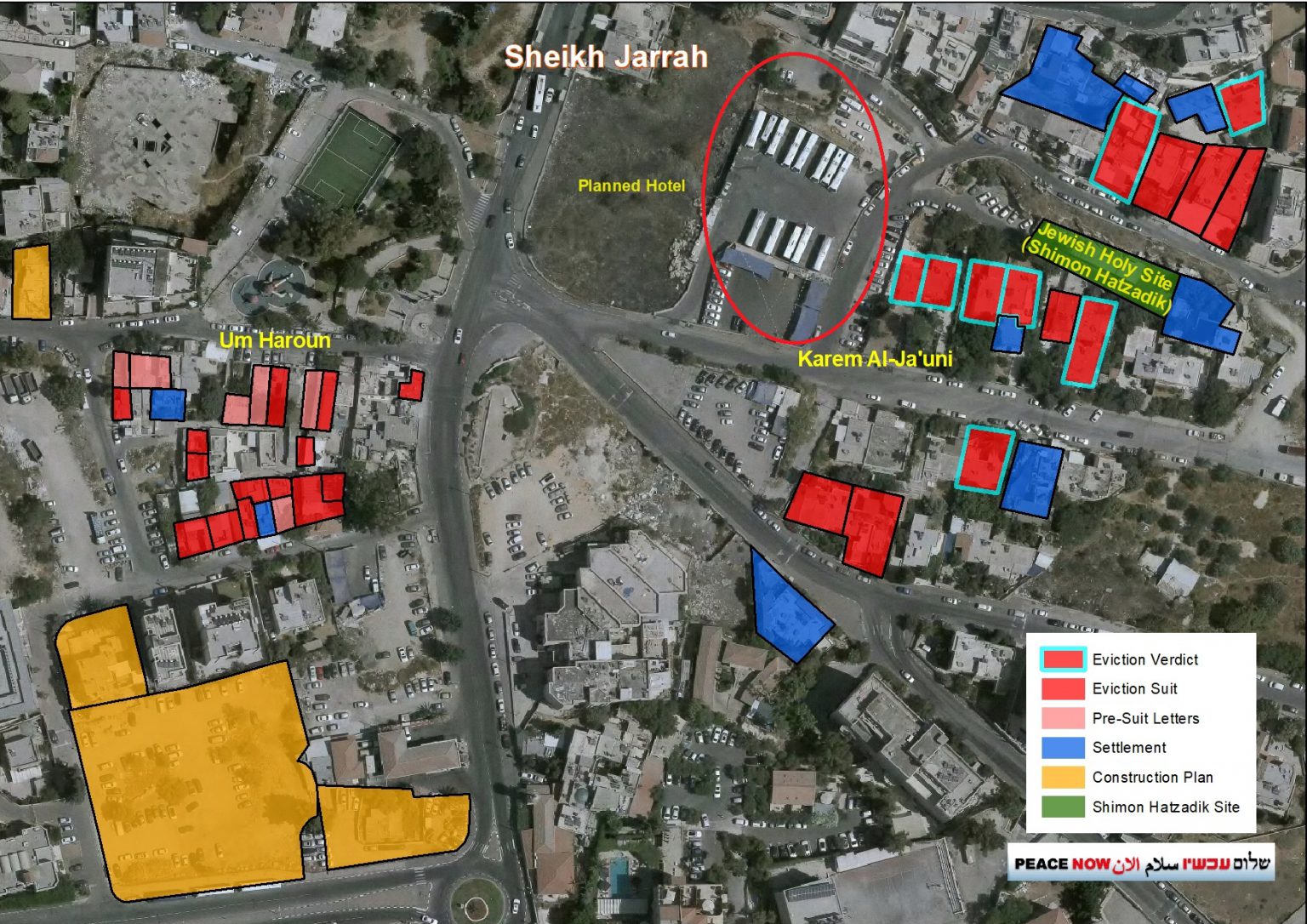
Map by Peace Now
On October 31st, the Israeli Supreme Court rejected the appeals of Palestinian business owners seeking to save their establishments located in the Sheikh Jarrah neighborhood from demolition. The businesses – a bus parking lot and a carwash – are now cleared to be demolished in order to make way for a “public garden” as well as a driveway that will service an as-of-yet-unbuilt Israeli hotel in the neighborhood. Notably, the businesses are located very close to the tomb of Shimon the Righteous, which is a religious site closely associated with the settler enclave in Sheikh Jarrah.
The Jerusalem Municipality previously expropriated the land — which was privately owned by Palestinians – on which the businesses exist. The land was expropriated “for public use,” a tactic that Israeli law permits the State to use in order to confiscate even privately owned land ostensibly to benefit the “public” (a “public” that it seems never includes Palestinians in East Jerusalem), if the State finds it necessary.
Offering critical context, Peace Now raises several absurdities regarding the land expropriation order:
“The decision to expropriate raises several questions. First, the timing. As far as we know to date, no application has been opened for a construction permit for the construction of the hotel. That means there do not appear to be any procedures for starting construction of the hotel soon. The designation for open public space is directly related to the hotel, so it is not clear why it was urgent for the municipality to act right now. We will also mention that the State Comptroller recently remarked to the Ministry of Transportation about the severe shortage of hundreds of parking spaces for buses in Jerusalem, and now the Municipality is cancelling parkings of dozens of buses.
Another issue to wonder about is the proximity of the area to the area of the tomb of Shimon the Righteous (Shimon Ha’tzadik), which is a pilgrimage site for Jews, especially ultra-Orthodox, throughout the year. It is possible that the municipality’s desire to carry out the expropriation is related to the desire to act for the benefit of Jewish visitors to the neighborhood and to allow the Israeli grip of the neighborhood to expand, even if it is formally an open public space intended for the entire Israeli and Palestinian public. Another issue to wonder about is the proximity of the area to the area of the tomb of Shimon the Righteous (Shimon Ha’tzadik), which is a pilgrimage site for Jews, especially ultra-Orthodox, throughout the year. It is possible that the municipality’s desire to carry out the expropriation is related to the desire to act for the benefit of Jewish visitors to the neighborhood and to allow the Israeli grip of the neighborhood to expand, even if it is formally an open public space intended for the entire Israeli and Palestinian public.”
While the court case that will lead to the demolition of the Palestinian businesses in Sheikh Jarrah is not formally linked to the ongoing effort to forcibly dispossess four Palestinian families of their homes in this same neighborhood, radical Kahanist Itamar Ben Gvir did not shy away from making the (obvious) connection between the two cases, commenting that the demolition of the businesses is a:
“necessary step, and now is the time to also evacuate the families of Sheikh Jarrah.”
Israel Demolishes East Jerusalem Muslim Cemetery, In Order to Make Way for Public Garden (& Increase Israeli Control Over Old City Perimeter)
For over ten consecutive days, the Jerusalem Municipality and the Israeli Parks and Nature Authority have been demolishing parts of the Yusufiya cemetery near the Al-Aqsa Mosque in order to turn the area into yet another “public park”. The area in question includes a monument to, and graves of, Palestinians and Jordanians who fought in the 1967 war. Palestinians, many of whom fear that their relatives’ graves will be demolished and exhumed (fears that the Jerusalem Municipality has sought – and failed – to assuage) have protested and clashed with Israeli authorities as they attempt to stop the desecration of the cemetery, the erasure of Arab history, and denial of Palestinian life in the city.
Aviv Tatarsky, a researcher at the Ir Amim, explained:
“The park in question is part of a series of government-funded projects which aim to link settler compounds in the Old City Basin…Similar projects are taking place on the Mount of Olives, [in] Silwan and [in] Sheikh Jarrah…The incidents at the Yusufiya Cemetery are an extreme example of the Israeli government’s lack of respect toward Palestinian property rights, heritage and holy places and its determination to make over the Old City Basin.”
The Grand Mufti of Jerusalem, Muhammad Hussein, told Al-Monitor:
“The cemeteries are part of the identity of the holy city and its narrative, and evidence of the Arab and Islamic presence in the city for thousands of years. Obliterating the city’s landmarks is in the interest of the Jewish settlement project and the Israeli narrative, which is embodied by changing the names of Arab cities, neighborhoods, and streets, and the Judaization of public places and landmarks.”
Hamza Quttaineh, a lawyer advocating for the Martyrs’ Cemetery before the Israeli courts, told Middle East Eye:
“There are huge machinations undertaken by the occupation municipality, along with the Israel Nature and Parks Authority and the judicial system, that provide the legal coverage needed for the Judaisation project encompassing the historical wall of Jerusalem’s Old City.”
Israeli Court OKs Refusal of Israeli Custodian of Absentee Properties to Disclose Extent of Control Over Palestinian Properties
Haaretz has in-depth reporting on a recent freedom of information case relating to the Israeli Custodian of Absentee Properties. The Custodian of Absentee Properties is a government body within the Israeli Finance Ministry that has possession of properties in East Jerusalem that under Israel’s “Absentee Property Law” were “abandoned” by Palestinians during and after the 1948 war, becoming the property of the Israeli state.
In response to a freedom of information request, the Custodian refused to disclose the number of “absentee” properties that it currently controls. The Custodian – Ronen Baruch, who has held the position since 2005 – gave multiple excuses for refusing the request, asserting at different points that his office doesn’t know how many properties it controls, that the process of gathering that information is too complicated, and that revealing this information may compromise the country’s foreign relations (ultimately the winning argument).
During the subsequent Court hearing on the freedom of information request, a senior official from the Israeli Foreign Ministry was granted permission to privately brief the judge, after which the judge ruled against the freedom of information request – a ruling the petitioners intend to appeal. The judge wrote,
“I have been convinced that the disclosure of the requested information may jeopardize the state’s foreign relations…I am satisfied that delivery of the information will cause an unreasonable allocation of resources… Which may disrupt and even paralyze the Custodian’s work.”
The two Israeli lawyers who filed the freedom of information request (Amir Adika and Ram Cohen) told Haaretz:
“What harms the state’s foreign relations? Revealing the information, or the very existence of the law, over 70 years after the country’s founding?…This law is very powerful in regard to the state’s authority over people’s private property…There is public and economic importance in knowing how it conducts itself with this power, how many such properties there are, how many they release, how many they sell. This is a very unconventional law. The impression is that they’re either presenting a very imprecise picture, or that they’re not managing at all.”
As a reminder, Israel’s Absentee Property Law affords Jews the right to reclaim property they owned in East Jerusalem and the West Bank in the period before Israel became a state in 1948, and that they were forced to abandon as a result of the 1948 War. Israel’s law affords no such right to Palestinians who as the result of that same war were likewise forced to abandon property inside what became the State of Israel. After the war, Israel designated such properties “absentee properties” control over which was transferred wholesale to the Israeli state. Use of the Absentee Property Law by settlers organizations with the willing participation of the Israeli government is a key legal mechanism behind past, present, and future evictions of Palestinains from the most sensitive areas of East Jerusalem (like Sheikh Jarrah and Silwan) where Palestinians are facing mass eviction.
New Report from HaMoked: The ‘Seam Zone’ & Israel’s Ongoing Dispossession & Annexation
In a new report, entitled “Creeping Dispossession: Israeli Restrictions on Palestinian Farming Beyond the Barrier,” the Israeli NGO HaMoked takes an in-depth look at the Israeli military bureaucracy which governs – – and systematically infringes upon — the right of Palestinian landowners and farmers to access and effectively cultivate their land which falls in the “Seam Zone” (i.e. the West Bank land that, when Israel constructed its Seperation Barrier along a route that cuts deeply into the West Bank, was left on the Israeli side of the wall/fence).
This important topic shows just how Israel’s policies work to systematically dispossess these Palestinians of their land. The report sarts with an important reminder about the “original sin” involved in this dispossession — Israel’s choice to build its separation barrier not along the 1967 Green Line (which, at the time of the barriers conception in 2002 was an internationally agreed upon divider between Israeli territory and occupied territory) but instead along a route that, for the sake of keeping settlements (and land upon which to expand settlements) on the Israeli side of the barrier, de facto annexed some 9.4% of West Bank land to Israel. [map] The West Bank lands which fell on the Isareli side of the barrier – the “Seam Zone” – were declared “closed military zones,” requiring Palestinians who live on the other side of the barrier to traverse a complicated Israeli bureaucracy in hopes of obtaining access their land (or the land upon which they are employed to cultivate). The matter gets even more complicated from there.
HaMoked writes in conclusion:
“Nearly two decades since the construction of the Barrier, we see the logic of a creeping dispossession – more and more restrictions on Palestinians trying to access areas trapped between the Barrier and the Green Line, and as a result, fewer and fewer people willing to navigate the permit bureaucracy Israel has put in place. Any agricultural community will tell you that land is not merely functional. The land is a source of produce and income, but its benefits cannot be quantified solely in monetary terms. The land is also a site for family and community events, and connection to the land is integral to the local culture. For dozens of Palestinian communities, and tens of thousands of people, all of this has been destroyed by the Separation Barrier. Even those who receive permits to cross the gates during their limited opening hours cannot have a picnic with their family or a spontaneous outing to their land as they once did.
The permit regime reverses the basic logic of international law, that individuals enjoy freedom of movement within their own country, and that movement can only be restricted with just cause. For Palestinians living near the Separation Barrier that Israel built on a route that cuts through the West Bank, free movement is the exception, and the restriction on movement is the rule. And whereas initially Israel promised access to lands behind the Barrier except when security needs warrant precluding access, now no security need is required to deny access. Instead, the premise of the permit regime is now that only Palestinians who prove a need to enter these areas will be allowed to do so. Furthermore, the military periodically amends its definition of “need” to be more and more narrow.
HaMoked has had success in overcoming some of the restrictions: individuals who were denied permits eventually received them following litigation; some restrictive policies have been reversed and others are still under judicial review. However, none of this changes the overall picture emerging from this report: steadily increasing restrictions on Palestinians’ access to the areas of the West Bank known as the Seam Zone have decimated the livelihoods of individuals, families and entire communities.”
Bonus Reads
- “Israel OKs Palestinian homes after advancing settlements” (AP)
- “Israeli forces demolish Palestinian-owned house in occupied Jerusalem” (Quds News Network)
- “Thirty Years On: The Ruse of the Middle East Peace Process” (Inez Abdel Razek for Al-Shabaka)
- “Israel Moves to Silence the Stalwarts of Palestinian Civil Society” (Zena Agha in The New York Times)