Welcome to FMEP’s Weekly Settlement Report, covering everything you need to know about Israeli settlement activity this week.
To subscribe to this report, please click here.
June 9, 2023
- NEXT WEEK – E-1 Back On the Agenda
- Israel Advances Plan for Massive New Industrial Zone
- Israel Quietly Expropriated Land to Facilitate the Retroactive Legalization of Havat Gilad
- Israel Allows Settlers to Operate Farms inside the Masafer Yatta Firing Zone, From Which Palestinians Are Being Forcibly Displaced
- Armenian Orthodox Church Sells Key Jerusalem Properties to an Israeli Investor
- Israel Preps New Laws to “Judaize” the Galilee, Subsidize Jewish-Only Communities in Galilee, Negev, and West Bank
- 17 Israeli Human Rights Orgs Issue Status Report on Occupation
- Yesh Din Re-Releases “Annexation Database”
- Bonus Reads
NEXT WEEK – E-1 Back On the Agenda
The High Planning Council’s Subcommittee for Objections is set to hold a third and final meeting on Monday June 12th to discuss objections that have been filed against the construction of the E-1 settlement, planned for an area just northeast of Jerusalem. Construction of this settlement would have severe geopolitical implications (cutting the West Bank in half, cutting it off from East Jerusalem); would necessitate the forcible transfer of several bedouin communities (a war crime); and affect thousands of Palestinians (shredding the fabric of life).
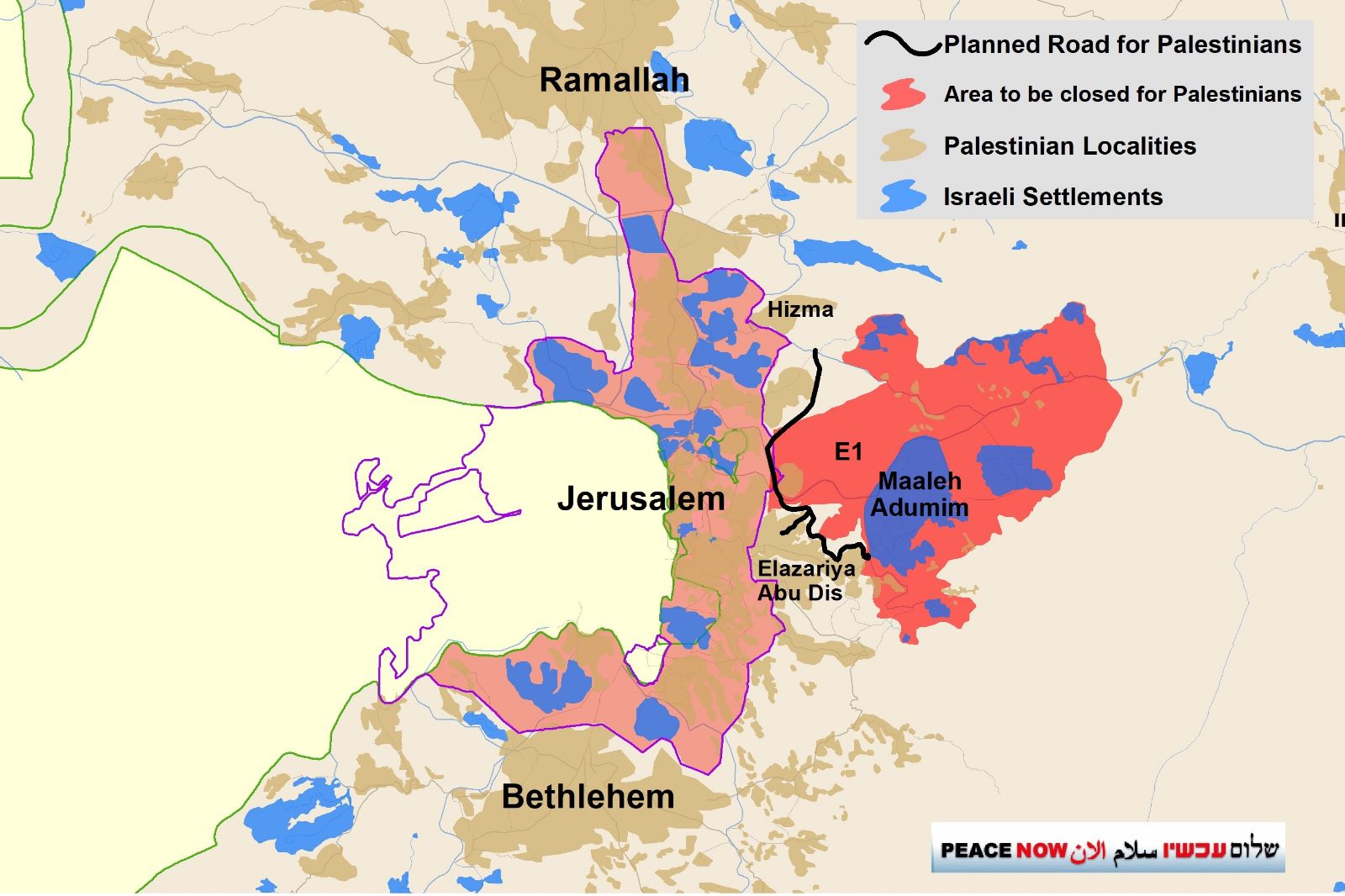 Assuming there is not another last-minute decision to take E-1 off the agenda (something that could well happen, and has happened repeatedly) this upcoming meeting promises to be a decisive one for the long-pending E-1 plan. It could very well result in the Committee – which is now under the authority of longtime settler advocate, Israeli Minister Bezalel Smotrich – granting final approval to the highly contentious plan.
As a reminder: in its current form, the E-1 plan provides for the construction of 3,412 new settlement units on a site located northeast of Jerusalem. The site is home to several Palestinian bedouin communities, comprising 3,000 people, including Khan al-Ahmar, which Israel is planning to forcibly relocate. Long called a “doomsday” settlement by supporters of a two-state solution, construction of the E-1 settlement would sever East Jerusalem from its West Bank hinterland, preventing East Jerusalem from ever functioning as a viable Palestinian capital. It would also cut the West Bank effectively in half, isolating the northern West Bank from the southern West Bank and foreclosing the possibility of the establishment of a Palestinian state with territorial contiguity.
Israel’s “answer” to that latter concern has long been to argue that Palestinians don’t need territorial contiguity, and that new roads can instead provide “transportational continuity,” via a plan called the “Sovereignty Road. If built, the “Sovereignty Road” will seal and divert Palestinian traffic around the area where Israel intends to build the E-1 settlement. In March 2023 Israel announced that construction of this so-called “Sovereignty Road” was set to begin in May 2023. There have since been reports that Israeli authorities have issued notices to Palestinian landowners whose land will be seized for construction of the road, undertaken prep work for construction, and has allocated millions of shekels to fund components of the road.
And another reminder: there have been attempts to promote the E-1 plan since the early 1990s, but due to wall-to-wall international opposition, the plan was not advanced until 2012. At that time Netaynuahu ordered it to be approved for deposit for public review (a key step in the approval process), ostensibly as payback for the Palestinians seeking recognition at the United Nations. Following an outcry from the international community, the plan again went into a sort of dormancy, only to be put back on the agenda by Netanyahu in February 2020, when he was facing his third round of elections in two years. Also, as a reminder: under the Trump Plan (which the Biden Administration has yet to comment on), the area where E-1 is located is slated to become part of Israel.
Peace Now said in a statement:
“The advancement of construction in E1 is another step in the current Israeli government’s actions, which since its establishment, has been establishing new settlements, returning settlers to the northern West Bank, and now working to create conditions for the annexation of the West Bank. Just last week, the Israeli government violated its commitment to the US government and re-established the outpost of Homesh in the northern West Bank. Next week it will violate an Israeli commitment again by promoting the construction plan in E1. This pro-settler and annexationist government seems to continue to act according to a systematic plan that leads us to a reality of apartheid, undermining the chances of a political solution between Israelis and Palestinians. The Israeli public and our friends around the world must wake up and stop Israel from falling into the abyss.”
Israel Advances Plan for Massive New Industrial Zone
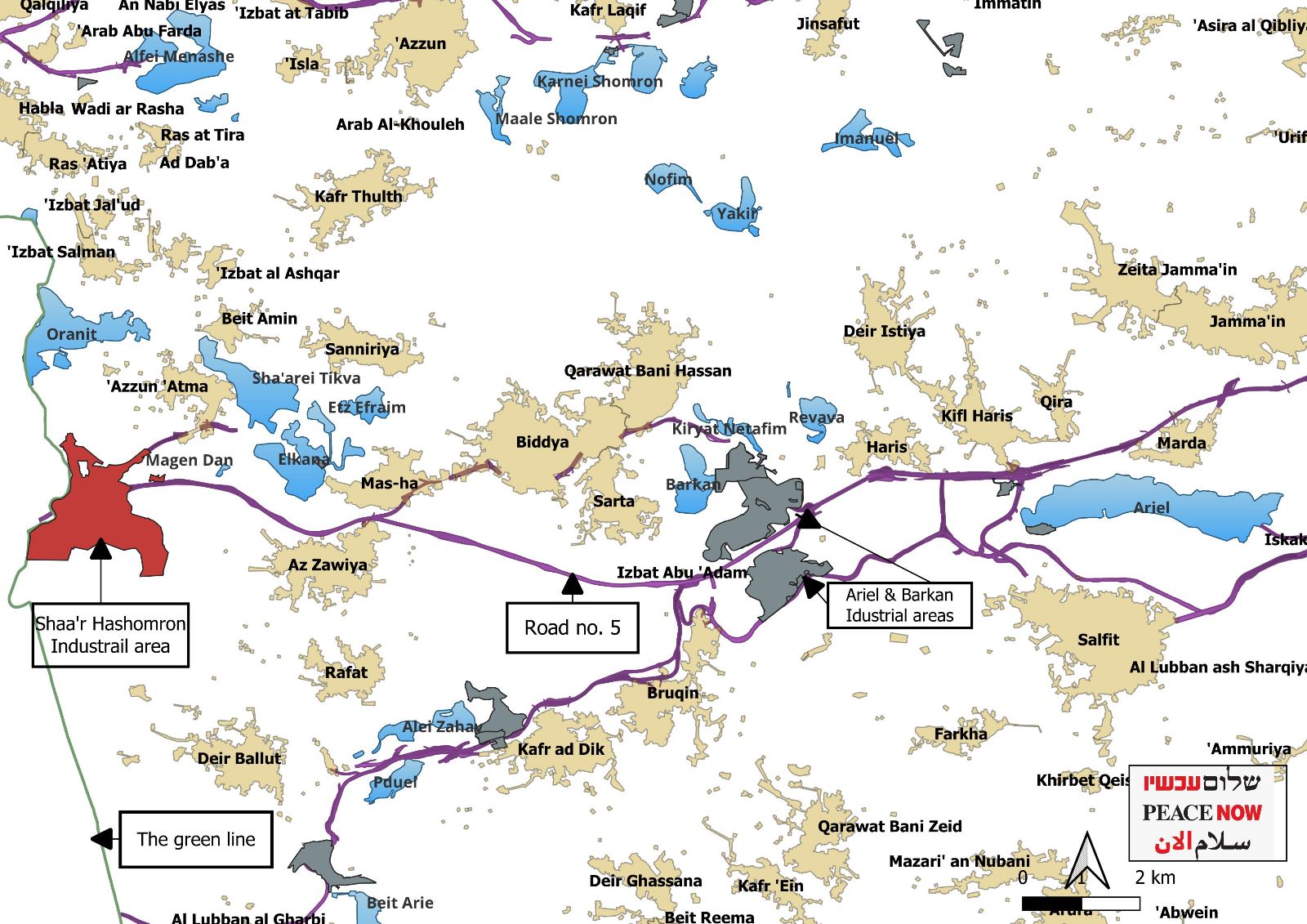 Peace Now reports that on June 2nd the Israeli High Planning Council deposited for public review a plan for the establishment of a massive new settlement industrial zone (called “Sha’ar Shomron”) to be located on lands historically belonging to the Palestinian villages of Siniria, Rafat, and Az-Zawiya in the northern West Bank. In addition to planning for industrial complexes and commercial areas, the plan also provides for the construction of educational buildings, office complexes, sports facilities, recreational areas, and tourism sites – and there is a future plan to connect the new industrial zone to the Israeli railway grid. The new settlement industrial zone is slated to be built directly adjacent to the Green Line, contributing to the erasure of the Green Line and Israel’s annexation of the West Bank.
Peace Now further reports that if the plan is approved, this will likely be the largest Israeli industrial zone in the West Bank, with 2,700 dunams of land, of which 2 million square meters will be for industrial use. Further, Peace Now notes that there is a “lack of need for an additional industrial zone”, especially in this area given that the Ariel and Barkan Industrial Zones are nearby.
Peace Now said in a statement:
“The settlement enterprise is about to receive tremendous economic support in the form of a 2 million square meter industrial zone that will greatly benefit the Shomron Regional Council, strengthen its economy, and, as in previous cases, provide very little, if anything at all, to the Palestinian villages and Palestinians themselves. The Sha’ar Shomron industrial zone is set to deeply integrate Israel’s economy into the occupation mechanism and turn thousands of Israelis into workers for the benefit of the settlement enterprise. This is a hazardous industrial settlement, not only for the Palestinians whose lands it is being built on but for the entire Israeli and Palestinian public. There is no economic prosperity here but rather another expression of the settlement enterprise and the occupation.”
For decades Israel has used industrial zones as another tool to expand and deepen control over West Bank land and natural resources. Industrial zones perpetuate Israel’s economic exploitation of occupied territory (including the local workforce, land, and other natural resources). Presented as benefiting both Israelis and Palestinians, it is in fact Orwellian to label such initiatives as “coexistence” programs, or to suggest that they offer the Palestinians benefits they should welcome. Importantly, jobs in industrial zones – often the only jobs available for Palestinians living under an Israeli occupation that prevents the development of any normal Palestinian economy – are widely viewed by Palestinians as a double-edged sword. The NGO Who Profits explained:
“Israeli Industrial Zones constitute a foundational pillar of the economy of the occupation. They contribute to the economic development of the settlements, which are in violation of international law and the Fourth Geneva Convention, while relying on the de-development of the Palestinian economy and the exploitation of Palestinian land and labor…The Industrial Zones in the oPt form part of a practice of ‘financial annexation’ which is an essential component of the broader policy of annexation taking place.”
Israel Quietly Expropriated Land to Facilitate the Retroactive Legalization of Havat Gilad
The anti-settlement watchdog Kerem Navot (aka Naboth’s Vineyard) reports that on May 2, 2023 the Israeli Custodian of Abandoned and Government Property – Yossi Segal – signed a military order declaring a small tract of land in the West Bank to be “state land.” The small tract of land happens to be where settlers have been allowed to illegally build the Havat Gilad outpost, despite the fact that aerial imagery shows that that area had been continuously cultivated by Palestinians prior to settlers taking over the land (and therefore cannot be taken over by Israel as “state land”). Nonetheless, settlers have been allowed to illegally build on this land, illegal activity which is now being rewarded and further incentivized by Segal’s move to expropriate the land – a move that paves the way for the retroactive legalization of the outpost.
As Kerem Navot chronicles, the Havat Gilad outpost has been the subject of controversy since it was first established by settlers in 2002. Since then, the outpost has become a source of radical, serious, and frequent violence against Palestinians. In 2014, two Havat Gilad settlers were sentenced to prison for setting Palestinian vehicles on fire in a price-tag attack; its residents have also been documented harassing Palestinian farmers and denying them access to their own lands. The Israeli NGO Yesh Din – which has documented violence emanating from Havat Gilad, including against Yesh Din employees – has filed several petitions against the outpost, including a 2010 case that resulted in the demolition of some of the outpost’s structures that were built on land Israel recognized as privately-owned by Palestinians. Yesh Din’s investigation shows that Havat Gilad was built on lands that the Israeli Civil Administration has now declared to be “state land” have in fact been continuously cultivated and privately owned by Palestinians; most of the outpost’s structures have standing (but unenforced) demolition orders issued against them.
In 2018, the Israeli government came under intense pressure from the settler lobby to legalize Havat Gilad in response to a Palestinian terror attack that killed a Havat Gilad settler — and came very close to doing so. At the time, the government ran into difficulties in legalizing the outpost because some of the illegal buildings were located on land Israel recognized as privately-owned by Palestinians, and the government could not – at that time – find a legal means by which to expropriate it. Meanwhile, the settler killed in the attack was subsequently buried at the outpost, and as Al-Monitor explains, the presence of a cemetery in the outpost makes its future evacuation nearly impossible. Kerem Navot’s Dror Etkes spoke to Haaretz around this same time about the phenomenon of settlers being buried in the West Bank:
“Etkes tells Haaretz he believes the choice of where the cemeteries are situated – particularly when they lie on private land some distance from the nearest homes – is not a coincidence. ‘I work on the assumption that there are always deliberate intentions afoot,’ he says. The placement of a cemetery ‘is not chosen for no reason. It is a very long-term investment – and in Judaism, whoever buries people in a certain place does so on the understanding they will not be removed. Obviously, there is deliberate intent lurking behind the location of these cemeteries,’ Etkes continues, ‘and it may be assumed that whoever buries the dead on private Palestinian land knows exactly what he’s doing.’”
Israel Allows Settlers to Operate Farms inside the Masafer Yatta Firing Zone, From Which Palestinians Are Being Forcibly Displaced
Amira Hass reports for Haaretz that Israel is allowing settlers to operate six sheep herding farms [what Americans would call “ranches”] in the Masafer Yatta area of the South Hebron Hills, which Israel has declared a “firing zone”, thereby making it illegal for civilians to enter, live, or farm on the land. This settler activity is being allowed while Israel is simultaneously pursuing the mass forcible expulsion of Palestinians from the area, based on the argument that their lives and homes in a firing zone are illegal. According to a settler from an illegal outpost, the IDF has even provided “grazing permits” to settlers authorizing their activities in the area.
The phenomenon of settlers using agricultural and farming outposts as a highly efficient means of taking control of land (a few farmers can easily take control over vast amounts of herding/grazing lands) has been thoroughly documented by Kerem Navot, which calls it “Israel’s most significant mechanism for dispossessing Palestinian communities.”
Two of the settler farms were established before the May 2022 ruling by the Israeli High Court which authorized the expulsion of Palestinians from the area, the other four were established after. Predictably, though these farms may have started as bare-bones operations, Palestinians now report:
“continuous and brisk activity around these farms, with trucks unloading, a cement truck laying down a concrete surface and all-terrain vehicles entering and leaving the farms, as well as people on horseback…Palestinians in the area say that they often see soldiers in the vicinity of Israeli shepherds, accompanying them within the firing zone.”
In stark contrast to the tolerance and assistance the IDF gives to settlers in the area who have illegally built outposts and these sheep farms, the nearby Palestinians living in Masafer Yatta are ruthlessly tormented, harassed, and attacked by Israeli settlers and the IDF. In a shocking and heartbreaking examination of what life in Masafer Yatta have become for Palestinians, Palestinian journalist and activist Hamdan Mohammed Al-Huraini quotes Issa Makhamra, a resident, who said:
“Everything is forbidden under the pretext that we live in a firing zone, even grazing sheep. Whenever we go anywhere, they set up a checkpoint. When I want to go to the city, I have to pass through this checkpoint, and I am stopped and detained for long hours. I swear to you, if the army could keep sunlight and air from us, they would do it.”
Armenian Orthodox Church Sells Key Jerusalem Properties to an Israeli Investor
The Associated Press reports that in a highly controversial move, the Armenian Orthodox Church signed a 99-year lease giving several church properties in the Old City of Jerusalem to an Australian-Israeli businessman, Danny Rothman (sometimes referred to as Danny Rubenstein). The lease reportedly includes the Hadiqat Al-Baqar (The Cows’ Garden) and its surrounding properties, including the Qishla building in Bab al-Khalil (Jaffa Gate), located in the Armenian Quarter. Rumors of this sale first surfaced in 2021, but recently a sign was placed on one of the tracts saying the land is the property of Xana Capital, the company which Danny Rothman owns. According to a bishop involved in the sale, Rothman and his business Xana Capital plans to develop the land into a luxury resort managed by a Dubai-based company.
The Armenian Archbishop, Nourhan Manougian, alleged that the Church’s real estate official and priest – Baret Yeretsian – sold the land in a “fraudulent and deceitful” deal that he was unaware of. Yeretsian, in turn, said he carried out the deal at the direction of Manougian. Both Manougian and Yeretsian have been forced into hiding due to communal outrage, with Yeretsian fleeing a mob attack with help from Israeli security forces and then relocating to California. Manougian has barricaded himself inside of a convent in the Old City, and protesters have staged weekly protests outside.
Dimitri Diliani, president of the National Christian Coalition of the Holy Land, told the AP: “From a Palestinian point of view, this is treason. From a peace activist point of view, this undermines possible solutions to the conflict.
Manuel Hassassian, the Palestinian Ambassador to Denmark, told the New Arab: “It’s a huge tract of land. By conceding it, they are erasing the Armenian presence historically, demographically, and culturally.”
In the wake of this deal coming to light, Palestinian President Mahmoud Abbas and Jordan’s King Abdullah II have both suspended recognition of Manougian’s authority, rendering him unable to sign contracts, complete transactions, or make decisions in the Palestinian territories and Jordan.
Israel Preps New Laws to “Judaize” the Galilee, Subsidize Jewish-Only Communities in Galilee, Negev, and West Bank
Two weeks ago, the Israeli security cabinet quietly organized an effort to draft and pass new laws designed to encourage Israeli Jews to move to the Galilee region of Israel, where Palestinian citizens of Israel are the majority. There are two main components of this effort so far:
- Amending the “admission committees” law to expand the number of Israel communities permitted to use such committees to screen future residents — a tool used primarily if not exclusively to prevent Palestinian citizens of Israel from moving into communities that residents want to preserve as Jewish-only towns and neighborhoods. The Israeli Ministerial Committee for Legislation granted government-backing to this proposed law weeks ago, and it recently passed its first reading in the Knesset.
- A law that will see the government subsidize land for “communities” that (in the eyes of the Israeli government) suffer from “demographic or security hardships” (which per a key backer of the law does not include Arab areas of Israel, as “Arab settlement does not suffer from similar hardships” as Jewish settlement). This law would in effect see the Israeli government subsidizing Jewish Israelis moving to areas like the Galilee and the Negev — and Prime Minister Benjamin Netanyahu is being pushed by Religious Zionism lawmakers to extend this plan to settlements in the West Bank.
Haaretz Editorial Board writes:
“The bill is part of a broader agenda that is euphemistically called ‘Zionism,’ but whose essence is Jewish supremacy in the spirit of the nation-state law. It’s a follow-up to the cabinet discussion of a resolution meant to give Jews preference in land allocations.”
17 Israeli Human Rights Orgs Issue Status Report on Occupation
On the 56th anniversary of the Occupation, a group of 17 Israel human rights organizations came together to author and publish a concise and highly relevant joint “Situation Report” on the state of the occupation. The report covers four main themes: security forces’ violence, annexation, displacement, and attacks on NGOs.
On annexation, the report covers several important issues that are being closely monitored:
- Structural changes to Israeli governance which amount to annexation of the West Bank;
- Settlement expansion;
- The completion of the Eastern Ring Road (aka the Apartheid Road);
- The “seam zone” permit regime; and,
- Gaza.
The report’s annexation section concludes with the following warnings:
» Changes advanced by Israel’s 37th government, even if not implemented in full, will lead to an irreversible transformation of the West Bank and will cement Israel’s control of the oPt’s Palestinian population and its property. The government’s policies are concurrently advanced via administrative tools, structural changes, legal reforms and huge budget allocations to settler causes. These should not be viewed piecemeal, but as a harmonized policy to accelerate the West Bank’s annexation.
» An exponential increase of the settler population is planned, paired with an unprecedented settlement-expansion drive. Building plans in over 37 settlements have already been approved and ten illegal outposts legalized – with legalization of a further 70 in the pipeline.
» Israel’s current government policies and its Jewish-supremacy ideology will further erode Palestinians’ rights and legal protections under military law, augmenting the West Bank’s dual legal system’s apartheid character. Palestinians’ diminished capacity to be served by the ICA has already been further hampered, and additional restrictions are expected.
» Large-scale construction plans are in place for the E1 area, including the Eastern Ring Road and a new settlement of 3,400 housing units. If realized, these projects will de facto annex strategic parts of Area C, east of Jerusalem, depleting much of East Jerusalem’s land reserves and further fragmenting the West Bank. Annexation of this area has been vehemently and successfully opposed by the international community in the past.
» With all eyes on the West Bank and East Jerusalem, Gaza and its population continue to be largely overlooked and its isolation from the West Bank and the outside world has been accepted as an insoluble reality. Palestinians in Gaza continue to live on the perpetual edge of a humanitarian crisis. Israel’s current government’s annexation policies and cementing of an apartheid regime will further increase Gaza’s isolation and its population’s unbearable predicament.
Yesh Din Re-Releases “Annexation Database”
The Israeli NGO Yesh Din has re-released an updated and incredibly useful database of Israeli laws – past, present, and pending; enacted and abandoned – that amount to annexation of West Bank land. The Annexation Legislation Database categorizes annexation bills into four types:
- The application of Israeli law and sovereignty;
- Direct legislation by the Knesset on the occupied territory;
- The transfer of authorities away from the military commander;
- The blurring of the Green Line.
The re-released database is complemented by a powerful article by Yesh Din’s longtime legal advisor Michael Sfard (who is a legal advisor to a host of anti-occupation, anti-apartheid, anti-settlement groups) in Foreign Policy, entitled “Israel Is Officially Annexing the West Bank.” Sfard writes:
“The high road to legal annexation is an official, public declaration, as Putin made when he annexed the Crimean Peninsula in 2014. But annexation does not necessarily involve pomp and ceremony. It can happen in dull, windowless offices and through seemingly dreary administrative and bureaucratic actions.
Exposing Israel’s annexation requires zooming out. This is what the international community fails to do, and it is why Israel’s brazen violation of international law has not drawn the ire it deserves. International discourse is hung up on the ceremonial, formal version of annexation—Putin’s annexation, which was rightly met with rebuke and sanctions. The world does not know how to deal with Netanyahu’s tactics.
Though it was not accompanied by a grand statement, the Israeli defense ministry’s portfolio transfer to Smotrich amounts to an act of de jure annexation of the West Bank—and is a dangerous step toward entrenching apartheid within the territory.”
Bonus Reads
- “Tantura massacre: Palestinian families call on Israel to mark site of mass graves” (Middle East Eye)
- “Israeli settlers encircling Jerusalem, EU envoys warn” (EU Observer)
- “Palestinian Forum Highlights Threats of Autonomous Weapons” (Human Rights Watch)
- “Settlement expansion is obstacle to peace, Blinken tells US Israel lobby” (Reuters)
Welcome to FMEP’s Weekly Settlement Report, covering everything you need to know about Israeli settlement activity this week.
To subscribe to this report, please click here.
May 5, 2023
-
- Planning Initiated for New East Jerusalem Settlement Enclave, Kidmat Zion
- May 8 Hearing Set to Advance Plan Massively Expanding Nof Zion Settlement Enclave
- Israel Announces Start of Construction of the “Sovereignty Road,” Which Enables E-1 Construction & Annexation of Area C
- IDF Created Unit Specifically for Radical, Violent “Hilltop Youth” Settlers to Terrorize
- Two Major New Reports: Amnesty on Surveillance and B’Tselem on Water
- Bonus Reads
Planning Initiated for New East Jerusalem Settlement Enclave, Kidmat Zion
Ir Amim reports that on April 27th a new plan was submitted to the Jerusalem District Planning Committee outlining the construction of a new settlement in East Jerusalem, between the Ras al-Amud neighborhood and the Israeli separation barrier, with the Abu Dis neighborhood on the other side of the wall. This new enclave – dubbed Kidmat Zion – is slated to have 384 settlement units built on a strip of land surrounded by Palestinian neighborhoods and only accessible by driving through the densely populated areas of Ras Al-Amud.
 The plan is being promoted by an affiliate of the Ateret Cohanim settler group – Bahorim Company – which filed documents with the planning committee that show it (Bahorim) only owns 10% of the land the new plan seeks to build on. The land is unregistered, but Bahorim submitted a table of ownership purporting to show that dozens of plots were owned by Jews prior to 1948, still other plots are owned by settler affiliated groups including one run by U.S. millionaire and settlement financier Irving Moskowitz, and 1 or 2 plots are owned by Palestinians. Part of the land is owned by the Israeli Custodian General, and though it is unknown whether or not the Israeli government is involved in the promotion of this plan Ir Amim speculates:
“Although this does not appear in the documents published thus far, it is possible that the General Custodian is involved in the plan’s preparation, which could explain how Bahorim Ltd. has submitted a plan while only allegedly owning 10% of the area. Last year, the General Custodian covertly transferred into its management 12 dunams of land near the area designated for the new settlement and subsequently completed land registration of the property. The assumption is that the General Custodian likely intends to advance another settlement plan on these respective dunams of land. It should be noted that the General Custodian has become one of the leading state institutions who works in close cooperation with settler groups to expand Jewish settlement in East Jerusalem.”
May 8 Hearing Set to Advance Plan Massively Expanding Nof Zion Settlement Enclave
Ir Amim reports that on May 8th the Jerusalem District Planning Committee is scheduled to take up a plan to massively expand the Nof Zion settlement enclave located in the middle of the Palestinian East Jerusalem neighborhood of Jabal Mukaber. The Committee is set to hold its second discussion to decide whether to submit the plan for public objection; it’s first discussion in March 2023 resulted in the committee sending the plan back to its initiators for a few minor revisions.
The plan – called “Nof Zahav” – would allow for 100 new residential units and 550 hotel rooms in the settlement enclave, which currently consists of 95 units, plus another 200 under construction. In order to provide sufficient land for this expansion, the Jerusalem Planning Committee is simultaneously advancing another plan to relocate an Israeli police station [the Oz station], currently located on the border of Jabal Mukaber, to a new site across the street. This will leave its original location free for the planned expansion of Nof Zion, while the new site will become a massive new Israeli security headquarters. Ir Amim filed a petition against the police station plan, arguing that it is an affront to the planning needs of the local community and that it represents a continuation of Israel’s systematic, city-wide discrimination against the housing, educational, and service-based needs of Palestinian neighborhoods.
Israel Announces Start of Construction of the “Sovereignty Road,” Which Enables E-1 Construction & Annexation of Area C
 Peace Now reports that the Israeli Civil Administration has announced that it will begin preparatory work for the so-called “Sovereignty Road” in early May. Terrestrial Jerusalem further reports that In recent days, Israeli authorities have: issued notices to Palestinian landowners whose land will be seized for construction of the road, began testing borings where the road will be paved, and allocated millions of shekels to fund components of the road. If built, the “Sovereignty Road” will seal and divert Palestinian traffic around the area where Israel intends to build the E-1 settlement just east of Jerusalem. [map]
The road was dubbed as the “sovereignty road” by Naftali Bennett, in light of Bennett’s argument that the Palestinian-only, Israeli-controlled road answers key international criticism over the ramifications of the construction of the E-1 settlement. For decades, construction of the E-1 settlement – which is scheduled for its final discussion on June 12th – has been adamantly opposed by the international community because, in part, it would effectively cut the West Bank in half – preventing any two-state solution. The new road has long been Israel’s answer to that criticism, with Israel arguing that it will replace territorial contiguity with limited “transportational continuity” – via a sealed road that is under Israel’s total control.
However, in order to plan for the road, Israel has had to make more than a few exceptions to its own planning laws (suggesting again that for Israel, “rule by law” rather than “rule of law” is the prevailing paradigm). Peace Now explains:
“Officially, the planned road is defined as a ‘security road’. The excuse for its construction is the intention to build the separation barrier around the Ma’ale Adumim settlement bloc, which is defined as a security need. As a derivative of this, there is a need to build a road that will allow the continuation of the ‘abric of life’ of the Palestinians travelling from north to south of the West Bank. Furthermore, by being defined as a security road, it is not brought for planning approval in the Higher Planning Council of the Civil Administration. Subsequently, the public is not given the opportunity to object to it, as in a formal planning process. Seemingly, this is because the State of Israel has no official authority to plan this road as significant parts of it pass through Area B (see map). According to the 1995 Interim Agreement with the Palestinians, planning authority in it is given only to the Palestinian Authority. To bypass this, the Ministry of Defense chose to define the road as a security road. The lands taken for its construction do not go through a process of seizure for public purposes, but rather a process of military seizure, and therefore the planning process is done behind closed doors.”
Terrestrial Jerusalem explains the significance of this road:
“this [road] is the last link in the creation of an ‘Israel-only’ national road grid in Area C, located to the East of East Jerusalem. The completion of this road will be a quantum leap towards de facto annexation of a large portion of Area C. Dovetailed with E-1, and the demolition of Khan al Ahmar, which are intimately-linked to the road project, would further solidify the irrefutable reality of de facto annexation.”
IDF Created Unit Specifically for Radical, Violent “Hilltop Youth” Settlers to Terrorize
An investigation by +972 Magazine and Local Call has revealed that two years ago the IDF created a special unit – “Desert Frontier” – composed mostly of settlers from the Hilltop Youth movement who are known to the army to be violent. The unit is based in the West Bank, operating now almost entirely in the Jordan Valley, and its soldiers police the area to assert Israeli control and presence, protecting settlers and outposts while harassing Palestinians and clearing them out of Israeli declared firing zones. +972 obtained testimony of at least 12 incidents in which the “Desert Frontier” perpetrated terrible interrogations and beatings of Palestinians – often driving their victims to remote areas in the desert and leaving them there without a phone or keys, sometimes blindfolded and handcuffed.
According to a security official who spoke to +972 on the basis of anonymity said that the idea behind the unit was/is to rehabilitate hilltop youth members, who are not only notoriously and violently anti-Palestinian, but who also regularly challenge the Israeli government’s authority. The source said the unit “consists mainly of hilltop youth … the extreme of the extreme, who otherwise would not have enlisted.”
Two Major New Reports: Amnesty on Surveillance and B’Tselem on Water
In case you missed it, two new reports have been released this week that are worth reading for those tracking settlements and annexation.
Amnesty International released “Automated Apartheid: How facial recognition fragments, segregates and controls Palestinians in the OPT”, revealing new information about Israel’s use of technology to enforce apartheid rule in the OPT. The publication of the report was covered by The New York Times.
B’Tselem released “Parched: Israel’s Policy of Water Deprivation in the West Bank.” The report details how Israel uses water rights and planning to strengthen its control over the West Bank and advance the apartheid regime’s principles: reinforcing and entrenching Jewish supremacy in the entire area between the Jordan River and the Mediterranean Sea.
Bonus Reads
- “Recent Developments in the Situation of Palestinian and Israeli Human Rights Defenders – April 2023” (Human Rights Defenders Fund)
- “Israelis Settlers Suspected of Assaulting Two Palestinian Men in West Bank” (Haaretz)
- “Legalizing the Younger Settlement Enterprise (Hanan Greenwood / Israel Hayom)
- “Israel Razed the Last Orchard in Silwan in Search of Siloam Pool. It Still Can’t Be Found”
- “Netanyahu Meets with Settler Leaders” (Arutz Sheva)
Welcome to FMEP’s Weekly Settlement Report, covering everything you need to know about Israeli settlement activity this week.
To subscribe to this report, please click here.
March 17, 2023
- E-1 Final Hearing Postponed Until June 12
- Disengagement Repeal Law Passes First Reading
- Israel Delivers Demolition Order on Salem Family Home in Sheikh Jarrah, As International Community Calls on Israel to Stop Displacement
- Bonus Reads
E-1 Final Hearing Postponed Until June 12
On March 12th Israeli press reported that the High Planning Council has postponed its final consideration of the E-1 settlement plan. As noted previously in FMEP’s settlement report, a subcommittee of the Higher Planning Council was scheduled to convene to discuss objections to the E-1 settlement plan on March 27th. This discussion is a final step in the approval of the plan. That meeting has now reportedly been postponed until June 12th. This is the fourth time that final consideration of the E-1 plan has been delayed.
The press reports have so far not been confirmed by the Civil Administration, which houses the High Planning Council (under the authority of Finance Minister Smotrich). Notably, none of the most rabidly pro-settlement senior figures in the Israeli government (including Ben Gvir and Smotrich) have commented on these reports, nor has the settler Yesha Council. Previous postponements of the plan were the result of international opposition. As a reminder: the E-1 settlement is slated to be built in the West Bank on land abutting the border of Jerusalem to the northeast, and is considered by the international community to be a “doomsday” settlement, in what its construction would mean for the two-state solution.
Disengagement Repeal Law Passes First Reading
On March 13th, the Knesset approved a first reading of a bill that will repeal clauses of the 2005 Disengagement Law. Repeal of these clauses will pave the way for implementation of the government’s plan to reestablish settlements in the northern West Bank that were dismantled as part of then-Prime Minister Ariel Sharon’s disengagement initiative (including, most notably, the Homesh settlement). The bill must now pass two more readings before becoming law.
Underscoring the current government’s legislative style, the Knesset drafted and voted on the bill without receiving formal opinions on its substance and impact from the Israeli National Security Council, the Israel Defense Forces, the Foreign Ministry, or the Shin Bet. The Knesset is under pressure to pass this legislation quickly due to a court-ordered deadline for the government to explain to the Court why the illegal outpost established by settlers at the site of dismantled Homesh settlement has not yet been demolished and the land returned to its Palestinian owners. Once this law is passed, the government can (ostensibly) tell the Court that it intends to grant retroactive legalization to the Homesh outpost. Legalization of this outpost was explicitly agreed to in the coalition deals which formed the current Israeli government.
As a reminder, for nearly three years Israel has put off responding to a 2019 legal petition filed by Yesh Din, seeking the removal of the illegal outpost (including a yeshiva) at the Homesh site, as well as the site’s return to its Palestinian landowners. Despite Homesh being dismantled in 2005, Israel has never permitted Palestinians to regain access to or control of the land, instead declaring the site a closed military zone. That status has enabled the IDF to prevent Palestinians from entering the area, even as IDF soldiers have routinely permitted settlers not only to access the site, but to set up residence there (illegally, under Israeli law), and to illegally establish a yeshiva there. That yeshiva, according to the Israeli NGO Kerem Navot, has become one of the West Bank’s “hardcore centers of settler terror”. Settlers associated with the outpost have also reportedly wreaked terror on nearby Palestinian villages, most notably Burqa and Sebastia. One Israeli politician even went so far as to say that settlers at one point were “carrying out a pogrom” in Burqa.
After the disengagement repeal bill was approved in its first reading, MK Merav Michaeli (Labor) told Army Radio that the bill:
“gives the crazy settlers permission to do whatever they want in Judea and Samaria, and to hell with Israel’s security.”
The bill will repeal clauses from the 2005 Disengagement Law that prohibit Israeli entry into the area of four former settlements (Homesh, Ganim, Kadim, and Sa-Nur) in the northern West Bank, in effect bringing the status of those sites in line with the rest of Area C. Many lawmakers were pushing for the bill to also include articles that would give outright permission for the reestablishment of Israeli settlement in these areas – articles to permit Israelis to buy and own property/real estate there – but the final text did not include those articles. The law also does not apply any changes to the Gaza Strip.
Israel Delivers Demolition Order on Salem Family Home in Sheikh Jarrah, As International Community Calls on Israel to Stop Displacement
On March 13th, Israeli authorities posted a demolition order on the home of Hajja Fatima Salem in the Sheikh Jarrah neighborhood of East Jerusalem. One day later, on March 14th, twelve European governments issued a joint statement calling on Israel to reverse its decisions on eviction cases threatening the mass displacement of Palestinians from East Jerusalem, with six families under imminent threat.
 A little over a year ago – in February 2022 – the Jerusalem Magistrate Court froze the impending eviction of the Salem family (which had been initiated in 1988) based on the family paying the court a $7,700 “guarantee”. The case has not evolved since; however, around that same time the Israeli government seized a piece of the Salem property, located adjacent to the home that is now under demolition threat. Itamar Ben Gvir (who is now serving as the National Security Minister, with authority over demolitions in East Jerusalem) subsequently set up a tent on that seized property and called it his parliamentary office – a deliberate provocation.
The state violence doesn’t stop there, the men behind the years-long effort to evict the Salem family are Yonaten Yousef, a Jerusalem city councilmember, and former deputy mayor of Jerusalem Aryeh King. Yousef and King claim to have bought the house from the Jewish family that owned it before 1948 — based on an Israeli law known as the Legal and Administrative Matters Law of 1970. This law provides Jewish Israelis the right to “reclaim” properties lost in the 1948 War. In contrast, under Israeli law the Salem family lacks any legal basis to claim both its home in Sheikh Jarrah – where the family has lived since being displaced from their home inside the Green Line during the 1948 War – or to their original home inside Israel, which they lost in the 1948 War (Israel law recognizes no such property claims by Palestinians who fled or were otherwise absent from the areas that became Israel in the course of that war)/.
Bonus Reads
- “Bezalel Somtrich’s West Bank Takeover is What Annexation Looks Like” (Dr. Debra Sushan, J Street)
- “The Rapid and Predictable Rise of Israeli Settler Violence Against Palestinians” (Yara Asi, Arab Center DC)
- “From Huwara to Jerusalem and Washington” (Terrestrial Jerusalem podcast)
- “Measures which will Determine Calm or Escalation during Ramadan” (Ir Amim)
- “Sameh Aqtash Was an Aid Worker Who Had Settler Friends. It Didn’t Save Him From the Pogrom” (Haaretz)
- “Enforcing Apartheid in the West Bank” (Tareq Baconi, NY Book Review)
Welcome to FMEP’s Weekly Settlement Report, covering everything you need to know about Israeli settlement activity this week.
To subscribe to this report, please click here.
February 24, 2023
- With New Powers Given to Smotrich, Israel Annexes the West Bank (Even Without a Formal Declaration)
- Final Hearing on E-1 Settlement Set for March 27th
- Israel Advances More than 7k Settlement Units & Establishes 4 More New Settlements
- U.S.-Brokered Compromise at the UN: Bibi Makes – and then breaks – Promises to Biden Admin on Settlements, Outposts, Raids, and Demolitions
- Multiple East Jerusalem Evictions Expected in March
- New Report: Displacement via Bureaucracy in East Jerusalem
- Bonus Reads
With New Powers Given to Smotrich, Israel Annexes the West Bank (Even Without a Formal Declaration)
On February 23rd, Netanyahu reached a deal to change the way Israel exercises authority over the West Bank. This new arrangement represents the extension of Israeli civilian/domestic authority over the entire West Bank. As such, it represents Israeli annexation of the West Bank, even without formal declaration of annexation.
Specifically: from 1967 until this week, the Minister of Defense was the de facto sovereign in the West Bank, with total authority over matters related to both Palestinians and settlers. With the deal reached this week, authority in the West Bank will now be split between Defense Minister Yoav Gallant and Finance Minister Bezalel Smotrich (acting in his capacity as a “Minister in the Defense Ministry”).
While the agreement takes pains to leave a tiny amount of power over West Bank civilian affairs with the Defense Minister in order to maintain a thin veneer of compliance with international law (the only authority left to Gallant with respect to “civilian” affairs will be to demolish illegal settler activity “in case of security and irregular events,” and even then, Smotrich must be given advance notice of any such demolition), in effect Smotrich will become the new reigning sovereign over the West Bank. According to the deal, he will exercise his authority via the establishment of a new “Settlement Administration” within the Defense Ministry, that he will lead (and appoint his own deputy to assist in leading). This “Settlements Administration” will enjoy virtually total autonomy and unchecked power, with almost no accountability to anyone in the Israeli Ministry of Defense (Gallant in principle can overrule Smotrich’s decisions but must put his reasoning in writing after first meeting with Smotrich to hear his case, and even then, Gallant cannot issue any order to overrule Smotrich). Importantly, the agreement allows Smotrich to systematically apply Israeli law over the settlements.
Itay Epstein, a lawyer of humanitarian law and senior advisor to the Norwegian Refugee Council, explains the totality and impact of Smotich’s powers:
“Spatial planning in the West Bank will come under the authority of the Minister [Smotrich], including authority over the High Planning Council, responsible for establishing and expanding settlements as well as considering Palestinian spatial plans and permit applications in Area C…All matters related to the regularization of “informal” settlement outposts and satellite neighborhoods will come under the sole authority of the Minister, who can endorse 147 such outposts most disruptive to a contiguous future Palestinian State…The [Civil Administration] Enforcement Unit, responsible for the destruction of Palestinian-owned structures built in Area C, as well as the seizure and destruction of donor-funded humanitarian relief, will come under the sole authority of the Minister…The Minister will have the authority to declare new ‘natural reserves’, a primary tool in the appropriation of Palestinian land (in areas A through C) and exclusion of Palestinians from land use across the entire West Bank…All matters related to housing, land, and property rights, including land ownership settlement, surveying, and registration, will come under the sole authority of the Minister. This is the primary tool for expropriating land, and abrogating Palestinian ownership claims…The planning and implementation of infrastructure across the West Bank (areas A through C) will come under the exclusive authority of the Minster, including surface roads, water and sanitation, energy and renewable energy, telecommunications, and waste management.”
Renowned Israeli lawyer Michael Sfard tweets:
“this is a dramatic change in the structure of governance over the occupied territory. Very broad administrative authorities pertaining to the majority of the governing powers in the West Bank are being transferred into hands that are not of the military commander of the occupied territory. From now on, those powers will be held by the minister in the Ministry of Defense, who will de facto serve as the governor of the West Bank…
International laws of belligerent occupation state that an occupied territory will be temporarily administered by the occupying force (that is, the army) which, along with security considerations, will be obligated to promote the interests of the occupied people. Transferring powers to Israeli civilian hands is an act of de jure annexation because it entails removing power from the occupying military and placing it directly in the hands of the government – this is an expression of sovereignty. The bottom line is that the agreement signed today is simultaneously a giant leap of legal annexation of the West Bank and an act of perpetuating the regime’s apartheid nature.”
Further, the agreement attempts to clarify and carefully craft the new, divided chain of command, which – in the end – creates incredible confusion. This confusion is a feature, not a bug, enabling Gallant and Smotrich to publicly, and disingenuously, to claim that the West Bank remains under the administration of the Israeli army as a separate regime from that of the Israeli state, and to assert that “nothing in this document changes the legal status of the West Bank, the laws applied within, or the government’s authority over it.”
On this argument, Sfard comments:
“The agreement includes two clauses aimed at obfuscating the transfer of powers by presenting the governor’s alleged subordination to the Minister of Defense, but according to the document, the cases in which the Minister of Defense can override the governor are extreme cases and even when this is done, the military commander of the West Bank will be bypassed, as he no longer holds authority.
The agreement also states that the governor will work to deepen the powers of the Israeli governmental authorities in the areas of Israeli settlements a process which will promote the unification of government powers and geographically expand their direct legal authority in the West Bank. Or, in other words: stretching Israeli sovereignty beyond the Green Line. The agreement also states that the governor will lead a process of expanding the dual legal system so that Israeli legislation by the Knesset will be applied more fully than it is today to the Israelis in the West Bank.”
In addition, in trying to manage the egos of Smotrich and Gallant – and prepare for inevitable disagreements – the agreement makes Prime Minister Netanyahu the ultimate arbiter of disputes between the two, in effect doubling down on the de facto annexation by giving the Prime Minister authority over decisions military decisions related to West Bank civilian governance.
Final Hearing on E-1 Settlement Set for March 27th
On March 27th, a subcommittee of the Higher Planning Council will convene to discuss objections to the E-1 settlement plan — a final step in the approval of the plan. Final consideration of the E-1 plan has been delayed several times, most recently in September 2022, due to international opposition to the plan. The E-1 settlement is slated to be built in the West Bank on land abutting the border of Jerusalem to the northeast, and is considered by the international community to be a “doomsday” settlement, in what its construction would mean for the two-state solution.
This upcoming meeting promises to be a decisive one for the long-pending E-1 plan, and could very well result in the Committee – which is now under the authority of longtime settler advocate Bezalel Smotrich – granting final approval to the highly contentious plan. Barring intensive outside pressure, additional postponement of the hearing seems highly improbable, given the Israeli domestic politics and the upcoming national election.
As a reminder: in its current form, the E-1 plan provides for the construction of 3,412 new settlement units on a site located northeast of Jerusalem. The site is home to several Palestinian bedouin communities, comprising 3,000 people, including Khan al-Ahmar, which Israel has already undertaken to forcibly displace (many attempts). Long called a “doomsday” settlement by supporters of a two-state solution, construction of the E-1 settlement would sever East Jerusalem from its West Bank hinterland, preventing East Jerusalem from ever functioning as a viable Palestinian capital.
E-1 would also cut the West Bank effectively in half, isolating the northern West Bank from the southern West Bank and foreclosing the possibility of the establishment of a Palestinian state with territorial contiguity. Israel’s “answer” to this concern has long been to argue that Palestinians don’t need territorial contiguity, and that new roads can instead provide “transportational continuity.” To this end, Israel has already built the so-called “Sovereignty Road” – a sealed road that enables Palestinians to pass through, but not to enter, the E-1 area. That road is wholly under Israel’s control (meaning Israel can cut off Palestinian passage through it at any time). In January 2021, then-Prime Minister Netanyahu promised to increase funding for the “Sovereignty Road” as part of the drive to get E-1 built. Further, Netanayhu also recently pitched a room of French investors on a vision to build high speed tunnels throughout the West Bank to accomplish this task.
And another reminder: there have been attempts to promote the E-1 plan since the early 1990s, but due to wall-to-wall international opposition, the plan was not advanced until 2012, when Netaynuahu ordered it to be approved for deposit for public review (a key step in the approval process), ostensibly as payback for the Palestinians seeking recognition at the United Nations. Following an outcry from the international community, the plan again went into a sort of dormancy, only to be put back on the agenda by Netanyahu in February 2020, when he was facing his third round of elections in the two years. Also, as a reminder: under the Trump Plan (which the Biden Administration has yet to comment on), the area where E-1 is located is slated to become part of Israel.
Israel Advances More than 7k Settlement Units & Establishes 4 More New Settlements
Over the course of two days (Feb 22-23, 2023), the Israeli High Planning Council advanced plans for 7,287 new settlement units. With these approvals, Israel has advanced more plans in 2023 (7,287 units) than in 2022 (4,427 units) or 2021 (3,645 units).
In addition, during this same period the Council granted retroactive legalization to three outposts while advancing plans for the retroactive legalization of a fourth outpost. The Council’s decision to legalize (under Israeli law) these outposts comes in addition to the ten outposts “legalized” by the Israeli Security Cabinet last week — meaning that in less than 2 weeks the new Israeli government has (so far) approved the establishment of 14 new settlements.
Three of the four outposts legalized by the High Planning Council this week were authorized as “new neighborhoods” of existing settlements, but in reality these outposts – which are not contiguous with the built-up area of existing settlements – are new settlements. The outposts granted authorization by the Higher Planning Council are:
- Mevo’ot Yericho (181 units granted final approval) – which was authorized by the Security Cabinet over a year ago, but is only now receiving final approval for its master plan from the Higher Planning Council. This outpost is located near Jericho in the Jordan Valley. Peace Now reports that the outpost currently has 60 units built, so the approval of this plan triples the size of the settlement.
- Pnei Kedem (120 units granted final approval), authorized as a new neighborhood of Metzad settlement, located northeast of Hebron. This plan will triple the size of the existing outpost.
- Nofei Nehemia (212 units granted final approval, most of which were already built illegally), authorized as a neighborhood of the Rehelim settlement (which itself was once an outpost granted retroactive legalization), located south of Nablus. Importantly, the Nofei Nehemia outpost is separated from the Rehelim settlement by Route 60 – the major north-south highway in the West Bank.
- Netiv Ha’avot (433 units, approved for public deposit), authorized as a neighborhood of the Elazar settlement. Should this plan receive final approval, the government will have handed settlers not one but two new settlements as compensation for the demolition of 14 units in the Netiv Ha’avot outpost that were built partially on privately owned Palestinian land..
At the last minute, the committee decided to delay its consideration of a plan that would have “legalized” the Zayit Ra’anan outpost. That plan outlines 189 units to be authorized as a “neighborhood” of the Talmon settlement, located north of Ramallah. Peace Now reports this plan was put on the agenda “almost out of nowhere” and that there are only a few caravans at this outpost currently.
In addition to authorizing four new settlements, the Higher Planning Council also:
- Granted final approval for the construction of 1,900 units
- Approved plans for 5,257 units for public deposit.
Peace Now notes that these plans include the retroactive authorization of approximately 1,000 units which settlers have illegally built in settlements. For Peace Now’s data table tracking these approvals, please see here.
As a reminder, the High Planning Council is a body with the Defense Ministry’s Civil Administration, which is now under the control of Finance Minister Bezalel Smotrich, in his capacity “Minister in the Defense Ministry” who in that role now enjoys virtually total control over civilian/settlement matters in the West Bank (see the first section of this report for details).
Peace Now said in a statement:
“The Israeli government is carrying out in full swing an act of annexation of the occupied territories. Just as the judicial coup that the government is advancing is an existential threat to Israeli democracy, so too is this annexation. Advancing the construction of thousands of housing units in the settlements and authorizing 15 outposts within a week are acts of de facto annexation. Building settlements in the occupied territories is a war crime, and annexation without granting citizenship to Palestinians is considered a crime of apartheid. These actions are directed first and foremost against the Palestinians and are with the intention to prevent the establishment of a future Palestinian state by means of taking control of Area C.”
U.S.-Brokered Compromise at the UN: Bibi Makes – and then breaks – Promises to Biden Admin on Settlements, Outposts, Raids, and Demolitions
This week, the United States succeeded in convincing the Palestinian leadership to forgo its push for a Security Council vote on a resolution condemning Israel’s settlement activity, and instead settle for an exceedingly weak statement on the matter signed by the UN Security Council, including the United States.
In exchange for this significant downgrade of international action, Israel reportedly promised that it would not authorize any additional settlement plans or outpost legalizations for some time, with some outlets suggesting Israel committed to a six-month reprieve. This pause, of course, did not stop Israel from advancing 7,000+ plans this week, including the creation of 15 new settlements.
Israel further agreed to pause its concerted efforts to demolish and evict Palestinians from their homes in East Jerusalem and Area C of the West Bank, and to reduce military incursions into Palestinian cities. This of course did not stop Israel from conducted a massive mid-day raid into the old city of Nablus this week – killing 11 Palestinians, included a teenager and three elderly. Over one hundred Palesitians were hospitalized, including an 11-year old who was shot in the leg and got shrapnel wounds to his liver, all while going to the market to get a sandwich. Lastly, press reports that Israel committed to several economic measures to help the Palestinian Authority, including increasing tax revenues.
The U.S. also promised to invite Palestinian Authority President Mahmoud Abbas to the White House, and committed to submitting a request to Israel to reopen the U.S. Consulate in Jerusalem.
On February 20th, the UN Security Council released its statement, which did not strongly condemn Israeli settlement activity – only expressed “deep concern and dismay” at Israel’s recent settlement approvals. Instead, the statement called on all sides to deescalate and condemned acts of violence by all parties.
Notably, this is the first time in eight years the Security Council has produced a formal product related to Palestine, wit the last action being the 2016 resolution on settlements (which the U.S. abstained from). Palestinian diplomat Riyad Mansour told the Washington Post that 14 out of 15 members of the Security Council supported the draft resolution, clearly intimating the United States is the sole reason the resolution was dropped in favor of a statement.
Multiple East Jerusalem Evictions Expected in March
Ir Amim reports that there are four pending eviction cases threatening to displace 150 Palestinians in early March, coinciding with the holy month of Ramadan. Those cases, summarized by Ir Amim, are:
- Gaith-Sub Laban Family, Muslim Quarter, Old City – the family of veteran Ir Amim staff member, Ahmad Sub Laban, faces eviction…on March 15 following the Supreme Court’s decision to deny their request to appeal. All legal remedies have been exhausted, and hence the family is at risk of immediate eviction. Save for state intervention, there is no further recourse to prevent their displacement.
- Shehadeh Family, Batan al-Hawa, Silwan – The District Court ruled to evict the family by March 1. A request to appeal to the Supreme Court is currently pending.
- Salem Family, Um Haroun, Sheikh Jarrah – A decisive administrative hearing on their pending eviction is scheduled for March 9 at the Enforcement and Collections Authority. If authorized, the eviction could potentially be carried out by the end of March.
- Dajani, Daoud, Hammad Families, Kerem al Jaouni, Sheikh Jarrah – a Supreme Court hearing on their appeal is scheduled for March 29. While a similar ruling is expected to that of the one handed down last year in the cases of four other families from the neighborhood, the outcome is still not definitive.
For a deep dive into the legal cases of each family, please see Ir Amim’s comprehensive reporting.
As a reminder, Netanyahu has reportedly promised the United States that it will suspend evictions for a few months. However, Israel made several other promises the United States that it has already violated – including the legalization of more outposts and provocative, violent military actions in the West Bank.
Ir Amim writes:
“Evictions of Palestinian families and settler takeovers of their homes have increasingly been used as a strategy to cement Israeli hegemony of the Old City Basin, the most religiously and politically sensitive part of Jerusalem and a core issue of the conflict. These measures are reinforced by a constellation of settler-operated tourist sites, which together serve to alter the character of the space and forge a ring of Israeli control around the area. This creates an irreversible reality on the ground that deliberately subverts efforts towards an agreed political resolution on Jerusalem. Moreover, such actions severely violate the individual and collective rights of Palestinians in the city and contravenes International Law, while carrying an acute humanitarian impact on the affected families. Since the eviction claims are based on inherently discriminatory laws, the legal recourse is limited. The political nature of these measures hence requires state intervention as a result of concerted engagement.”
New Report: Displacement via Bureaucracy in East Jerusalem
In a new report, Who Profits explains how Israel – following its illegal annexation of East Jerusalem in 1967 – has weaponized government bureaucracy in order to expand settlement and displace Palestinians. Who Profits zooms in on two key levers of power that Israel wields to achieve these goals: land registration and residency permits.
On land registration, Who Profits provides an explanation of the history, the mechanisms, and the consequences of land registration on Palestinian. The entire report, but especially this section, is worth reading closely because it unpacks how the land registration process works. Who Profits explains the scale of potential harm involved:
“Around 90% of land in East Jerusalem (30% of all land in the city),31 was never registered, as Israel froze all land registration proceedings until the launch of this formal land drive in 2018. Although framed as part of a larger package to uplift East Jerusalem and its Palestinian inhabitants’ socio-economic conditions and development, land registration is a key part of Israel’s larger geopolitical agenda of Judaizing and strengthening Israeli governance on the ground, through which it can entrench “sovereignty over East Jerusalem,” as succinctly articulated by the then Minister of Justice, Ayelet Shaked. According to the Civic Coalition to Defend Palestinian Rights in Jerusalem, the land registration process may lead to the confiscation of around 60% of Palestinian land and mass Palestinian dispossession, in violation of international law.”
On residency rights, Who Profits digs into Israel’s “center of life” policy, under which Palestinians may lose their Jerusalem residency if the State believes that an individuals “center of life” is outside of the city. Who Profits writes: “The process imposed by the Israeli Ministry of Interior on Palestinians in Jerusalem to prove that Jerusalem is their “center of life” is deliberately convoluted, draconian, and time-consuming, functioning as an additional means to surveil Palestinian Jerusalemites’ everyday lives and ultimately push them out of their city.” Who Profits profiles three private companies which Israel has contracted with to conduct investigations in Palestinians lives, to support the revocation of residency rights.
This new Who Profits reports dovetails perfectly with the recent legal analysis “A Theory of Annexation” which examines how the Israeli state is similarly using bureaucracy to annex the West Bank. So, whether the goal be displacement or annexation, bureaucratic enforcement is clearly a major tool and tactic to achieve it.
Bonus Reads
- “Police arrest 5 settlers over clash with IDF soldiers, torching of Palestinian car” (The Times of Israel)
- “The White House Is Still Whitewashing Israel’s West Bank Settlement Project” (Haaretz)
- “Why Israel’s goal of pacifying the Palestinians is failing” (+972 Magazine)
Welcome to FMEP’s Weekly Settlement Report, covering everything you need to know about Israeli settlement activity this week.
To subscribe to this report, please click here.
September 9, 2022
- Israel Advances Givat HaShaked Settlement Plan in East Jerusalem
- Israel Delays (for now) Consideration of E-1 Settlement
- Israel Planning to “Legalize” 30+ Shepherding Outposts in Massive Land Grab
- Israel to Request Another Delay in Demolition of Khan al-Ahmar
- IDF Issues Orders to Keep Settlers Out of Ramat Migron Outpost Area
- IDF Removes Amichai Settlement Tower
- Yesha Council Elects New Leader
- Settlement Schools are Flourishing
- Bonus Reads
Israel Advances Givat HaShaked Settlement Plan in East Jerusalem
On September 5th, the Jerusalem District Planning Committee advanced plans to build a new settlement in East Jerusalem, to be called “Givat HaShaked.” The plan provides for 700 housing units (in 4 highrise towers and several six-story buildings), a school, and commercial buildings –all to be built on a highly sensitive and geopolitically critical sliver of land located within the Palestinian neighborhood of Beit Safafa. The plan was approved for public deposit, an advanced stage in the Israeli planning process. The plan for Givat HaShaked is unprecedented, according to the Israeli NGO Terrestrial Jerusalem, in that it is the first settlement of this size that that Israeli government will establish within a Palestinian neighborhood. Beit Safafa is already in the process of being completely surrounded by Israeli development (for Jewish Israelis) — most notably with final approval of the Givat Hamatos settlement plan, for which tenders were issued in January 2021.

The Israeli NGO Ir Amim also points out that, while the government goes to great lengths to find a way to squeeze in several high rise towers to house Israelis in East Jerusalem, there is no parallel effort to address the decades-long lack of planning and approvals for Palestinian communities. Ir Amim writes:
“Givat HaShaked is also a flagrant example of the breadth and depth of housing and planning discrimination in the city. While Givat HaShaked is intended for land located along the built-up area of Sharafat, it is not designated for the community’s development needs, but rather a new housing project for Israelis over the Green Line in Jerusalem. Construction of this new settlement will likewise stand in stark contrast to the existing Palestinian neighborhood, dwarfing and engulfing Sharafat with high-rise apartment buildings – the likes of which Israeli authorities refuse to promote or approve for Palestinian areas. In a similar fashion, the remaining land reserves on the eastern side of Beit Safafa, which could have been used to address the neighborhood’s housing needs, were depleted to advance construction of the Israeli settlement of Givat Hamatos.”
Interior Minister Ayelet Shaked celebrated the advancement, telling Arutz Sheva:
“As I promised, despite all the pressures from at home and abroad, the Givat Hashaked plan was approved today by the district committee. This plan is located in the heart of Jerusalem and is unthinkable to prevent development and construction in this area as well as all over the city. This is an important plan that will lead to an increase in the supply of housing units, employment areas and public buildings for the well-being of the residents.”
As a reminder, the Israeli government has been sitting on plans for Givat HaShaked for decades, but has refrained from implementing them because doing so would require the government to seize a sizeable amount of land in East Jerusalem, some of which is privately owned by Palestinian residents of Sharafat (a section of the Palestinian neighborhood of Beit Safafa). Other parts of the land proposed to be used for the Givat HaShaked settlement plan are managed by the Israeli General Custodian (but neither owned or claimed by the government of Israel) – a fact Ir Amim calls “highly unusual and seemingly marks a new phenomenon.” The Israeli General Custodian is empowered by the State to act as a caretaker of land that has unknown ownership until the heirs are located. In an attempt to explain why the General Custodian has the authority to approve a plan for construction on land that the State does not own, the Israeli Justice Ministry told Haaretz that the plan for Givat HaShaked increased the value of the land and that “by law, the administrator general is obligated to care for the assets under his management in a way that will benefit their private owners.” This answer implies, bizarrely, that if and when Palestinian heirs are located, they will be somehow better off with their land having been used to build a settlement.
Another important facet of how Givat HaShaked is being advanced now is the decision by the Israeli government in late 2020 to initiate a (typically secret) registration process for land in East Jerusalem, including in the Sharafat area. At this time, it is unknown whether the land managed by the General Custodian in Sharafat (and designated for the new settlement) has been – or is in the process of being – registered. On that uncertainty, Ir Amim writes:
“…in the event that it is the same location [where formal land registration has taken place], this move would constitute yet another brazen example of how the settlement of title procedures are repeatedly being used to aid state authorities and settler groups in taking over more land in East Jerusalem…Although portrayed as a measure to ostensibly benefit Palestinian residents, there has been grave alarm that these [land registration and settlement of title] procedures would in fact be exploited to confiscate Palestinian land for political purposes, leading to the expansion of Jewish settlement and widespread Palestinian dispossession in the city.”
For a deep dive into land registration in East Jerusalem, please listen to a new FMEP podcast featuring Kristin McCarthy (FMEP) in conversation with Amy Cohen (Ir Amim).
Israel Delays (for now) Consideration of E-1 Settlement
The Israeli Higher Planning Committee of the Civil Administration has again delayed its consideration of the E-1 settlement plan, which was scheduled to be taken up at the Committee’s September 12th meeting. The E-1 settlement is considered a “doomsday” settlement for much of the international community that still hopes to negotiate a two state solution. This same committee was previously scheduled to take up the E-1 plan on July 18th – days after U.S. President Joe Biden’s visit to Jerusalem. The Israeli government intervened to postpone the meeting, rescheduling it for September 12th – the hearing that has now also been delayed.
Peace Now said in response:
“This is welcome news, but we wish to see E1 taken off the table completely. E1 is lethal to the two-state solution, highly detrimental to Palestinian freedom of movement and to connection between different parts of the future Palestinian state. The Israeli government, and in particular Minister of Defense Benny Gantz (in whose jurisdiction these decisions lie), must take the plan off the table completely.”
This repeatedly delayed meeting promises to be a decisive one for the long-pending E-1 plan, and could result in the Committee granting final approval to the highly contentious plan. Barring intensive outside pressure, additional postponement of the hearing seems highly improbable, given the Israeli domestic politics and the upcoming national election.
As a reminder: in its current form, the E-1 plan provides for the construction of 3,412 new settlement units on a site located northeast of Jerusalem. The site is home to several Palestinian bedouin communities, including Khan al-Ahmar, which Israel has already undertaken to forcibly displace (many attempts). Long called a “doomsday” settlement by supporters of a two-state solution, construction of the E-1 settlement would sever East Jerusalem from its West Bank hinterland, preventing East Jerusalem from ever functioning as a viable Palestinian capital. It would also cut the West Bank effectively in half, isolating the northern West Bank from the southern West Bank and foreclosing the possibility of the establishment of a Palestinian state with territorial contiguity.
Israel’s “answer” to the latter criticism has long been to argue that Palestinians don’t need territorial contiguity, and that new roads can instead provide “transportational continuity.” To this end, Israel has already built the so-called “Sovereignty Road” – a sealed road that enables Palestinians to pass through, but not to enter, the E-1 area. That road is wholly under Israel’s control (meaning Israel can cut off Palestinian passage through it at any time). In January 2021, then-Prime Minister Netanyahu promised to increase funding for the “Sovereignty Road” as part of the drive to get E-1 built.
And another reminder: there have been attempts to promote the E-1 plan since the early 1990s, but due to wall-to-wall international opposition, the plan was not advanced until 2012, when Netaynuahu ordered it to be approved for deposit for public review (a key step in the approval process), ostensibly as payback for the Palestinians seeking recognition at the United Nations. Following an outcry from the international community, the plan again went into a sort of dormancy, only to be put back on the agenda by Netanyahu in February 2020, when he was facing his third round of elections in the two years. Also, as a reminder: under the Trump Plan (which the Biden Administration has yet to comment on), the area where E-1 is located is slated to become part of Israel.
Israel Planning to “Legalize” 30+ Shepherding Outposts in Massive Land Grab
Haaretz reports that the Israeli Civil Administration is in the midst of a years-long process of drafting new protocols that will allow the State to “legalize” settlers’ claims to huge areas of the West Bank (mainly in Area C) that settlers have de facto seized through illegal shepherding activities (grazing settler-owned flocks of sheep, etc on the land). The Civil Administration is working to “legalize” this land theft in areas where the land in question is categorized by Israel as “State land.”
The phenomenon of “shepherding outposts” has been extensively documented by the Israeli NGO Kerem Navot, which has identified it as currently the “most significant mechanism for dispossessing Palestinian communities” in the West Bank. According to Kerem Navot’s May 2022 report, entitled “Wild Wild West,” settlers have taken control of nearly 7% of Area C of the West Bank (around 60,000 acres) via 77 of these grazing outposts.
The Haaretz Editorial Board – in a piece entitled “Settler Crime Always Pays” – writes:
“Once again, the settlers have proved that Jewish crime in the territories always pays. The Civil Administration began formulating the draft regulation about two years ago, against the background of the increase in the number of these outposts. The proper response to the growing number of farms established illegally would have been to see to their removal and to step up enforcement. Instead, the agency bowed down to the settler masters and seeks to cut the law to fit their vices…It must be hoped that he [Gantz] recognizes that it is a looting mechanism designed to take control of more and more of Area C, to prevent Palestinians from working their land and to reduce their living space.”
As a reminder: Israel has a legal responsibility under international law regarding stewardship of “state land” held under its occupation. As the Association for Civil Rights in Israel explains:
“Israel holds state land in an occupied territory as a trustee, and must do everything possible to preserve and develop it for the benefit of the local Palestinian population. The very use of state land for the purpose of building settlements and/or developing infrastructure and industrial zones not in favor of the Palestinian population constitutes a violation of international law.”
Israel to Request Another Delay in Demolition of Khan al-Ahmar
Facing a September 11th deadline to complete the forcible relocation of the Khan al-Ahmar community from their longtime lands just east of Jerusalem (an act that would constitute a war crime), Israeli Prime Minister Yair Lapid has become just the most recent Israeli premier to ask the Court for an extension. As a reminder, the High Court has ordered the demolition of Khan al-Ahmar, which it declared to be illegally built (i.e., lacking Israeli building permits that are virtually impossible for Palestinians to obtain).
The Israeli High Court imposed a deadline on the State to demolish Khan al Ahmar in response to a petition filed by the right-wing pro-settler group Regavim, which sued the government for failing to carry out the demolition of the community in the wake of the Court’s ruling that the community was built illegally. That demolition order has been pending since 2018. The Court granted several delays to the Netanyahu government, and one to the Bennett government. When granting the government another delay in September 2020, the Court said that it would not be granting any more delays. It then granted several more delays, most recently in July 2021, ostensibly due to Russia’s invasion of Ukraine.
Prior to becoming Prime Minister, Lapid opposed the State’s plan to forcibly relocate Khan al-Ahmar. Reports suggested that the government has been preparing a plan that would entail the demolition of the Khan Al-Ahmar, followed by (bizarrely) the rebuilding of the community some 300 meters from where it currently stands.
IDF Issues Orders to Keep Settlers Out of Ramat Migron Outpost Area
After three weeks of repeatedly demolishing the “Ramat Migron” outpost, only to have settlers rebuild it, the IDF has issued a new order declaring the area a “closed military zone” — apparently in hopes of barring settlers from entering the area. The order is effective for only one month. As a reminder: The IDF already viewed it as illegal for settlers to enter the area (which is why the IDF arrested settlers in the area last week), so it is not clear (at least as of this writing) what is different about this new order.
The IDF informed the settlers of the new order as they were in the process of constructing buildings at the Ramat Migron site. Settlers have already vowed to continue fighting to establish a settlement on the hilltop.
IDF Removes Amichai Settlement Tower
On September 8th, Israeli authorities demolished a tower built by settlers on land that has been allotted to the Amihai settlement, located in the Shiloh Valley in the northern West Bank. Settlers built the tower apparently in order to surveil a nearby Palestinian village where new homes are being built. Settlers have already vowed to rebuild the tower.
The Amichai settlement was approved for construction in 2017, making it at that time the first new settlement formally approved by the Isareli government in 25 years. Aerial imagery from 2021 show the massive growth Amichai has enjoyed in the years that followed its establishment, a previously empty hilltop with cultivated fields nearby have been transformed into a sizable suburban neighborhood. In addition to new construction, Amichai was also massively expanded, subsequent to its initial construction, when the Israeli Civil Administration announced that its plan to retroactively legalize the Adei Ad outpost by significantly expanding the borders of the Amichai settlement to turn Adei Ad into a (non-contiguous) neighborhood. In effect, this was a slight-of-hand by Israel to turn the Adei Ad outpost into an entirely new official, legal settlement.
Yesha Council Elects New Leader
The Yesha Council – an association of heads of settlements and regional council leaders that acts as the settler lobby to the government – has elected a new chair, Shlomo Ne’eman. Ne’eman is set to take over the post from David Elhayani.
Ne’eman has earned his stripes as the chairman of the Gush Etzion Regional Council. Upon his election (he was unopposed), Ne’eman said:
“The first task before us is to strengthen the sovereignty and the Jewish presence in the region. This is the time to unite against those who seek our harm, the Palestinian Authority and other terrorist organizations that fight us with guns and knives, as well as with plows and concrete pumps, and to continue working to develop and strengthen Israeli settlement in Judea, Samaria and the Jordan Valley.”
Settlement Schools are Flourishing
According to a newsletter issued by the Friends of Beit El Settlement (an organization that former Ambassador David Friedman used to chair), as the new school year starts there are 86,000 children living in settlements and enrolled in 270 elementary schools across the West Bank. In addition, the newsletter reports that 35,000 settler students attend ~200 post-elementary schools. Gloating, the newsletter boasts:
“Beautiful numbers like these don’t just happen on their own. We can barely imagine the amount of idealism and effort and self-sacrifice over the course of decades, under severely difficult economic and security conditions, that has gone into the Yesha enterprise.”
Bonus Reads
- “Settlement Org Eyes a New Target, and Israeli Authorities Go Out of Their Way to Help” (Haaretz)
- “IDF preparing to use armed drones in West Bank operations” (The Times of Israel)
- “U.S. Examining Allegations Against Israel’s Orthodox West Bank Battalion” (Haaretz)
Welcome to FMEP’s Weekly Settlement Report, covering everything you need to know about Israeli settlement activity this week.
To subscribe to this report, please click here.
August 4, 2022
- Encircling Jerusalem: Israel Advances Settlement Plans Across the City, While Settler Projects Tighten the Noose
- Dumping Any Pretense of Respect for Rule of Law, Israeli High Court Reverses Course, Allows Mitzpe Kramim Outpost to be “Legalized”
- Settlers Acquire Another Home in Downtown Hebron
- Elad Closes Palestinian Access Road Near Sambuski Cemetary in Silwan
- This Week in Area C, Part 1: JNF Approves Purchase of Palestinian Land In Jordan Valley While High Court Weighs Petition
- This Week in Area C, Part 2: Regavim Files Petition Pushing for Immediate Demolition of Palestinian Construction in Area C
- This Week in Area C, Part 3: Settlers Continue to Occupy Six Sites After Recent Attempt to Establish New Outposts En Masse
- Groups Petition to Cancel New Israeli-Led Archeological Dig in the West Bank Citing Legal Questions
- Bonus Reads
Encircling Jerusalem: Israel Advances Settlement Plans Across the City, While Settler Projects Tighten the Noose
It must be stressed that events over the past several months (while the Settlement Report has taken an abbreviated form) have rapidly accelerated the encirclement of Jerusalem by settlements and settler-backed projects — developments which come at the direct expense of Palestinians — their presence in Jerusalem, their rights as land owners, and their quality of life. This encirclement continues to progress, unabated and almost entirely unchallenged, each day. 
Last week, on July 25th, the Jerusalem District Planning Committee advanced plans for two brand new settlements in East Jerusalem – “Givat HaShaked” and the “Lower Aqueduct” plan. These two settlements that would nearly complete the encirclement of Jerusalem to the south. Details of those plans are:
- The Lower Aqueduct plan (1,465 new units) was approved for deposit for public comment. This plan would see a new settlement – called the Lower Aqueduct Plan – built on a small sliver of land between the controversial settlements of Givat Hamatos and Har Homa – and is intended to connect them. In so doing, it will establish an uninterrupted continuum of Israeli settlements on the southern rim of Jerusalem, and destroy the contiguity of Palestinian land in the West Bank and East Jerusalem.
- The Givat HaShaked settlement was also discussed, and the Committee opted to increase the total number of units that the plan outlines for construction, from ~400 to 700 housing units, plus schools and synagogues. Ir Amim and Terrestrial Jerusalem both report that, after a few technical requirements are met, the plan to build Givat HaShaked is expected to receive final approval when the Committee reconvenes in the coming weeks. The plan for Givat HaShaked is unprecedented, according to Terrestrial Jerusalem, in that it is the first settlement of this size that that Israeli government will establish inside of a Palestinian neighborhood – Beit Safafa, which will be completely encircled by Israeli construction if Givat HaShaked is built.
For more background on the Lower Aqueduct plan, see resources by: Terrestrial Jerusalem and Ir Amim.
These plans are significant developments in the effort to establish settler hegemony over East Jerusalem, but are only part of the story of how the encirclement of East Jerusalem has rapidly advanced over the past months. In addition to the construction of new settlements and growth of existing ones, settlers are succeeding in advancing new projects under the guise of tourism (like: the Cable Car, a new visitors center in Batan Al Hawa, and more) and the State is undertaking systematic efforts to take over more and more land. Those methods include the revival of a politicized land registration process in East Jerusalem and the expansion of “national park” lands onto the Mount of Olives. Palestinians in Sheikh Jarrah and Silwan also continue to face the looming threat of dispossession through Court proceedings. In a rare piece of good news — on July 21st the Israeli Supreme Court partially accepted a petition filed by the Duweik family, which has led to the (temporary) freezing of their eviction.
Another facet is the looming threat is the seemingly growing inevitability of the construction of the E-1 settlement to Jerusalem’s east. Prior to the arrival of U.S. President Joe Biden in Jerusalem on July 13th, the Israeli government intervened to postpone a critical hearing on the E-1 settlement, rescheduling it for September 12th. The rescheduled hearing, if it is not postponed yet again, could result in granting final approval to the highly contentious plan (and barring intensive outside pressure such additional postponement seems highly improbable, given the Israeli domestic politics and the upcoming national election). See Terrestrial Jerusalem for a recap of President Biden’s visit.
Dumping Any Pretense of Respect for Rule of Law, Israeli High Court Reverses Course, Allows Mitzpe Kramim Outpost to be “Legalized”
Nearly two years after ruling there is no possible legal basis by which the Mitzpe Kramim outpost can be retroactively “legalized” under Israeli law, the Israeli Supreme Court has now reversed course and will allow the State to formally legalize the settlement using the so-called Market Regulation principle.
In its original ruling, issued in September 2020, the High Court held that construction of the Mitzpe Kramim outpost was not undertaken in “good faith” because there were “multiple warning signs” that the land was privately owned by Palestinians. The outpost was ordered to be dismantled at that time. Now, with apparently no new evidence, the Court decided to accept the settlers’ claim of “good faith.”
The “good faith” condition for retroactive legalization of illegal settler construction on privately-owned Palestinian land is a central element of the “market regulation” legal principle which was devised by former Attorney General Avichai Mandelblit in December 2018 as an alternative to the (now overturned) Settlement Regulation Law. The principle offers a path to grant retroactive legalization to the settlers for what this principle treats as “unintentional” land theft – throwing the principles of both rule of law and private property rights out the window. Peace Now has a comprehensive breakdown of the legal opinion, including the specific criteria outlining which outposts can qualify under the new scheme. It is estimated that 2,000 illegal settlement structures qualify for retroactive legalization using this principle.
Yesh Din writes on the significance of this ruling:
“This ruling overtly indicates Israel’s intentions to continue to pursue retroactive legalization of illegal Israeli construction in blatant disregard of the rights of the local Palestinian population of the West Bank. The State of Israel continues to ignore the duties bestowed upon it by IHL, as the occupying power, to protect the occupied population. Additionally, as the occupying power, Israel is prohibited from transferring the occupier’s population into occupied territory. The interpretation of the Supreme Court’s majority opinion will, in practice, undoubtedly serve to fulfill the intentions of the repealed Regularization Bill from 2017. It will enable settlers, backed by the Civil Administration and other State authorities, to take over thousands of dunams of Palestinian land, leading to human rights violations on a massive scale all over the West Bank and serving as the basis for future negligent and illegal policies, which are now more likely to be given the go-ahead by the Supreme Court. This ruling symbolizes a turning point of Israel’s Supreme Court, which, for the first time, has endorsed the forced confiscation of privately owned land, which is not required for military needs, for the sole purpose of use by Israeli civilians for the establishment of a new settlement.”
In +972 Magazine, Orly Noy writes:
“The court’s ruling could potentially pave the way for the retroactive legalization of thousands more homes in outposts built on privately-owned Palestinian land…The legalization of Mitzpe Kramim is only a footnote in Israel’s policies of dispossession and land theft on both sides of the Green Line, carried out through what the Israeli regime deems completely “legal” expropriations…And one more word regarding the concept of “good faith,” which was sufficient reasoning for the High Court to retroactively legalize the theft of private Palestinian land. This same line of argumentation did not protect the residents of Umm al-Hiran, a Bedouin village in the Negev/Naqab, from being threatened with destruction and expulsion, even though they were physically placed where the village exists today in the 1950s by the military government after it expelled them from their original land, on which Kibbutz Shoval now sits. Although the state itself was the one to move them to their new location, the residents of Umm al-Hiran have lived for decades without basic infrastructure such as water and electricity — that is, until the state decided to destroy the village in order to build Hiran, a town for Jews alone, on its ruins. Unlike the settlers of Mitzpe Kramim, the residents of Umm al-Hiran did not take over land that did not belong to them, nor did they settle on private land that belonged to others. And yet, the state did not hesitate to brutally deport them — even killing a local resident, Yacoub Abu al-Qi’an, in the process. The same court that will allow the residents of Mitzpe Kramim to remain on land it itself admits does not belong to them did not hesitate to legalize the cleansing of Umm al-Hiran. Because, after all, in the apartheid regime, even the concept of “good faith” applies solely to Jewish citizens.”
Settlers Acquire Another Home in Downtown Hebron
On July 28th, a settler group called Harchvi announced it has purchased a three-story house in central Hebron, very close to the Tomb of the Patriarchs/Al-Ibrahimi Mosque and on the Palestinian side of a key IDF checkpoint (the “Pharmacy” checkpoint), which Israeli Jews are supposed to be prohibited from crossing. The group was granted a purchase agreement by the Israeli Defense Ministry this week, which seemingly legitimizes the settlers claim to have purchased the property – but it is not a final determination of the legality of the transaction. This is the second such house in Hebron that settlers have claimed to have purchased from Palestinians owners this year.
Providing more detail on the status of the house, Peace Now writes:
“Peace Now has no information regarding the alleged deal in this case. We know from many other cases in Hebron and in the West Bank that these are dubious purchases, which are sometimes based on forgery or the purchase of only small parts of the property. It almost always turns out that the settlers may have managed to acquire the rights from one person, but the rest of the rights holders did not agree and the issue gets to courts for lengthy hearings. When settlers entered the Za’atari house in March 2018, the case got to the courts and the legal argument is still pending, but the settlers are still in the house. Every purchase of land in the territories requires the approval of the Minister of Defense – according to the law in the Occupied Territories, in order to make a transaction and register it in the land registry, a transaction permit from the Civil Administration is required. Any such transaction-permit requires the prior approval of the Minister of Defense. In this case, it is hard to believe that the settlers have a transaction permit from the Minister of Defense. In all previous cases the settlers hurry to establish a fact on the ground, enter the house and only then submit applications for registration of purchase, and only then does it come to the Defense Minister’s approval. The defense minister can refuse and prevent the execution of the deal.”
In addition to the settlement activity in Hebron that the state of Israel has formally (and publicly) sanctioned, +972 Magazine reports this week that over the past month settlers have been bulldozing Palestinian stores that have been inaccessible to their owners for more than 20 years under Israel closure orders. Though the Israeli Civil Administration has denied authorizing the settlers’ destruction of the stores over the past month, one of the Palestinian shop owners, Tareq Al-Kiyal, raises the point that “Nothing moves in the Old City — and certainly no bulldozers come in and destroy buildings — without a green light from the army.” Palestinians have filed a police report regarding the damage to the stores, which they believe were demolished by settlers in order to expand the nearby settlement enclave, Avraham Avinu.
The shops are in an area referred to as the Kiyal Market, which was “temporarily” shuttered by the Israeli army in 2001 during the Second Intifada. Since then, Palestinians have been forbidden from reopening the shops and cannot even enter their shops to remove valuable equipment. Meanwhile, Israeli settlers have systematically looted the stores, and have been using the buildings for warehouses, recreational spaces, and even as housing.
Elad Closes Palestinian Access Road Near Sambuski Cemetary in Silwan
Emek Shaveh reports that the Elad settler group has blocked an access road near the Sambuski cemetery in the Silwan neighborhood of East Jerusalem, a move which blocks car traffic to the Wadi Rababa area of Silwan where some 150 Palestinian families live. Palestinian residents, in partnership with Emek Shaveh, have appealed to several Israeli authoritative bodies (including the Israeli Nature and Parks Authority, the Jerusalem Municipality, and the Israeli police) to remove the boulders blocking the road, but Elad has failed to cooperate with efforts to negotiate a solution and has instead continued their work at the site. Emek Shaveh reports that the ongoing blockage of the road has led to daily friction between Palestinians and Elad employees.
The Sambuski cemetery is deeply integrated into Elad’s overarching, comprehensive plan to control the Silwan neighborhood. However, the cemetery was a relatively unknown, neglected site until recent years. In 2020, the Trump “Peace to Prosperity” plan identified the Sambuski cemetery as a place of prime historical and religious importance to Israel, elevating the status of the cemetery. The Israeli NGO Emek Shaveh – which has a special expertise on archaeology and the way archeology has been weaponized to serve the political agenda of the settlers and the state – wrote a report on exactly how the Trump “Vision” supports settler efforts to use Jerusalem’s history and antiquities to promote Israeli-Jewish hegemony and control over the city.
Emek Shaveh explains how the cemetery is connected to other settler endeavors in Silwan:
“For the Elad Foundation the cemetery is a strategic site as it links together two important focal points of its enterprise – the neighborhood of Silwan, home to the City of David archaeological park and specifically to the Pool of Siloam at the southern tip of the site, and the Hinnom Valley an area which Elad has been developing for the past two years (more below).”
This Week in Area C, Part 1: JNF Approves Purchase of Palestinian Land In Jordan Valley While High Court Weighs Petition
At the urging of the Israeli government, the Board of the Jewish National Fund (JNF) approved the allocation of $18 million for the purchase of 250 acres (1,000 dunams) of Palestinian-owned land in the Jordan Valley, land that is the subject of a petition with the High Court of Justice.
Israel has controlled the land in question since issuing a military closure order in 1969. In the 1980s, the World Zionist Organization then allocated the land (which is privately owned by Palestinians) to settlers without any documentation of either having received control of the land from the government, or documentation allocating the land to the settlers. Since then, settlers have developed the land into profitable date farms. In 2018, several Palestinian landowners have filed a petition with the High Court of Justice to have the settlers removed from the area and the land returned to their control. In a contentious court hearing in June 2022, in which the State conceded that it does not know how or why the settlers were allocated the land in the first place, High Court Justice Esther Hayut told the State lawyer: “Given that you cannot explain how the land was given to those to whom it was given, does that give them the right to remain there forever?”
The JNF – via its subsidiary group Himnuta, which handles West Bank transactions – allegedly secured a deal with a Palestinian landowner to purchase the land in phases, starting with a smaller plot in 2018. Further phases of the the transaction were canceled due to criticism of the JNF’s involvement in land purchases in the occupied West Bank at the time. The deal is now back in process at the request of the Isareli Defense Ministry in order to finalize the transaction before the High Court.
This Week in Area C, Part 2: Regavim Files Petition Pushing for Immediate Demolition of Palestinian Construction in Area C
The settler group Regavim filed a petition with the Israeli High Court of Justice seeking to change operational procedures within the Civil Administration so that Palestinian construction in Area C can be immediately demolished – eliminating any chance for Palestinian landowners to challenge the demolition of their property – if it is believed to be illegal. Regavim calls it “absurd” that the Civil Administration would allow Palestinians a chance to assert their legal rights to build on land in Area C before demolition is carried out.
While settlers push for faster demolition of illegal (under Israeli law) Palestinian construction in Area C, a new piece by +972 Magazine reveals that an Israeli official who is in charge of handing out demolition orders against Palestinian buildings in the Massaffer Yatta region, himself lives in an illegally built home in an illegally built outpost. This only furthers the clear message that settler groups are not interested in ensuring the faithful enforcement of Israeli law, but are rather interested in wielding Israeli law as a weapon to displace and replace Palestinians.
This Week in Area C, Part 3: Settlers Continue to Occupy Six Sites After Recent Attempt to Establish New Outposts En Masse
According to an op-ed by Arlene Kushner, settlers continue to ”maintain a presence” at six sites located in Area C where they are planning to establish new outposts. These are the same sites that were part of a large-scale effort two weeks ago, led by the Nahala settler movement, to establish six new outposts all at once. That effort was thwarted by Defense Minister Benny Gantz, who ordered Israeli security forces to prevent and remove settlers from the sites.
The determination of settlers to violate the law is unsurprising, in the ensuing hours after the failed operation a leader of the Nahala Movement, Daniela Weiss, told Haaretz:
“We’ll be back, of course. We’ll try to come back in a day or two. If it’s this Shabbat, I can’t say. We’re taking it one step at a time.”
Groups Petition to Cancel New Israeli-Led Archeological Dig in the West Bank Citing Legal Questions
The Israeli NGOs Haqel and Emek Shaveh report that on July 25th, an Israeli archaeologist launched a new excavation of the “Tel Tibnah” site in the Ramallah district, with sponsorship from the Israeli Bar-Ilan University. The NGOs jointly raised concerns about the political motivation behind the excavation, given “several fundamental legal and ethical issues” with the dig. The groups have called for the immediate cancellation of the excavation.
Haqel and Emek Shaveh further explain:
To the best of our knowledge, the site is situated on private and public lands of three Palestinian villages: Deir-Nisham, Beit Rima and Nebi Salah, and lies in proximity to the village of Abud. These lands are used by the local Palestinian population for agriculture and herding. In addition, within the site there is a spring that serves for drinking and irrigation. Initiating archaeological projects on privately owned land, even if these are declared as archaeological sites, demands that notification be given to the owners of these lands and their approval is required in advance. Entering private property without the permission of the owner is defined as a criminal act of incursion, even more so when conducting actions that might damage property and prevent access to the property, as is a frequent occurrence throughout the West Bank. The local residents unambiguously submitted their objection to the proposed excavations which will have a dramatic effect on their lives, impact their freedom of movement and violate their property rights. So far, this objection has not been taken into consideration.
The main question at stake is the State of Israel’s range of legitimate courses of action and that of Israeli academia. Initiation of an academic archaeological excavation serves, by nature, a scientific-academic motivation. This project does not serve an immediate necessity or mitigate against a pending danger, and does not meet the criteria as a “salvage excavation”, nor does it serve the local population living around the site. Any attempt to “govern” archaeological sites that are not within the sovereign borders of Israel is a political act and not a scientific one.
In addition, the claims of “antiquity robbery” should not justify state actions, and the political act should not be concealed as an archaeological one. The erosion of the distinction between heritage protection on the one hand and settlement and annexation on the other, threatens the future of archaeology.”
As FMEP has chronicled, settlers and their allies are intent on taking control of archaeological sites in the West Bank, and and seizing artifacts that are currently under Palestinian control. Settlers claim the sites are neglected and/or damaged. To that end, the settler groups known as “the Shilo Forum” and the “Shomrim al HaNetzach” (“Preservers of the Eternal”) — see background on these groups here — issued a report surveying 365 sites in the West Bank and arguing that the Palestinian Authority is moving to “erase all traces of Israel’s ancient Jewish heritage.” The accusations were in addition to allegations of neglect, mismanagement, and intentional damage. The report is part of the organizations’ campaign to push the Israeli government to assert control over these sites.
Bonus Reads
- “Saving Masafer Yatta: The Fight Against Expulsion” (Mondoweiss)
- “Military Rule: Testimonies of soldiers from the Civil Administration, Gaza DCL and COGAT (2011-2021)” (Breaking the Silence)
- “Palestinian family encircled by Israeli settlement” (Al-Monitor)
Welcome to FMEP’s Weekly Settlement Report, covering everything you need to know about Israeli settlement activity this week.
To subscribe to this report, please click here.
March 18, 2022
- Court Delays Decision on Mass Expulsion in Massafer Yatta
- Settlers Construct New Outpost on World Heritage Site in Battir
- Ma’aleh Adumim to Challenge Government of Delay of E-1 Settlement Construction
- This Week in Settler Terrorism
- U.S. Ambassador Has Harsh Words for Settlements, But Admits Some Construction Will Proceed
- Further Reading
Court Delays Decision on Mass Expulsion in Massafer Yatta
On March 15th, the Israeli High Court held what was expected to be a decisive hearing regarding the fate of eight Palestinian communities facing expulsion — at the hands of the Israeli State — from a large area in the South Hebron Hills known as Massafer Yatta. This is an area that Israel declared to be a closed “firing zone” in the 1980s (known as Firing Zone 918).
At the conclusion of this week’s hearing the Court did not issue its final ruling, but indicated it will convene another hearing in the coming months at which time it will issue its ruling. If given the green light, the forced expulsion in Massafer Yatta would constitute the largest displacement of Palestinians by Israel in decades — displacement that would be entirely illegal under international law.
This week’s court proceedings were live tweeted by the Israeli human rights group Breaking the Silence, and also covered by Palestinian journalist and activist Basel al-Adraa, who lives in Massafer Yatta. Adraa noted that it is “extremely likely” that the Israeli High Court will rule in favor of the State, and in so doing provide a green light (and legal cover, as far as the Israeli legal system is concerned) to the State’s plans to forcibly relocate some 1,300 people from the their homes and destroy their villages and their unique way of life. The State has maintained its argument that the firing zone is essential to state security, specifically for military training exercises because the terrain resembles Lebanon.
+972 Magazine, in a helpful explainer on this topic, explained why this effort to establish a pretense of legality for Israel’s actions against Palestinians in the South Hebron Hills flies in the face of international law and Israel’s obligations under treaties it has signed, writing:
“According to international law, and as detailed in treaties to which Israel is party, it is illegal to use occupied territory for a purpose that serves only the occupier and not the occupied population. In addition, international law prohibits the forcible transfer of the occupied population. The state has further claimed that one reason it needs the land in Masafer Yatta is to train soldiers for a possible war in Lebanon. But here, international law stipulates that such military use of occupied land can only be for the direct management or security needs of the occupied territory itself, making Israel’s declared purpose regarding Lebanon also illegal.”
A lawyer representing the eight communities under threat, Shlomo Lecker of the Association for Civil Rights in Israel, told Reuters:
“This case is not about a firing zone, it is about taking control of land because unlike other areas, most of this land is privately owned,” said Shlomo Lecker who, along with the Association for Civil Rights in Israel, is representing 200 of the Palestinian families under threat of displacement. In effect this is land expropriation without compensation.”
Basel al-Adraa wrote for +972 Magazine:
“Our expulsion from Masafer Yatta has never ceased over the last two decades. Lacking the ability to expel everyone at once, like in 1999, the army has tried to slowly dispossess us. To immiserate us until we leave. Every year, I have watched as Israeli soldiers seal our wells, cut water lines, and destroy the roads that connect our villages. The dangerous road conditions here are a constant reminder of a racist reality governed by an army that denies us our ability to live on our land legally. Even our vehicles are confiscated by soldiers when they feel like it. Our lives have become nearly impossible. We want to build families and homes, but know the army will destroy those as well.”
Settlers Construct New Outpost on World Heritage Site in Battir
In the early morning hours of March 14th, a group of settlers accompanied by Israeli soldiers set up a new outpost on a piece of land in the Palestinian village of Battir, located near Bethlehem, on land that is registered UNESCO world heritage site. Settlers reportedly moved in two caravans, a large tent, and sheep – suggesting an intent to establish a so-called agricultural outpost. The sheep pen was reportedly removed from the area on the same day it was brought in.
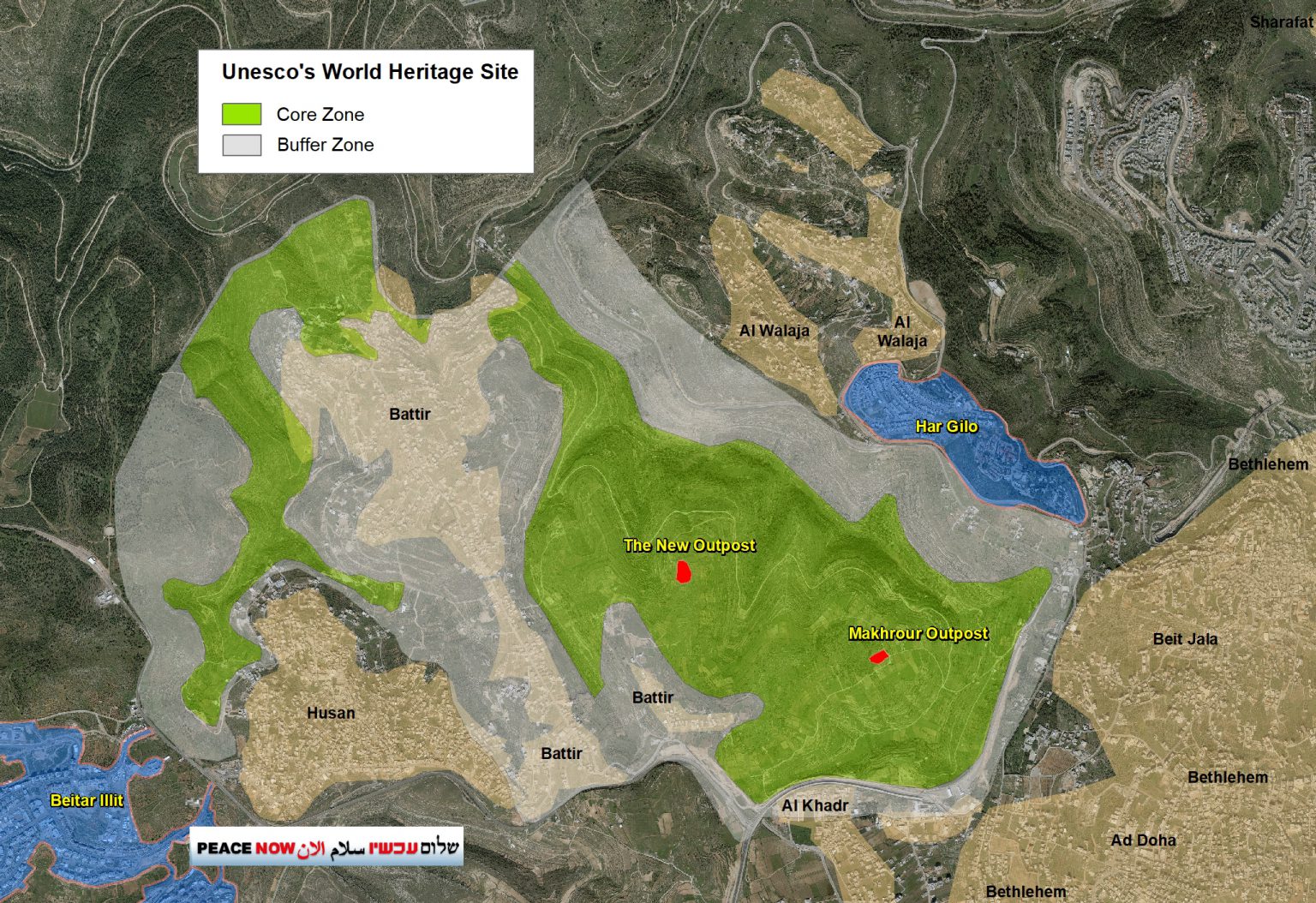 Since the outpost was set up, Middle East Eye reports that Israeli soldiers have been continuously patrolling the area to prevent any Palestinians from approaching the site – and attacking those who attempt to protest the new outpost. This is the fourth time settlers have attempted to establish an outpost in the area of Battir.
An local activist from Battir, Hassan Muamer, explained the settlers strategy:
“The settlers want to connect these two outposts [the new outpost and an outpost established in 2019 in the nearby Al-Makhrour Valley] together, and confiscate hundreds of acres of land in the process..This is all part of their plan, to shorten the distance between the two outposts, confiscate more land, and eventually connect these outposts to the settlements of Har Gilo, Gilo, and Gush Etzion, creating a massive settlement bloc that extends from Jerusalem, through Bethlehem, all the way to Hebron.”
Peace Now said in a statement:
“It is no coincidence that this illegal outpost is established while most of the public’s attention is drawn towards the war in Ukraine. The current government has already failed several times in stopping a handful of settlers in Eviatar, Homesh, and other places and has refrained from evicting illegal outposts immediately upon their establishment. The government must not fail this time, so the outpost will not be established.”
Ma’aleh Adumim to Challenge Government of Delay of E-1 Settlement Construction
The Jerusalem Post reports that the settlement council of Ma’aleh Adumim is preparing to submit an appeal against the State of Israel for delaying construction of the E-1 settlement, contending that Prime Minister Bennett and Defense Minister Gantz lack the authority to freeze the plans at this stage. The petition will be submitted to the Jerusalem Local Court, according to the report.
As a reminder, the E-1 settlement plan remains on the precipice of construction. In January 2022, the Bennett government intervened to stop a key hearing on the project. At the time, reports suggested that the political echelon had put on “indefinite hold” on the plan, largely due to U.S. pressure. U.S. Ambassador to Israel Thomas Nides seemed to confirm that U.S. pressure was exerted at that time to stop E-1 from moving forward, telling Peace Now recently:
“I went full board [sic] on E1… It is a very important area which if [built] could cut off any possibility of a capital for the Palestinians.”
Also as a reminder: in its current form, the E-1 plan provides for the construction of 3,412 new settlement units on a site located northeast of Jerusalem. The site is home to several Palestinian bedouin communities, including Khan al-Ahmar, which Israel has already undertaken to forcibly displace (many attempts). Long called a “doomsday” settlement by supporters of a two-state solution, construction of the E-1 settlement would sever East Jerusalem from its West Bank hinterland, preventing East Jerusalem from ever functioning as a viable Palestinian capital. It would also cut the West Bank effectively in half, isolating the northern West Bank from the southern West Bank and foreclosing the possibility of the establishment of a Palestinian state with territorial contiguity.
Israel’s “answer” to the latter criticism has long been to argue that Palestinians don’t need territorial contiguity, and that new roads can instead provide “transportational continuity.” To this end, Israel has already built the so-called “Sovereignty Road” – a sealed road that enables Palestinians to pass through, but not to enter, the E-1 area. That road is wholly under Israel’s control (meaning Israel can cut off Palestinian passage through it at any time). In January 2021, then-Prime Minister Netanyahu promised to increase funding for the “Sovereignty Road” as part of the drive to get E-1 built.
And another reminder: there have been attempts to promote the E-1 plan since the early 1990s, but due to wall-to-wall international opposition, the plan was not advanced until 2012, when Netaynuahu ordered it to be approved for deposit for public review (a key step in the approval process), ostensibly as payback for the Palestinians seeking recognition at the United Nations. Following an outcry from the international community, the plan again went into a sort of dormancy, only to be put back on the agenda by Netanyahu in February 2020, when he was facing his third round of elections in the two years.
Also, as a reminder: under the Trump Plan (which the Biden Administration has yet to comment on), the area where E-1 is located is slated to become part of Israel.
This Week in Settler Terrorism
On March 14th, an Israeli-licensed car drove into an IDF checkpoint, in an apparent attack, near the illegal Homesh outpost, lightly injuring two Israeli soldiers. It’s unclear what happened next, as the IDF has not said if the perpetrator – who is thought to be an Israeli settler, given the license plate on the car – was arrested. What is clear is that the IDF did not respond with lethal force, as is almost always the case when Israeli soldiers perceive themselves to be under attack by a car driven by a Palestinians.
This week’s apparent car ramming attack transpired two days after settlers from the site of the former settlement of Homesh (which is supposed to be a closed military zone) arrived at the checkpoint to stage a stone-throwing attack on Palestinian cars. The settlers ended up battling IDF soldiers who attempted to stop their terrorism. An IDF soldier subsequently filed a complaint with the Israeli police about the incident.
Elsewhere, Israel arrested two settlers on suspicion of involvement in vandalism and destruction of Palestinian property in the village of Fara’ata on March 15th. One of the detained settlers serves as the security coordinator for the Gilad outpost, and the second arrestee is a bodyguard. Following the arrest and remand of the settlers, security coordinators for various other Israeli settlements and outposts announced they will be going on strike.
It’s also worth noting that Defense Minister Benny Gantz signed an order this week to place an unnamed 21-year old settler under administration detention on suspicion of involvement with terrorism against Palestinians and Israelis. Though administrative detention is a familiar military tool used to keep Palestinians incarcerated without charge, Haaretz reports this will be the first such order signed against an Israeli since February 2020. There are currently 490 Palestinians being held as administrative detainees according to Addameer.
The detained settler is believed to be from the Givat Ronen outpost, an outpost from which settlers attacked Palestinians and Israeli activists who were planting trees on privately owned Palestinian land near the village of Burin in the northern West Bank in January 2022. Footage of the attack shows settlers wielding clubs, throwing stones, and burning a car — in the process injuring six people. Following the attack, the Israeli authorities delivered demolition notices to five structures at the Givat Ronen outpost (also known as Sneh Ya’akov), where the attackers are believed to be illegally living. The notices were posted on January 23rd.
Subsequently, the apparently undaunted settlers attacked an IDF soldier during riots near the Givat Ronen outpost. Haaretz reports that dozens of settlers participated in the attack, which included stone throwing and tear gassing Israeli troops.
Kerem Navot – an anti-settlement watchdog – provides critical history on the Givat Ronen outpost and how violence is at the center of settlers’ drive to takeover Palestinian land, tweeting:
“The outpost of ‘Givat Ronen,’ known also as ‘Sneh Yaakov,’ is named after the man who founded it in 1998–Ronen Arusi…Givat Ronen is one of two outposts located around the isolated, violent, and extremist settlement of Har Bracha, which was established overlooking the city of Nablus in 1983. Givat Ronen is located about a kilometer south of the settlement…The two outposts surrounding this settlement (like all outposts in the West Bank) are used for the same function: to take over land surrounding the settlement. In this case, the lands of the village of Burin. The approach is simple: you build an outpost on land that was looted by the state by declaring it to be “state land”; from there you continue to take over cultivated agricultural land surrounding the outpost by way of violence most of which were previously cultivated by Palestinians. In practice, as a result of the settler violence that is backed by the army, Palestinians are not able to access any of this land, or any of the land within the much larger area around the settlement covering about 5,400 dunams that this land is located in, unless they work in construction in the settlement of Har Bracha. The scumbags who carried out this pogrom below the outpost have learned this tactic well: employing murderous violence in order to increase the size of the territory that Palestinians cannot enter. They have every reason in the world to assume that in this case, as in every case, no one will bother to leverage the law against them.”
U.S. Ambassador Has Harsh Words for Settlements, But Admits Some Construction Will Proceed
Speaking to a virtual event organized by Americans Peace Now, U.S. Ambassador Thomas Nides called Israeli settlement construction “infuriating” and “stupid.” Nides, while deriding the settlement growth, conceded that the U.S cannot (or will not?) stop Israel from all settlement construction, saying:
“We can’t do stupid things that impede us for a two-state solution…We can’t have the Israelis doing settlement growth in east Jerusalem or the West Bank. I’m a bit of a nag on this, including the idea of settlement growth – which infuriates me, when they do things – just infuriates the situation, both in east Jerusalem and the West Bank… [I] would be lying [if he said that it was possible to avert] every single house that is built. I can’t stop everything, just so we are clear.”
Bonus Reads
- “Major New Developments: Plans being advanced around the Old City and the Court verdict regarding Sheikh Jarrah evictions” (Terrestrial Jerusalem)
- “Instead of Army Service, Israel Allows People to Volunteer at Illegal West Bank Outposts” (Haaretz)
- “US envoy looks to bolster West Bank economy with 4G service, tech offerings” (The Times of Israel)
- “PA complains to US over ‘settler terrorism’” (Arutz Sheva)
Welcome to an abbreviated version of FMEP’s Weekly Settlement Report, this week providing you a list of resources that cover everything you need to know about Israeli settlement activity this week. The Settlement Report will return to its normal format next week. To subscribe to this report, please click here.
Jerusalem
Reports this week suggest that the Bennett government has (for now) tabled the E-1 settlement plan, due largely to U.S. pressure. At the same time, the Israeli government continued to advance other major new settlement projects across East Jerusalem (most notably Givat HaShaked, and “Silicon Wadi”). And all of this comes, of course, in addition to the looming mass displacement of Palestinians from their homes in Sheikh Jarrah and Silwan, as the result of the joint efforts of Israeli settlers, Israeli courts, and the Israeli government.
- E-1 tabled (?): “Israel freezes plans to connect Jerusalem to Maale Adumim due to US, Meretz pressure” (Israel Hayom)
- Advancing new settlement of “Givat HaShaked”: “District Planning Committee to Discuss Settlement Plans for ‘Givat HaShaked’ and Pisgat Ze’ev” (Ir Amim)
- Demolition Orders in Wadi Joz to pave way for Silcon Wadi: “Dozens of Palestinian commercial facilities in Jerusalem receive demolition orders from the Israeli municipality” (WAFA). For Background on the “Silicon Wadi” project, see here.
- Looming mass displacement in Sheik Jarrah/Silwan: PODCAST: “Sheikh Jarrah Showdown” (Terrestrial Jerusalem)
The Evyatar Outpost
With the legal backing of the Israeli Attorney General’s office and the reported support of Defense Minister Gantz, the drive to retroactively legalize the Evyatar outpost continues to advance, despite opposition from leaders of the Yesh Atid and Meretz parties. For detailed background on the Evyatar outpost, see here. For further info on recent developments, see:
- “Bennett’s gov’t bent on legalizing Evyatar outpost, Minister says” (Jerusalem Post)
- “Top Israeli Official Explains Why Evyatar Won’t Be Legalized” (Haaretz)
- “Settlers Score Decisive Win Against Israeli Government” (Haaretz)
- “Israeli Attorney General’s ‘Parting Gift’ to Government: A Land Mine” (Haaretz)
- “Opinion | Legalizing the Illegal Pretense of Evyatar” (Zvi Bar’el in Haaretz).
The Homesh Outpost & Yeshiva
Facing a court-mandated deadline to state its position on the unauthorized Homesh outpost and yeshiva, the Israeli government told the Court last week that it is “working hard to enforce the law” but that Defense Minister Gantz is ultimately responsible for what happens. A few days later, the IDF removed *some* of the illegally built structures that settlers have been using for many years as a yeshiva at the site of the former Homesh settlement (which was dismantled by the Israeli government in 2005, but the land was never returned to its Palestinian owners). However, the main yeshiva building was left intact (the buildings that were removed had been used as dormitories). For background on the Homesh outpost and yeshiva, see here. For further info on recent developments, see:
- “Israeli Government Says Fate of Illegal Outpost of Homesh in Gantz’s Hands” (Haaretz)
- “IDF razes settler buildings at West Bank’s Homesh, yeshiva remains” (Jerusalem Post)
- “Security forces demolish structures at Jewish outposts in West Bank, Negev” (The Times of Israel)
- “Yamina MK Nir Orbach supports repeal of Disengagement Law” (Arutz Sheva)
More on Outposts
Significantly, the Knesset this week rejected a bill that would have connected some 70 West Bank settlement outposts (illegal even under Israeli law) to the Israeli power grid. Naftali Bennett’s Yamina party (which had previously backed the bill when it was in the opposition, back when Netanyahu was still Prime Minister) voted against the bill. For more details, see:
- “Opposition bill on connecting illegal West Bank outposts to power grid shot down” (The Times of Israel)
- “Security forces demolish illegal outpost named for teen killed in police chase” (The Times of Israel)
- “Vehicles Vandalized in Palestinian Village Hours After Israel Evacuates Outpost” (Haaretz)
More Developments – Quick Hits
Khan Al-Ahmar
- “Binyamin Council rejects establishment of Khan al-Amar on its territory” (Arutz Sheva)
Settler Violence
- “Illegal Outpost Resident Arrested After Attack on Left-wing Activists” (Haaretz)
- “Charges Are Pressed Only in 4% of Settler Violence Cases” (Haaretz)
- “Israeli minister keeps up campaign against growing settler violence” (Al-Monitor)
Radar-Worthy
- “Approved Monday, relatively unknown AG will take office amid falling trust” (The Times of Israel)
Welcome to FMEP’s Weekly Settlement Report, covering everything you need to know about Israeli settlement activity this week.
To subscribe to this report, please click here.
January 7, 2022
- E-1 Settlement Reportedly Delayed
- E-1 Settlement Reportedly Delayed, BUT (Part 1): Israel Advances New Settlement Plan in East Jerusalem
- E-1 Settlement Reportedly Delayed, BUT (Part 2): Israel Approves Expansion of French Hill Settlement in East Jerusalem
- E-1 Settlement Reportedly Delayed, BUT (Part 3): An Update on Two Families Facing Displacement in Sheikh Jarrah
- Al-Walajah Hearing Postponed but Remains Likely
- Report: Gantz Intends to Turn Evyatar Outpost Into New “Legal” Settlement
- Settlers Still Pressing Govt to Authorize Homesh Outpost, & Terrorizing Nearby Palestinians
- IDF Evacuates Kumi Ori Outpost, Yitzhar Start Clashes
- IDF Renews Standing Demolitions Orders Against Six Unauthorized Outposts
- Israel Earmarks Millions for Seven New Synagogues in Settlements & Outposts
- Bonus Reads
E-1 Settlement Reportedly Delayed
The Israeli Civil Administration’s High Planning Council has removed consideration of the E-1 settlement plan from the agenda of its scheduled January 10th meeting. Haaretz reports that the plan has been indefinitely postponed due to “the expert opinions of certain officials in the Civil Administration.” No further information regarding the identity of the officials nor their opinions has been made public, and neither Israeli Minister of Defense Benny Gantz (who oversees the Civil Administration and all planning in the West Bank) nor Prime Minister Bennett have made any public comments. Haaretz further notes that the decision to add and remove items – particularly contentious items such as the E-1 plan – requires the approval of political leadership.
The High Planning Council – which is the body within the Israeli Defense Ministry which oversees all construction in the occupied West Bank – was expected to convene on January 10th to hold a third hearing to consider public objections to the E-1 plan. The Council’s previous hearings on public objections to the plan have been riddled with drama. The first was held on October 4th, but Palestinians were effectively denied the ability to participate, as it was held online and was thus inaccessible to the many Palestinians affected by the plan who do not have internet access. The second was held on October 18th; at that hearing three objections were presented (one by the Palestinian village of Anata, a second by the Palestinian village of Al-Azariya, and a third joint submission filed by Ir Amim and Peace Now). Ir Amim reports that there was no substantive discussion of these objections, with the Civil Administration panel offering no questions or comments on them. This third hearing – which was scheduled for January 10th – was set by the Court (originally for November 2021, but delayed) to compensate for the exclusion of Palestinians from the first hearing.
E-1 Settlement Reportedly Delayed, BUT (Part 1): Israel Advances New Settlement Plan in East Jerusalem
 On January 5th, the Jerusalem Municipal Planning Committee advanced a plan – referred to as the “Lower Aqueduct Plan” – to build a new settlement with 1,457 units in East Jerusalemn land located between two already controversial settlements on the southern flank of East Jerusalem: Givat Hamatos and Har Homa. The new settlement is intended to connect the Givat Hamatos and Har Homa, establishing an uninterrupted continuum of Israeli settlements on the southern rim of Jerusalem, and destroying the contiguity of Palestinian land in the West Bank and East Jerusalem. With approval from the municipal planning authority, the plan now goes to the Jerusalem District Planning Committee which will convene on January 17th to consider depositing the plan for public review.
In addition to severing East Jerusalem from the West Bank in the south, the new settlement will impinge on two neighboring East Jerusalem Palestinian villages of Sur Baher and Umm Tuba, and will involve the expropriation by Israel of privately owned Palestinian land. Most notably, in order to pave a new access road for the new settlement, the State will likely expropriate land privately owned by Palestinian residents of Umm Tuba. Ir Amim explains:
“According to the plan, an access road to the new neighborhood will be built over the Green Line on private Palestinian land belonging to residents of Umm Tuba. These lands will likely be expropriated. Despite the probable expropriation, the plan does not offer any development for the remaining privately-owned Palestinian land and will likewise not grant building rights to Palestinian landowners for areas alongside the road not intended for expropriation.”
Adding insult to injury, two years ago the Jerusalem Municipality and the Ministry of Jerusalem Affairs initiated a plan to build a new Palestinian business center in the precise area targeted by the “lower aqueduct” plan, as part of an Israeli government initiative to reduce poverty in East Jerusalem. The Jerusalem Municipality subsequently abandoned the plan for the Palestinian business center under pressure from settlers, specifically from the Har Homa settlement which borders the area. Ir Amim comments:
“Not only is this yet another example of severe planning discrimination, but construction of this new neighborhood will serve to further create Israeli territorial contiguity along East Jerusalem’s southern perimeter while depleting more land reserves for Palestinian development.”
Peace Now notes that the majority of the land on which the new settlement will be built (half of which is in East Jerusalem and half in West Jerusalem) is privately owned, or managed by the Israeli Custodian General. Although recent reporting suggests the Custodian General is moving to advance settlement construction on lands it manages across East Jerusalem, its legal ability to do so is questionable (and doing so has historically not been its practice).
It’s worth recalling that in December 2021, reports surfaced that the Israeli Custodian General is planning to establish a new settler enclave in Sur Baher, and is hoping to add more land in the village to its existing portfolio of 3.3 dunams.
Terrestrial Jerusalem writes:
“This Plan is not promoted in a vacuum, and constitutes yet another significant link the chain of new settlement schemes currently being expedited by Israeli authorities on the southern flank of East Jerusalem. Connecting Har Homa to Givat Hamatos, the Lower Aqueduct Plan joins these other schemes: Givat Hamatos, Har Homa West, Ahuzat Nof Gilo and Har Gilo West. The cumulative impact of these plans is to create a continuous built-up buffer, sealing East Jerusalem off from its sister city, Bethlehem. Viewed in context, the Lower Aqueduct Plan is a significant component in a strategic thrust with the objective of consolidating sole Israeli rule over East Jerusalem, and cutting it off from its environs in the West Bank. The physical detachment of East Jerusalem from Bethlehem will be viewed as unilateral act that causes concern not only among Palestinians and the international community, among the major Christian denominations around the world.”
Peace Now said in a statement:
“As in the case of the Atarot plan, right-wing elements in the government are taking advantage of the lack of coalition agreement on the issue of settlements to advance far-reaching plans that post facts on the ground that undermine the possibility of peace. The plans add to the tension on the ground and highlight the blatant discrimination that the government is building in East Jerusalem for Israelis only, while the hundreds of thousands of Palestinians in the city can build almost nothing. The coalition parties that support the possibility of two states for two peoples must do everything so that these plans are not promoted and do not reach a discussion in the District Committee.”
E-1 Settlement Reportedly Delayed, BUT (Part 2): Israel Approves Expansion of French Hill Settlement in East Jerusalem

Map by Peace Now
On January 5th, the Jerusalem District Planning Committee gave its final approval to several plans that will add a total of 2,092 new units to the French Hill settlement in East Jerusalem, on the edge of Mount Scopus.
Several plans relate to the Hebrew University campus on Mt. Scopus. Notably, while Mt. Scopus is in East Jerusalem, it is not considered by the international community to be occupied territory (reflecting the fact that in 1948 the area was designated as a demilitarized zone). These new plans, which expand the footprint of the Hebrew University campus but on land that is in the French Hill area (i.e. occupied territory), are:
- The “Bronfman Dormitory” plan to build 672 settlement units on land located in the French Hill settlement area (beyond the borders of the Mt. Scopus campus). Ir Amim raises alarm that this plan will completely encircle a Palestinian neighborhood (leaving it as an enclave surrounded by Israeli development), which “will greatly increase the construction in areas marked as Israeli, while blocking any further development of the Palestinian neighborhood.”
- The “Lerner Complex & Lower Resnick Dormitory” plan calls for the construction of 1027 units , the majority of which are designated for land east of the Green Line where there are currently student dormitories for the Hebrew University.
- The construction of 528 settlement units on land just north of the Jerusalem British War Cemetery, on land that is cut in half by the Green Line.
Ir Amim said in a statement:
“Beyond the geopolitical implications of constructing more housing units over the Green Line in Jerusalem, these plans are yet another example of the acute housing discrimination facing East Jerusalem Palestinians. These four plans follow close on the heels of other major housing projects advanced for Israelis in East Jerusalem over the course of 2021. The Israeli authorities continue to promote plans at full force for thousands of housing units for Israelis, while systemically refraining from advancing plans for Palestinians to meet their severe housing needs.”
Peace Now writes:
“it should be noted that some of the plans are adjacent to Palestinian land and houses (a neighborhood considered to be the fringe of Sheikh Jarrah), but all the huge building rights planned in these plans are not given to Palestinian homeowners living adjacent to the planned area. The Israel Land Authority has chosen to plan only the complexes under its control and not to allow the private construction of Palestinians next door. Since 1967, the government initiated and planned approx. 56,000 units for Israelis in East Jerusalem, while for Palestinians the government supported only 600 units, in the 1970’s. The planning of so many units in East Jerusalem for Israelis alongside with the increase in house demolition for Palestinians, raises the frustration and anger in East Jerusalem.”
E-1 Settlement Reportedly Delayed, BUT (Part 3): An Update on Two Families Facing Displacement in Sheikh Jarrah
New details have emerged regarding the delayed forcible displacement of the Salem family from their longtime home in Sheikh Jarrah in favor of settlers. Though the eviction notice stated that the family would be evicted from their home on December 29th, a last minute delay was granted based on a request submitted to the Court by the setters. The settlers requested that the court postpone the evacuation and instead require that it be carried out between January 20 and February 8th.
The settlers’ lawyers’ request was in line with concerns raised by the Jerusalem police, which also submitted a letter to the Court that warned a set date for the eviction, known in advance by the family and the public, “could endanger the forces and foil the evacuation’s success.”
Also in Sheikh Jarrah and in keeping with the police’s warning, the Saliha family received another eviction notice from Israeli authorities warning them that an eviction order against their home can be carried out anytime between January 10 and January 25. There are two households in the Saliha family living on a plot of land that Israel expropriated (in 2017) for “public use”, and on which it now intends to build a school (it is as yet unclear what population the school will serve).
Ir Amim provides essential and comprehensive information on what is going on with regards to the Salhia family case:
“The Jerusalem Municipality is demanding the eviction of the entire Salhia family, comprised of two households and totaling 12 individuals, under the pretext that expropriation of the property is necessary for the construction of a school. Following the court’s dismissal of one petition, one of the households received the aforementioned eviction order. The second household’s petition will be heard tomorrow (January 6) at the Jerusalem District Court.
While the municipality is evicting the family to build an educational institution, in recent years it relinquished a plot of land in Sheikh Jarrah originally designated for a school and transferred it into the hands of an ultra-Orthodox association for the construction of a massive yeshiva. The municipality appears to perceive it as reasonable to dispossess a Palestinian family for the sake of a school rather than utilizing open land initially allocated for such purposes.
When the District Planning Committee discussed the objections to the Ohr Somayach yeshiva plan (TPS 68858) at the end of 2020, the representative of the Jerusalem Municipality’s planning department claimed that there was no shortage of educational institutions nor a lack of space for such buildings in Sheikh Jarrah.
Today, Ir Amim sent an urgent letter to the Director of the Municipality’s Education Administration (MEA) in which it detailed the contradiction in the municipality’s actions and demanded MEA act to retrieve the parcel of land it transferred to the ultra-Orthodox association. Such a measure could in fact obviate the “need” to seize the Salhia family’s land and prevent the violation of their property rights and forced eviction.
Members of the Salhia family are Palestinian refugees who were uprooted from their homes in Ein Kerem in 1948 and now stand to be displaced for a second time. According to the family, their parents purchased the plot of land and have lived in homes they built since before 1967. The property also houses a well-known and thriving garden center called Peace Nursery.
Situated directly across from the British Consulate, the homes are strategically located between Kerem Al’ajoni and the Shepherd Hotel complex where settler groups are acting to establish major settler enclaves (see map below). In Kerem Al’ajoni, Nahalat Shimon is working at the behest of settlers to evict some 30 Palestinian families, while the Ateret Cohanim settler organization has constructed 22 housing units in the Shepherd Hotel complex to house a new settlement. The organization received the compound from the state decades ago after it was declared “absentee property.” There are reports that Ateret Cohanim intends to build additional floors, and therefore the units are not yet occupied.
It should be underscored that this development is taking place in parallel to the impending eviction of the 11-member Salem family from Um Haroun, Sheikh Jarrah (western section) for the benefit of settlers. As reported previously, the family was handed an eviction notice in early December citing that they would be subject to forcible removal as of December 29. That eviction order was cancelled, and an administrative hearing was held on December 30 at the Enforcement and Collection Agency concerning a request for a new eviction order with a flexible implementation date. Although the hearing concluded without a decision nor the issuance of a new eviction order, the family’s legal representation has made it clear that all potential legal channels have been exhausted. Therefore save for government intervention, there appears to be no other means to prevent the family’s displacement. Continued public pressure and concerted engagement with the Israeli government on this matter is hence vital.
A total of some 70 families, numbering over 300 Palestinians, are under threat of eviction from Sheikh Jarrah due to lawsuits filed by settler groups working in close collaboration with state bodies, including the General Custodian. Driven by political and ideological motives, these efforts aim to establish settler enclaves by forcibly uprooting Palestinians and supplanting them with Jewish settlers as a means to Israelize the area and further entrench Israeli control. Such measures carry severe humanitarian and geopolitical ramifications.”
Al-Walajah Hearing Postponed but Remains Likely
The Israeli Supreme Court hearing on the demolition of 38 homes in the beleaguered Palestinian village of al-Walajah, scheduled for December 26th, was ultimately postponed by the Court. The delay followed a new request submitted to the Court by the lawyer representing the Palestinian families facing imminent homelessness, though it’s not clear what the request was exactly. Ir Amim makes it clear that the delay is not cause for celebration, and stems from a technical matter.
The Court has not set a new date for the hearing.
As a reminder, the State of Israel has longstanding demolition orders against 38 Palestinian homes – in which around 300 people live – in the village of Al-Walajah, though the orders have been contested by Palestinians and, until this point, frozen by the Court as the matter is litigated. In December 2021, the State asked the Court to lift a freeze on the demolition orders, arguing (as it had in the past) that the houses – built by Palestinian residents of al-Walajah s on their own land – were illegal, because the were built without the required Israeli permits. This argument points to the Kafkaesque nightmare in which al-Walajah’s residents are trapped.
In point of fact: It is all but impossible for Palestinians to obtain building permits from Israel to build “legally” on their own land in East Jerusalem and in Area C of the West Bank. In the case of al-Walajah, such permits are, literally, impossible to obtain. This is because Israel has actively chosen not to approve an “outline plan” for the area, without which permits are an impossibility. Al-Walajah residents, with the help of planning experts, prepared and proposed an outline plan for the area, and for more than 15 years have worked to get Israel to approve it — to no avail. Israeli authorities have repeatedly (in January 2021 and again in March 2021) refused to approve the resident-backed plan, and have also refrained from initiating their own planning process. Indeed, the Jerusalem District Committee, as part of a January 25, 2021 ruling against the outline plan proposed by residents, deemed the area in question — where Palestinians have lived for decades — an “agricultural area” where no building would ever be permitted. The result: Al-Walajah’s residents have been left with zero hope of obtaining the permits required to build on their own land – or keep their current homes located there.
Report: Gantz Intends to Turn Evyatar Outpost Into New “Legal” Settlement
Over the past few weeks, reports have surfaced indicating the Israeli Defense Minister Benny Gantz is planning to approve the retroactive authorization of the Evyatar outpost, located on a strategic hilltop named Mount Sabih just south of Nablus on land historically belonging to nearby the Palestinian villages Beita, Yatma, and Qablan. This follows Prime Minister Bennett’s November 2021 promise to legalize the outpost.
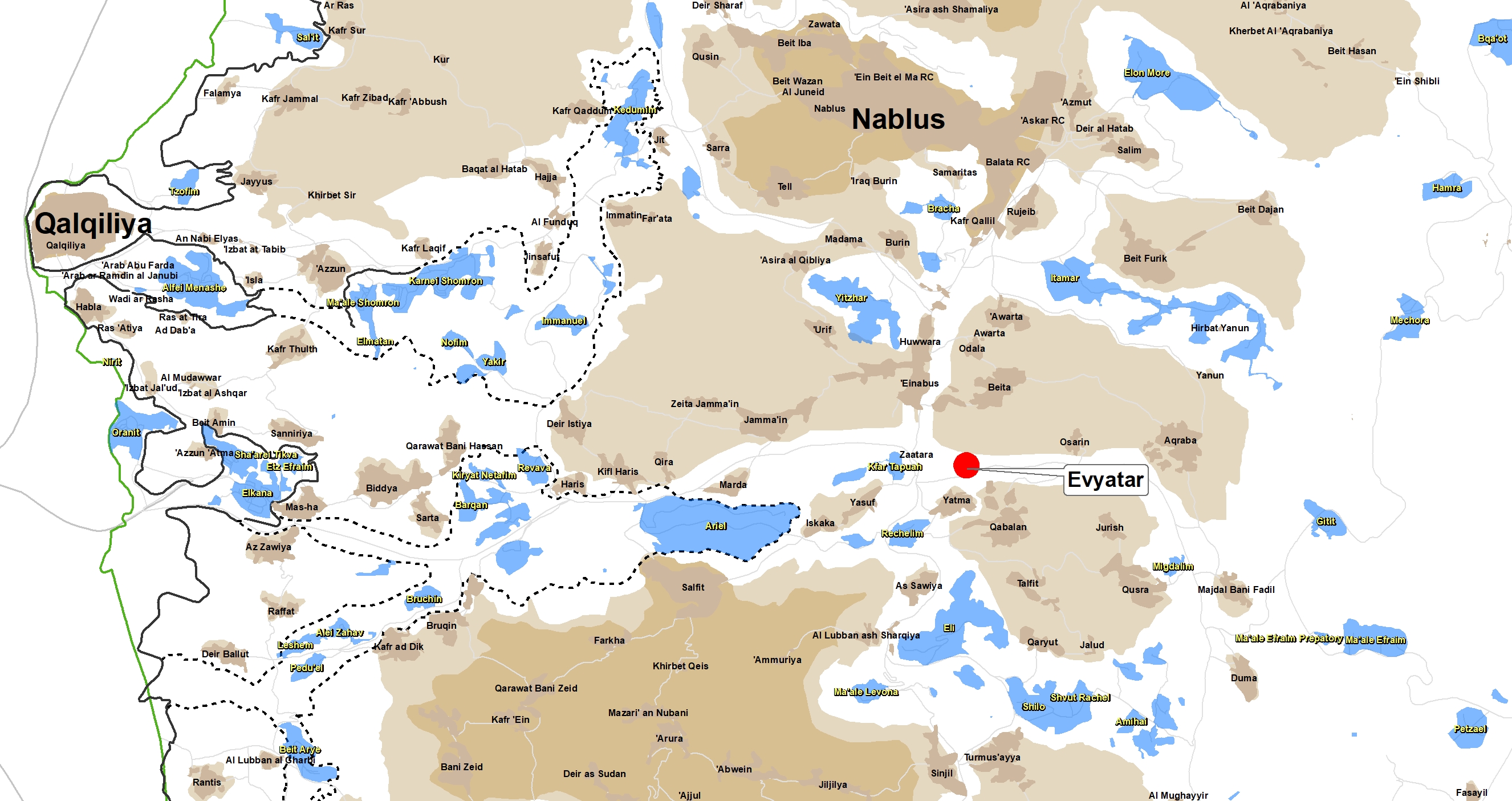
Map by Peace Now
The decision to authorize Evyatar as a full-fledged, new, and “legal” settlement is supposedly dependent on the outcome of an Israeli-led investigation into the status of the land. If the land is “discovered” to be “state land,” the government will authorize EVyatar. The results of the “investigation” are not public at this time. [map]
The Evyatar outpost has been at the core of sustained settler violence and Palestinian protest over the course of 2021, ever since the government agreed to a deal with settlers to evacuate the outpost temporarily (leaving its structures intact) until the government determines whether it can find a pretext upon which to declare the land to be state land.
Peace Now said in a statement:
“There is no justification in the world for establishing a new settlement in the West Bank, which will be a security burden, a political blow and a reward for outlaws. The small settler group who established the outpost in Evyatar did so illegally, with the aim of dragging Israel to deepen the occupation and prevent its end, and they led to daily risk of IDF soldiers and severe escalation of violence in the area. The government must come to its senses and stop this madness and not be dragged after a small minority.”
In addition to reportedly preparing to grant approval to formally establish the Evyatar settlement, the settler news outlet Arutz Sheva reports that Gantz has suggested making the new settlement the new home for the illegal yeshiva settlers have established as the site of the former Homesh settlement – a yeshiva that has likewise been at the center of ongoing violence (including settler violence targeting Israeli forces). Settlers have come out in opposition to this suggestion – unsurprisingly, given that the explicit objective of the settlers targeting the Homesh site is the re-settlement of that specific area (more below).
As a reminder, the fate of the Evyatar outpost was the first controversy that threatened to divide the fragile Bennett-led government when it was sworn in. Bennet’s partners were bitterly divided on whether to evacuate the outpost or let it be, while the government sought to grant it retroactive legalization. In the end, the government reached a “deal” which saw the settlers (temporarily) vacate the outpost on Friday, July 2nd. In return, the government left the settlers’ illegal construction at the site in place (i.e., did not demolish it) — including buildings and roads — while it “examines” the status of the land to see if it can be declared “state land” and therefore “legally” turned into a settlement (opening the door for the settlers to return). Under the agreement, the outpost is being used as a military base in the interim.
The fact that the “compromise” left in place the settlers’ structures and allowed Israel to maintain complete control over the site during the “survey” process signalled from the start that the government is not concerned with enforcing Israeli law, but rather is focused on finding a political solution that works for the settlers. It was further clear from the terms of the “compromise” that the Bennet government believed it will be succeed in finding a pretext to assert that the land on which the outpost stands is “state land” which can be used by the state as it sees fit (i.e., give it to the settlers). If the state decides, pursuant to the investigation, that it has a basis on which to declare the site to be “state land,” the settlers will be allowed to return and resume the establishment of what would from that point no longer be an illegal outpost, but a new “legal” settlement.
Settlers Still Pressing Govt to Authorize Homesh Outpost, & Terrorizing Nearby Palestinians
There has been continuing fallout and violence surrounding the Homesh oupost and yeshiva following the murder of settler Yehuda Dimentan by a Palestinian in December 2021. Settlers have used Dimentan’s death to press the government to formally reestablish the Homesh settlement (evacuated in 2005 as part of the Gaza disengagement plan, at which time it was declared by Israel to be a closed military zone – but settlers have been allowed to frequent the site and even operate a yeshiva there. That yeshiva, according to Kerem Navot, became one of the West Bank’s “hardcore centers of settler terror”). Settlers have also wreaked terror on nearby Palestinian villages, most notably Burqa. One Israeli politicians even said that settlers are carrying out a pogrom in Burqa.
Most prominently to date, Israeli Justice Minister Gidon Sa’ar (Likud) offered his support for reestablishing the Homesh settlement – directly tying his support to the death of Yehuda Dimentan. On January 1st, Yesha Council leader Yossi Dagan and MK Yuli Edelstein inaugurated a new caucus in the Knesset specifically dedicated to the cause of reestablishing the Homesh settlement along with the other two settlements that were dismantled by the Israeli government in 2005 as part of the Gaza Disengagement Plan.
Since the murder, the IDF has imposed severe movement restrictions on Palestinians living near the Homesh site and the Shavei Shomron settlement (where Dimentan lived). This includes road closures, and IDF-imposed closures of the Palestinian towns of Burqa and Sebastia. In addition, two new Israeli-controlled checkpoints positioned near Shavei Shomron and Homesh in practice now prevent Palestinians from using the roads, while allowing settlers to reach the Homesh site (which, again, is supposedly a closed military zone). The closures have not prevented settlers from regularly attacking Burqa, including “three large scale attacks”. According to the PA’s settlement monitor, Palestinians in Burqa fear a massacre.
In addition to the now-routine closures and movement restrictions on Palestinians, the IDF chose to completely shut down the highway connecting Shavei Shomron and Homesh on December 23rd to allow a massive march led by Dimentan’s widow – estimated to have included 15,000 Israelis (including several elected officials) – following Dimentan’s funeral. The march and the closures resulted in clashes, particularly in Burqa, between Palestinians and IDF forces. The night of the march, settlers raided Burqa where they attacked Palestinian homes and desecrated the village’s cemetary.
The marchers told Ynet that they intend to maintain a presence at the yeshiva to prevent the government from dismantling it. The Dimentan family has personally asked government officials to authorize the Homesh yeshiva in Dimentan’s honor.
Amidst the ongoing violence and political agitation, on January 2, 2022 a delegation of Israeli lawmakers, including several senior members of the Likud party, paid a visit to the illegal yeshiva at the dismantled Homesh settlement site. Their tour of the yeshiva was used to offer support to the settlers’ effort to push for retroactive authorization.
IDF Evacuates Kumi Ori Outpost, Yitzhar Start Clashes
On December 31st, Israeli forces once again removed caravans from the unauthorized “Kumi Ori” settler outpost, which serves as the home of 20 extremist “Hilltop Youth” settlers and is a satellite outpost of the notoriously violent and radical Yitzhar settlement. Dozens of settlers from Yitzhar attacked Israeli forces, resulting in injuries to three soldiers and one settler.
Haaretz reports that despite an order issued two years ago declaring the land to be a “closed military zone,” Israeli border police – who maintain a checkpoint at the entrance of the outpost – have continued to allow settlers to live and visit the area if they had lived there (illegally) prior to the eviction order being issued. The caravan that was removed on December 31st was new, and therefore subject to the eviction order.
Kumi Ori was previously evacuated by the IDF in April 2020 and in January 2020, and also in August 2017 – each time resulting in violence. The battle between the outpost settlers and the Israeli army has played out for many years, and the IDF has demolished the outpost at least 10 times. In one extraordinary attempt by the settlers to preserve the outpost, settlers attempted to convince the court that Israel did not have authority to demolish the structures, because the outpost is not located in Area C (where Israel has complete control), but rather in a Palestinian-administered area (Area A or B) [raising the question, would the settlers recognize/respect the Palestinian Authority’s authority to evict them?]. The Court rejected that argument.
IDF Renews Standing Demolitions Orders Against Six Unauthorized Outposts
The Israeli military recently re-issued standing demarcation orders that allow (should Israeli authorities so choose) for the demolition of the outposts without any legal hoops or holdups. Of course, the orders have been in place for years, and while the IDF has occasionally dismantled the outposts, settlers have been able (or allowed) to reestablish the illegal encampments.
The orders were renewed for the following outposts:
- Ramat Migron outpost, located in the Shiloh Valley in the northern West Bank. The IDF recently dismantled the Ramat Migron settlement in November 2021.
- Oz Zion outpost, located between Jerusalem and Ramallah. The Oz Zion outpost has been demolished by the IDF several times but the settlers have been allowed to reestablish it. The outpost was most recently dismantled by the IDF in June 2021.
- Guelat Zion outpost, located in the Shiloh Valley in the northern West Bank. Guelat Zion was most recently demolished in November 2021. Established in 2011, the outpost is adjacent to the new “Amichai” settlement, which Israel built as a pay-off to settlers it was forced by the courts to remove from the illegal Amona outpost.
- Givat Assaf outpost, located east of Ramallah. The Givat Assaf outpost was rumored to be included in a list of 66 outposts the Knesset sought to retroactively legalize via legislation.
- Givat Tekuma (“Hill 725”) outpost, located near the Yitzhar settlement in the Nablus area of the northern West Bank.
- Shaked farm outpost, located near the Yitzhar settlement in the Nablus area of the northern West Bank
Israel Earmarks Millions for Seven New Synagogues in Settlements & Outposts
Israeli Minister of Religious Services Matan Kahana approved the allocation of millions of shekels (exact figure unknown) for the construction of 30 new synagogues – seven of which will be located in settlements or unauthorized outposts. In addition, Kahana earmarked 25% of his ministry’s aid budget for the construction of mikveh’s (Jewish ritual baths) in the West Bank.
Meretz MK Mossi Raz said in response:
“Kahana has decided to discriminate against residents within the green line, and to build a quarter of the synagogues in his ministry’s budget over the green line. This does not only strengthen the settlement enterprise, which is harmful for Israel’s future, it acts inequitably in allocating resources to every worshiper within Israel’s borders.”
Bonus Reads
- “First Settlers Beat Them Up, Then Ismail and His Family Were Jailed” (Haaretz)
- “Why Palestinian Kids’ Playgrounds Are Such Prime Targets for Israeli Settlers” (Haaretz // Ali Awad)
- “Power struggle: Bill to hook up illegal Arab homes to grid passes in stormy session” (The Times of Israel)
Welcome to FMEP’s Weekly Settlement Report, covering everything you need to know about Israeli settlement activity this week.
To subscribe to this report, please click here.
October 22, 2021
- Israel to Advance Plans for Nearly 3,000 Settlement Units & 1,300 Palestinian Homes in Area C
- Israeli Supreme Court to Hold Hearing on Batan al-Hawa, Silwan Dispossession Cases Next Week; AG Declines Intervention
- Israel Begins Construction on New Settlement in Downtown Hebron
- Israel Advances “Silicon Wadi” Project in East Jerusalem
- Recap: Israel Advances Settlement Plans Across Greater Jerusalem Area
- Recap: Court Pushes for Palestinians to “Compromise” with Settlers in Sheikh Jarrah
- New Report: State-Backed Settler “Tourism” Projects in East Jerusalem
- Bonus Reads
Israel to Advance Plans for Nearly 3,000 Settlement Units & 1,300 Palestinian Homes in Area C
The Israeli Civil Administration’s High Planning Council will convene next week — for the first time since Bennett and Biden took over leadership in Israel and the U.S., respectively — to advance the construction of 2,862 new settlement units (of which 1,231 will be eligible to receive final approval). These plans include the retroactive legalization of two unauthorized outposts (Mitzpe Danny and Haroeh Haivri), which should be properly understood as the creation of two new settlements.
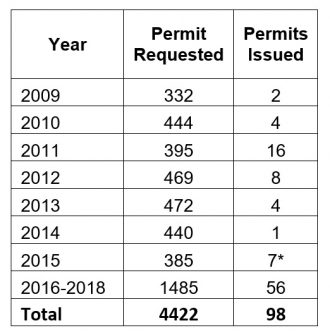
Peace Now data
In addition, reports suggest that Israel will also advance plans for 1,303 Palestinian homes in Area C – about half of which, importantly, are already built. A majority of these units have been awaiting Israeli approval for many, many years. If approved, the permits under consideration next week for Palestinians will be the first of any significant quantity issued by Israel since, at least, 2009 (data from before this period has not been released by the Israeli government). Between 2009 and 2018, Israel issued a total of 98 building permits to Palestinians according to data released by the Israeli government in response to a freedom of information request submitted by Bimkom.
As a reminder, Area C is the 60% of the West Bank over which Israel enjoys absolute authority. For years Israel has systematically denied Palestinians the right to build on land in Area C that even Israel recognizes is privately owned by them, At the same time, it has continuously promoted the expansion of settlements and unauthorized outposts, while systematically demolishing Palestinian private construction. In terms of numbers: between 2016 to 2018, Israel issued only 21 building permits to Palestinians in Area C, while issuing 2,147 demolition orders against Palestinians during.
Commenting on the Planning Council agenda’s Peace Now observed:
“The approval of a handful of plans for the Palestinians is only a fig leaf intended to try to reduce criticism of the government. For years, Israel has pursued a policy of blatant discrimination that does not allow almost any construction for Palestinians in Area C, while in the settlements it encourages and promotes the construction of thousands of housing units each year for Israelis. The approval of a few hundred housing units for Palestinians can not cover up discrimination and does not change the fact that Israel maintains an illegal regime of occupation and discrimination in the territories.”
It is worth noting that many of the settlement units and Palestinian permits on next week’s agenda were expected to have been advanced earlier this year, in August 2021, but the High Planning Council never convened to do so.
Below are lists of settlement plans expected to be given final approval and plans expected to be advanced next week (italicized plans represent those which appear to have been added to the slate of plans that were expected to be advanced in August 2021).
Settlement plans expected to be granted final approval include:
- 629 units, including the retroactive legalization of 61 units, in the Eli settlement – located south of Nablus and southeast of the Ariel settlement in the central West Bank. Though the Eli settlement previously received Israeli government approval, a “Master Plan” – which officially zones land for distinct purposes (residential, commercial, public) – has never been issued for Eli, meaning all construction there is illegal under Israeli law;
- 286 units in the Har Bracha settlement, located south of Nablus. If implemented, these new units will double the size of Har Bracha;
- 224 units in the Talmon settlement, located west of Ramallah;
- 146 units in the Kfar Etzion settlement, located between Bethlehem and Hebron and on the Israeli side of the planned route of the barrier (which is not yet built in this area);
- 110 units in the Alon Shvut settlement, located just north of the Kfar Etzion settlement and between Bethlehem and Hebron;
- 82 units in the Karnei Shomron settlement, located in the northern West Bank, east of the Palestinian village of Qalqilya. Israel has openly declared its intention to continue expanding settlements in this area with the stated goal of bringing 1 million settlers to live in the area.;
- 52 units in the Beit El settlement, located in the heart of the northern West Bank [as a reminder, former US Ambassador to Israel David Friedman has deep ties to the Beit El settlement]; Construction on 350 new units in Beit El began earlier this year;
- 42 units in the Givat Zeev settlement, located south of Ramallah in an area that is on the Israeli side of the barrier;
- 24 units in the Haroeh Haivri outpost, a plan that will effectively grant retroactive legalization to this outpost. The Haroeh Haivri outpost is located just east of Jerusalem, within eyesight of the Khan al-Ahmar community, which Israel is threatening to demolish (forcibly relocating the Palestinian bedouin community that has lived there since the 1950s) — ostensibly because the structures in Khan al Ahmar were built without necessary Israeli approvals. The Haroah Haivri outpost was also built without the necessary Israeli approvals, but instead of demolishing the construction, Israel is moving to retroactively legalize it — demonstrating once again that, when it comes to administering the occupation, Israel prefers “rule by law” – where law is turned into a tool to elevate the rights/interests of one party over another, over the democratic rule of law.;
- 14 units in the Ma’aleh Mikhmash settlement, a plan that will effectively grant retroactive legalization to one of Ma’aleh Mikhmash’s outposts – – Mitzpe Danny;
- 10 units in the Barkan settlement, located about half way between the Ariel settlement and the cluster of settlements slated to be united into a “super settlement” area (Oranit, Elkana, Shiva Tikva, and others);
- 5 units in the Shima’a settlement, located in the southern tip of the West Bank;
- 7 units in the Peduel settlement, located in the northern West Bank and part of a string of settlements and unauthorized outposts – most notably Ariel – extending from the Green Line into the very heart of the West Bank and on towards the Jordan Valley.
Settlement plans expected to be approved for deposit (an earlier stage in the planning process) include:
- 399 units in the Revava settlement, located just east of the Barkan settlement and west of the Ariel settlement, in a string of settlements and unauthorized outposts – most notably Ariel – extending from the Green Line into the very heart of the West Bank and on towards the Jordan Valley.
- 380 units in the Kedumim settlement, located just east of Nablus. Israeli MK Bezalel Smotrich lives in the Kedumim settlement on a section of land in the settlement that has been found to be privately owned by Palestinians.;
- 100 units in the Elon Moreh settlement, located east of Nablus (for background on the significance of the Elon Moreh settlement, please see here);
- 100 units in the Sansana settlement, located on the southern tip of the West Bank on the Israeli side of the separation barrier;
- 73 units in the Givat Zeev settlement, which is also expected to receive final approval for 42 units. Givat Zeev is located south of Ramallah in an area that is on the Israeli side of the barrier;
- 68 units in the Tene settlement, located on the southern tip of the West Bank;
- 45 units in the Vered Yericho settlement, located just west of the Palestinian city of Jericho in the Jordan Valley;
- 27 units in the Karnei Shomron settlement, which is also expected to receive final approval for 82 units. Karnei Shomron is located in the northern West Bank, east of the Palestinian village of Qalqilya. Israel has openly declared its intention to continue expanding settlements in this area with the stated goal of bringing 1 million settlers to live in the area.;
- 18 units in the Alon Shvut settlement, which is also expected to receive final approval for 110 units. Alon Shvut is located just north of the Kfar Etzion settlement and between Bethlehem and Hebron;
- 10 units in the Tal Menashe settlement, located located on the tip of the northern West Bank, inside the “seam zone” between the 1967 Green Line and the Israel separation barrier, which was constructed along a route designed to keep as many settlements and as much adjacent land as possible on the Israeli side of the wall/fence.
- 7 units in the Hermesh settlement, located in the northern West Bank;
- 4 units in the Efrat settlement, located south of Bethlehem, inside a settlement block that cuts deep into the West Bank. Efrat’s location and the route of the barrier wall around it, have literally severed the route of Highway 60 south of Bethlehem, cutting off Bethlehem and Jerusalem from the southern West Bank. The economic, political, and social impacts of the closure of Highway 60 at the Efrat settlement (there is literally a wall built across the highway) have been severe for the Palestinian population.
Peace Now reports that the Planning Council will also consider advancing the following plans for Palestinian homes:
- 270 houses in the Bir al-Bash village, located south of Jenin in the northern West Bank;
- 270 houses in the Al-Ma’asara village, located south of Bethlehem;
- 233 houses in the the Almasqufa village, located near Tulkarem in the northern West Bank;
- 200 houses in the Dkeika village in the South Hebron Hills;
- 170 houses in the Khirbet Abdallah Younas village, located in the Jenin area;
- 160 houses in the Abba a-Sharqiya village, also located south of Jenin in the northern West Bank;
Israeli Supreme Court to Hold Hearing on Batan al-Hawa, Silwan Dispossession Cases Next Week; AG Declines Intervention
On October 25th, the Israeli Supreme Court is scheduled to hold an important hearing on the case of the Palestinian Duweik family which is under threat of being dispossessed of their longtime home in the Batan al-Hawa section of the Silwan neighborhood in East Jerusalem by the Ateret Cohanim settler organization.
In advance of that hearing – and after repeated extensions on a Court-ordered deadline – the Israeli Attorney General finally submitted his position on the case to the Court. The document submitted by the Attorney General was only 1 page, and simply stated that the case does not merit intervention either on the specific case of the Duweik family or regarding the wider legal principle at stake, which threatens an additional 85 families living under threat of eviction in Batan al-Hawa.
Ir Amim writes:
“Among the 85 families facing eviction, the Duweik family case is the first to reach the Supreme Court level, and its outcome will inevitably set a precedent, significantly impacting the rest of the cases in the neighborhood…As in the eviction cases in Sheikh Jarrah, the Attorney General and by extension, the government, was given a rare opportunity to take a moral stand by providing a legal opinion and policy position to help prevent the mass displacement of these families. Yet, at this point, the Attorney General’s response appears to imply that he has declined to intervene. Now, the decision concerning the fate of these families seems to lie solely in the hands of the Supreme Court. The rights of Palestinians to housing and shelter and the right to family and community life are fundamental and must be upheld. The same discriminatory legal system, which led to the confiscation of these families’ original homes in 1948, is now being exploited 73 years later to displace them for a second time from their current homes in which they have lived for decades. The Supreme Court has the power to make a principled and just decision to uphold the rights of these families to remain safely in their homes, free from the constant threat of being forcibly uprooted and driven from their homes and communities.”
Peace Now said in response to the AG’s decision to not intervene:
“The Attorney General’s response actually says that for the Israeli government, there is no problem to kick hundreds of residents out from their homes, on the basis of a discriminatory law, in favor of a settlement. The government was given an opportunity here to try to prevent moral injustice and political folly, but instead of taking a stand, it chose to remain on the sidelines, as if Silwan’s story, like that of Sheikh Jarrah, was a legal matter and not a political one.”
In July 2021, Peace Now assembled a coalition of Israeli lawyers to submit an amicus brief to the Court regarding the Duweik case. Peace Now summarizes:
“The brief addresses an approach that has emerged in international jurisprudence on human rights law which puts an emphasis on group vulnerability of occupants facing eviction and institutional, systemic discrimination against them. Where these are present, in certain circumstances, the occupants’ rights, stemming from the human right to housing and specifically, to live in their home and their family’s home – trump the right of the original owner or their substitute to regain possession of the property.
The brief reaches the conclusion that in the Duweik case, the occupants’ property rights and their right to housing supersede the right of the settlers acting on behalf of the pre-1948 original owners to receive possession of the property, based on the following:
1 – The fact that Palestinian residents of East Jerusalem are underprivileged, vulnerable and subjected to discrimination in every aspect of life, and particularly the fact that Israeli law on the restitution of property that changed hands due to wars, openly and deliberately discriminates against them;
2 – The fact that the family entered the property in good faith and/or in accordance with the law applicable at the time, and has developed a legitimate expectation to continue residing in it permanently and without interruption;
3 – The imbalance between the devastating harm the family would suffer and the minor damage the Benvenisti charitable endowment (represented by the settlers), which claims ownership of the property, would sustain, which clearly tips the scales in favor of the family.
In other words, according to the brief, even if the court finds the settlers do, in fact, have ownership, they are not necessarily entitled to remedy in the form of the families’ eviction from their homes, but rather to compensation from the state.”
Israel Begins Construction on New Settlement in Downtown Hebron
Peace Now reports that construction has begun on 31 new settlement units at the site of an old bus station previously repurposed as an IDF base, located in the heart of the Old City of Hebron on the infamous Shuhada street. This is a new settler enclave in the city and is, in effect, a new urban settlement, disconnected from already existing settlements in the city. It will be the first new settlement construction approved in downtown Hebron – where Palestinians already live under apartheid conditions – since 2002.
Peace Now said in a statement:
“The government is acting like an annexation government, not as a change government. Since the 1980s, no government has dared to build a new settlement in the heart of the largest Palestinian city in the West Bank, with the exception of one building built under the auspices of the second intifada in 2001. The Defense Minister has to stop construction, even if the plan was approved by the previous government. The settlement in Hebron is the ugly face of Israeli control of the territories. The moral and political price of having a settlement in Hebron is unbearable.”
As a reminder: in October 2017, the Israeli Civil Administration approved a building permit for the 31 units, on the condition that the Palestinian municipality of Hebron and others would have the opportunity to file objections to the plan. Soon after, two appeals were filed with the Defense Ministry: one by the Palestinian municipality of Hebron and one by the Israeli settlement watchdog Peace Now. The legal objections were based on the legally questionable process by which Israel made land in downtown Hebron available for settlement construction. Located in the Israeli-controlled H-2 area of Hebron (where 500 Israeli settlers live amongst 40,000 Palestinians), Israel seized the land in the 1980s from the Hebron Municipality, for military purposes. In 2007, the Civil Administration’s Legal Advisor issued an opinion stating that once Israel is done using the land for military purposes, it must be returned to the Hebron Municipality, which has protected tenancy rights to the land. Nonetheless, in 2015, the Israeli Civil Administration, with the consent of the Minister of Defense, quietly authorized the Housing Ministry to plan the area for Israeli settlement use, paving the way for that same ministry to subsequently present the plan for the 31 units.
In October 2018, with the legal challenges still pending, the Israeli Cabinet voted to expedite the planning of the new settlement and allocated approximately $6.1 million (NIS 22 million) for the project, which will require Israel to significantly renovate the bus station/military base in order to build the 31 new settlement housing units, as well as a kindergarten, and “public areas” for the new settler residents. Peace Now explains:
“The approval of the building permit in the heart of Hebron is an extraordinary move not only because it is a new settlement in Hebron for the first time since 2001, but because it indicates a significant change in Israeli legal interpretation of what is allowed and forbidden in occupied territory. The area in question was owned by Jews before 1948, and it was leased by the Jordanian government in protected tenancy to the Hebron municipality for the purpose of establishing the central bus station. Since 1967, the Israeli authorities managed the land and continued the lease to the Hebron municipality, until in the 1980s when the area was seized for military purposes, the bus station was closed and a military base was established there. A legal opinion of the Judea and Samaria Attorney General on the issue in 2007 emphatically stated that by law the municipality’s protected lease must not be revoked.”
Israel Advances “Silicon Wadi” Project in East Jerusalem
On October 13th, the Jerusalem Local Planning Committee met to initiate the planning process for the “Silicon Wadi” project, which was initiated by the Jerusalem Municipality and outlines plans to build a large industrial zone for hi-tech, commercial, and hospitality businesses in the heart of East Jerusalem’s Wadi Joz neighborhood. The project requires the demolition of some 200 Palestinian-owned businesses that currently operate in the area; dozens of demolition notices for which were issued in November 2020.
Ir Amim writes:
“Beyond the devastating impact of widespread demolitions of existing businesses and structures, the plan also raises concerns that the Israeli authorities will exploit the planning procedures to locate alleged Palestinian absentee properties and transfer lands into the hands of the State. It should also be noted that while Israel focuses on bolstering employment and economic activity in East Jerusalem, it simultaneously continues to suppress residential development in Palestinian neighborhoods. As with nearly all outline plans advanced in East Jerusalem in recent years, the Wadi Joz business park plan only allocates a marginal amount for residential use, which hardly meets the acute housing needs of the Palestinian population. Rather than undertaking measures to rectify the housing crisis, these plans only exacerbate the current situation and perpetuate the residential planning stranglehold, which ultimately serves to push Palestinians out of the city.”
Recap: Israel Advances Settlement Plans Across Greater Jerusalem Area
Over the past two weeks, the government of Israel has advanced four highly controversial and politically consequential settlement plans in the Greater Jerusalem area:
- The Givat Hamatos Settlement: On October 13th, the Jerusalem Local Planning Committee approved the expropriation of lands designated for public use in the Givat Hamatos area for the construction of roads, public buildings and the development of open space for the planned new settlement/neighborhood. For more on the Givat Hamatos settlement plan, please see here.
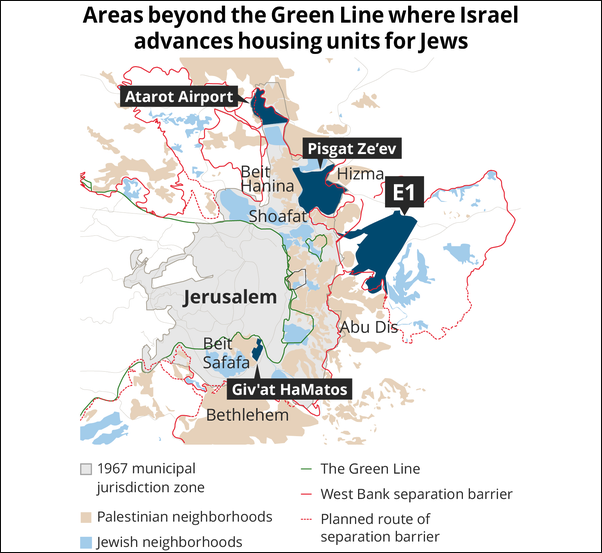
Map by Haaretz
- The E-1 Settlement: The Israel Civil Administration moved forward with advancing plans for the construction of the E-1 settlement, setting a date for a third hearing to discuss public objections to the plan (now set for November 8th). The first hearing was held on October 4th, but Palestinians were denied the ability to participate in that hearing (which was held virtually, making it inaccessible to the many Palestinians affected by the plan who do not have internet access). As a result, the Court scheduled this 3rd hearing (to allow the participation of Palestinians). The second hearing was held on October 18th; at that hearing three objections were presented (one by the Palestinian village of Anata, a second by the Palestinian village of Al-Azariya, and a third joint submission filed by Ir Amim and Peace Now). Ir Amim reports that there was no substantive discussion of these objections, with the Civil Administration panel offering no questions or comments on them. For more on the E-1 settlement plan, please see Terrestrial Jeruaslem’s excellent and thorough reporting.
- The Atarot Settlement: The Jerusalem District Planning Committee formally signaled that it will proceed with a hearing on the Atarot settlement plan – scheduled for December 6th – to build a huge new settlement on the site of the former Qalandiya airport (located at the northern tip of East Jerusalem). In its current form, the plan provides for up to 9,000 residential units for ultra-Orthodox Jews (assuming, conservatively, an average family size of 6, this means housing for 54,000 people), as well as synagogues, ritual baths (mikvehs), commercial properties, offices and work spaces, a hotel, and a water reservoir. If built, the Atarot settlement will effectively be a small Israeli city surrounded by Palestinian East Jerusalem neighborhoods on three sides and Ramallah to its north. Geopolitically, it will have a similar impact to E-1 in terms of dismembering the West Bank and cutting it off from Jerusalem. For more on the Atarot settlement plan, please see here.
- The Pisgat Ze’ev Settlement: The Israeli government advanced plans for 470 new settlement units in Pisgat Ze’ev, the largest settlement located in East Jerusalem.


Recap: Court Pushes for Palestinians to “Compromise” with Settlers in Sheikh Jarrah
The Israeli Supreme Court has set November 2nd as the deadline for Palestinian families living at risk of forced displacement in Shiekh Jarrah to decide wether or not to accept a Court-authored deal which would help them – at least temporarily – avoid eviction from their homes, in part by requiring them to recognize settler ownership over the properties.
Under the terms of the Court’s deal, which it is pressuring both parties to accept, the following would take place:
- The settler group Nahalat Shimon will be recognized as the owners of the site.
- The Palestinians will be recognized as protected tenants and be required to pay an nominal annual rental fee to the attorney of the settlers (in effect recognizing the settlers as the owners) but
- The Palestinians will be able to continue pursuing legal challenges to the underlying ownership of the land
- The Palestinians are permitted to renovate the properties without interference
- Settlers will be able to instigate eviction proceedings against Palestinians if they are in violation of the Court’s compromise agreement or in violation of Israel’s tenancy laws.
Terrestrial Jerusalem writes:
“The most problematic element of the settlement relates to the settlers’ ability to institute evictions even if the residents are not in violation of the agreement or of the tenancy laws. The settlers will be entitled to institute such proceedings in the event that the ownership rights are conclusively awarded to them, or after 15 years, the earlier of the two. This can be done if the settlers either wish to personally use the property or to demolish and rebuild. Under these circumstances, the settlers will need to offer the residents alternative equivalent quarters. Palestinian residents might hope settlers reject the deal to avoid having to make an ‘excruciatingly painful decision.’”
According to Terrestrial Jerusalem, the Court has signaled that further negotiations are acceptable, but that if either party rejects the agreement a decision on the eviction cases will be handed down swiftly.
New Report: State-Backed Settler “Tourism” Projects in East Jerusalem
In a new report entitled, “The Valley of Hinnom: Trees and Flowerbeds in the Political Struggle over East Jerusalem,” the Israeli NGO Emek Shaveh surveys the multitude of recent “tourism” projects jointly undertaken by the Elad settler organization and the Israeli government in the Ben Hinnom Valley — a strategic area between East and West Jerusalem (stretching past the 1967 Green Line), and located within the area designated by Israel as the Jerusalem “Walls National Park”.
Emek Shaveh writes:
“The nature of the tourism-settlement activity in the Valley of Hinnom conducted jointly by Elad and government authorities is familiar to us from the City of David/Silwan. The series of joint ventures such as the café, the Center for Ancient Agriculture and the cable car in effect hand over large expanses of land to the settlers of the Elad Foundation under the guise of tourism. Although unlike Silwan, the valley is sparsely populated, the activity there must be viewed as an integral part of the struggle for the Old City Basin of Jerusalem and as a means to clear this highly strategic area from the presence of Palestinians.”
In conclusion, we wish to emphasize the following points:
1 – Development in East Jerusalem is almost always driven by political objectives. Recent developments in the Valley of Hinnom are part of the grand plan to change the character and the landscape of the Old City Basin and ought to be considered an integral component of the settlement enterprise in the Palestinian neighborhoods surrounding the Old City.
2 – Halting the destructive development schemes in the areas surrounding the Old City is vital in order to preserve Jerusalem as a multicultural historic city and is indirectly essential for safeguarding the status quo at the holy places.
3 – The Palestinian protests against the expansion of the settlers’ grip over the open spaces such as the Hinnom Valley is part of the struggle by the residents of Silwan and the surrounding neighborhoods to preserve the character of their neighborhoods. In our view, one ought to view the various activities by the settlers and the authorities in the Historic Basin such as the expulsion of residents from their homes, taking over land and the shaping of a historic narrative as part of the same general bid to cement their control over the Historic Basin.”
Bonus Reads
- “[PODCAST] The Occupation & the Biden Administration” (FMEP ft. Danny Seidemann and Yehuda Shaul with Lara Friedman and Khaled Elgindy)
- “How offshore accounts turned the British Virgin Islands into an east Jerusalem landlord” (JTA)
- “Beita residents reach lands for first time since settler takeover” (Al Jazeera)
- “After Years of Neighborly Relations, Settlers Try to Foil Recognition of Palestinian Hamlet” (Haaretz)
- “Palestinian protests turn deadly as Israel considers the future of a new settlement” (NPR)
- “These Palestinian Families Face Eviction From Their East Jerusalem Homes” (Haaretz)
- “When Settler Becomes Native” (Jewish Currents)