Welcome to FMEP’s Weekly Settlement Report, covering everything you need to know about Israeli settlement activity this week.
To subscribe to this report, please click here.
October 22, 2021
- Israel to Advance Plans for Nearly 3,000 Settlement Units & 1,300 Palestinian Homes in Area C
- Israeli Supreme Court to Hold Hearing on Batan al-Hawa, Silwan Dispossession Cases Next Week; AG Declines Intervention
- Israel Begins Construction on New Settlement in Downtown Hebron
- Israel Advances “Silicon Wadi” Project in East Jerusalem
- Recap: Israel Advances Settlement Plans Across Greater Jerusalem Area
- Recap: Court Pushes for Palestinians to “Compromise” with Settlers in Sheikh Jarrah
- New Report: State-Backed Settler “Tourism” Projects in East Jerusalem
- Bonus Reads
Israel to Advance Plans for Nearly 3,000 Settlement Units & 1,300 Palestinian Homes in Area C
The Israeli Civil Administration’s High Planning Council will convene next week — for the first time since Bennett and Biden took over leadership in Israel and the U.S., respectively — to advance the construction of 2,862 new settlement units (of which 1,231 will be eligible to receive final approval). These plans include the retroactive legalization of two unauthorized outposts (Mitzpe Danny and Haroeh Haivri), which should be properly understood as the creation of two new settlements.
Peace Now data
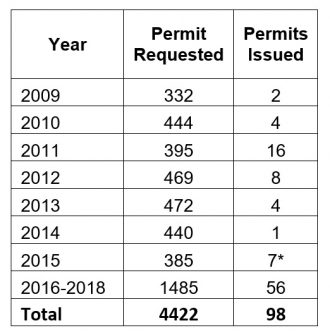
In addition, reports suggest that Israel will also advance plans for 1,303 Palestinian homes in Area C – about half of which, importantly, are already built. A majority of these units have been awaiting Israeli approval for many, many years. If approved, the permits under consideration next week for Palestinians will be the first of any significant quantity issued by Israel since, at least, 2009 (data from before this period has not been released by the Israeli government). Between 2009 and 2018, Israel issued a total of 98 building permits to Palestinians according to data released by the Israeli government in response to a freedom of information request submitted by Bimkom.
As a reminder, Area C is the 60% of the West Bank over which Israel enjoys absolute authority. For years Israel has systematically denied Palestinians the right to build on land in Area C that even Israel recognizes is privately owned by them, At the same time, it has continuously promoted the expansion of settlements and unauthorized outposts, while systematically demolishing Palestinian private construction. In terms of numbers: between 2016 to 2018, Israel issued only 21 building permits to Palestinians in Area C, while issuing 2,147 demolition orders against Palestinians during.
Commenting on the Planning Council agenda’s Peace Now observed:
“The approval of a handful of plans for the Palestinians is only a fig leaf intended to try to reduce criticism of the government. For years, Israel has pursued a policy of blatant discrimination that does not allow almost any construction for Palestinians in Area C, while in the settlements it encourages and promotes the construction of thousands of housing units each year for Israelis. The approval of a few hundred housing units for Palestinians can not cover up discrimination and does not change the fact that Israel maintains an illegal regime of occupation and discrimination in the territories.”
It is worth noting that many of the settlement units and Palestinian permits on next week’s agenda were expected to have been advanced earlier this year, in August 2021, but the High Planning Council never convened to do so.
Below are lists of settlement plans expected to be given final approval and plans expected to be advanced next week (italicized plans represent those which appear to have been added to the slate of plans that were expected to be advanced in August 2021).
Settlement plans expected to be granted final approval include:
- 629 units, including the retroactive legalization of 61 units, in the Eli settlement – located south of Nablus and southeast of the Ariel settlement in the central West Bank. Though the Eli settlement previously received Israeli government approval, a “Master Plan” – which officially zones land for distinct purposes (residential, commercial, public) – has never been issued for Eli, meaning all construction there is illegal under Israeli law;
- 286 units in the Har Bracha settlement, located south of Nablus. If implemented, these new units will double the size of Har Bracha;
- 224 units in the Talmon settlement, located west of Ramallah;
- 146 units in the Kfar Etzion settlement, located between Bethlehem and Hebron and on the Israeli side of the planned route of the barrier (which is not yet built in this area);
- 110 units in the Alon Shvut settlement, located just north of the Kfar Etzion settlement and between Bethlehem and Hebron;
- 82 units in the Karnei Shomron settlement, located in the northern West Bank, east of the Palestinian village of Qalqilya. Israel has openly declared its intention to continue expanding settlements in this area with the stated goal of bringing 1 million settlers to live in the area.;
- 52 units in the Beit El settlement, located in the heart of the northern West Bank [as a reminder, former US Ambassador to Israel David Friedman has deep ties to the Beit El settlement]; Construction on 350 new units in Beit El began earlier this year;
- 42 units in the Givat Zeev settlement, located south of Ramallah in an area that is on the Israeli side of the barrier;
- 24 units in the Haroeh Haivri outpost, a plan that will effectively grant retroactive legalization to this outpost. The Haroeh Haivri outpost is located just east of Jerusalem, within eyesight of the Khan al-Ahmar community, which Israel is threatening to demolish (forcibly relocating the Palestinian bedouin community that has lived there since the 1950s) — ostensibly because the structures in Khan al Ahmar were built without necessary Israeli approvals. The Haroah Haivri outpost was also built without the necessary Israeli approvals, but instead of demolishing the construction, Israel is moving to retroactively legalize it — demonstrating once again that, when it comes to administering the occupation, Israel prefers “rule by law” – where law is turned into a tool to elevate the rights/interests of one party over another, over the democratic rule of law.;
- 14 units in the Ma’aleh Mikhmash settlement, a plan that will effectively grant retroactive legalization to one of Ma’aleh Mikhmash’s outposts – – Mitzpe Danny;
- 10 units in the Barkan settlement, located about half way between the Ariel settlement and the cluster of settlements slated to be united into a “super settlement” area (Oranit, Elkana, Shiva Tikva, and others);
- 5 units in the Shima’a settlement, located in the southern tip of the West Bank;
- 7 units in the Peduel settlement, located in the northern West Bank and part of a string of settlements and unauthorized outposts – most notably Ariel – extending from the Green Line into the very heart of the West Bank and on towards the Jordan Valley.
Settlement plans expected to be approved for deposit (an earlier stage in the planning process) include:
- 399 units in the Revava settlement, located just east of the Barkan settlement and west of the Ariel settlement, in a string of settlements and unauthorized outposts – most notably Ariel – extending from the Green Line into the very heart of the West Bank and on towards the Jordan Valley.
- 380 units in the Kedumim settlement, located just east of Nablus. Israeli MK Bezalel Smotrich lives in the Kedumim settlement on a section of land in the settlement that has been found to be privately owned by Palestinians.;
- 100 units in the Elon Moreh settlement, located east of Nablus (for background on the significance of the Elon Moreh settlement, please see here);
- 100 units in the Sansana settlement, located on the southern tip of the West Bank on the Israeli side of the separation barrier;
- 73 units in the Givat Zeev settlement, which is also expected to receive final approval for 42 units. Givat Zeev is located south of Ramallah in an area that is on the Israeli side of the barrier;
- 68 units in the Tene settlement, located on the southern tip of the West Bank;
- 45 units in the Vered Yericho settlement, located just west of the Palestinian city of Jericho in the Jordan Valley;
- 27 units in the Karnei Shomron settlement, which is also expected to receive final approval for 82 units. Karnei Shomron is located in the northern West Bank, east of the Palestinian village of Qalqilya. Israel has openly declared its intention to continue expanding settlements in this area with the stated goal of bringing 1 million settlers to live in the area.;
- 18 units in the Alon Shvut settlement, which is also expected to receive final approval for 110 units. Alon Shvut is located just north of the Kfar Etzion settlement and between Bethlehem and Hebron;
- 10 units in the Tal Menashe settlement, located located on the tip of the northern West Bank, inside the “seam zone” between the 1967 Green Line and the Israel separation barrier, which was constructed along a route designed to keep as many settlements and as much adjacent land as possible on the Israeli side of the wall/fence.
- 7 units in the Hermesh settlement, located in the northern West Bank;
- 4 units in the Efrat settlement, located south of Bethlehem, inside a settlement block that cuts deep into the West Bank. Efrat’s location and the route of the barrier wall around it, have literally severed the route of Highway 60 south of Bethlehem, cutting off Bethlehem and Jerusalem from the southern West Bank. The economic, political, and social impacts of the closure of Highway 60 at the Efrat settlement (there is literally a wall built across the highway) have been severe for the Palestinian population.
Peace Now reports that the Planning Council will also consider advancing the following plans for Palestinian homes:
- 270 houses in the Bir al-Bash village, located south of Jenin in the northern West Bank;
- 270 houses in the Al-Ma’asara village, located south of Bethlehem;
- 233 houses in the the Almasqufa village, located near Tulkarem in the northern West Bank;
- 200 houses in the Dkeika village in the South Hebron Hills;
- 170 houses in the Khirbet Abdallah Younas village, located in the Jenin area;
- 160 houses in the Abba a-Sharqiya village, also located south of Jenin in the northern West Bank;
Israeli Supreme Court to Hold Hearing on Batan al-Hawa, Silwan Dispossession Cases Next Week; AG Declines Intervention
On October 25th, the Israeli Supreme Court is scheduled to hold an important hearing on the case of the Palestinian Duweik family which is under threat of being dispossessed of their longtime home in the Batan al-Hawa section of the Silwan neighborhood in East Jerusalem by the Ateret Cohanim settler organization.
In advance of that hearing – and after repeated extensions on a Court-ordered deadline – the Israeli Attorney General finally submitted his position on the case to the Court. The document submitted by the Attorney General was only 1 page, and simply stated that the case does not merit intervention either on the specific case of the Duweik family or regarding the wider legal principle at stake, which threatens an additional 85 families living under threat of eviction in Batan al-Hawa.
Ir Amim writes:
“Among the 85 families facing eviction, the Duweik family case is the first to reach the Supreme Court level, and its outcome will inevitably set a precedent, significantly impacting the rest of the cases in the neighborhood…As in the eviction cases in Sheikh Jarrah, the Attorney General and by extension, the government, was given a rare opportunity to take a moral stand by providing a legal opinion and policy position to help prevent the mass displacement of these families. Yet, at this point, the Attorney General’s response appears to imply that he has declined to intervene. Now, the decision concerning the fate of these families seems to lie solely in the hands of the Supreme Court. The rights of Palestinians to housing and shelter and the right to family and community life are fundamental and must be upheld. The same discriminatory legal system, which led to the confiscation of these families’ original homes in 1948, is now being exploited 73 years later to displace them for a second time from their current homes in which they have lived for decades. The Supreme Court has the power to make a principled and just decision to uphold the rights of these families to remain safely in their homes, free from the constant threat of being forcibly uprooted and driven from their homes and communities.”
Peace Now said in response to the AG’s decision to not intervene:
“The Attorney General’s response actually says that for the Israeli government, there is no problem to kick hundreds of residents out from their homes, on the basis of a discriminatory law, in favor of a settlement. The government was given an opportunity here to try to prevent moral injustice and political folly, but instead of taking a stand, it chose to remain on the sidelines, as if Silwan’s story, like that of Sheikh Jarrah, was a legal matter and not a political one.”
In July 2021, Peace Now assembled a coalition of Israeli lawyers to submit an amicus brief to the Court regarding the Duweik case. Peace Now summarizes:
“The brief addresses an approach that has emerged in international jurisprudence on human rights law which puts an emphasis on group vulnerability of occupants facing eviction and institutional, systemic discrimination against them. Where these are present, in certain circumstances, the occupants’ rights, stemming from the human right to housing and specifically, to live in their home and their family’s home – trump the right of the original owner or their substitute to regain possession of the property.
The brief reaches the conclusion that in the Duweik case, the occupants’ property rights and their right to housing supersede the right of the settlers acting on behalf of the pre-1948 original owners to receive possession of the property, based on the following:
1 – The fact that Palestinian residents of East Jerusalem are underprivileged, vulnerable and subjected to discrimination in every aspect of life, and particularly the fact that Israeli law on the restitution of property that changed hands due to wars, openly and deliberately discriminates against them;
2 – The fact that the family entered the property in good faith and/or in accordance with the law applicable at the time, and has developed a legitimate expectation to continue residing in it permanently and without interruption;
3 – The imbalance between the devastating harm the family would suffer and the minor damage the Benvenisti charitable endowment (represented by the settlers), which claims ownership of the property, would sustain, which clearly tips the scales in favor of the family.
In other words, according to the brief, even if the court finds the settlers do, in fact, have ownership, they are not necessarily entitled to remedy in the form of the families’ eviction from their homes, but rather to compensation from the state.”
Israel Begins Construction on New Settlement in Downtown Hebron
Peace Now reports that construction has begun on 31 new settlement units at the site of an old bus station previously repurposed as an IDF base, located in the heart of the Old City of Hebron on the infamous Shuhada street. This is a new settler enclave in the city and is, in effect, a new urban settlement, disconnected from already existing settlements in the city. It will be the first new settlement construction approved in downtown Hebron – where Palestinians already live under apartheid conditions – since 2002.
Peace Now said in a statement:
“The government is acting like an annexation government, not as a change government. Since the 1980s, no government has dared to build a new settlement in the heart of the largest Palestinian city in the West Bank, with the exception of one building built under the auspices of the second intifada in 2001. The Defense Minister has to stop construction, even if the plan was approved by the previous government. The settlement in Hebron is the ugly face of Israeli control of the territories. The moral and political price of having a settlement in Hebron is unbearable.”
As a reminder: in October 2017, the Israeli Civil Administration approved a building permit for the 31 units, on the condition that the Palestinian municipality of Hebron and others would have the opportunity to file objections to the plan. Soon after, two appeals were filed with the Defense Ministry: one by the Palestinian municipality of Hebron and one by the Israeli settlement watchdog Peace Now. The legal objections were based on the legally questionable process by which Israel made land in downtown Hebron available for settlement construction. Located in the Israeli-controlled H-2 area of Hebron (where 500 Israeli settlers live amongst 40,000 Palestinians), Israel seized the land in the 1980s from the Hebron Municipality, for military purposes. In 2007, the Civil Administration’s Legal Advisor issued an opinion stating that once Israel is done using the land for military purposes, it must be returned to the Hebron Municipality, which has protected tenancy rights to the land. Nonetheless, in 2015, the Israeli Civil Administration, with the consent of the Minister of Defense, quietly authorized the Housing Ministry to plan the area for Israeli settlement use, paving the way for that same ministry to subsequently present the plan for the 31 units.
In October 2018, with the legal challenges still pending, the Israeli Cabinet voted to expedite the planning of the new settlement and allocated approximately $6.1 million (NIS 22 million) for the project, which will require Israel to significantly renovate the bus station/military base in order to build the 31 new settlement housing units, as well as a kindergarten, and “public areas” for the new settler residents. Peace Now explains:
“The approval of the building permit in the heart of Hebron is an extraordinary move not only because it is a new settlement in Hebron for the first time since 2001, but because it indicates a significant change in Israeli legal interpretation of what is allowed and forbidden in occupied territory. The area in question was owned by Jews before 1948, and it was leased by the Jordanian government in protected tenancy to the Hebron municipality for the purpose of establishing the central bus station. Since 1967, the Israeli authorities managed the land and continued the lease to the Hebron municipality, until in the 1980s when the area was seized for military purposes, the bus station was closed and a military base was established there. A legal opinion of the Judea and Samaria Attorney General on the issue in 2007 emphatically stated that by law the municipality’s protected lease must not be revoked.”
Israel Advances “Silicon Wadi” Project in East Jerusalem
On October 13th, the Jerusalem Local Planning Committee met to initiate the planning process for the “Silicon Wadi” project, which was initiated by the Jerusalem Municipality and outlines plans to build a large industrial zone for hi-tech, commercial, and hospitality businesses in the heart of East Jerusalem’s Wadi Joz neighborhood. The project requires the demolition of some 200 Palestinian-owned businesses that currently operate in the area; dozens of demolition notices for which were issued in November 2020.
Ir Amim writes:
“Beyond the devastating impact of widespread demolitions of existing businesses and structures, the plan also raises concerns that the Israeli authorities will exploit the planning procedures to locate alleged Palestinian absentee properties and transfer lands into the hands of the State. It should also be noted that while Israel focuses on bolstering employment and economic activity in East Jerusalem, it simultaneously continues to suppress residential development in Palestinian neighborhoods. As with nearly all outline plans advanced in East Jerusalem in recent years, the Wadi Joz business park plan only allocates a marginal amount for residential use, which hardly meets the acute housing needs of the Palestinian population. Rather than undertaking measures to rectify the housing crisis, these plans only exacerbate the current situation and perpetuate the residential planning stranglehold, which ultimately serves to push Palestinians out of the city.”
Recap: Israel Advances Settlement Plans Across Greater Jerusalem Area
Over the past two weeks, the government of Israel has advanced four highly controversial and politically consequential settlement plans in the Greater Jerusalem area:
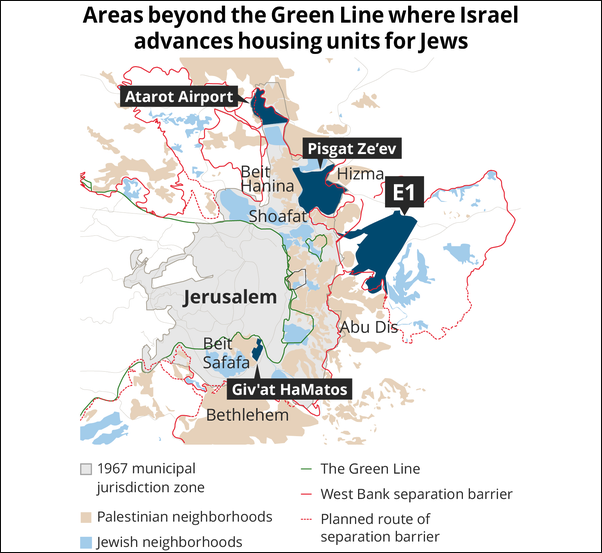
- The Givat Hamatos Settlement: On October 13th, the Jerusalem Local Planning Committee approved the expropriation of lands designated for public use in the Givat Hamatos area for the construction of roads, public buildings and the development of open space for the planned new settlement/neighborhood. For more on the Givat Hamatos settlement plan, please see here.
Map by Haaretz
- The E-1 Settlement: The Israel Civil Administration moved forward with advancing plans for the construction of the E-1 settlement, setting a date for a third hearing to discuss public objections to the plan (now set for November 8th). The first hearing was held on October 4th, but Palestinians were denied the ability to participate in that hearing (which was held virtually, making it inaccessible to the many Palestinians affected by the plan who do not have internet access). As a result, the Court scheduled this 3rd hearing (to allow the participation of Palestinians). The second hearing was held on October 18th; at that hearing three objections were presented (one by the Palestinian village of Anata, a second by the Palestinian village of Al-Azariya, and a third joint submission filed by Ir Amim and Peace Now). Ir Amim reports that there was no substantive discussion of these objections, with the Civil Administration panel offering no questions or comments on them. For more on the E-1 settlement plan, please see Terrestrial Jeruaslem’s excellent and thorough reporting.
- The Atarot Settlement: The Jerusalem District Planning Committee formally signaled that it will proceed with a hearing on the Atarot settlement plan – scheduled for December 6th – to build a huge new settlement on the site of the former Qalandiya airport (located at the northern tip of East Jerusalem). In its current form, the plan provides for up to 9,000 residential units for ultra-Orthodox Jews (assuming, conservatively, an average family size of 6, this means housing for 54,000 people), as well as synagogues, ritual baths (mikvehs), commercial properties, offices and work spaces, a hotel, and a water reservoir. If built, the Atarot settlement will effectively be a small Israeli city surrounded by Palestinian East Jerusalem neighborhoods on three sides and Ramallah to its north. Geopolitically, it will have a similar impact to E-1 in terms of dismembering the West Bank and cutting it off from Jerusalem. For more on the Atarot settlement plan, please see here.
- The Pisgat Ze’ev Settlement: The Israeli government advanced plans for 470 new settlement units in Pisgat Ze’ev, the largest settlement located in East Jerusalem.

Recap: Court Pushes for Palestinians to “Compromise” with Settlers in Sheikh Jarrah
The Israeli Supreme Court has set November 2nd as the deadline for Palestinian families living at risk of forced displacement in Shiekh Jarrah to decide wether or not to accept a Court-authored deal which would help them – at least temporarily – avoid eviction from their homes, in part by requiring them to recognize settler ownership over the properties.
Under the terms of the Court’s deal, which it is pressuring both parties to accept, the following would take place:
- The settler group Nahalat Shimon will be recognized as the owners of the site.
- The Palestinians will be recognized as protected tenants and be required to pay an nominal annual rental fee to the attorney of the settlers (in effect recognizing the settlers as the owners) but
- The Palestinians will be able to continue pursuing legal challenges to the underlying ownership of the land
- The Palestinians are permitted to renovate the properties without interference
- Settlers will be able to instigate eviction proceedings against Palestinians if they are in violation of the Court’s compromise agreement or in violation of Israel’s tenancy laws.
Terrestrial Jerusalem writes:
“The most problematic element of the settlement relates to the settlers’ ability to institute evictions even if the residents are not in violation of the agreement or of the tenancy laws. The settlers will be entitled to institute such proceedings in the event that the ownership rights are conclusively awarded to them, or after 15 years, the earlier of the two. This can be done if the settlers either wish to personally use the property or to demolish and rebuild. Under these circumstances, the settlers will need to offer the residents alternative equivalent quarters. Palestinian residents might hope settlers reject the deal to avoid having to make an ‘excruciatingly painful decision.’”
According to Terrestrial Jerusalem, the Court has signaled that further negotiations are acceptable, but that if either party rejects the agreement a decision on the eviction cases will be handed down swiftly.
New Report: State-Backed Settler “Tourism” Projects in East Jerusalem
In a new report entitled, “The Valley of Hinnom: Trees and Flowerbeds in the Political Struggle over East Jerusalem,” the Israeli NGO Emek Shaveh surveys the multitude of recent “tourism” projects jointly undertaken by the Elad settler organization and the Israeli government in the Ben Hinnom Valley — a strategic area between East and West Jerusalem (stretching past the 1967 Green Line), and located within the area designated by Israel as the Jerusalem “Walls National Park”.
Emek Shaveh writes:
“The nature of the tourism-settlement activity in the Valley of Hinnom conducted jointly by Elad and government authorities is familiar to us from the City of David/Silwan. The series of joint ventures such as the café, the Center for Ancient Agriculture and the cable car in effect hand over large expanses of land to the settlers of the Elad Foundation under the guise of tourism. Although unlike Silwan, the valley is sparsely populated, the activity there must be viewed as an integral part of the struggle for the Old City Basin of Jerusalem and as a means to clear this highly strategic area from the presence of Palestinians.”
In conclusion, we wish to emphasize the following points:
1 – Development in East Jerusalem is almost always driven by political objectives. Recent developments in the Valley of Hinnom are part of the grand plan to change the character and the landscape of the Old City Basin and ought to be considered an integral component of the settlement enterprise in the Palestinian neighborhoods surrounding the Old City.
2 – Halting the destructive development schemes in the areas surrounding the Old City is vital in order to preserve Jerusalem as a multicultural historic city and is indirectly essential for safeguarding the status quo at the holy places.
3 – The Palestinian protests against the expansion of the settlers’ grip over the open spaces such as the Hinnom Valley is part of the struggle by the residents of Silwan and the surrounding neighborhoods to preserve the character of their neighborhoods. In our view, one ought to view the various activities by the settlers and the authorities in the Historic Basin such as the expulsion of residents from their homes, taking over land and the shaping of a historic narrative as part of the same general bid to cement their control over the Historic Basin.”
Bonus Reads
- “[PODCAST] The Occupation & the Biden Administration” (FMEP ft. Danny Seidemann and Yehuda Shaul with Lara Friedman and Khaled Elgindy)
- “How offshore accounts turned the British Virgin Islands into an east Jerusalem landlord” (JTA)
- “Beita residents reach lands for first time since settler takeover” (Al Jazeera)
- “After Years of Neighborly Relations, Settlers Try to Foil Recognition of Palestinian Hamlet” (Haaretz)
- “Palestinian protests turn deadly as Israel considers the future of a new settlement” (NPR)
- “These Palestinian Families Face Eviction From Their East Jerusalem Homes” (Haaretz)
- “When Settler Becomes Native” (Jewish Currents)
Welcome to FMEP’s Weekly Settlement Report, covering everything you need to know about Israeli settlement activity this week.
To subscribe to this report, please click here.
August 13, 2021
- The First Bennett/Biden Settlement Wave, Part 1: Israel Set to Advance 2,259 Settlement Units
- The First Bennett/Biden Settlement Wave, Part 2: Israel Announces Intention to Issue 863 Building Permits for Palestinians in Area C
- The First Bennett/Biden Settlement Wave, Part 3: Observations on Settlement Policy Coordination Between Governments
- Jerusalem District Court Orders 16 Homes to Be Demolished While Delaying – for 6 months – Demolition of Others in Silwan
- Israel Begins Work on Settler-Back Project at the Ibrahimi Mosque/Tomb of the Patriarchs
- Atarot Settlement Plan to Be Discussed on December 6th
- Bonus Reads
Questions/comments? Email kmccarthy@fmep.org
The First Bennett/Biden Settlement Wave, Part 1: Israel Set to Advance 2,259 Settlement Units
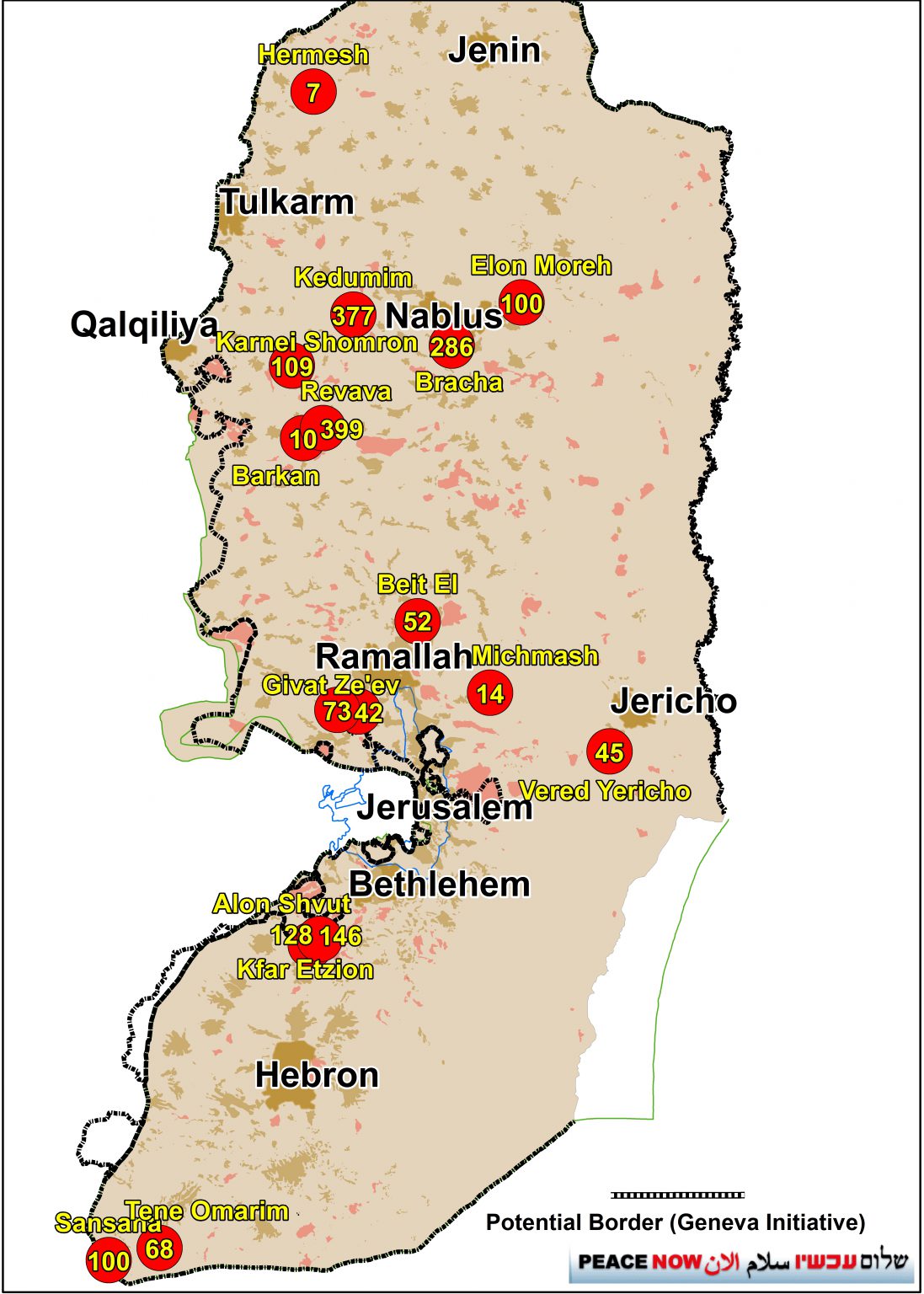 On August 12th, Israeli Defense Minister Benny Gantz announced that the High Planning Council will convene on August 18th to advance 2,259 new settlement units, as part of projects across the West Bank. Of these, 908 units are slated to receive final approval, including many units in areas beyond Israel’s security barrier. This will be the first time that the High Planning Council (HPC) has convened in 10 months, and it will be the first time a large number of settlement units has been advanced since Biden entered the White House. As a reminder, the HPC is a body within the Israeli Civil Administration (which is a part of the Israeli Ministry of Defense) that has authority over construction planning and approvals for both settlers and Palestinians in the West Bank (the HPC does not have authority with respect to settlement construction in East Jerusalem; since Israel annexed the area in 1967, Israeli domestic Israeli planning authorities are in charge there).
The plans expected to receive final approval include:
- 286 units in the Har Bracha settlement, located south of Nablus. If implemented, these new units will double the size of Har Bracha;
- 146 units in the Kfar Etzion settlement, located between Bethlehem and Hebron and on the Israeli side of the planned route of the barrier (which is not yet built in this area);
- 110 units in the Alon Shvut settlement, located just north of the Kfar Etzion settlement and between Bethlehem and Hebron;
- 82 units in the Karnei Shomron settlement, located in the northern West Bank, east of the Palestinian village of Qalqilya. Israel has openly declared its intention to continue expanding settlements in this area with the stated goal of bringing 1 million settlers to live in the area.;
- 52 units in the Beit El settlement, located in the heart of the northern West Bank [as a reminder, former US Ambassador to Israel David Friedman has deep ties to the Beit El settlement]; Construction on 350 new units in Beit El began earlier this year;
- 42 units in the Givat Zeev settlement, located south of Ramallah in an area that. is on the Israeli side of the barrier;
- 14 units in the Ma’aleh Mikhmash settlement, located east of Ramallah;
- 10 units in the Barkan settlement, located about half way between the Ariel settlement and the cluster of settlements slated to be united into a “super settlement” area (Oranit, Elkana, Shiva Tikva, and others).;
Peace Now said:
“The approval of thousands of housing units in the settlements harms the Israeli interest and the chances of reaching peace. It seems that the approval of a handful of plans for the Palestinians is only intended to try to reduce criticism of the government and to please the US administration ahead of Prime Minister Bennett’s expected visit to Washington in the coming weeks. For years, Israel has pursued a policy of blatant discrimination that does not allow almost any construction for Palestinians in Area C, while in the settlements it encourages and promotes the construction of thousands of housing units each year for Israelis. The approval of a few hundred housing units for Palestinians can not cover up discrimination and does not change the fact that Israel maintains an illegal regime of occupation and discrimination in the territories.”
The First Bennett/Biden Settlement Wave, Part 2: Israel Announces Intention to Issue 863 Building Permits for Palestinians in Area C
In announcing plans to advance over 2,000 new settlement units, Defense Minister Gantz also announced his intention to issue permits for 863 houses – some of which will be issued for existing structures – for Palestinians living in Area C. Haaretz reports that the permits are being advanced in order to buy the consent of the few members of the Israeli governing coalition that oppose settlement construction, and as “calculated risk” with respect to the Biden administration.
As a reminder, Area C is the 60% of the West Bank where Israel enjoys absolute authority and has systematically denied Palestinian building rights, while promoting the expansion of settlements and unauthorized outposts. If issued, these permits for Palestinians will be the first issued by Israel in years, and the first of any significant size. Only 21 building permits were issued to Palestinians between 2016 to 2018, while 2,147 demolition orders were issued in the same period.
Commenting on the announcement of the planned permits (which, given past experience, there is no reason to assume will ever be issued) Peace Now said:
“It is a very small expansion of the Palestinian villages and a drop in the ocean in terms of real Palestinian development needs.”
Peace Now reports that these permits, if they are ever issued, might be for:
- 270 houses in the Bir al-Bash village, located south of Jenin in the northern West Bank;
- 233 houses in the the Almasqufa village, located near Tulkarem in the norhtern West Bank;
- 160 houses in the Abba a-Sharqiya village, also located south of Jenin in the northern West Bank;
- 150 houses in the Al-Ma’asara village, located south of Bethlehem; and,
- 50 houses in the Khirbet Zakariya, also located south of Bethlehem.
The First Bennett/Biden Settlement Wave, Part 3: Observations on Settlement Policy Coordination Between Governments
In reporting over the past week, Axios journalist Barak Ravid has documented the efforts by the Israeli and U.S. governments to square conflicting positions with regards to settlement growth.
On the U.S. side, the Biden Administration has appeared to take pains to make room in its official discourse to begrudgingly tolerate settlement construction. While the U.S. has criticized the new batch of settlement advancements, until this week the U.S. had reportedly identified three actions it has asked Israel to refrain from, notably not including settlement expansion. Those three actions are: the demolition of Palestinian homes, the eviction of Palestinians from their homes, and the establishment of new outposts in the West Bank. The U.S. is also reportedly asking Israel to take positive steps to stabilize the Palestinian Authority, which is suffering from economic shortfalls and crashing levels of popular support.
For it’s part, Israeli press suggests that the Bennett government reduced the number of upcoming settlement advancements in order to appease the Biden Administration. The Israelis wanted to advance 3,623 plans, but announced a total of 2,259 (a 39% cut according to Jerusalem Post). Axios also reports that the Israeli government is assertively framing its settlement policy as one of restraint, prioritizing settlement projects that address the supposed “natural growth” needs of existing settlements.
“Natural growth” has been used many times in the past by the Israeli government as an argument for why settlements must be allowed to expand. FMEP’s Lara Friedman has debunked this argument many times in the past, explaining:
“While ‘natural growth’ has no formal definition, it has generally been used in the settler context to mean population growth due to births, as contrasted to growth due to immigration from Israel or other places. But in numerical terms (according to Israeli official statistics), taking into account deaths and people migrating out of settlements, births inside the settlements account for approximately 60% of the annual population growth in settlements, while around 40% is immigration from inside Israel or abroad. So clearly population growth in settlements is not simply a matter of births. Perhaps this is why some excuse-makers have expanded ‘natural growth’ to include other ways that families can grow, from non-settler spouses to aged non-settler relatives moving in.
“Regardless of what definition people want to use, the fact is that ‘natural growth’ is not a legitimate argument against a complete freeze in settlement construction. Yes, settlers, like people everywhere, indeed have the right to have babies, and yes, their children indeed have the right to grow up and have families and homes of their own. But nowhere in the world – not in New York, or Paris, or Tel Aviv – do people have an inalienable right to live exactly where they want – in the size home they want, in the neighborhood they want – irrespective of real estate market factors, or any political, economic, zoning, or other considerations that may come into play (including in this case, considerations about actual land ownership). Inside Israel, just like in other countries, people regularly face difficult decisions about where to live, given that major cities like Tel Aviv and Jerusalem are crowded and little affordable housing is available.
“Settlers have the right to have babies and to take in their parents or grandparents. When settler children grow up they have the right to start families and have homes of their own. But the settlers must do what people everywhere must do: reconcile their needs as best as possible to the housing market, which is affected not only by demand but by a myriad of other variables – including, in this case, the fact that settlers have knowingly and voluntarily chosen to make their lives on land that is the subject of a political dispute of global proportions.”
Axios quotes an Israeli government official saying:
“The Biden administration knows we are going to build. We know they don’t like it, and both sides don’t want to reach a confrontation around this issue.”
An Israeli government source summarized the dance going on between the respective governments by saying:
“[The U.S.] will express opposition to this move, but everyone wants this impossible coalition in Israel to hold out… It was clear for Bennett he would not have been able to advance this move after his meeting with [U.S. President Joe] Biden at the end of the month, so as not to damage their relations, and that’s why he had to announce it as early as he did.
Jerusalem District Court Orders 16 Homes to Be Demolished While Delaying – for 6 months – Demolition of Others in Silwan
On August 12th, a Jerusalem Court granted a six-month freeze on demolition orders affecting dozens of Palestinian homes in the al-Bustan section in the Silwan neighborhood of East Jerusalem. At the same time, the Court cleared the way for the immediate demolition of 16 Palestinian homes in the same area.
A lawyer representing the Palestinians involved in these demolition cases said his clients intend to file for permits for the structures, which were built on land that Palestinians assert they own. Israel argues that the land is public land.
Israel Begins Work on Settler-Back Project at the Ibrahimi Mosque/Tomb of the Patriarchs
This week, an Israeli crew began construction on a new elevator leading to the Ibrahimi Mosque/Tomb of the Patriarchs in Hebron, arguably one of the most sensitive religious sites outside of Jerusalem. The project to install accessible infrastructure at the site has been backed and pushed by settlers for over two decades and provides a means by which the State of Israel has increased its control over the site. The project is roundly opposed by Palestinians along with archaeologists and other experts. The Israeli archeology group Emek Shaveh explains its opposition:
“We claim that while the plan is couched in terms of concern for the disabled and elderly worshippers, in actual fact it is unilaterally advancing changes to a site mired in deep political controversy…The size and characteristics of the structure demonstrate that at issue is not simply a lift for persons with disabilities, but a significant change to the compound. The lift will constitute a change in the status quo and a strengthening of the settlers’ control of the holy site. Ignoring the fact that the site falls under the auspices of the Hebron Municipality is evidence that Israel is further reneging on its commitments to agreements signed in the past with Palestinians.”
Atarot Settlement Plan to Be Discussed on December 6th
As expected, the Jerusalem District Planning and Building Committee has set a date – December 6th – for the advancement of the Atarot settlement plan. This plan would allow for the construction of 9,000 settlement units, to be built on the site of the former Qalandiya airport (located at the northern tip of East Jerusalem).
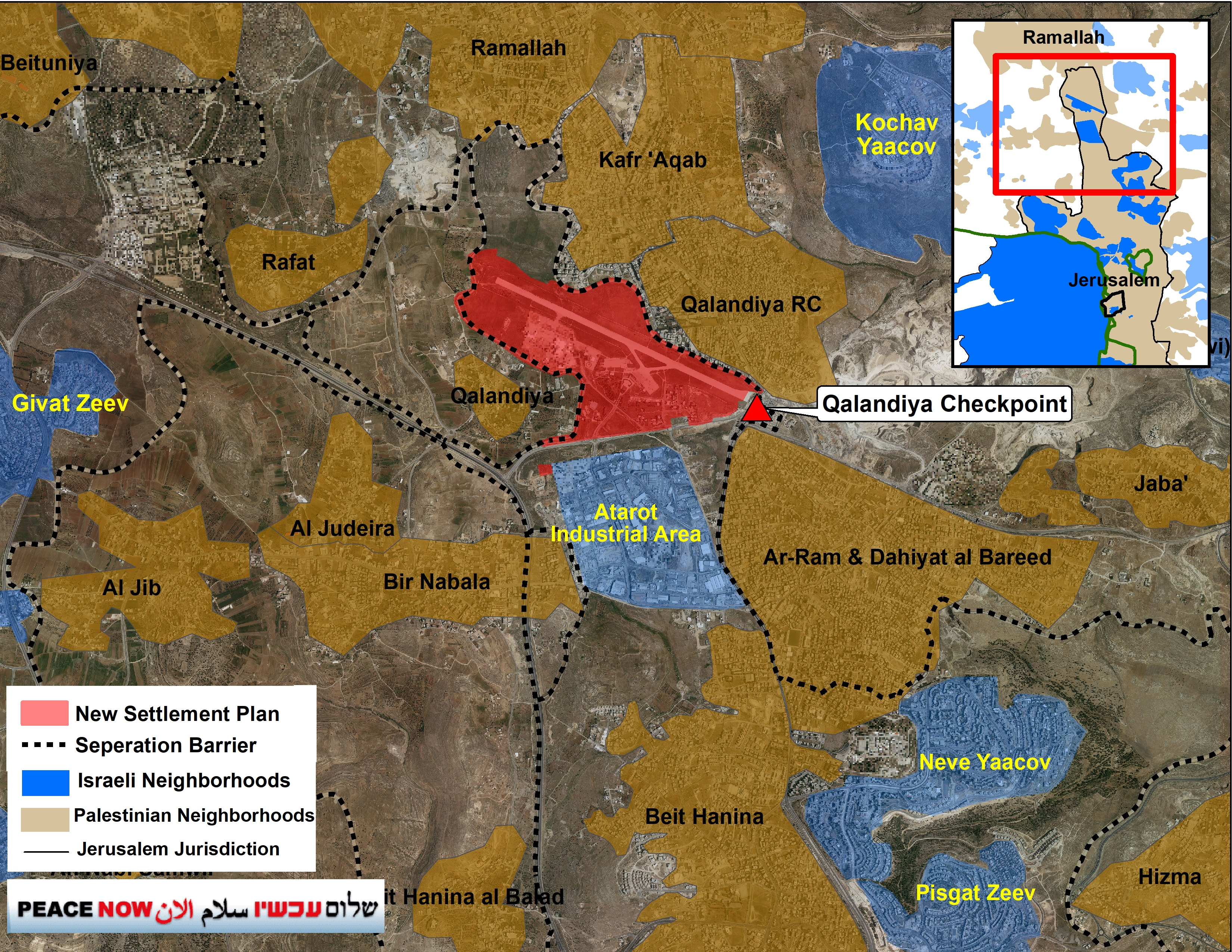 The Atarot settlement plan dates back to 2007. It was pursued by the Israeli government in 2012 but shelved under pressure from the Obama administration. The plan came back into consideration in April 2017 (a few months following the inauguration of President Trump) when it was rumored to be included on Netanyahu’s master blueprint of settlements for which he was seeking U.S. approval. In February 2020, following the publication of the Trump Plan – which designated the area that would be used for the settlement as a “special tourist zone” for Palestinians – the Atarot settlement plan was formally introduced. In January 2021 then-Prime Minister Netanyahu dangled the advancement of the plan as an incentive for parties to join his flagging coalition in order to remain in power.
In its current form, the plan provides for up to 9,000 residential units for ultra-Orthodox Jews (assuming, conservatively, an average family size of 6, this means housing for 54,000 people), as well as synagogues, ritual baths (mikvehs), commercial properties, offices and work spaces, a hotel, and a water reservoir. If built, the Atarot settlement will effectively be a small Israeli city surrounded by Palestinian East Jerusalem neighborhoods on three sides and Ramallah to its north.
There are currently 15 Palestinian families living in buildings on the land slated for the settlement, part of which is privately owned by Palestinians. Other land in the area has been declared “state land” by Israel or belongs to the Jewish National Fund. To solve the problem of Palestinian land owners, the Israeli government will need to evict the Palestinians living there and demolish their homes — a step that will be facilitated by the fact that all of the homes lack Israeli-issued building permits (which are essentially impossible for Palestinians to receive). The private Palestinian landowners will then be subjected to a non-consensual process of “reparcelization,” in which Israel will unilaterally reparcel and then redistribute the land amongst its owners on the basis of the value of the land (as determined by Israel) and the percentage of their ownership claim.
The Atarot airport site is an important commodity and, during past negotiations, it was promised to the Palestinians for their state’s future international gateway. Israeli development of the site as a settlement would — by design — not only deprive a future Palestinian state of the only airport in a Palestinian area, but also dismember Palestinian neighborhoods in the northern part of the Jerusalem, and sever East Jerusalem from a Palestinian state on this northern flank of the city (acting like E-1 on Jerusalem’s northeast flank, and like Givat Hamatos on Jerusalem’s southern flank).
Bonus Reads
- “Case Study: How a Settler Law-Breaker Became the #2 Official in Israel’s Ministry of the Interior” (FMEP // Lara Friedman w/ Dror Etkes)
- “Senior Israeli Official’s Appointment Approved Despite Demolition Order for His Settlement Home” (Haaretz)
- “In Sheikh Jarrah, anonymous actors and an absent state have created a powder keg” (The Times of Israel)
- “The Fight for Palestine’s Sheikh Jarrah Isn’t Over” (Jacobin)
- “ICC Mulls Probing Israel Over Razing Palestinian Homes in Jordan Valley” (Haaretz)
- “81 Palestinian homes demolished by Israel in East Jerusalem in 2021” (Middle East Monitor)
- “Jewish claim of land ownership in occupied East Jerusalem neighborhood displaces five Palestinian families” (WAFA)
Welcome to FMEP’s Weekly Settlement & Annexation Report. To subscribe to this report, please click here.
January 22, 2021
- Cashing In Before Trump Cashes Out, PART 1: Israel Awards Tender for the Construction of Givat Hamatos
- Cashing In Before Trump Cashes Out, PART 2: Israel Issues Tenders for 2,572 Settlement Units
- Cashing In Before Trump Cashes Out, PART 3: In Final Hours of Trump Era, Israel Advances Plans for 780 Settlement Units Across the West Bank
- Netanyahu’s Bid for Mass Legalization of Outposts Fails (For Now)
- Bonus Material
Comments/Questions – email Kristin McCarthy (kmccarthy@fmep.org)
Cashing In Before Trump Cashes Out, PART 1: Israel Awards Tender for the Construction of Givat Hamatos
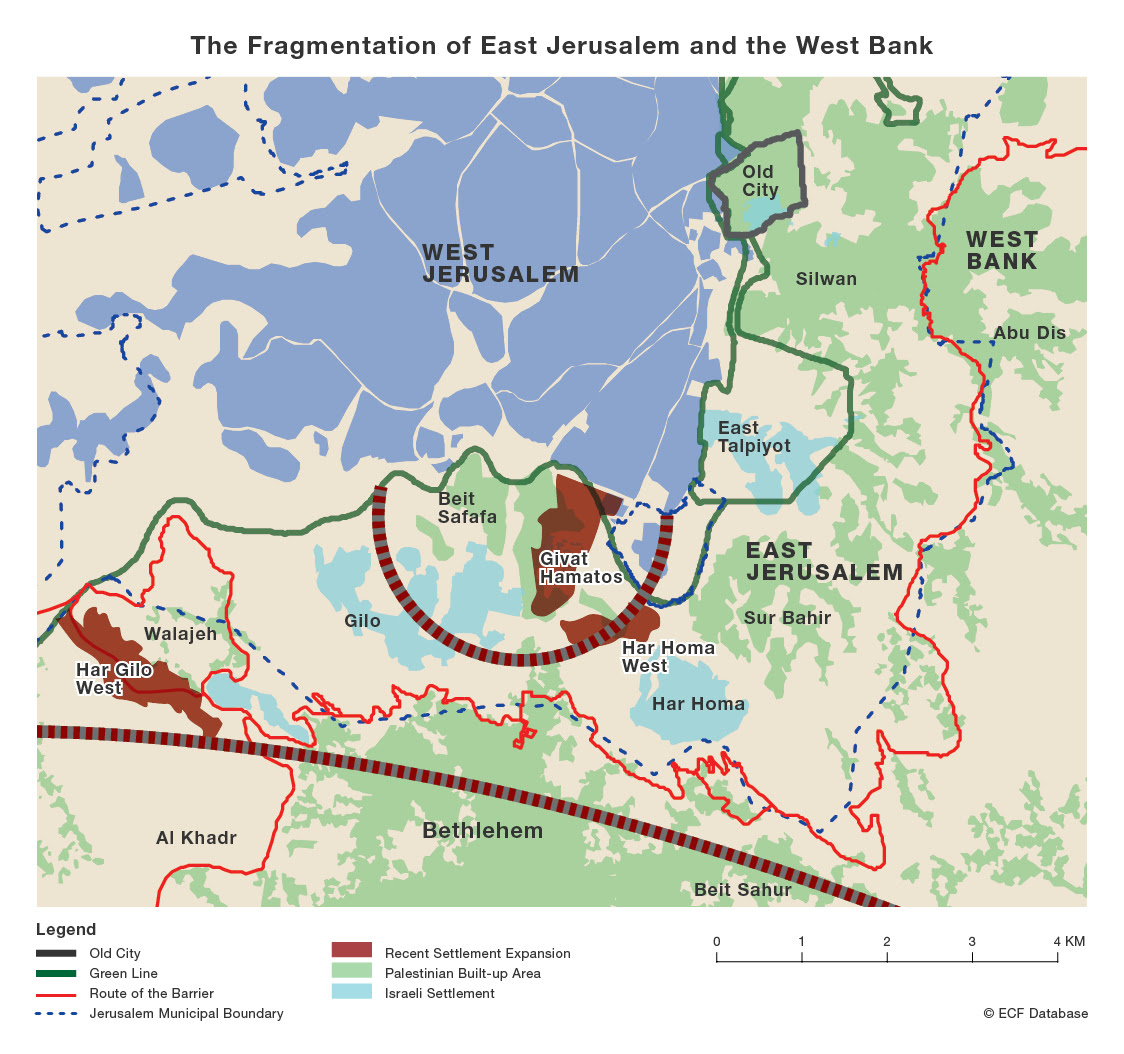
Map by Terrestrial Jerusalem
On January 19th, the Israel Land Authority issued the tender for the construction of the Givat Hamatos settlement in East Jerusalem (the tender is for a total of 1,257 settlement units). The issuance of the tender came a mere 6 hours before Joe Biden was sworn in as the President of the United States.
Prior to the issuance of the tender, the Jerusalem District Court rescinded its injunction against the tender, which the Court had issued last week in response to a petition filed by Palestinian residents of East Jerusalem and the Israeli NGO Ir Amim. That petition – which alleges that the planned construction of government-subsidized housing has discriminatory eligibility guidelines – is still pending, and the Court scheduled a discussion of the petition for May 27th.
According to Jerusalem expert Daniel Seidemann (of the Israeli NGO Terrestrial Jerusalem), now that the tender has been issued and awarded, construction of Givat Hamatos is now “virtually inevitable.” Givat Hamatos has long been regarded as a doomsday settlement by parties interested in preserving the possibility of a two-state solution, in that it will prevent the division of Jerusalem into an Israeli capitol and a Palestinian capitol (if the Givat Hamatos settlement is built, the Palestinian neighborhood of Beit Safafa in East Jerusalem will be completely surrounded by Israeli construction, severing its connection to the West Bank). Regardless of the implications of Givat Hamatos on a two state solution, the impact of the new settlement on the Beit Safafa neighborhood are nonetheless significant.
Explaining how Netanyahu bears direct responsibility for the highly consequential decision to move ahead with Givat Hamatos, Terrestrial Jerusalem writes:
“Netanyahu could have made this ‘go way’ at ZERO political cost to himself. He could have said truthfully: I tried, but the Court didn’t let me. Instead, he pulled out all plugs and instructed the State Attorney to aggressively pursue the rescission of the injunction. He went out of his way to make this happen. The tender process may now be completed, after which construction is virtually inevitable.This is happening because Netanyahu wants it to happen. This is happening now, because Netanyahu wants it to happen now.”
Ir Amim punctuates its analysis of the move by writing:
“The fact that the ILA hastened to announce the winners of the tender only 6 hours before Joe Biden’s inauguration serves to underline how determined the Israeli government is to create as many facts on the ground as possible before Biden takes office.”
Regarding the prospects of its petition against the Givat Hamatos tender, Ir Amim writes:
“The petition targets the conditions of eligibility for subsidized housing within the tender which discriminate against Palestinians. The petition does not call for cancellation of the tender but it remains to be seen how the petition will be viewed by the court and whether or not this will affect more than the specific discrimination present. One possible result of the petition – although we do not think its likelihood is high – can be that subsidized housing be completely removed from the tender in which case it is very possible that the tender will have to be reissued.”
Cashing In Before Trump Cashes Out, PART 2: Israel Issues Tenders for 2,572 Settlement Units
On January 20, 2021 – inauguration day in the U.S., the Israeli government issued tenders for the construction of 2,572 units (total) in settlements across the West Bank, as well in East Jerusalem. Now that the tenders are issued, construction companies are invited to bid to win the contract. Peace Now estimates that building is likely to happen within two years from now.
The issuance of these tenders comes in addition to the Givat Hamatos tender (see section above) and the advancement of plans for 780 more settlement units (see section below).
Commenting on the tenders, Peace Now said in a statement:
“Our out-of-touch government leadership continues to press on with its mad scramble to promote as much settlement activity as possible until the last minutes before the change of the administration in Washington. By doing so, Netanyahu is signaling to the incoming President that he has no intention of giving the new chapter in US-Israel relations even one day of grace, nor serious thought to how to plausibly resolve our conflict with the Palestinians.”
The 2,572 tenders issued on January 20 provide for:
- 941 units in the Emanuel settlement, located in the northern West Bank east of the Palestinian village of Qalqilya. Israel has openly declared its intention to continue expanding settlements in this area – which includes the settlements of Karnei Shomron and Alfei Menashe – with the stated goal of bringing 1 million settlers to live in the area.
- 460 units in the Pisgat Zeev settlement, the largest settlement in East Jerusalem. This involves the issuance of two tenders, one for 210 units and a second for 250 units.
- 377 units in the Adam (aka Geva Binyamin) settlement, through the issuance of three tenders, one for 94 units, a second for 263 units, and a third for 20 units. The Adam settlement is located northeast of Jerusalem, just beyond the separation barrier. Israel has for some years been steadily building the Adam settlement in a manner meant to connect the settlement seamlessly with East Jerusalem settlements and infrastructure, erasing the Green Line.
- 359 units in the Beit Aryeh settlement, located northwest of Ramallah, through the issuance of two tenders, one for 159 units and a second for 200 units.
- 220 units in the Maaleh Efraim settlement, located in the northern West Bank in the area between the central ridge and the Jordan Valley, through the issuance of three tenders, one for 24 units, a second for 178 units, and a third for 18.
- 150 units in the Alfei Menashe settlement, located in the northern West Bank east of the Palestinian village of Qalqilya. Israel is planning to continue expanding this area – which includes Karnei Shomron and Emmanuel – with the stated goal of bringing 1 million settlers to live in the area.
- 49 units in the Karnei Shomron settlement, through the issuance of two tenders, one for 48 units and a second for 1 unit). Israel also advanced plans for construction of 24 more units in the Karnei Shomron settlement through an earlier stage of the planning process (see the section below). Karnei Shomron is located in the northern West Bank east of the Palestinian village of Qalqilya. Israel is planning to continue expanding Karnei Shomron with the stated goal of bringing 1 million settlers to live in the area.
- 16 units in the Beitar Illit settlement. through the issuance of two tenders, one for 14 units and a second for 2 units). Beitar Illit is located west of Bethlehem, near the Green Line.

Cashing In Before Trump Cashes Out, PART 3: In Final Hours of Trump Era, Israel Advances Plans for 780 Settlement Units Across the West Bank
At its final meeting of the Trump era — which took place the day before Joe Biden’s inauguration — Israel’s High Planning Council advanced plans for 780 new settlement units. This includes final approval for plans for a total of 365 units plus the expansion of an industrial zone and approval for deposit for public review (one of last steps before final approval) for a total of 415 units, including retroactive legalization to two illegal outposts.
Commenting on the Council’s actions, Peace Now said in a statement:
“By promoting hundreds of settlement units, Prime Minister Netanyahu is once again putting his personal political interests over those of the country. Not only will this settlement activity erode the possibility for a conflict-ending resolution with the Palestinians in the long-term, but in the short-term it needlessly sets Israel on a collision course with the incoming Biden administration.”
Specifically, plans granted final approval by the Council include:
- 152 new units in the Shavei Shomron settlement, located in the northern West Bank, northwest of Nablus.
- 123 new units in the Itamar settlement, located southeast of Nablus in a cluster of notoriously violent settlements and outposts.
- 66 new units in the Oranit settlement, located in the northern West Bank, in the “seam zone” between the 1967 Green Line and the Israel separation barrier (a barrier constructed along a route designed to keep as many settlements and as much adjacent land as possible on the Israeli side of the wall/fence).
- 24 new units in the Karnei Shomron settlement, located in the northern West Bank east of the Palestinian village of Qalqilya. Israel is planning to continue expanding Karnei Shomron with the stated goal of bringing 1 million settlers to live in the area.
- Expansion of the Barkan Settlement Industrial Zone, located in the northern West Bank and a part of a strand of settlements connecting Israel proper and the Ariel settlement. Ariel is located in the very heart of the northern West Bank, reaching literally to the midpoint between the Green Line and the Jordan border. The future of Ariel and the settlements between Ariel and Israel proper have long been one of the greatest challenges to any possible peace agreement, since any plan to connect Ariel to Israel will cut the northern West Bank into pieces. For background on this industrial zone and others, see here.
Plans the Council approved for deposit for public review include:
- The retroactive legalization of 118 existing units in the Nofei Nehemia outpost. If implemented, this plan would have the effect of retroactively legalizing the outpost as a “neighborhood” of the Rehelim settlement, notwithstanding the fact that the Nofei Nehemia outpost is a fair distance from the Rehelim settlement and is not contiguous with the built-up area of Rehelim. In reality, Nofei Nehemia – if authorized – should be understood as a brand new settlement in its own right, rather than an expansion of an existing one (as the Israeli government wants the world to believe). The Nofei Nehemia outpost is located east of the Ariel settlement in the very heart of the northern West Bank. The Nofei Nehemia outpost made news this week with launch of a public bus route through the outpost – an overt act of entrenching and normalizing its presence by Israeli authorities.
- 107 new units in the Tal Menashe settlement, located on the tip of the northern West Bank, inside the “seam zone” between the 1967 Green Line and the Israel separation barrier, which was constructed along a route designed to keep as many settlements and as much adjacent land as possible on the Israeli side of the wall/fence. Tal Menashe is technically a neighborhood of the Hinanit settlement, though the built-up areas do not connect. The plans for 107 units would, if implemented, “dramatically increase” the size of the Tal Menashe settlement, which is the settlement where Esther Horgan – who was murdered by a Palestinian in late December 2020 – lived. Israeli government officials have made it a clear policy to advance settlement construction in response to deadly attacks on settlers by Palestinians, an approach publicly endorsed by U.S. Ambassador to Israel David Friedman.
- The retroactive legalization of 96 units in the Havot Yair outpost, with the intention of granting retroactive legalization (under Israeli law) to the entire outpost. The Havat Yair outpost is located near the Karnei Shomron settlement in the northern West Bank, east of the Palestinian village of Qalqilya. Israel is planning to continue expanding Karnei Shomron area with the stated goal of bringing 1 million settlers to live in the area.
Netanyahu’s Bid for Mass Legalization of Outposts Fails (For Now)
Despite an intensive last ditch effort, Netanyahu did not succeed in pushing through a government decision to grant retroactive legalization to dozens of outposts in the waning hours of the Trump era.
According to reports, Netanyahu made a last minute effort to gain Gantz’s support for a more narrow authorization – for 6 outposts instead of the 43 outposts as included in an earlier draft government decision. Gantz reportedly blocked Netanyahu’s proposal from coming up for a vote at the Israeli government cabinet meeting on January 19th, saying that “no diplomatically irresponsible proposal will be raised at such a sensitive time.” Other reports suggest European leaders intervened to make their objections to outpost authorization clear.
According to Haaretz, Netanyahu made several attempts to get the decision passed, including convening a call with Israel’s Attorney General to make progress. During that call Netanyahu complained that “jurists” were getting in his way. Netanyahu then surprised Gantz by adding the outpost issue to the Cabinet’s meeting planned for January 19th (a meeting devoted solely to the COVID-19 crisis).
The 6 outposts Netanyahu’s proposal reportedly listed for legalization are: Tel Zion, Ovnat, Metzoke Deragot, Kedem Arava, Avigail, and Asa’el. For more information on those outposts, see Peace Now’s reporting. Of those outposts, three would have been legalized as neighborhoods of existing settlements (Tel Zion, Ovnat, Metzoke Deragot), and three would have been authorized as full-fledged independent settlements (Kedem Arava, Avigail, Asa’el). Netanuyahu’s new proposal also called for the government to allocate over $6.2 million (NIS 20 million) to hire 13 new staff members at the Civil Administration tasked with continuing outpost legalization legal efforts.
FMEP has traced this saga for weeks – from the time when Likud and Blue & White officials were collaborating to draft such a decision, to last week’s news that Gantz decided to continue blocking the move despite a private meeting with settlers asking him to give his OK. It’s worth reiterating that Gantz has made clear he is not opposed to granting retroactive legalization to outposts, but is opposed to this manner of doing so. Gantz prefers for each outpost to be considered on an individual basis.
Bonus Material
- “A regime of Jewish supremacy from the Jordan River to the Mediterranean Sea: This is apartheid” (B’Tselem)
- “Al-Haq Welcomes B’Tselem’s Recognition of Israeli Apartheid” (Al-Haq)
- [VIDEO] “Calling the Thing by its Proper Name: “Apartheid” Between the Jordan River & the Mediterranean Sea” (FMEP)
- “Palestinian factory workers strike in West Bank industrial zone” (Al-Monitor)
- “West Bank demolitions and displacement | December 2020” (OCHA)
Welcome to FMEP’s Weekly Settlement & Annexation Report. To subscribe to this report, please click here.
January 15, 2021
- Tender for Givat Hamatos Settlement Construction Delayed
- Israel Expected to Advance Plans for (At Least) 684 Settlement Units, Grant Retroactive Approval to Outposts
- Netanyahu Promises to Boost Funds for “Sovereignty Road”
- Settlers Escalate Campaign for Outposts Legalization
- Israel Sets Up New Hotline to Assist Settler Surveillance of Palestinian Construction in Area C
- Key Quotes from U.S. Amb. Friedman on His Way Out the Door
- Bonus Reads
by Kristin McCarthy (kmccarthy@fmep.org)
Tender for Givat Hamatos Settlement Construction Delayed
On January 15th, the Jerusalem District Court issued a temporary injunction against the issuance of the tender for construction of 1,257 units in the Givat Hamatos settlement, slated to be built in East Jerusalem. Givat Hamatos has long been regarded as a doomsday settlement by parties interested in preserving the possibility of a two-state solution, assuming that Jerusalem will need to be divided and shared. If the Givat Hamatos settlement is built, the Palestinian neighborhood of Beit Safafa in East Jerusalem will be completely surrounded by Israeli construction, severing its connection to the West Bank.
Map by Terrestrial Jerusalem
The injunction comes in response to an emergency petition submitted on January 14th by 25 Palestinian residents of East Jerusalem with the assistance of the Israeli NGO Ir Amim. The petition argues that the conditions of the tender represent “severe housing discrimination” in that non-Isareli citizens are ineligible for the government subsidized housing planned for Givat Hamatos. Rather than seeking to stop the construction of Givat Hamatos, the petition asks the government to correct these discriminatory conditions so that Palestinian residents are also welcome to purchase homes in Givat Hamatos.
The tender was scheduled to be published on January 18th (2 days before the inauguration of Joe Biden as the new U.S. president). The injunction delays that publication and orders the government to respond to Ir Amim’s petition by January 21st.
Ir Amim explains the petition’s claims in detail:
“40% of the homes [planned for Givat Hamatos] will be allocated to individuals who are eligible for a government subsidized housing scheme. To qualify, individuals must be a non- homeowner and an Israeli citizen, which entirely precludes EJ Palestinians, as the vast majority do not hold citizenship but rather permanent residency. Not only are they excluded from an affordable subsidized housing option, but only 60% of the apartment supply offered to an Israeli citizen is available to a Palestinian resident, which discriminates on two planes. The petition therefore calls for the following remedies:
1 – to grant Palestinian residents eligibility to qualify for the subsidized apartments on Givat Hamatos,
2 – Instruct the state to consider equitably allocating a significant number of affordable apartments to Palestinian residents of Jerusalem,
3 – Postpone the apartment marketing process for a period of no less than six months to allow for interested Palestinian Jerusalem residents to apply for eligibility for the subsidized housing scheme, or
4 – To cancel the subsidized housing scheme and rather sell all apartments on the free market, making them accessible to all…
East Jerusalem Palestinians already suffer from acute housing shortages and suppression of residential development stemming from long-standing discriminatory planning and building policies. Since East Jerusalem’s annexation in 1967, not one neighborhood has been built for Palestinians, while only 8.5 % of Jerusalem is zoned for their residential use despite them constituting nearly 40% of the city’s population. 1/3 of the land in East Jerusalem was confiscated to build Israeli neighborhoods/settlements. If and when residential outline plans are approved for existing Palestinian neighborhoods, they only allow for a few hundred housing units versus thousands of housing units in Israeli neighborhoods across the city.”
Terrestrial Jerusalem’s Daniel Seidemann comments:
“This is far from over, and one can never estimate the life expectancy of an injunction like this, but this is very good news. As matters stand the tender process regarding Givart Hamatos will NOT end on January 18, and the bids will not open.”
Israel Expected to Advance Plans for (At Least) 684 Settlement Units, Grant Retroactive Approval to Outposts
The Israeli Defense Ministry’s Higher Planning Council (which oversees all construction in the occupied West Bank) is expected to meet on January 17th to advance plans for at least 684 – but potentially 850 or more – settlement units across the West Bank, while also advancing the retroactive legalization of two outposts. These approvals will come only days before the inauguration of Joe Biden as the new President of the United States, a changing of the guards expected to temper U.S. support and approval for settlement construction.
An additional report by Middle East Eye reports that on January 13th the Israeli planning authorities in Jerusalem advanced plans for 400 units in the Gilo settlement and 130 units in the Ramat Shlomo settlement, both located in East Jerusalem. FMEP will provide more details when those reports are confirmed.
FMEP will confirm the details of the Civil Administration’s High Planning Council meeting in next week’s Settlement Report. Based on what is known today, the settlement units expected to receive final approval include:
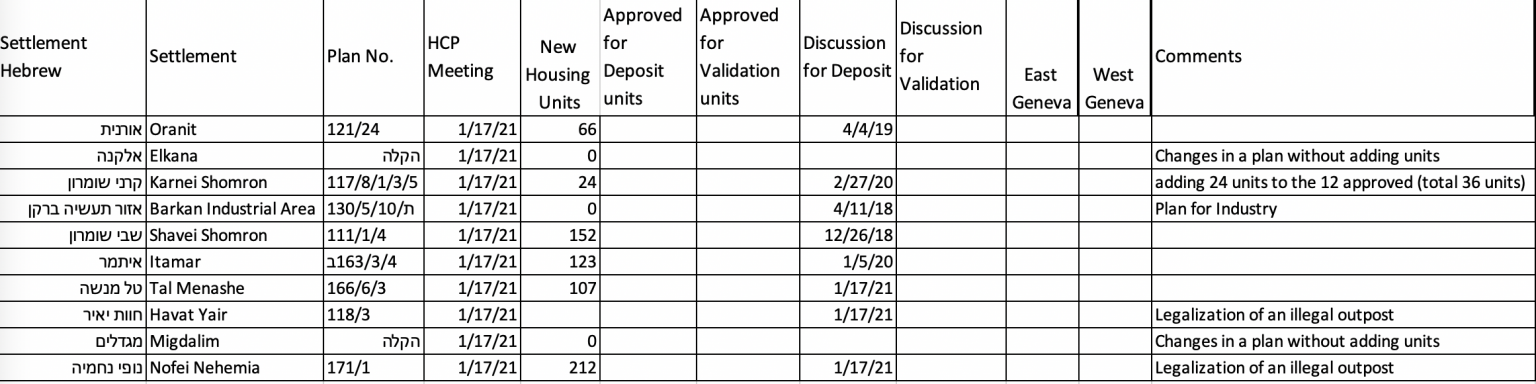
- 152 new units in the Shavei Shomron settlement, located in the northern West Bank – northwest of Nablus;
- 123 new units in the Itamar settlement, located southeast of Nablus in a cluster of notoriously violent settlements and outposts;
- 66 new settlements units in the Oranit settlement, located in the northern West Bank, in the “seam zone” between the 1967 Green Line and the Israel separation barrier (constructed along a route designed to keep as many settlements as possible on the Israeli side of the wall/fence);
- 24 new units in the Karnei Shomron settlement, located in the northern West Bank east of the Palestinian village of Qalqilya. Israel is planning to continue expanding Karnei Shomron with the stated goal of bringing 1 million settlers to live in the area surrounding the settlement;
- Expansion of the Barkan Settlement Industrial Zone, located in the northern West Bank and a part of a strand of settlements leading from Israel proper all the way to the Ariel settlement in the very heart of the northern West Bank, reaching literally to the midpoint between the Green Line and the Jordan border. The future of Ariel and the settlements between Ariel and Israel proper have long been one of the greatest challenges to any possible peace agreement, since any plan to connect Ariel to Israel will cut the northern West Bank into pieces. For background on this industrial zone and others, see here.
The settlement units slated to be advanced to the planning stage of depositing for public review include:
- The retroactive legalization of 212 existing units in the Nofei Nehemia outpost, which if implemented would have the effect of retroactively legalizing the outpost as a neighborhood of the Rehelim settlement. The Nofei Nehemia outpost is a fair distance from the Rehelim settlement and is not contiguous with the built up area of Rehelim, making Nofei Nehemia – if authorized – more properly understood as a brand new settlement rather than an expansion of an existing settlement (as the Israeli government would want one to believe). The Nofei Nehemia outpost is located east of the Ariel settlement in the very heart of the northern West Bank.
- 107 new units in the Tal Menashe settlement, located on the tip of the northern West Bank. Tal Menashe is technically a neighborhood of the Hinanit settlement, though the built up areas do not connect. Notably, the plans for 107 units would, if implemented, “dramatically increase” the size of the Tal Menashe settlement, which is the settlement where Esther Horgan – who was murdered by a Palestinian in late December 2020 – lived. Israeli government officials have made it a clear policy to advance settlement construction in response to deadly attacks on settlers by Palestinians, an approach publicly endorsed by current U.S. Ambassador David Friedmam. Tal Menashe is situated in the “seam zone” between the 1967 Green Line and the Israel separation barrier, which was constructed along a route designed to keep as many settlements as possible on the Israeli side of the wall/fence.
- An unknown number of units in the Havot Yair outpost with the intention of granting retroactive legalization (under Israeli law) to the entire outpost. The Havat Yair outpost is located near the Karnei Shomron settlement in the northern West Bank, east of the Palestinian village of Qalqilya.
Wasel Abu Youssef, a member of the Executive Committee of the Palestine Liberation Organization told Reuters:
“[Israel’s advancement of settlement construction] is an attempt to race against time and benefit from the last days of the current U.S. administration.”
Peace Now said in a statement:
“By promoting hundreds of settlement units, Prime Minister Netanyahu is once again putting his personal political interests over those of the country. Not only will this settlement activity erode the possibility for a conflict-ending resolution with the Palestinians in the long-term, but in the short-term it needlessly sets Israel on a collision course with the incoming Biden administration. For eight years as vice president, Biden and the rest of the Obama administration gradually became more irritated and willing to spar with Israel over settlements, and for the past four years Biden has watched Netanyahu stroke Trump’s ego to promote policies meant to undermine the very foundations for a two-state solution. Although supporting more settlement activity may be a shrewd way to attract votes over the increasing number of rivals to his right, Netanyahu is gambling with Israel’s all-important relationship with its US ally.”
It’s worth noting that current Israeli Defense Minister (and increasingly disgraced Blue & White party leader) Benny Gantz, following the publication of the High Planning Council’ agenda for settlement construction, announced that his office had taken “preliminary steps” towards the approval of Palestinian construction plans in communities located in Area C of the West Bank (some 60% of the West Bank which Israel exercises unilateral civil and security control over, and which is the focus of the most intense settler campaigns for de jure annexation). The Times of Israel reports that those plans include: the expansion of the Palestinian village of Al-Walaja (located south of Jerusalem and surrounded on three sides by the Israeli separation barrier), the expansion of Hizma (located on the northern border of the Jerusalem municipal boundary), approval of a new hotel in the Bethlehem area (note: Bethlehem itself is not in Area C), a hearing on plans for a hotel in Beit Jala (located on the eastern border of Bethlehem, 75% of land belonging to Beit Jala was designated as Area C under the Oslo Accords), and a hearing on the retroactive legalization of farming buildings in al-Fara (located in the northern West Bank). Commenting on Gantz’s announcement of these Palestinian plans, Bimkom researcher Alon Cohen-Lifshitz told told The Times of Israel:
“This is like mocking the poor. Most of the plans are from 2012. They’re all very small in terms of their land use and do not allow for [further] development.”
Predictably, settlers responded with vitriol to the rumor of plans to regulate (i.e., post-facto legalize) Palestinian construction in Area C. A spokesman for the Young Settlements Forum (“young settlements” is a new euphemism for illegal outposts that has been catching on in Israeli politics) said:
“There is no limit to this cynicism. The defense minister and the prime minister want to legitimize the illegal Palestinian takeover of Area C in violation of political agreements, and remove from the agenda the regulation of Israeli settlements that have been built on state land.”
Netanyahu Promises to Boost Funds for “Sovereignty Road”
According to the Jerusalem Post, Prime Minister Netanyahu has promised to allocate an additional $4 million USD (NIS 14 million) or more to the construction of the so-called “Sovereignty Road.” The road is a key element in Israel’s plan to build the E-1 settlement east of Jerusalem and its larger ambition to annex (de facto or de jure) a huge area of West Bank territory located between Jerusalem and Jericho.
According to the Jerusalem Post, Netanyahu met with Benny Kashriel, mayor of the Ma’ale Adumim settlement (located adjacent to the E-1 site), along with Transportation Minister Miri Regev and Finance Minister Israel Katz to discuss the matter this week. During the meeting, Bibi made the verbal commitment to allocating additional funds to see that the road is built.
Peace Now responded to the news:
“Netanyahu’s election campaign is costing Israel a very heavy price. Once again, he is using the election period to try to impress key Likud supporters by promoting a plan that could eliminate the possibility of a two-state solution. The planned road will allow Israel to cut the West Bank in two, build E1 and the separation barrier, and close the door on the possibility of developing a sustainable Palestinian state.”
For decades, construction of the E-1 settlement – which is now actively advancing through the planning process – has been adamantly opposed by the international community. A key criticism of the plan is that it would effectively cut the West Bank in half — thereby preventing any two-state solution. The “Sovereignty Road” has long been Israel’s answer to that criticism, with Israel arguing that it will replace territorial contiguity with limited “transportational continuity” – via a sealed road that is under Israel’s total control (meaning they can cut off passage through it at any time).
If built, a section of the Palestinian-only road is projected to run under the separation barrier (which is not currently built in this area). The rest of the road will run relatively adjacent to the route of the planned separation barrier, in order – in the words of former Defense Minister Bennet – to prevent Palestinian traffic from coming “near Jewish communities.” This new section of road connects to the infamous “apartheid road” (aka, the Eastern Ring Road) which has a high wall down the middle dividing Israeli and Palestinian traffic, and which was opened for Palestinian traffic in January 2019.
In March 2020, then Defense Minister Naftali Bennet gave final approval for the “Sovereignty Road” plan, at the time giving lip service to the idea that the plan will benefit Palestinians (even as it further cuts them off from Jerusalem, takes more land, and cuts the West Bank in half). At the same time, he made clear his real objective. stating:
“[the road] will improve the quality of life for residents in the area, avoid unnecessary friction [for Israelis] with the Palestinian population and most importantly — allow for continued [settlement] construction. We’re applying sovereignty [to the West Bank] in deeds, not in words.”
Peace Now has previously explained the issue with Israel’s design:
“The new road is intended to allow Palestinians to pass under the route of the separation barrier, and to travel ‘inside’ the Adumim Bloc along a wall without entering the ‘Israeli’ side, as in a kind of tunnel. Once the road is paved, Israel can then claim that construction in E1, and the construction of the barrier around the Adumim bloc does not sever the West Bank because the Palestinians have an alternative transport route. This argument is preposterous. A thin line of road connecting separate territorial sections–transportational contiguity–does not meet the needs for territorial viability for the development and livelihoods of Palestinians in the critical Ramallah-Jerusalem-Bethlehem metropolitan area. Without actual territorial contiguity, an independent Palestinian state cannot be established and prosper, and therefore a two-state solution cannot be reached.”
Settlers Escalate Campaign for Outposts Legalization
Kan radio reported that Defense Minister Benny Gantz told settlers that he remains opposed to issuing retroactive authorization to dozens of outposts in one fell swoop, but will instead prefers that each outpost go through a legal process individually in order to gain legalization.
Settlers have been encamped in front of the Prime Minister’s office for nearly two weeks demanding for the passage of a government decision for large scale retroactive legalization of as many as 70 outposts. That decision has been drafted but has been held up by Defense Minister Gantz; In December 2020, Knesset introduced a bill to circumvent Gantz’s opposition and grant authorization to 65 outposts.
Some of the protesting settlers began a hunger strike in hopes of escalating their demands for outpost authorization. Numerous politicians and officials have visited the encamped settlers to show solidarity, including aspiring Prime Minister Naftali Bennett visited the encamped hunger strikers, saying:
“Netanyahu, authorize the young settlements [outposts] now in these coming 10 days. If you don’t do it, when I am the prime minister, I will do it.”
Israel Sets Up New Hotline to Assist Settler Surveillance of Palestinian Construction in Area C
Haaretz reports that in November 2020 the Israeli Civil Administration (the body within the Israeli Defense Ministry tasked with coordinating all civilian affairs in the occupied West Bank) created a new hotline for settlers wishing to report their suspicions of “illegal” Palestinian construction in the West Bank (on the Kochav Ya’akov settlement website, the new phone service is called a “snitch line”).
Amira Hass reports in Haaretz that the Civil Administration’s announcement of the “snitch line” said:
“Have you seen Palestinian construction work that looks to you to be suspicious and unauthorized? Have you encountered a sanitation hazard created by Palestinians who disdain the law? From now on you have a ‘snitch-line’ of your own. Call at any hour of the day and submit a complaint about it. Every day there will be a summary of the complaints and a display of what was examined and what was confiscated in the event that there was improper conduct. Good luck.”
Testing whether the new hotline was exclusively for Israeli settlers reporting on Palestinians, the Palestinian-led NGO Haqel tried reporting illegal construction by the settlers. In response, the Civil Administration said that the “coordination office representatives sent someone to check what’s going on.”
The new hotline is yet another victory in the campaign by settlers to stop Palestinian construction in Area C, and push Palestinians out altogether. In November 2020, in addition to razing an entire Palestinian community, Khirbet Humsa, and tightening the noose on Khan Al-Ahmar – the Israeli government advanced plans to begin a land registration process in Area C as a means by which the state can declare more West Bank land to be “state land,” a way to retroactively legalize unauthorized settlement construction there (as well as put more land off limits to Palestinain construction and even render some existing Palestinian construction illegal).
Additionally, on September 10th the Israeli government allocated $6 million USD (20 million NIS) for the newly created Settlement Affairs Ministry to survey and map unauthorized (by Israel) Palestinian construction in Area C of the West Bank, which Israel – egged on by settlers – has been aggressively demolishing in an effort to rid the area of Palestinians. Haaretz reports that this is the first time that the state budget has included funds specifically for a land survey in the West Bank. The state also allocated an additional $2.8 million (9.5 million NIS) to an existing grant program specifically for settlement municipalities to cash in on. As a reminder, virtually all Palestinian construction in Area C of the West Bank is “unauthorized,” because Israel almost universally refuses to give Palestinians permission to build in Area C even on land that Israel recognizes as owned by Palestinians.
The Settlement Affairs Ministry is a new creation of the current coalition government, and is headed by Tzachi Hanegbi (Likud). The funding for the Settlement Affairs Ministry to conduct a survey of unauthorized Palestinian construction in Area C further empowers a domestic Israeli body to exert extraterritorial sovereignty over Area C – in effect, treating the area as land already de facto annexed by Israel. While technically the occupied territories are administered by the Israeli Civil Administration (a body within the Defense Ministry), Israel has spent decades bringing the administration of the territories (specifically the settlements and Area C) ever more directly under direct Israeli law (de facto annexation).
The Knesset has also repeatedly hosted forums to discuss “the Palestinian takeover of Area C.” Consistent with this framing (which is predicated on the idea that Area C belongs to Israel), and pushed by outside groups, many members of the Knesset have criticized the Israeli government’s allegedly lackadaisical approach to defending Israel’s rights/ interests in Area C (i.e., preventing “illegal” Palestinian construction, preventing foreign projects that support Palestinians’ presence in the area, clearing out Palestinians, expanding settlements, consolidating state infrastructure). Reportedly, Foreign Affairs Minister Gabi Ashkenazi (Blue & White) sent a letter to the committee in October 2020 specifically addressing the Knesset’s outrage over European humanitarian assistance projects for Palestinians in Area C. In the letter, Ashkenazi not only celebrated the reduction of European projects over the past year, but validated settlers’ insinuations regarding the nefarious nature of European assistance for Palestinians, saying that any European activity in the West Bank lacking Israeli permission is “an attempt to define a border.”
At one Knesset hearing, MK Bezalel Smotrich (Yamina) suggested that a solution could be to empower the settlements with the ability to demolish Palestinian construction they believe to be unauthorized. Smotrich’s partymate Ayelet Shaked (former Justice Minister) suggested that the government should appoint a project manager tasked with preventing a “Palestinian takeover” of Area C.
As noted above, Israel has long denied Palestinians the ability to build in Area C, resulting in many Palestinian structures (including homes, schools, farms, etc) being built without the required Israeli-issued permits. To fully understand what is happening, see B’Tselem’s excellent explainer.
Key Quotes from U.S. Amb. Friedman on His Way Out the Door
Please read the New York Times feature on David Friedman in its entirety, and the two separate threads (one and two) journalist David Halbfinger tweeted with supplemental material from the interview. A few key quotes regarding U.S. settlement and annexation policy over the past four years are copied below.
On internal Israeli annexation negotiations between Netanyahu and his government coalition partners:
“I was invited.”
On the future of Israel’s de jure annexation of West Bank land:
“They [Israel] can act unilaterally. It’s suboptimal, but at some point, it’s just sort of necessary just to move on.”
On how the U.S. settlement policy over the past four years:
“he agreed with the Israelis that they should build ‘from the inside out’ — to expand settlements ‘with the least amount of damage to the overall footprint. And that’s how they’ve been operating over the last four years’.”
On the opposition to settlement construction by previous U.S. administrations:
“just to kind of virtue-signal that we think the Palestinians should have something more, made no sense to me…[What Israel does inside or outside the settlements is] an internal decision.” And also on the idea of asking for a settlement freeze: “for them [Israel], I think a freeze of construction is the acknowledgment that the land doesn’t belong to them.”
On criticisms of the Trump Plan map:
“We spent months working on ways to achieve contiguity. You can drive from Hebron to Nablus and never see an Israeli. “I used to take the Midtown Tunnel to work every day. If you tell me that there’s a river, that I go under a river, I don’t know that. I never saw the river once. I drove under that thing for 30 years, never saw a river. So I take it on faith that there’s an East River. I’m just saying that we created enough contiguity so that Palestinians could go throughout the West Bank without ever coming face-to-face with the Israelis.”
On the role Israelis played in creating the Trump Plan and map:
“The editorial control was always ours. This was entirely authored by us and almost entirely conceptualized by us.”
On how to get Israelis to buy into future peace talks:
“Peace talks would only gain traction with the Israeli right, he ‘without the accusation that somehow it’s a thief and being asked to return things that it stole. Israel will not and should not come to the table on the basis of being an illegal occupier of stolen land’”
On the current status quo (in which Israel occupies the West Bank and blocakes the Gaza Strip):
“the status quo is not unsustainable, but I think the status quo is suboptimal and should be.”
On the dangers posed to Israeli democracy by permanent occupation:
“I don’t think it has anything to do with Israel’s democracy because Israel’s democracy is the function of the citizens, and these are not citizens of Israel.”
Friedman confirmed that the Trump Plan and normalization deals between Israel and the UAE and Bahrain held out the “aspiration” of a massive change to the status quo on the Temple Mount in which non-Muslim prayer would be allowed at all areas except Al Aqsa Mosque.
Dismissing any remaining doubt that normalization deals between Israel and Arab countries were contingent on Israel’s permanent suspension of annexation:
“I don’t think it would’ve been appropriate for Israel to, especially without the consensus of the Israeli population, to just give up territory permanently for any agreement with another country,”
He blamed the Israeli left for a tense moment in 2010 between then Vice President Biden and the Israeli government, when Biden arrived in Israel on the same day Isreal announced settlement construction plans:
“The reality here is whenever under the last administration somebody of significance came to visit, the Israeli left would immediately publicize whatever they could find in terms of settlement expansion, to create that friction,”
On his future plans:
“I’m going to stay American-only for at least four years. I want to give myself every opportunity to return to government.” And later, “Finally, there’s talk of his forming an Israel-based pro-settlement group. He hinted: ‘I will stay in the space somehow, but I just don’t know how,’ he said. ‘I’ll try to maintain a voice. I mean, it’s a huge drop-off when you no longer have access to the president’.”
Bonus Reads
- “[Webinar] ‘Raided and Razed’: West Bank Education under Attack” (FMEP & NRC)
- “‘Does someone have to die for West Bank outposts to be legalized?’” (Jerusalem Post)
- “Land of wine and honey? Israeli settlers export to UAE, to Palestinian chagrin” (Reuters)
Welcome to FMEP’s Weekly Settlement & Annexation Report. To subscribe to this report, please click here.
October 16, 2020
- No Annexation, No Problem – Israel Advances Nearly 5,000 New Settlement Plans, Including New Settlement South of Jerusalem
- Plan for 570 Units in East Jerusalem Settlement Approved for Deposit
- Israel Approves Construction of Elevator at Tomb of the Patriarchs
- Israel Delivers Confiscation Notices to Palestinians Living in the Heart of Hebron
- Palestinians Report Newly Established Outposts & Land Confiscations
- Targeting Palestinians Construction in Area C: State Devotes $6 million to Mapping Program
- In First, Palestinian Authority Courts to Hear Lawsuits Against Settlers
- NF, Elad Face International Heat Over Sumarin Family Eviction Case – Will it Matter?
- Report: U.S. Will Not Back De Jure Annexation Until 2024 [Friedman Says 2021 in Play]
- Bonus Reads
Comments/questions? Contact Kristin McCarthy (kmccarthy@fmep.org)
No Annexation, No Problem – Israel Advances Nearly 5,000 New Settlement Plans, Including New Settlement South of Jerusalem
During meetings held October 14th and 15th, the Israeli High Planning Council advanced plans for a total of 4,948 new settlement units. Of that total, plans for 2,688 units were granted final approval and plans for 2,260 units were approved to be deposited for public review (a late stage in the planning process). The latter approvals include a plan to build a new settlement, “Har Gilo West,” just beyond Jerusalem’s southern border. In addition, the Council granted retroactive approval to 340 existing illegally-built settlement units in the unauthorized outposts of Peni Kedem and Tapuach West, paving the establishment of two new official West Bank settlements (through post-facto legalization of the illegal outposts).
These were the first meetings of the High Planning Council since February 2020, at which time settlement planning was put on pause in favor of attempting to implement annexation plans as designed by Trump’s “Deal of the Century.” Under annexation, authority over the settlement planning/approval process could have been shifted from the Israeli Civil Administration (the branch of the Israeli Defense Ministry, in charge of the administration of affairs in the West Bank, – i.e., Israel’s occupation) into Israel domestic planning mechanism. Such a shift has long been a goal of settlers and their political allies.
In addition to advancing construction of new residential settlement units, the High Planning Council also advanced plans for the construction of new settlement projects that support tourism, further entrench the permanency of settlements, and that continue the exploitation of West Bank land and resources.
Record-Setting Settlement Activity in 2020
With the huge advancement of settlement plans this week, the Israeli government has advanced plans for 12,159 settlement units so far in 2020. With over two months to go, the settlement watchdog group Peace Now reports that this is already the highest total number settlement advancements in any year since Peace Now began tracking totals in 2012. Peace Now also reports that it is possible that the High Planning Council will convene one more time before the year ends.
Har Gilo West Approved for Deposit w/ Plan to Seal Off Al-Walajah
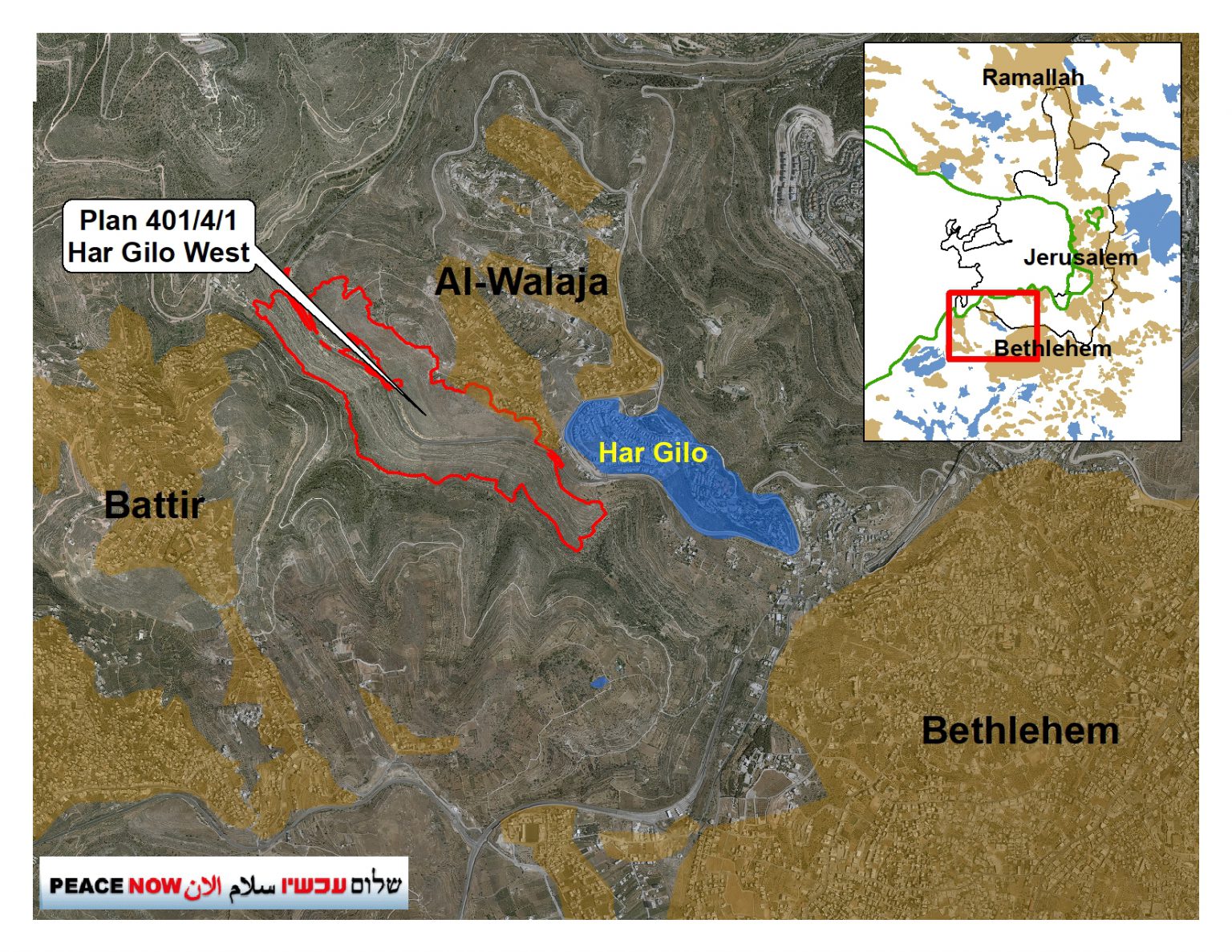 The High Planning Council approved for public deposit a plan to build 560 units at the Har Gilo West settlement site, located just south of Jerusalem. The Council is treating this plan as merely an expansion of the existing Har Gilo settlement, but in actuality it represents the construction of a new settlement on Jerusalem’s southern border, as the two areas of construction (Har Gilo and Har Gilo West) would not be contiguous. The plan for 560 units in Har Gilo West is part of a larger plan to construct around 952 units in the new settlement, extending the its borders right up to the Jerusalem municipal boundary, with dire consequences for the long-beleaguered Palestinian village of Al-Walajah.
The discussion on October 14th further revealed that, in order to build Har Gilo West, Israel plans to extend the separation barrier in that area to completely encircle al-Walajah, which is surrounded on three sides by the separation wall already. The new section of the barrier would be a 7-meters high concrete slab along the western edge of the built-up area of Al-Walajah. That would leave Al-Walajah completely encircled by the separation barrier and Israeli construction beyond it.
Ir Amim explains:
“In the past decade a series of Israeli moves have taken over more and more of Al-Walaja land and gradually isolating it. These are now culminating with the intention to construct the new settlement on the land reserves on the western side of Al-Walaja and to extend the separation barrier so as to complete the encircling of the village. As Al-Walaja will turn into an isolated enclave which lacks an outline plan its residents will be especially vulnerable to increasing home demolitions and other Israeli sanctions. Since the village will separate the new settlement from the existing Har Gilo we are likely to see increasing Israeli actions against Al-Walaja and its residents which will put their future existence at risk.”
Peace Now writes:
“The current plan of 952 housing units to be advanced will create a brand new neighborhood that will be larger than the existing settlement, and will exploit the land cut off by the West Bank barrier to further break up the western Bethlehem metropolitan area, including the land connecting al-Walaja and the town of Battir, as well as Battir and Bethlehem. This land also constitutes some of the only uninhabited fertile land reserves for Bethlehem, which currently is cut off by the West Bank barrier to its immediate north and west.“
FMEP has repeatedly documented various Israeli efforts to seal off al-Walajah from Jerusalem. Residents of al-Walajah have fought the growing encroachment by the nearby Etzion settlement bloc and the Israeli government’s attempt to de facto annex the bloc as part of “Greater Jerusalem.” Ir Amim explains several prongs of this effort, including a particularly unbelievable section of Israel’s separation barrier planned to almost completely encircle the village, to turn its valuable agricultural land into an urban park for Jerusalem, and construction of a highway that will connect the Etzion settlement bloc to Jerusalem with Israeli-only bypass roads.
Two Outposts Advance Towards Retroactive Legalization
The High Planning Council approved for deposit two plans that would, if implemented, have the effect of retroactively legalizing two outposts – bestowing upon those outposts legitimacy in the eyes of Israeli law and, in effect, establishing two new, official settlements. Those plans are:
- Pnei Kedem: A plan to grant retroactive legalization to 120 units in the Pnei Kedem farm outpost by recognizing the outpost as a “neighborhood” of the Metzad/Asfar settlement. This is despite the fact that the two areas of construction are non-contiguous. Pnei Kedem is located halfway between Bethlehem and Hebron in the southern West Bank. Settlers were particularly gleeful about this plan being advanced
- Tapuach West: A plan to grant retroactive legalization to 133 units in the Tapuach West outpost, located south of Bethlehem.
Not Just Residential Units – Council Advances Settler Tourism & Infrastructure Projects
The High Planning Council also advanced plans for the construction of new settlement projects that support tourism, further entrench the permanency of settlements, and that continue the exploitation of West Bank land and resources.
The Council granted final approval to:
- A plan for new shops and an educational site (to include an agricultural farm) in the Kochav Yaakov settlement – located between Jerusalem and Ramallah; and,
- A plan to grant retroactive authorization to a motor park and 120 hotel rooms in the Petza’el settlement, located in the Jordan Valley. As FMEP has covered in the past, this state-of-the-at racetrack and hotel complex is being built partially on land that the Israeli army previously declared a closed firing zone, a designation which resulted in the forcible displacement of Palestinians who lived there. The land remains under this designation today. Rather than halting the construction of this complex, the Israeli authorities instead created a Master Plan for the area in order to enable even more construction in the area.
Plans the Council granted final approval for public deposit include:
- A plan for an industrial zone near the Mishor Adumim settlement; and,
- A plan to build a new commercial area and 50 hotel rooms in the Maale Adumim settlement;
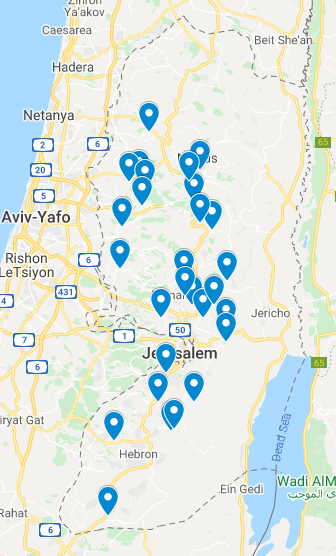
Map by Ben White (@benabyad)
Included in the total number of units receiving final approval and/or retroactive legalization (3,028 units) are (in descending order of number of units): [map]
- 382 units in the Beit El settlement, located in the heart of the northern West Bank. This includes retroactive legalization for 36 units which had been previously built without authorization and the construction of 346 units in highrise buildings with 9 or 10 floors (building up, not out in Beit El) [as a reminder, US Ambassador to Israel David Friedman has deep ties to the Beit El settlement];
- 357 units in the Geva Benyamin (Adam) settlement, located just north east of Jerusalem, just beyond the separation barrier. Israel has been steadily building the Adam settlement in a manner meant to unite the settlement more seamlessly with East Jerusalem settlements and infrastructure, erasing the Green Line;
- 354 units in the Nili settlement, located in the northern West Bank;
- 213 units in the Shiloh settlement, including the retroactive legalization of 21 units built without required approvals. The Shiloh settlement is located in the central West Bank;
- 211 units in the radical and violent Yitzhar settlement, including some retroactive authorizations (exact number not specified) as well as approval for public buildings. Yitzhar, located just south of Nablus, is associated with the Hilltop Youth movement – and a string of illegal outposts in the area associated with repeated attacks on Palestinians and their property;
- 205 units in the Nokdim settlement (actually approved for the Kfar Eldad settlement, which is officially within the jurisdiction of Nokdim), located south of Bethlehem;
- 200 units in the Metzad settlement (also known as Asfar), including the retroactive legalization of an unspecified number of existing units built without necessary approvals;
- 160 units in the Kochav Yaacov settlement, located east of Ramallah;
- 140 units in Kerem Reim settlement – located north west of Ramallah. Peace Now has repeatedly challenged the illegal construction of the Kerem Reim outpost, which the Israeli government retroactively legalized by declaring it a neighborhood of the Talmon settlement even though the areas are non-contiguous. Though a court rejected one Peace Now petition, there is an ongoing case against the Amana settler organization which Peace Now alleges engaged in illegal activities to build the outpost;
- 132 units in Kfar Adumim settlement – located east of Jerusalem and less than one mile from the Khan al-Ahmar bedouin community which the state of Israel is seeking to demolish;
- 106 units in the Ma’ale Shomron settlement, located east of the Palestinian village of Qalqilya;
- 84 new units in the Shima settlement, including retroactive legalization of 14 existing units;
- 74 units in the Yakir settlement – located in the northern West Bank and part of a string of settlements and unauthorized outposts – most notably Ariel – extending from the Green Line deep into the West Bank;
- 64 units in the Telem settlement – located west of Hebron;
- Retroactive legalization of 18 units in the Psagot settlement – located east of Ramallah, and home to the Psagot Winery;
- Retroactive legalization of 2 units in the “Givon Hadasha” settlement;
Plans which were approved for deposit for public review include (in descending order of number of units):
- 629 units in the Eli settlement, including the retroactive legalization of 61 units – located south of Nablus and southeast of the Ariel settlement in the central West Bank. Though the Eli settlement previously received Israeli government approval, a “Master Plan” – which officially zones land for distinct purposes (residential, commercial, public) – has never been issued for Eli, meaning all construction there is illegal under Israeli law;
- 560 units in the Har Gilo settlement located just south of Jerusalem (covered in detail above);
- 286 units in the Har Bracha settlement – located just south of Nablus. If implemented, these new units will double the size of Har Bracha;
- 179 units in the Einav settlement – located northwest of Nablus;
- 148 units in the Rimonim settlement – located between Ramallah and Jericho in the Jordan Valley;
- A plan to grant retroactive legalization to 133 units in the Tapuach West outpost, thereby granting approval to the outpost itself (discussed above);
- A plan to grant retroactive legalization to 120 units in the Pnei Kedem outpost by recognizing the outpost as a “neighborhood” of the Metzad/Asfar settlement although the two areas of construction are non-contiguous. Pnei Kedem is located between Bethlehem and Hebron in the southern West Bank;
- 82 units in the Karnei Shomron settlement – located in the northern West Bank east of the Palestinian village of Qalqilya. Israel is planning to continue expanding Karnei Shomron with the stated goal of bringing 1 million settlers to live in the area surrounding the settlement.;
- 75 units in the Shimaa settlement, including the legalization of 14 units previously built without authorization;
- 52 units received retroactive legalization in the Kfar Adumim settlement;
- 35 units in the Efrat settlement – located south of Bethlehem. As a reminder, Efrat is located inside a settlement block that cuts deep into the West Bank. Efrat’s location and the route of the barrier wall around it, have literally severed the route of Highway 60 south of Bethlehem, cutting off Bethlehem and Jerusalem from the southern West Bank. The economic, political, and social impacts of the closure of Highway 60 at the Efrat settlement (there is literally a wall built across the highway) have been severe for the Palestinian population;
- 14 units (in one building) in the Maale Mikmash settlement – located east of Ramallah;
- 10 units in the Barkan settlement – located about half way between the Ariel settlement and the cluster of settlements slated to be united into a “super settlement” area (Oranit, Elkana, Shiva Tikva, and others).
- 7 units in the Peduel settlement – located in the northern West Bank and part of a string of settlements and unauthorized outposts – most notably Ariel – extending from the Green Line into the very heart of the West Bank and on towards the Jordan Valley; and,
The High Planning Council met only after settlers, who represent a key ally of the embattled Prime Minister, pressured Netanyahu to allow it. Settlers have spent months decrying what they understood to be a freeze on settlement constructed inflicted upon them by Netanyahu. Gush Etzion Regional Council Head Shlomo Ne’eman said:
“Sometimes we take our prime minister to task, which we feel is justified as a result of our disappointment in postponing the application of sovereignty over our country. But now something tangible is happening – we are building and developing our communities, and of course, the highlight of today is the full registration in the Land Authority of the young community of Pnei Kedem, 20 years since it was established.”
Samaria Regional Council head Yossi Dagan said:
“This is a happy day for Samaria. [New construction] in Har Bracha, Yitzhar, Einav and Tapuach is another step on the way to a million residents in this beautiful region of the country…While we’re very content with today’s developments, I call on the Prime Minister not to stop here. We’re overfilled with joy, but it is a drop in the ocean with sovereignty falling off the agenda. The expectation now is that construction and strengthening of the settlement movement will increase tenfold.”
Peace Now responded to the approvals in a statement saying:
“While Israel reels from its second lockdown and economic distress, Netanyahu is promoting construction in isolated settlements that Israel will have to evacuate. Instead of taking advantage of the agreements with the Gulf states and promoting peace with the Palestinians, he is distorting Israel’s priorities and catering to a fringe minority for these settlement unit approvals that will continue to harm future prospects for peace. We call on the Defense Minister and the Alternative Prime Minister Benny Gantz to veto these plans. Far from a ‘settlement freeze,’ the right has been complaining about, the expected settlement approvals announcement next week prove that the settlement enterprise under Netanyahu is moving ahead at full steam toward solidifying the de facto annexation of the West Bank. The move also will be the first major demonstration of Defense Minister Benny Gantz’s bowing to the ‘Greater Israel’ settlement agenda that would in reality bring about a permanent undemocratic one-state reality. By doing so, Israel will be signaling to the world its bi-partisan support for the end to the concept of a two-state solution and a Palestinian state – the paradigm that until now has largely shielded Israel from formal pressure over its 53-year occupation. The settlement enterprise is not in Israel’s national or security interest, and is a strategic mistake at the international level.”
Palestinian Prime Minister Mohammed Shtayyeh denounced the approvals, saying:
“Every settler unit constitutes a plan to annex our land.”
Palestinian Authority spokesman Nabil Abu Rudeineh said in a statement:
“We warn against this Israeli policy that will lead the region to the brink of the abyss, and we call on the international community to intervene immediately and urgently to pressure the Netanyahu government to stop this settlement madness that totally eliminates any real opportunity to achieve a just and comprehensive peace to end the occupation and establish the independent Palestinian state with East Jerusalem as its capital on the 1967 borders.”
UN High Representative Josep Borrell said in a statement:
“In recent days, Israel has announced a significant expansion of settlements in the occupied West Bank, in areas in and around Jerusalem. These plans, which foresee the construction of close to 5.000 housing units, jeopardise the viability and territorial contiguity of a future Palestinian State as the outcome of a negotiated two-state solution, in line with the internationally agreed parameters. Settlements are illegal under international law. As stated consistently, the EU will not recognise any changes to the pre-1967 borders, including with regard to Jerusalem, other than those agreed by the parties. Settlement activity threatens current efforts to rebuild trust, to resume civil and security cooperation between Palestinians and Israelis and to prepare the ground for an eventual resumption of meaningful and direct negotiations. The Government of Israel should reverse these decisions and halt all continued settlement expansion, including in East Jerusalem and sensitive areas such as Har Homa, Givat Hamatos and E1. The period from March to August 2020 also saw a spike in demolitions or confiscations of Palestinian-owned structures in the West Bank in spite of the COVID-19 pandemic. The EU reiterates its call on Israel to halt all such demolitions, including of EU-funded structures, in particular in light of the humanitarian impact of the current pandemic. Against the background of normalization of relations between Israel, UAE and Bahrain, Israelis and Palestinians should seize this opportunity and take urgent steps to build confidence and restore cooperation along the line of previous agreements and in full respect of international law.”
A spokesperson for UN Secretary-General Antonio Guterres issued a statement flagging concern over the advancements, saying:
“We are concerned about the reports of Israel’s settlement advancements in the occupied West Bank and will continue to follow developments closely, as the Israeli High Planning Committee finalizes its meetings tomorrow. The Secretary-General has consistently reiterated that all settlements are illegal under international law and remain a substantial obstacle to peace. We urge the Israeli authorities to refrain from such unilateral actions that fuel instability and further erode the prospects for resuming Palestinian-Israeli negotiations on the basis of relevant UN resolutions, international law and bilateral agreements.”
Plan for 570 Units in East Jerusalem Settlement Approved for Deposit
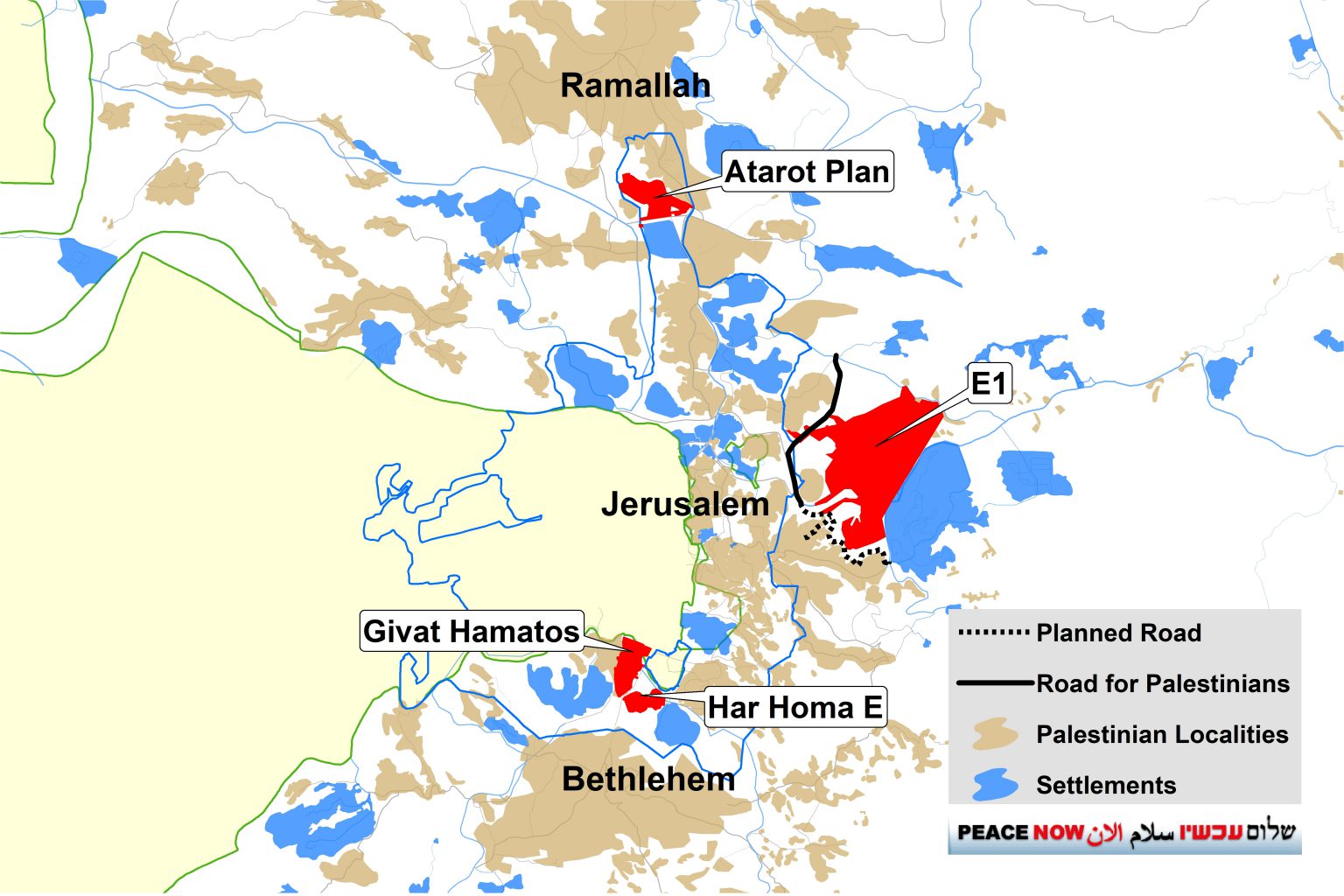 Ir Amim reports that on September 22nd, the Jerusalem District Committee approved for deposit for public review a detailed plan providing for the construction of 570 units in the Har Homa E settlement, located in East Jerusalem. Taken together with the pending construction of the nearby Har Gilo West settlement (discussed in the section above), the Palestinian village of al-Walajah stands to be completely encircled by Israeli settlements.
If implemented, this plan will extend the Har Homa settlement westward, in the direction of the site of the as-of-yet-unbuilt Givat Hamatos settlement. Ir Amim explains:
“If realized, Har Homa E together with construction in Givat Hamatos will connect Har Homa to Gilo creating a contiguous Israeli settlement area that will disconnect East Jerusalem from Bethlehem and the south of the West Bank.”
Ir Amim also reminds us that the Jerusalem District Committee previously approved a Master Plan for a total of 2,200 units in Har Homa E. The plan for 570 units approved for deposit in late September represents the first detailed plan under this Master Plan allows for. Plans to build the remaining units permitted under the Master Plan are not yet being advanced.
Israel Approves Construction of Elevator at Tomb of the Patriarchs
Emek Shaveh reports that on September 29th the Civil Administration granted final approval to a plan to build accessible infrastructure, including an elevator, at the Ibrahimi Mosque/Tomb of the Patriarch in Hebron — a plan which requires Israel to seize land from the Islamic Waqf. As of this writing, Emek Shaveh is considering whether to challenge that approval.
Regarding the significance of the plan, Emek Shaveh said:
“One need not be an archaeologist or architect to review the council’s plan and understand that it is destructive in a manner which is unprecedented. We are convinced that the plan, as approved, would never have been promoted had it not been driven by political motives.”
Emek Shaveh has previously provided critical context as to why this plan is not really, or not fully, being advanced out of humanitarian concerns, explaining:
“Israel’s decision to seize responsibility for the site from the Hebron municipality and the Palestinians sends a clear political message that Israel is reneging on agreements that were signed with the Palestinians in Hebron. Beyond the precedent that will enable the settlers in the future to demand additional changes at the Tomb of the Patriarchs/Ibrahimi Mosque, this is also a precedent that could play out at other sites under the responsibility of the Islamic Waqf. Experience has shown us that what begins in Hebron percolates into other places including Jerusalem. It begins with a seemingly rational demand to benefit the disabled or the general public and evolves into a new status quo. The expected change in Hebron has not escaped the attention of members of the Temple movement and they will know how to present their demands to the government. If Israel can repudiate agreements with the Palestinians in Hebron and expropriate land from the Waqf, it would seem that accepting what appears to be the far more modest demands by the Temple movement to pray or to walk about the Temple Mount complex freely is not so far-fetched. In the reality of Hebron and East Jerusalem, a change involving only several meters at a historic or holy place is not free of political considerations and often it is part of long-term strategy. While it is necessary to tend to the needs and interests of persons with disabilities, the extremists who presume to speak on their behalf must be prevented from forging Israeli policy, even if it is only a matter of a lift and an access path.”
Read Emek Shaveh’s full analysis here: “Humanitarianism Hebron Style.”
Israel Delivers Confiscation Notices to Palestinians Living in the Heart of Hebron
The Palestinian media outlet WAFA news reports that several Palestinians living in the Tel Rumeida section of downtown Hebron were handed confiscation notices from the Israeli authorities, informing them that the State of Israel had confiscated 17 plots of land, including land privately owned by Palestinians.
Tel Rumeida is a part of Hebron located directly in the city center, considered H2 by the Hebron Accords giving Israel full control of security in that area. B’Tselem estimates that there are around 700 settlers living in enclaves amongst approximately 34,000 Palestinians in H2. The Israeli army heavily protects those settlers, and has implemented an apartheid system of segregated movement and checkpoints, most notably in the area of Shuhada Street.
Palestinians Report Newly Established Outposts & Land Confiscations
The Palestinian news outlet WAFA reports that settlers have installed three new outposts over the past month – one near Nablus and a second near Hebron, and a third in the Jordan Valley.
Near Nablus, Palestinians report that the settlers installed mobile homes and a small farm in an attempt to establish a permanent presence on a new plot of land. The settlers are reportedly in the process of connecting the new outpost to the Elon Moreh settlement via roads and water supply. Ghassan Daghlas, who monitors Israeli settlements on behalf of the PLO, told WAFA that the specific area has seen even wider road construction recently, which he sees as an effort to create more seamless contiguity between settlements in the Nablus area and the Jordan Valley. The construction comes at the direct expense of the Palestinian village of Beit Dajani, which has historically owned the land where the outpost and roads are being built.
Near Hebron, WAFA reports that an Israeli settler erected a tent with and Israeli flag on privately owned Palestinian land near the Birin village.
In the Jordan Valley, WAFA reports that settlers set up a caravan on land on which they began planting trees about three months ago. The settlers also reportedly dug a well at the site.
On October 15th, Israel reportedly announced its intention to confiscate large tracts of land (11,000 dunums) adjacent to the Jordan Valley settlements of Rotem, Maskiyot, and Mesovah. This confiscation, according to Palestinian settlement watcher Qasem Awwad, was presented by the Israeli authorities as a move to add land to natural reserve areas, but seems clearly to be linked to efforts to expand settlements and their control over land in the area.
Targeting Palestinians Construction in Area C: State Devotes $6 million to Mapping Program
Despite COVID and the suspension of Israeli’s unilateral annexation of vast tracts of land in the West Bank, the Israeli government — at the urging of settlers and their allies — is continuing its push to consolidate its control over all aspects of life in Area C (the over 60% of the West Bank that is under full Israeli control).
OCHA has documented an acceleration in the Civil Administration’s demolition of Palestinian structures in the West Bank over the summer, documenting the demolition of 389 Palestinian-owned structures in Area C of the West Bank. As a result of those demolitions, 442 Palestinians were made homeless. OCHA further reported that In just the month of August, 205 Palestinians lost their homes, the highest single month total since January 2017. In addition, Israel continues to issue more demolition notices, including against Palestinians living in a cave near Jenin, and against a newly constructed school for bedouin children located east of Ramallah.
To further this effort, on September 10th the Israeli government allocated $6 million USD (20 million NIS) for the newly created Settlement Affairs Ministry to survey and map unauthorized Palestinian construction in Area C of the West Bank, which Israel and its settlers have been aggressively demolishing in an effort to rid the area of Palestinians. Haaretz reports that this is the first time that the state budget has included funds specifically for a land survey in the West Bank. The state also allocated an additional $2.8 million (9.5 million NIS) to an existing grant program specifically for settlement municipalities to cash in on. As a reminder, virtually all Palestinian construction in Area C of the West Bank is unauthorized, because Israel almost universally refuses to give Palestinians permission to build in Area C even on land that Israel recognizes as owned by Palestinians.
The Settlement Affairs Ministry is a new creation of the current coalition government, and is headed by Tzachi Hanegbi (Likud). The funding for the Settlement Affairs Ministry to conduct a survey of unauthorized Palestinian construction in Area C further empowers a domestic Israeli body to exert extraterritorial sovereignty over Area C – in effect, treating the area as land already de facto annexed by Israel. While technically the occupied territories are administered by the Israeli Civil Administration (a body within the Defense Ministry), Israel has spent decades bringing the administration of the territories (specifically the settlements and Area C) ever more directly under direct Israeli sovereignty (de facto annexation).
In the lead up to the allocation of funds for this new survey of Palestinians life in Area C, the Knesset hosted two committee discussions the political outlook of which was clearly indicated in the stated subject of the meetings: “the Palestinian takeover of Area C.” Consistent with this framing (which is predicated on the idea that Area C belongs to Israel), and pushed by outside groups, many members of the Knesset have criticized the Israeli government’s allegedly lackadaisical approach to preserving State interests in Area C (i.e., clearing out Palestinians, expanding settlements, consolidating state infrastructure). Reportedly, Foreign Affairs Minister Gabi Ashkenazi (Blue & White) sent a letter to the committee specifically addressing the Knesset’s outrage over European humanitarian assistance projects for Palestinians in Area C. In the letter, Ashkenazi not only celebrated the reduction of European projects over the past year, but validated settlers’ insinuations regarding the nefarious nature of European assistance for Palestinians, saying that any European activity in the West Bank lacking Israeli permission is “an attempt to define a border.” Ashkenazi also said that Israel will not compensate European donors for confiscated equipment or the demolition of European-funded projects that lack Israeli permission (like in the case of schools built with European funding, and solar panels donated to bedouin communities lacking power).
At one Knesset hearing, MK Bezalel Smotrich (Yamina) suggested that a solution could be to empower the settlements with the ability to demolish Palestinian construction they believe to be unauthorized. Smotrich’s partymate Ayelet Shaked (former Justice Minister) suggested that the government should appoint a project manager tasked with preventing a Palestinian takeover of Area C.
As noted above, Israel has long denied Palestinians the ability to build in Area C. To fully understand what is happening, it is worth reviewing B’Tselem’s excellent explainer:
“Israel’s planning and building policy in the West Bank is aimed at preventing Palestinian development and dispossessing Palestinians of their land. This is masked by use of the same professional and legal terms applied to development in settlements and in Israel proper, such as “planning and building laws”, “urban building plans (UBPs)”, “planning proceedings” and “illegal construction”. However, while the planning and building laws benefit Jewish communities by regulating development and balancing different needs, they serve the exact opposite purpose when applied to Palestinian communities in the West Bank. There, Israel exploits the law to prevent development, thwart planning and carry out demolitions. This is part of a broader political agenda to maximize the use of West Bank resources for Israeli needs, while minimizing the land reserves available to Palestinians….
In the West Bank, the potential for urban, agricultural and economic development remains in Area C. Israel uses its control over the area to quash Palestinian planning and building. In about 60% of Area C – 36% of the West Bank – Israel has blocked Palestinian development by designating large swathes of land as state land, survey land, firing zones, nature reserves and national parks; by allocating land to settlements and their regional councils; or by introducing prohibitions to the area now trapped between the Separation Barrier and the Green Line (the boundary between Israel’s sovereign territory and the West Bank).
Even in the remaining 40% of Area C, Israel restricts Palestinian construction by seldom approving requests for building permits, whether for housing, for agricultural or public uses, or for laying infrastructure. The Civil Administration (CA) – the branch of the Israeli military designated to handle civil matters in Area C – refuses to prepare outline plans for the vast majority of Palestinian communities there. As of November 2017, the Civil Administration had drafted and approved plans for only 16 of the 180 communities which lie in their entirety in Area C. The plans cover a total of 17,673 dunams (1 dunam = 1,000 square meters), less than 1% of Area C, most of which are already built-up. The plans were drawn up without consulting the communities and do not meet international planning standards. Their boundaries run close to the built-up areas of the villages, leaving out land for farming, grazing flocks and future development. Since 2011, seeing that the Civil Administration did not draft plans as it is obliged to do, dozens of Palestinian communities – with the help of Palestinian and international organizations and in coordination with the PA – drafted their own plans. Some of the plans covered communities or villages located in full in Area C and others covered places only partly in Area C. As of September 2018, 102 plans had been submitted to the Civil Administration’s planning bodies, but by the end of 2018, a mere five plans – covering an area of about 1,00 dunams (or about 0.03% of Area C) – had received approval.
The odds of a Palestinian receiving a building permit in Area C – even on privately owned land – are slim to none. Given the futility of the effort, many Palestinians forgo requesting a permit altogether. Without any possibility of receiving a permit and building legally, the needs of a growing population leave Palestinians no choice but to develop their communities and build homes without permits. This, in turn, forces them to live under the constant threat of seeing their homes and businesses demolished.
The impact of this Israeli policy extends beyond Area C, to the hundreds of Palestinians communities located entirely or partially in Areas A and B, as the land reserves for many of these communities lie in Area C and are subject to Israeli restrictions there.
The demand for land for development has grown considerably since the 1995 division of the West Bank: The Palestinian population has nearly doubled, and the land reserves in Areas A and B have been nearly exhausted. Due to the housing shortage, much land still available in these areas is used for residential construction, even if it is more suited for other uses, such as agriculture.
Without land for construction, local Palestinian authorities cannot supply public services that require new structures, such as medical clinics and schools, nor can they plan open spaces for recreation within communities. Realizing the economic potential of Area C – in branches such as agriculture, quarrying for minerals and stone for construction, industry, tourism and community development – is essential to the development of the entire West Bank, including creating jobs and reducing poverty. Area C is also vital for regional planning, including laying infrastructure and connecting Palestinian communities throughout the West Bank.
In contrast to the restrictive planning for Palestinian communities, Israeli settlements – all of which are located in Area C – are allocated vast tracts of land, drawn up detailed plans, connected to advanced infrastructure, and the authorities turn a blind eye to illegal construction in them. Detailed, modern plans have been drawn up for the settlements, including public areas, green zones and, often, spacious residential areas. They enjoy a massive amount of land, including farmland that can serve for future development.
Israel’s policy in Area C is based on the assumption that the area is primarily meant to serve Israeli needs, and on the ambition to annex large parts of it to the sovereign territory of Israel. To that end, Israel works to strengthen its hold on Area C, to further exploit the area’s resources and achieve a permanent situation in which Israeli settlements thrive and Palestinian presence is negligible. In doing so, Israel has de facto annexed Area C and created circumstances that will leverage its influence over the final status of the area.”
In First, Palestinian Authority Courts to Hear Lawsuits Against Settlers
For the first time since the Palestinian Authority was established in 1994, it will allow Palestinians to bring lawsuits against Isareli settlers in Palestinian courts. The Palestinian Authority’s Justice Minister Mohammed al-Shalaldeh announced that the PA had formed a national team to handle these cases, and the team was already working to collect evidence and file suits against settlers who have committed crimes against Palestinians in Hebron and in the village of Burin, located just south of Nablus.
Until this point, no Israeli citizen has been tried in a Palestinian court. Under the Oslo Accords (which established the Palestinian Authority), the Palestinian Authority holds no jurisdication over Israeli citizens – including Israeli citizens living in the West Bank. In May 2020, PA President Mahmoud Abbas announced that the PA considers all accords and agreements with Israel to be void following Israel’s announcement that it intends to annex large parts of the West Bank in accordance with the Trump Plan. Shalaldeh said that the announcement this week flows directly from Abbas’s decision to free the PA from the Oslo Accords’ provisions.
Explaining how these cases might work, Shalaldeh said:
“The Israeli side will be notified as an occupying power to appear before the Palestinian court…If the [Israeli] side refuses the jurisdiction of the Palestinian courts, formal procedures will be followed and in absentia rulings will be issued, in accordance with Palestinian laws.”
JNF, Elad Face International Heat Over Sumreen Family Eviction Case – Will it Matter?
Over the past month, international audiences have directed heightened scrutiny towards the radical settler group Elad and the Jewish National Fund (JNF) for the role both organizations have played in spearheading the effort to evict the Palestinian Sumreen family from their home in the Silwan neighborhood of East Jerusalem. Due to the new attention, the JNF is reportedly reconsidering whether or not to carry out the eviction of the Sumreens – an eviction which the organization has pursued since 1991.

Map by Haaretz
JNF donors – along with activists, religious leaders, members of Congress, and Israel prize winners – reportedly began to express concern and outrage over the JNF’s role in the Sumreen case following the September 2020 ruling by Jerusalem Magistrate’s Court against the Sumreen’s claim to the home. In response to the criticism, the JNF (via actions by the Board of its subsidiary organization, Himnuta, which was created to take the lead for JNF in litigating aggressive settlement takeover cases like this) has acted to freeze the eviction process internally, and was scheduled to consider a proposal for freezing the formal legal proceedings against the Sumreens this past week. Himnuta’s decision and deliberations caused conflict with Elad, which had the Jerusalem Magistrate’s Court intervene to postpone Himnuta’s Board meeting to discuss the proposal. Elad argues that Himnuta transferred all legal authority over the Sumreen case to their organization, and cannot now interfere in the proceedings. The meeting was subsequently postponed at the request of the Court.
Elad is also coming under new international scrutiny following the revelation that Roman Abramovitch – a Russian oligarch and naturalized Israeli citizen who also is one of the owners of the renowned Chelsea football club – is Elad’s single largest donor, having anonymously donated over $100 million to the settler group over the past 13 years. The BBC produced an investigative feature report on Abramovitch’s connection to Elad, pointing out that over the past 15 years more than half of Elad’s funding has come from offshore companies in the Caribbean, which are now known to be owned or controlled by Abramovitch. The BBC feature connects Elad to the settlers’ struggle to evict the Sumreen family, and the larger effort to replace Palestinians in Silwan with Jewish Israelis.
Peace Now writes:
“The news about Abramovich’s involvement highlights the injustice Palestinians face at the hands of these settlement groups. Impoverished families are up against the financial weight of a Russian oligarch. NGOs trying to protect these families are delegitimized and their work dismissed for receiving funding from democratic European aid agencies while settler groups rake in vast sums of non-transparent money from offshore Caribbean shell companies. And the JNF is profiting off of all of this. We can’t force Abramovich to stop his funding or the JNF to stop abetting Elad in its settling campaign, but we can make them worry about their reputation. Peace Now has been conducting a campaign inside Israel to call Abramovich out for his devious funding.”
Regarding the revelations of Elad’s funding source, Emek Shaveh writes:
“…the Elad Foundation, through a combined strategy of sponsoring excavations, developing tourism and settling in Palestinian homes, succeeded in recreating Silwan as the Jewish neighbourhood of Ir David (City of David) and one of the most popular tourist destinations in the country. The exploitation of archaeological tourism by the Elad Foundation has become a number one strategy for entrenching Israeli sovereignty over historic Jerusalem. “
The Sumreen family home is located in the middle of what today has been designed by Israel “the City of David National Park.” The area is managed by the radical Elad settler organization, which for years has also been pursuing the eviction of Palestinians from the homes in Silwan. For nearly three decades, the Sumreen family has been forced to battle for legal ownership of their home, after the state of Israel, prompted repeatedly by the JNF, declared the Sumreen’s home to be “absentee” property. After that designation – which was not communicated to the Sumreen family – Israeli law permitted the state to take over the rights to the building. The state then sold the rights to the home to the JNF in 1991. The JNF has pursued the eviction of the Sumreen family ever since. Israeli courts ruled in favor of the Sumreen family’s ownership claims to the home for years, until a September 2019 ruling by the Jerusalem Magistrate’s Court granted ownership of the family’s home to the JNF, a decision the family immediately appealed to the Jerusalem District Court.
A full history of the saga involving the Sumreen family – which is similar to dozens of other Palestinian homes in Silwan that were declared Absentee Property in the 1990s – can be found on the Peace Now website here.
Report: U.S. Will Not Back De Jure Annexation Until 2024 [But Friedman Says 2021 Is in Play]
A series of reports in mid-September suggested that, as part of its commitment to the U.A.E. in exchange for normalization with Israel, the U.S. promised to withhold its recognition of Israeli annexation until January 2024, at the earliest.
The 2024 timeline harkens back to a concept in Trump’s “Deal of the Century” which gave (oh so generously) the Palestinians a four year window to enter into negotiations with Israel on the basis of the Trump Plan’s conceptual map.
Following these reports regarding a 2024 timeline for the U.S. greenlighting Israeli annexation, U.S. Ambassador David Friedman (who has been a champion of annexation) told Israel’s Army Radio that annexation can happen next year. Friedman, pushing back on U.A.E. press leaks seeking to promote the notion that the Abraham Accords stopped annexation, said:
“We said in our statement that sovereignty will be postponed, and this does not mean that it has been abolished, but rather that it has stopped. It has been suspended for a year, maybe more, but it has not been cancelled.”
Bonus
- “Tourism in the Service of Occupation” (Al-Shabaka)
- “The Status Quo on the Temple Mount/Haram Al Sharif: Dodging a Bullet (For Now)” (Terrestrial Jerusalem)
- “How Evangelicals Working in Settlements Bypassed Israel’s COVID-19 Entry Ban” (Haaretz)
- “ The March of Folly in the Settlements Continues” (Haaretz)
- “Israeli Students in State-funded Scholarship Program Guard Illegal West Bank Outposts” (Haaretz)
Welcome to FMEP’s Weekly Settlement Report, covering everything you need to know about Israeli settlement activity this week.
To subscribe to this report, please click here.
October 12, 2018
- Israeli Cabinet to Expedite Construction of 1st New Settlement in Hebron in 16 Years
- Israeli Settlers Move Into a House in Jerusalem’s Old City, Next to Temple Mount/al-Haram al-Sharif
- Settler’s New Silwan Property Sits on Massive Settler-Driven Excavation Site
- De Facto Annexation: Israel Applies Two Domestic Agricultural Laws to West Bank Settlements
- Government Approves Funds for Settlement Propaganda Film
- Shaked: Annexation Plan Can Accommodate 100,000 Palestinian Citizens in Area C
- Murder Prompts Critical Coverage of Settlement Industrial Zones
- Bonus Reads
Comments, questions, or suggestions? Email Kristin McCarthy at kmccarthy@fmep.org.
Israeli Cabinet to Expedite Construction of 1st New Settlement in Hebron in 16 Years
Israeli Defense Minister Avigdor Liberman announced on October 11th that he expects the Israeli Cabinet to move to expedite plans to build 31 new settlement units on Shuhada Street in the heart of downtown Hebron. The units, which would be the first new construction in Hebron to be approved in 16 years, would create a new settler enclave in the city (in effect, a new urban settlement, not connected to already existing settlements in the city).
The Israeli Civil Administration approved a building permit for the 31 units in October 2017, but did so conditionally. One condition was that the Palestinian municipality of Hebron and others would have the opportunity to file objections to the plan. Soon after, two appeals were filed with the Defense Ministry: one by the Palestinian municipality of Hebron and one by the Israeli settlement watchdog Peace Now. This week, in response to Liberman’s announcement and potential Cabinet-level involvement in the plan, the Israeli Defense Ministry said that “a decision will be released soon” on the petitions. Peace Now said that if the Defense Ministry rejects its appeal, it will file a petition with the High Court of Justice.
The legal objections to the plan stem from the problematic process by which Israel made land in downtown Hebron available for settlement construction. Located in the Israeli-controlled H-2 area of Hebron (where 500 Israeli settlers live amongst 40,000 Palestinians), the land was seized in the 1980s from the Hebron Municipality by Israel for military use. In 2007, the Civil Administration’s Legal Advisor issued an opinion stating that once Israel is done using the land for military purposes, it must be returned to the Hebron Municipality, which has protected tenancy rights to the land. Nonetheless, in 2015, the Israeli Civil Administration, with the consent of the Minister of Defense, quietly authorized the Housing Ministry to plan the area, paving the way for that same ministry to subsequently present the plan for 31 units.
The Cabinet might decide to take up the plan as soon as October 14th, during its next weekly meeting. Liberman’s move this week to involve the Cabinet is an attempt to expedite and coordinate the implementation of the plan, which requires funding from several ministries. It might also be an effort to put a thumb on the scale against petitions that have stalled (and may continue to stall) the plan’s implementation.
Israeli Settlers Move Into a House in Jerusalem’s Old City, Next to Temple Mount/al-Haram al-Sharif
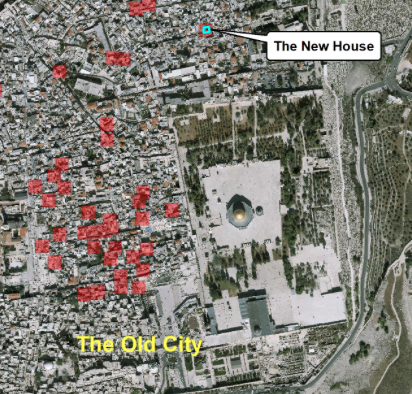
Map by Peace Now
The radical Ateret Cohanim settler organization managed to purchase a house in an incredibly sensitive and inflammatory location inside the Muslim Quarter of the Old City of Jerusalem, only 100 meters from the Dome of the Rock/al-Haram al-Sharif. Settlers moved into the house this week and have already begun renovating the property. Some reports blamed infighting between Palestinian Authority President Mahmoud Abbas and political rival Mohammed Dahlan for the sale to the settlers. The settlers gained control of the house, which was owned by a prestigious Palestinian family for decades, after the Palestinians sold it to a middleman, who then sold it for $17 million to Ateret Cohanim.
News of the sale of the home to settlers has reverberated within the Palestinian body politic, engendering intense public outrage directed at Palestinian Authority officials who are believed to have been involved in killing the sale of the house to a Palestinian American with ties to Dahlan, and at others who vouched for the credibility of a middleman who eventually sold the house to settlers.
Internal politics notwithstanding, the fact of the matter is that the sale only advances Israeli settlers’ and Temple Mount activists’ ongoing efforts to undermine and change the status quo in the Old City and on the Temple Mount. Israeli provocations on and around the Temple Mount have proven to be (and continue to be) a volatile flashpoint for the outbreak of widespread violence.
Peace Now released a statement saying:
“The settlement activity around the Temple Mount is akin to playing with fire, and instead of keeping the pyromaniacs at a distance, the government serves them matches.”
Writing in 2009 but ringing even more true today, FMEP’s Lara Friedman and Terrestrial Jerusalem’s Daniel Seidemann warned:
“The city is the major fault line of the Israeli-Palestinian conflict, and earthquakes have been triggered invariably by events in and around the volcanic core of that conflict: the Haram al-Sharif/Temple Mount. It is precisely in this area – spreading from Sheikh Jarrah to Silwan – where events today have begun to careen out of control.”
Settler’s New Silwan Property Sits on Massive Settler-Driven Excavation Site
New details have emerged regarding the Silwan house that settlers moved into last week, having previously purchased it from its Palestinian owners (covered by FMEP last week). According to new Peace Now reporting, the significance of the property goes beyond its location in the Palestinian East Jerusalem neighborhood of Silwan (a site of concentrated and aggressive settlement activity). The house’s precise location sits on top of a massive and controversial underground archaeological excavation led by the Israel Antiquities Authority under the direction of the radical Elad settler organization. Elad is dedicated to increasing a Jewish presence in East Jerusalem neighborhoods at the expense of current and historical Palestinian connections.
Elad has been trying to acquire the property since the 1990s. The house is located next to the al-Ein mosque in Wadi Hilweh, near the Siloam Pool, which has been under settler control for the last few years. According to Peace Now, by purchasing the house, Elad will have “easy access to the underground excavation and to create an exit or entrance point to the underground project.” The ultimate goal of the project is to create a walking path from the Siloam Pool to the Temple Mount, a spiritual walk highlighting Jewish history that former Jerusalem Mayor Nir Barakat envisions as a way to teach pilgrims “exactly who owns this city.”
In 2017, the excavation project severely damaged Palestinian homes in Silwan above the site. At the time, Haaretz reported that:
“two senior Israel Antiquity Authority archaeologists criticized the excavations in internal correspondence. They wrote that the work being done in the tunnels, contrary to accepted practice, was ‘bad archaeology’ and added that ‘the authority could not be proud of this excavation.’”
Emek Shaveh, a non-governmental organization specifically dedicated to fighting attempts to co-opt the archeological history of Jerusalem to serve political agendas, has a large body of reporting on excavation projects linked to Elad, the Israel Antiquities Authority in Silwan. Emek Shaveh writes:
“Temple Mount/Haram al-Sharif in particular – i.e. the Old City and the village of Silwan – there can be no doubt but that Israel is interested in expanding its presence and entrenching its authority over the area. The Israeli authorities and settler NGOs invest their best efforts in transforming Silwan into a tourist site and into the Israeli settlement of ‘The City of David’. At the same time, the Old City is undergoing unprecedented development of a nature which prioritizes Jewish belonging and the Jewish people’s historic rights to Jerusalem… The volume and pace of archaeological works and development for tourism is in striking contrast with the years of neglect of the Palestinian population. These processes in the city solidify an Israeli vision that ancient Jerusalem should remain under Israeli sovereignty forever.”
De Facto Annexation: Israel Applies Two Domestic Agricultural Laws to West Bank Settlements
After months of pressure from senior government officials, this week the head of the Israeli Defense Forces agreed to allow the government to directly apply two Israeli laws over the West Bank settlements. One law, allowing settlers to share their egg quotas with farmers in Israeli proper, was passed by the Knesset in June 2018. The second law, regulating the production and sale of organic produce, was passed in 2005.
As FMEP has extensively documented (see Table #3 in red), this is just the latest in a string of moves over the past 2+ years by which the Knesset and Israeli government has begun institutionalizing the application of Israeli domestic law over areas of Israeli settlement outside of its borders, amounting to a process of de facto annexation. .
Government Approves Funds for Settlement Propaganda Film
The Israeli Minister of Social Equality, Gila Gamliel, has allocated 1.5 million shekels ($413,000 USD) to a film project that will glorify the history of the settlement movement and the personal stories of leading settlement figures. The project will be a governmental collaboration with the Menachem Begin Heritage Center and the Yesha Council – an umbrella group representing all settlements in the West Bank; both organizations will appoint representatives to the steering committee for the project.
Minister Gamliel said:
“This is the purpose of the testimonies project – to give expression to the significant role of the veterans of settlement in Judea and Samaria in fashioning the moral and Zionist image of the State of Israel.”
The Director-General of the Yesh Council, Yigal Dilmoni, said:
“There are many young people today who are searching for inspiration for Zionist activities…If we give them this story, it will give the next generation the strength to continue to carry out [the ideals of] Zionism, to build and develop the State of Israel.”
Haaretz quotes a source close to Minister Gamliel saying:
“This is another step toward sovereignty…This isn’t a project initiated by a nonprofit or an organization, but by the state itself.”
Contrary to the claims of those backing the project, the history and personal stories of leading figures of the settlement movement have been extensively documented – most epically by Akiva Eldar in “Lords of the Land: The War Over Israel’s Settlements in the Occupied Territories 1967-2007.” Eldar’s historical accounting of early settlers unveils the reality that most early settlers were knowingly and deliberately breaking Israeli law by building without government permits and directly undermining Israeli government policies. Another superb book, Dear Brothers: the West Bank Jewish Underground, by Haggai Segal (now a prominent right-wing Israeli journalist), provides first-hand documentation and testimony regarding a critical chapter in the settlement movement: the 1980s Jewish Underground, which among other things carried out and celebrated a series of terrorist attacks against Palestinian mayors and planned to blow up the Dome of the Rock. This new film project, on the other hand, promises to be a piece of propaganda designed to sanitize and mythologize these same people and events.
Shaked: Annexation Plan Can Accommodate 100,000 Palestinian Citizens in Area C
A lengthy profile of Israeli Justice Minister Ayelet Shaked shed new light on the Jewish Home’s plan for the annexation of the West Bank’s Area C. The Atlantic columnist and chief anchorwoman for The News Company in Israeli, Yonit Levi, writes:
“Bennett and Shaked are trying to advance a plan for the annexation of Area C, the part of the West Bank (about 60 percent) that is under Israeli control. The plan would require extending citizenship to the Palestinians who live there. ‘We can definitely take in 100,000 Palestinian citizens,’ Shaked says. ‘These processes take time to ripen. At the moment, the annexation plan looks like science fiction, but I think that slowly, gradually, people will see what’s going on in the Middle East and realize that it really could happen.’ Shaked, too, sees clearly that the annexation plan could put Israel on a confrontational path, even with the current supportive American administration—and even more so if the administration changes. ‘Sadly, it’s impossible to ignore the processes taking place in the Democratic Party. You know, the party itself is becoming less and less what’s considered Zionist,’ she says. When I ask her whether this is the result of processes occurring in Israel, she responds: ‘We’re also seeing a strengthening of the Palestinian narrative among liberal circles, not only in the United States, and we must deal with this, too. Clearly, the Democrats will return to power at some point—things always change there—and it’s obvious that we have to maintain good relations with them and explain what’s going on in Israel.’”
Murder Prompts Critical Coverage of Settlement Industrial Zones
In response to the heinous murder of Israeli employees by a Palestinian worker at the Barkan Industrial Zone (a settlement industrial zone located deep inside the West Bank, near the Ariel settlement), U.S. Ambassador to Israel described Barkan as a “model of Israeli-Palestinian coexistence since 1982, with thousands working and prospering together.” The reality of West Bank industrial zones, and the role they play in the lives of Palestinians, is, in fact, more complicated. For decades Israel has used industrial zones as another tool to expand and deepen control over West Bank land, and jobs in industrial zones – often the only jobs available for Palestinians living under an Israeli occupation that prevents the development of any normal Palestinian economy – are widely viewed by Palestinians as a double-edged sword.
These realities were touched on in some of the coverage of the murder. The New York Times wrote:
“The West Bank settlements, constructed in territory that Israel captured from Jordan in the 1967 war, and which the Palestinians envision as part of their state, are considered a violation of international law by most of the world. But many Israelis, particularly the settler leadership, hold up the Barkan industrial park, where the attack took place on Sunday, as a model of cooperation and an important source of employment for thousands of Palestinians…”
The Washington Post offers noted:
“Thousands of Israelis and Palestinians work side by side at the [Barkan] industrial zone, which includes 160 factories. The Palestinian economy is heavily restricted under Israeli military rule, forcing tens of thousands of Palestinians to seek work in Israel as well as Jewish settlements.”
Bonus Reads
- “‘Traitor? Who Me?’ Talia Sasson Sums Up Her Term as New Israel Fund President” (Haaretz)
- “Trump’s Pation-In-Chief” (ProPublica)
***NOTE: This week the Israeli government unleashed a massive wave of approvals to advance plans for settlement construction — in excess of 2,000 units — in highly sensitive and strategically significant areas deep inside the West Bank and in East Jerusalem. More approvals/advancements are expected in the coming weeks. See below for detailed coverage of the individual plans, keeping in mind both the significance of each approval on its own, and as part of the overarching Israeli government agenda clearly intending to both prevent any possibility of a Palestinian state and to further the march toward formal annexation of the West Bank. Also keep in mind, importantly, that there has been zero public push back from the Trump Administration against this surge, which comes on the heels of Ambassador Friedman’s statement last week that Israel will never be required to remove any settlements.***
August 24, 2018
- Settlement Wave, Part 1: High Planning Council Advances Plans for 1,004 Settlement Units (96% Located Deep in the West Bank)
- Settlement Wave, Part 2: Housing Ministry Published Tenders for 420 Settlement Units
- Settlement Wave, Part 3: Jerusalem District Committee Advances Plans for 603 Settlement Units in East Jerusalem
- Settlement Wave, Part 4: More Settlement Construction Coming Soon
- U.S. Stands by Israeli “Intentions” on Settlements
- State Tells High Court: We Can Annex the West Bank – International Law Be Damned
- This Week in Ariel: Settlers Celebrate 40 Years, A Construction Boom, A Medical School, & An Evangelical “Leadership Camp”
- Amana (the Official Settler Movement) Moves Its HQ to Sheikh Jarrah
- Settlement Gains in East Jerusalem Result in Palestinians Self-Demolitioning Their Homes
- Bonus Reads
Comments, questions, or suggestions? Email Kristin McCarthy at kmccarthy@fmep.org. To subscribe to this report, please click here.
Settlement Wave, Part 1: High Planning Council Advances Plans for 1,004 Settlement Units (96% Located Deep in the West Bank)
On August 22nd, the Israeli Defense Ministry’s High Planning Council (the body in the Israeli Defense Ministry responsible for regulating all construction in the West Bank) advanced plans for 1,004 new settlement units, 96% of which are located deep inside of the West Bank. Of the total, 620 units were approved for deposit for public review and 382 units were given final approval for construction.
As reported by Israeli settlement watchdog Peace Now, the plans approved for deposit for public review (totalling 620 units) are:
- 370 units in the Adam settlement (aka Geva Benyamin). This project was urged on by Defense Minister Liberman following a stabbing attack in the settlement, which resulted in one death and injuries to three others. The 370 units are part of a larger plan for 1,000+ units that will, if built, connect the Adam settlement to two large settlements in East Jerusalem (Neve Ya’akov and Pisgat Ze’ev) that are on the Israeli side of the separation barrier (the route of the barrier juts far beyond the 1967 Green Line to include Pisgat Ze’ev and Neve Ya’akov on the Israeli side while the Adam settlement is on the West Bank side). If the larger plan is implemented, the Adam settlement will have built up areas on both sides of the separation barrier, which could (in all likelihood) present Israel an opportunity to re-route the barrier around Adam — which would de facto annex even more West Bank land to Israel and further choke off Palestinian East Jerusalem from the West Bank to its north. [Note: FMEP’s Lara Friedman and Peace Now’s Hagit Ofran published an op-ed in Haaretz in 2008 warning of this plan – you can read that background here].
- 85 units in Karnei Shomron settlement. Israel has repeatedly confiscated as “state land” located between Karnei Shomron and the Palestinian village of Qalqilya (which is literally surrounded on three sides by the separation barrier). In November 2017, Israel began clearing landmines from that “state land” in order to prepare for settlement construction. At the time, Deputy Defense Minister Eli Ben-Dahan said that the new construction in the Karnei Shomron area will bring “a million Jews [to] live in Judea and Samaria in the future.”
- 84 units in the Kiryat Netafim settlement, located about half way between the Ariel settlement and the cluster of settlements close to the 1967 Green Line that are slated to be united into a “super settlement” area (Oranit, Elkana, Shiva Tikva, and others). The expansion of Kiryat Netafim will go towards creating a contiguous corridor of Israeli settlements stretching from sovereign Israeli territory, though the super settlement, to Ariel. As FMEP has repeatedly said, the Ariel settlement is located in the heart of the northern West Bank, reaching literally to the midpoint between the Green Line and the Jordan border. The future of Ariel has long been one of the greatest challenges to any possible peace agreement, since any plan to attach Ariel to Israel (with a finger of land running through settlements like Kiryat Netafim) will cut the northern West Bank into pieces.
- 52 units in the Beit El settlement. This is the second major approval for new units in Beit El in 2018, with a third plan for 300 more units coming soon, according to Israel Hayom. The construction boom is being hailed by the settler-aligned Arutz Sheva outlet, which wrote that the plans will increase the size of Beit El by 65%. If any of the units are constructed it will be first new, government-sanctioned construction in Beit El in over 10 years. U.S. Ambassador to Israel David Friedman is closely associated with the Beit El settlement, having donated to and fundraised for it prior to his appointment as ambassador (including in his capacity as the President of the American Friends of Beit El, reportedly from 2011 until he became ambassador).
- 29 units in the Otinel settlement, located south of Hebron. MK Yehuda Glick (Likud) lives in Otinel.
Plans that gained final approval, meaning no additional formal approvals are required to move ahead with construction (totalling 382 units) are:
- 168 units in the Tzofim settlement, located on the Israeli side of the separation barrier, but jutting towards the Karnei Shomron settlement, which also received advancements this week. See the section on Karnei Shomron, above, for context and news regarding this area of settlements.
- 108 units in the Nofim settlement, located on the Israeli side of the separation barrier but jutting towards the Karnei Shomron settlement, which also received advancements this week. See the section on Karnei Shomron, above, for context and news regarding this area of settlements.
- 56 units in the Barkan settlement, located near the Kiryat Netafim settlement. Both Barkan and Netafim are located about half way between the Ariel settlement and the cluster of settlements slated to be united into a “super settlement” area (Oranit, Elkana, Shiva Tikva, and others). See the section on Kiryat Netafim, above. for context and news regarding this area of settlements.
- 44 units in Ma’ale Adumim, the mega settlement just east of Jerusalem.
- 6 units in the Avnei Hefetz settlement, located southeast of the Palestinian city of Tulkarem.
Notably, Netanyahu intervened to remove two items from the High Planning Council’s agenda, both of which would have led to the retroactive legalization of illegal outposts. Those plans are:
- A plan to retroactively legalize the Ibei Hanahel outpost, which is a non-contiguous “neighborhood” of the Ma’ale Amos settlement, located deep in the southern West Bank. The plan would have allowed the outpost to be demolished and then rebuilt legally with residential units, transforming the outpost into a new, fully authorized settlement.
- A plan to build an education center in the Nofei Prat South outpost, which is a non-contiguous“neighborhood” of the Kfar Adumim settlement, located northeast of Jerusalem. The land on which the project would be built is located just 1.5 km away from the Khan Al-Ahmar Bedouin community – the same one that the Israeli government plans to forcibly evacuate in order to cleanse the area of Palestinians and expand settlements. The outpost was established by the Haroeh Ha’ivri (“the Hebrew Shepherd”) nonprofit association, which is funded by the Israeli Education Ministry.
In response to Netanyahu’s directive to remove these two items from the agenda, the heads of the Knesset’s “Land of Israel Lobby,” Bezalel Smotrich (Jewish Home) and Yoav Kisch (Likud), said that the Prime Minister should “ act with greater rigor to promote settlement, rather than doing the opposite.”
Settler leaders were also unsatisfied with the High Planning Council’s overall numbers. Yossi Dagan, head of the Samaria Regional Council (a municipal body for settlements in the northern West Bank), said:
“We are happy about every new house in Samaria, but we have to tell the truth. Hundreds of housing units are not enough for an area that constitutes 12% of the State of Israel…We expect the government to step in the gas, stop worrying about what they will say overseas, and develop this beautiful region.”
Settlement Wave, Part 2: Housing Ministry Published Tenders for 420 Settlement Units
On August 23rd, one day after the Defense Ministry’s High Planning Council advanced a huge tranche of settlement plans (detailed above), the Israeli Housing Ministry published tenders for a total of 425 settlement units (under plans previously approved by the High Planning Council).
Those tenders include:
- 211 units in the Ma’ale Efraim settlement, located in the Jordan Valley.
- 54 units in the Givat Ze’ev settlement, located north of Jerusalem.
- 52 units in the Beit Aryeh settlement, which comes in addition to the the publication of tenders for 511 units in the settlement last week.
- 42 units in the Ariel settlement. See reporting below for extensive coverage of the many reasons settlers in Ariel are celebrating this week.
Settlement Wave, Part 3: Jerusalem District Committee Advances Plans for 603 Settlement Units in East Jerusalem
In addition to the tranche of settlement plans advanced by the Defense Ministry’s High Planning Council and the tenders published by the Housing Ministry (detailed above), the Jerusalem District Committee deposited for public review (one of the final steps before approval) plans for a total of 608 new settlement units in East Jerusalem, with 345 units slated for the Gilo settlement and 263 units in the Ramot settlement.
On the plan for the Gilo settlement, Ir Amim explains:
“The Gilo plan is being promoted in tandem with development of the new Green Line branch of the Light Rail (construction of which was launched in May), which will be built adjacent to the settlement expansion. This sequencing of events once again exemplifies a pattern of the state investing billions of shekels in transportation infrastructures to allow for extensive construction beyond the Green Line.”
As Ir Amim notes, this week’s advancements come on the heels of Israel’s August 15th decision to publish tenders for 603 units in Ramat Shlomo, and its June 2018 advancement of plans for 1,064 settlement units in the Pisgat Ze’ev settlement — bringing Israel’s two-month total of settlement advancements in East Jerusalem to 2,275 units.
As a reminder, approvals/advancement of settlement plans is not the only ongoing threat to Palestinians in East Jerusalem. Settlers and settler-run organizations continue their campaign to take over sensitive areas in East Jerusalem neighborhoods neighborhood – like Silwan and Sheikh Jarrah – and to create more settler run tourist sites – like the Jerusalem cable car, the Kedem Center, the Abu-Tor footbridge, the Yemenite “heritage center,” and more – to erase the visibility of Palestinians in Jerusalem. Meanwhile, pending legislation in the Knesset seeks to gerrymander the borders of Jerusalem to create a Jewish majority by annexing settlements and cutting out Palestinian neighborhoods from the borders of the city. Sounding the alarm on all of these trends, Ir Amim writes:
“It is vital that the traditional calculus of settlement building be readjusted to a) treat these coordinated efforts to consolidate control of the Old City and surrounding Palestinian neighborhoods with the same urgency afforded to settlement building throughout the whole of East Jerusalem; b) ensure a holistic response that regards private settlement inside the Old City Basin and touristic settlement not as individual phenomena but as multiple elements of a unified and politically lethal strategy.”
Settlement Wave, Part 4: More Settlement Construction Coming Soon
In addition to the plans for 1,004 units that were advanced this week by the High Planning Council, the 425 tenders published by the Housing Ministry, and the 608 units advanced in East Jerusalem (all detailed above), this week saw reports that additional plans are expected to advance soon. Those are:
- Ir Amim reports that on September 2nd, the Jerusalem District Committee is expected to discuss a plan to build a six-story building in Sheikh Jarrah, a neighborhood in which at least 75 families face eviction by radical settlers, with the backing of the Israeli government and courts. For detailed reporting on the building, plans for which were deposited for public review in May 2018, see FMEP reporting here.
- Peace Now reports that tenders are expected to be issued (having already been marketed) for more units in the Adam (Geva Binyamin) settlement. If true, this will be another step towards uniting Adam to the East Jerusalem settlements – the details of which are covered above.
- Peace Now also notes that a plan for 300 units in Beit El is expected to be advanced. This comes in addition to the 52 tenders issued for Beit El this week.
- The Times of Israel reports that plans for hundreds of additional settlement units will soon be marketed for construction by the Defense Ministry. These plans received final approval before this week’s High Planning Council meeting. A Civil Administration official hinted that the plans will be marketed for the Alfei Menashe and Ma’ale Efraim settlements. [NOTE: This reporting was before the subsequent publication of tenders for 211 units in Ma’ale Efraim, covered above.]
U.S. Stands By Israeli “Intentions” on Settlements
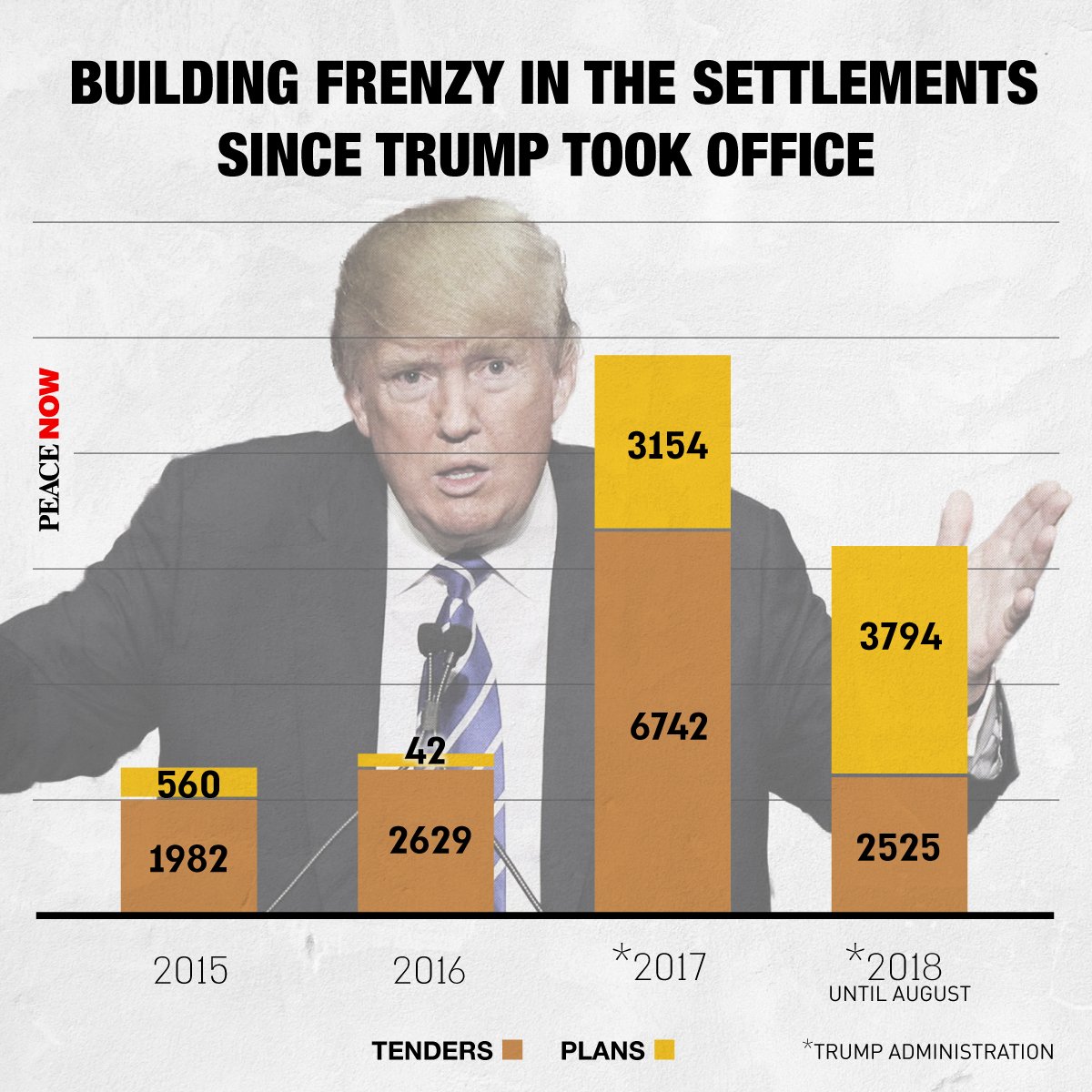
Image by Peace Now
When asked for comment on the various major settlement announcements, the U.S. State Department said that the Trump Administration believes the Israeli government has clearly demonstrated an intent to “adopt a policy regarding settlement activity that takes the president’s concerns into consideration” – a statement that suggests unequivocally that the Trump Administration has given a green light for massive settlement expansion across the length and breadth of the West Bank and East Jerusalem.
Notably, on the same day that the bulk of the settlement announcements were made, President Trump’s National Security Advisor, Ambassador John Bolton, was on the ground in Jerusalem. Not only did he offer no comment or criticism of the settlement announcements, he very publicly joined Israeli politicians and settlers leaders for dinner in East Jerusalem, dining in the “City of David National Park,” the archeological/touristic/residential site in the Palestinian neighborhood of Silwan that is run by the radical Elad settler organization. As FMEP has repeatedly covered, the Elad settler organization is spearheading a government-aided campaign to evict Palestinians from their homes in Silwan, replace them with Jewish Israeli settlers, and transform the neighborhood into a Biblical tourist site emphasizing exclusively the area’s Jewish history.
The head of the Peace Now Settlement Watch program, Shabtay Bendet, told Al-Monitor:
“The situation on the ground is changing rapidly…Restraints on construction in the settlements have been lifted. The Americans don’t care…”
State Tells High Court: We Can Annex the West Bank, International Law Be Damned
On August 7th, the state’s private attorney Harel Arnon submitted a second brief [Hebrew] to the High Court of Justice in defense of the settlement “Regulation Law.” In it he argues that the Knesset is not bound by international law and has the right to apply its own laws outside of its borders and annex land, if it wishes.
Arnon argues:
“The mere application of a certain Israeli norm [law] to an anonymous place outside the state does not necessarily make that anonymous place part of Israel. The Knesset is not restricted from legislating extra-territorially anywhere in the world, including in the region, the Knesset can legislate in Judea and Samaria.”
The brief also argues:
“The Knesset is permitted to impose the powers of the military commander of the West Bank region as it sees fit. The Knesset is permitted to define the authorities of the military commander as it sees fit. The authority of the government of Israel to annex any territory or to enter into international conventions derives from its authority as determined by the Knesset…[and] the Knesset is allowed to ignore the directives of international law in any field it desires.”
Lawyers representing Adalah responded:
“the Israeli government’s extremist response has no parallel anywhere in the world. It stands in gross violation of international law and of the United Nations Charter which obligates member states to refrain from threatening or using force against the territorial integrity of other states – including occupied territories. The Israeli government’s extremist position is, in fact, a declaration of its intention to proceed with its annexation of the West Bank.”
Harel was ordered to submit a second defense of the bill in response to a petition filed by Adalah and Al-Mezan on behalf of seventeen local Palestinian authorities. The petition argues that the Regulation Law violates international law and that the Knesset cannot enact laws over the West Bank where the majority of the population is Palestinians (who are not Israeli citizens and cannot vote).
The High Court of Justice is widely expected to strike down the “Regulation Law,” but has yet to make a ruling. Just last week, Arnon made the case that the recently passed Nation-State Law, which makes “Jewish settlement,” a “constitutional value,” can help him defend the settlement law before the High Court.
For ongoing tracking of the Regulation Law and other annexation trends in Israel, see FMEP’s Annexation Policy Tables.
This Week in Ariel: Settlers Celebrate 40 Years, A Construction Boom, A Medical School, & An Evangelical “Leadership Camp”
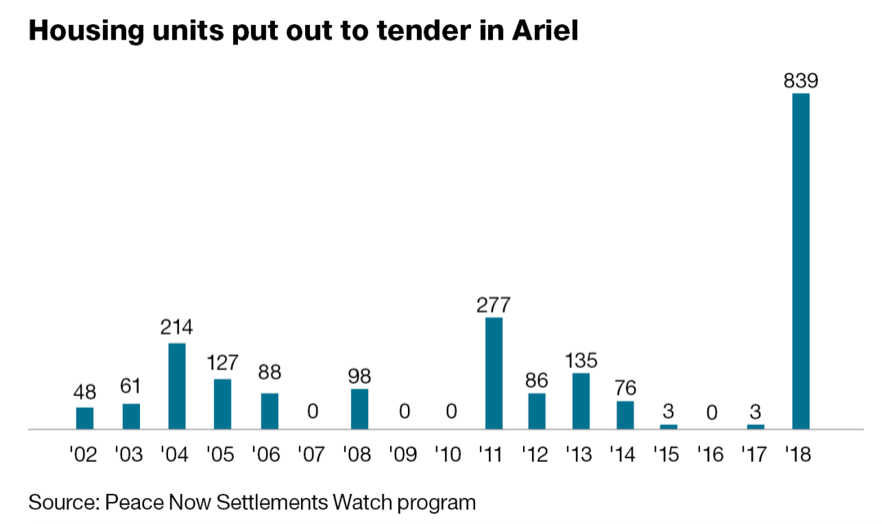 Haaretz published a lengthy report this week on the history of the the Ariel settlement – which is celebrating its 40th anniversary this month – and the dramatic spike in construction in the settlement in 2018. Even before tenders were issued for 42 new units this week (see above), plans for 839 units had already been approved during the first eight months of 2018, compared to tenders for fewer than 5 units each of the past three years. One of the original settlers of Ariel said:
“During the Obama years, everything here was frozen. But thanks to Donald Trump, we’re starting to see the light at the end of the tunnel.”
Not only has Ariel seen a massive surge in construction advancements this year, but the settlement broke ground on a new medical school heavily financed by U.S. casino magnate, and Trump backer, Sheldon Adelson (who this week gave $25 million to the GOP to help it keep the Senate, and in May gave the GOP $30 million to help it keep the House). Many settler leaders and Israeli officials, as well as Adelson and his wife Miriam, were in Ariel this weekend to attend a dedication ceremony for the medical school, despite ongoing controversy around its accreditation under domestic Israeli law. Prime Minister Netanyahu was notably absent from (and reportedly was not invited to) the ceremony, fueling rumors regarding the growing disaffection between him and Adelson.
According to another recent report in Haaretz, Ariel university is illegally dumping construction debris on land that Israel acknowledges is not “state land.” The dump site is outside of the so-called “Blue Line” which the Israeli government uses to demarcate the land that it considers “state land.” Since the dump site is not within the Blue Line, it is likely on land that even the government of Israel recognizes as being privately owned by Palestinians. Anti-settlement watchdog and founder of Kerem Navot, Dror Etkes, commented:
“It’s not surprising that Ariel University, which is the only university in the world built and existing by military order, has adopted the standards accepted in the West Bank involving the takeover of private Palestinian land.”
According to a third Haaretz report, the Israeli Education Ministry has signed a contract to sponsor 3,000-4,000 Israeli high school students of Ethiopian descent to take part in a leadership training program located in Ariel. The program, called “JH Israel,” was founded by American evangelical mega-church pastors Bruce and Heather Johnston, the latter of whom also runs the U.S. Israel Education Association, a pro-Israel, pro-settlement, non-profit group which works with the Family Research Council to lead Congressional delegations to Israel. The JH Israel website says its mission is to help Jewish Israeli students who are “disconnected from the roots of their faith” to establish “a deeper connection to God by embracing their biblical and cultural heritage.” The website also says that Ariel is “at the forefront of biblical prophecy unfolding in modern Israel.”
As FMEP has repeatedly documented, Ariel is located in the heart of the northern West Bank, reaching literally to the midpoint between the Green Line and the Jordan border. The future of Ariel has long been one of the greatest challenges to any possible peace agreement, since any plan to connect Ariel to Israel will cut the northern West Bank into pieces.
Peace Now Settlement Watch Director Shabtay Bendet spoke to Haaretz about the future of the Ariel settlement and the (other) significant repercussions of opening the new medical school. Bendet said:
“Most places in Israel don’t get recognized as cities unless they have 20,000 to 30,000 residents. Ariel became a city when it had just 11,000 residents. Why was this so significant? Because maybe you can uproot a settlement, but you don’t uproot a city. The same holds true for the university. Why was it so important for him to get it accredited? Because when a place has a university, that means it’s established — no pulling it out of the ground….By creating a buffer between the northern and southern parts of the West Bank it makes any future Palestinian state unviable. But besides that, it is also causing damage in the present because its continued expansion impinges on the ability of the surrounding Palestinian villages to develop and grow.”
Amana (the Official Settler Movement) Moves Its HQ to Sheikh Jarrah
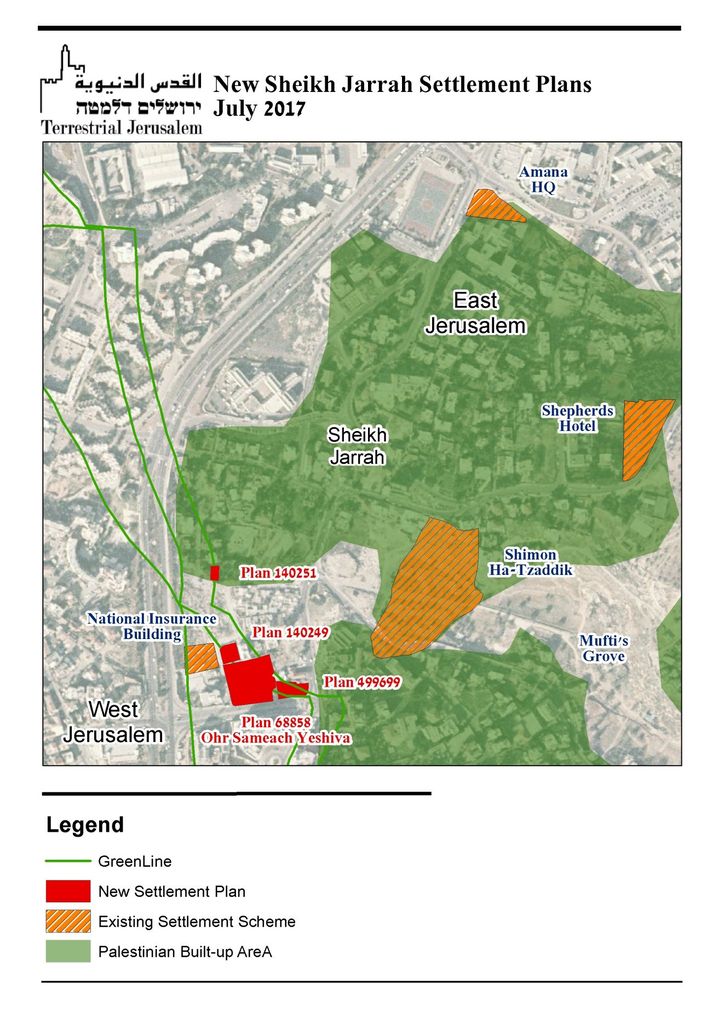 The Ynet news outlet reports that the Amana settler organization – the official body of the settlement movement, operating since the 1970s – has moved into its new headquarters in the heart of the Sheikh Jarrah neighborhood of East Jerusalem, where settlers are continuing to wage a displacement campaign against Palestinian residents. Though Amana has owned the plot of land since 1992, various legal challenges and incredibly sensitive geopolitical considerations have slowed construction of the building, called the “Amana House” (see a detailed history here).
Regarding the strategic implications of the location, Ynet reports:
“Amana says the new headquarters will help bolster the territorial contiguity of Jewish settlements in east Jerusalem.”
Agriculture and Rural Development Minister Uri Ariel (Bayit Yehudi) who previously served as the CEO of Amana, commented that the organization’s relocation:
“constitutes a significant reinforcement to the (Jewish) settlement in east Jerusalem and the bolstering of the Jewish territorial contiguity in the area.”
Several settlement plans are currently proceeding in Sheikh Jarrah, underscoring the strategic location and goals of settler activity in Sheikh Jarrah. As covered previously in this report, Israel is expected to advance a plan for a 6-story office building for settlers, located at the entrance to the neighborhood. Across the street from that building, a highly consequential plan for a new religious school (the Glassman yeshiva) was approved for deposit for public review in July 2017. The goal is clear: to unite the enclaves of settlers living inside of the Palestinian neighborhood by creating a contiguous area of settlement that connects to West Jerusalem, thereby cementing an immovable Jewish Israeli presence in a key Palestinian neighborhood – closing off the possibility of evacuation under a future peace deal.
Settlement Gains in East Jerusalem Result in Palestinians Self-Demolishing Their Homes
OCHA reports that two Palestinian homes in the East Jerusalem neighborhood of Beit Hanina were self-demolished after the Israeli Supreme Court ruled in favor of settlers’ ownership claims. OCHA writes:
“In recent decades, Israeli settler organizations, with the support of the Israeli authorities, have taken control of properties within Palestinian neighbourhoods in East Jerusalem, and some 180 Palestinian families are currently facing eviction cases, filed mainly by settler organizations.”
Bonus Reads
- “How Israeli Right-wing Thinkers Envision the Annexation of the West Bank” (Haaretz)
- “Let’s Admit It: The Settlers Have Won and We Have Lost” (Haaretz)