Welcome to FMEP’s Weekly Settlement & Annexation Report. To subscribe to this report, please click here.
January 16, 2026
- Greater Jerusalem: Atarot, Sheikh Jarrah/Um Haroun, “Sovereignty Road”, UNRWA
- Settlement & Outpost Construction: 5 New Settlement Licenses Approved
- Settler Terrorism: Ras Ein al-Auja, Al-Mughayyir
Greater Jerusalem: Atarot, Sheikh Jarrah, Sovereignty Road, UNRWA
Atarot
Peace Now (link) and Ir Amim (link) report the Israeli District Planning Committee met on January 12th to advance a plan for the construction of the Atarot settlement, located on the northern tip of east Jerusalem. Though the plan was eligible to be deposited for public review, the committee asked for amendments to the plan, and will schedule another hearing to once again consider depositing the plan.
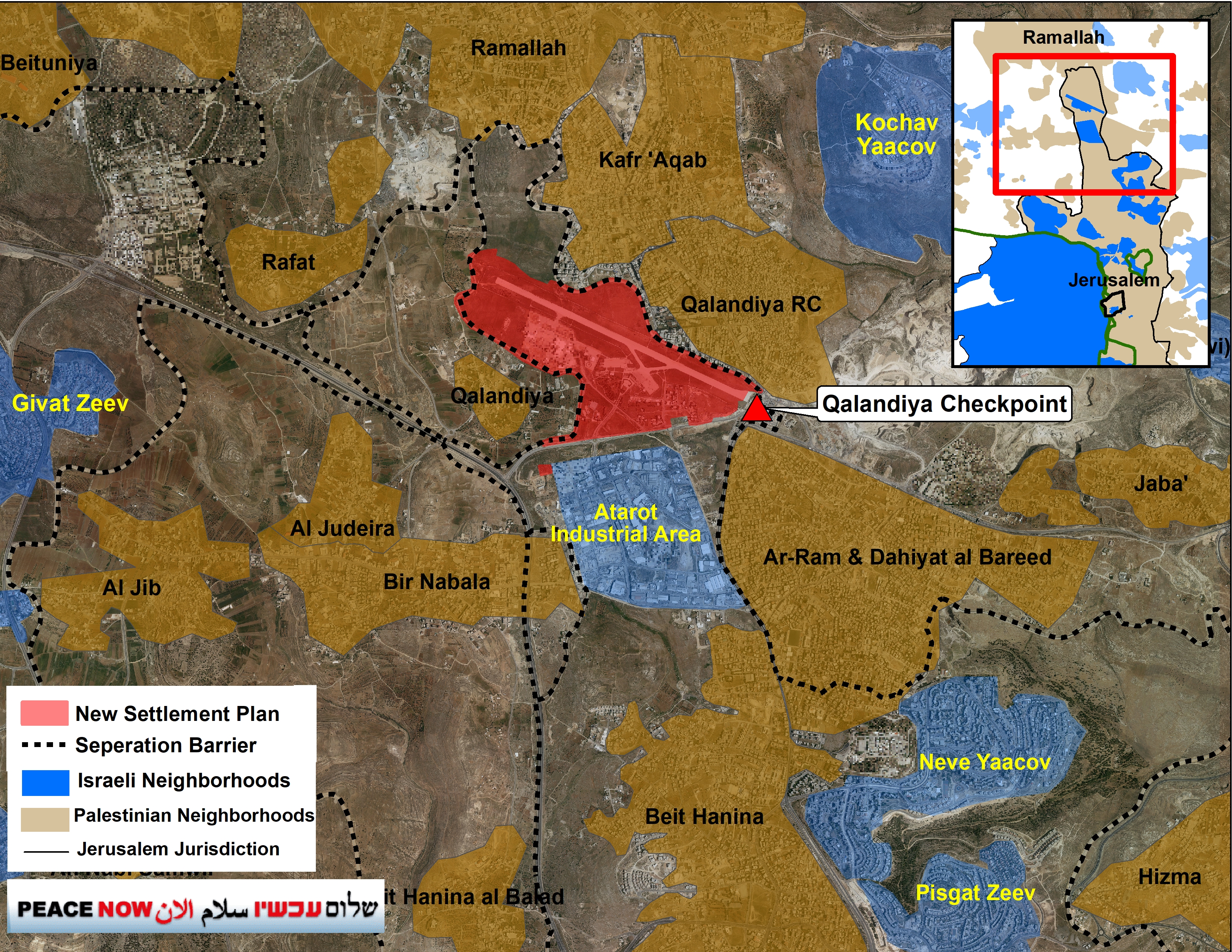 The plan for the Atarot settlement, which has existed since 2007, calls for a huge new settlement on the site of the defunct Qalandiya Airport, located on a sliver of land between Ramallah and Jerusalem. In its current form, the plan provides for up to 9,000 residential units for ultra-Orthodox Jews (assuming, conservatively, an average family size of 6, this means housing for 54,000 people), as well as synagogues, ritual baths (mikvehs), commercial properties, offices and work spaces, a hotel, and a water reservoir. If built, the Atarot settlement will effectively be an Israeli city surrounded by Palestinian East Jerusalem neighborhoods on three sides and Ramallah to its north. Geopolitically, it will have a similar impact to E-1 in terms of dismembering the West Bank and cutting it off from Jerusalem. For more on the Atarot settlement plan, please see here.
Sheikh Jarrah – “Nahalat Shimon” Plan
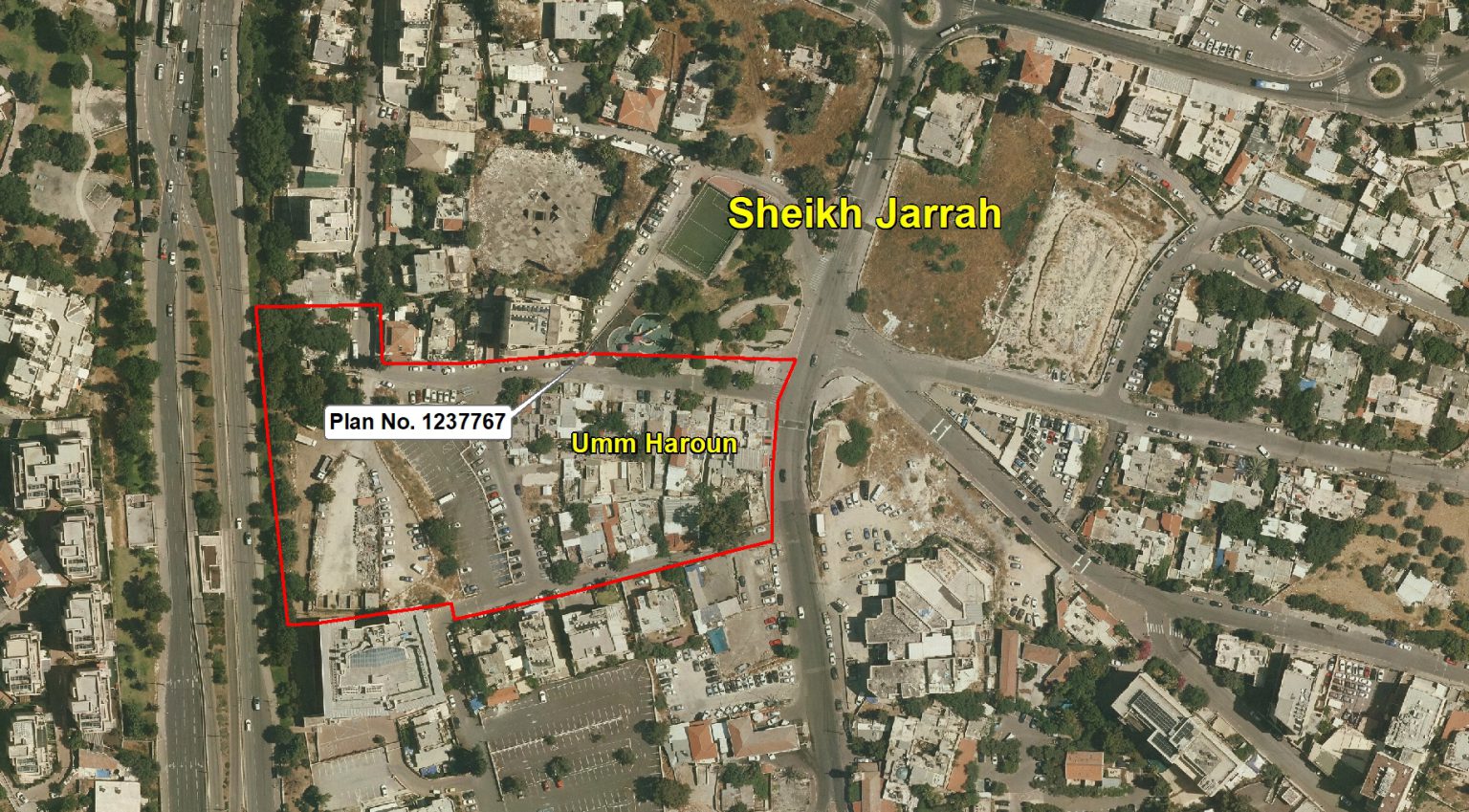 In addition to its consideration of the Atarot plan, the Jerusalem District Planning Committee also discussed an “urban renewal” project that outlines the construction of a new settlement enclave in the Sheikh Jarrah neighborhood, requiring the demolition of the Um Haroun Palestinian section of Sheikh Jarrah. The Committee discussed the plan, but decided to hold another, yet unscheduled, meeting for further consideration.
Palestinians in Umm Haroun have spent years in legal battles against Israeli settlers (backed by the Israeli courts) to remain in their homes, and now – making an end run around the legal cases – the Israeli government is pursuing the demolition of 40 homes in Um Haroun. See Ir Amim’s comprehensive July 2025 report on Sheikh Jarah, including the Nahalat Shimon plan, here.
Apartheid Road
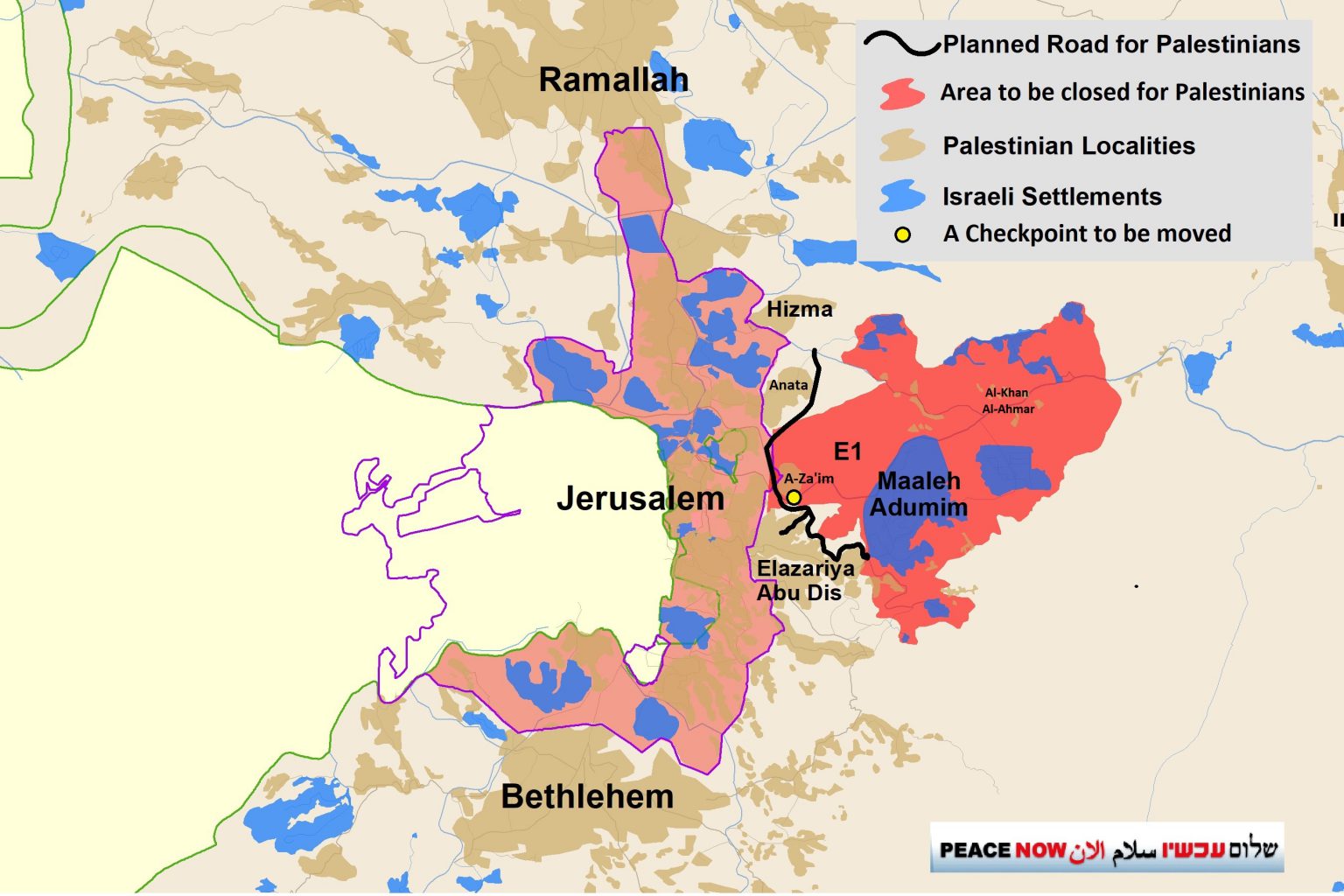 Israel announced that it will soon begin construction on a new section of the so-called “Sovereignty Road” between Elazariya and A-Az’ayem. Peace Now estimates that the road will close the entire area of Ma’ale Adumim and the E1 area to Palestinians, some 3% of the West Bank, and de facto annex the area to Israel. The “Sovereignty Road” is designed to seal and divert Palestinian traffic around the area where Israel intends to build the E-1 settlement just east of Jerusalem.
UNRWA
Israel is moving towards the total closure of UNRWA operations in Jerusalem. See reporting:
- “The UN Footprint in Occupied East Jerusalem is Shrinking Fast” (UNRWA, 1/14/26)
- “East Jerusalem: Forced shutdown of UN clinic signals escalating disregard for international law” (United Nations, 1/14/26)
- “Israel shutters UNRWA health clinic in Jerusalem’s Old City for 30 days” (The Times of Israel, 1/15/26)
- “Palestinian UNRWA Vocational Training Center Faces Closure by Israel” (Haaretz, 1/16/26)
More News and Anlysis from Jerusalem
- “For Hundreds of Palestinians, a 2-kilometer Jerusalem Commute Takes Three Hours” (Haaretz, 1/11/26)
- “‘A race against time’: Jerusalem’s Silwan faces escalating Israeli expulsions” (Middle East Eye, 1/12/26)
West Bank Settlement & Outpost Construction
Israel Grants Licenses to Five Settlements
On January 14th the Israeli government approved licenses to five settlements that have recently been granted authorization. The settlements are: Homesh, Yondif, Jibot, Betron, and Kedem Arava. Except for Homesh, the newly licensed settlements are all currently existing outposts. With a license, the settlements are officially recognized as legal under Israeli law and can be fully integrated into Israel’s domestic planning and services. In a post on X about the licenses, Israeli Finance Minister Bezalel Smotrich said, the move is a step towards his goal “to crush the idea of a Palestinian state.”
Settler Terrorism
Confirming what seems obvious, Haaretz reports that settler violence against Palestinians rose dramatically in 2025, by 25% compared to 2024, and increase that the IDF ties directly to the rapid expansion of settlement farms in the two years since October 2023.
Ras Ein al-Auja
The bedouin community of Ras Ein al-Auja, in the Jordan Valley, has been displaced at the hands of violent settlers backed by the IDF. Over 100 residents were forced to dismantle their homes and flee the area, where settlers recently established an outpost which has been used as a base for violent attacks on Ras Ein al-Auja.
Al Mugghayir
On January 16th Israeli forces shot and killed a 14-year old Palestinian, Mohammed Naasan, during a military raid on the village of Al-Mughayyir, located near Ramallah. Earlier that same day settlers invaded under IDF protection, land belonging to Al-Mughayyir. Settlers have repeatedly raided Mughayyir in recent weeks.
Welcome to FMEP’s Weekly Settlement Report, covering major news on Israeli settlement and annexation activity this week.
To subscribe to this report, please click here.
February 7, 2025
- East Jerusalem Settlement Plans to Watch
- Israel Pushing Raze Palestinian Homes in Sheikh Jarrah, Build New Settlement Enclave
- High Court Orders Zanuta Return, Again
- High Court Orders Investigation Into Settler Municipal Councils
- Settler Population Grew 2.3% in 2024
- Trump to Decide on West Bank Annexation In Four Weeks
- Bonus Reads
East Jerusalem Settlement Plans to Watch
Haaretz reports that, with Trump installed in office, the Israeli government is pushing forward at least three settlement plans in the greater Jerusalem area:
- Atarot Settlement – see background here.
- Givat Hamatos settlement expansion towards Beit Safafa – see background here.
- The Glassman Yeshiva plan for Sheikh Jarrah – see background here.
- A settlement enclave plan in Sheikh Jarrah (See below)
Israel Pushing Raze Palestinian Homes in Sheikh Jarrah, Build New Settlement Enclave
Haaretz reports the Jerusalem Municipality is advancing plans for the construction of a new settlement enclave – composed of 312 residential units in 15 buildings – in the heart of the Sheikh Jarrah neighborhood of East Jerusalem. If enacted, the plan will displace dozens of Palestinian families in the Um Haroun section of the community, destroying approximately 40 buildings, in favor of Israeli Jews.
East Jerusalem expert Danny Seideman writes:
“For the first time since 1967, the Government of Israel intends to raze a Palestinian [neighborhood] in East Jerusalem, displace its residents and build an Israeli settlement in its stead. This is without precedent.”
The land in question was secretly brought under the management of the Israeli General Custodian, a clandestine effort that was discovered in May 2021 by Ir Amim and Bimkom. The land registration procedures were carried out without notifying Palestinian residents or providing an opportunity to defend ownership claims. Legal efforts to halt Israel’s registration of the lands were denied.
Ir Amim researcher Aviv Tatarsky told Haaretz:
“The plan is part of a racist policy aimed at establishing Jewish supremacy in the city and pushing out its Palestinian residents. The new plan being promoted by the government is nothing but a calculated assault on Palestinian presence in Jerusalem. It aims to erase an entire neighborhood and turn it into a settler outpost.”
High Court Orders Zanuta Return, Again
For the second time, the Israeli High Court of Justice ordered the State of Israel to facilitate the safe return of residents to their homes in Zanuta, located in the South Hebron Hills, by February 16th. Residents of Zanuta have been forced to flee from their homes twice now, both times due to the persistent violent harassment and attacks perpetrated by nearby settlers. In the most recent ruling, the Court ordered that Israeli police and the army must provide ongoing and sustained protection to the residents, and the Court ruled the State must allow residents to repair homes and infrastructure that were damaged/demolished by settlers when the residents were absent. In the past, the State tried to coerce residents into permanently abandoning Zanuta by refusing to issue new permits and to carry out demolitions against the remaining buildings that did not already have permits.
The villagers first left in November 2023 after violence escalated dramatically following the events of October 7th. In July 2024 the Israeli High Court of Justice ruled that the State of Israel must facilitate their safe return to the land. Villagers started returning to the area in August 2024 to discover that in the intervening months, settlers have been allowed to enter the area and destroy nearly all of the houses, the small school, and the village’s health clinic. The village appeared ransacked. Only days after their initial return, the village was attacked by Yinon Levy (a settler under international sanctions for his involvement in violence) while the Israeli police and army watched.
High Court Orders Investigation Into Settler Municipal Councils
On February 4th, the Israeli High Court of Justice ordered Israeli police to open a criminal investigation into the involvement of two settlement regional councils in the illegal construction of outposts. The Court made this ruling in response to petitions filed by Peace Now, which documented the alleged involvement of the settlement councils in constructing three outposts: Shvut Rachel, Haroeh, and Alonei Shiloh. Since the petition was filed in 2018 the Shvut Rachel outpost has been granted retroactive legalization by the Israeli government; and, the Alonei Shiloh outpost is in the process of receiving retroactive legalization.
Settler Population Grew 2.3% in 2024
According to data compiled by the pro-settlement advocacy group “West Bank Stats”, the population of settlers in the West Bank (not including East Jerusalem) rose by 2.3% in 2024 – 12,000 individuals. The 2023 growth rate was 2.9%.
The group’s founder, Baruch Gordon, told ABC News that he expects “an explosion in [settlement] construction” during the Trump Administration.
Trump to Decide on West Bank Annexation In Four Weeks
At a press conference on February 4th alongside Israeli Prime Minister Netanyahu, President Trump said he will announce whether or not his administration will support Israel’s de jure annexation of the West Bank in four weeks. When asked a question by a reporter who stated their support for annexation, President Trump said:
“We’re discussing that with many of your representatives. You’re represented very well… [but] we haven’t been taking a position on it yet…People do like the idea, but we haven’t taken a position on it yet. We’ll be making an announcement probably on that very specific topic over the next four weeks.”
Trump has appointed many officials in his administration who strongly support Israeli sovereignty over the West Bank, including his nomination for U.S. Ambassador to Israel Mike Huckabee, and the newly appointed Ambassador to the UN, Elise Stefanik.
During Trump’s election campaign, Miriam Adelson – who donated $100 million to Trump’s effort – reportedly conditioned her funding on Trump’s pledge to support West Bank annexation, though a spokesperson for Adelson denied the report.
Bonus Reads
- “NGOs, Trade Unions, Call on EU to Ban Trade with Israel’s Illegal Settlements” (Human Rights Watch)
- “As part of West Bank offensive, Israel conducts largest demolition in years” (Mondoweiss)
- “Curfews, demolitions and airstrikes: Israel expands West Bank offensive to Tulkarem, Jordan Valley” (Mondoweiss)
- “Israeli Settler Indicted After Opening Fire on Palestinian Family Harvesting Olives in the West Bank” (Haaretz)
- “West Bank? No, Judea and Samaria, Some Republicans Say.” (New York Times)
- “What Just Happened: Trump’s Termination of West Bank Settler Sanctions” (Just Security)
- “Trump’s Gaza plan suggests his pro-settler advisers are in the ascendant” (The Guardian)
Welcome to FMEP’s Weekly Settlement Report, covering everything you need to know about Israeli settlement activity this week.
To subscribe to this report, please click here.
February 10, 2023
- Government Begins Forming Bureaucracy for Annexation
- Smotrich Says No Settlement Freeze, Asks Settlers to Hold Off on New Outposts
- A New Settlement: Israel Establishes Tel Zion as Independent Settlement
- Israeli Government Expected to Advance Atarot Settlement Plan
- Court Grants State Two-Month Delay in Khan Al-Ahmar Forced Displacement
- Israeli Cabinet Prepares for Vote to Amend 2005 Disengagement Law, Legalize Homesh Outpost & Yeshiva
- Bibi Pitches Massive Tunnel Construction in West Bank to French Investors
- Smotrich Resigns, Brings Criminal Settler into Knesset
- Bonus Reads
Government Begins Forming Bureaucracy for Annexation
As the new Israeli government continues to take shape, the bureaucratic mechanisms of annexation have come into focus.
Key components of this bureaucracy will reportedly include a new “Settlement Administration,” the creation of which is still pending an agreement between Smotrich and Defense Minister Gallant on how duties in the Defense Ministry will be divided (a division which is facing international opposition). In a meeting with settler leaders, Smotrich unveiled a plan for a new “settlement administration” that will attempt to centralize the Defense Ministry’s efforts accomplish several key objectives: to promote settlements, to take control of more land, to handle legal cases related to the settlements, and to advance Smotrich’s long-time goal of dismantling the Civil Administration in order to bring the settlements under the direct governance of the Israeli state (annexation).
According to Smotrich, this new administration will operate on a two year timeline to achieve its goals, ultimately working itself out of existence once all powers over the settlements are transferred from the Civil Administration to the various Israeli Ministries. According to Haaretz, Yehuda Eliyahu is likely to lead the settlement administration under the management of Smotrich. Smotrich and Eliyahu co-founded the Regavim settler group.
In addition, the Israeli government expanded the portfolio of the Minister of the Negev and Galilee, a post held by Otzma Yehudit member Yitzhak Wasserful. The expanded position will also have a new “young settlement department” (young settlement is a euphemism used by settlers for outposts). This department will be engaged in preparatory work for the legalization of outposts, and will also work on plans to deliver infrastructure to the outposts. Prior to this new department, this ministerial post did not have any authority in the West Bank (i.e. outside of Israel’s sovereign borders).
Haaretz details how these new bodies will interact:
“… if outposts are legalized, the process will likely be divided among three different agencies. The Civil Administration, which is under Smotrich’s control according to the coalition agreement, will be in charge of formal legalization. But responsibility for building or improving infrastructure in outposts will be divided between two other agencies. One is the National Missions Ministry, headed by Orit Strock (Religious Zionism). The other is the so-called young settlement department.”
Lastly, Emek Shaveh reports on a January 29th government decision which transferred the Israeli Antiquities Authority (IAA) from the Ministry of Culture to the Ministry of Heritage, which is now headed by Jewish Power MK Amihai Eliyahu. The IAA exercises authority over heritage and archaeological sites in Israel, including East Jerusalem, but has increasingly expanded its authorities into Area C of the West Bank, at the expense of the Staff Officer for Archaeology within the Civil Administration which has historically been in charge. The government also tasked Eliyahu with preparing an emergency plan to “safeguard” antiquity sites in the West Bank specifically, where settlers have spent years alleging neglect and destruction of heritage sites by Palestinians and the Palestinian Authority (which, turns out, has created a basis for the government to take control over those sites – go figure). The government allocated NIS 150 million to the effort.
Emek Shaveh reacts:
“After years of monitoring the process of weaponizing ancient sites in the service of the settlements in East Jerusalem and the West Bank, we are not surprised that the ultranationalist Jewish Power party demanded the heritage portfolio. An indication of the minister’s intentions was offered in January, when Eliyahu took over from outgoing minister of Heritage and Jerusalem Affairs, Ze’ev Elkin. At the ceremony he said: ‘Israel needs three pillars in order to stand strong: the security pillar, the economic pillar and a third pillar which is the pillar of significance.’ He added ‘The Ministry of Heritage will strengthen the third pillar. We will fortify our national resilience by encountering our heritage. We will protect the various heritage sites and devise programs to deepen Jewish identity’.”
For an overview of Israel’s weaponization of archaeology in its effort to take control of more land in Jerusalem and the West Bank, please see Emek Shaveh’s report.
Smotrich Says No Settlement Freeze, Asks Settlers to Hold Off on New Outposts
Following reports that Netanyahu had conceded to the U.S. request to freeze settlement construction in order to de-escalate tensions, Finance Minister Bezalel Smotrich repudiated the idea of any freeze, saying: “There will be no freeze on construction in Judea and Samaria. Period.”
Smotrich’s statement, however, did not contradict reports that he had asked settler leaders to stop efforts to establish new outposts, asking settlers leaders to coordinate all activity with the government. Smotrich publicly explained his request to pause outpost construction, saying at the weekly meeting of the Religious Zionism party:
“Our ambition is not to have to resort to illegal measures. We want the government to officially adopt a policy of recognizing all the communities in the settlements and also, of establishing new communities, in line with natural growth. None of us considers himself above the law. We are the government, and this will take more than a day or two, but I’m convinced that we’ll see substantial changes occurring in the near future.”
A New Settlement: Israel Establishes Tel Zion as Independent Settlement
On February 5th, the Israeli Cabinet approved a plan that will, once implemented, establish a new settlement, Tel Zion, by splitting off the Ultra-Orthodox section of the Kochav Yaakov settlement, located east of Jerusalem. The approval of this plan was delayed from consideration last month while U.S. National Security Advisor Jake Sullivan was in Israel.
The creation of the “Tel Zion” settlement is part of Netanyahu’s coalition deal with the ultra-Orthodox Shas Party, and is also supported by Defense Minister Gallant.
Israeli Government Expected to Advance Atarot Settlement Plan
Peace Now reports that the Netanyahu government appears likely to re-engage a plan to build the Atarot settlement.
 The plan for the Atarot settlement, which has existed since 2007, calls for a huge new settlement on the site of the defunct Qalandiya Airport, located on a sliver of land between Ramallah and Jerusalem. In its current form, the plan provides for up to 9,000 residential units for ultra-Orthodox Jews (assuming, conservatively, an average family size of 6, this means housing for 54,000 people), as well as synagogues, ritual baths (mikvehs), commercial properties, offices and work spaces, a hotel, and a water reservoir. If built, the Atarot settlement will effectively be an Israeli city surrounded by Palestinian East Jerusalem neighborhoods on three sides and Ramallah to its north. Geopolitically, it will have a similar impact to E-1 in terms of dismembering the West Bank and cutting it off from Jerusalem. For more on the Atarot settlement plan, please see here.
The Atarot settlement plan was last considered in 2021 when Naftali Bennet was Prime Minister, but was delayed from consideration by the planning committee – reportedly at the urging of U.S. Secretary of State Blinken. The Committee delayed advancement of the plan by ordering an environmental study which was expected to take about one year. Notably, in ordering the study, the Court made it clear that the environmental study is “standard practice” and expressed support for the underlying plan, saying it believes the plan represents a proper use of unutilized land reserves.
Peace Now said in a statement:
“This is a highly dangerous plan that could land a fatal blow to the prospect of peace and two states. The Atarot plan puts a wedge in the heart of the existing Palestinian urban continuum between Ramallah and East Jerusalem, thus preventing the possibility of establishing a Palestinian state with its capital in East Jerusalem. If the plan is not removed from the agenda of Israel´s far-right and pro-settler government, an eventual political resolution will become even harder to reach.”
Court Grants State Two-Month Delay in Khan Al-Ahmar Forced Displacement
On February 7th, the Israeli Supreme Court granted the State until April 2nd – a two month delay when the State had requested four months delay – to submit a plan to forcibly remove the Khan Al Ahmar bedouin community (a war crime) from its lands just outside of Jerusalem. The Court also set May 1st as the date for a final hearing on a petition submitted by the Regavim settler group demanding the immediate removal of Khan Al-Ahmar.
As with previous delays (there have been a total of 9), the Court expressed its extreme displeasure with the State’s foot dragging. Justice Noam Sohlberg said in his ruling:
“Suffice it to say that we are not at all satisfied with the conduct of the state…[the state’s behavior demonstrates] the existing situation is comfortable for it: Once every few months it files a request for an extension, which the petitioner opposes and the court accedes to through gritted teeth, and the world carries on as normal; deciding not to decide.”
In a statement revealing its ideological motivations, Regavim wrote:
“The government should formulate a working plan for the enforcement of the law in Khan al-Ahmar, as part of a fight against the Palestinian Authority’s institutionalized takeover of open areas in Judea and Samaria. The State of Israel must behave like the owner of the house, even in the face of American pressure, otherwise no one in the world will take it seriously.”
Israeli Cabinet Prepares for Vote to Amend 2005 Disengagement Law, Legalize Homesh Outpost & Yeshiva
The Israeli Cabinet’s Ministerial Committee on Legislation is expected to vote to amend the 2005 Disengagement Law at its February 12th meeting in order to pave the way for the reestablishment of four settlements in the northern West Bank. Jerusalem Post reports that the measure is expected to have enough support to be approved by the Cabinet and passed by the Knesset.
If passed, the bill will allow Israel to grant retroactive legalization to the Homesh outpost and yeshiva – reestablishing Homesh as a fully legal, under Israeli law, settlement. The retroactive legalization of Homesh was agreed to in coalition agreements that formed the current Israeli government.
The vote comes as the government faces a deadline from the High Court to submit its position on the court-ordered evacuation of the illegal yeshiva settlers built at the site of the dismantled Homesh outpost. The State has, for nearly three years, delayed its response to a 2019 petition filed by Yesh Din seeking the removal the illegal Homesh outpost and yeshiva, as well as guarantee the site’s return to its Palestinian landowners. Despite Homesh being dismantled in 2005, Israel never permitted Palestinians to regain access to or control of the land, declaring it a closed military zone. That status has prevented Palestinians from entering the area, while allowing settlers to routinely enter and (illegally, under Israeli law) inhabit the land, even (illegally) establishing a yeshiva there. That yeshiva, according to the Israeli NGO Kerem Navot, has become one of the West Bank’s “hardcore centers of settler terror”. Settlers have also wreaked terror on nearby Palestinian villages, most notably Burqa and Sebastia. One Israeli politician even went so far as to say that settlers are “carrying out a pogrom” in Burqa.
Bibi Pitches Massive Tunnel Construction in West Bank to French Investors
The Times of Israel reports that Netanyahu held a meeting with investors to pitch a massive construction project that would see highspeed tunnels be carved into the terrain throughout the West Bank in order to connect Israeli settlements together, and have more seamless access to Jerusalem and Tel Aviv. The underground highways would be designed in such a way to provide so-called “transportational contiguity” for both Israelis and Palestinians, in lieu of territorial contiguity for the latter (an idea endorsed in the Trump plan). The tunnel vision would effectively annex the settlements to Israel, and entrench a separate but unequal transportation grid that severely limits Palestinian freedom of movement, access to land, and more. The Israeli notion of “transportational contiguity” is put forward as an alternative to “territorial contiguity” which is no longer possible for Palestinians because of Israeli settlements, infrastructure, and control. The notion also gives permission to Israel for further settlement growth.
Smotrich Resigns, Brings Criminal Settler into Knesset
Finance Minister Bezalel Smotrich formally resigned his seat in the Knesset in order to focus his time on his Ministry postings, which not only include head of the Finance Ministry but also as a key minister within the Defense Ministry in control of the Civil Administration. Upon his resignation, the vacant Knesset seat has been filled by the next name on the Religious Zionist Party slate, and that happens to be Zvi Sukkot – a hardline settler who is one of the founders of Evyatar outpost.
Sukkot lives in the Yitzhar settlement – a hotbed of settler extremism and violence, the home of the notorious “Hilltop Youth” movement that has terrorized the Nablus region. He has been arrested on suspicion of arson in a 2010 attack on a Palestinian mosque. In 2012, he was temporarily banned from the West Bank on suspicion that he was orchestrating attacks on Palestinians.
Bonus Reads
- “In West Bank, Settlers Sense Their Moment After Far Right’s Rise” (New York Times)
- “Israel steps up Jerusalem home demolitions as violence rises” (AP)
- “From This Hill, You Can See the Next Intifada” (The Atlantic)
- “Threat Still Looms Despite Postponement of Largescale Wadi Qaddum Demolition” (Ir Amim)
- “ICJ sets July 25 for submission on illegality of Israel’s ‘occupation’” (Jerusalem Post)
Welcome to FMEP’s Weekly Settlement Report, covering everything you need to know about Israeli settlement activity this week.
To subscribe to this report, please click here.
December 10, 2021
- Israel Advances Plan for New East Jerusalem Settlement, “Givat HaShaked”
- Israel Decides on a Last Minute (& Temporary) Delay of Atarot Settlement
- Shaked Funds, Elevates Settler Municipal Council in Hebron
- Demolition of Palestinian Property in Area C Hit a Five Year High in 2020
- Israel Escalates Intimidation of Activists Working in the South Hebron Hills
- Bonus Reads
Israel Advances Plan for New East Jerusalem Settlement, “Givat HaShaked”
 On Wednesday December 8th, the Jerusalem Local Planning Committee advanced a plan to build a new settlement, called “Givat HaShaked,” to be located on the southern perimeter of East Jerusalem – on the northwestern part of the Palestinian neighborhood of Beit Safafa. The plan would see construction of 473 settlement units, as well as schools. The plan also includes plots designated for two synagogues, the latter fact casting doubt on the Jerusalem Municipality’s assertion that “the Givat HaShaked plan is not necessarily designed for a specific demographic.”
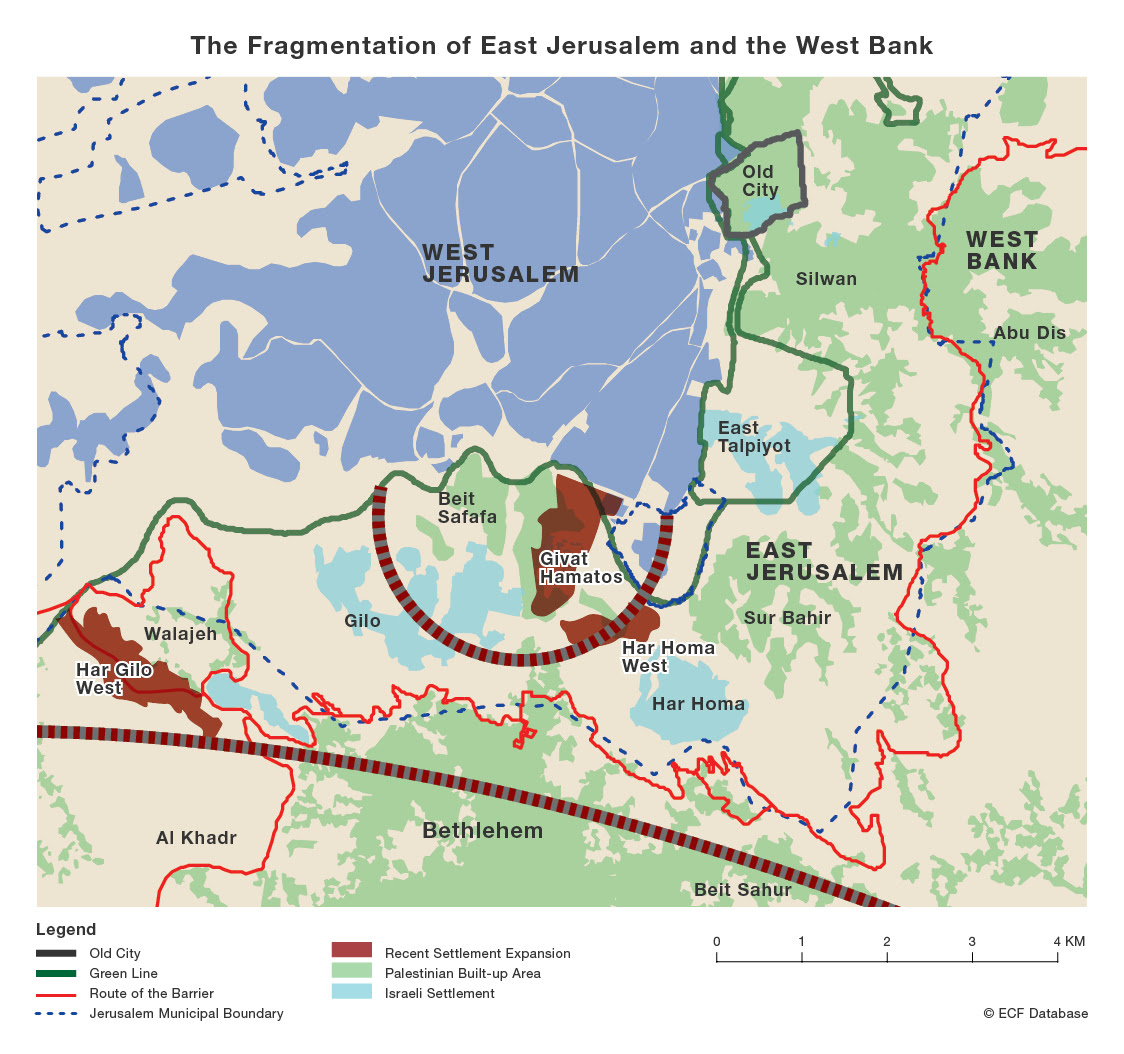 Ir Amim reports that a portion of the land on which Givat HaShaked would be constructed is privately owned by Palestinian residents of Sharafat, which is a section of the Palestinian neighborhood of Beit Safafa on the southern end of Jerusalem. It should be recalled that Beit Safafa – which is suffering from an acute housing crisis that Israeli authorities have refused to address – is in the process of being completely surrounded by Israeli development (for Jewish Israelis) — most notably with final approval of the Givat Hamatos settlement plan, for which tenders were issued in January 2021.
Other parts of the land proposed to be used for the Givat HaShaked settlement plan are managed by the Israeli General Custodian – a fact Ir Amim calls “highly unusual and seemingly marks a new phenomenon.” The Israeli General Custodian is empowered by the State to act as a caretaker of land that has unknown ownership until the heirs are located. In an attempt to explain why the General Custodian has the authority to approve a plan for construction on land that the State does not own, the Israeli Justice Ministry told Haaretz that the plan for Givat HaShaked increased the value of the land and that “by law, the administrator general is obligated to care for the assets under his management in a way that will benefit their private owners.” [An answer that implies, bizarrely, that if and when Palestinian heirs are located, they will be somehow better off with their land having been used to build a settlement].
It must be remembered that in late 2020 the Israeli government initiated a registration process for land in East Jerusalem, including in the Sharafat area. At this time, it is unknown whether the land managed by the General Custodian in Sharafat (and designated for the new settlement) has been – or is in the process of being – registered. On that uncertainty, Ir Amim writes:
“…in the event that it is the same location [where formal land registration has taken place], this move would constitute yet another brazen example of how the settlement of title procedures are repeatedly being used to aid state authorities and settler groups in taking over more land in East Jerusalem…Although portrayed as a measure to ostensibly benefit Palestinian residents, there has been grave alarm that these [land registration and settlement of title] procedures would in fact be exploited to confiscate Palestinian land for political purposes, leading to the expansion of Jewish settlement and widespread Palestinian dispossession in the city.”
It should also be recalled that Israeli authorities undertook the secret registration of land for the benefit of settlers in Sheikh Jarrah. For further information on the highly sensitive and consequential land registration process in East Jerusalem, please see FMEP’s reporting here and Ir Amim’s reporting here.
Ir Amim said in a statement on the Givat HaShaked plan:
“As 2021 comes to a close, it has become more evident that although the current Israeli government is comprised of a broad coalition, it is unequivocally advancing a hardline rightwing agenda propelled by far rightwing politicians in strategic positions. Since the theoretical “government of change” came to power half a year ago, it has successfully undertaken systematic measures, which sabotage any remaining viability of a negotiated political resolution and carry severe ramifications on Palestinian human rights. Settlement advancements in the most sensitive locations in and around East Jerusalem have accelerated unimpeded, while heightened threats of mass Palestinian displacement from the city have soared to an unprecedented level.”
Terrestrial Jerusalem founder Daniel Seidemann tweeted:
“Atatrot, E-1, Sheikh Jarrah, Silwan and now Givat Hashaked reveal the Bennett Doctrine: ‘Leave no eye un-poked’.”
Israel Decides on a Last Minute (& Temporary) Delay of Atarot Settlement
At a hearing on December 6th, the Jerusalem District Planning Committee ordered an environmental study be completed before it advances a plan for the construction of the new Atarot settlement on the northern border of Jerusalem. The court-ordered study is expected to take about one year. Notably, in ordering the study, the Court made it clear that the environmental study is “standard practice” and expressed support for the underlying plan, saying it believes the plan represents a proper use of unutilized land reserves.
The decision to delay the advancement of the Atarot settlement plan came as a bit of a surprise, as Israeli Prime Minister Naftali Bennett had assured settlers only last week that the plan would indeed be advanced at the meeting. However, Bennett has come under sustained scrutiny and pressure from the U.S. – most pointedly in a call on December 2nd with Secretary of State Antony Blinken. In the call, as reported by The Times of Israel, Blinken made it clear to Bennett that the U.S. would be unhappy if the plan was advanced, even if Israel committed that the construction would not move forward (as reports suggested was the preferred Israeli solution — one that the Israeli government likely thought would appease both settlers and the U.S.). Blinken is reported to have made it clear that any advancement of the project would be unacceptable. Notably, U.S. diplomats were in attendance at the December 6th hearing, which came one day after Thomas Nides presented his credentials to the Israeli government to serve as the U.S. Ambassador to Israel. Nides’ ceremony was originally scheduled for December 6th (the day of the hearing) but was reportedly rescheduled to not coincide with the Atarot hearing.
Meanwhile, Regional Cooperation Minister Issawi Frej (Meretz) is considering how to advance his own plan to build a new airport at the Atarot site, a plan which has the support of Israeli Transportation Minister Merav Michaeli (Labor).
As a reminder, the Atarot plan calls for a huge new settlement on the site of the defunct Qalandiya Airport, located on a sliver of land between Ramallah and Jerusalem. In its current form, the plan provides for up to 9,000 residential units for ultra-Orthodox Jews (assuming, conservatively, an average family size of 6, this means housing for 54,000 people), as well as synagogues, ritual baths (mikvehs), commercial properties, offices and work spaces, a hotel, and a water reservoir. If built, the Atarot settlement will effectively be an Israeli city surrounded by Palestinian East Jerusalem neighborhoods on three sides and Ramallah to its north. Geopolitically, it will have a similar impact to E-1 in terms of dismembering the West Bank and cutting it off from Jerusalem. For more on the Atarot settlement plan, please see here.
Shaked Funds, Elevates Settler Municipal Council in Hebron
On December 1st, an Israeli news station reported that Interior Minister Ayelet Shaked allocated $158,000 to the settlers in Hebron for the “development of municipal services.” Al-Monitor reports that this is the first such allocation of funds for Hebron’s nascent settler municipal body, which Shaked was part of establishing in 2017, when she served as Justice Minister.
Prior to receiving permission to form a municipal body in 2017, the loose cluster of settlements located in Hebron’s city center (home to around 1,000 settlers) had technically fallen under the municipal jurisdiction of the Palestinian Authority, while for all practical purposes operating as an enclave under full Israeli control and authority.
Hebron Mayor Taysir Abu Sneineh warned that Israel has repeatedly stoked tensions in Hebron – citing Israel President Isaac Herzog’s recent Hanukkah celebration at the Tomb of the Patriarchs/Al-Ibrahimi Mosque. The Mayor believers that Israel is trying to replace the Palestinian-run Hebron Municipality with a settler organization, telling Al-Monitor:
“This is not to mention the daily attacks [by settlers] in the Tel Rumeida neighborhood and al-Shuhada Street. The city is sitting on a volcano, and things might explode at any moment.”
Karim Jubran, director of field research at the Jerusalem-based nonprofit organization B’Tselem, told Al-Monitor:
“Settlers are tightening the noose around the lives of half a million Palestinians in Hebron, especially those who live in the H2 area, as hostages of settlers and the Israeli army.”
Demolition of Palestinian Property in Area C Hit a Five Year High in 2020
According to data from the Israeli Civil Administration, Israel demolished 797 Palestinian-owned structures in Area C of the West Bank – marking a five year high. The data was obtained via a freedom of information request filed by the Israeli NGO Bimkom.
The soaring number of demolitions is congruent with the escalating, government-funded and government-equipped campaign run by settlers to more aggressively wield building laws against Palestinians in Area C, even as settlers continue building unauthorized outposts in violation of the same building laws, and rarely facing consequences. Just last month, settlers formed a new task force coordinating settler advocacy on the topic. In October 2020, the Israeli government allocated nearly $2650,000 to 14 settler councils in order to buy drones and hire policeman to patrol Palestinian construction in Area C. The government also set up a hotline for settlers to report illegal construction.
As a reminder, under the Oslo Accords, the West Bank was divided into 3 “areas” – Area A, B, and C – pending a permanent status Israeli-Palestinian agreement that would determine final control over all the land (an agreement that was supposed to have been reached by by May 1999). Area C – which accounts for around 60% of the West Bank – was to be (temporarily, until an agreement was concluded) under full Israeli control over Area C. However, throughout the 28 years since the Oslo Accords were signed (and with no peace agreement achieved or in sight), Israel has systematically expanded settlements and its control over lands in Area C, including by denying Palestinians in Area C permits to build “legally” (under Israeli law) on their own land. As a result, Palestinians have been forced to build without Israeli permits (i.e., “illegally” in the eyes of Israeli authorities), and Israel has responded by issuing wide-scale demolition orders and carrying out frequent demolitions.
In recent years, Israel has increasingly treated Area C as indistinguishable from sovereign Israeli territory, extending its laws and regulations to the area and its Israeli settler inhabitants. In parallel, settler groups – most notably the notorious “Regavim” – have lobbied Israeli authorities to crack down on “illegal” Palestinian construction, claiming that Palestinians are trying to “take over Israeli land”.
As part of these ongoing efforts — by settlers and the Israeli government — to entrench and expand Israel’s control over/de facto annexation of the entirety of Area C, in September 2020 the Israeli government allocated 20 million NIS ($6 million USD) for the newly created “Settlement Affairs Ministry.” That ministry was given the mission of surveying and mapping “unauthorized” (by Israel) Palestinian construction in Area C (the same construction which Israel has been aggressively demolishing). This funding further empowers a domestic Israeli body to exert extraterritorial sovereignty over Area C – in effect, treating the area as land already annexed by Israel.
The Knesset has also repeatedly hosted forums to discuss the alleged (by settlers and their allies/advocates) “Palestinian takeover of Area C.” This framing is predicated on the assertion that Area C belongs to Israel (an assertion that is not supported by the Oslo Accords) and must be defended against Palestinian efforts to “steal” it. Consistent with this framing, and under pressure from various outside groups, many members of the Knesset have criticized the Israeli government’s alleged failure to robustly “defend” Israel’s rights and interests in Area C (e.g., failure to prevent/destroy “illegal” Palestinian construction, failure to block foreign government-funded humanitarian projects that support Palestinians’ presence in the area; failure to clear out Palestinians from the area, expand settlements, and consolidate state-built settlement infrastructure; etc.).
Israel Escalates Intimidation of Activists Working in the South Hebron Hills
In two separate – but by all indications connected – actions over the past week, Israeli authorities detained and interrogated several Jewish Israeli activists (some of whom are American citizens) involved in Palestinian solidarity and anti-occupation efforts related to raising awareness around settler violence, land seizures, and firing zones in the South Hebron Hills.
In Jerusalem, police twice raided the home of several Jewish activists on allegations that some of the residents were involved in spraying graffiti on public property as part of an anti-occupation action. In the course of those two raids, police ransacked the house and photographed all the residents, later summoning them for interrogation about the allegations of graffiti and opening cases against some of them.
Later the same day, there was an incident in A-Tuwani, a Palestinian village in the South Hebron Hills. A settler jogging through A-Tuwani – a bizarre action by a settler given that A-Tuwani has been the target of intense settler attacks – was confronted by Palestinians. The incident was eventually resolved in the presence of Israeli police and Israeli activists staying in the village in solidarity with Palestinians. Subsequently, the IDF summoned three of the Israeli activists for questioning about the incident. Those three activists (plus another two) were then detained, interrogated, and charged — with charges ranging from obstructing justice, assault, and failure to prevent a crime. The charge of assault was later dropped; the charge of failing to prevent a crime is a novel charge, generally reserved for cases of murder. The activists were later conditionally released, some after accepting a 15-day ban on entering the South Hebron Hills. In parallel, Israeli Police raided two homes in A-Tuwani – one of the homes houses Israeli activists, the other is the home of a Palestinian family prominently involved in activism and documentation of settler violence in the area. The Israeli police confiscated (without a warrant) equipment owned by the activists and the Palestinian Al-Adra family, including cameras, computers, and a jeep – all of which are vital tools in documenting the ongoing settler terrorism.
Attorney Riham Nasra, who is representing the three activists who were charged, told +972 Magazine:
“It is clear that this arrest is an attempt to inflate accusations in order to intimidate and deter activists, to prevent them from continuing their important activities. They were turned into suspects only because they did not cooperate with the investigators’ attempts to indict them. From the hearing it is clear that the activists were never suspected of involvement in the attack. Their arrest is part of the attempts to keep the activists out of the South Hebron Hills, where they expose the atrocities of occupation and human rights violations.”
The actions come at a time when settler terrorism in the South Hebron Hills is a matter of growing international scrutiny, and come only a few short weeks after U.S. members of Congress visited Palestinians in the area. One of the members of Congress, Rep. Mark Pocan (D-WI), followed up his visit by tweeting, “Today @JamaalBowmanNY & I visited w/ Nasser of Susia in Palestine today to discuss Israeli settler violence to his village. We will be watching to make sure no violence occurs this weekend or anytime.”
For more insight and details on these arrests and the background of the South Hebron Hills, check out FMEP’s latest podcast featuring Oriel Eisner and Maya Eshel – two of the Israelis arrested in Jerusalem and the South Hebron Hills, respectively – entitled, “Israeli Government Escalates Pressure on Israelis Who Stand in Solidarity with Palestinians.”
Bonus Reads
- “Israel, sans West Bank, officially joins EU’s huge flagship R&D program” (The Times of Israel)
- “New Israeli Government’s Scorecard for Peace: Poor.” (Dahlia Scheindlin for The Century Foundation)
- “How settler violence is fuelling West Bank tension” (The Guardian)
- “The Temple Mount movement is soaring under Israel’s new government” (+972 Magazine)
- “Israeli settlers have a new target, and it’s not in the West Bank” (+972 Magazine)
- “Why Settlers Are Quietly Happy With Israel’s post-Netanyahu Government” (Anshell Pfeffer in Haaretz)
Welcome to FMEP’s Weekly Settlement Report, covering everything you need to know about Israeli settlement activity this week.
To subscribe to this report, please click here.
December 3, 2021
- Israel to Advance Atarot Settlement Plan
- New Israeli President Kicks Off Hanukkah with Settlers in Hebron, Sparking Clashes and Raising Ire
- Court OKs Demolition of Palestinian Homes in Wadi Yasul (Silwan)
- “Day of Destruction” – Israel Demolitions in East Jerusalem & West Bank
- Government Contradictions Delay Final Decision on Jerusalem Cable Car Project
- Knesset Holds Hearing on Settler Terrorism
- Bonus Reads
Israel to Advance Atarot Settlement Plan
At its upcoming meeting scheduled for December 6th, the Israeli Interior Ministry District Planning Committee is set to approve the Atarot settlement plan for public deposit.
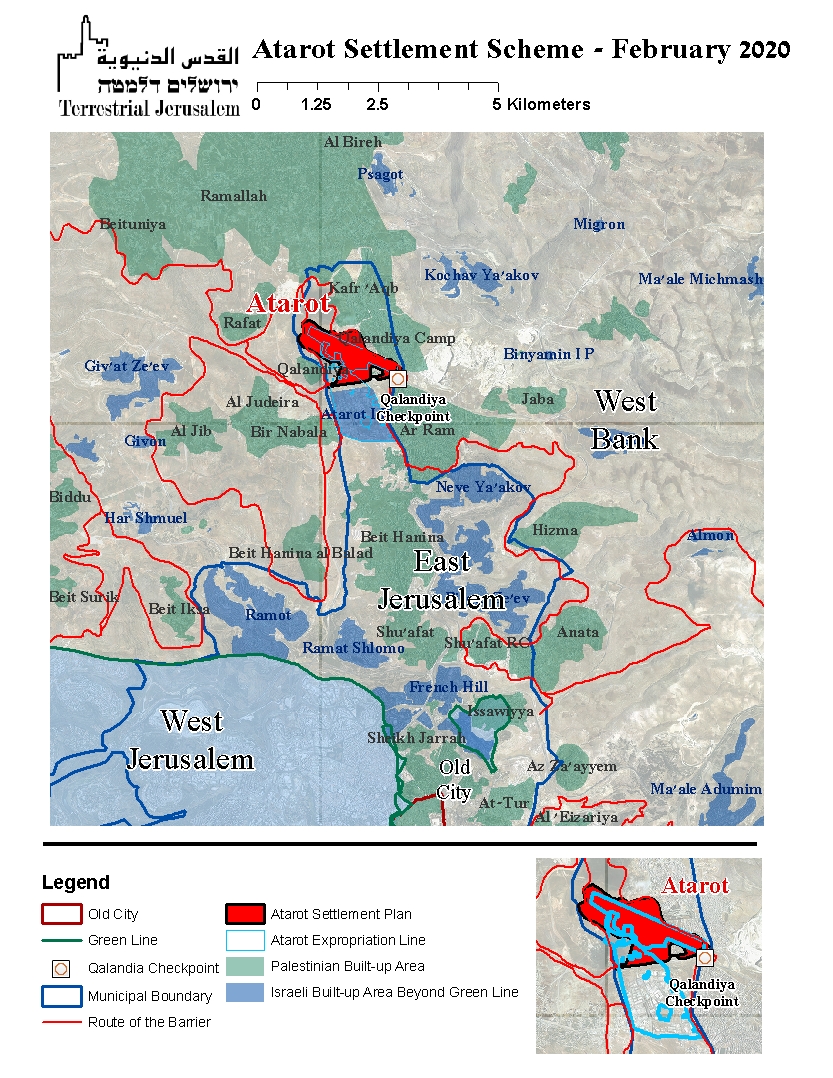 As a reminder, the Atarot plan calls for a huge new settlement on the site of the defunct Qalandiya Airport, located on a sliver of land between Ramallah and Jerusalem. In its current form, the plan provides for up to 9,000 residential units for ultra-Orthodox Jews (assuming, conservatively, an average family size of 6, this means housing for 54,000 people), as well as synagogues, ritual baths (mikvehs), commercial properties, offices and work spaces, a hotel, and a water reservoir. If built, the Atarot settlement will effectively be an Israeli city surrounded by Palestinian East Jerusalem neighborhoods on three sides and Ramallah to its north. Geopolitically, it will have a similar impact to E-1 in terms of dismembering the West Bank and cutting it off from Jerusalem. For more on the Atarot settlement plan, please see here.
The Jerusalem District Planning Committee previously signaled its intent to advance the Atarot settlement plan, most notably by placing it on the December 6th agenda. After apparent pushback from the Biden Administration, on November 25th the plan was suddenly removed from the December 6th agenda, reportedly in fulfillment of a promise to the U.S. to freeze the project. That removal, however, proved short-lived. On November 28th, the Atarot plan reappeared on the agenda, confirming earlier comments Bennett made to the settler-run news outlet Arutz Sheva saying that the plan will indeed be discussed on December 6th. Apparently settling the matter, an Israeli diplomatic source said that the government will act on the plan by approving it for deposit for public review, while at the same time offering the U.S. a rhetorical commitment (but nothing more) that there will be no further advancement in the planning process for at least a year.
Peace Now’s Hagit Ofran cautions:
“‘…please, don’t buy any ‘promise’ that ‘we will not build’ (anyway the planning process takes a while, and even if they work hard and fast they can’t start to build Atarot in less than 3-4 years), what we need is clear: Don’t promote the plan; Shelve it.’ Ofran separately told The Los Angeles Times, ‘As soon as [the committee] approve[s] it, it’s like a snowball.’”
Ir Amim also warns:
“While the Israeli authorities may attempt to relegate the upcoming discussion as a prosaic, bureaucratic step in a lengthy approval process, it is a necessary stage in the plan’s final approval and indeed advances the plan one step closer to full validation.”
For further information about the Atarot plan – and what has transpired over the past week – please see the following two podcasts:
- “The Settlement That Wasn’t But Now Is” ft. Daniel Seidemann & Evan Gottesman (Terrestrial Jerusalem Podcast – 11/30/2021)
- “Scorched Earth & Settlements in Jerusalem” ft. Daniel Seidemann and Kristin McCarthy (FMEP podcast – 12/2/2021)
New Israeli President Kicks Off Hanukkah with Settlers in Hebron, Sparking Clashes and Raising Ire
Isaac Herzog – the former head of the Jewish Agency who was sworn in as the new Israeli President in July 2021 – opted to make a highly political statement by attending a celebration of the first night of Hanukkah in Hebron, at the Tomb of the Patriarchs/al-Ibrahimi Mosque. Herzog’s choice is correctly understood to be an intentional embrace and legitimization of settlers in Hebron, and of the apartheid reality Palestinians experience everyday. In his speech at the event, Herzog emphasized recognition of “the historical affinity of the Jewish people to Hebron, to the Cave of the Patriarchs,” and spoke about the 1929 massacre of Jews in Hebron. He said nothing about Palestinian links to the city, the 1993 Hebron Massacre, or anything else related to Palestinian equities in the city.
Palestinian and Israeli activists protested the event, which led to clashes with the IDF.
The Palestinian Foreign Ministry responded:
“The Israeli government bears full and direct responsibility for this event…[this is] a defiant move aimed at embracing the settlement enterprise and a blatant violation of international law and the international effort to curb unilateral measures.”
MK Ayman Odeh (Joint List) tweeted:
“Herzog did not go to light the first candle, he went to light Hebron…Whoever celebrates with fans of the killer Goldstein cannot be the president of all the citizens of the country.”
Peace Now, commenting on Herzog’s activities, said:
“[Hebron is] the ugliest face of Israeli control over the territories..It is inconceivable that the president, who is supposed to be a unifying figure, would choose, of all places, to light a candle in a place that has become a stronghold of oppression and violence.”
Commenting on the IDF’s preventing protests of Herzog’s appearance, Peace Now also said:
“While the president lights a candle with Baruch Marzel and the Kahanists, security forces are preventing law-abiding citizens from exercising their right to protest”.
In speculating that Herzog’s appearance in Hebron is indicative of his higher political ambitions [to become Prime Minister], Israeli analyst Anshel Pfeffer writes:
“Herzog’s decision to light the first candle of Hanukkah on Sunday night with the settlers of Hebron, [Kahanist MK] Ben-Gvir’s core constituency, should come as no surprise to anyone. These were the kind of people he courted before being elected president and he’s not about to shun them now, or anytime… The visit to Hebron is not an afterthought or a symbolic gesture of ‘unity.’ This was the very first Hanukkah-lighting of Herzog’s presidency, and his choice of venue signals how he intends to build his political brand throughout his term and beyond.”
The Haaretz Editorial Board – in an editorial entitled “Herzog Decided He Wants to Be the President of the Settlements. It’s Not Too Late to Change It” – pleaded with Herzog to cancel his plan, writing:
“Of all the places in Israel, the president chose Hebron, the ultimate symbol of the ugliness and brutality of the occupation and the violence and domineering of the settlers.
“The visit by Israel’s No. 1 citizen to that place – most of whose Palestinian inhabitants have been forced to flee in fear of the settlers and abandon their homes and stores, turning the heart of Hebron into a ghost town – is tantamount to granting official legitimacy to the appalling injustices perpetrated there every day, both before and after Dr. Baruch Goldstein massacred 29 Arab worshipers in the mosque at the Tomb of the Patriarchs.
“In no other place in the West Bank is Israeli apartheid so horrifyingly flagrant: segregated streets on which Palestinians are prohibited from walking; vehicle entry barred to the Palestinians still living there; checkpoints at every turn – only for Palestinians, of course. Violence and humiliation are the daily fare of every Palestinian resident at the hands of the settlers and their children, as well as the army and Border Patrol personnel who are stationed on every corner.
“That is where Herzog believes he must go. His planned visit to Hebron is a gesture of recognition of and solidarity with the most violent settlers and additional proof that occupied Hebron has been annexed to Israel, at least de facto. Otherwise, the president has no reason to go there.”
Court OKs Demolition of Palestinian Homes in Wadi Yasul (Silwan)
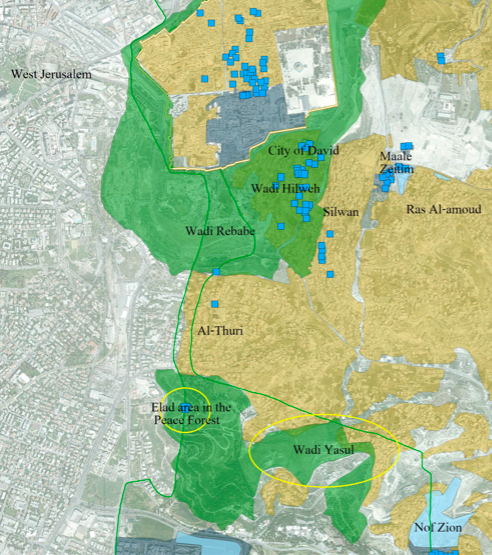
Map by Ir Amim
On November 28th the Jerusalem District Court cleared the way for the immediate demolition of 58 Palestinian homes in the Wadi Yasul section of the Silwan neighborhood in East Jerusalem – adjacent to an area known as the “Peace Forest”. The basis for the order is the Israeli claim that the homes lack Israel-issued building permits. The Court rejected an appeal to continue freezing demolition orders, filed by Palestinian homeowners, ruling that demolition orders can no longer be justifiably suspended because there appeared to be no prospect of Israel legalizing the homes, despite a 15-year effort on the part of Wadi Yasul’s residents to advance planning schemes that could have enabled Israel to rezone the land and legalize the homes.
An attorney representing the Palestinian homeowners told Haaretz:
“The residents have spent millions of shekels on these plans, but in the end, [city officials] broke their promises, posed insurmountable obstacles and insist on implementing the demolition orders and throwing the families out onto the street with no alternative.”
The brutal outcome Israel is meting out to the Palestinian residents of Wadi Yasul stands in stark contrast to the Israeli State and judicial system’s treatment of illegal settler construction in the same area — a reality that underscores the systematic discrimination that characterizes Israeli planning policies and enforcement facing Palestinians in Jerusalem. While pursuing the demolition of Palestinian construction and refusing efforts to address the issue, FMEP reported in 2019 how the Israeli government is working hand-in-hand with Israeli settlers to pursue every avenue to secure the retroactive legalization of the Elad settler group’s illegal construction. Even more brazenly, Israeli officials have been working to rezone the “Peace Forest” [something it refuses to do for Palestinians] in order to allow the Elad settler group to build more infrastructure in the area, including a tourist zipline and a promenade meant to connect settlement enclaves in the area.
Haaretz previously explained how Jerusalem authorities have repeatedly assisted Elad in its illegal activities:
“At first the NGO simply trespassed and built illegal structures there [the “Peace Forest”]. But things changed and gradually various local and national bodies – including the Jerusalem Municipality, the Israel Land Authority, the Tourism Ministry and the JNF – began to grant Elad assistance. This assistance has included granting building permits retroactively, allocating land to the group without a proper bidding process, and generous funding to the tune of tens of millions of shekels… It has been sponsoring activities in the Peace Forest since 2005, despite the fact that it has no ownership rights there or permits from the ILA (the legal owner of the land, which was expropriated from private Palestinian owners).”
Ir Amim explains:
“The scope of settlement projects in the vicinity of Wadi Yasul – and the breadth and depth of state support awarded to Elad, including authorities’ overt efforts to retroactively legalize their own unpermitted buildings – illuminate the stark discrimination in planning that empowers the expansion of radical settlement inside Palestinian neighborhoods while putting their native residents at risk of displacement.”
In a 2019 report on Wadi Yasul, B’Tselem told the story of what’s transpiring there:
“The residents of Wadi Yasul built [their homes] adjacent to a forest, also located on privately owned land that was expropriated from its Palestinian owners in 1970. In 1977, the Jerusalem Municipality zoned the forest and the area where Wadi Yasul was later established as a green space, where construction is prohibited.
“In 2004, the neighborhood’s residents submitted a detailed plan to the District Planning and Building Committee for retroactive authorization of their homes. The committee rejected the plan in 2008, citing incompatibility with the Jerusalem 2000 Outline Plan, which states that the area where the neighborhood was built must remain a green space.
“At the same time, the municipality and the JNF (Jewish National Fund) – the body in charge of managing the forest – gave their approval to settler organization El-Ad to move forward with plans for group campgrounds, including building the longest recreational zipline in Israel. Some of the facilities have already been built in the forest, without building permits. While the city did issue demolition orders against them, it has refrained from following through.
“In contrast, over the last decade, the city has filed indictments with the Court of Local Affairs against all Wadi Yasul homeowners. The court then issued demolition orders for all of the homes and imposed heavy fines, fining each family tens of thousands of shekels. Three of the families appealed these decisions with the District Court. The appeals were dismissed in April on the grounds that “there are no clear and near planning prospects” for the approval of a plan that would see the appellants’ homes, or other homes in the neighborhood, approved. An appeal the families filed with the Supreme Court was also rejected. In late April, 47 other families filed a motion with the District Court seeking an interim injunction staying execution of the demolition orders. The court’s decision is still pending. Consequently, all of the homes in the neighborhood are still under immediate threat of demolition.
“Ever since 1967, planning policy in Jerusalem has been geared toward establishing and maintaining a Jewish demographic majority in the city. Under this policy, it is nearly impossible to obtain a building permit in Palestinian neighborhoods. The outline plans the city has prepared for these neighborhoods are largely aimed at restricting and limiting building opportunities in Palestinian neighborhoods. One way the plans do so is by designating vast areas as open green spaces, thereby barring Palestinians from building there. The resulting housing shortage forces Palestinian residents to build without permits.”
“Day of Destruction” – Israel Demolitions in East Jerusalem & West Bank
On November 23rd, Israeli forces carried out a demolition campaign targeting Palestinian homes in East Jerusalem and the West Bank, under the pretense that these homes lack Israeli-required Israeli-issued building permits (permits Israel systematically refuses to issue to Palestinians in East Jerusalem and in Area C). As a result of these demolitions, 22 people, including 15 children, were rendered homeless in a single day.
The demolitions included:
- 3 homes in the Wadi al-Hummus neighborhood of East Jerusalem. One of the buildings was a multi-unit apartment buildings;
- 1 home and a burial building (perhaps a funeral home) in villages in the South Hebron Hills;
- 1 tent and 3 livestock structures belonging to bedouin families living east of Ramallah;
- An agricultural road near Nablus. The road was used by the residents of ‘Asirah al-Shamaliyah to reach their farmland and also connects the town to Nablus.
B’Tselem writes:
“The wave of demolitions expresses the perception of the Israeli regime, which holds that land is a resource intended primarily to serve the Jewish population. This regime uses a variety of administrative, planning and bureaucratic tools to implement this concept. Governments come and go, but the apartheid regime remains untouched.”
Government Contradictions Delay Final Decision on Jerusalem Cable Car Project
On November 28th, the Israeli High Court of Justice held what was scheduled to be the final hearing to determine the fate of the Jerusalem cable car project — a project which has been promoted by the government and the Elad settler organization until this point. But instead of reaching a decision, the Court ended up giving the Israeli government a 21-day extension, by the end of which the government must explain its position on the project.
 The proximate cause of the Court’s action was Israeli Minister of Transportation Merav Michaeli’s (Labor) statement, delivered two days before the Court hearing, saying that “the cable car has no significant transportation role, and the harm will exceed the benefits.” That statement contradicts and completely undermines the rationale for the project that the government has put forward until this point — i.e., that the cable car will provide a legitimate transportation benefit. Given Michaeli’s statement, the Court issued its order for the State to clarify where it stands.
Commenting on the Court’s action, the Israeli NGO Emek Shaveh – which specializes in archaeology – said:
“We are pleased that after three years, the transport minister has said what we have been saying all along: that the Jerusalem cable car project is not a transportation project and is not an answer to the traffic issues near the Old City. We believe that its value for tourism has also been greatly misrepresented and although the plan is being advanced by the Jerusalem Development Authority and the Tourism Ministry it will primarily benefit a powerful interest group (the Elad Foundation) by transporting thousands of tourists to its hub at the City of David to the detriment of the historic city and its residents. We hope that the judges will rule that the approval process for the cable car plan severely undermined principles of good governance and on those grounds decide to put a stop to the plan.”
As a reminder, the Jerusalem cable car project is an initiative backed by the powerful, state-backed Elad settler group and advanced by the Israeli Tourism Ministry. The State of Israel – which has pushed the project forward in the midst of the COVID-19 pandemic and despite commitments by the government to focus on public health matters only – was previously forced to publicly admit that the implementation of the cable car project will require the confiscation of privately owned Palestinian land in the Silwan neighborhood of East Jerusalem.
While public efforts to “sell” the cable car plan have focused on its purported role in helping to grow Jerusalem’s tourism industry or in serving supposedly vital transportation needs, in reality the purpose of the project is to further entrench settler control in Silwan, via archeology and tourism sites, while simultaneously delegitimizing, dispossessing, and erasing the Palestinian presence there. Notably, the cable car line is slated to terminate at the settler-run Kedem Center compound (Elad’s large tourism center, currently under construction at the entrance of the Silwan neighborhood, in the shadows of the Old City’s walls and Al-Aqsa Mosque).
Emek Shaveh and other non-governmental organizations, including Who Profits and Terrestrial Jerusalem, have repeatedly challenged (and provided evidence discrediting) the government’s contention that the cable car will serve a legitimate transportation need in Jerusalem, and have clearly enumerated the obvious political drivers behind the plan, the archeological heresies it validates, and the severe negative impacts the cable car project will have on Palestinian residents of Silwan.
Knesset Holds Hearing on Settler Terrorism
On November 22nd a group of Knesset members – all hailing from political parties considered to be part of the Israeli Left – convened a hearing on settler violence against Palestinians.
As part of the hearing, several experts were asked to testify, including Ali Awad, a journalist and anti-settlement activist in the South Hebron Hills. Awad testified regarding his experience growing up in Tuba (read about that here), saying:
“I grew up in Tuba in the South Hebron Hills, under the threat of settlers my whole life. The military and settlers are working to steal our resources, rob us of our freedom, and take our land. There is full cooperation between the settlers and the army” [paraphrased by Breaking the Silence]
Peace Now Executive Director Shaqued Morag also testified, and emphasized that unauthorized outposts radiate settler terrorism and violence, serving as a tool for settlers (and the state) to take over more and more land.
A group of retired Israeli commanders – called Commanders for Israeli Security – delivered a written testimony for the hearing, writing:
“Groups of settlers have been perpetrating deadly acts of violence against Palestinians — for the most part helpless villagers — in areas under our control…This is completely unacceptable from an ethical and humanitarian perspective, and it stands in contradiction to Israel’s Jewish values.”
The hearing was not without controversy, as it was held the one day after a Palestinian killed one Jewish Israeli and injured four others in a shooting attack in the Old City of Jerusalem. Right-wing members of the Knesset, including Kahanist MK Ben Gvir, asked for the hearing on settler violence to be cancelled altogether. When it was allowed to proceed, Ben Gvir used the podium to shout his criticism of the Knesset members who organized the hearing, eventually resulting in his removal from the hearing room.
Decrying the lack of participation of many MKs, Meretz Party Chairman Nitzan Horowitz said:
“Their silence and lack of interest is tantamount to the endorsement and encouragement of continued violence.”
Horowitz also said:
“Some people in the Knesset minimize its existence or even deny it entirely. I invite them to visit the area, to meet with the victims of this violence, and to see the photos and video clips they produce.’’
Bonus Reads
- “Highway of hope and heartbreak” (Washington Post)
- “The Gaza Bantustan – Israeli Apartheid in the Gaza Strip” (Al-Mezan Center for Human Rights)
- “‘Hate crime’ attacks by Israeli settlers on Palestinians spike in the West Bank” (Washington Post)
- “Democratic Lawmakers Warn Against ‘Doomsday’ Israeli Settlement Plan” (Haaretz)
- “‘The occupation is trying to uproot us. Art can bring us back’” (+972 Magazine)
- “Israelis attacked, car set on fire after entering Ramallah” (i24 News)
- “The Long Reach of Restraint: For Israel’s Supreme Court, to exercise power might be to lose it.” (Jewish Currents // Elisheva Goldberg)
Welcome to FMEP’s Weekly Settlement Report, covering everything you need to know about Israeli settlement activity this week.
To subscribe to this report, please click here.
October 22, 2021
- Israel to Advance Plans for Nearly 3,000 Settlement Units & 1,300 Palestinian Homes in Area C
- Israeli Supreme Court to Hold Hearing on Batan al-Hawa, Silwan Dispossession Cases Next Week; AG Declines Intervention
- Israel Begins Construction on New Settlement in Downtown Hebron
- Israel Advances “Silicon Wadi” Project in East Jerusalem
- Recap: Israel Advances Settlement Plans Across Greater Jerusalem Area
- Recap: Court Pushes for Palestinians to “Compromise” with Settlers in Sheikh Jarrah
- New Report: State-Backed Settler “Tourism” Projects in East Jerusalem
- Bonus Reads
Israel to Advance Plans for Nearly 3,000 Settlement Units & 1,300 Palestinian Homes in Area C
The Israeli Civil Administration’s High Planning Council will convene next week — for the first time since Bennett and Biden took over leadership in Israel and the U.S., respectively — to advance the construction of 2,862 new settlement units (of which 1,231 will be eligible to receive final approval). These plans include the retroactive legalization of two unauthorized outposts (Mitzpe Danny and Haroeh Haivri), which should be properly understood as the creation of two new settlements.
Peace Now data
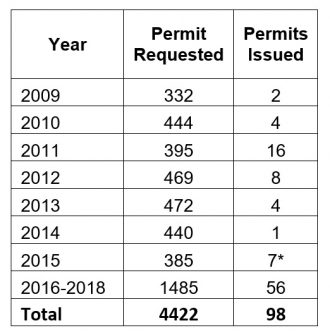
In addition, reports suggest that Israel will also advance plans for 1,303 Palestinian homes in Area C – about half of which, importantly, are already built. A majority of these units have been awaiting Israeli approval for many, many years. If approved, the permits under consideration next week for Palestinians will be the first of any significant quantity issued by Israel since, at least, 2009 (data from before this period has not been released by the Israeli government). Between 2009 and 2018, Israel issued a total of 98 building permits to Palestinians according to data released by the Israeli government in response to a freedom of information request submitted by Bimkom.
As a reminder, Area C is the 60% of the West Bank over which Israel enjoys absolute authority. For years Israel has systematically denied Palestinians the right to build on land in Area C that even Israel recognizes is privately owned by them, At the same time, it has continuously promoted the expansion of settlements and unauthorized outposts, while systematically demolishing Palestinian private construction. In terms of numbers: between 2016 to 2018, Israel issued only 21 building permits to Palestinians in Area C, while issuing 2,147 demolition orders against Palestinians during.
Commenting on the Planning Council agenda’s Peace Now observed:
“The approval of a handful of plans for the Palestinians is only a fig leaf intended to try to reduce criticism of the government. For years, Israel has pursued a policy of blatant discrimination that does not allow almost any construction for Palestinians in Area C, while in the settlements it encourages and promotes the construction of thousands of housing units each year for Israelis. The approval of a few hundred housing units for Palestinians can not cover up discrimination and does not change the fact that Israel maintains an illegal regime of occupation and discrimination in the territories.”
It is worth noting that many of the settlement units and Palestinian permits on next week’s agenda were expected to have been advanced earlier this year, in August 2021, but the High Planning Council never convened to do so.
Below are lists of settlement plans expected to be given final approval and plans expected to be advanced next week (italicized plans represent those which appear to have been added to the slate of plans that were expected to be advanced in August 2021).
Settlement plans expected to be granted final approval include:
- 629 units, including the retroactive legalization of 61 units, in the Eli settlement – located south of Nablus and southeast of the Ariel settlement in the central West Bank. Though the Eli settlement previously received Israeli government approval, a “Master Plan” – which officially zones land for distinct purposes (residential, commercial, public) – has never been issued for Eli, meaning all construction there is illegal under Israeli law;
- 286 units in the Har Bracha settlement, located south of Nablus. If implemented, these new units will double the size of Har Bracha;
- 224 units in the Talmon settlement, located west of Ramallah;
- 146 units in the Kfar Etzion settlement, located between Bethlehem and Hebron and on the Israeli side of the planned route of the barrier (which is not yet built in this area);
- 110 units in the Alon Shvut settlement, located just north of the Kfar Etzion settlement and between Bethlehem and Hebron;
- 82 units in the Karnei Shomron settlement, located in the northern West Bank, east of the Palestinian village of Qalqilya. Israel has openly declared its intention to continue expanding settlements in this area with the stated goal of bringing 1 million settlers to live in the area.;
- 52 units in the Beit El settlement, located in the heart of the northern West Bank [as a reminder, former US Ambassador to Israel David Friedman has deep ties to the Beit El settlement]; Construction on 350 new units in Beit El began earlier this year;
- 42 units in the Givat Zeev settlement, located south of Ramallah in an area that is on the Israeli side of the barrier;
- 24 units in the Haroeh Haivri outpost, a plan that will effectively grant retroactive legalization to this outpost. The Haroeh Haivri outpost is located just east of Jerusalem, within eyesight of the Khan al-Ahmar community, which Israel is threatening to demolish (forcibly relocating the Palestinian bedouin community that has lived there since the 1950s) — ostensibly because the structures in Khan al Ahmar were built without necessary Israeli approvals. The Haroah Haivri outpost was also built without the necessary Israeli approvals, but instead of demolishing the construction, Israel is moving to retroactively legalize it — demonstrating once again that, when it comes to administering the occupation, Israel prefers “rule by law” – where law is turned into a tool to elevate the rights/interests of one party over another, over the democratic rule of law.;
- 14 units in the Ma’aleh Mikhmash settlement, a plan that will effectively grant retroactive legalization to one of Ma’aleh Mikhmash’s outposts – – Mitzpe Danny;
- 10 units in the Barkan settlement, located about half way between the Ariel settlement and the cluster of settlements slated to be united into a “super settlement” area (Oranit, Elkana, Shiva Tikva, and others);
- 5 units in the Shima’a settlement, located in the southern tip of the West Bank;
- 7 units in the Peduel settlement, located in the northern West Bank and part of a string of settlements and unauthorized outposts – most notably Ariel – extending from the Green Line into the very heart of the West Bank and on towards the Jordan Valley.
Settlement plans expected to be approved for deposit (an earlier stage in the planning process) include:
- 399 units in the Revava settlement, located just east of the Barkan settlement and west of the Ariel settlement, in a string of settlements and unauthorized outposts – most notably Ariel – extending from the Green Line into the very heart of the West Bank and on towards the Jordan Valley.
- 380 units in the Kedumim settlement, located just east of Nablus. Israeli MK Bezalel Smotrich lives in the Kedumim settlement on a section of land in the settlement that has been found to be privately owned by Palestinians.;
- 100 units in the Elon Moreh settlement, located east of Nablus (for background on the significance of the Elon Moreh settlement, please see here);
- 100 units in the Sansana settlement, located on the southern tip of the West Bank on the Israeli side of the separation barrier;
- 73 units in the Givat Zeev settlement, which is also expected to receive final approval for 42 units. Givat Zeev is located south of Ramallah in an area that is on the Israeli side of the barrier;
- 68 units in the Tene settlement, located on the southern tip of the West Bank;
- 45 units in the Vered Yericho settlement, located just west of the Palestinian city of Jericho in the Jordan Valley;
- 27 units in the Karnei Shomron settlement, which is also expected to receive final approval for 82 units. Karnei Shomron is located in the northern West Bank, east of the Palestinian village of Qalqilya. Israel has openly declared its intention to continue expanding settlements in this area with the stated goal of bringing 1 million settlers to live in the area.;
- 18 units in the Alon Shvut settlement, which is also expected to receive final approval for 110 units. Alon Shvut is located just north of the Kfar Etzion settlement and between Bethlehem and Hebron;
- 10 units in the Tal Menashe settlement, located located on the tip of the northern West Bank, inside the “seam zone” between the 1967 Green Line and the Israel separation barrier, which was constructed along a route designed to keep as many settlements and as much adjacent land as possible on the Israeli side of the wall/fence.
- 7 units in the Hermesh settlement, located in the northern West Bank;
- 4 units in the Efrat settlement, located south of Bethlehem, inside a settlement block that cuts deep into the West Bank. Efrat’s location and the route of the barrier wall around it, have literally severed the route of Highway 60 south of Bethlehem, cutting off Bethlehem and Jerusalem from the southern West Bank. The economic, political, and social impacts of the closure of Highway 60 at the Efrat settlement (there is literally a wall built across the highway) have been severe for the Palestinian population.
Peace Now reports that the Planning Council will also consider advancing the following plans for Palestinian homes:
- 270 houses in the Bir al-Bash village, located south of Jenin in the northern West Bank;
- 270 houses in the Al-Ma’asara village, located south of Bethlehem;
- 233 houses in the the Almasqufa village, located near Tulkarem in the northern West Bank;
- 200 houses in the Dkeika village in the South Hebron Hills;
- 170 houses in the Khirbet Abdallah Younas village, located in the Jenin area;
- 160 houses in the Abba a-Sharqiya village, also located south of Jenin in the northern West Bank;
Israeli Supreme Court to Hold Hearing on Batan al-Hawa, Silwan Dispossession Cases Next Week; AG Declines Intervention
On October 25th, the Israeli Supreme Court is scheduled to hold an important hearing on the case of the Palestinian Duweik family which is under threat of being dispossessed of their longtime home in the Batan al-Hawa section of the Silwan neighborhood in East Jerusalem by the Ateret Cohanim settler organization.
In advance of that hearing – and after repeated extensions on a Court-ordered deadline – the Israeli Attorney General finally submitted his position on the case to the Court. The document submitted by the Attorney General was only 1 page, and simply stated that the case does not merit intervention either on the specific case of the Duweik family or regarding the wider legal principle at stake, which threatens an additional 85 families living under threat of eviction in Batan al-Hawa.
Ir Amim writes:
“Among the 85 families facing eviction, the Duweik family case is the first to reach the Supreme Court level, and its outcome will inevitably set a precedent, significantly impacting the rest of the cases in the neighborhood…As in the eviction cases in Sheikh Jarrah, the Attorney General and by extension, the government, was given a rare opportunity to take a moral stand by providing a legal opinion and policy position to help prevent the mass displacement of these families. Yet, at this point, the Attorney General’s response appears to imply that he has declined to intervene. Now, the decision concerning the fate of these families seems to lie solely in the hands of the Supreme Court. The rights of Palestinians to housing and shelter and the right to family and community life are fundamental and must be upheld. The same discriminatory legal system, which led to the confiscation of these families’ original homes in 1948, is now being exploited 73 years later to displace them for a second time from their current homes in which they have lived for decades. The Supreme Court has the power to make a principled and just decision to uphold the rights of these families to remain safely in their homes, free from the constant threat of being forcibly uprooted and driven from their homes and communities.”
Peace Now said in response to the AG’s decision to not intervene:
“The Attorney General’s response actually says that for the Israeli government, there is no problem to kick hundreds of residents out from their homes, on the basis of a discriminatory law, in favor of a settlement. The government was given an opportunity here to try to prevent moral injustice and political folly, but instead of taking a stand, it chose to remain on the sidelines, as if Silwan’s story, like that of Sheikh Jarrah, was a legal matter and not a political one.”
In July 2021, Peace Now assembled a coalition of Israeli lawyers to submit an amicus brief to the Court regarding the Duweik case. Peace Now summarizes:
“The brief addresses an approach that has emerged in international jurisprudence on human rights law which puts an emphasis on group vulnerability of occupants facing eviction and institutional, systemic discrimination against them. Where these are present, in certain circumstances, the occupants’ rights, stemming from the human right to housing and specifically, to live in their home and their family’s home – trump the right of the original owner or their substitute to regain possession of the property.
The brief reaches the conclusion that in the Duweik case, the occupants’ property rights and their right to housing supersede the right of the settlers acting on behalf of the pre-1948 original owners to receive possession of the property, based on the following:
1 – The fact that Palestinian residents of East Jerusalem are underprivileged, vulnerable and subjected to discrimination in every aspect of life, and particularly the fact that Israeli law on the restitution of property that changed hands due to wars, openly and deliberately discriminates against them;
2 – The fact that the family entered the property in good faith and/or in accordance with the law applicable at the time, and has developed a legitimate expectation to continue residing in it permanently and without interruption;
3 – The imbalance between the devastating harm the family would suffer and the minor damage the Benvenisti charitable endowment (represented by the settlers), which claims ownership of the property, would sustain, which clearly tips the scales in favor of the family.
In other words, according to the brief, even if the court finds the settlers do, in fact, have ownership, they are not necessarily entitled to remedy in the form of the families’ eviction from their homes, but rather to compensation from the state.”
Israel Begins Construction on New Settlement in Downtown Hebron
Peace Now reports that construction has begun on 31 new settlement units at the site of an old bus station previously repurposed as an IDF base, located in the heart of the Old City of Hebron on the infamous Shuhada street. This is a new settler enclave in the city and is, in effect, a new urban settlement, disconnected from already existing settlements in the city. It will be the first new settlement construction approved in downtown Hebron – where Palestinians already live under apartheid conditions – since 2002.
Peace Now said in a statement:
“The government is acting like an annexation government, not as a change government. Since the 1980s, no government has dared to build a new settlement in the heart of the largest Palestinian city in the West Bank, with the exception of one building built under the auspices of the second intifada in 2001. The Defense Minister has to stop construction, even if the plan was approved by the previous government. The settlement in Hebron is the ugly face of Israeli control of the territories. The moral and political price of having a settlement in Hebron is unbearable.”
As a reminder: in October 2017, the Israeli Civil Administration approved a building permit for the 31 units, on the condition that the Palestinian municipality of Hebron and others would have the opportunity to file objections to the plan. Soon after, two appeals were filed with the Defense Ministry: one by the Palestinian municipality of Hebron and one by the Israeli settlement watchdog Peace Now. The legal objections were based on the legally questionable process by which Israel made land in downtown Hebron available for settlement construction. Located in the Israeli-controlled H-2 area of Hebron (where 500 Israeli settlers live amongst 40,000 Palestinians), Israel seized the land in the 1980s from the Hebron Municipality, for military purposes. In 2007, the Civil Administration’s Legal Advisor issued an opinion stating that once Israel is done using the land for military purposes, it must be returned to the Hebron Municipality, which has protected tenancy rights to the land. Nonetheless, in 2015, the Israeli Civil Administration, with the consent of the Minister of Defense, quietly authorized the Housing Ministry to plan the area for Israeli settlement use, paving the way for that same ministry to subsequently present the plan for the 31 units.
In October 2018, with the legal challenges still pending, the Israeli Cabinet voted to expedite the planning of the new settlement and allocated approximately $6.1 million (NIS 22 million) for the project, which will require Israel to significantly renovate the bus station/military base in order to build the 31 new settlement housing units, as well as a kindergarten, and “public areas” for the new settler residents. Peace Now explains:
“The approval of the building permit in the heart of Hebron is an extraordinary move not only because it is a new settlement in Hebron for the first time since 2001, but because it indicates a significant change in Israeli legal interpretation of what is allowed and forbidden in occupied territory. The area in question was owned by Jews before 1948, and it was leased by the Jordanian government in protected tenancy to the Hebron municipality for the purpose of establishing the central bus station. Since 1967, the Israeli authorities managed the land and continued the lease to the Hebron municipality, until in the 1980s when the area was seized for military purposes, the bus station was closed and a military base was established there. A legal opinion of the Judea and Samaria Attorney General on the issue in 2007 emphatically stated that by law the municipality’s protected lease must not be revoked.”
Israel Advances “Silicon Wadi” Project in East Jerusalem
On October 13th, the Jerusalem Local Planning Committee met to initiate the planning process for the “Silicon Wadi” project, which was initiated by the Jerusalem Municipality and outlines plans to build a large industrial zone for hi-tech, commercial, and hospitality businesses in the heart of East Jerusalem’s Wadi Joz neighborhood. The project requires the demolition of some 200 Palestinian-owned businesses that currently operate in the area; dozens of demolition notices for which were issued in November 2020.
Ir Amim writes:
“Beyond the devastating impact of widespread demolitions of existing businesses and structures, the plan also raises concerns that the Israeli authorities will exploit the planning procedures to locate alleged Palestinian absentee properties and transfer lands into the hands of the State. It should also be noted that while Israel focuses on bolstering employment and economic activity in East Jerusalem, it simultaneously continues to suppress residential development in Palestinian neighborhoods. As with nearly all outline plans advanced in East Jerusalem in recent years, the Wadi Joz business park plan only allocates a marginal amount for residential use, which hardly meets the acute housing needs of the Palestinian population. Rather than undertaking measures to rectify the housing crisis, these plans only exacerbate the current situation and perpetuate the residential planning stranglehold, which ultimately serves to push Palestinians out of the city.”
Recap: Israel Advances Settlement Plans Across Greater Jerusalem Area
Over the past two weeks, the government of Israel has advanced four highly controversial and politically consequential settlement plans in the Greater Jerusalem area:
- The Givat Hamatos Settlement: On October 13th, the Jerusalem Local Planning Committee approved the expropriation of lands designated for public use in the Givat Hamatos area for the construction of roads, public buildings and the development of open space for the planned new settlement/neighborhood. For more on the Givat Hamatos settlement plan, please see here.
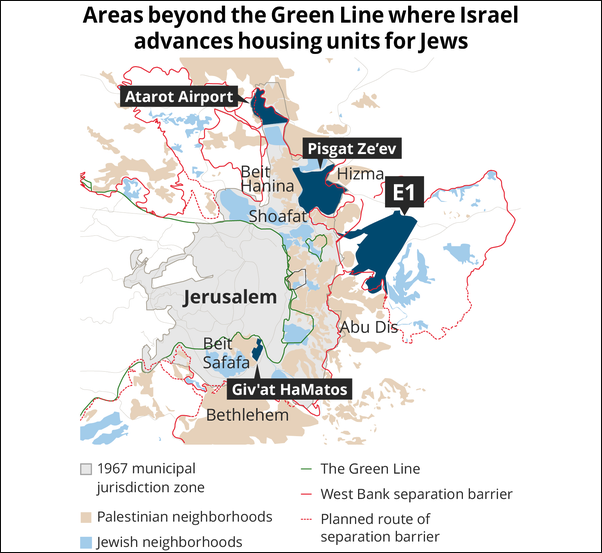
Map by Haaretz
- The E-1 Settlement: The Israel Civil Administration moved forward with advancing plans for the construction of the E-1 settlement, setting a date for a third hearing to discuss public objections to the plan (now set for November 8th). The first hearing was held on October 4th, but Palestinians were denied the ability to participate in that hearing (which was held virtually, making it inaccessible to the many Palestinians affected by the plan who do not have internet access). As a result, the Court scheduled this 3rd hearing (to allow the participation of Palestinians). The second hearing was held on October 18th; at that hearing three objections were presented (one by the Palestinian village of Anata, a second by the Palestinian village of Al-Azariya, and a third joint submission filed by Ir Amim and Peace Now). Ir Amim reports that there was no substantive discussion of these objections, with the Civil Administration panel offering no questions or comments on them. For more on the E-1 settlement plan, please see Terrestrial Jeruaslem’s excellent and thorough reporting.
- The Atarot Settlement: The Jerusalem District Planning Committee formally signaled that it will proceed with a hearing on the Atarot settlement plan – scheduled for December 6th – to build a huge new settlement on the site of the former Qalandiya airport (located at the northern tip of East Jerusalem). In its current form, the plan provides for up to 9,000 residential units for ultra-Orthodox Jews (assuming, conservatively, an average family size of 6, this means housing for 54,000 people), as well as synagogues, ritual baths (mikvehs), commercial properties, offices and work spaces, a hotel, and a water reservoir. If built, the Atarot settlement will effectively be a small Israeli city surrounded by Palestinian East Jerusalem neighborhoods on three sides and Ramallah to its north. Geopolitically, it will have a similar impact to E-1 in terms of dismembering the West Bank and cutting it off from Jerusalem. For more on the Atarot settlement plan, please see here.
- The Pisgat Ze’ev Settlement: The Israeli government advanced plans for 470 new settlement units in Pisgat Ze’ev, the largest settlement located in East Jerusalem.

Recap: Court Pushes for Palestinians to “Compromise” with Settlers in Sheikh Jarrah
The Israeli Supreme Court has set November 2nd as the deadline for Palestinian families living at risk of forced displacement in Shiekh Jarrah to decide wether or not to accept a Court-authored deal which would help them – at least temporarily – avoid eviction from their homes, in part by requiring them to recognize settler ownership over the properties.
Under the terms of the Court’s deal, which it is pressuring both parties to accept, the following would take place:
- The settler group Nahalat Shimon will be recognized as the owners of the site.
- The Palestinians will be recognized as protected tenants and be required to pay an nominal annual rental fee to the attorney of the settlers (in effect recognizing the settlers as the owners) but
- The Palestinians will be able to continue pursuing legal challenges to the underlying ownership of the land
- The Palestinians are permitted to renovate the properties without interference
- Settlers will be able to instigate eviction proceedings against Palestinians if they are in violation of the Court’s compromise agreement or in violation of Israel’s tenancy laws.
Terrestrial Jerusalem writes:
“The most problematic element of the settlement relates to the settlers’ ability to institute evictions even if the residents are not in violation of the agreement or of the tenancy laws. The settlers will be entitled to institute such proceedings in the event that the ownership rights are conclusively awarded to them, or after 15 years, the earlier of the two. This can be done if the settlers either wish to personally use the property or to demolish and rebuild. Under these circumstances, the settlers will need to offer the residents alternative equivalent quarters. Palestinian residents might hope settlers reject the deal to avoid having to make an ‘excruciatingly painful decision.’”
According to Terrestrial Jerusalem, the Court has signaled that further negotiations are acceptable, but that if either party rejects the agreement a decision on the eviction cases will be handed down swiftly.
New Report: State-Backed Settler “Tourism” Projects in East Jerusalem
In a new report entitled, “The Valley of Hinnom: Trees and Flowerbeds in the Political Struggle over East Jerusalem,” the Israeli NGO Emek Shaveh surveys the multitude of recent “tourism” projects jointly undertaken by the Elad settler organization and the Israeli government in the Ben Hinnom Valley — a strategic area between East and West Jerusalem (stretching past the 1967 Green Line), and located within the area designated by Israel as the Jerusalem “Walls National Park”.
Emek Shaveh writes:
“The nature of the tourism-settlement activity in the Valley of Hinnom conducted jointly by Elad and government authorities is familiar to us from the City of David/Silwan. The series of joint ventures such as the café, the Center for Ancient Agriculture and the cable car in effect hand over large expanses of land to the settlers of the Elad Foundation under the guise of tourism. Although unlike Silwan, the valley is sparsely populated, the activity there must be viewed as an integral part of the struggle for the Old City Basin of Jerusalem and as a means to clear this highly strategic area from the presence of Palestinians.”
In conclusion, we wish to emphasize the following points:
1 – Development in East Jerusalem is almost always driven by political objectives. Recent developments in the Valley of Hinnom are part of the grand plan to change the character and the landscape of the Old City Basin and ought to be considered an integral component of the settlement enterprise in the Palestinian neighborhoods surrounding the Old City.
2 – Halting the destructive development schemes in the areas surrounding the Old City is vital in order to preserve Jerusalem as a multicultural historic city and is indirectly essential for safeguarding the status quo at the holy places.
3 – The Palestinian protests against the expansion of the settlers’ grip over the open spaces such as the Hinnom Valley is part of the struggle by the residents of Silwan and the surrounding neighborhoods to preserve the character of their neighborhoods. In our view, one ought to view the various activities by the settlers and the authorities in the Historic Basin such as the expulsion of residents from their homes, taking over land and the shaping of a historic narrative as part of the same general bid to cement their control over the Historic Basin.”
Bonus Reads
- “[PODCAST] The Occupation & the Biden Administration” (FMEP ft. Danny Seidemann and Yehuda Shaul with Lara Friedman and Khaled Elgindy)
- “How offshore accounts turned the British Virgin Islands into an east Jerusalem landlord” (JTA)
- “Beita residents reach lands for first time since settler takeover” (Al Jazeera)
- “After Years of Neighborly Relations, Settlers Try to Foil Recognition of Palestinian Hamlet” (Haaretz)
- “Palestinian protests turn deadly as Israel considers the future of a new settlement” (NPR)
- “These Palestinian Families Face Eviction From Their East Jerusalem Homes” (Haaretz)
- “When Settler Becomes Native” (Jewish Currents)
Welcome to FMEP’s Weekly Settlement Report, covering everything you need to know about Israeli settlement activity this week.
To subscribe to this report, please click here.
August 13, 2021
- The First Bennett/Biden Settlement Wave, Part 1: Israel Set to Advance 2,259 Settlement Units
- The First Bennett/Biden Settlement Wave, Part 2: Israel Announces Intention to Issue 863 Building Permits for Palestinians in Area C
- The First Bennett/Biden Settlement Wave, Part 3: Observations on Settlement Policy Coordination Between Governments
- Jerusalem District Court Orders 16 Homes to Be Demolished While Delaying – for 6 months – Demolition of Others in Silwan
- Israel Begins Work on Settler-Back Project at the Ibrahimi Mosque/Tomb of the Patriarchs
- Atarot Settlement Plan to Be Discussed on December 6th
- Bonus Reads
Questions/comments? Email kmccarthy@fmep.org
The First Bennett/Biden Settlement Wave, Part 1: Israel Set to Advance 2,259 Settlement Units
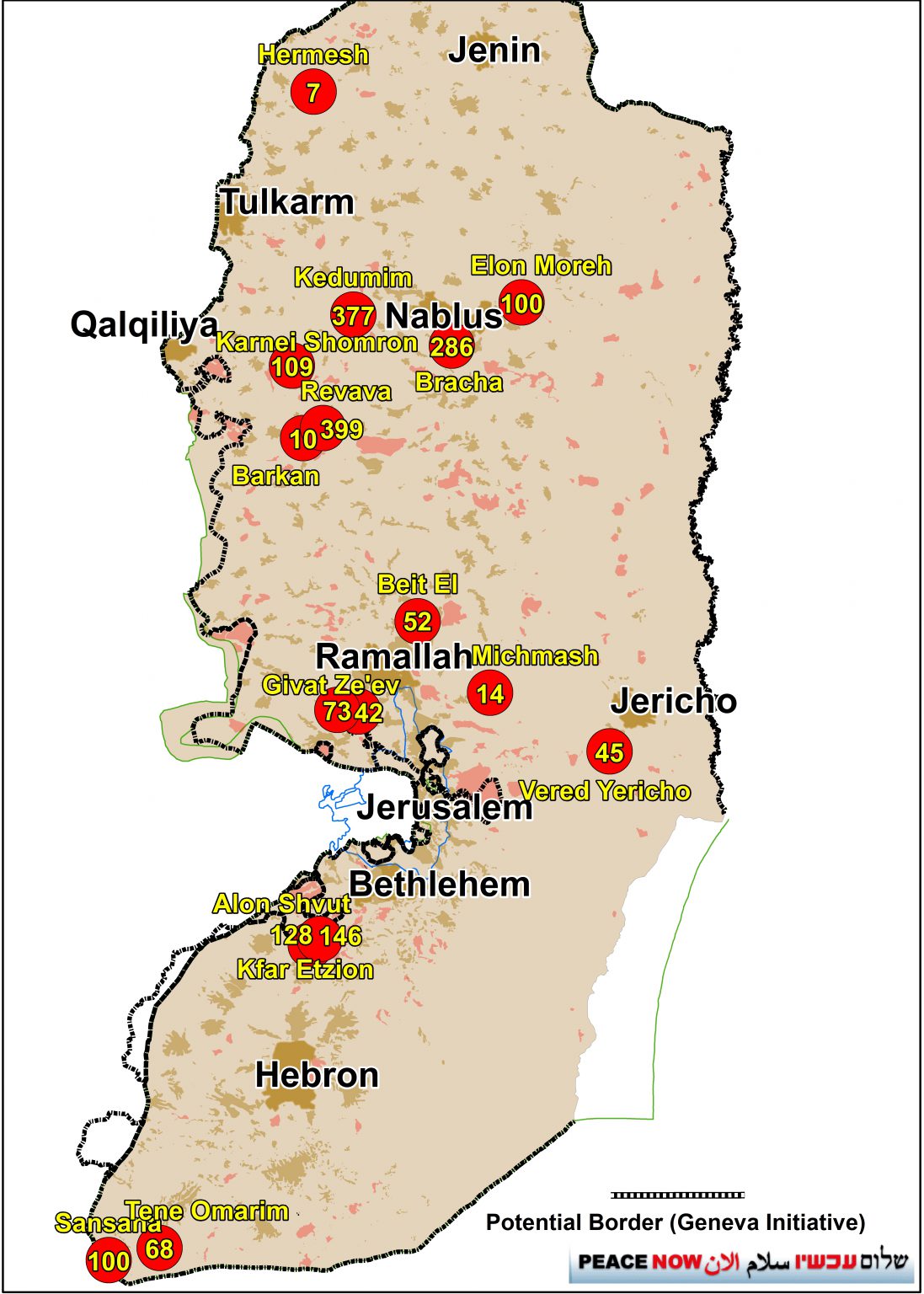 On August 12th, Israeli Defense Minister Benny Gantz announced that the High Planning Council will convene on August 18th to advance 2,259 new settlement units, as part of projects across the West Bank. Of these, 908 units are slated to receive final approval, including many units in areas beyond Israel’s security barrier. This will be the first time that the High Planning Council (HPC) has convened in 10 months, and it will be the first time a large number of settlement units has been advanced since Biden entered the White House. As a reminder, the HPC is a body within the Israeli Civil Administration (which is a part of the Israeli Ministry of Defense) that has authority over construction planning and approvals for both settlers and Palestinians in the West Bank (the HPC does not have authority with respect to settlement construction in East Jerusalem; since Israel annexed the area in 1967, Israeli domestic Israeli planning authorities are in charge there).
The plans expected to receive final approval include:
- 286 units in the Har Bracha settlement, located south of Nablus. If implemented, these new units will double the size of Har Bracha;
- 146 units in the Kfar Etzion settlement, located between Bethlehem and Hebron and on the Israeli side of the planned route of the barrier (which is not yet built in this area);
- 110 units in the Alon Shvut settlement, located just north of the Kfar Etzion settlement and between Bethlehem and Hebron;
- 82 units in the Karnei Shomron settlement, located in the northern West Bank, east of the Palestinian village of Qalqilya. Israel has openly declared its intention to continue expanding settlements in this area with the stated goal of bringing 1 million settlers to live in the area.;
- 52 units in the Beit El settlement, located in the heart of the northern West Bank [as a reminder, former US Ambassador to Israel David Friedman has deep ties to the Beit El settlement]; Construction on 350 new units in Beit El began earlier this year;
- 42 units in the Givat Zeev settlement, located south of Ramallah in an area that. is on the Israeli side of the barrier;
- 14 units in the Ma’aleh Mikhmash settlement, located east of Ramallah;
- 10 units in the Barkan settlement, located about half way between the Ariel settlement and the cluster of settlements slated to be united into a “super settlement” area (Oranit, Elkana, Shiva Tikva, and others).;
Peace Now said:
“The approval of thousands of housing units in the settlements harms the Israeli interest and the chances of reaching peace. It seems that the approval of a handful of plans for the Palestinians is only intended to try to reduce criticism of the government and to please the US administration ahead of Prime Minister Bennett’s expected visit to Washington in the coming weeks. For years, Israel has pursued a policy of blatant discrimination that does not allow almost any construction for Palestinians in Area C, while in the settlements it encourages and promotes the construction of thousands of housing units each year for Israelis. The approval of a few hundred housing units for Palestinians can not cover up discrimination and does not change the fact that Israel maintains an illegal regime of occupation and discrimination in the territories.”
The First Bennett/Biden Settlement Wave, Part 2: Israel Announces Intention to Issue 863 Building Permits for Palestinians in Area C
In announcing plans to advance over 2,000 new settlement units, Defense Minister Gantz also announced his intention to issue permits for 863 houses – some of which will be issued for existing structures – for Palestinians living in Area C. Haaretz reports that the permits are being advanced in order to buy the consent of the few members of the Israeli governing coalition that oppose settlement construction, and as “calculated risk” with respect to the Biden administration.
As a reminder, Area C is the 60% of the West Bank where Israel enjoys absolute authority and has systematically denied Palestinian building rights, while promoting the expansion of settlements and unauthorized outposts. If issued, these permits for Palestinians will be the first issued by Israel in years, and the first of any significant size. Only 21 building permits were issued to Palestinians between 2016 to 2018, while 2,147 demolition orders were issued in the same period.
Commenting on the announcement of the planned permits (which, given past experience, there is no reason to assume will ever be issued) Peace Now said:
“It is a very small expansion of the Palestinian villages and a drop in the ocean in terms of real Palestinian development needs.”
Peace Now reports that these permits, if they are ever issued, might be for:
- 270 houses in the Bir al-Bash village, located south of Jenin in the northern West Bank;
- 233 houses in the the Almasqufa village, located near Tulkarem in the norhtern West Bank;
- 160 houses in the Abba a-Sharqiya village, also located south of Jenin in the northern West Bank;
- 150 houses in the Al-Ma’asara village, located south of Bethlehem; and,
- 50 houses in the Khirbet Zakariya, also located south of Bethlehem.
The First Bennett/Biden Settlement Wave, Part 3: Observations on Settlement Policy Coordination Between Governments
In reporting over the past week, Axios journalist Barak Ravid has documented the efforts by the Israeli and U.S. governments to square conflicting positions with regards to settlement growth.
On the U.S. side, the Biden Administration has appeared to take pains to make room in its official discourse to begrudgingly tolerate settlement construction. While the U.S. has criticized the new batch of settlement advancements, until this week the U.S. had reportedly identified three actions it has asked Israel to refrain from, notably not including settlement expansion. Those three actions are: the demolition of Palestinian homes, the eviction of Palestinians from their homes, and the establishment of new outposts in the West Bank. The U.S. is also reportedly asking Israel to take positive steps to stabilize the Palestinian Authority, which is suffering from economic shortfalls and crashing levels of popular support.
For it’s part, Israeli press suggests that the Bennett government reduced the number of upcoming settlement advancements in order to appease the Biden Administration. The Israelis wanted to advance 3,623 plans, but announced a total of 2,259 (a 39% cut according to Jerusalem Post). Axios also reports that the Israeli government is assertively framing its settlement policy as one of restraint, prioritizing settlement projects that address the supposed “natural growth” needs of existing settlements.
“Natural growth” has been used many times in the past by the Israeli government as an argument for why settlements must be allowed to expand. FMEP’s Lara Friedman has debunked this argument many times in the past, explaining:
“While ‘natural growth’ has no formal definition, it has generally been used in the settler context to mean population growth due to births, as contrasted to growth due to immigration from Israel or other places. But in numerical terms (according to Israeli official statistics), taking into account deaths and people migrating out of settlements, births inside the settlements account for approximately 60% of the annual population growth in settlements, while around 40% is immigration from inside Israel or abroad. So clearly population growth in settlements is not simply a matter of births. Perhaps this is why some excuse-makers have expanded ‘natural growth’ to include other ways that families can grow, from non-settler spouses to aged non-settler relatives moving in.
“Regardless of what definition people want to use, the fact is that ‘natural growth’ is not a legitimate argument against a complete freeze in settlement construction. Yes, settlers, like people everywhere, indeed have the right to have babies, and yes, their children indeed have the right to grow up and have families and homes of their own. But nowhere in the world – not in New York, or Paris, or Tel Aviv – do people have an inalienable right to live exactly where they want – in the size home they want, in the neighborhood they want – irrespective of real estate market factors, or any political, economic, zoning, or other considerations that may come into play (including in this case, considerations about actual land ownership). Inside Israel, just like in other countries, people regularly face difficult decisions about where to live, given that major cities like Tel Aviv and Jerusalem are crowded and little affordable housing is available.
“Settlers have the right to have babies and to take in their parents or grandparents. When settler children grow up they have the right to start families and have homes of their own. But the settlers must do what people everywhere must do: reconcile their needs as best as possible to the housing market, which is affected not only by demand but by a myriad of other variables – including, in this case, the fact that settlers have knowingly and voluntarily chosen to make their lives on land that is the subject of a political dispute of global proportions.”
Axios quotes an Israeli government official saying:
“The Biden administration knows we are going to build. We know they don’t like it, and both sides don’t want to reach a confrontation around this issue.”
An Israeli government source summarized the dance going on between the respective governments by saying:
“[The U.S.] will express opposition to this move, but everyone wants this impossible coalition in Israel to hold out… It was clear for Bennett he would not have been able to advance this move after his meeting with [U.S. President Joe] Biden at the end of the month, so as not to damage their relations, and that’s why he had to announce it as early as he did.
Jerusalem District Court Orders 16 Homes to Be Demolished While Delaying – for 6 months – Demolition of Others in Silwan
On August 12th, a Jerusalem Court granted a six-month freeze on demolition orders affecting dozens of Palestinian homes in the al-Bustan section in the Silwan neighborhood of East Jerusalem. At the same time, the Court cleared the way for the immediate demolition of 16 Palestinian homes in the same area.
A lawyer representing the Palestinians involved in these demolition cases said his clients intend to file for permits for the structures, which were built on land that Palestinians assert they own. Israel argues that the land is public land.
Israel Begins Work on Settler-Back Project at the Ibrahimi Mosque/Tomb of the Patriarchs
This week, an Israeli crew began construction on a new elevator leading to the Ibrahimi Mosque/Tomb of the Patriarchs in Hebron, arguably one of the most sensitive religious sites outside of Jerusalem. The project to install accessible infrastructure at the site has been backed and pushed by settlers for over two decades and provides a means by which the State of Israel has increased its control over the site. The project is roundly opposed by Palestinians along with archaeologists and other experts. The Israeli archeology group Emek Shaveh explains its opposition:
“We claim that while the plan is couched in terms of concern for the disabled and elderly worshippers, in actual fact it is unilaterally advancing changes to a site mired in deep political controversy…The size and characteristics of the structure demonstrate that at issue is not simply a lift for persons with disabilities, but a significant change to the compound. The lift will constitute a change in the status quo and a strengthening of the settlers’ control of the holy site. Ignoring the fact that the site falls under the auspices of the Hebron Municipality is evidence that Israel is further reneging on its commitments to agreements signed in the past with Palestinians.”
Atarot Settlement Plan to Be Discussed on December 6th
As expected, the Jerusalem District Planning and Building Committee has set a date – December 6th – for the advancement of the Atarot settlement plan. This plan would allow for the construction of 9,000 settlement units, to be built on the site of the former Qalandiya airport (located at the northern tip of East Jerusalem).
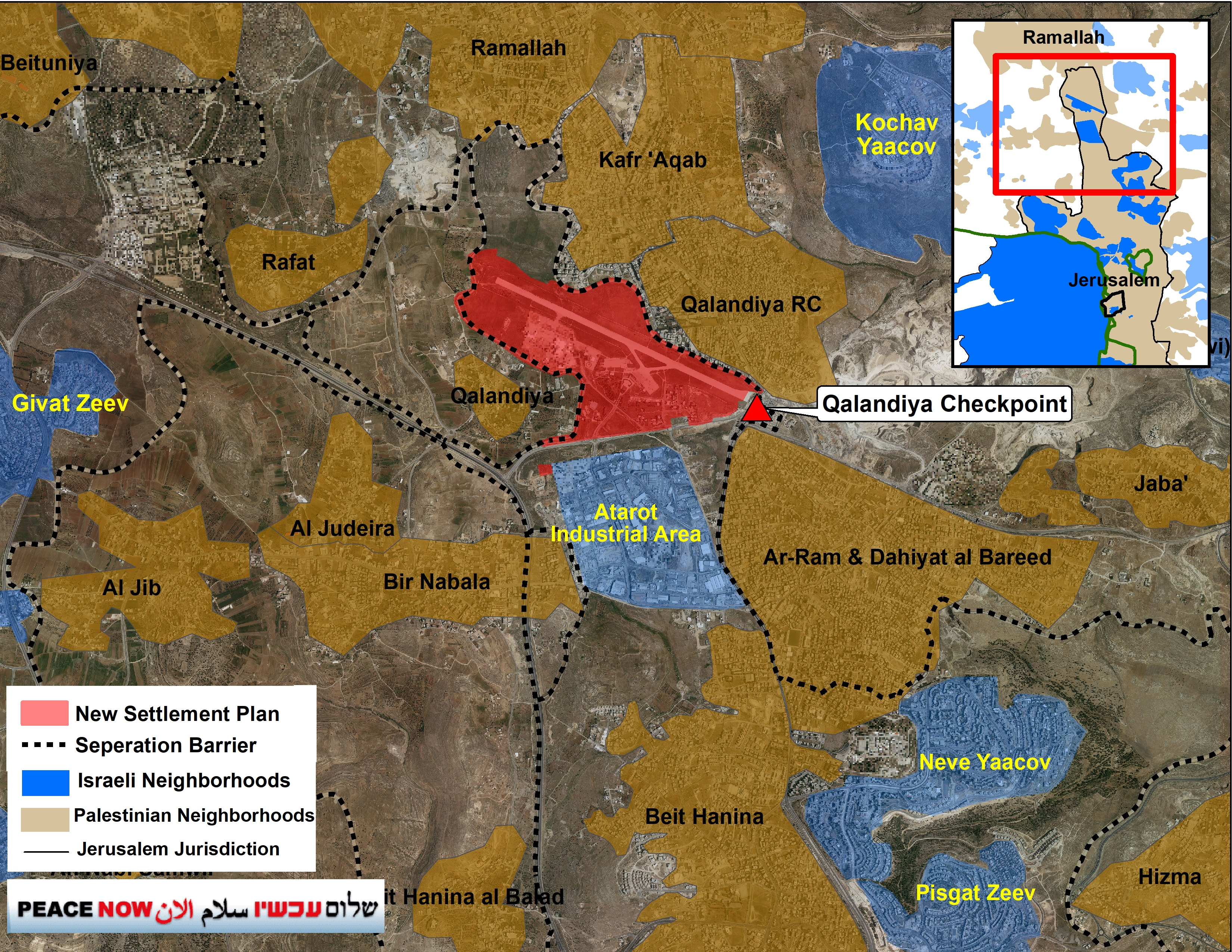 The Atarot settlement plan dates back to 2007. It was pursued by the Israeli government in 2012 but shelved under pressure from the Obama administration. The plan came back into consideration in April 2017 (a few months following the inauguration of President Trump) when it was rumored to be included on Netanyahu’s master blueprint of settlements for which he was seeking U.S. approval. In February 2020, following the publication of the Trump Plan – which designated the area that would be used for the settlement as a “special tourist zone” for Palestinians – the Atarot settlement plan was formally introduced. In January 2021 then-Prime Minister Netanyahu dangled the advancement of the plan as an incentive for parties to join his flagging coalition in order to remain in power.
In its current form, the plan provides for up to 9,000 residential units for ultra-Orthodox Jews (assuming, conservatively, an average family size of 6, this means housing for 54,000 people), as well as synagogues, ritual baths (mikvehs), commercial properties, offices and work spaces, a hotel, and a water reservoir. If built, the Atarot settlement will effectively be a small Israeli city surrounded by Palestinian East Jerusalem neighborhoods on three sides and Ramallah to its north.
There are currently 15 Palestinian families living in buildings on the land slated for the settlement, part of which is privately owned by Palestinians. Other land in the area has been declared “state land” by Israel or belongs to the Jewish National Fund. To solve the problem of Palestinian land owners, the Israeli government will need to evict the Palestinians living there and demolish their homes — a step that will be facilitated by the fact that all of the homes lack Israeli-issued building permits (which are essentially impossible for Palestinians to receive). The private Palestinian landowners will then be subjected to a non-consensual process of “reparcelization,” in which Israel will unilaterally reparcel and then redistribute the land amongst its owners on the basis of the value of the land (as determined by Israel) and the percentage of their ownership claim.
The Atarot airport site is an important commodity and, during past negotiations, it was promised to the Palestinians for their state’s future international gateway. Israeli development of the site as a settlement would — by design — not only deprive a future Palestinian state of the only airport in a Palestinian area, but also dismember Palestinian neighborhoods in the northern part of the Jerusalem, and sever East Jerusalem from a Palestinian state on this northern flank of the city (acting like E-1 on Jerusalem’s northeast flank, and like Givat Hamatos on Jerusalem’s southern flank).
Bonus Reads
- “Case Study: How a Settler Law-Breaker Became the #2 Official in Israel’s Ministry of the Interior” (FMEP // Lara Friedman w/ Dror Etkes)
- “Senior Israeli Official’s Appointment Approved Despite Demolition Order for His Settlement Home” (Haaretz)
- “In Sheikh Jarrah, anonymous actors and an absent state have created a powder keg” (The Times of Israel)
- “The Fight for Palestine’s Sheikh Jarrah Isn’t Over” (Jacobin)
- “ICC Mulls Probing Israel Over Razing Palestinian Homes in Jordan Valley” (Haaretz)
- “81 Palestinian homes demolished by Israel in East Jerusalem in 2021” (Middle East Monitor)
- “Jewish claim of land ownership in occupied East Jerusalem neighborhood displaces five Palestinian families” (WAFA)
Welcome to FMEP’s Weekly Settlement & Annexation Report. To subscribe to this report, please click here.
August. 6, 2021
- Sheikh Jarrah, Part 1: Court Proposes Settler-friendly “Compromise” to Avoid Substantive Ruling on Sheikh Jarrah Dispossession Cases
- Sheikh Jarrah, Part 2: Israel Reportedly Asks Biden Administration to Pressure Palestinians Into Accepting Sheikh Jarrah “Deal”
- Israel Housing Ministry Moves to Advance Atarot Settlement Plan
- Report: Jewish National Fund to Approve “Review” of West Bank Land/Property it Claims to Own but Not Have Registered
- New Petition Against Construction on Top of Ruins of Lifta
- Members of Congress Seek Codify Trump’s Green Line-Erasing Labeling Policy Into Law
- Bonus Reads
Sheikh Jarrah, Part 1: Court Proposes Settler-friendly “Compromise” to Avoid Substantive Ruling on Sheikh Jarrah Dispossession Cases
At a hearing held on Monday August 2nd, the three-judge panel of the Israeli Supreme Court proposed a “compromise” to resolve the cases of pending evictions of four Palestinian families from their longtime homes in the East Jerusalem neighborhood of Sheikh Jarrah. The compromise — which appears designed above all else to enable the Court to avoid issuing a ruling on the substance of the case — would enable the Palestinians in the targeted homes to avoid displacement for the time being, while offering settlers formal recognition of their ownership of the properties in question (and turning the Palestinians into tenants paying rent to a settler organization that has made clear its intention to displace them). Moreover, if implemented, the “compromise” would almost certainly become a precedent for the cases of the many other Palestinians in Sheikh Jarrah and Silwan (and almost certainly elsewhere in the future) whose homes/presence is targeted by settlers.
Specifically, under the deal proposed by the Court, the four Palestinian families fighting imminent forcible displacement from their longtime homes in the Sheikh Jarrah (the El Kurd, Jaouni, Abu Hasna, and Askafi families) would be required to recognize the settlers as the rightful owners of the land their homes are built on. In exchange for this recognition — in effect, a repudiation of claims to their own rights to the property — the Palestinians would be designated as “protected tenants,” which would enable the families to continue to live in their homes for 2 generations (protected tenancy rights may be handed down to the children and grandchildren, but not further), so long as the Palestinians pay the required rent to settlers (set at 1,500 shekels a year) and do not otherwise violate the rules of protected tenancy.
The four families swiftly rejected the proposal – which Mohammed El-Kurd observed, accurately, would leave them “at the mercy of settlers, paying rent to live in our own homes.” Despite this rejection, the Court announced that it intends to continue pursuing the “deal” (while applying pressure on the families to accept it). To that end, the four families were asked to submit a list of individuals who might be eligible to receive protected tenancy rights.
Ir Amim explains not only the trap of protected tenancy rights, but also the larger concerns about how the Court is behaving, writing:
“While protected tenancy offers some assurances against arbitrary eviction, the law still allows for the eviction of protected tenants through a variety of means. Settler organizations are currently using these mechanisms in order to try and evict protected Palestinian tenants in other cases. Alternatively, the settler group could advance an urban renewal building plan, which would ultimately result in the eviction and demolition of the families’ homes. In such a case, the families would be eligible for alternative housing elsewhere, but would lose their community and the homes in which they were living for decades and to which they are strongly tied. Indeed, settler leaders have already applauded the court’s proposal calling it a victory.
Additionally, protected tenancy status will mean, in essence, that the families are not recognized as the owners of their homes. The significance is both symbolic and practical since it means that the families would lose all opportunity to claim ownership in the future – for example when the Israeli Government conducts a land registration process in the neighborhood. Past experience shows that regardless of any phrasing which may be used in an attempt to circumvent recognition of settler ownership, the declaration of protected tenants may be used against future claims by the families.
The judges’ resolve to push for a settlement indicates their reticence in issuing a substantive ruling which would obligate them to rule against the settler group and the discriminatory legal mechanism which grants Palestinian property to Jews. Such a settlement likewise enables the Israeli government to abdicate responsibility for these measures.
A fair proposal can only be one that is in accordance with International Law and its basic premise of protecting the occupied population and its right to property, family, and community life. This basic principle must not be forgotten as the Israeli government is trying to evade the strong pressure which the protests against the Sheikh Jarrah evictions have succeeded in creating.”
Sheikh Jarrah, Part 2: Israel Reportedly Asks Biden Administration to Pressure Palestinians Into Accepting Sheikh Jarrah “Deal”
Haaretz reports that the Israeli government has asked the Biden Administration to pressure the four Palestinian families facing forcible dispalcement from their homes in Sheikh Jarrah into accepting the deal offered by the Supreme Court (see section above for details on the Supreme Court’s “deal”). The families rejected the deal immediately upon presentation, based on their refusal to legitimize settler claims of ownership over their homes.
Haaretz further reported that officials in the Biden Administration is not jumping to implement the Israeli request, but is keeping a close eye on the case. When asked about these reports at a State Department briefing on August 5th, spokesperson Ned Price responded:
“Well, as you know, we don’t speak to any diplomatic or private conversations, but what I can say is that we believe that the proposal offered by the Israeli court on August 2nd is a matter for the Israeli and Palestinian parties to the case to consider and to decide for themselves. We’ve said this just this week and many times before that: families should not be evicted from their homes in which they have lived for decades. We have encouraged Israeli authorities to avoid evictions and other actions that exacerbate tensions and that undercut efforts to advance a negotiated two-state solution...Look, we’re not going to comment or comment on or confirm reports of diplomatic conversations. What we have said as it relates to this – we have both in public and in private encouraged Israeli authorities to avoid evictions and other actions that exacerbate tensions and undercut efforts to advance negotiated two-state solution.”
Reporting around the Court’s and the Israeli government’s efforts to secure Palestinian agreement on the Sheikh Jarrah “compromise” makes clear that this deal is seen by the Court and the government as a solution that can (a) placate the international community, by avoiding immediate evictions; (b) deliver a huge victory to the settlement enterprise in East Jerusalem by creating a legal precedent for settlers to take ownership – and, eventually, possession – of a large number of homes/properties across East Jerusalem); and (c) bolster the Israeli narrative that what is happening in East Jerusalem is merely a real estate dispute, while rebutting claims that Israeli rule in East Jerusalem involves occupation/apartheid policies that systematically dispossess and disenfranchise Palestinians, while in parallel promoting the interests and aspirations of settlers.”
Haaretz columnist Nir Hasson wrote:
“In the end, the Sheikh Jarrah legal battle revolves around one question. Is it simply a real estate dispute, as the settlers assert, or is it part of a campaign by the state – its official arms (the custodian general, Land Registry, the Israel Police) and its unofficial ones (the Nahalat Shimon Company) to dispossess the Palestinians and Judaize the neighborhood? If it’s the latter, it’s a campaign based on discrimination and unjust laws. Needless to say, for the rest of the world, apart from Israel, the Palestinian viewpoint is the one that is accepted; the view that it’s a private dispute is rejected. The three justices struggled to decide where the court stood on this question. On the one hand, they are clearly not happy reopening a discussion on the legal substance of the affair. On the other, they also very much do not want to order the eviction of hundreds of people from their homes – at least not now, when Sheikh Jarrah is the focus of media and diplomatic attention.”
Israel Housing Ministry Moves to Advance Atarot Settlement Plan
The Walla news outlet reports that the Israeli Housing Ministry has placed the Atarot settlement plan on the agenda for the Jerusalem District Planning and Building Committee, which is scheduled to convene in December 2021. The plan for the Atarot settlement – which calls for 9,000 units to be built on the site of the former Qalandiya airport (located at the northern tip of East Jerusalem) – is at an early stage in the approval process.
According to the Times of Israel, Prime Minister Bennett was not notified in advance of the Ministry’s move – which is surprising given the sensitivity of the plan (which is opposed by the international community and strikes a deadly blow to the prospects of a two-state solution). Bennet is scheduled to head to Washington, D.C. soon – a trip originally scheduled for August, but now delayed until September.
The Atarot settlement plan dates back to 2007. It was pursued by the Israeli government in 2012 but shelved under pressure from the Obama administration. The plan came back into consideration in April 2017 (a few months following the inauguration of President Trump) when it was rumored to be included on Netanyahu’s master blueprint of settlements for which he was seeking U.S. approval. In February 2020, following the publication of the Trump Plan – which designated the area that would be used for the settlement as a “special tourist zone” for Palestinians – the Atarot settlement plan was formally introduced. In January 2021 then-Prime Minister Netanyahu dangled the advancement of the plan as an incentive for parties to join his flagging coalition in order to remain in power. At the time, Jerusalem expert Daniel Seidemann noted that the plan faces significant legal obstacles and predicted that it will not come to fruition “anytime soon.”
In its current form, the plan provides for up to 9,000 residential units for ultra-Orthodox Jews (assuming, conservatively, an average family size of 6, this means housing for 54,000 people), as well as synagogues, ritual baths (mikvehs), commercial properties, offices and work spaces, a hotel, and a water reservoir. If built, the Atarot settlement will effectively be a small Israeli city surrounded by Palestinian East Jerusalem neighborhoods on three sides and Ramallah to its north.
There are currently 15 Palestinian families living in buildings on the land slated for the settlement, part of which is privately owned by Palestinians. Other land in the area has been declared “state land” by Israel or belongs to the Jewish National Fund. To solve the problem of Palestinian land owners, the Israeli government will need to evict the Palestinians living there and demolish their homes — a step that will be facilitated by the fact that all of the homes lack Israeli-issued building permits (which are essentially impossible for Palestinians to receive). The private Palestinian landowners will then be subjected to a non-consensual process of “reparcelization,” in which Israel will unilaterally reparcel and then redistribute the land amongst its owners on the basis of the value of the land (as determined by Israel) and the percentage of their ownership claim.
The Atarot airport site is an important commodity and, during past negotiations, it was promised to the Palestinians for their state’s future international gateway. Israeli development of the site as a settlement would — by design — not only deprive a future Palestinian state of the only airport in a Palestinian area, but also dismember Palestinian neighborhoods in the northern part of the Jerusalem, and sever East Jerusalem from a Palestinian state on this northern flank of the city (acting like E-1 on Jerusalem’s northeast flank, and like Givat Hamatos on Jerusalem’s southern flank).
Report: Jewish National Fund to Approve “Review” of West Bank Land/Property it Claims to Own but Not Have Registered
Haaretz reports that the Board of Directors of the Jewish National Fund is set to approve an institutional review of approximately 17,000 assets it claims to own but failed to register (or take possession of) in the West Bank and East Jerusalem. Many of these properties are Palestinian homes, whose residents the JNF refers to as “squatters”. The JNF’s legal review could reportedly take five years to complete, and could result in the eviction of Palestinians if the JNF is found by Israel to rightfully own the land (given the track record of Israeli courts with respect to property disputes between Israeli organizations and Palestinains, such a finding is a near certainty), is then permitted to register the land, and then chooses to pursue the eviction of those Palestinians.
Of the total (17,000 assets), the JNF claims:
- It has documentation showing the purchase of 360 properties.
- It has a contract proving ownership of 170 properties
- It has legal claim to 2,050 plot currently under the control of Israel’s General Custodian (the body set up by the Israeli government to take control of land and properties “abandoned” by Palestinians in the 1948 war).
Peace Now said in response:
“The Jewish National Fund is becoming the Settlers’ National Fund. The registration procedures in the Occupied Territories and in East Jerusalem could bring to massive dispossession of Palestinians, like in Sheikh Jarrah and Silwan, and expansion of the settlements. The JNF- KKL is a national institution for the entire Jewish people which should not serve one side of the political map as it puts facts on the ground that endanger the state of Israel. We call upon all the organizations which are party to the JNF- KKL board, including Maccabi, Hadassah and Naamat and others: don’t be political organizations, don’t let your representatives vote for deepening the occupation and the settlements.”
As a reminder, established in 1901, the JNF devoted itself to buying land for Jews. Today, the JNF owns about 15% of all the land inside the Green Line (a figure which stands to increase if the review process leads to more properties being registered to the JNF). In addition, the JNF has used two subsidiary companies – both called Himanuta – to purchase land in the West Bank, even though the stated JNF policy (until now) did not support such purchases. Peace Now reports that the JNF, via Himanuta, has already purchased over 160,000 acres (65,000 dunams) across the West Bank; settlements established on some of those lands include Itamar, Alfei Menashe, Einav, Kedumim, Givat Ze’ev, Metzadot Yehuda (Beit Yatir), Otniel and more. At the same time, the JNF and the settler group Elad have been partnering together to pursue the mass eviction of Palestinians from East Jerusalem neighborhoods, including Silwan.
New Petition Against Construction on the Ruins of Lifta
On August 4th, a new petition was submitted to the Jerusalem Administrative Court challenging the issuance of a tender for construction on the ruins of the Palestinian neighborhood of Lifta in West Jerusalem. The tender was issued for 259 luxury housing units, commercial buildings, and a hotel. The petition was submitted by Adv. Dr. Sami Arshid on behalf of refugees from Lifta and experts/activists who have been protesting for the conservation of the site, which is on the UNESCO Tentative List of World Heritage Sites.
The Israeli NGO Emek Shaveh writes that the petition was submitted with three expert opinions, one from a civil engineer, a second from an ecologist, and a third written by a team of five architects and conservation planners. All of these opinions object to the construction plan.
While FMEP’s settlement and annexation report focuses on settlement building in areas located over the 1967 Green Line, the story of Lifta – and of other Palestinian villages forcibly depopulated by Israeli forces in the 1948 – is another facet of the Israeli government’s policy of erasure of Palestinians via the establishment of Jewish Israeli communities. You can read one Palestinian’s account of forced her forced displacement from Lifta, here.
Members of Congress Seek Codify Trump’s Green Line-Erasing Labeling Policy Into Law
On July 27th, U.S. Senator Tom Cotton (R-AR) and 5 Republican colleagues introduced a bill to “require the maintenance of the country of origin markings for imported goods produced in the West Bank or Gaza, and for other purposes.” Under this legislation, products made in the West Bank and Gaza would be legally required to be labelled “Made in Israel” for the purposes of importing to the United States.
In a tweet following the introduction of the bill, which has been referred to committee, Sen. Cotton released a statement and tweeted:
“Left-wing activists abuse county-of-origin labels in order to stigmatize products made in Israel. Our bill will defend the integrity of the Jewish State by ensuring that Israeli products may proudly bear the label ‘Made in Israel’
As a reminder, in the waning months of the Trump Administration, then-Secretary of State Mike Pompeo announced new U.S. guidelines that require products made in all areas under Israeli control to be labelled as “Made in Israel” (or iterations thereof) when being exported to the U.S. This was a massive and highly consequential shift in U.S. policy, boiling down to U.S. recognition of Israeli sovereignty not only over settlements (as the Trump Administration has previously done) but over all of Area C – some 60% of the West Bank), irrespective of whether or not Israel officially annexes the land. This Trump-era labeling policy remains in effect today, as the Biden Administration has not publicly reversed it. Notably, this policy – as laid out by Pompeo – would in principle require even Palestinian-made goods originating from villages in Area C to be labelled as “Made in Israel”. Roughly 150,000 Palestinians live in Area C, where they are subjected to an escalating Israeli campaign to make life untenable for them via discriminatory planning policies and demolitions.
For more, please see (and subscribe to receive) Lara Friedman’s weekly legislative roundup.
Bonus Reads
- “Why we went to the UN Security Council about East Jerusalem” (The Times of Israel // Yudith Oppenheimer of Ir Amim)
- “Ted Cruz blocks bill advancing Israel-Arab normalization, citing pressure on Israel to reach two-state solution” (JTA)
- “WATCH: Settler grabs Israeli soldier’s weapon, fires at Palestinians” (+972 Magazine)
Welcome to FMEP’s Weekly Settlement & Annexation Report. To subscribe to this report, please click here.
March 4, 2021
- ICC Opens Investigation Into Palestine
- JNF Board Approves $11.5 Million for Settlement Expansion
- Report: Netanyahu Offered Construction of Atarot Settlement in Return for Votes
- In Hebron, Economic “Coexistence” Group Reportedly Working on Plan for New Hospital
- Bonus Reads
Comments or questions? Contact Kristin McCarthy (kmccarthy@fmep.org)
ICC Opens Investigation Into Palestine
On March 3, 2021, International Criminal Court (ICC) Chief Prosecutor Fatou Bensouda formally opened an investigation into the “Situation in Palestine,” an investigation which is expected to look at war crimes committed by Israelis involved in the settlement enterprise (as well as other alleged war crimes committed by both Israelis and Palestinians). Notably, Bensouda is leaving her post in June 2021; her replacement, U.K. prosecutor Karim Khan, will have the ability to end the investigation if he so chooses (which Israel hopes is a real possibility).
Bensouda’s move to open an investigation comes after almost five years of considering doing so. Over that time, Bensouda oversaw a lengthy pre-investigation inquiry (Bensouda announced in December 2019 that this inquiry had found grounds to open an investigation), and a special pre-trial chamber ruling, issued on February 5, 2021, that affirmed the ICC’s jurisdiction over crimes committed in Palestine.
According to Haaretz, the ICC is expected to send formal notification of its decision to open an investigation to the leaders of Israel and the Palestinian Authority. Israel and the PA then have a 30-day window within which to tell the Court if they intend to investigate the alleged criminal activities within their own judicial systems. If they inform the Court that they will do so, Bensouda will need approval from the Court to proceed with the ICC’s investigation. It’s unclear how much of this can be expected to happen prior to Bensouda’s departure from the Court in June.
Assuming the investigation does go forward, it is expected to take years to complete, and will reportedly look at bringing charges against both Israeli and Palestinian individuals involved in the commission of crimes — including the crime of genocide, crimes against humanity, war crimes and the crime of aggression — in the West Bank, East Jerusalem, and the Gaza Strip, going back to 2014 up to the present day. This could include the prosecution of Israeli officials involved in establishing settlements in the occupied territory – which is illegal under international law.
For a rich discussion of this case and the complexities involved in it, watch this recent FMEP webinar, ”Israel-Palestine at the International Criminal Court: What Next?”
In response to the ICC’s announcement, the U.S. Department of State issued a statement saying the Biden Administration “firmly opposes and is deeply disappointed by this decision.”
Reiterating his prior assertion that the ICC investigation is antisemitic, Prime Minister Netanyahu said in a video message: “The decision of the International Court to open an investigation against Israel today for war crimes is absurd. It’s undiluted antisemitism and the height of hypocrisy.”
Palestinian Prime Minister Shtayyeh called the ICC’s decision a “victory for justice and humanity, for the values of truth, fairness and freedom, and for the blood of the victims and their families.”
A coalition of Palestinian civil society groups – Al-Haq, Al Mezan Center for Human Rights, the Palestinian Centre for Human Right and Al Dameer – said in a statement:
“This investigation represents a critically important step towards ending impunity and upholding the international rule of law, while ensuring the dignity of the Palestinian people who continue to be denied their right to self-determination and who are subjected to a criminal regime of apartheid, forced displacement, population transfer, extensive destruction and appropriation of property, pillage, wilful killings, and persecution, amongst other crimes within the jurisdiction of the Court. Investigating war crimes related to the settlement enterprise in the West Bank, including East Jerusalem, as well as Israel’s subjection of Palestinian civilians in Gaza to the inhumane closure and brutal military offensives, and apartheid as a crime against humanity, will require the Court to engage both with the conduct of individual soldiers and military commanders, and the entire military and civilian hierarchies embedded in and advancing the Israeli occupation.”
JNF Board Approves $11.5 Million for Settlement Expansion
Immediately following the March 23rd elections in Israel, the Jewish National Fund will hold a vote on whether to adopt a new policy explicitly supporting the purchase of West Bank land for the purpose of settlement expansion. Despite that vote not yet having been taken, on February 25th, the Israeli Board of the Jewish National Fund (JNF-KKL) voted to allocate $11.5 million (38 million shekels) towards the purchase of land in the West Bank in order to expand settlements. The Jerusalem Post reports that proponents of the new policy might have used the funding vote to “strong arm” the organization into moving forward with the policy prior to a final vote.
A group of JNF Board members who oppose the new policy has filed a petition demanding that the February 25th funding allocation vote be annulled, citing alleged malpractice by the Board Chairman. The petition says that the Chair, Avi Duvdevani, “muted certain members on the Zoom meeting and prevented others from answering questions before rushing the vote” and deliberately withheld legal opinions critical of the new policy.
The day prior to the vote on funding allocation, Israeli attorney Shachar Ben-Meir sent a legal analysis of the proposed policy to the JNF Board. In it, Ben-Meir argued that the JNF would need approval from the Israeli Justice Minister (currently Benny Gantz) in order to make a necessary amendment to the organization’s founding agreements to allow for activity in the West Bank.
Pushing in the other direction, Israeli MK Bezalel Smotrich wrote to the JNF Board Chairman to demand that the new policy avoid limiting the JNF’s settlement dealings to Area C, arguing that the JNF ought to be buying land throughout the West Bank, especially in Hebron.
Notwithstanding the significant controversy the JNF’s potential explicit embrace of settlements has provoked, the reality is that the JNF has long worked in support of settlements. What is different now is that, where in the past the JNF preferred to leave its settlement-related activities deliberately obscured, under the new policy the JNF would openly claim and promote its support for settlements. As such, the shift under consideration is not so much in policy as in public relations (a public relations approach that does not shy away from blatant racism, evidenced by the JNF Chairman’s recent TV appearance in which he said that the JNF’s goal is to stop land from ending up in Arab hands).
Report: Netanyahu Offered Construction of Atarot Settlement in Return for Votes
In early January 2021, Netanyahu allegedly attempted to secure a merger of parties to his right by offering to advance the construction of the Atarot settlement – a planned settlement to be located just north of Jerusalem on the site of the former Qalandiya airport – which has been designated for ultra-Orthodox housing. According to reporting, the deal was not agreed to, though that does not mean Netanyahu will not advance the plan (in December 2020 the plan for the Atarot settlement was reportedly ready to be scheduled for discussion, an early phase in the planning process).
According to Jerusalem expert Daniel Seidemann of Terrestrial Jerusalem, the plan faces significant legal obstacles and he predicts that the plan will not come to fruition “anytime soon.” It’s worth noting, Israel is well underway with other settlement projects in the area, most notably construction of a new bypass tunnel road that will go underneath the Qalandiya checkpoint which is immediately adjacent to the area where the Atarot settlement is planned for.
The Atarot settlement plan dates back to 2007; it was pursued by the Israeli government in 2012 but shelved under pressure from the Obama administration. The plan came back into consideration in April 2017 (a few months following the inauguration of President Trump) when it was rumored to be included on Netanyahu’s master blueprint of settlements for which he was seeking U.S. approval. In February 2020, following the publication of the Trump Plan – which designated the area that would be used for the settlement as a “special tourist zone” for Palestinians – the Atarot settlement plan was formally introduced.
In its current form, the plan provides for up to 9,000 residential units for ultra-Orthodox Jews (assuming, conservatively, an average family size of 6, this means housing for 54,000 people), as well as synagogues, ritual baths (mikvehs), commercial properties, offices and work spaces, a hotel, and a water reservoir. If built, the Atarot settlement will effectively be an Israeli enclave surrounded by Palestinian East Jerusalem neighborhoods on three sides and Ramallah to its north.
There are currently 15 Palestinian families living in buildings on the land slated for the settlement, part of which is privately owned by Palestinians. Other land in the area has been declared “state land” by Israel or belongs to the Jewish National Fund. To solve the problem of Palestinian land owners, the Israeli government will need to evict the Palestinians living there and demolish their homes — a step that will be facilitated by the fact that all of the homes lack Israeli-issued building permits (which are essentially impossible for Palestinians to receive). The private Palestinian landowners will then be subjected to a non-consensual process of reparcelization, in which Israel will unilaterally reparcel and then redistribute the land amongst its owners on the basis of the value of the land (as determined by Israel) and the percentage of their ownership claim.
The Atarot airport site is an important commodity and, during past negotiations, it was previously promised to the Palestinians for their state’s future international gateway. Israeli development of the site as a settlement would — by design — not only deprive a future Palestinian state of the only airport in the West Bank, but also dismember Palestinian neighborhoods in the northern part of the city, and sever East Jerusalem from a Palestinian state on this northern flank of the city (acting like E-1 on Jerusalem’s northeast flank, and like Givat Hamatos on Jerusalem’s southern flank).
In Hebron, Economic “Coexistence” Group Reportedly Working on Plan for New Hospital
According to a glowing profile and interview in the Jewish News Syndicate, a right-wing media outlet, Palestinian businessman Ashraf Jabari is in talks with the settler leaders in Hebron to open a new hospital as a joint project. The new JNS interview provides fascinating insights into Jabari’s acceptance of Israeli settlements and settlers as a permanent feature in the West Bank, and into his dismissal of the prevailing formulation of a two-state solution. Jabari even suggests that Palestinians would prefer to live under full Israeli control, for economic reasons.
As a reminder, Jabari has long been the darling of settlers and Greater Israel advocates. He publicly welcomed and participated in Trump’s “Deal of the Century” (he was the only Palestinian on-stage at the “Peace to Prosperity’ summit convened by the Trump Administration in June 2019) and has been actively working with settlers to establish “joint” economic initiatives in the West Bank through a group called the Judea and Samaria Chamber of Commerce (JSCC). For his role in the JSCC and his close ties to the Trump Administration, Jabari has been slammed as a traitor by the Palestinian Authority, shunned as a pariah by his fellow Palestinian business people, and disowned by his family.
As FMEP has repeatedly explained, economic “coexistence” initiatives like the Judea and Samaria Chamber of Commerce (JSCC) seek to normalize, entrench, and reward Israeli settlements while perpetuating Israel’s economic exploitation of occupied territory (including the local workforce, land, and other natural resources). Congressional support for such initiatives could mean U.S. taxpayer dollars going directly (and publicly) to the settlements.
Bonus Material
- “Can Silwan’s rekindled protests beat back Israel’s eviction threats?” (+972 Magazine)
- “The road to nowhere: Israel tarmacs over peace with the Palestinians” (The Prospect // Donald Macintyre)
- “Not Just a Few Bad Apples, Violent Settlement Outposts Pose a Danger to Israel” (Haaretz)
- “Jewish Groups Call to Reverse Trump Policy of Labeling Settlement Products ‘Made in Israel’” (J Street)
- “Israel Is Recreating the Nakba, Without Putting Palestinians on Trucks” (Haaretz)
- “Trump’s $3 billion Abraham Fund may be tapped out before staking a dime” (The Times of Israel
- “Al-Haq Field Report on Human Rights Violations in 2020” (Al-Haq)
- “Judge, Jury, & Occupier” (War on Want)
Welcome to FMEP’s Weekly Settlement Report, covering everything you need to know about Israeli settlement and annexation activity this week.
To subscribe to this report, please click here.
February 21, 2020
- Netanyahu Green Lights Construction of Doomsday Settlement Givat Hamatos – & Massive Expansion of Har Homa
- Israel Introduces Plan to Build Atarot Settlement in East Jerusalem, An Apparent Contradiction to the Trump Plan
- Joint US-Israeli Mapping Committee Unveiled
- Israel Advances Plan for New High Speed Rail Station, Requiring Tunnel Under the Old City’s Historic Basin
- Amazon Offers Free Shipping to Israeli Settlements, Not Palestinians
- Six EU Countries Argue that ICC Jurisdiction Does Not Have Jurisdiction Over Israeli Settlements, Others Push EU Recognition of Palestine
- Bonus Reads
Questions/comments? Contact Kristin McCarthy (kmccarthy@fmep.org).
Netanyahu Green Lights Construction of Doomsday Settlement Givat Hamatos – & Massive Expansion of Har Homa
On February 20th, Prime Minister Nentanyahu announced that he had lifted the freeze his government had put on building the controversial East Jerusalem settlement of Givat Hamatos and on the significant expansion of the Har Homa settlement (essentially creating a new settlement area called Har Homa West), both of which are located in geopolitically sensitive areas of East Jerusalem. Netanyahu said that he had given his blessing for plans that outline 3,000 units to be built at the Givat HaMatos settlement site (assuming, conservatively, a family size of 5, this means housing for 15,000 settlers) and for 2,200 new units in Har Homa West (i.e., housing for around 11,000 settlers).
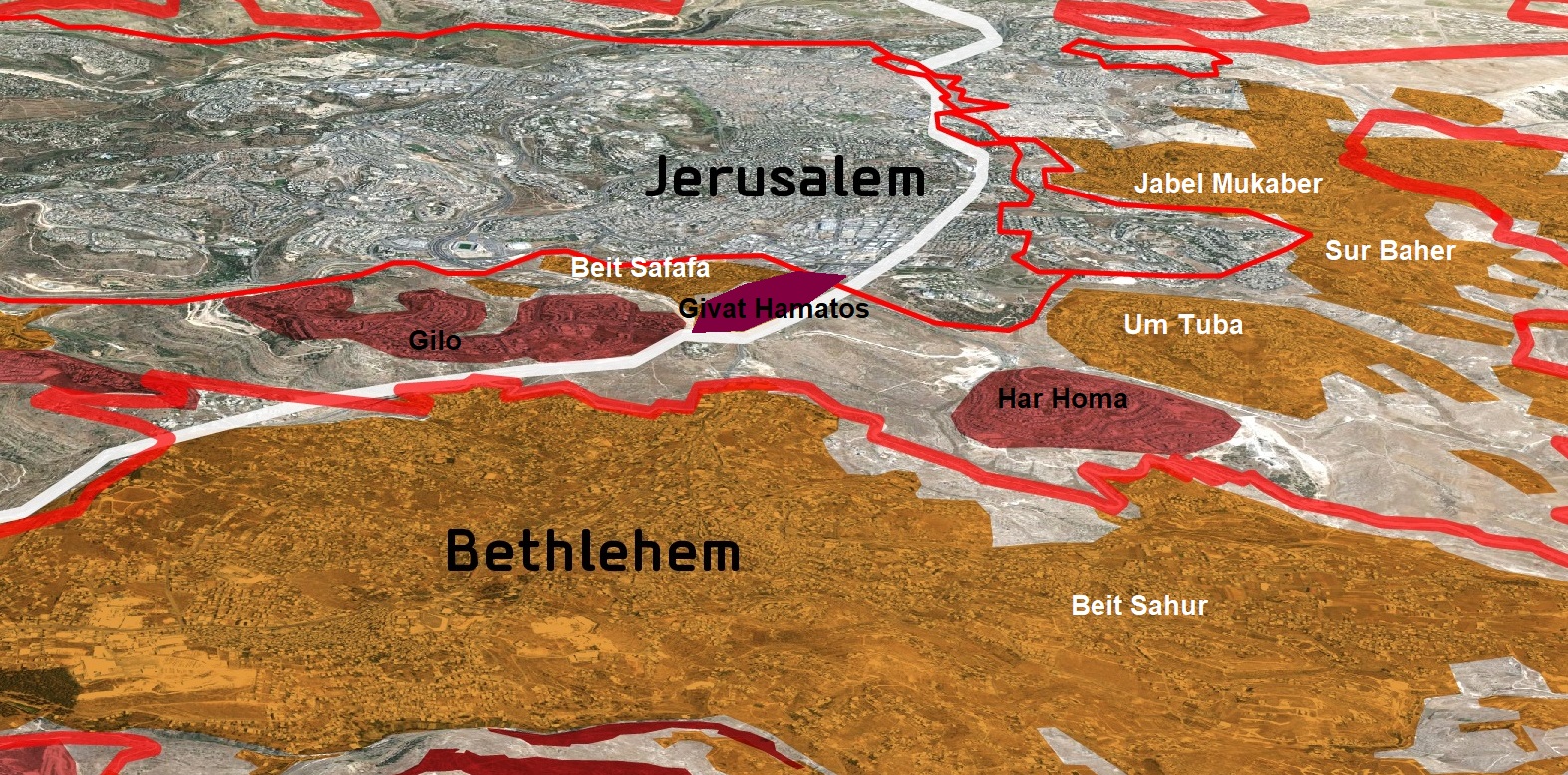
Map by Peace Now
Speaking at a vista overlooking the Har Homa settlement, and alongside Jerusalem Mayor Moshe Leon and Israeli Housing Minister Yariv Levin, Netanyahu also announced the government will be building 1,000 new homes for Palestinian residents of Beit Safafa – an East Jerusalem neighborhood which will be completely encircled by Israeli construction if/when the Givat Hamatos and Har Homa West settlement plans are implemented.
Ir Amim writes:
“If advanced, these new settlements will essentially connect the existing Gilo and Har Homa neighborhoods/settlements and create a contiguous Israeli built-up area along the southern perimeter of East Jerusalem. This will serve to detach Bethlehem and the south of the West Bank from East Jerusalem while isolating the Palestinian neighborhood of Beit Safafa. Constituting a long term strategy of Israeli governments, construction of large settlements is employed as a means to fracture the Palestinian space and unilaterally determine the boundaries of Jerusalem to prevent the future establishment of a Palestinian capital in the city.”
Unlike the Givat Hamatos plans, which were fully approved in 2014 and have since been awaiting the issuance of construction tenders, the plans to expand Har Homa towards Givat Hamatos are in preliminary stages of the planning process. The Jerusalem Planning & Building Committee is scheduled to meet on February 27th and is expected to initiate plans for Har Homa West. Peace Now’s Hagit Ofran points out to The Times of Israel that Netanyahu’s numbers regarding Har Homa were imprecise (the only Givat Hamatos plan slated to be considers outlines 2,610 units, not 3,000; and the project in Beit Safafa is for 805 homes not 1,000).
On the Har Homa plans, when rumors regarding these plans circulated in January 2020, Jerusalem expert Daniel Seidemann – who previously predicted Givat Hamatos will move in relation to Israeli election calendar – weighed in with concerns which remain relevant, saying:
“The construction potential at Har Homa has been exhausted, and it’s not possible to build anything near 2,000 units. So what are they talking about? Something is clearly going on. Three possibilities come to mind, all problematic…Possibility no. 1: the nearby planned doomsday settlement of Givat Hamatos, which is awaiting tenders. Possibility no. 2: Hirbet Mazmoriyya, to the northeast of Har Homa. The lands owned by Palestinians that will have to be expropriated. Not likely. Too complicated and controversial. Possibility no. 3: the area wedged btwn. Mar Elias Monastery, the Hebron Road, the 300 Checkpoint, dubbed Bethlehem Gate or Har Homa West. The land is ownership is a mixture of Palestinian &Church lands, along with settlement developers.”
Peace Now said in response to this week’s news:
“This is the last point that can allow territorial contiguity between Bethlehem and East Jerusalem — the most significant Palestinian metropolitan area — and if the neighborhood is built, it will not be possible to connect the two cities. Such a policy change cannot be passed in a transitional government without a mandate from the public. This move is therefore but another cynical election exercise by Netanyahu to the detriment of the interests of all Israeli citizens.”
Palestinian Authority President Abbas quickly denounced Netanyahu’s announcement and insinuated it is a politcal stunt, saying in a statement:
“Netanyahu’s attempts to win right-wing Israeli votes on the eve of the Israeli elections at the expense of Palestinian rights will not bring peace and stability to anyone, and will lead to more tension and violence in the region.”
Israel Introduces Plan to Build Atarot Settlement in East Jerusalem, An Apparent Contradiction to the Trump Plan
On February 9th, the Israeli Ministry of Housing officially introduced a plan to build a new settlement on the site of the disused Atarot airport, located at the northern tip of East Jerusalem – an area that the Trump Plan seems to suggest would be the site for a Palestinian tourism zone (under the plan, that zone would be located entirely inside the state of Israel, and therefore subject to the complete control of Israeli authorities).
The Atarot settlements plan, which has existed for years, occasionally popping into the news and then disappearing, calls for up to 9,000 residential units aimed for ultra-Orthodox Jews (assuming, conservatively, an average family size of 6, this means housing form 54,000 people), as well as synagogues, ritual baths (mikvehs), commercial properties, offices and work spaces, a hotel, and a water reservoir. If built, the Atarot settlement will effectively be an Israeli enclave, surrounded by Palestinian East Jerusalem neighborhoods on three sides and Ramallah to its north.
Terrestrial Jerusalem’s Daniel Seidemann explains important context of the plan:
”This plan has been around since 2007. Every few years rears its ugly head, only to disappear for another few years. The obstacles to implementation are almost insurmountable but under Trump & Netanyahu, the unthinkable is commonplace. The plan keeps being ressurrected because it is the darling of the ultra-Orthodox. The land reserves in Jerusalem have been pretty much exhausted, and the haredim are leaving for Beit Shemesh and the settlements of Beitar and Modi’in Illit. They are pushing. There is even talk of a surrealistic plan to build a tunnel under the Qalandia Refugee Camp, linking the planned Atarot settlement with the existing West Bank settlement of Kochav Yaacov.”
There are currently 15 Palestinian families living in buildings on the land slated for the settlement, part of which is privately owned by Palestinians; other land in the area has been declared “state land” or belongs to the Jewish National Fund. To solve the problem of Palestinian land owners, the Israeli government will need to evict the Palestinians living there and demolish their homes — a step that will be facilitated by the fact that all of the homes lack Israeli-issued building permits (which are essentially impossible for Palestinians to receive). The private Palestinian landowners will then be subjected to a non-consensual process of reparcelization, in which Israel will unilaterally reparcel and then redistribute the land amongst its owners on the basis of the value of the land (as determined by Israel) and the percentage of their ownership claim.
Though the recently released Trump Plan does not explicitly designate the disused Atarot Airport as the site for a “special tourism zone,” this land is the only remaining undeveloped area in the Atarot. Explaining why the Atarot settlements plan has now resurfaced, despite the fact the has it contradicts the Trump Plan, Daniel Seidemann explains:
“The fact that the planned settlement contradicts the Trump plan’s designation as a Special Tourist Area for Palestinians is no problem at all: both Netanyahu and Trump secretly have silent contempt for the plan, exceeded only by their open contempt for the Palestinians. What is this REALLY all about? Elections. Courting the ultra-Orthodox, there is no rabbit that Netanyahu will not pull out of his sleeve before elections, even if the rabbit turns out to be a dead squirrel.”
The Atarot airport site is an important commodity and, during past negotiations, it was previously promised to the Palestinians for their state’s future international gateway. The Trump Plan borders, and Israels long-held desire to develop the site into a settlement, would deprive a future Palestinian state of the only airport in the West Bank, dismember Palestinian neighborhoods in the northern part of the city, and sever East Jerusalem from a Palestinian state on this northern flank of the city (acting like E-1 on Jerusalem’s northeast flank, and like Givat Hamatos on Jerusalem’s southern flank).
The Atarot settlement plan dates back to 2007; it was pursued by the Israeli government in 2012 but shelved under pressure from the Obama administration. The plan came back into consideration in April 2017 (a few months following the inauguration of President Trump) when it was rumored to be included on Netanyahu’s master blueprint of settlements for which he was seeking U.S. approval. It was expected to be announced in May 2017 on the occasion of the Jerusalem Day celebration, but was not. In December 2019, rumors on the plan once again rumbled, but nothing came of it.
Peace Now said:
“Netanyahu wants to strike another deadly blow to the prospect of a two-state solution. The planned settlement neighborhood drives a wedge in the heart of the Palestinian urban continuity between Ramallah and East Jerusalem, thus preventing the establishment of a viable Palestinian state with capital in East Jerusalem. Netanyahu is dragging Israel into a reality of a bi-national apartheid state and is putting the Zionist enterprise in jeopardy.”
Ir Amim writes:
“It is important to emphasize that construction of this new neighborhood/settlement (also marked in pale green in Greater Jerusalem map below) will create an Israeli residential area between Ramallah and Kufr Aqab and East Jerusalem, driving a wedge between Ramallah and Jerusalem from the north. Such a plan will significantly fragment Palestinian land contiguity necessary for any independent and viable Palestinian state with a capital in East Jerusalem similar to the implications of potential future construction in the E1 area to the east and Givat Hamatos in the south. These measures serve to further seal off East Jerusalem from the West Bank and reinforce Israeli control of these areas, rendering the two-state framework based on two capitals in the heart of Jerusalem nonviable.”
Joint US-Israeli Mapping Committee Unveiled
On February 15th, the White House confirmed that U.S. Ambassador David Friedman will be leading the U.S. delegation appointed to the joint U.S.-Israeli committee formed to precisely map the Trump Plan. From the American side, Friedman will be joined by his longtime advisor Rabbi Aryeh Lightstone (a political appointee) as well as National Security Council advisor Scott Leith (a career military officer). From the Israeli side, Netanyahu has appointed Tourism Minister Yariv Levin, Ronen Peretz (director of the Prime Minister’s Office), and Israeli Ambassador to the U.S. Ron Dermer.
The committee is tasked with lying down exact borders in accordance with the Trump Plan, which would see Israel annexing around 30% of the West Bank, including nearly all of settlements and the entire Jordan Valley. The “conceptual map” published alongside the Trump Plan lacked granular detail, and, conspicuously, large icons covered some of the most delicate and geopolitically important areas when it comes to drawing borders. At the press conference unveiling the plan, Trump stated that once the committee was done with its work the U.S. will immediately recognize Israeli sovereignty based upon the map.
Last week, Netanyahu suggested that the Israeli government has already started the mapping process, and that the committee’s work will not take “too long.”
Israel Advances Plan for New High Speed Rail Station, Requiring Tunnel Under the Old City’s Historic Basin
 On February 17th, Israel’s National Infrastructure Committee approved a highly controversial route for a new segment of Israel’s high speed rail way, which will connect the Ben Gurion International Airport directly to the Western Wall, inside the Old City of Jerusalem. The new rail line will require the construction of a 1.8 mile-long tunnel leading to the walls of the Old City, extending underneath some of the most sensitive and potentially explosive territory on earth: the Old City’s historic basin.
Specifically, the tunnel would run beneath the East Jerusalem neighborhood of Silwan – above which Israel is simultaneously advancing plans to build a new cable car line. Both projects, according to the archeological experts at Emek Shaveh, will negatively impact Palestinian inhabitants of the area, infringing on their rights and quality of life.. In addition to damaging Palestinian property and safety, the tunnel project is opposed by archeologists because it will disrupt archeological layers in what is one of the most historically and archeologically rich areas on earth. The plan also poses a pollution threat to a nearby historic spring.
Emek Shaveh writes:
“the NIC yesterday approved the route, likely due to political pressures on behalf of the Ministry of Transportation and settler organizations who view the train as another means of directly connecting settlements and tourist sites in East Jerusalem with West Jerusalem. The train’s route includes a strip that runs underneath dozens of Palestinian homes in the neighborhood of Wadi Hilweh in Silwan, parallel to the southern wall of the Old City. These are the same residents over whom the cable car is scheduled to be built. Even though both these projects will not be situated on the residential level, it is clear that the ventilation, above-ground infrastructure, and more, will be constructed adjacent to, or even on, Palestinian residents’ territory….Following the approval of the cable car plan to the Western Wall, the National Infrastructure Committee approved the advancement of the train’s route, which will further destroy the Western Wall area. It appears that government ministers are competing to see who will advance the most destructive transportation plan for Jerusalem’s Old City, which will ultimately serve the interests of a handful of settlers, to the detriment of hundreds of residents. The Israel Antiquities Authority, in its professional capacity, ought to prevent harmful development that will result in destruction of Jerusalem’s antiquities.”
The Kingdom of Jordan, which holds a special role as caretaker of Muslim sites in the Old City, quickly and strongly spoke out against the plan. A spokesman for the Foreign Ministry called the plan a “flagrant violation of international law” and urged the international community to “assume its responsibilities to resist the illegitimate and illegal Israeli steps”.
The Israeli plan to extend the Tel Aviv-Jerusalem high-speed line to the Western Wall has been in the works since 2017. Introduced by Transportation Minister Israel Katz, the plan intends to name the station underneath the Old City after U.S. President Donald Trump.
Amazon Offers Free Shipping to Israeli Settlements, Not Palestinians
A report by Financial Times revealed the curious fact that Amazon, the online shopping and shipping giant, offers free shipping on orders over $49 to customers in the West Bank – so long as customers indicate that their addresses are in Israel. What this means in practice is that Amazon free shipping is available for settlers only.
In a statement to Middle East Eye, an Amazon spokesman cited logistical challenges in delivering to Palestinian areas due to Israeli-imposed inspections, saying:
“In November, we launched a free shipping promotion for customers within Israel. This does not include the Palestinian Territories, as we cannot guarantee the high standard of delivery experience that Amazon customers expect.”
Peace Now told Financial Times that Amazon’s policy “adds to the overall picture of one group of people enjoying the privileges of citizenship while another people living in the same territory do not”.
Diana Buttu told Financial Times that Amazon’s policy is “allowing the settlement activity to be viewed as legal when [it’s] not. The issue is just how normalized the settlements have become, not just in Israeli eyes, but in international eyes. And that’s the problem, it’s that unless you begin to treat them as illegal, then it becomes so natural for them to become normalised.”
Michael Sfard told Financil Times that Amazon’s policy is “blatant discrimination between potential customers on the basis of their nationality.”
Six EU Countries Argue that ICC Jurisdiction Does Not Have Jurisdiction Over Israeli Settlements, Others Push EU Recognition of Palestine
Australia, Austria, Brazil, Czech Republic, Germany and Hungary have appealed to the International Criminal Court to join their investigation into Israeli practices, in order to present their argument that the Court does not have jurisdiction over Israeli settlement activities in the West Bank (perhaps related to their own hesitancy to grant the ICC universal jurisdiction over their own affairs). While Israel – which also denies the Court’s jurisdiction over its actions – is not likely to participate in the Court’s proceedings, these European countries echo Israel’s main arguments against the case. In addition to state filings, several non-governmental organizations also filed to join the case as amicus curiae (“friend of the court”) on the side of Israel.
Haaretz reports that perhaps the most consequential filing on the case came from the court’s own Office of Public Counsel for the Defense (akin to a public defender’s office for the ICC). Haaretz reports that:
“[the Office of Public Counsel for the Defense] believes that the jurisdiction issue should be deferred until a specific case is brought before the court. Rather, that question should be discussed in concert with the charges. Why? In order to protect the rights of future defendants to raise the issues during their trials. That, because the ICC prosecutes individuals, not states. Experts in international law say that could also turn out to be the surprising position of the judges, who would pass the hot potato to the prosecutor. In that event, no friend would be able to block an investigation. That, because the ICC prosecutes individuals, not states. Experts in international law say that could also turn out to be the surprising position of the judges, who would pass the hot potato to the prosecutor. In that event, no friend would be able to block an investigation.”
At the same time, a different set of European countries, led by Luxembourg, are reportedly considering offering a motion at the upcoming meeting of European Union foreign ministers to extend EU recognition to the state of Palestine. Haaretz reports that Luxembourg Foreign Minister Jean Asselborn is in discussions with the foreign ministers of Ireland, France, Belgium, Spain, Portugal, Finland, Sweden, Malta and Slovenia.
Bonus Reads
- “Congressmen to Samaria Council Head: We’ll fight UN blacklist.” (Arutz Sheva)
- “More hospitals and cheaper houses: Netanyahu, Barkat unveil new financial plan” (Ynet)
- “Settlement winery unveils ‘Pompeo’ wine in show of appreciation” (The Times of Israel)