Welcome to FMEP’s Weekly Settlement Report, covering everything you need to know about Israeli settlement activity this week.
To subscribe to this report, please click here.
April 7, 2023
- In Rare Ruling, Israeli High Court Rejects JNF/Settler Effort to Evict Palestinian Family from their Home in Silwan
- Israel Advances Plans for 6,500 New Settlement Units in East Jerusalem
- Israel Doubles Funding of Settler Surveillance of Palestinians
- Bonus Reads
In Rare Ruling, Israeli High Court Rejects JNF/Settler Effort to Evict Palestinian Family from their Home in Silwan
 On April 3rd, a three-judge panel of the Israeli Supreme Court ruled against the Jewish National Fund, which has pursued a 32-year legal battle to evict the Palestinian Sumreen family from their longtime home in the Silwan neighborhood of East Jerusalem. In its ruling the Court criticized the government for declaring the Sumreen home to be absentee property “without any basis in law.” The Court further ruled that the JNF’s subsidiary Himnuta (which was created to take the lead for JNF in litigating aggressive settlement takeover cases like this) must compensate the family with 20,000 shekels ($5,560).
The case to evict the Sumreen family has been viewed as a key test of the State’s use of the Absentee Property Law to seize Palestinian homes in East Jerusalem, with the fate of the Sumreen case likely to set a precedent that could impact the many other ongoing eviction cases brought by settlers against Palestinians in Silwan.
Reacting to the ruling, the Sumreen family lawyer told Haaretz:
“This decision is precedential and just. The Supreme Court brought justice after two proceedings in which [the court] ordered the eviction of several families from their homes. The decision includes criticism of how the authorities behaved on this matter and the declaration of absentee property despite the fact that the owner is a living resident of Jerusalem.”
The Free Jerusalem activist movement said in a statement:
“There are few moments in which we feel like a bit of justice has been done in the reality of the occupation. This is one of those movements. Amal Sumreen and her children have lived in their home in Silwan for decades. For the first time in those decades, Amal will be able to sleep soundly tonight” and vowed to continue working “until this racist law, which allows the seizure of homes, is struck down, until the occupation ends, until there is full equality for all.”
The Sumreen family home is located in the middle of what today has been designated by Israel “the City of David National Park” (the home existed long before that designation). The Israeli government has handed over management of the area to the radical Elad settler organization, which for years has also been pursuing the eviction of Palestinians from the homes in Silwan. For nearly three decades, the Sumreen family has been forced to battle for legal ownership of their home, after the state of Israel, prompted repeatedly by the JNF, declared the home to be “absentee” property”. As a reminder, that law (as summarized by the Israeli legal NGO Adalah),
“Defines persons who were expelled, fled, or who left the country after 29 November 1947, mainly due to the war, as well as their movable and immovable property (mainly land, houses and bank accounts etc.), as ‘absentee’. Property belonging to absentees was placed under the control of the State of Israel with the Custodian for Absentees’ Property. The Absentees’ Property Law was the main legal instrument used by Israel to take possession of the land belonging to the internal and external Palestinian refugees, and Muslim Waqf properties across the state.”
Based on that designation – which was not communicated to the Sumreen family, which of course was not “absentee” but was living in the home – Israeli law permitted the state to take over the rights to the building. The state then sold the rights to the home to the JNF in 1991. The JNF has pursued the eviction of the Sumreen family ever since, with the secret funding/backing of the Elad settler group.
Israeli courts ruled in favor of the Sumreen family’s ownership claims to the home for years. This changed, arguably as a direct result of a deliberate policy (led by then-Justice Minister Ayelet Shaked) to pack the courts with right-wing judges) in September 2019, when the Jerusalem Magistrate’s Court tossed out the previous rulings to grant ownership of the family’s home to the JNF — a decision the family immediately appealed to the Jerusalem District Court. Notably: in 2020, the JNF came under considerable international scrutiny for its handling of the Sumreen case, and was pressured to call off its eviction campaign (it did not).
In 2022, the Israeli Attorney General issued a legal opinion supporting the JNF’s legal claim to the home and the eviction of the Sumreens. In his opinion, the Attorney General did not address the broader political context of widespread dispossession of Palestinians in Silwan, or the legally dubious actions on the part of the Elad settler group and the Jewish National Fund in having the property declared to be absentee in order to take control over it. Instead, the Attorney General decided simply that there is no new basis on which to overturn the JNF’s ownership of the home, and therefore the Sumreen family does not have a legal right to reside there.
A full history of the saga involving the Sumreen family – which is similar to dozens of other Palestinian homes in Silwan that were declared Absentee Property in the 1990s – can be found on the Peace Now website here. For more on the collusion of the JNF and the Elad settler group, see reporting by +972 Magazine.
Israel Advances Plans for 6,500 New Settlement Units in East Jerusalem
Ir Amim reports that over the past week various Israeli agencies have advanced plans for a total of 6,500 new settlement units slated for incredibly sensitive areas of East Jerusalem.
On March 29th, the Jerusalem Local Planning Committee took the following actions:
- Wadi Joz Business Center (Silicon Wadi) – the Committee discussed and rejected all objections submitted against this plan, recommending the plan for final approval. The “Silicon Wadi” plan seeks to establish a major high-tech hub along the western side of East Jerusalem’s Wadi Joz neighborhood. While touted as a plan that will benefit Palestinians, its implementation will require the eviction of many Palestinian businesses in the area. You can read Ir Amim’s in-depth reporting on the Silicon Wadi project here.
- Lower Aqueduct Plan – the Committee discussed and rejected all objections submitted against this plan, recommending the plan for final approval. This plan would see a new settlement of 1,465 units built on a sliver of land located between the controversial settlements of Givat Hamatos and Har Homa – and is intended to connect the two. In so doing, it will establish a huge, uninterrupted continuum of Israeli settlements on the southern rim of Jerusalem, and will destroy Palestinian contiguity between the West Bank and East Jerusalem. For more background on the Lower Aqueduct plan, see resources by: Terrestrial Jerusalem and Ir Amim.
- Ramot North A and B – The Committee recommended these two plans, outlining a total of 1,918 units, for deposit for public review. Both plans will expand the existing settlement of Ramot northeastward towards the Palestinian town of Bir Nabala. See more details from Ir Amim here.
On April 3rd, the Jerusalem District Planning Committee was slated to advance the following plans (final confirmation of the committee’s actions has not been reported as of publication on April 6th)
- French Hill/Mount Scopus – The committee was slated to possibly review amendments to two plans for a total of 1,539 new settlement units to be built in the area of French Hill and the premises of Hebrew University’s Mount Scopus campus, most of which would be located beyond the Green Line. One of the plans – called the “Bronfman Dormitory Complex” – will encircle a Palestinian residential area on the Mount of Olives.
- Givat HaShaked – This plan outlines 700 housing units (in 4 high-rise towers and several six-story buildings), a school, and commercial buildings, all to be built on a highly sensitive and geopolitically critical sliver of land located within the Palestinian neighborhood of Beit Safafa. It was approved for public deposit in September 2022. Ir Amim reports, “although approved for deposit, the plan has not yet been formally deposited for public review. An internal session was scheduled […] to amend the decision on the plan. Although the details regarding this amendment are unknown at present, the assumption is that the modification is a technical issue.” For more information on this new settlement, see previous FMEP reporting.
- Pisgat Ze’ev – The committee was slated to possibly review amendments to a plan for 730 new settlement units that would expand the Pisgat Ze’ev settlement eastwards towards the Separation Barrier and the area of the Palestinian town of Hizma, depleting the few remaining open land reserves in the area.
- Ramot – A plan for 240 new units in the settlement of Ramot was slated to be reviewed by the committee for the first time.
Israel Doubles Funding of Settler Surveillance of Palestinians
Haaretz reports that the Israeli government budget request includes $11.1 million for a program that organizes and equips settlers to surveil Palestinian construction in the West Bank, doubling the government budget from 2022. Haaretz explains:
“Recent years have seen the formation of ‘land departments’ in West Bank settlements, which track Palestinian construction and cultivation and report such activity to the Civil Administration and the Israeli military. These departments have no enforcement authority, but its inspectors serve as an additional source of pressure on the Civil Administration in Area C…Settlement authorities could use these budgets to hire members of their inspection units, to purchase aerial photos, drones, tablets and vehicles. For larger settlements, the funds could be enough to hire four full-time inspectors and another four part-time ones. In addition, the funds could be used to pay youths doing their national service, and to hold public diplomacy conferences on the matter.”
It’s worth recalling that Bezalel Smotrich – who today is effectively the sovereign power ruling over the West Bank – has previously suggested empowering settlemers, on their own judgment and authority, to demolish Palestinian construction they believe lacks Israeli-required authorizations. As FMEP has repeatedly explained, Israel has long denied Palestinians the ability to build (on land that Israel recognizes they legally own) in Area C, resulting in many Palestinian structures — including homes, schools, and agricultural structures — being built without the required Israeli-issued permits. To fully understand what is happening, see B’Tselem’s excellent explainer.
The program for which the new Israeli government is doubling funding is only one of the ways in which settlers act as a surveillance mechanism of the Israeli state. In November 2020 the Israeli Civil Administration created a hotline for settlers wishing to report their suspicions of “illegal” Palestinian construction in the West Bank (on the Kochav Ya’akov settlement website, the new phone service is called a “snitch line”). In November 2021, Breaking the Silence and the Washington Post revealed that settlers have been helping the IDF build a facial photo database of West Bank Palestinians. The database serves to buttress the facial recognition capabilities of the Israeli army, as part of its pervasive surveillance arsenal, including a growing network of cameras and smartphones.
Bonus Reads
- “Mount of Olives becomes latest target in fight for control of Jerusalem” (The Guardian)
- “Why the Netanyahu Government’s Disengagement Repeal is so Problematic for the Biden Administration” (Dr. Deborah Shushan, J Street)
- “Israeli Settlements in the Ramallah & Al-Bireh Governorate” (PLO NAD)
- “Israeli Settlers Descend on West Bank Village of Hawara, Injuring Six Palestinians” (Haaretz)
- “As Israel’s Crises Pile Up, a Far-Right Minister Is a Common Thread” (New York Times)
- “To Understand the Settler Mindset, Read This Eulogy” (Avi Garfinkel, Haaretz)
Welcome to FMEP’s Weekly Settlement Report, covering everything you need to know about Israeli settlement activity this week.
To subscribe to this report, please click here.
October 22, 2021
- Israel to Advance Plans for Nearly 3,000 Settlement Units & 1,300 Palestinian Homes in Area C
- Israeli Supreme Court to Hold Hearing on Batan al-Hawa, Silwan Dispossession Cases Next Week; AG Declines Intervention
- Israel Begins Construction on New Settlement in Downtown Hebron
- Israel Advances “Silicon Wadi” Project in East Jerusalem
- Recap: Israel Advances Settlement Plans Across Greater Jerusalem Area
- Recap: Court Pushes for Palestinians to “Compromise” with Settlers in Sheikh Jarrah
- New Report: State-Backed Settler “Tourism” Projects in East Jerusalem
- Bonus Reads
Israel to Advance Plans for Nearly 3,000 Settlement Units & 1,300 Palestinian Homes in Area C
The Israeli Civil Administration’s High Planning Council will convene next week — for the first time since Bennett and Biden took over leadership in Israel and the U.S., respectively — to advance the construction of 2,862 new settlement units (of which 1,231 will be eligible to receive final approval). These plans include the retroactive legalization of two unauthorized outposts (Mitzpe Danny and Haroeh Haivri), which should be properly understood as the creation of two new settlements.
Peace Now data
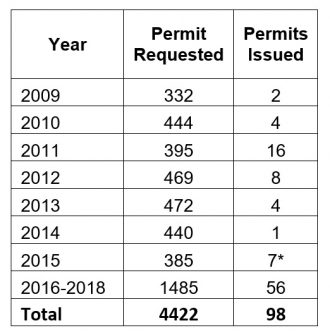
In addition, reports suggest that Israel will also advance plans for 1,303 Palestinian homes in Area C – about half of which, importantly, are already built. A majority of these units have been awaiting Israeli approval for many, many years. If approved, the permits under consideration next week for Palestinians will be the first of any significant quantity issued by Israel since, at least, 2009 (data from before this period has not been released by the Israeli government). Between 2009 and 2018, Israel issued a total of 98 building permits to Palestinians according to data released by the Israeli government in response to a freedom of information request submitted by Bimkom.
As a reminder, Area C is the 60% of the West Bank over which Israel enjoys absolute authority. For years Israel has systematically denied Palestinians the right to build on land in Area C that even Israel recognizes is privately owned by them, At the same time, it has continuously promoted the expansion of settlements and unauthorized outposts, while systematically demolishing Palestinian private construction. In terms of numbers: between 2016 to 2018, Israel issued only 21 building permits to Palestinians in Area C, while issuing 2,147 demolition orders against Palestinians during.
Commenting on the Planning Council agenda’s Peace Now observed:
“The approval of a handful of plans for the Palestinians is only a fig leaf intended to try to reduce criticism of the government. For years, Israel has pursued a policy of blatant discrimination that does not allow almost any construction for Palestinians in Area C, while in the settlements it encourages and promotes the construction of thousands of housing units each year for Israelis. The approval of a few hundred housing units for Palestinians can not cover up discrimination and does not change the fact that Israel maintains an illegal regime of occupation and discrimination in the territories.”
It is worth noting that many of the settlement units and Palestinian permits on next week’s agenda were expected to have been advanced earlier this year, in August 2021, but the High Planning Council never convened to do so.
Below are lists of settlement plans expected to be given final approval and plans expected to be advanced next week (italicized plans represent those which appear to have been added to the slate of plans that were expected to be advanced in August 2021).
Settlement plans expected to be granted final approval include:
- 629 units, including the retroactive legalization of 61 units, in the Eli settlement – located south of Nablus and southeast of the Ariel settlement in the central West Bank. Though the Eli settlement previously received Israeli government approval, a “Master Plan” – which officially zones land for distinct purposes (residential, commercial, public) – has never been issued for Eli, meaning all construction there is illegal under Israeli law;
- 286 units in the Har Bracha settlement, located south of Nablus. If implemented, these new units will double the size of Har Bracha;
- 224 units in the Talmon settlement, located west of Ramallah;
- 146 units in the Kfar Etzion settlement, located between Bethlehem and Hebron and on the Israeli side of the planned route of the barrier (which is not yet built in this area);
- 110 units in the Alon Shvut settlement, located just north of the Kfar Etzion settlement and between Bethlehem and Hebron;
- 82 units in the Karnei Shomron settlement, located in the northern West Bank, east of the Palestinian village of Qalqilya. Israel has openly declared its intention to continue expanding settlements in this area with the stated goal of bringing 1 million settlers to live in the area.;
- 52 units in the Beit El settlement, located in the heart of the northern West Bank [as a reminder, former US Ambassador to Israel David Friedman has deep ties to the Beit El settlement]; Construction on 350 new units in Beit El began earlier this year;
- 42 units in the Givat Zeev settlement, located south of Ramallah in an area that is on the Israeli side of the barrier;
- 24 units in the Haroeh Haivri outpost, a plan that will effectively grant retroactive legalization to this outpost. The Haroeh Haivri outpost is located just east of Jerusalem, within eyesight of the Khan al-Ahmar community, which Israel is threatening to demolish (forcibly relocating the Palestinian bedouin community that has lived there since the 1950s) — ostensibly because the structures in Khan al Ahmar were built without necessary Israeli approvals. The Haroah Haivri outpost was also built without the necessary Israeli approvals, but instead of demolishing the construction, Israel is moving to retroactively legalize it — demonstrating once again that, when it comes to administering the occupation, Israel prefers “rule by law” – where law is turned into a tool to elevate the rights/interests of one party over another, over the democratic rule of law.;
- 14 units in the Ma’aleh Mikhmash settlement, a plan that will effectively grant retroactive legalization to one of Ma’aleh Mikhmash’s outposts – – Mitzpe Danny;
- 10 units in the Barkan settlement, located about half way between the Ariel settlement and the cluster of settlements slated to be united into a “super settlement” area (Oranit, Elkana, Shiva Tikva, and others);
- 5 units in the Shima’a settlement, located in the southern tip of the West Bank;
- 7 units in the Peduel settlement, located in the northern West Bank and part of a string of settlements and unauthorized outposts – most notably Ariel – extending from the Green Line into the very heart of the West Bank and on towards the Jordan Valley.
Settlement plans expected to be approved for deposit (an earlier stage in the planning process) include:
- 399 units in the Revava settlement, located just east of the Barkan settlement and west of the Ariel settlement, in a string of settlements and unauthorized outposts – most notably Ariel – extending from the Green Line into the very heart of the West Bank and on towards the Jordan Valley.
- 380 units in the Kedumim settlement, located just east of Nablus. Israeli MK Bezalel Smotrich lives in the Kedumim settlement on a section of land in the settlement that has been found to be privately owned by Palestinians.;
- 100 units in the Elon Moreh settlement, located east of Nablus (for background on the significance of the Elon Moreh settlement, please see here);
- 100 units in the Sansana settlement, located on the southern tip of the West Bank on the Israeli side of the separation barrier;
- 73 units in the Givat Zeev settlement, which is also expected to receive final approval for 42 units. Givat Zeev is located south of Ramallah in an area that is on the Israeli side of the barrier;
- 68 units in the Tene settlement, located on the southern tip of the West Bank;
- 45 units in the Vered Yericho settlement, located just west of the Palestinian city of Jericho in the Jordan Valley;
- 27 units in the Karnei Shomron settlement, which is also expected to receive final approval for 82 units. Karnei Shomron is located in the northern West Bank, east of the Palestinian village of Qalqilya. Israel has openly declared its intention to continue expanding settlements in this area with the stated goal of bringing 1 million settlers to live in the area.;
- 18 units in the Alon Shvut settlement, which is also expected to receive final approval for 110 units. Alon Shvut is located just north of the Kfar Etzion settlement and between Bethlehem and Hebron;
- 10 units in the Tal Menashe settlement, located located on the tip of the northern West Bank, inside the “seam zone” between the 1967 Green Line and the Israel separation barrier, which was constructed along a route designed to keep as many settlements and as much adjacent land as possible on the Israeli side of the wall/fence.
- 7 units in the Hermesh settlement, located in the northern West Bank;
- 4 units in the Efrat settlement, located south of Bethlehem, inside a settlement block that cuts deep into the West Bank. Efrat’s location and the route of the barrier wall around it, have literally severed the route of Highway 60 south of Bethlehem, cutting off Bethlehem and Jerusalem from the southern West Bank. The economic, political, and social impacts of the closure of Highway 60 at the Efrat settlement (there is literally a wall built across the highway) have been severe for the Palestinian population.
Peace Now reports that the Planning Council will also consider advancing the following plans for Palestinian homes:
- 270 houses in the Bir al-Bash village, located south of Jenin in the northern West Bank;
- 270 houses in the Al-Ma’asara village, located south of Bethlehem;
- 233 houses in the the Almasqufa village, located near Tulkarem in the northern West Bank;
- 200 houses in the Dkeika village in the South Hebron Hills;
- 170 houses in the Khirbet Abdallah Younas village, located in the Jenin area;
- 160 houses in the Abba a-Sharqiya village, also located south of Jenin in the northern West Bank;
Israeli Supreme Court to Hold Hearing on Batan al-Hawa, Silwan Dispossession Cases Next Week; AG Declines Intervention
On October 25th, the Israeli Supreme Court is scheduled to hold an important hearing on the case of the Palestinian Duweik family which is under threat of being dispossessed of their longtime home in the Batan al-Hawa section of the Silwan neighborhood in East Jerusalem by the Ateret Cohanim settler organization.
In advance of that hearing – and after repeated extensions on a Court-ordered deadline – the Israeli Attorney General finally submitted his position on the case to the Court. The document submitted by the Attorney General was only 1 page, and simply stated that the case does not merit intervention either on the specific case of the Duweik family or regarding the wider legal principle at stake, which threatens an additional 85 families living under threat of eviction in Batan al-Hawa.
Ir Amim writes:
“Among the 85 families facing eviction, the Duweik family case is the first to reach the Supreme Court level, and its outcome will inevitably set a precedent, significantly impacting the rest of the cases in the neighborhood…As in the eviction cases in Sheikh Jarrah, the Attorney General and by extension, the government, was given a rare opportunity to take a moral stand by providing a legal opinion and policy position to help prevent the mass displacement of these families. Yet, at this point, the Attorney General’s response appears to imply that he has declined to intervene. Now, the decision concerning the fate of these families seems to lie solely in the hands of the Supreme Court. The rights of Palestinians to housing and shelter and the right to family and community life are fundamental and must be upheld. The same discriminatory legal system, which led to the confiscation of these families’ original homes in 1948, is now being exploited 73 years later to displace them for a second time from their current homes in which they have lived for decades. The Supreme Court has the power to make a principled and just decision to uphold the rights of these families to remain safely in their homes, free from the constant threat of being forcibly uprooted and driven from their homes and communities.”
Peace Now said in response to the AG’s decision to not intervene:
“The Attorney General’s response actually says that for the Israeli government, there is no problem to kick hundreds of residents out from their homes, on the basis of a discriminatory law, in favor of a settlement. The government was given an opportunity here to try to prevent moral injustice and political folly, but instead of taking a stand, it chose to remain on the sidelines, as if Silwan’s story, like that of Sheikh Jarrah, was a legal matter and not a political one.”
In July 2021, Peace Now assembled a coalition of Israeli lawyers to submit an amicus brief to the Court regarding the Duweik case. Peace Now summarizes:
“The brief addresses an approach that has emerged in international jurisprudence on human rights law which puts an emphasis on group vulnerability of occupants facing eviction and institutional, systemic discrimination against them. Where these are present, in certain circumstances, the occupants’ rights, stemming from the human right to housing and specifically, to live in their home and their family’s home – trump the right of the original owner or their substitute to regain possession of the property.
The brief reaches the conclusion that in the Duweik case, the occupants’ property rights and their right to housing supersede the right of the settlers acting on behalf of the pre-1948 original owners to receive possession of the property, based on the following:
1 – The fact that Palestinian residents of East Jerusalem are underprivileged, vulnerable and subjected to discrimination in every aspect of life, and particularly the fact that Israeli law on the restitution of property that changed hands due to wars, openly and deliberately discriminates against them;
2 – The fact that the family entered the property in good faith and/or in accordance with the law applicable at the time, and has developed a legitimate expectation to continue residing in it permanently and without interruption;
3 – The imbalance between the devastating harm the family would suffer and the minor damage the Benvenisti charitable endowment (represented by the settlers), which claims ownership of the property, would sustain, which clearly tips the scales in favor of the family.
In other words, according to the brief, even if the court finds the settlers do, in fact, have ownership, they are not necessarily entitled to remedy in the form of the families’ eviction from their homes, but rather to compensation from the state.”
Israel Begins Construction on New Settlement in Downtown Hebron
Peace Now reports that construction has begun on 31 new settlement units at the site of an old bus station previously repurposed as an IDF base, located in the heart of the Old City of Hebron on the infamous Shuhada street. This is a new settler enclave in the city and is, in effect, a new urban settlement, disconnected from already existing settlements in the city. It will be the first new settlement construction approved in downtown Hebron – where Palestinians already live under apartheid conditions – since 2002.
Peace Now said in a statement:
“The government is acting like an annexation government, not as a change government. Since the 1980s, no government has dared to build a new settlement in the heart of the largest Palestinian city in the West Bank, with the exception of one building built under the auspices of the second intifada in 2001. The Defense Minister has to stop construction, even if the plan was approved by the previous government. The settlement in Hebron is the ugly face of Israeli control of the territories. The moral and political price of having a settlement in Hebron is unbearable.”
As a reminder: in October 2017, the Israeli Civil Administration approved a building permit for the 31 units, on the condition that the Palestinian municipality of Hebron and others would have the opportunity to file objections to the plan. Soon after, two appeals were filed with the Defense Ministry: one by the Palestinian municipality of Hebron and one by the Israeli settlement watchdog Peace Now. The legal objections were based on the legally questionable process by which Israel made land in downtown Hebron available for settlement construction. Located in the Israeli-controlled H-2 area of Hebron (where 500 Israeli settlers live amongst 40,000 Palestinians), Israel seized the land in the 1980s from the Hebron Municipality, for military purposes. In 2007, the Civil Administration’s Legal Advisor issued an opinion stating that once Israel is done using the land for military purposes, it must be returned to the Hebron Municipality, which has protected tenancy rights to the land. Nonetheless, in 2015, the Israeli Civil Administration, with the consent of the Minister of Defense, quietly authorized the Housing Ministry to plan the area for Israeli settlement use, paving the way for that same ministry to subsequently present the plan for the 31 units.
In October 2018, with the legal challenges still pending, the Israeli Cabinet voted to expedite the planning of the new settlement and allocated approximately $6.1 million (NIS 22 million) for the project, which will require Israel to significantly renovate the bus station/military base in order to build the 31 new settlement housing units, as well as a kindergarten, and “public areas” for the new settler residents. Peace Now explains:
“The approval of the building permit in the heart of Hebron is an extraordinary move not only because it is a new settlement in Hebron for the first time since 2001, but because it indicates a significant change in Israeli legal interpretation of what is allowed and forbidden in occupied territory. The area in question was owned by Jews before 1948, and it was leased by the Jordanian government in protected tenancy to the Hebron municipality for the purpose of establishing the central bus station. Since 1967, the Israeli authorities managed the land and continued the lease to the Hebron municipality, until in the 1980s when the area was seized for military purposes, the bus station was closed and a military base was established there. A legal opinion of the Judea and Samaria Attorney General on the issue in 2007 emphatically stated that by law the municipality’s protected lease must not be revoked.”
Israel Advances “Silicon Wadi” Project in East Jerusalem
On October 13th, the Jerusalem Local Planning Committee met to initiate the planning process for the “Silicon Wadi” project, which was initiated by the Jerusalem Municipality and outlines plans to build a large industrial zone for hi-tech, commercial, and hospitality businesses in the heart of East Jerusalem’s Wadi Joz neighborhood. The project requires the demolition of some 200 Palestinian-owned businesses that currently operate in the area; dozens of demolition notices for which were issued in November 2020.
Ir Amim writes:
“Beyond the devastating impact of widespread demolitions of existing businesses and structures, the plan also raises concerns that the Israeli authorities will exploit the planning procedures to locate alleged Palestinian absentee properties and transfer lands into the hands of the State. It should also be noted that while Israel focuses on bolstering employment and economic activity in East Jerusalem, it simultaneously continues to suppress residential development in Palestinian neighborhoods. As with nearly all outline plans advanced in East Jerusalem in recent years, the Wadi Joz business park plan only allocates a marginal amount for residential use, which hardly meets the acute housing needs of the Palestinian population. Rather than undertaking measures to rectify the housing crisis, these plans only exacerbate the current situation and perpetuate the residential planning stranglehold, which ultimately serves to push Palestinians out of the city.”
Recap: Israel Advances Settlement Plans Across Greater Jerusalem Area
Over the past two weeks, the government of Israel has advanced four highly controversial and politically consequential settlement plans in the Greater Jerusalem area:
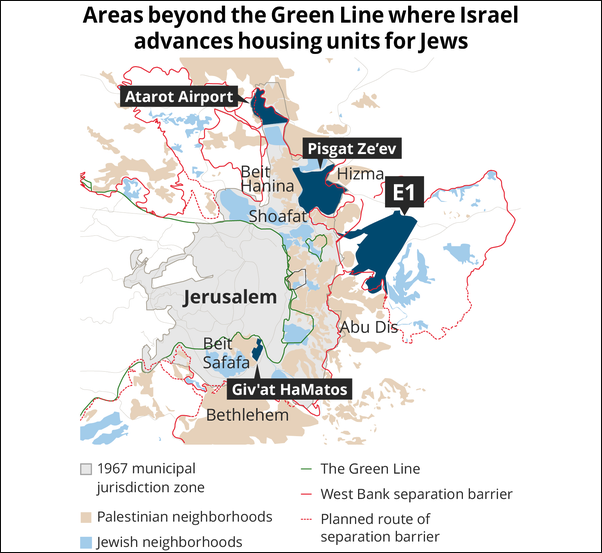
- The Givat Hamatos Settlement: On October 13th, the Jerusalem Local Planning Committee approved the expropriation of lands designated for public use in the Givat Hamatos area for the construction of roads, public buildings and the development of open space for the planned new settlement/neighborhood. For more on the Givat Hamatos settlement plan, please see here.
Map by Haaretz
- The E-1 Settlement: The Israel Civil Administration moved forward with advancing plans for the construction of the E-1 settlement, setting a date for a third hearing to discuss public objections to the plan (now set for November 8th). The first hearing was held on October 4th, but Palestinians were denied the ability to participate in that hearing (which was held virtually, making it inaccessible to the many Palestinians affected by the plan who do not have internet access). As a result, the Court scheduled this 3rd hearing (to allow the participation of Palestinians). The second hearing was held on October 18th; at that hearing three objections were presented (one by the Palestinian village of Anata, a second by the Palestinian village of Al-Azariya, and a third joint submission filed by Ir Amim and Peace Now). Ir Amim reports that there was no substantive discussion of these objections, with the Civil Administration panel offering no questions or comments on them. For more on the E-1 settlement plan, please see Terrestrial Jeruaslem’s excellent and thorough reporting.
- The Atarot Settlement: The Jerusalem District Planning Committee formally signaled that it will proceed with a hearing on the Atarot settlement plan – scheduled for December 6th – to build a huge new settlement on the site of the former Qalandiya airport (located at the northern tip of East Jerusalem). In its current form, the plan provides for up to 9,000 residential units for ultra-Orthodox Jews (assuming, conservatively, an average family size of 6, this means housing for 54,000 people), as well as synagogues, ritual baths (mikvehs), commercial properties, offices and work spaces, a hotel, and a water reservoir. If built, the Atarot settlement will effectively be a small Israeli city surrounded by Palestinian East Jerusalem neighborhoods on three sides and Ramallah to its north. Geopolitically, it will have a similar impact to E-1 in terms of dismembering the West Bank and cutting it off from Jerusalem. For more on the Atarot settlement plan, please see here.
- The Pisgat Ze’ev Settlement: The Israeli government advanced plans for 470 new settlement units in Pisgat Ze’ev, the largest settlement located in East Jerusalem.

Recap: Court Pushes for Palestinians to “Compromise” with Settlers in Sheikh Jarrah
The Israeli Supreme Court has set November 2nd as the deadline for Palestinian families living at risk of forced displacement in Shiekh Jarrah to decide wether or not to accept a Court-authored deal which would help them – at least temporarily – avoid eviction from their homes, in part by requiring them to recognize settler ownership over the properties.
Under the terms of the Court’s deal, which it is pressuring both parties to accept, the following would take place:
- The settler group Nahalat Shimon will be recognized as the owners of the site.
- The Palestinians will be recognized as protected tenants and be required to pay an nominal annual rental fee to the attorney of the settlers (in effect recognizing the settlers as the owners) but
- The Palestinians will be able to continue pursuing legal challenges to the underlying ownership of the land
- The Palestinians are permitted to renovate the properties without interference
- Settlers will be able to instigate eviction proceedings against Palestinians if they are in violation of the Court’s compromise agreement or in violation of Israel’s tenancy laws.
Terrestrial Jerusalem writes:
“The most problematic element of the settlement relates to the settlers’ ability to institute evictions even if the residents are not in violation of the agreement or of the tenancy laws. The settlers will be entitled to institute such proceedings in the event that the ownership rights are conclusively awarded to them, or after 15 years, the earlier of the two. This can be done if the settlers either wish to personally use the property or to demolish and rebuild. Under these circumstances, the settlers will need to offer the residents alternative equivalent quarters. Palestinian residents might hope settlers reject the deal to avoid having to make an ‘excruciatingly painful decision.’”
According to Terrestrial Jerusalem, the Court has signaled that further negotiations are acceptable, but that if either party rejects the agreement a decision on the eviction cases will be handed down swiftly.
New Report: State-Backed Settler “Tourism” Projects in East Jerusalem
In a new report entitled, “The Valley of Hinnom: Trees and Flowerbeds in the Political Struggle over East Jerusalem,” the Israeli NGO Emek Shaveh surveys the multitude of recent “tourism” projects jointly undertaken by the Elad settler organization and the Israeli government in the Ben Hinnom Valley — a strategic area between East and West Jerusalem (stretching past the 1967 Green Line), and located within the area designated by Israel as the Jerusalem “Walls National Park”.
Emek Shaveh writes:
“The nature of the tourism-settlement activity in the Valley of Hinnom conducted jointly by Elad and government authorities is familiar to us from the City of David/Silwan. The series of joint ventures such as the café, the Center for Ancient Agriculture and the cable car in effect hand over large expanses of land to the settlers of the Elad Foundation under the guise of tourism. Although unlike Silwan, the valley is sparsely populated, the activity there must be viewed as an integral part of the struggle for the Old City Basin of Jerusalem and as a means to clear this highly strategic area from the presence of Palestinians.”
In conclusion, we wish to emphasize the following points:
1 – Development in East Jerusalem is almost always driven by political objectives. Recent developments in the Valley of Hinnom are part of the grand plan to change the character and the landscape of the Old City Basin and ought to be considered an integral component of the settlement enterprise in the Palestinian neighborhoods surrounding the Old City.
2 – Halting the destructive development schemes in the areas surrounding the Old City is vital in order to preserve Jerusalem as a multicultural historic city and is indirectly essential for safeguarding the status quo at the holy places.
3 – The Palestinian protests against the expansion of the settlers’ grip over the open spaces such as the Hinnom Valley is part of the struggle by the residents of Silwan and the surrounding neighborhoods to preserve the character of their neighborhoods. In our view, one ought to view the various activities by the settlers and the authorities in the Historic Basin such as the expulsion of residents from their homes, taking over land and the shaping of a historic narrative as part of the same general bid to cement their control over the Historic Basin.”
Bonus Reads
- “[PODCAST] The Occupation & the Biden Administration” (FMEP ft. Danny Seidemann and Yehuda Shaul with Lara Friedman and Khaled Elgindy)
- “How offshore accounts turned the British Virgin Islands into an east Jerusalem landlord” (JTA)
- “Beita residents reach lands for first time since settler takeover” (Al Jazeera)
- “After Years of Neighborly Relations, Settlers Try to Foil Recognition of Palestinian Hamlet” (Haaretz)
- “Palestinian protests turn deadly as Israel considers the future of a new settlement” (NPR)
- “These Palestinian Families Face Eviction From Their East Jerusalem Homes” (Haaretz)
- “When Settler Becomes Native” (Jewish Currents)
Welcome to FMEP’s Weekly Settlement & Annexation Report. To subscribe to this report, please click here.
January 22, 2021
- Cashing In Before Trump Cashes Out, PART 1: Israel Awards Tender for the Construction of Givat Hamatos
- Cashing In Before Trump Cashes Out, PART 2: Israel Issues Tenders for 2,572 Settlement Units
- Cashing In Before Trump Cashes Out, PART 3: In Final Hours of Trump Era, Israel Advances Plans for 780 Settlement Units Across the West Bank
- Netanyahu’s Bid for Mass Legalization of Outposts Fails (For Now)
- Bonus Material
Comments/Questions – email Kristin McCarthy (kmccarthy@fmep.org)
Cashing In Before Trump Cashes Out, PART 1: Israel Awards Tender for the Construction of Givat Hamatos
Map by Terrestrial Jerusalem
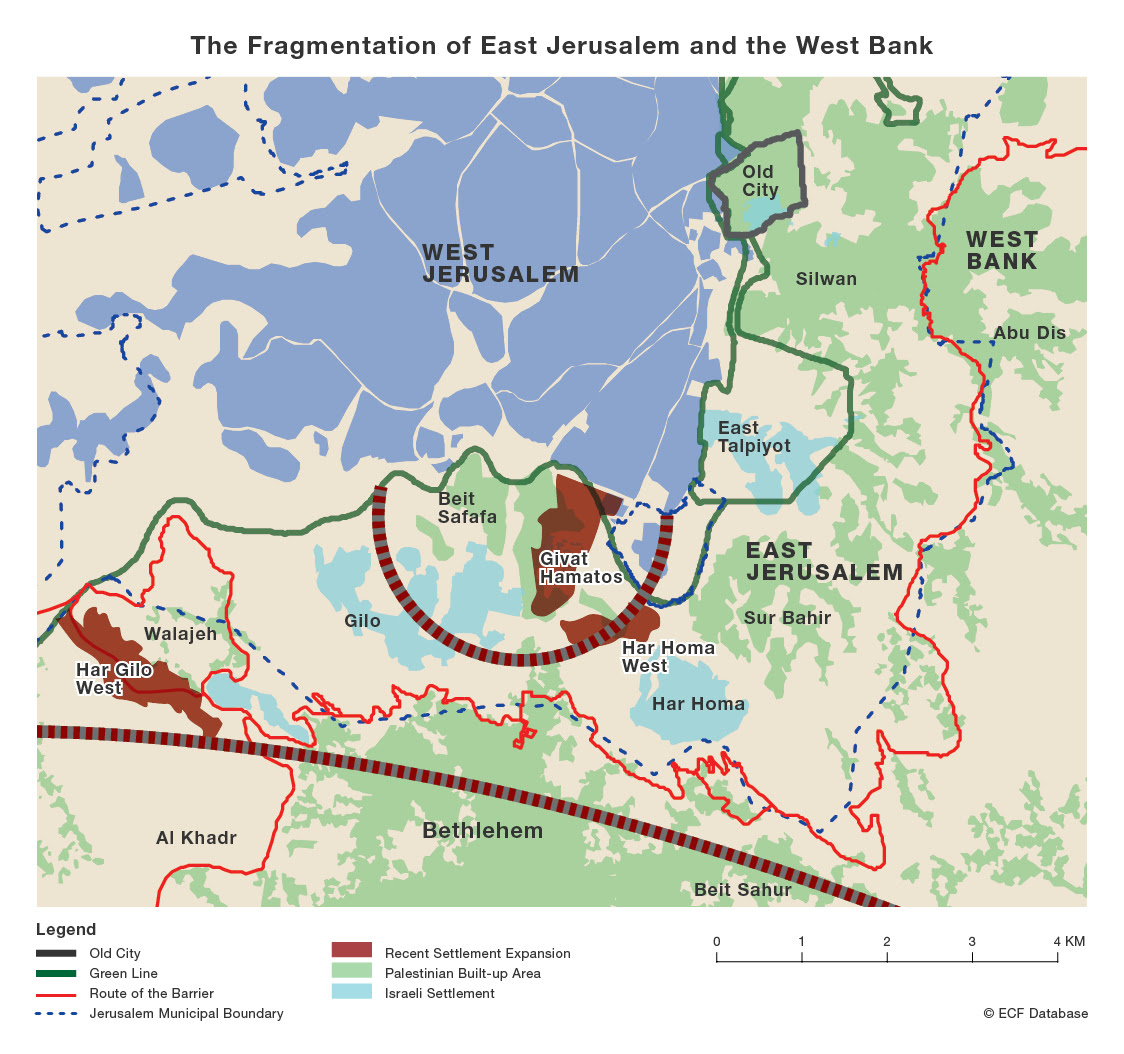
On January 19th, the Israel Land Authority issued the tender for the construction of the Givat Hamatos settlement in East Jerusalem (the tender is for a total of 1,257 settlement units). The issuance of the tender came a mere 6 hours before Joe Biden was sworn in as the President of the United States.
Prior to the issuance of the tender, the Jerusalem District Court rescinded its injunction against the tender, which the Court had issued last week in response to a petition filed by Palestinian residents of East Jerusalem and the Israeli NGO Ir Amim. That petition – which alleges that the planned construction of government-subsidized housing has discriminatory eligibility guidelines – is still pending, and the Court scheduled a discussion of the petition for May 27th.
According to Jerusalem expert Daniel Seidemann (of the Israeli NGO Terrestrial Jerusalem), now that the tender has been issued and awarded, construction of Givat Hamatos is now “virtually inevitable.” Givat Hamatos has long been regarded as a doomsday settlement by parties interested in preserving the possibility of a two-state solution, in that it will prevent the division of Jerusalem into an Israeli capitol and a Palestinian capitol (if the Givat Hamatos settlement is built, the Palestinian neighborhood of Beit Safafa in East Jerusalem will be completely surrounded by Israeli construction, severing its connection to the West Bank). Regardless of the implications of Givat Hamatos on a two state solution, the impact of the new settlement on the Beit Safafa neighborhood are nonetheless significant.
Explaining how Netanyahu bears direct responsibility for the highly consequential decision to move ahead with Givat Hamatos, Terrestrial Jerusalem writes:
“Netanyahu could have made this ‘go way’ at ZERO political cost to himself. He could have said truthfully: I tried, but the Court didn’t let me. Instead, he pulled out all plugs and instructed the State Attorney to aggressively pursue the rescission of the injunction. He went out of his way to make this happen. The tender process may now be completed, after which construction is virtually inevitable.This is happening because Netanyahu wants it to happen. This is happening now, because Netanyahu wants it to happen now.”
Ir Amim punctuates its analysis of the move by writing:
“The fact that the ILA hastened to announce the winners of the tender only 6 hours before Joe Biden’s inauguration serves to underline how determined the Israeli government is to create as many facts on the ground as possible before Biden takes office.”
Regarding the prospects of its petition against the Givat Hamatos tender, Ir Amim writes:
“The petition targets the conditions of eligibility for subsidized housing within the tender which discriminate against Palestinians. The petition does not call for cancellation of the tender but it remains to be seen how the petition will be viewed by the court and whether or not this will affect more than the specific discrimination present. One possible result of the petition – although we do not think its likelihood is high – can be that subsidized housing be completely removed from the tender in which case it is very possible that the tender will have to be reissued.”
Cashing In Before Trump Cashes Out, PART 2: Israel Issues Tenders for 2,572 Settlement Units
On January 20, 2021 – inauguration day in the U.S., the Israeli government issued tenders for the construction of 2,572 units (total) in settlements across the West Bank, as well in East Jerusalem. Now that the tenders are issued, construction companies are invited to bid to win the contract. Peace Now estimates that building is likely to happen within two years from now.
The issuance of these tenders comes in addition to the Givat Hamatos tender (see section above) and the advancement of plans for 780 more settlement units (see section below).
Commenting on the tenders, Peace Now said in a statement:
“Our out-of-touch government leadership continues to press on with its mad scramble to promote as much settlement activity as possible until the last minutes before the change of the administration in Washington. By doing so, Netanyahu is signaling to the incoming President that he has no intention of giving the new chapter in US-Israel relations even one day of grace, nor serious thought to how to plausibly resolve our conflict with the Palestinians.”
The 2,572 tenders issued on January 20 provide for:
- 941 units in the Emanuel settlement, located in the northern West Bank east of the Palestinian village of Qalqilya. Israel has openly declared its intention to continue expanding settlements in this area – which includes the settlements of Karnei Shomron and Alfei Menashe – with the stated goal of bringing 1 million settlers to live in the area.
- 460 units in the Pisgat Zeev settlement, the largest settlement in East Jerusalem. This involves the issuance of two tenders, one for 210 units and a second for 250 units.
- 377 units in the Adam (aka Geva Binyamin) settlement, through the issuance of three tenders, one for 94 units, a second for 263 units, and a third for 20 units. The Adam settlement is located northeast of Jerusalem, just beyond the separation barrier. Israel has for some years been steadily building the Adam settlement in a manner meant to connect the settlement seamlessly with East Jerusalem settlements and infrastructure, erasing the Green Line.
- 359 units in the Beit Aryeh settlement, located northwest of Ramallah, through the issuance of two tenders, one for 159 units and a second for 200 units.
- 220 units in the Maaleh Efraim settlement, located in the northern West Bank in the area between the central ridge and the Jordan Valley, through the issuance of three tenders, one for 24 units, a second for 178 units, and a third for 18.
- 150 units in the Alfei Menashe settlement, located in the northern West Bank east of the Palestinian village of Qalqilya. Israel is planning to continue expanding this area – which includes Karnei Shomron and Emmanuel – with the stated goal of bringing 1 million settlers to live in the area.
- 49 units in the Karnei Shomron settlement, through the issuance of two tenders, one for 48 units and a second for 1 unit). Israel also advanced plans for construction of 24 more units in the Karnei Shomron settlement through an earlier stage of the planning process (see the section below). Karnei Shomron is located in the northern West Bank east of the Palestinian village of Qalqilya. Israel is planning to continue expanding Karnei Shomron with the stated goal of bringing 1 million settlers to live in the area.
- 16 units in the Beitar Illit settlement. through the issuance of two tenders, one for 14 units and a second for 2 units). Beitar Illit is located west of Bethlehem, near the Green Line.
Cashing In Before Trump Cashes Out, PART 3: In Final Hours of Trump Era, Israel Advances Plans for 780 Settlement Units Across the West Bank
At its final meeting of the Trump era — which took place the day before Joe Biden’s inauguration — Israel’s High Planning Council advanced plans for 780 new settlement units. This includes final approval for plans for a total of 365 units plus the expansion of an industrial zone and approval for deposit for public review (one of last steps before final approval) for a total of 415 units, including retroactive legalization to two illegal outposts.
Commenting on the Council’s actions, Peace Now said in a statement:
“By promoting hundreds of settlement units, Prime Minister Netanyahu is once again putting his personal political interests over those of the country. Not only will this settlement activity erode the possibility for a conflict-ending resolution with the Palestinians in the long-term, but in the short-term it needlessly sets Israel on a collision course with the incoming Biden administration.”
Specifically, plans granted final approval by the Council include:
- 152 new units in the Shavei Shomron settlement, located in the northern West Bank, northwest of Nablus.
- 123 new units in the Itamar settlement, located southeast of Nablus in a cluster of notoriously violent settlements and outposts.
- 66 new units in the Oranit settlement, located in the northern West Bank, in the “seam zone” between the 1967 Green Line and the Israel separation barrier (a barrier constructed along a route designed to keep as many settlements and as much adjacent land as possible on the Israeli side of the wall/fence).
- 24 new units in the Karnei Shomron settlement, located in the northern West Bank east of the Palestinian village of Qalqilya. Israel is planning to continue expanding Karnei Shomron with the stated goal of bringing 1 million settlers to live in the area.
- Expansion of the Barkan Settlement Industrial Zone, located in the northern West Bank and a part of a strand of settlements connecting Israel proper and the Ariel settlement. Ariel is located in the very heart of the northern West Bank, reaching literally to the midpoint between the Green Line and the Jordan border. The future of Ariel and the settlements between Ariel and Israel proper have long been one of the greatest challenges to any possible peace agreement, since any plan to connect Ariel to Israel will cut the northern West Bank into pieces. For background on this industrial zone and others, see here.
Plans the Council approved for deposit for public review include:
- The retroactive legalization of 118 existing units in the Nofei Nehemia outpost. If implemented, this plan would have the effect of retroactively legalizing the outpost as a “neighborhood” of the Rehelim settlement, notwithstanding the fact that the Nofei Nehemia outpost is a fair distance from the Rehelim settlement and is not contiguous with the built-up area of Rehelim. In reality, Nofei Nehemia – if authorized – should be understood as a brand new settlement in its own right, rather than an expansion of an existing one (as the Israeli government wants the world to believe). The Nofei Nehemia outpost is located east of the Ariel settlement in the very heart of the northern West Bank. The Nofei Nehemia outpost made news this week with launch of a public bus route through the outpost – an overt act of entrenching and normalizing its presence by Israeli authorities.
- 107 new units in the Tal Menashe settlement, located on the tip of the northern West Bank, inside the “seam zone” between the 1967 Green Line and the Israel separation barrier, which was constructed along a route designed to keep as many settlements and as much adjacent land as possible on the Israeli side of the wall/fence. Tal Menashe is technically a neighborhood of the Hinanit settlement, though the built-up areas do not connect. The plans for 107 units would, if implemented, “dramatically increase” the size of the Tal Menashe settlement, which is the settlement where Esther Horgan – who was murdered by a Palestinian in late December 2020 – lived. Israeli government officials have made it a clear policy to advance settlement construction in response to deadly attacks on settlers by Palestinians, an approach publicly endorsed by U.S. Ambassador to Israel David Friedman.
- The retroactive legalization of 96 units in the Havot Yair outpost, with the intention of granting retroactive legalization (under Israeli law) to the entire outpost. The Havat Yair outpost is located near the Karnei Shomron settlement in the northern West Bank, east of the Palestinian village of Qalqilya. Israel is planning to continue expanding Karnei Shomron area with the stated goal of bringing 1 million settlers to live in the area.
Netanyahu’s Bid for Mass Legalization of Outposts Fails (For Now)
Despite an intensive last ditch effort, Netanyahu did not succeed in pushing through a government decision to grant retroactive legalization to dozens of outposts in the waning hours of the Trump era.
According to reports, Netanyahu made a last minute effort to gain Gantz’s support for a more narrow authorization – for 6 outposts instead of the 43 outposts as included in an earlier draft government decision. Gantz reportedly blocked Netanyahu’s proposal from coming up for a vote at the Israeli government cabinet meeting on January 19th, saying that “no diplomatically irresponsible proposal will be raised at such a sensitive time.” Other reports suggest European leaders intervened to make their objections to outpost authorization clear.
According to Haaretz, Netanyahu made several attempts to get the decision passed, including convening a call with Israel’s Attorney General to make progress. During that call Netanyahu complained that “jurists” were getting in his way. Netanyahu then surprised Gantz by adding the outpost issue to the Cabinet’s meeting planned for January 19th (a meeting devoted solely to the COVID-19 crisis).
The 6 outposts Netanyahu’s proposal reportedly listed for legalization are: Tel Zion, Ovnat, Metzoke Deragot, Kedem Arava, Avigail, and Asa’el. For more information on those outposts, see Peace Now’s reporting. Of those outposts, three would have been legalized as neighborhoods of existing settlements (Tel Zion, Ovnat, Metzoke Deragot), and three would have been authorized as full-fledged independent settlements (Kedem Arava, Avigail, Asa’el). Netanuyahu’s new proposal also called for the government to allocate over $6.2 million (NIS 20 million) to hire 13 new staff members at the Civil Administration tasked with continuing outpost legalization legal efforts.
FMEP has traced this saga for weeks – from the time when Likud and Blue & White officials were collaborating to draft such a decision, to last week’s news that Gantz decided to continue blocking the move despite a private meeting with settlers asking him to give his OK. It’s worth reiterating that Gantz has made clear he is not opposed to granting retroactive legalization to outposts, but is opposed to this manner of doing so. Gantz prefers for each outpost to be considered on an individual basis.
Bonus Material
- “A regime of Jewish supremacy from the Jordan River to the Mediterranean Sea: This is apartheid” (B’Tselem)
- “Al-Haq Welcomes B’Tselem’s Recognition of Israeli Apartheid” (Al-Haq)
- [VIDEO] “Calling the Thing by its Proper Name: “Apartheid” Between the Jordan River & the Mediterranean Sea” (FMEP)
- “Palestinian factory workers strike in West Bank industrial zone” (Al-Monitor)
- “West Bank demolitions and displacement | December 2020” (OCHA)
Welcome to FMEP’s Weekly Settlement Report, covering everything you need to know about Israeli settlement activity this week.
To subscribe to this report, please click here.
January 10, 2020
- ICC Opens Formal Investigation into Israeli War Crimes, Including Israeli Settlements
- Israel to ICC: You Do Not Have Jurisdiction & You Will Not Stop Us from Advancing Settlements and Annexation
- Following ICC Announcement, Israel Advances Plans for Nearly 2,000 Settlement Units
- Following ICC Announcement, Israel Begins Planning Jordan Valley Annexation
- Plans Advance in East Jerusalem, Part 1: New Settlement Enclave in Palestinian Neighborhood
- Plans Advance in East Jerusalem, Part 2: Reports on Har Homa & Rumors on Givat Hamatos
- Plan Advance in East Jerusalem, Part 3: Israel Approves Plans for Two More Settler-Run Tourist Sites in East Jerusalem
- Plans Advance in East Jerusalem, Part 4: Tenders for Pisgat Zeev and Gilo
- For Second Time, Israeli Court Rules Against Settler Claim to Bakri House in Hebron
- Peace Now Wins Interim Decision Against Secretive Public Funding to Amana
- Israeli Court Dismisses Palestinian Landowners’ Petition Against the Ofra Settlement
- Bennett Launches Initiative to More Aggressively Police Palestinians in Area C
- Bennett Appoints Key Settler Ally to Lead New Government Task Force on Area C Annexation Plans, Immediately Announces Plan to Legalize Settlements
- Following ICC Announcement, Pompeo Says Israel Has “Fundamental Rights” to Land
- Pro-Settlement Legal Forum Conference Draws Big Names, Big Promises
- Bonus Reads
Comments/questions? Email Kristin McCarthy (kmccarthy@fmep.org)
ICC Opens Formal Investigation into Israeli War Crimes, Including Israeli Settlements
On December 20, 2019 the Chief Prosecutor of the International Criminal Court (ICC) Fatou Bensouda announced that the court has found a reasonable basis upon which to open an investigation into Israeli war crimes against Palestinians in the West Bank, East Jerusalem, and Gaza. Bensouda said that the preliminary investigation, launched five years ago, established sufficient evidence of war crimes, citing Israeli settlements and Israel’s conduct during its 2014 incursion into the Gaza Strip, which Israel gave the title “Operation Protective Edge”. The statement said that the Court found evidence that Hamas and armed Palestinian groups also committed war crimes during the 50 days of hostilities in 2014.
Before proceeding with a formal investigation, Bensouda requested a pre-trial chamber to rule on the Court’s territorial jurisdiction, as outlined in the Rome Statute, over the West Bank, East Jerusalem, and Gaza Strip. Bensouda requested a ruling on the matter within 120 days. Bensouda has previously articulated her opinion on the matter, suggesting that questions regarding Palestinian statehood do not necessarily need to be resolved because Palestine acceded to the Rome Statute and formally became a “State Party” to the court.
Israel to ICC: You Do Not Have Jurisdiction & You Will Not Stop Us from Advancing Settlements and Annexation
Prior to Bensouda’s announcement on December 20th that the ICC will proceed with an investigation into Israeli war crimes in the West Bank, East Jerusalem, and Gaza, Israeli Attorney General Avichai Mandleblit published a 34-page legal opinion arguing that the Court does not have jurisdiction over those territories because Palestine does not meet the criteria for statehood, and non-sovereign entities cannot confer jurisdiction to the Court. Notably, that opinion doesn’t address (let alone dispute or challenge) the assertion that Israeli actions might constitute war crimes.
Going beyond Mandleblit’s legal arguments, Netanyahu launched a disingenuous attack on Bensouda’s criticism of Israeli settlements, saying:
“[Bensouda] says it is a crime, a war crime, for Jews to live in their homeland, the land of the Bible, the land of our forefathers.”
Netanyahu later said:
“This will not deter us — not in the slightest”
Netanyahu is riding a wave of defiant, ultra-confident language following his Dec. 27th victory in the Likud primaries, after which he promised to secure U.S. recognition for Israeli sovereignty over the Jordan Valley and all settlements in the West Bank. In his victory speech, Netanyahu laid out a 6-point plan he will implement if he goes on to win the March 2020 elections:
“First, we will finalize our borders; second, we will push the US to recognize our sovereignty in the Jordan Valley and the northern Dead Sea; third, we will push for US recognition of our extension of sovereignty over all the communities in Judea and Samaria, all of them without exception; fourth, we will push for a historic defense alliance with the US that will preserve Israeli freedom of action; fifth, stop Iran and its allies decisively; and sixth, push for normalization and agreements that will lead to peace accords with Arab countries. The opportunities are within reach.”
Demonstrating that Netanyahu means what he says, shortly following the ICC’s announcement his government advanced plans for nearly 2,000 settlement units and launched the planning process for annexing the Jordan Valley. Both of these items – in addition to several other significant settlement advancements which were not explicitly linked to the ICC’s announcement – are covered in detail below.
Following ICC Announcement, Israel Advances Plans for Nearly 2,000 Settlement Units
Over the course of a two-day meeting Jan 5-6, 2020, the Israeli Civil Administration’s High Planning Committee approved plans for 1,936 settlement units, of which 786 units received final approval for construction. The Israeli Civil Administration is the body of the Defense Ministry which regulates all construction in the West Bank, both Palestinian and Israeli settler.
The Civil Administration granted final approval to the following plans:
- A plan for 258 units in the unauthorized Haresha outpost, located east of Ramallah, to take them to the final stage of the approval process. If granted final approval, the plan will have the effect of retroactively legalizing the Haresha outpost. This outpost has been one of several test cases for the Israel government’s evolving legal justifications for granting retroactive approval to unauthorized outposts built on privately owned Palestinian land. In the case of Haresha, an outpost built on an island of “state land” surrounded by privately owned Palestinian land, then-Israeli Justice Minister Ayelet Shaked issued a new legal opinion in December 2018 outlining a legal basis for temporarily seizing the private Palestinian land for the construction of a tunnel road underneath it (essentially holding that Palestinian land rights – which can be temporarily infringed upon at any time for the sake of the settlements – do not extend below the ground’s surface). The tunnel road has not yet been constructed, an important qualification that Israel, to this point, has generally required outposts to meet prior to legalization.
- 147 units in the Mitzpe Yericho settlement, located just west of the Palestinian city of Jericho in the Jordan Valley. The plan will have the effect of retroactively legalizing existing illegal construction in the settlement.
- 120 units in the Karnei Shomron settlement, located in the northern West Bank east of the Palestinian village of Qalqilya. Israel is planning to continue expanding Karnei Shomron with the stated goal of bringing 1 million settlers to live in the area surrounding the settlement.
- 107 units in the Elon Moreh settlement, located east of Nablus.
- 100 units in the Halamish settlement, (where settlers have built a strategic outpost, with the protection of the IDF, in order to further restrict Palestinian access to the area);
- 25 units in the Peduel settlement, located in the northern West Bank and part of a string of settlements and unauthorized outposts – most notably Ariel – extending from the Green Line into the very heart of the West Bank and on towards the Jordan Valley.
- 12 units in the Ariel settlement, located in the central West Bank.
- 10 units in the Etz Efraim settlement, located in the northern West Bank, one of several settlements slated to become a “super settlement” area.
- 7 units in the Rechelim settlement, located east of the Ariel settlement and south of Nablus, in the heart of the West Bank.
The Civil Administration advanced the following plans:
- 224 units in the Talmon settlement, located west of Ramallah.
- 204 units in the Shilo settlement, located in the central West Bank.
- A plan for 180 units in the unauthorized Mitzpe Danny outpost, located east of Ramallah. If approved, the plan will have the effect of retroactively legalizing the outpost, which was built without Israeli permission in 1999 in an area that includes privately owned Palestinian land. The Binyamin Regional Council – a settler body acting as the municipal government for settlements in the central West Bank – has been angling to retroactively legalize Mitzpe Danny for some time. As part of that effort, the regional council successfully lobbied for approval of a plan to build an educational campus for settlers that will create a territorial link between the Maale Mikhmash settlement (which has official recognition from the government) and the outpost. That plan received final approval in January 2019.
- 160 units in the Kochav Yaakov settlement, located between Jerusalem and Ramallah.
- 92 units in the Tzofim settlement, one of the settlements that flank the Palestinian city of Qalqilya in the northern West Bank.
- 91 units in the Almon settlement, located northeast of Jerusalem.
- 136 units in the Givat Zeev settlement, located south of Ramallah.
- 63 units in the Maale Adumim settlement, located just east of Jerusalem.
- A plan for 204 new units in the Shvut Rachel settlement, which only recently became an authorized settlement area when Israel extended the jurisdiction of the Shiloh settlement to include it as a “neighborhood” (along with three other outposts).
Peace Now said in a statement:
“Despite lacking a clear mandate, for this caretaker government it’s business as usual – Continue the massive promotion of harmful and unnecessary construction in occupied territory and in places that Israel will have to evacuate. Netanyahu continues to sabotage the prospects of peace, dragging Israel into an anti-democratic one-state reality resembling apartheid.”
The Yesha Council, an umbrella group representing all the settlements, celebrated the approvals, saying in a statement:
“To our delight, construction in Judea, Samaria and the Jordan Valley is commonplace and we are pleased to see that every few months plans are up in the Supreme Planning Council. The time has come for extremist Leftist organizations to accept that the U.S. has also declared that settling in Judea, Samaria, and the Jordan Valley is not contrary to international law and that applying Israeli sovereignty is a consensus in the State of Israel. After eight years of unprecedented construction freeze, the government regularly approves construction and we strengthen the hands of the Prime Minister and Defense Minister on their blessed work. We need more and more construction to promote the prosperity and growth of settlement.”
The head of the Binyamin Regional Council, Yisrael Gantz, spoke happily about the settlement advancements but also kept focused on the settlement movement’s ultimate demand: annexation. Gantz told Arutz Sheva:
“This is undoubtedly an important and significant step. I hope we will soon be able to applaud the application of full Israeli sovereignty and the closure of the Civil Administration in order to truly develop the regions of our amazing country, in the same way that it is possible in the entire State of Israel.”
Despite the celebratory remarks, settlers were disappointed with the final number of settlement units, which fell short of the 3,000 units Netanyahu promised to advance on the eve of the Likud primary leadership vote (which went in Netanyahu’s favor). When promising the 3,000 units, Netanyahu also promised:
“We are going to bring [secure] US recognition for our sovereignty in the Jordan Valley [and] in all the settlements, those in the blocs and those that are beyond it.”
Following ICC Announcement, Israel Begins Planning Jordan Valley Annexation
On January 5th, the inter-ministerial committee created to plan the annexation of the Jordan Valley held its first meeting, in an effort to prepare an official proposal for how Israel can annex the Jordan Valley. The committee – dubbed the “Sovereignty Committee” – is headed by the Prime Minister’s Office Director General Ronen Peretz and includes representatives from the Foreign Ministry, the Israel Defense Forces, and the National Security Council.
The meeting took place despite (or perhaps because of) reports that Netanayhu put Jordan Valley annexation plans in a “deep freeze” following ICC Chief Prosecutor Fatou Bensouda’s announcement on Dec. 20th that the Court will open an investigation into war crimes committed by Israel in the West Bank, East Jerusalem, and Gaza. Following those reports, the head of the Yesha Council, the settler umbrella group, David ElHayani spoke to Netanyahu on the phone to gain reassurance that the annexation plan was not frozen, which Netanyahu reportedly gave him.
Haaretz reports:
“Sources familiar with the establishment of the inter-ministerial committee told Haaretz that the insistence on moving forward with the discussions are mainly to show that the idea has not been abandoned due to international pressure.”
Plans Advance in East Jerusalem, Part 1: New Settlement Enclave in Palestinian Neighborhood
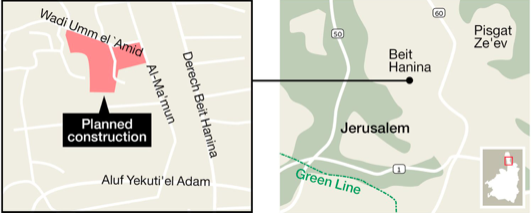
On January 8th the Jerusalem District Planning Committee granted final approval to a new 75-unit settlement compound to be built in the heart of the Palestinian East Jerusalem neighborhood of Beit Hanina. If built, it will be the first-ever authorized settlement project in Beit Hanina, located north of the Old City.
May by Haaretz
The Beit Hanina settlement plan – as FMEP has previously reported – is backed and promoted by settlement impresario Aryeh King, and it provides for the construction of a total of 150 new units in the southern end of the Beit Hanina neighborhood. The land slated for the 150 units is privately owned, 53% of the land is owned by an Israeli who is supportive of the plan, and 47% by a Palestinian company who objects to the plan and has fought against it. Because the land has not been surveyed to demarcate the split ownership, Israeli planning authorities decided that the settlement plan is designated for the entire property, with construction rights split evenly between the parties, meaning the 75 units granted final approval on January 8th represent the Israeli-controlled half of the project.
Ir Amim notes the larger picture of Isreali settlement activity north of the Old City:
“In close proximity to Ramat Shlomo to the southwest and Pisgat Zeev to the northeast, construction of this new compound may signal the beginning of a move to create contiguity between the two settlements, while fracturing the contiguous space between Bet Hanina and Shuafat. As exemplified by the ring of state-sponsored settlement strongholds throughout the Old City Basin, the establishment of a settler enclave in the midst of Beit Hanina will not only impact the fabric of this community, but will further erode opening conditions for a political solution to the conflict based on two capitals in Jerusalem.”
Ir Amim explains essential context:
“the plan will enable an ideologically driven settler outpost in the heart of Beit Hanina, a neighborhood located on the northern perimeter of East Jerusalem that has remained relatively untouched by Israeli settlement within its limits. Since the land in question is not far from Ramat Shlomo to the south-west and Pisgat Zeev to the north-east of it, its construction may mark the beginning of a far sweeping move to create contiguity between the two settlements, while driving a wedge between Bet Hanina and Shuafat.”
Plans Advance in East Jerusalem, Part 2: Reports on Har Homa & Rumors on Givat Hamatos
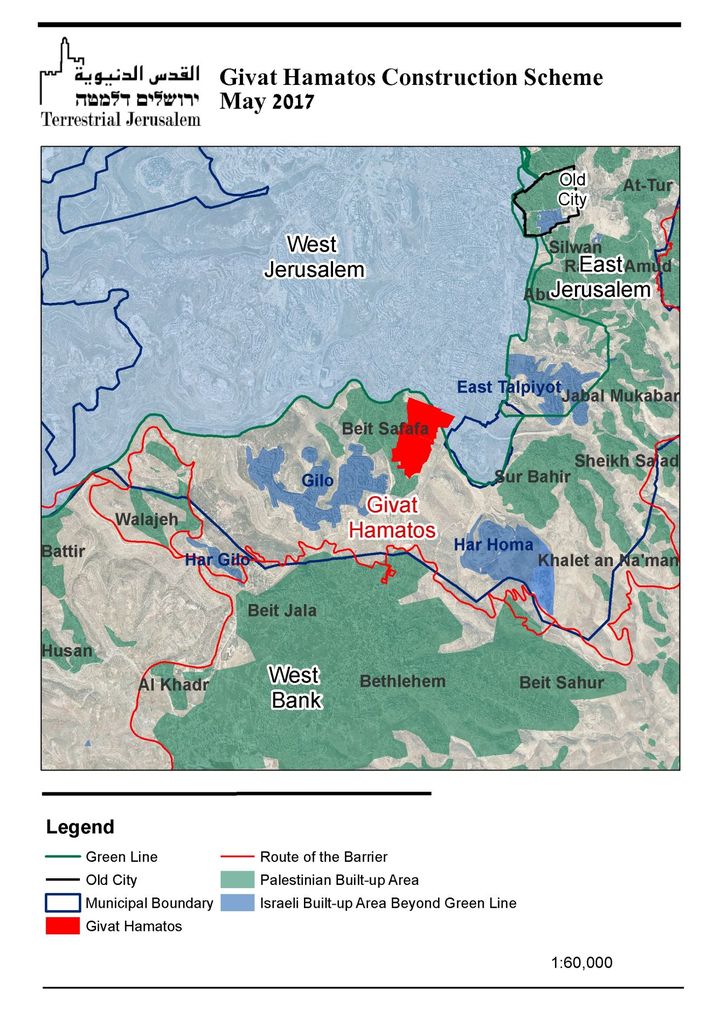 On January 7th, the popular Isareli broadcaster network Kan reported that the Prime Minister’s office has blocked a plan to build 2,000 new settlement units in the settlement of Har Homa, citing “diplomatic difficulties.” In response to an inquiry, the office did not deny the report, but issued the following statement:
“Israel has built in Jerusalem, is building in Jerusalem and will continue building in Jerusalem — while exercising judgment.”
Jerusalem expert Daniel Seidemann raised a key question and larger concerns about the reports concerning Har Homa, saying:
“The construction potential at Har Homa has been exhausted, and it’s not possible to build anything near 2,000 units. So what are they talking about? Something is clearly going on. Three possibilities come to mind, all problematic…Possibility no. 1: the nearby planned doomsday settlement of Givat Hamatos, which is awaiting tenders. Possibility no. 2: Hirbet Mazmoriyya, to the northeast of Har Homa. The lands owned by Palestinians that will have to be expropriated. Not likely. Too complicated and controversial. Possibility no. 3: the area wedged betw. Mar Elias Monastery, the Hebron Road, the 300 Checkpoint, dubbed Bethlehem Gate or Har Homa West. The land is ownership is a mixture of Palestinian &Church lands, along with settlement developers.”
Ir Amim notes that, while reportedly stalling the Har Homa plan, Netanyahu is – in fact – simultaneously facing mounting pressure to issue tenders for the construction of the Givat Hamatos settlement, the site for which is the northern border of Har Homa. Ir Amim writes:
“Last week, rightwing groups launched a coordinated campaign to exert pressure on Prime Minister Netanyahu to advance construction in the area of Givat Hamatos, which has been essentially frozen for the past six years. While the approval of the plan for 2,610 housing units in the area was formally published in 2014, there has been no announcement of tenders since then. This has been largely attributed to international opposition, namely from the United States and Germany. Likely attempting to ratchet up pressure on Netanyahu in lead-up to the upcoming elections in March, the campaign has been spearheaded on a public level by rightwing organizations. Several prominent rabbis known for supporting the settler movement penned a letter to the Prime Minister calling on him to announce the tenders for Givat Hamatos, while rightwing media outlets have published daily articles demanding an ‘end to the freeze.’ A rightwing institute likewise published a lengthy paper on the significance of establishing a new settlement in the area as a means of thwarting any potential future division of Jerusalem within the framework of a resumed peace process.”
Plan Advance in East Jerusalem, Part 3: Israel Approves Plans for Two More Settler-Run Tourist Sites in East Jerusalem
On December 25, 2019 the Jerusalem Local Planning approved two significant settler-backed schemes in East Jerusalem:
- The committee approved the Israeli government’s plan to seize land in the Palestinian East Jerusalem neighborhood of Sheikh Jarrah, in order to establish a park adjacent to the infamous Shepherd Hotel, an historic/iconic building that was taken over by the radical Ateret Chohanim settler organization in 2011. The new park – called “Hakidron Park” has been discussed and considered by Israeli governments for the past 15 years.
- The committee also approved the Israeli government’s plan to confiscate land in the Ras al-Amud neighborhood of East Jerusalem, for the purpose of opening a tourist and religious services center on the Mount of Olives, adjacent to the Jewish cemetery. The Jerusalem Municipality hired an architect, Arie Rahamivov, who is also employed by the radical Elad settler group for the planning and construction of their crown jewel: the Kedem Center in Silwan. The new center in Ras al Amud will be yet another tourist center under the management of Elad, which already operates another visitors center on the Mount of Olives.
Ir Amim writes:
“Approval of the aforementioned land expropriations would signal intent to begin construction at both sites and will help to further solidify the settlement ring around the Old City Basin. While both plans can be posited as innocuous municipal initiatives to serve local residents and visitors to the areas, such touristic projects play an integral role in expanding the scope of settlement strongholds in the area and creating a more contiguous Israeli space, while diffusing the political agenda behind these efforts.”
Plans Advance in East Jerusalem, Part 4: Tenders for Pisgat Zeev and Gilo
Ir Amim reports that the Israel Lands Authority published construction tenders for the following East Jerusalem settlements in early January:
- 3 tenders for a total of 461 new settlement units in the Pisgat Zeev
- 1 tender for commercial buildings in the Gilo settlement, located
For Second Time, Israeli Court Rules Against Settler Claim to Bakri House in Hebron
On December 23rd, the Jerusalem District Court ruled that the Palestinian Bakri family are the rightful owners of a disputed property in Hebron. This ruling should deal a final blow to the 18-year long legal battle settlers have waged to gain control of the Bakri family house (“should”, not “will”, because the settlers have repeated been dealt defeats in court and each time are able to manufacture a new claim or appeal) .
The ruling – which affirmed a March 2019 ruling by the Magistrate court, which the settlers had appealed – called for the immediate evacuation of the settlers whom Israel has permitted to illegally squat in the house while the legal processes were ongoing. For a full history of the Bakri house saga, see here.
Following the ruling, Peace Now said:
“[the] court again ruled that the settlers had forged [documents] and lied all along… We hope that after [almost] two decades of violence, lies and terror, justice will be carried out and the invaders will be evicted.”
Peace Now Wins Interim Decision Against Secretive Public Funding to Amana
In response to a Peace Now petition, on December 31st the Israeli High Court issued an interim decision that requires state bodies to request approval from the court before transferring funds to Amana, a settlement body which is known to undertake illegal settlement activities across the West Bank. Peace Now filed the petition after discovering that state bodies have been secretly funneling money to Amana.
Peace Now said in a statement:
“Amana is the most significant organization operating in the settlements. For decades, it has overseen the establishment of dozens of illegal outposts and neighborhoods with the help of massive budgets, some of which have been transferred from Israeli taxpayer money through local settlement authorities in violation of the law. The judges’ decision is a dramatic yet necessary step that limits, for the time being, this illicit transfer of funds to illegal projects in the settlements and outposts. We hope that in this spirit, the court will rule that public funds should no longer be transferred to Amana via subsidy procedures. This situation in which the State of Israel backs illegal activities with public funds is unconscionable, and we urge the Israeli government to put an end to it.”
Israeli Court Dismisses Palestinian Landowners’ Petition Against the Ofra Settlement
On January 6th, the Israeli High Court of Justice dismissed a petition filed by Palestinian landowners challenging the legality of the Ofra settlement. The petition was based on the fact that the settlement is partially built on privately owned Palestinian land. The court ruled that the majority of the settlement had been built on land expropriated by Israel, and that the minority of land that Palestinians claim ownership over was not enough to invalidate the entire Master Plan for the settlement. Further, the court stated that the settlement structures built on the privately owned Palestinian land were built by settlers “in good faith,” under the mistaken belief that land had also been expropriated by the Israeli government.
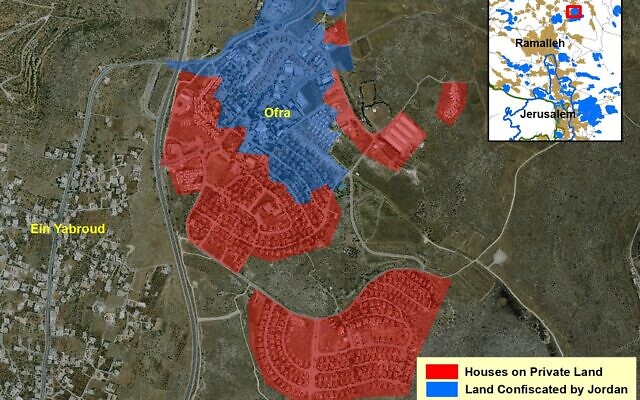
Map by Peace Now
This High Court ruling does not fix the legal status of Ofra settlement buildings, but it is nonetheless significant because it continues to deny Palestinians their property rights. Likewise, it gives a green light to the use of the “market regulation” principle to expropriate land in order to retroactively legalize the structures. As a reminder, the “market regulation” principle – which was invented by the Israeli Attorney General – holds that if settlers acted “in good faith” when they built on privately owned Palestinian land, the state can expropriate that land, thereby making what was illegal before, now perfectly legal.
The Ofra settlement’s legal situation has long been an issue that the Israeli government has tried to fix. Ofra was first established by settlers on land that the Jordanian government had expropriated in 1966, in order to build a military base (which was never built). The Israeli government used this pretext to expropriate the land in 1977, in order to recognize the Ofra settlement, which had been established illegally but with tacit cooperation of the government on the site two years earlier. However, the settlers built the majority of the Ofra settlement on land that was not expropriated by Israel in 1977 — land that was in fact registered to Palestinians from the nearby village of Ein Yabroud. In light of the legal status of the land, no Israeli government has since found a way to fix the legal status of these homes (not for lack of trying) – meaning that the majority of the structures in Ofra were built without permits, making them illegal under Israeli law.
Peace Now elaborates on what is at stake in the Ofra settlement case:
“Most of the houses built in Ofra (approximately 413 out of 625) were built on an area of 550 dunams of privately owned Palestinian land. In addition, hundreds of dunams of Palestinian private land were seized for roads in Ofra, as well as infrastructure and agricultural lands for the settlers. The only way to regulate the theft of these lands would be to expropriate them from the Palestinian landowners for the benefit of the settlers, in complete contradiction to the positions of previous Israeli governments and legal advisors, and contrary to binding rulings of the High Court. Although the current legal advisor (Avichai Mandelblit) allowed land expropriation in some places for settlement purposes (for example, in Haresha), in the regulation of massive land theft such as in Ofra the Israeli government would be crossing a new red line.”
FMEP documents the government’s efforts to expropriate Palestinian land for the settlements in its Annexation Policy Tables.
Bennett Launches Initiative to More Aggressively Demolish Palestinian Construction in Area C
Making the most of his appointment as Israeli Defense Minister in the current caretaker government, Naftali Bennett is pushing an initiative to annex Area C and to aggressively demolish Palestinian construction in the area (reminder: Area C constitutes nearly 60% of the West Bank; it is land that under Oslo II was supposed to have been “gradually transferred to Palestinian jurisdiction”).
As part of his efforts, Bennett has launched legal research into how Israeli can bring settlement building in Area C under the direct authority of the Justice Ministry, cutting out the Civil Administration. This Civil Administration, it should be recalled, is the arm of the Israeli Defense Ministry which acts as the sovereign power over the West Bank, in a system of governance Israel created based on its recognition of the different legal status of the area. Bennett has called for that system to be disbanded (in addition to annexing Area C). To be clear: transferring the construction and planning processes in Area C to domestic Israeli jurisdiction would by any definition constitute the Israeli state extending its sovereignty over area — an act of annexation.
Bennett has requested that Defense Ministry officials present several legal options for how Israel can bring planning processes under the Justice Ministry (integrating the settlements into the normal planning process). The settler-run Arutz Sheva outlet attributes the following quote Bennett in a private meeting:
“We are in essence discussing applying procedural sovereignty only. Full sovereignty is under the authority of the political echelon, but this is a step in the right direction. There is no reason that residents of Judea and Samaria should continue being discriminated against. We must stop this. Residents of Beit El and Ariel are no less Zionist than residents of Kfar Saba and Tel Aviv. They pay taxes and serve in the army, and they need to receive the same services from the government.”
Bennett is also advancing several initiatives that will empower and compel the Civil Administration to more aggressively enforce demolition orders against Palestinian construction in Area C (based on Israel’s policy of not granting permits to Palestinians in Area C, nearly every Palestinian structure in this territory has a demolition order pending against it). Bennett is also eyeing ways to combat what he considers illegitimate and nefarious funding from the European Union to Palestinian communities living in Area C. Israel Hayom reports:
“Bennett’s plan to stop the Palestinians from chipping away at Area C demands action in four areas: Operational, economic, legal, and PR. He wants to change enforcement priorities to put an emphasis on eradicating illegal buildings in strategic locations rather than by numbers. For example, home demolitions would be carried out in accordance with Israeli interests, prioritizing illegal buildings next to roads or settlements. Bennett also instructed the Central Command and the Civil Administration to work more closely to implement his plan and asked that the Civil Administration report to him monthly to update him on progress. Meanwhile, the defense minister is weighing the possibility of allocating more resources to the Civil Administration for enforcement, which would entail hiring more personnel. Bennett also wants to take steps to stop the flow of European money that funds the illegal Palestinian construction in the first place, allowing the “Fayyad Plan” to flourish.”
Bennett Appoints Key Settler Ally to Lead New Government Task Force on Area C Annexation Plans, Immediately Announces Plan to Legalize Settlements
In addition to his new initiative targeting Palestinian construction in Area C, Israeli Defense Minister Naftali Bennett announced that he has created an inter-ministerial taskforce to develop settlement and annexation plans for the future of Area C in the West Bank.
Bennett’s chief of staff, Itay Hershkowitz, has been in weeks-long consultations with key settler leaders to decide what items to act on immediately. Haaretz reports their agenda includes:
- Allowing Jews to privately purchase land in the West Bank. [See here for a detailed explanation of this complicated matter]
- Connecting unauthorized outposts to water and electricity.
- Granting official recognition to unauthorized outposts that are located near established settlements by recognizing them as “neighborhoods” of the settlement.
- Repealing a military order that empowers the Civil Administration to evict settlers from privately owned Palestinian land with or without a Palestinian-initiated petition to have the settlers removed.
- Legalizing 30 sheep farms in the West Bank that are under pending demolition orders.
On Thursday, Bennett announced that he has appointed West Bank settler Koby Eliraz to lead the new taskforce. Calling Eliraz a “bulldozer,”Bennett said:
“The territorial future of the Land of Israel is at stake. The State of Israel has simply not been up to the task of stopping [Palestinian construction]. We are changing direction and embarking on a battle that Israel must win… The defense establishment will fight for this territory, and it is essential for someone to lead this campaign.”
Eliraz previously served as Netanyahu’s settlement advisor, but was fired by the Prime Minister in June 2019 reportedly because he was believed to be allied too closely to Netanyahu rival Avigdor Liberman, who Netanyahu also dismissed. At the time of Eliraz’s firing, settler leaders were outraged and published a letter asking Netanyahu to reverse Eliraz’s firing, suggesting that Eliraz’s absence will hinder government efforts to retroactively legalize outposts. The letter noted:
“Kobi has taken care of Israeli settlement and its residents with great professionalism. He is credited for many advancements [on our behalf] in the fields of construction, infrastructure development, security and more.”
The Times of Israel observed, significantly, that the Yesha Council was able to get every single settlement Mayor to sign the letter in support of Eliraz, explaining:
“The Yesha Council in recent years has struggled to get all of its members on board with its initiative, but the umbrella group’s ability to gather the signatures of every Israeli mayor beyond the Green Line is testament to the broad respect that Eliraz holds among settler leader.”
Following ICC Announcement, Pompeo Says Israel Has “Fundamental Rights” to Land
At a press briefing on December 22nd, U.S. Secretary of State Mike Pompeo did not specifically address the ICC announcement, but made lengthy comments regarding statements from European countries and the European Union that were critical of the new U.S. position on settlements (that they are not “per se illegal” under international law). Pompeo’s comments hold relevance to the U.S. position on the ICC case and more generally on the U.S. approach to the Israeli-Palestinian conflict:
“First, the legal analysis that the EU performed [on settlements] we just think is wrong. We think they have an improper analysis of the international law surrounding this. So as the technical legal matter, [EU Foreign Minister] Ms. Mogherini just – she’s just wrong. And so we are doing our level best to demonstrate to them our legal theory, our understandings, and why it is that we’re convinced that under international law these settlements are not per se illegal. So we’re working that element of it as well. But at another level, and perhaps at the level that will lead to the right outcome, which is why we did this, this has to be resolved through political means, and we hope that all nations, including member nations inside of the EU and the EU itself and countries all over the world, will come to recognize the fundamental rights that the Israeli people have to this land, to this space. There are real security needs. The risk that is presented from the world as anti-Semitism is on the rise, we hope that every nation will recognize that and weigh in on this conflict in a way that is constructive, that will ultimately lead to the peace that is so desperately needed.” [Emphasis added by editor]
Pro-Settlement Legal Forum Conference Draws Big Names, Big Promises
The Kohelet Policy Forum, a right-wing advocacy organization that has enormous influence with senior Israeli – and increasingly American – government figures, hosted a “Conference on the Pompeo Doctrine” in Jerusalem, Jan. 7-8, 2020. The conference served as a gleeful celebration and forward-looking projection of what the new U.S. settlement policy towards settlements means for Israel. The conference drew participation from all the leading Israeli politicians and several senior members of the Trump Administration, including Secretary of State. Pompeo. Key quotes from the conference speakers are copied below.
U.S. Secretary of State Mike Pompeo:
“We’re recognizing that these settlements don’t inherently violate international law. That is important. We’re disavowing the deeply flawed 1978 Hansell memo, and we’re returning to a balanced and sober Reagan-era approach. “In doing so, we’re advancing the cause of peace between Israelis and Palestinians.”
U.S. Ambassador David Friedman:
“…when we came into office the lingering issues included three of significant importance: the status of 1) Jerusalem, 2) the Golan Heights and 3) Judea and Samaria. We have approached them in ascending order of complexity…I thank God that President Trump had the courage and the wisdom to recognize Jerusalem as the capital of Israel and move our embassy to Jerusalem from Tel Aviv…In recognizing Israel’s sovereignty over the Golan Heights, President Trump, evaluating the continuous malign and barbarous threats posed by Syria, concluded that no northern boundary for Israel would be secure except a boundary that incorporated the Golan. He acted well within the language of 242. [Judea and Samaria] is certainly the most complicated of the issues because of the large indigenous Palestinian population. Over the years before we came into office, it’s only gotten more complicated and more challenging. The proverbial goalposts have moved and moved – to the point today where they are no longer even on the field….The Pompeo Doctrine does not resolve the conflict over Judea and Samaria. But it does move the goalposts back onto the field. It does not obfuscate the very real issue that 2 million or more Palestinians reside in Judea and Samaria, and we all wish that they live in dignity, in peace, and with independence, pride and opportunity. We are committed to find a way to make that happen. The Pompeo Doctrine says clearly that Israelis have a right to live in Judea and Samaria. But it doesn’t say that Palestinians don’t….it calls for a practical negotiated resolution of the conflict that improves lives on both sides.”
Israeli Prime Minister Netanyahu said:
“I will not let any settlements be uprooted in any diplomatic plan. This idea of ethnic cleansing… it won’t happen. There is a window of opportunity. It opened, but it could close…There was no West Bank separate from the rest of the land. It was seen as the heart of the land. We never lost our right to live in Judea and Samaria. The only thing we lost temporarily was the ability to exercise the right. When Israel returned to the West Bank We didn’t return to a foreign land. That is a distortion of history. Jews lived in Jerusalem and Hebron for thousands of years consecutively…The Pompeo declaration about the status of the towns [in Judea and Samaria] establishes the truth that we are not strangers in our land. In a clearly defensive war, we returned… to the land where our forefathers put down roots thousands of years ago…Unlike some in Europe who think the Pompeo declaration distances peace, I think it will promote peace, because peace must be based on truth, not lies. Settlements are not the root of the conflict. We are standing with justice and the truth. It is a great struggle.”
Israeli Defense Minister Naftali Bennett on Area C annexation and his initiatives in that regard:
“Our aim is that within a decade a million Israeli citizens will live in Judea and Samaria” and later “Our objective is that within a short amount of time, and we will work for it, we will apply [Israeli] sovereignty to all of Area C, not just the settlements, not just this bloc or another. We are embarking on a real and immediate battle for the future of the Land of Israel and the future of Area C. It started a month ago and I am announcing it here today. A month ago, I convened a meeting and I explained the clear directive, the State of Israel will do everything to ensure that these territories [Area C] will be part of the State of Israel.”
Likud MK and former Mayor of Jerusalem Nir Barkat said:
“I am confident that Secretary Pompeo’s statement is an integral part of the American plan and is closely linked to Jared Kushner’s proposal advanced in Bahrain promoting significant economic investment in the Palestinian economy…Now is a perfect opportunity to similarly grow the communities throughout Judea and Samaria at a pace like never before. This declaration is a recognition of the legal and historic right of the Jewish people to live wherever we wish. This is how it should be in other parts of the world and certainly here in the Jewish State. This declaration is therefore an exceptional opportunity for Israel to ensure our continued growth and expansion throughout these areas. Israel needs to set a goal for the settlement of two million people in Judea and Samaria within fifty years. This is a commitment which requires that we already now lay the framework to make that possible and this is an investment which will also benefit the Palestinian people” [Editor’s note: Barkat has been working with Harvard Professor Michael Porter to promote an economic peace scheme, most recently speaking at Harvard about the plan in December 2019]
Eugene Kontorovich, Director of International Law at the Jerusalem-based Kohelet Policy Forum and a key shaper of anti-BDS/pro-settlement legislation in U.S. Congress and across state governments, said:
“American Policy is now clearer than ever, Jews living in Judea and Samaria is not a crime. For decades, the obscure Carter-era memo was used as justification for anti-Israel policies despite the fact that its conclusions were rejected by subsequent administrations. Sec. Pompeo’s statement at the Kohelet conference today makes clear the U.S.’s wholesale rejection of the legal theory that holds that international law restricts Israeli Jews from moving into areas from which Jordan had ethnically cleansed them in 1949.”
Bonus Reads
- “The Atarot Exception? Business and Human Rights Under Colonization” (Marya Farah in Jerusalem Quarterly)
- “The Decade Israel Erased the Green Line” (+972 Magazine)
- “Settlers are seizing ‘empty’ land. The Palestinian owners are fighting back” (+972)
- “Israeli Right Wants to End Peace with Jordan” (Haaretz)
- “Security official says police, courts scuttling efforts to curb settler violence” (The Times of Israel)
Welcome to FMEP’s Weekly Settlement Report, covering everything you need to know about Israeli settlement activity this week.
To subscribe to this report, please click here.
May 31, 2019
- Israel Publishes Tenders for 805 Settlement Units in East Jerusalem; More May Be Coming
- The World Zionist Organization Continues to Finance Illegal Settlement Construction
- Yitzhar Settlers Attack Israeli Police Officers, Again
- Israel Cut-Off & Trapped a Palestinian Family on the Israeli Side of the Wall, Then Banned Them from Entering Israel
- Palestinians React to Latest Annexation Rumors Amidst Israeli Government Chaos
- Florida Governor Leads Headline-Grabbing Trade Delegation to West Bank Settlements
- Scheindlin: Israel’s Democratic Decay is Happening for the Sake of Annexation
- Bonus Reads
For questions and/or comments contact Kristin McCarthy – kmccarthy@fmep.org.
Israel Publishes Tenders for 805 Settlement Units in East Jerusalem; More May Be Coming
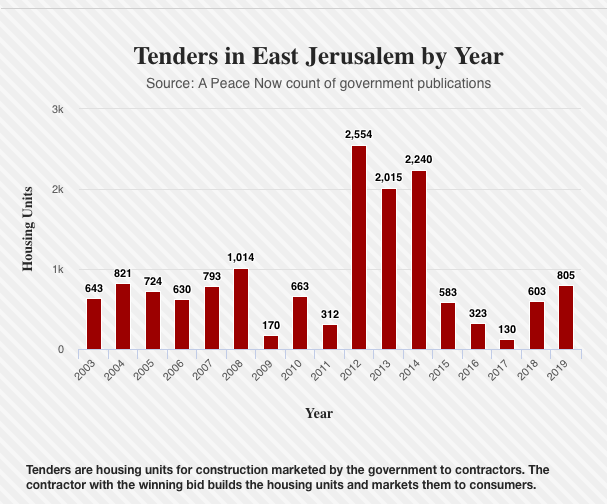 On May 30th, the Israel Land Authority published tenders for a total of 805 new settlement units in East Jerusalem, a decisive step towards the start of construction. The 805 tenders were issued for 345 units in the Ramot settlement and 460 new units in the Pisgat Ze’ev settlement. These are the first tenders published for East Jerusalem settlement construction since April 2018, and collectively are the most tenders published in a single year (let alone simultaneously) since 2014. Moreover, as Jerusalem expert Daniel Seidemann explains, this batch of tenders allows for more construction in East Jerusalem settlements than the government has approved for East Jerusalem Palestinian neighborhoods since Israel gained control of East Jerusalem in 1967.
Furthermore, the Jerusalem settlement watchdog group Ir Amim warns that this batch of tenders may only be the first of an oncoming wave:
“For several years after the collapse of the Kerry initiative in April 2014, there was a significant decrease in the approval of master plans in East Jerusalem and as a result, few tenders were announced. This dramatically changed in 2017 and 2018 with the advancement of master plans reaching near record levels. Today’s tenders are primarily a result of plan approvals from last year, potentially signaling impending large-scale announcements of tenders based on additional plans which have been approved over the last year.”
Peace Now, the veteran settlement monitoring organization, said in a statement:
“Continued construction in East Jerusalem does not contribute to Jerusalem and does not contribute to Israel. As long as we have not reached a permanent agreement with the Palestinians on Israel’s borders, building beyond the Green Line is illegitimate and only harms the prospects for peace and trust between the sides.”
The World Zionist Organization Continues to Finance Illegal Settlement Construction
According to documents acquired by Israel’s Movement for Freedom of Information, over the past two years the Settlement Division of the World Zionist Organization continued to finance illegal settlement construction while simultaneously trying to hide this information from the public.
As a reminder, the Settlement Division is technically part of the World Zionist Organization, but in practice the unit was created by the Israeli government in 1968 and is funded entirely by the Israeli government (and Israeli taxpayers). Its mandate is to manage West Bank land expropriated by Israel, in order to facilitate the settlement of Israeli Jews in the occupied territories. To make this possible, the Israeli government has allocated approximately 60% of all “state land” in the West Bank to the WZO’s Settlement Division [over the past 50 years Israel has declared huge areas of the West Bank to be “state land,” including more than 40% of Area C, where most of the settlements are located]. Together, the WZO and the Israeli government work in coordination to develop West Bank settlements and encourage Jews to move into them, working together so closely that the Settlement Division even splits its real estate profits with the Israeli Housing and Construction Ministry.
According to the WZO’s financial documents for 2017-2018, the WZO subsided settlement projects that are illegal under Israeli law — to the tune of $734,577 USD (NIS 2,668,427).
In addition, the WZO failed to specify how it spent an additional USD $16 million (NIS 58 million) in support of new construction projects, leaving the exact location and legal status of the construction unknown. This represents 43% of the WZO’s overall budget for subsidizing projects.
The settlement projects known to have been subsidized by the WZO in 2017-2018 include:
-
- $640,000 USD (NIS 2,330,973) for the establishment of a community center in the Eli settlement. Though the Eli settlement previously received Israeli government approval, a “Master Plan” – which officially zones land for distinct purposes (residential, commercial, public) – has never been issued for Eli, meaning all construction there is illegal under Israeli law.
- $85,816 USD (NIS 311,736) on projects in the unauthorized Brosh outpost (the Israeli government is advancing a plan that would legalize Brosh retroactively, but until it does, all projects in it are illegal).
- $42,000 USD (NIS 153,127) for infrastructure development in the unauthorized Givat Eitam/E-2 outpost, which according to Peace Now appears had not been transferred as of the end of 2018. FMEP has covered the settlers efforts to establish the Givat Eitam/E-2 outpost and the government’s plan to retroactively authorize it as an official settlement in detail. It is worth recalling that the location of the Givat Eitam/E-2 has dire geopolitical consequences for the fate of the two state solution as well as the development of Palestinian communities just south of Bethlehem.
- $6,000 USD (NIS 22,445) for projects in the unauthorized Mitzpe Kramim outpost. Funding for Mitzpe Kramim over the past two years is particularly galling, given ongoing litigation that has included evidence that the Settlement Division knowingly gave land privately owned by Palestinians to settlers in order to build the outpost.
- $900 USD (NIS 3,273) for renovation of illegal structures in the unauthorized outpost of Haresha. The Israeli government has successfully used the Haresha outpost as a test case for new legal tools the government of Israel developed in order to justify the expropriation of privately owned Palestinian land in order to retroactively legalize outposts. Using these tools, the government has found a way to “legally” build an access road to the settlement through privately owned Palestinian land; once the road is built, there is nothing preventing the government from retroactively legalizing Haresha.
Peace Now said in a statement:
“The Settlement Division is a body that was born in sin immediately after 1967 in order to carry out the dubious works of building settlements for the government. It turns out that even today, after regulating the activities of the Settlement Division, it still operates without transparency and continues to finance illegal activity. The time has come to dismantle the Settlement Division and to restore to the government the governmental activities it has privatized.”
Despite the WZO’s ongoing defiance of Israeli planning and building laws — or perhaps in light of its direct and very effective role in entrenching and expanding the settlements — the Israeli government is actively seeking to transfer more West Bank land to the WZO for management. In the last Knesset session, a government-backed bill to expedite the transfer of more land to the WZO was stalled by the Israeli Attorney General only because the bill, in the view of the Attorney General, was duplicative of his own efforts to enrich the Settlement Division at the administrative level.
Yitzhar Settlers Attack Israeli Police Officers, Again
On May 26th, dozens of masked Israeli settlers violently attacked Israeli police officers who approached an illegal outpost near the settlement of Yitzhar, forcing the Israeli army to intervene in order to get the police officers to safety.
Not a single settler was arrested for the attack.
The event started when Israeli police arrived at the Kippah Sruga outpost in response to calls saying that clashes had broken out between Palestinians and Israelis in the area. According to Israeli police, when they arrived masked settlers began launching stones at them and slashed their car tires with a knife.
Haaretz reporting on this incident reminds readers:
“Over the past several weeks, settlers from Yizhar and surrounding settlements have been involved in several altercations, yet police have not arrested a single suspect. Last week, Israelis and Palestinians reported a field set ablaze and clashes in the Palestinian towns of Burin, Urief and Asira al-Qibliya. In a video disseminated by Asira al-Qibliya’s council, settlers are seen throwing stones at Palestinians, while soldiers nearby do nothing to arrest them. In response to the video, the IDF spokesman said that ‘Palestinians started a fire near Asira al-Qibliya. The IDF, the Border Police and civilian volunteers worked to extinguish the fire, which was spreading towards a military position and the edge of Yitzhar.’ After a B’Tselem video surfaced, showing settlers setting fire to fields, the army revised its response and confirmed that Jewish settlers also took part in setting fires.”
Israel Cut-Off & Trapped a Palestinian Family on the Israeli Side of the Wall, Then Banned Them from Entering Israel
On May 27th, Haaretz published a gut wrenching profile of the Hajajla family who lives on the Israeli side of the separation wall that cut them off from their hometown of al-Walajah, a Palestinian village just south of Jerusalem. Two days after publication of the profile – which FMEP shares in brief below – Israel issued an order banning the patriarch of the family, Omar Hajajala, from entering Israel, though he lives on the Israeli side of the wall in a spot where the route of the wall juts into the West Bank.
Before jumping into the full story, here is a reminder about the situation facing all of the residents of al-Walajah, in the words of Danny Seidemann:
“Walajeh is a village on Jerusalem’s southern flank that is entirely surrounded by the separation barrier. Since 1967, Walajeh’s inhabitants have lived in a Kafka-esque situation, with their village technically located inside Israel’s expanded borders, but with villagers never given Israeli residency (they are considered West Bankers and thus are not permitted inside Jerusalem). As a result, the villagers’ presence in their own village is, under Israeli law, illegal, and their homes there are, by definition, illegal.”
The Hajajla family was the only home in al-Walajah disconnected from the village when the separation barrier was built, leaving the family home on the Israeli side of the wall since 2014. The family refused to abandon their home despite the coercive and legal efforts by Israel to force them to do so. In 2014, after a petition before the High Court of Justice, the Defense Ministry opted to build the family a special passage underneath the barrier so it could reach the village, at a cost $1.1 million USD (NIS 4 million).
After the tunnel was constructed, the Israeli government began to impose new, burdensome, and compounding restrictions on the family regarding its use of the passageway. In 2017, the government decided to install a locked gate at one end of the passageway to control who enters and exits, which could be opened only by a single remote control given to the family. That single remote meant that whenever one member of the family left the home (impossible without taking the remote control with them), the rest of the family was left trapped, literally, until the remote-holder returned.
To make the situation more workable, Omar Hajajla, the family’s patriarch rigged an electric bell near the gate so that the single remote control can stay at the house while family members leave and return (the bell enables someone in the home to know that someone is at the gate needing to be let in). The bell has been in place for over a year, but only recently the Israeli Border police opted to make it an issue. This month, the police took Omar in for questioning and changed the lock so that the family could not open the gate at all. Omar Hajajla was ultimately fined and released, but the lock on the gate remained — until Haaretz filed an inquiry on May 26, 2019.
Omar Hajajla speculates that a recent court ruling in his family’s favor prompted the Israeli Border police to escalate their harassment of the family and make an issue of the bell. About a month ago, the Jerusalem Magistrate’s Court rejected the state’s assertion that the family’s home is illegal – allowing the Hajajla family to stay put.(Note: The state of Israel has initiated demolition proceedings against dozens of homes in al-Walajah claiming that they were built without Israeli building permits – which are next to impossible for Palestinians to obtain, let alone Palestinians on coveted land like al-Walajah) –
In response to the May 27th Haaretz profile, Israeli police stated:
“At issue is a security passage that provides a short passage for the family from their home in Israeli territory to the Palestinian Authority areas. As you can see from the attached video and photos, the gate was shut last Monday to repair security cameras that were broken, to repair damage to the gate and to remove an electric bell that the father of the family had installed against the law, by attaching an unapproved electric wire from his home, a distance of dozens of meters from the passage. After the repair the passage was opened on Wednesday but when the father was seen exploiting it to illegally allow Palestinians to enter it was shut again and the suspect was taken for questioning. The passage was opened again yesterday, but because of a technical problem that was discovered it was shut again and we are working to fix it quickly. The Israel Police will not allow any damage to the security passages it is responsible for and will bring to justice anyone who vandalizes them and tries to harm the State of Israel’s security.”
The treatment of the Hajajla family should be seen in context of Israeli efforts to seal off al-Walajah from Jerusalem. As FMEP has previously reported, residents of al-Walajah have long been struggling against the growing encroachment the nearby Etzion settlement bloc and the Israeli government’s attempt to de facto annex the bloc as part of “Greater Jerusalem.” Ir Amim explains several prongs of this effort, including a particularly problematic section of the separation barrier around al-Walajah that has been planned in order to (a) almost completely encircle the village, (b) turn its valuable agricultural land into an urban park for Jerusalem, and (c) enable construction of a highway that will connect the Etzion settlement bloc to Jerusalem with Israeli-only bypass roads.
Palestinians React to Latest Annexation Rumors Amidst Israeli Government Chaos
Al-Monitor reports reactions from Palestinian leaders who are increasingly fearful that rumors about Israeli annexation of the settlements will be acted upon. Those rumors – as FMEP wrote last week – suggest that Israel will strip the Israel Civil Administration of its authority over the settlements and bring all settlements under Israeli domestic law, making settlement affairs the responsibility of the various Israeli ministries.
Wasel Abu Youssef, member of the PLO Executive Committee in the West Bank, told Al-Monitor:
“Expanding the powers of the Israeli ministries at the expense of the civil administration is an attempt to impose occupation and establish it in the West Bank, to end the [idea of a] two-state solution and prevent the establishment of a Palestinian state, which falls within the framework of denying the Palestinian people their rights to freedom and independence. These efforts mean practically annexing parts of the West Bank to Israel. Unfortunately, this comes with the blessing of the administration of US President Donald Trump, who doesn’t recognize the option of a two-state solution and gives Israel the green light to do whatever it wants in the West Bank.”
Walid Assaf, head of the Colonization and Wall Resistance Commission, told Al-Monitor:
“The efforts to transfer the powers of the civil administration to the Israeli ministries directly mean the annexation of the West Bank settlements to Israel. This will lead to annexing Area C — which amounts to over 60% of the entire area of the West Bank — to Israeli sovereignty…Annexing West Bank settlements to Israel would pave the way for Israel to perpetuate a policy of ethnic cleansing against the Palestinians, and this will push the Palestinians in Area C to migrate to PA-controlled Areas A and B.”
Hanna Issa, an international law professor at Al-Quds University in Abu Dis, told Al-Monitor:
“The Israeli occupation has always been there. It is essential that the Palestinian territories [including the Israeli settlements] remain administered through the civil administration of the Israeli army [in cooperation with the Palestinians] until this occupation ends…“Limiting the powers of this administration and giving its responsibilities to the Israeli ministries is a dangerous step aimed at annexing occupied areas under international law.”
Scheindlin: Israel’s Democratic Decay is Happening for the Sake of Annexation
In a new paper for The Century Foundation, Israeli pollster and political analyst Dahlia Scheindlin writes an important analysis regarding Israel’s path to annexation:
“This report argues that Israel’s slide into illiberal democracy can only be understood as part of an attempt to go beyond military or physical control and establish a political and legal foundation for permanent annexation of both land and people. The assault on Israel’s democratic norms over the past decade initially appeared only indirectly related to a future of permanent annexation, as they suppressed the mechanisms of dissent and undermined the basis for minority rights. Then, in the recent elections, Prime Minister Benjamin Netanyahu made explicit his goal to annex occupied territory in the West Bank, which represented the culmination (to date) of increasingly open policies and legislative initiatives from the previous term that explicitly advance annexation.”
The entire paper is worth reading, and is available online here.
Florida Governor Leads Headline-Grabbing Trade Delegation to West Bank Settlements
From May 25-31, Florida Governor Ron DeSantis led a trade mission – purposefully and prominently also visiting settlements in the West Bank. While on the ground, DeSantis made headlines by blasting BDS, endorsing Israeli settlements, and gloating about Florida’s role in AirBnB’s reversal of its decision to remove rental listing located in Israeli settlements.
DeSantis signed several formal partnerships between Florida universities and Israeli schools, most notably including an agreement between Florida Atlantic University and Ariel University – the first such deal between a U.S. school and an Israeli school located in a settlement. In recognition of the historic deal, Ariel University presented DeSantis with an Honorary Fellowship Award at an event in the settlement, attended by U.S. casino magnates and settlement financiers Sheldon Adelson and Dr. Miriam Adelson. In his acceptance speech, the Governor invoked the Bible to lend his support for Israel’s permanent control of the West Bank, saying:
“We are now in the heart of the Holy Land of Israel. When you think about Israel’s history and the tradition that connects Israel and the U.S., it’s inspiring. On my last visit to Israel in 2014, the U.S. embassy was in Tel Aviv and we were on the verge of signing a destructive agreement with Iran, and I am happy that today we have achieved real progress. We have an American embassy in Jerusalem with an American acceptance of the sovereignty of the State of Israel on the Golan Heights and the agreement with Iran has been removed from the stage of history. I, personally, have fought Airbnb’s discriminatory policy against Jewish-owned properties in Judea and Samaria, and only recently have they changed their discriminatory policy. I say here: BDS has no place in Florida. The memorandum of understanding signed today between the University of Ariel and Florida State University is a blessed agreement that will bring these two institutions forward. I am happy to say that Florida is a very diverse state, but not when it comes to its unequivocal support for the State of Israel.”
U.S. Ambassador to Israel David Friedman also hosted DeSantis for a reception and Israel’s Minister of Public Security Gilad Erdan joined DeSantis on a visit to additional West Bank settlements, this time in Gush Etzion, for a briefing about the fight against BDS. Friedman said:
“Israel has no greater friend in all the 50 governor mansions than Ron DeSantis. I welcome you and the Cabinet members and your delegation to this small but incredibly important country.”
As mentioned by Ambassador Friedman, DeSantis was joined by members of the Florida Cabinet on the trade mission, including Florida Attorney General Ashley Moody and Florida Agricultural Commissioner Nikki Fried. In a controversial move, DeSantis convened a Florida cabinet meeting on May 29th at the Embassy in Jerusalem, despite a lawsuit filed in Florida seeking to stop him from doing so. The lawsuit was filed by a government watchdog group and several news outlets, arguing that convening the Cabinet in Israel violated a state law that requires government meetings to be accessible to the public. The lawsuit was dismissed because the court could not serve paperwork to DeSantis and the other named defendants – who were, obviously, in Israel.
At the Cabinet meeting on may 29th, DeSantis signed a bill to prohibit anti-Semitism in Florida’s public schools and universities. The new law wrongly conflates anti-Semitism with criticism of Israel by including in the definition of anti-Semitism, “drawing comparisons of contemporary Israeli policy to that of the Nazis,” ″blaming Israel for all interreligious or political tensions,” and/or “requiring behavior of Israel that is not expected or demanded of any other democratic nation.”
The next day, DeSantis met with Prime Minister Netanyahu while the larger delegation visited the City of David national park, which is run by the radical Elad settler group.
Bonus Reads
- “Israel’s High Court Seeks Order, Not Justice” (Haaretz)
- “Another Company Withdraws from Israeli Light Rail Project” (IMEMC)
Welcome to FMEP’s Weekly Settlement Report, covering everything you need to know about Israeli settlement activity this week.
To subscribe to this report, please click here.
August 17, 2018
- U.S. Ambassador: There is “No Reason” to Evacuate Settlements from West Bank
- Israel Publishes Tenders for 603 new units in East Jerusalem Settlement of Ramat Shlomo
- Massive Jerusalem Development Deal for 20,000 New Apartments – Including Settlement Expansion Projects
- Israel Triples Size of New Settlement Industrial Zone In Hebron
- Knesset Sends Funds to New Settler Council in Hebron, Despite High Court Injunction
- Knesset Approves Past Due Payment for the Construction of Amichai Settlement & “Temporary” Outpost
- Delay in Opening of new Jerusalem “Park” That Confiscates Palestinian Spring
- Israel Evicts Palestinians from Bethlehem Home Despite Court Order
- Bonus Reads
Comments, questions, or suggestions? Email Kristin McCarthy at kmccarthy@fmep.org.
U.S. Ambassador: There is “No Reason” to Evacuate Settlements from West Bank
According to MK Yehuda Glick (Likud), U.S. Ambassador to Israel David Friedman – who is one of three lead authors of the supposedly forthcoming U.S. peace plan – told a group of settler leaders that he does not see any reason why settlements would need to be evacuated from the West Bank in a peace deal with the Palestinians. MK Glick said Friedman was “very explicit” about that point during the meeting, which was held at the U.S. Embassy in Jerusalem. Notably, the position attributed to Friedman is consistent with positions he has taken in the past, both in speaking and writing.
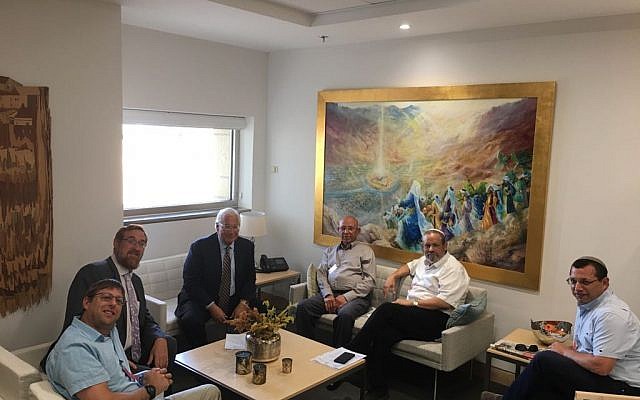 The Embassy declined to comment on the headline-making statement or the meeting itself. Without an American statement, settler leaders are the only source for what transpired in the meeting. According to MK Glick, the small group of settler leaders pushed Ambassador Friedman to endorse an “economic peace plan” as a substitute for a political solution to the conflict. Glick said that an economic proposal would “make redundant the discourse of concessions” (under previous U.S. proposals, Israeli concessions would have included the evacuation of far flung settlements in the West Bank).
Along those lines, the group presented Ambassador Friedman with a plan for a new industrial zone and medical center in the southern West Bank that, according to Glick and Har Hevron Regional Council Chairman Yochai Damari, would employ and serve thousands of Palestinians. The plan was presented by Glick, Damari, and Palestinian businessman Muhammad Nasser, who also attended the meeting. According to Glick, the U.S. Ambassador was supportive of the plan and offered U.S. assistance once the initiative was up and running.
[UPDATED 9/28/18: More details on the joint Israeli-Palestinian industrial zone in the Har Hebron region was later fleshed out by Ynet in a report here. The plan calls for an industrial zone and commercial center to be built near the Tene-Omarim settlement. Israeli Finance Minister Moshe Kahlon briefed the details of the plan to U.S. Treasury Secretary Steven Mnuchin and Jason Greenblatt, U.S. Special Representative for International Negotiations. The U.S. is expected to present the plan to the World Economy Forum during its annual meeting in January 2019]
Israel Publishes Tenders for 603 new units in East Jerusalem Settlement of Ramat Shlomo

Map by Ir Amim
On August 15th, the Israel Land Authority published construction tenders for 603 new settlement units in the Ramat Shlomo settlement in East Jerusalem. The 603 units are part of a larger plan for 1,500 units in Ramat Shlomo (tenders for almost all of which have been published now) that was announced by Israel in 2010, during the visit of then-Vice President Joe Biden. The timing of that announcement, and the inflammatory nature of settlement approvals in East Jerusalem (which the Obama Administration pressured Israel to halt), sparked outrage and prompted Biden to issue harsh criticism of Israel while on the ground. The incident earned the 2010 Ramat Shlomo plan the nickname the “Biden Plan.”
Anti-settlement watchdog Ir Amim comments that the Ramat Shlomo tenders are a part of the Israeli endeavor to:
“expand the Israeli neighborhoods/settlements in such a way as to consume the remaining space between them and nearby Palestinian neighborhoods ( a critical geo-political link between Jerusalem and Ramallah) so as to inhibit their development and further complicate any future division of the city.”
There has been a significant uptick in East Jerusalem settlement advancements since President Trump assumed office in January 2017, reflecting the sea change in U.S. policy towards settlements (evidenced again this week by Ambassador Friedman’s remarks, detailed above). As Ir Amim details, Israel’s unrestrained advancement of settlement construction in East Jerusalem has been coupled with legislative schemes to change the borders of Jerusalem (annexing far flung settlements into Jerusalem and cutting Palestinian neighborhoods out of Jerusalem) in order to engineer a Jewish Israeli majority in Jerusalem.
Massive Jerusalem Development Deal for 20,000 New Apartments – Including Settlement Expansion Projects
On August 15th, the Jerusalem Municipality signed a $380 million deal with the Israel Land Authority to finance a plethora of projects across the city, including 20,000 new apartment units. While much of this development will be in West Jerusalem, some will reportedly be in the East Jerusalem settlements of Pisgat Ze’ev, French Hill, and Atarot. The Jerusalem City Council is expected to give final approval to the plan next week.
Israel Triples Size of New Settlement Industrial Zone In Hebron
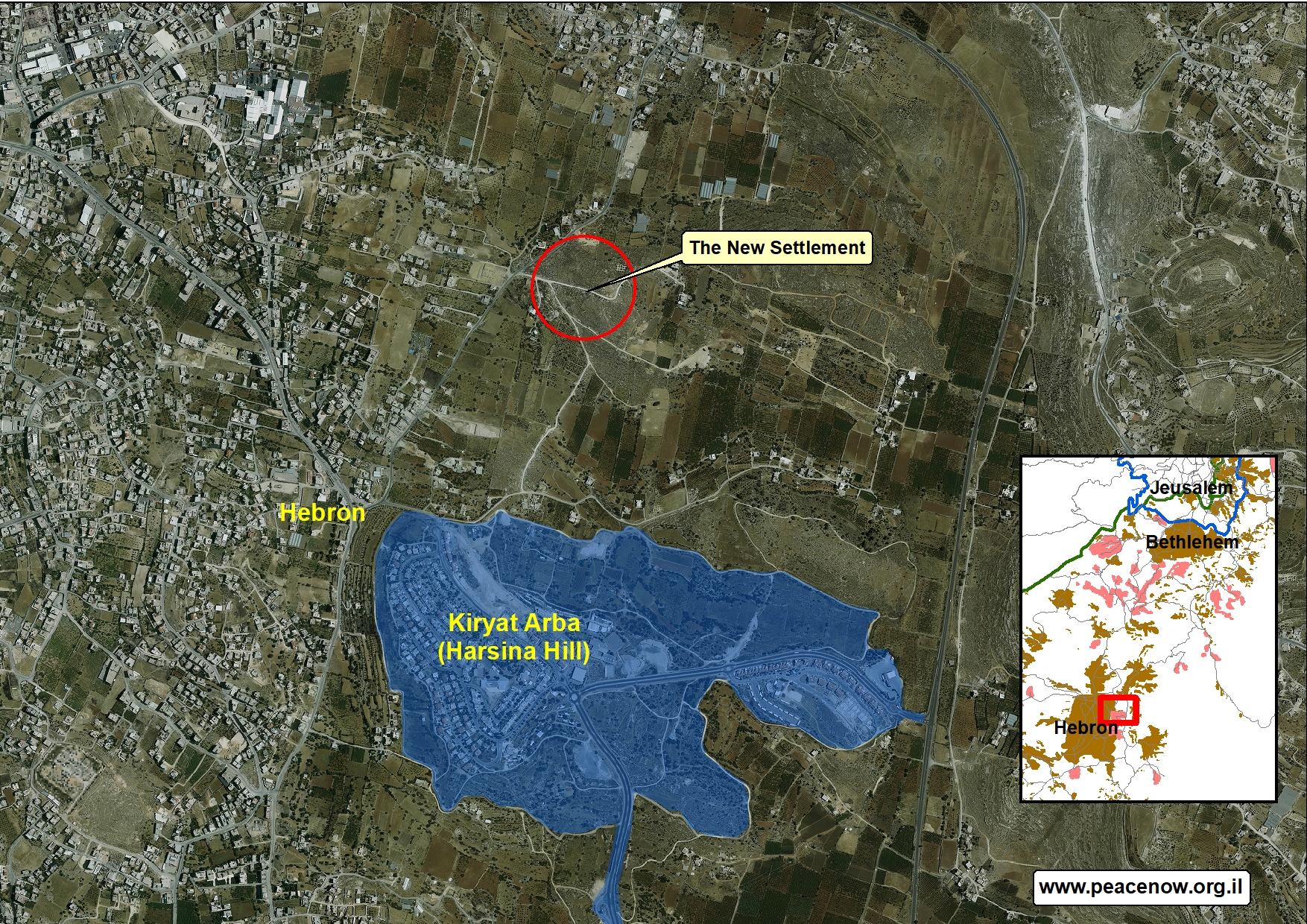
Map by Peace Now
According to The Jerusalem Post, on August 12th the Israeli government approved a plan that will triple the size of an industrial zone in the Kiryat Arba settlement in Hebron, approving 10 million shekels for the project. FMEP reported on the initial plans to build the Kiryat Arba industrial zone in March 2018, noting that the industrial zone is technically within the borders of the settlement but well outside of the developed lines of the settlement and beyond the fence that surrounds it – making it, in effect, a new Israeli settlement in Hebron. Now, the new settlement is set to significantly expand in one of the most volatile areas in the West Bank.
Knesset Sends Funds to New Settler Council in Hebron, Despite High Court Injunction
On August 12th, the Knesset Finance Committee approved 2 million shekels (about $550,000 USD) to fund the new local settler committee in Hebron. The Finance Committee requested that the money be disbursed to the Hebron settler committee “in accordance with an agreement in the past with MK Bezalel Smotrich,” (Habayit Hayehudi)…after the necessary professional and legal checks.”
The creation (via military order) of a new autonomous committee to represent and service a cluster of settlers living in enclaves in Hebron’s city center is being challenged by the Hebron Municipality. In response to the Palestinian petition, the High Court of Justice put a freeze on the plan, effective July 4, 2018, and gave the Israeli government 120 days to explain the legality of the plan. The petition argued that the military order creating the new body was intentionally vague in defining its legal and geographical jurisdiction, and pointed out that the new committee would be able to override decisions by the Hebron Municipality thereby stripping Palestinians of autonomy and representation in matters that directly affect them.
It is unclear from reporting if the Knesset Finance Committee’s decision to fund the new committee is related to the High Court’s ongoing consideration of the case. However, what is clear is that the Knesset is not concerned about undermining the High Court of Justice’s power over West Bank issues — indeed, the Knesset is actively pursuing that end with the recent passage of a new law stripping the Court of jurisdiction over land disputes and transferring it to a domestic Israeli Court, and with ongoing consideration of a bill that would allow the Knesset to reinstate laws that the High Court strikes down.
Knesset Approves Past Due Payment for the Construction of Amichai Settlement & “Temporary” Outpost
On August 12th, the Knesset Finance Committee approved the transfer of $9.5 million to pay contractors for their ongoing work on the first new settlement built with government approval in 25 years, Amichai, and a new “temporary” outpost for settlers whose homes were built on privately owned Palestinian land in the Netiv Ha’avot outpost and were recently demolished. Amichai is the new settlement approved as a pay-off to the settlers who were evacuated from the illegal Amona outpost. Construction on Amichai has begun, but has been interrupted several times due to lack of government cash, a problem ostensibly solved by this week’s cash transfer.
With respect to the new outpost for the Netiv Ha’avot outpost settlers, in February 2017 the Israeli government approved an unusual plan to place 15 mobile homes — connected to Israeli water, power, sewage, roads, and other infrastructure — at a site located near, but not within, the borders of the Alon Shvut settlement, in effect creating a new outpost for settlers evacuated from another outpost. When the High Planning Council initially approved the advancement of this plan in October 2017, it noted that “the plan is improper, but we will have to approve it as a temporary solution.” At the time, the Council ordered the government to go about expanding the borders of the Alon Shvut settlement to include the land. Under the approved plan, the new homes will be allowed to stay in that location for three years. However, based on past practice, it can be expected that within that time, or at the end of those three years, the site will “regulated” by Israel to become a permanent area of Israeli settlement.
In both cases – the Amichai plan and the Netiv Ha’avot plan – the Israeli government massively “compensating” citizens for the inconvenience of having been caught brazenly breaking Israeli law (i.e., for building without permits on privately owned Palestinian land). The two cases highlight the way in which the Israeli government not only encourages illegal settlement building, but generously incentivizes and rewards its. At this point, in addition to two new settlements, approximately 20 million shekels ($5.4 million) has been paid to the Amona evacuees and 15 million shekels ($4 million) to the Netiv Ha’avot evacuees.
Delay in Opening of new Jerusalem “Park” That Confiscates Palestinian Spring
A dispute between Israeli government agencies has led to a delay in the opening of a new Jerusalem tourist site – a park established for the express purpose of taking control over the Ein Al-Hanya spring, which was historically part of the al-Walajah Palestinian village. Originally slated to open April 1st, the delay centers around a battle over who will fund the operations of the site. For now, the site is closed and the grounds are not being maintained.
Regardless of the dispute, Israel has implemented policies that prevent Palestinians from accessing the spring and surrounding lands, including illegally moving a police checkpoint to further choke off al-Walajah from Jerusalem. As detailed in Haaretz, the plan for the park includes three pools filled by the spring – two for Israelis and tourists, and one for al-Walajah residents to water their crops and flocks. However, that third pool for Palestinians has not been built, and the water “merely spills into the nearby wadi.” The other pools, like the park, are currently empty and fenced off.
Israel Evicts Palestinians from Bethlehem Home Despite Court Order
Haaretz reports that settlers have forcibly evicted a Palestinian family from their home near Bethlehem, in defiance of an Israeli court order. The Palestinian Samara family reports that settlers tricked them into leaving the property, after which settlers locked them out, forcibly evicted them and their belongings, and then used a bulldozer to demolish their home. The family has filed an appeal to the High Court of Justice.
The Samara family – which since the early 1980s lived in 3 small units within a larger apartment building – has been targeted for eviction by settlers since 2012, when ownership of the building was transferred to an American organization controlled by Irving Moskowitz, a major funder of Jewish settlement in East Jerusalem. In 2016, the Gush Etzion Regional Council was given jurisdiction over the compound to move in Jewish Israeli settlers. Since that time, the building has been taken over by settlers, except for 2 units in which the Samara family lived as protected tenants (the third was welded shut), based on an Israeli court ruling under which the building’s owner promised not to restrict access to the building for four members of the Samara family (no other family members or visitors were allowed access). Regarding the arrangement, the judge wrote:
“This arrangement will remain in force unless a different judicial order is issued after a legal proceeding instituted by one of the parties.”
As Haaretz notes, there does not appear to be a different or new judicial order that would change the 2016 agreement.
In 2017, the Samaras reported that a new settler family had moved into the compound and began harassing the family members who remained – prompting them to file a complaint on July 26, 2018 with the Israeli police in the Beitar Illit settlement. Two weeks later on August 6th, the family was forcibly evicted and their units were demolished.
Despite the Samara’s harassment complaint and a real-time call to the police while the eviction was taking place, Israeli police took no action to prevent settlers from evicting the Samaras, reportedly stealing their cellphones, and bulldozing the properties. The Beitar Illit police station even refuse to allow the Samara family to enter the station and file a complaint until a lawyer for the family got involved many hours later.
Following intervention by UNRWA, the family was allowed to return to search the site for their ID cards and other important belongings. Now homeless, the Samara are taking their case to Israel’s the High Court of Justice.
Bonus Reads
- “A Palestinian Bedouin Village Braces for Forcible Transfer as Israel Seeks to Split the West Bank in Half” (The Intercept)
- “Between Garbage and Sewage: Israel’s Future Plans for Khan al-Ahmar” (+972 Mag)
- “Their Parents Settled the West Bank for Ideology, They’re Staying for the Vibes” (The Times of Israel)
Welcome to FMEP’s Weekly Settlement Report, covering everything you need to know about Israeli settlement activity this week.
To receive this report via email, please click here.
July 19, 2018
- It’s the Settlements, Stupid: Documents Reveal Israel Planned Khan al-Ahmar Bedouin Removal for 40+ Years
- New Law Puts West Bank Legal Matters under Domestic Israeli Jurisdiction
- Since 1967, Israel Gave 99.76% of “State Land” in the West Bank to Settlers (But Blames Palestinians)
- Birthright & the Settlers
- Jordan Valley Settlement Council Confirms Participation in (Illegal) Outpost Activity, Refuses to Release Any Details
- Huge Expansion Approved for Pisgat Ze’ev; Jerusalem Expert: this is “Natural Response” to Trump’s Jerusalem Policy
- Bonus Reads
Comments, questions, or suggestions? Email Kristin McCarthy at kmccarthy@fmep.org.
It’s the Settlements, Stupid: Documents Reveal Israel Planned Khan al-Ahmar Bedouin Removal for 40+ Years
A recently discovered document from the 1970s confirms that the removal of Bedouin communities from the Maale Adumim/E-1 area east of Jerusalem (like Khan al-Ahmar) has been planned for decades and is directly connected to plans to expand Israeli settlements and annex West Bank territory.
The document, entitled “A proposal to plan the Ma’aleh Adumim region and establish the community settlement of Ma’aleh Adumim B,” was written by settler activist Uri Ariel (who is currently serving as Israel’s Agricultural Minister). It lays out a plan to create a “Jewish corridor” of settlements connecting the coast to the Jordan River, recommending that Bedouin be evacuated from the area east of Jerusalem in order to build a new settlement: “Maale Adumim B.”
Haaretz reports that “a large part of the plan has been executed, except for the eviction of all the area’s Bedouin,” adding “Today, under a government in which [Agricultural Minister Uri] Ariel’s Habayit Hayehudi party is so powerful, the open expulsion of Bedouin is possible.”
Jerusalem expert Danny Seidemann adds:
“the story of Khan Al-Ahmar is not only about the tragedy for the village and its inhabitants, or about Israel’s readiness to carry out an ostensible war crime in the face of the world. It is also about Israel’s determination to clear the entire area of the West Bank east of Jerusalem, and located within the line of the built and planned barrier, of any Palestinian presence. This clearing will prepare the ground for the future construction of E1 and de facto annexation of this so-called bloc, which extends well beyond the built-up area of Maale Adumim.”
New Law Puts West Bank Legal Matters under Domestic Israeli Jurisdiction
On July 16th, the Knesset voted 56-48 to pass a law that, in effect, further extends Israeli sovereignty into the West Bank, suspends even the pretense that Israel’s justice system is interested in protecting the rights of Palestinians living under occupation, and strengthens the hand of settlers and their supporters.
Specifically, since 1967, the court of first jurisdiction for cases related to Palestinians living in the West Bank — where Palestinians can legally challenge State actions (and inactions) regarding planning and construction, travel permits, freedom of information, and freedom of movement — has been the Israeli High Court of Justice, reflecting the extraordinariness of Israeli judges issuing, in effect, extra-territorial legal rulings.
The new law strips Palestinians of this direct avenue to the High Court of Justice. It compels Palestinians living in the West Bank to file petitions with the Jerusalem District Court (located within Israel’s sovereign borders). The High Court of Justice will only hear Palestinians’ cases on appeal from the district court, adding more time and higher costs to any potential appellant. The bill has been championed by Justice Minister Ayelet Shaked (Jewish Home), whose three-fold rationale for the bill explicitly states its purpose: to help settlers take more Palestinian land and shut-down Palestinian challenges to such thefts.
Shaked celebrated the passage of the bill, saying:
“The High Court petition party of Palestinians and extreme left organization against the settlements in Judea and Samaria is over today. From now on they will have to go through the judicial hurdle like any other Israeli citizen [note: Palestinians living in the West Bank are not Israeli citizens and as such do not enjoy the same rights or privileges as settlers in an Israeli court].”
Reiterating her call for annexation of the settlements, Shaked added that:
“Hebron, Ra’anana, Elon Moreh and Kiryat Arba [all but Ra’anana being places located deep inside the West Bank] are all inseparable parts of the Land of Israel.”
With the passage of the bill, the Israeli Knesset has further revealed – with startling honesty – its intention to treat the occupied territories as if they are sovereign Israeli territory. The bill is part of the legislative body’s broader effort to erase all remaining distinctions (legal, judicial, economic, and otherwise) between sovereign Israel and the occupied territories, distinctions which allowed Israel to preserve the guise of respect for rule of law, and good intentions, for the last 50 years. Lara Friedman points out:
“…this [the passage of the new law] is good news, further removing the pretense that Israel’s justice system protects Palestinian rights. For 50yrs the High Court’s rulings have at BEST dealt Palestinians pyrrhic victories that have systemically legitimized occupation & rule by law.”
FMEP tracks the application of domestic Israeli law over the occupied West Bank (the de facto annexation of the West Bank) on its Annexation Policy Tables, which are regularly updated.
Since 1967, Israel Gave 99.76% of “State Land” in the West Bank to Settlers (But Blames Palestinians)
On July 17, Israel’s Peace Now published a new report (covered in the New York Times) showing that Israel has allocated 99.76% of “State Land” in the West Bank to Israeli settlers, and just .24% to the local Palestinian population living under Israeli occupation. Israel has declared a total of 16% of land in the West Bank – including nearly half of all land in Area C – as “state land,” a method of land confiscation Israel has exploited to take control of West Bank land. This works out to around 260 square miles (674,459 dunams) of West Bank land granted to the settlers, and less than 1 square mile (1625 dunams) granted to the Palestinians.
Adding insult to injury, the 1 square mile of land granted for Palestinians was mostly for the purpose of establishing Israeli settlements and for the forced transfer of Bedouin communities off other land coveted by Israel (as in the case of Khan al-Ahmar).
The data upon which the report is based was furnished to Peace Now and the Movement for Freedom of Information in response to a two-year old freedom of information request to the Israeli Civil Administration (which is the sovereign governing power over the West Bank and is obligated under international law to protect the rights of the occupied people). In its response to the request, the Civil Administration suggested that Palestinians are to blame for the stark inequality, since they have refrained from applying to use the land. A statement from the Civil Administration reads:
“Applications for the allocation of state land are routinely submitted by all the population, both Palestinian and Israeli. It should be emphasized that the number of requests submitted by Palestinian residents is generally very low.”
With this argument, the Civil Administration has constructed a classic “damned if they do, damned if they don’t” argument. If Palestinians apply to use the land, they would legitimize Israel’s authority to declare West Bank land “State Land” in the first place as well as Israel’s authority to grant or deny its use, whether to Palestinians or settlers. If Palestinians don’t apply, they are blamed for Israel’s decisions on allocating virtually all of the land to settlers. This argument also ignores the fact that the the pattern of allocation of “State Land” revealed in this report is not an exception to, but an illustration of, the rules according to which the Civil Administration has run the West Bank for the past 51 years – rules that overwhelmingly favor the settlers over the Palestinians, most blatantly when it comes to land and construction.
More fundamentally, setting aside the question of whether Israel has abused its authority in declaring so much of the West Bank to be “State Land,” the Civil Administration’s response completely ignores the fact that Israel has a legal responsibility under international law regarding stewardship of “state land” held under its occupation. As the Association for Civil Rights in Israel explains:
“Israel holds state land in an occupied territory as a trustee, and must do everything possible to preserve and develop it for the benefit of the local Palestinian population. The very use of state land for the purpose of building settlements and/or developing infrastructure and industrial zones not in favor of the Palestinian population constitutes a violation of international law. ”
The New York Times observes, correctly:
“The lopsided allocation is hardly surprising. Israeli legal experts say the whole point of seeking out state lands, the bulk of which were designated in the 1980s, was to aid the growing settlement enterprise, which most of the world considers a violation of international law. But the paucity of land allocated to the Palestinians shows the extent of competition over territory, and the effort Israel puts toward building the settlements.”
Peace Now said:
“The significance of the data is that the State of Israel, which has been in control of the West Bank for more than 50 years, allocates the land exclusively to Israelis, while allocating virtually no land for the unqualified benefit of the Palestinian population. Land is one of the most important public resources. Allocation of land for the use of only one population at the expense of another is one of the defining characteristics of apartheid. This is further proof that Israel’s continued control of the occupied territories over millions of Palestinian residents without rights and the establishment of hundreds of settlements on hundreds of thousands of dunams has no moral basis.”
The Peace Now report shines a harsh spotlight on a key facet of Israel’s decades long effort to confiscate land and transfer it to the settlers, particularly in Area C, and it comes at a time when Israeli lawmakers are loudly and clearly calling for the unilateral annexation of Area C – all of which FMEP documents in its Annexation Policy Tables.
Birthright & the Settlers
Adding to the swirling coverage of participants leaving Birthright trips to learn about Palestinians and realities in the West Bank and East Jerusalem, Birthright (an organization which organizes free trips to Israel for young Jews around the world) has come under the spotlight this week for two settlement-related reasons: the harassment of Birthright participants who left the trip to tour Hebron, and Birthright’s partnership with the radical settler group Elad.
First, cameras caught settlers harassing a group of Birthright participants who left the trip to tour Hebron with Breaking the Silence. The tour guide, a former IDF soldier, was attacked by the settlers. Breaking the Silence regularly takes groups to Hebron to observe the apartheid-like reality that exists there, “sterile streets” (an Israeli military term for streets which Palestinians are forbidden to access) and all. Part of that reality is daily settler violence, as Breaking the Silence explains:
“Near daily occurrences of abuse of the Palestinian population by settlers, including humiliation and physical attacks, are part and parcel of the lives of those Palestinians who still live in H2. Even worse, twisted norms of law enforcement in which two different populations are subject to two different sets of laws – one military and one civilian – creates a situation of selective law enforcement at best, and complete lack of law enforcement over the residents of the Jewish settlement at worst.”
Second, Birthright’s partnership with the radical Elad settler organization was exposed when a second group of youth left a Birthright trip during a tour of Silwan (aka the City of David) with Elad, which manages the City of David National Park (which was declared on Silwan land). Elad is engaged in a range of activities to enact their extremist political agenda, at the expense of Palestinians. The group left the Birthright tour to join a Peace Now visit with the Palestinian Sumreen family, who are under threat of eviction from their Silwan home because of the actions of the Elad and the JNF. Birthright responded by accusing the participants who left the trip of seeking to advance a “political agenda,” and defending itself as an “apolitical” organization. Birthright’s response is especially ironic given Birthright’s own choice to ally itself with Elad — an organization that explicitly exists to promote an extremist political and ideological agenda (for further irony, see this proud announcement by a former Birthright participant noting that it was her experience with Birthright that inspired her to become a settler).
Peace Now later said in an email:
“Peace Now has no fight with Birthright. What we oppose are government (or any other) efforts to insert political programming into trips like Birthright’s that intentionally conceal the occupation, such as Elad tours. Elad’s far-right, one-state agenda is well-known, and it is involved in the legal acrobatics underway to evict Palestinian families from their homes.”
Jordan Valley Settlement Council Confirms Participation in (Illegal) Outpost Activity, Refuses to Release Any Details
The Jordan Valley Settlement Council, which represents the majority of Israeli settlements located in the West Bank section of the Jordan Valley, has admitted that it supports illegal outposts in the area, but declined to provide information on its activities. The admission came in response to a freedom of information request made by an Israeli lawyer representing the anti-occupation group Machsom Watch and the coexistence group Combatants for Peace.
In the written refusal to divulge information about the Jordan Valley Settlement Council’s involvement with outposts, staff member Oshra Yihye said that its refusal is based on the fact that the parties requesting the information are critical of settlers living in the Council’s jurisdiction. Yihye also claimed that revealing the information will interfere with Council’s operations. Some Jordan Valley settlers are known to violently attack Palestinian farmers and their property, and settlers have been repeatedly caught on video attacking Israeli activists trying to assist the Palestinians.
Israel has effectively annexed 85% of land in the Jordan Valley, through ongoing settlement building and the declaration of “closed military zones” on vast swaths of farmland. A recent report by B’Tselem documents how Israeli settlers were allowed to establish two new outposts in the Jordan Valley last year. In recent months, Israel has delivered eviction notices to entire Palestinian communities near Israeli settlements in the Jordan Valley. Simultaneously, settlers have been allowed to continue construction on a tourist project – a car race track built in a closed military zone (land expropriated from Palestinians ostensibly for security purposes), despite a court ordered stop-work order.
Huge Expansion Approved for Pisgat Ze’ev; Jerusalem Expert: this is “Natural Response” to Trump’s Jerusalem Policy
On July 2nd, the Israeli Housing Ministry deposited for public review plans for 1,064 units in the Pisgat Ze’ev settlement in East Jerusalem. Jerusalem expert and founder of Terrestrial Jerusalem, Danny Seidemann, recently punctuated the significance of the move, explaining:
“Politically speaking, this approval signals a clear statement by Israeli authorities. These plans received initial approval from the Planning Board in July 2017, as [Terrestrial Jerusalem] reported in detailed here. While the approval of these plans at this time, after a year’s delay, is indeed in large part the normal course of events in the bureaucratic decision, the publication could not have taken place without the advance knowledge and blessing of Netanyahu. As such, this is yet another component in Netanyahu’s systematic effort to tighten Israel’s grip on East Jerusalem, his natural response to Jerusalem having been ‘taken off the table’ by President Trump.”
While pointing out that the Pisgat Ze’ev plans are the first East Jerusalem settlement plans to be deposited for public review this year, Seidemann says:
“This should by no means lead to the conclusion that until now there has been a de facto settlement freeze in East Jerusalem. Before the Pisgat Ze’ev approvals, other settlement activities were proceeding apace, including ground being broken for the expansion East Talpiyot and deliberations on a major new plan in Southeastern Gilo (Master Plan 125195).”
For more analysis from Terrestrial Jerusalem on the Pisgat Ze’ev plans, see here.
Bonus Reads
- “How a West Bank Highway’s Road Sign Captures the Israeli Psyche” (Haaretz)
- “Bulldozers In The West Bank: How recent Israeli Settlement Expansion Jeopardizes the Peace Process” (Forbes)
- “Israel Accelerates ‘Greater Jerusalem’ Plan” (Ahram Online)
Welcome to FMEP’s Weekly Settlement Report, covering everything you need to know about Israeli settlement activity this week.
To receive this report via email, please click here.
June 28, 2018
- Israeli Govt Advances Plans for 1,064 New Settlement Units in East Jerusalem
- Justice Minister Pushes Bill to Further Politicize Legal Environment
- New Moves Make Bad Situation Worse for al-Walajah
- Israeli Ministry Funds Settlement Farm Schools Built on Private Palestinian Land
- Israeli Anthropological Association Rejects Annexation-By-Academia
- Bonus Reads
Comments, questions, or suggestions? Email Kristin McCarthy at kmccarthy@fmep.org.
Israeli Govt Advances Plans for 1,064 New Settlement Units in East Jerusalem

Map by Ir Amim
The Israeli government in recent days deposited for public review six plans to expand the East Jerusalem settlement of Pisgat Ze’ev, totaling 1,064 new settlement units. After being deposited, the public has 60 days to submit objections, which will then be considered by the High Planning Council which will either recommend changes to the plan or validate it (meaning, give it final approval).
Ir Amim reports:
“Most of the plans will expand Pisgat Ze’ev to the west, pushing it further to the limits of Beit Hanina, and east toward Hizma [two Palestinian neighborhoods in the norther part of East Jerusalem]. The narrowing proximity of Israeli and Palestinian neighborhoods along the northern perimeter increases tensions on the ground, throwing into stark relief the endemic discrimination between planning and resource investment in Palestinian and Israeli neighborhoods. Further, enduring discrimination in the planning process – the suppression of detailed outline plans (requisite for access to building permits) for Palestinian residents alongside continued growth and expansion of Israeli neighborhoods/settlements in East Jerusalem – serves as a powerful Palestinian displacement mechanism in support of Israel’s demographic goals.”
Justice Minister Pushes Bill to Further Politicize Legal Environment
On June 25th, the Knesset Constitution, Law, and Justice Committee considered a bill, introduced by Justice Minister Ayelet Shaked (Jewish Home), that would empower Cabinet Ministers to select their own ministerial legal advisors. Historically non-political positions, the ministerial legal advisors, referred to as “gatekeepers,” work to ensure that ministerial activities are taken up and implemented in accordance with Israeli law. This move is just the latest Shaked effort to politicize elements of the Israeli legal environment in favor of the de facto annexation of settlements.
Under current Israeli law, legal advisors are appointed through a public tender process that ministers cannot influence. Under Shaked’s bill, each ministry would create a selection committee to the fill the position. The members of the selection committee would be chosen by the relevant minister, and the committee’s decision on a candidate would then require the approval of the relevant minister and the Attorney General. The proposal would effectively allow each minister to choose the legal advisor he or she wants. Haaretz explains:
“The ‘selection committee’ would exist in name only, a way to whitewash the complete politicization of the position of ministry counsel. In the name of governability, Shaked seeks to eliminate the gatekeeper function of the legal adviser, protecting human and minority rights and fighting corruption and damage to proper public administration.”
Current Attorney General Avichai Mandelblit submitted an 11-page brief to the Knesset ahead of the hearing, which he attended in person to argue against the bill. He was joined by two former Attorneys General, Yitzhak Zamir and Elyakim Rubinstein, who also argued against the bill in the Knesset on June 25th. Zamir told the committee, “the entire legal community,” opposes the politicization of the ministerial legal advisor position as proposed in the bill.
Shortly after assuming office in 2015, Shaked hired a private lawyer, Amir Fisher (who also represents the settler group Regavim), to essentially write the State’s responses to petitions before the High court that deal with settlements. In June 2017, Shaked announced that all Knesset bill’s seeking government backing must include a legal opinion explaining the method by which the bill can be applied to the settlements (by Military Order or directly). In January 2018, Shaked announced that she had reorganized the Justice Ministry in order to create a new unit tasked with coordinating the application of Israeli laws in the settlements across government ministries. In February 2018, the Ministerial Committee for Legislation voted to give government backing to a bill introduced by Shaked which would transfer jurisdiction over certain West Bank legal petitions (including Palestinian petitions relating to land disputes, travel permits, and building permits) from the High Court of Justice to the Jerusalem District Court – where Shaked installed a pro-settlement judge. The bill received government backing in February 2018 and passed its first reading in the Knesset May 2018. In April 2018, Shaked and Education Minister Naftali Bennett (Jewish Home) advanced a bill that would allow the Knesset to reinstate a law that the High Court of Justice overturned (the Ministerial Committee on Legislation, of which Shaked and Bennett are members, voted to give government backing to the bill in May 2018).
FMEP tracks all these developments in the Israeli legal system with regards to settlements and annexation in its regularly-updated annexation policy tables.
New Moves Make Bad Situation Worse for al-Walajah
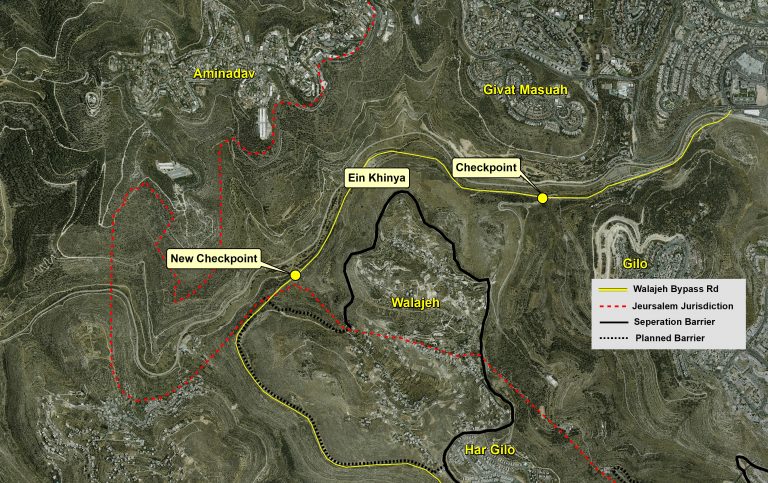
Map by Peace Now
Haaretz reports that that the Jerusalem District Planning Committee gave final approval to a plan to relocate the “Ein Yael” checkpoint, which controls traffic into and out of the Palestinian village of al-Walajah. By moving the checkpoint, Israel will be able to prevent Palestinian access to the recently renovated Ein Haniya spring and further consolidate Israeli control over the village’s access to Jerusalem.
FMEP has covered the relocation of the Ein Yael checkpoint previously, first and most extensively in February 2018, when construction on the new checkpoint began, and then in March 2018 when the Israeli government admitted in court that construction permits for work on the new checkpoint had been issued illegally. Since them, all the necessary authorizations have been properly issued and construction of the new checkpoint can resume.

Map by Ir Amim
Haaretz observes that the relocation of the checkpoint, coupled with the June 15th advancement of a plan to build the Har Gilo West settlement (see FMEP reporting here) will completely isolate al-Walajah and create an “unbroken stretch of Jewish construction from Jerusalem to Bethlehem in the West Bank.”
Ir Amim research Aviv Tatarsky said:
“Har Gilo’s expansion and the checkpoint’s relocation give us an opportunity to see the true significance of the greater Jerusalem plan. The expansion will create contiguity between Jerusalem and the settlements near Bethlehem, and also strangle Al-Walaja. These are two sides of the same coin. The situation in which Israel chooses to expand settlements in a way meant to perpetuate its control over millions of Palestinians without citizenship cannot be sustainable. But when the day we finally understand this arrives, the price of fixing it will be much higher.”
FMEP has repeatedly documented various Israeli efforts to seal off al-Walajah from Jerusalem. Residents of al-Walajah have fought the growing encroachment by the nearby Etzion settlement bloc and the Israeli government’s attempt to de facto annex the bloc as part of “Greater Jerusalem.” Ir Amim explains several prongs of this effort, including a particularly unbelievable section of Israel’s separation barrier planned to almost completely encircle the village, to turn its valuable agricultural land into an urban park for Jerusalem, and construction of a highway that will connect the Etzion settlement bloc to Jerusalem with Israeli-only bypass roads.
Israeli Ministry Funds Settlement Farm Schools Built on Private Palestinian Land
Haaretz reports that the Israeli Education Ministry is supporting two farm schools built on privately owned Palestinian land in the West Bank. The farms in questions – one near the Efrat settlement and one near the Geva Benyamin settlement – were built by local settlement councils for “ecological agricultural education,” and are officially supported by the Education Ministry. In 2017, the Efrat settlement received $274,000 USD from the government to build the farm (the settlement’s budget did not specify which ministry transferred the funds).
The Efrat local council argued that their farm school is located on state land (and therefore, even if built improperly, is eligible for retroactive legalization). However, the council acknowledges the school is outside of the so-called “blue line,” which is the Israeli government’s demarcation of land in the West Bank that it has granted to settlements. The council’s disregard for the blue line’s relevance adds to the call to disband the IDF team responsible for accurately demarcating the “blue line.” If the blue line team is disbanded, Israel will cease making any effort to identify if and where settlement boundaries include private Palestinian land, let alone retroactively returning such land to the control of its owners. Israeli Attorney General Avichai Mandelblit has reportedly already agreed to this recommendation.
Israeli Anthropological Association Rejects Annexation-By-Academia
The Israeli Anthropological Association voted 49-25 to stop cooperating with institutes of higher education based in the occupied West Bank, a ban which extends to holding “conferences and workshops or any general interaction.” The Association states that the decision is applied only to institutions, not students or professors associated with the institutes.
In a statement, the Israeli Anthropological Association said:
“Putting Ariel University, Herzog College, and Orot Israel College [all in West Bank settlements] harms both Israeli society and the academy (and…) it undercuts the Council’s position as a barrier to the politicization of the Israeli academy, science, and higher education, and drags academics working in Israeli academic institutions into supporting the occupation and annexation efforts.”
The decision follows the February 2018 passage of a bill to extend Israeli domestic law over universities and colleges in the settlements. Know as the “Ariel Bill,” it effectively annexes colleges and universities in settlements by bringing them under the authority of the domestic Israeli Council for Higher Education.
Bonus Reads
- “As Israel Pushes to Build, Bedouin Homes and School Face Demolition” (New York Times)
- “In memory of Felicia Langer, the first lawyer to bring the occupation to court” (+972 Mag)
- “Trump and Netanyahu have not learned from history – they are repeating it” (+972 Mag)
- “Donald Trump’s Policies are Hurting Palestinians and Middle East Peace Prospects” (Sen. Dianne Feinstein, USA Today)
- “Israeli settlers burn 300 Palestinian olive trees in Nablus District” (Maan)
***The Settlement Report is taking a two-week break for the Holidays, and will return again after the New Year.***
Welcome to FMEP’s Weekly Settlement Report, covering everything you need to know about Israeli settlement activity this week.
To receive this report via email, please click here.
December 14, 2017
- Israel Announces 6,000 Settlement Units in East Jerusalem
- A Special Israeli Committee Fast-Tracks the Controversial Jerusalem Cable Car Project
- Hebron Squatters Issue Set Conditions for Complying with the Law
- Knesset Expedites Funding for Armored Vehicles for Settlers
- Government Supports Bill to de facto Annex Settlement Universities
- Knesset Suspends Benefits to Non-Profit Operating in Illegal Outpost
- Bonus Reads
Comments, questions, or suggestions? Email Kristin McCarthy at kmccarthy@fmep.org.
Israel Announces 6,000 Settlement Units in East Jerusalem
Shortly after President Trump’s proclamation recognizing Jerusalem as the capital of Israel and directing the U.S. Department of State to begin the process of relocating the U.S. Embassy there, Israel was rumored to be planning 6,000 new settlement units in occupied East Jerusalem.
Israel’s Minister of Housing and Construction, Yoav Galant, was quoted saying, “Following President Trump’s historic declaration, I intend to advance and strengthen building in Jerusalem.”
According to reports the plans include:
- Introduction of a new plan for 5,000 settlement units at the site of the disused Atarot airport at the northern tip of East Jerusalem. Construction at the site has not yet begun, but Israel has made significant moves since Trump took office – in April leaking news of the of the plans and suggesting they were working to come to an understanding with Trump on settlements including Atarot, and in October allocating funds for building the Atarot settlement. If implemented, Atarot will be the first new government-backed settlement in East Jerusalem since the 1995 construction of Har Homa. Settlement construction at Atarot will cut off Palestinian neighborhoods in East Jerusalem from the West Bank. [image]
- A new plan for 1,000 units in the Pisgat Ze’ev settlement in East Jerusalem.
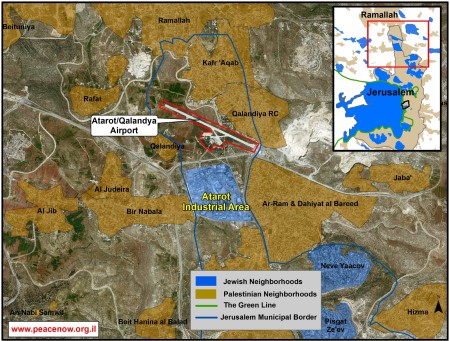
A Special Israeli Committee Fast-Tracks the Controversial Jerusalem Cable Car Project

Map by Terrestrial Jerusalem
Exactly one week after President Trump’s proclamation recognizing Jerusalem as the capital of Israel and directing the U.S. Department of State to begin relocating the U.S. Embassy there, a special committee held a hearing to consider plans for a cable car project. The controversial project is deeply connected to a settler-run tourist organization, Elad, which is responsible for building a huge new tourist center in the heart of the Palestinian East Jerusalem neighborhood of Silwan.
As Ir Amim explains:
The [Israeli] State will invest 200 million shekels in a system designed to seamlessly connect the western part of the city with a constellation of Elad settler group managed tourism enterprises in Silwan. If, as intended, the cable car becomes a primary means of transportation to the Old City, it will route masses of visitors to the compound Elad intends to establish as the headquarters of its decades long campaign to settle the neighborhood of Silwan…
The cable car project is another compelling example of state sponsored private settlement under the guise of tourism. Officials have circumvented the local and district planning committees to fast track the plan, transferring authority to the National Infrastructure Committee (NIC), The NIC was established to expedite approval of significant infrastructure projects and limit the role of the public to block problematic schemes. Until recently, tourism related projects were not discussed under its purview. About a year ago, the Planning and Building Law was amended to enable its new function.
Hebron Squatters Issue Set Conditions for Complying with the Law
The 100 Israeli settlers who since July have been illegally squatting in a contested Hebron house, which they have dubbed the Machpelah house, are attempting to dictate the terms under which they will comply with a court ruling compelling them to leave. After delaying their evacuation for months through a series of Court petitions, the settlers said this week that they will voluntarily vacate the property if the High Court orders the demolition of a storage shed near the house, which they claim Palestinians recently built. They also demanded the right to station their own private security guards to “supervise” the house while the Court decides on its legal ownership, which has been in dispute since 2012.
In response, Peace Now called the settlers’ demands “another dubious exercise,” noting that the “guards” settlers want to station at the house are themselves settlers. In this way, the conditions the settlers are setting demonstrate that the squatters have no intention of leaving, despite the Court’s ruling.
Knesset Expedites Funding for Armored Vehicles for Settlers
Under unrelenting pressure from settler leaders, the Knesset Finance Committee voted to expedite the first transfer of money to finance projects that are a part of the much-promised “Settler Security Package,” slated to total USD $228 million in 2018. This initial allocation, made this week, totals USD $12.8 million to finance the purchase of bullet-proof buses to transport settlers throughout the West Bank.
Government Supports Bill to de facto Annex Settlement Universities
The Israeli government threw its support behind a Knesset bill that would bring universities and colleges located in Israeli settlements under domestic Israeli law. The bill has already cleared the Ministerial Committee for Legislation, and is now set to be voted on three times, after which it will become law.
Settlement universities and colleges have been governed and accredited through the Council of Higher Education in the West Bank, but the bill would disband this council and the settlement schools would fall under the authority of the Council of Higher Education in Israel – further blurring the legal distinction between Israel and the occupied territories.
Knesset Suspends Tax Benefits to Non-Profit Operating in Illegal Outpost
According to Arutz Sheva (a settler-aligned news outlet), the Knesset Finance Committee has removed an organization called “Hebrew Shepherd” from a list of Israeli organizations eligible to receive tax breaks, saying that Hebrew Shepherd requires additional study by the Israeli Tax Authority.
In November, Haaretz published a report revealing that the Israeli Education Ministry established and continues to fund the operations of Hebrew Shepherd, which operates in an illegal settlement outpost. Hebrew Shepherd has launched a petition to have the outpost retroactively legalized in order to void the demolition orders that have been issued against all of the outpost’s structures and its access road.
Ironically, the organization’s mission is to rehabilitate radical Israeli youth, known as the “Hilltop Youth,” who violently establish and defend unauthorized outposts.
Bonus Reads
- “Israel’s Settlement Regularization Law: The Attorney General’s Extraordinary Brief and What it Means for Israel’s Legal Stance on Illegal Settlements” (Lawfare)
- “At East Jerusalem enclave, some Jews happier with Trump than with Netanyahu” (Times of Israel)
- [Opinion] “Should Israelis also Boycot the Haredim and Settlers? Or Just Get Over Their Fear of Arabs?” (Haaretz+)
FMEP has long been a trusted resource on settlement-related issues, reflecting both the excellent work of our grantees on the ground and our own in-house expertise. FMEP’s focus on settlements derives from our commitment to achieving lasting Israeli-Palestinian peace, and our recognition of the fact that Israeli settlements – established for the explicit purpose of dispossessing Palestinians in the West Bank and East Jerusalem of land and resources, and depriving them of the very possibility of self-determination in their own state with borders based on the 1967 lines – are antithetical to that goal.
Welcome to FMEP’s Weekly Settlement Report, covering everything you need to know about Israeli settlement activity this week.
To receive this report via email, please click here.
July 21, 2017
- In Jerusalem’s North: The “Adam-Neve Ya’akov” Plan Resurfaces
- In Jerusalem’s South: The “Gilo Southeast” Plan Expected to Advance
- In the Shadow of Jerusalem’s Old City: Settler-Run Visitor Center is Approved
- In the Heart of East Jerusalem: Alarming Plans Advance As Expected
- U.S. Department of State: Settlements & Settlers Provoke Violence
- Settlement Outpost Near Bethlehem is Angling to Avoid Demolition
- Court Wants Settlers/Palestinians to “Negotiate” Land Theft Ex-Post Facto
- Bonus Reads
Comments, questions, or suggestions? Email Kristin McCarthy at kmccarthy@fmep.org
In Jerusalem’s North: The “Adam-Neve Ya’akov” Plan Resurfaces
The Israeli Construction & Housing Ministry announced impending plans for a 1,100 unit housing project to Jerusalem’s immediate northeast.
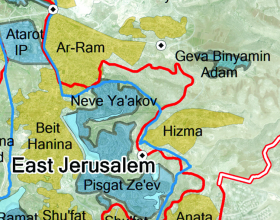
Map by Ir Amim
The plan aims to connect large settlements in East Jerusalem (Neveh Ya’akov and Pisgat Zeev) with an isolated settlement in the West Bank (Adam, aka Geva Binyamin). The land identified for the project is within the municipal boundaries of Adam, but on the Israeli side of the separation barrier (the route of the separation barrier in this area cuts deep into the West Bank). If implemented, the Adam settlement would have built up areas on both sides of the barrier.
Israeli Housing Minister Yoav Galant’s office issued a statement explaining, “We will be everywhere that it is possible to build and to provide solutions to the housing shortage, particularly, as in the case of Adam, in the vicinity of Jerusalem. In Greater Jerusalem, there is also particular security importance in Israeli [territorial] contiguity from the Gush Etzion Bloc in the south to Atarot in the north, and from Ma’aleh Adumim in the east to Givat Ze’ev in the west.”
Ir Amim writes that the plan would, “further fracture a future Palestinian state by… breaking contiguity from north to south… while isolating the southern perimeter of Ramallah from East Jerusalem, the future capital of the Palestinian state. Advancing a project of this size, given its extreme geo-political ramifications, would have a fatal impact on the two-state solution.”
The same plan was developed in the early 2000s and explored in 2007 and again in 2008, but shelved because of its political sensitivity and international concern for the future of Jerusalem and the prospects for a two-state solution. Jerusalem expert Daniel Seidemann of Terrestrial Jerusalem writes, “What is different now than in the past is talk of the plan comes in the context of an opening of the settlement floodgates in East Jerusalem, including green lights and expediting of plans the implementation of which, for any number of reasons, in the past was far-fetched or even inconceivable. Consequently, it is important to flag this scheme as early as possible, and to monitor in vigilantly.”
In Jerusalem’s South: The “Gilo Southeast” Plan Expected to Advance
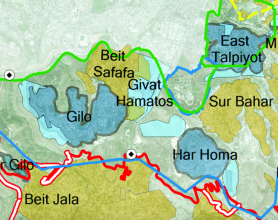
Map by Ir Amim
The Israeli government is set to advance a plan to expand the borders of the Gilo settlement (between Jerusalem and Bethlehem) in order to build 3,000 new units. This plan, called “Gilo Southeast,” is expected to be considered at a meeting on July 26th.
If implemented, Gilo Southeast would further surround the Palestinian city of Beit Safafa, severing the town from the West Bank. An area of intense Israeli settlement infrastructure growth (a settler-only freeway divides the community, and the area has been the focus of demolitions of Palestinian homes), Beit Safafa’s Palestinian residents describe a life under siege.
Gilo Southeast is just one of several alarming plans threatening to sever Palestinian contiguity between East Jerusalem and the southern West Bank:
- Gilo Southeast would abut the border of the Givat Hamatos doomsday plan, which is only waiting for the publication of tenders to begin construction. The Givat Hamatos plan has remained blocked under the previous political calculations, but can be tendered at any moment.
- The plan would also connect Gilo to Har Homa, a fast growing settlement that was built with the Netanyahu’s approval in 1997 – the last official settlement to be built until the recent approval of the Amichai settlement.
Ir Amim writes that Gilo Southeast would create “one more link in a chain of developments designed to seal off the southern perimeter of Jerusalem from the West Bank, nullifying prospects for a two state solution.”
In the Shadow of Jerusalem’s Old City: Settler-Run Visitor Center is Approved

Map by Emek Shaveh
Last week the controversial Visitor’s Center in the Palestinian neighborhood of Silwan (known to Israelis as the “City of David” and located just outside the walls of Jerusalem’s Old City in the shadow of the Temple Mount/Haram al-Sharif) took another important step forward in the final stages of the planning process. According to the Israeli NGO Emek Shaveh, the plan “awaits final approval by the Israel Antiquities Authority, which will only be granted once the archaeological excavations at the site are completed. In our assessment this should happen soon.”
Known as the “Kedem Center,” the building is being financed and promoted by the settler-run Elad Foundation, whose goal is to establish Jewish hegemony over all of Jerusalem (i.e. erase all Palestinian presence, history, and any visibility in the city). The Center will be the largest, state-of-the-art tourism center in Jerusalem and will also serve as a station for the new cable car line approved this year, a cable car line that is designed to facilitate tourists visits to Jewish sites in East Jerusalem while preventing tourists from encountering Palestinians.
Emek Shaveh issued a statement saying, “this project will change the landscape in the area between the Old City and the village of Silwan, and will have a considerable impact on the identity of the Historic Basin. The purpose of the Kedem Center is first and foremost political – to Judaize Silwan and prevent a political solution for Jerusalem.”
The Jerusalem Post reports the Kedem Center plan was approved by Prime Minister Netanyahu as a defiant gesture following UNESCO’s decision to designate sites in Hebron as World Heritage Sites, which Netanyahu incorrectly says deny Jewish history.
In the Heart of East Jerusalem: Plans Advance as Expected
In addition to the north, south, and center settlements plans detailed above, previously reported settlement plans targeting East Jerusalem were all approved for deposit for public review at a government meeting last week. We reported extensively on these in our last edition, here. The plans approved for deposit for public review include the incendiary plans in the Palestinian East Jerusalem neighborhood of Sheikh Jarrah, and more.
Though the plans were all approved for deposit for public review, as of this writing none have been deposited (yet). Like almost every step in the Israeli settlement planning process, actually depositing the plans for public comment is itself a political decision.
U.S. Department of State: Settlements & Settlers Provoke Violence
In the recently released 2016 Country Reports on Terrorism, Secretary Tillerson’s State Department writes, “Continued drivers of violence included a lack of hope in achieving Palestinian statehood, Israeli settlement construction in the West Bank, settler violence against Palestinians in the West Bank, the perception that the Israeli government was changing the status quo on the Haram Al Sharif/Temple Mount, and IDF tactics that the Palestinians considered overly aggressive.” [emphasis added]
Notably, the 2015 Country Reports on Terrorism (an Obama Administration document) did not focus on the role of settlements or identify settlements/settlers as a “driver of violence.” The 2015 document simply noted a handful of terrorist incidents, including the trend of “price-tag attacks,” committed by settlers and committed by Palestinians near settlements.
Settlement Outpost Near Bethlehem is Angling to Avoid Demolition
A settlement outpost near Bethlehem – built illegally even under Israeli law – is fighting a decision by the Israeli Supreme Court to demolish 17 buildings that were found to have been built on land owned by Palestinians. A 2016 decision ruled that buildings in the center of the outpost sit partially on Palestinian land and must be demolished by March 2018. The NGO Yesh Din has an additional, broader petition before the High Court that seeks to prove that the whole outpost is on Palestinian land.

Map by Peace Now
The Netiv Ha’avot outpost was built in 2001 as an additional “neighborhood” of the Elazar settlement southwest of Bethlehem, but was in fact built on a hilltop near the outskirts of the settlement, on land located beyond the settlement’s borders. Forty Israeli settler families currently live there, 15 of which will be affected by the demolition orders.
The outposts’ residents are aggressively pressuring Prime Minister Netanyahu to intervene in their favor (Netanyahu has already caved to vociferous settler protests several times this year). At a demonstration in support of the outpost, signs read “This destruction too is on your watch” (referring to the Amona evacuation) and “Bibi wake up and intervene.”
Court Wants Settlers/Palestinians to “Negotiate” Land Theft Ex-Post Facto
The Israeli Supreme Court made an unusual move to try to avoid having to return private land to Palestinians. The ruling pertains to a case in the Jordan Valley, where the Israeli military seized Palestinian private land for military uses, and subsequently (and improperly, according to Israeli law) gave the land to settlers. Rather than compel the settlers to return the stolen land to its owners, the court wants the Palestinians to negotiate with the settlers for compensation. The court’s move – which is in response to a 2013 petition – is an attempt to resolve the issue without having to rule on the validity of the land seizure, and without having to compel Israel to forfeit the land and evict the settlers (even if doing so requires suspending even the pretense of the rule of law).
Haaretz explains how we got here, “After the Israeli occupation of the West Bank began in 1967, the army issued an order prohibiting Palestinians from entering the area between the border fence and the Jordan River. At the beginning of the ‘80s, the government decided to encourage farmers to work the fields to create a buffer zone with Jordan. The World Zionist Organization was given the land and leased it to settlers.”
- “In Israel’s ‘eternal capital’ anti-Palestinian discrimination is built-in” (July 16, 2017; +972 Mag)
- “Black is the New Orange: 30% of Settlers are Haredim” (July 18, 2017; Times of Israel)
- “Why Adelson is Pouring Millions of Dollars Into an Army-run Israeli University in the West Bank” (July 19, 2017; Haaretz+)
- “The Biggest Attack in Jerusalem” (July 18, 2017; Haaretz+)
- REPORT: “Insurance against political risk: Settlements and the Yanai governmental insurance corporation” (Akevot, July 21, 2017)
Overview: “Archival records, now declassified at Akevot’s request, tell the story of the financial safety net Israeli government provided for commercial companies and settlement agencies beyond the Green Line. Referred to as a “political guarantee” or “political insurance”, it protected settlers and investors in the occupied territories against such “political risks” as Israel’s evacuation from the occupied territories, policy changes or boycotts. As use of the government guarantees gradually expanded, a government insurance corporation was created, to sell insurance policies against these political risks. This is the story of the political guarantee in the occupied territories and the Yanai insurance corporation.”
FMEP has long been a trusted resource on settlement-related issues, reflecting both the excellent work of our grantees on the ground and our own in-house expertise. FMEP’s focus on settlements derives from our commitment to achieving lasting Israeli-Palestinian peace, and our recognition of the fact that Israeli settlements – established for the explicit purpose of dispossessing Palestinians in the West Bank and East Jerusalem of land and resources, and depriving them of the very possibility of self-determination in their own state with borders based on the 1967 lines – are antithetical to that goal.