Beginning in 2014, opponents of boycotts, divestment, and sanctions (BDS) against Israel began promoting legislation in various U.S. states denouncing the BDS movement. In 2015, these efforts shifted/expanded to efforts in the U.S. Congress (as well as at the state level) to pass legislation targeting boycotts of Israel and/or settlements. These efforts continue through the present day.
To track this legislative trend in the US Congress, see this data table here. (Last update: July 17, 2023)
To follow what is happening at the state level, see here.
Questions about this issue or data table should be directed to: Lara@fmep.org
Welcome to FMEP’s Weekly Settlement Report, covering everything you need to know about Israeli settlement activity this week.
To subscribe to this report, please click here.
August 30, 2019
- NEW: Peace Now Releases Updated 2019 Settlement Map
- Netanyahu Promises 300 New Units in Dolev Settlement in Response to Terror Attack
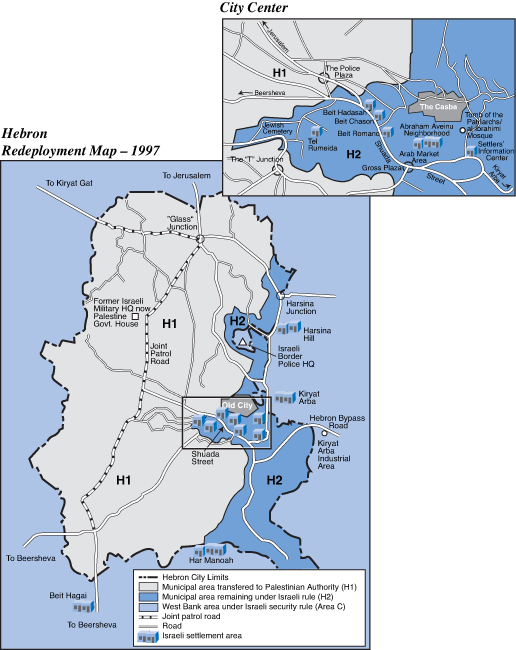
- Following New Ruling, Settlers Move Back in to Contested Hebron Property
- Israel Demolishes Palestinian Home & Business Near Bethlehem After High Court Rules in Favor of Settlement Organization
- Israeli Govt Approves School Trips to Contested West Bank Religious Sites; Settlers Storm Joseph’s Tomb in Violent Celebration
- Israeli Economic Minister Promises to Compensate Settlements if they are Hurt by South Korea FTA
- Ayelet Shaked Rolls out Campaign Pledge to Build 113,000 New Settlement Units — & Thereby Solve the Israeli Housing Shortage & Erase the Green Line
- Israeli Occupation & the Case of Beit Ur al-Fauqa, where Rep. Tlaib’s Family Lives
- Pro-settlement U.S. group Brings GOP Codel to the West Bank
- Pro-Settlement Propaganda Continues to Grease Gears for Israeli Annexation of AreaC
- Bonus Reads
Questions or comments? Contact Kristin McCarthy at kmccarthy@fmep.org.
NEW: Peace Now Releases Updated 2019 Settlement Map
Peace Now recently released an updated version of its 2019 Settlement Map, available online and for download here. New on this version is the site (a garbage dump adjacent to Abu Dis) where Israel wants to forcibly transfer residents from Khan al-Ahmar, as well as a detailed outline of the E-2 settlement plan, and the 11 outposts established since 2018.
Netanyahu Promises 300 New Units in Dolev Settlement in Response to Terror Attack
On August 26th, Prime Minister Netanyahu ordered the Civil Administration to give final approval to a plan for 300 new settlement units in the Dolev settlement, located west of Ramallah. The move was framed as a response to a terror attack on a nearby spring (called Ein Bubin) in which an Israeli teenager was killed.
In response to Netanyahu’s approval for 300 units in the Dolev settlement, Peace Now said in a statement:
“Netanyahu has adopted the morbid conception of the settler Right that there is a payoff in the form of settlement expansion for the blood of terrorism victims. This calculation cynically turns terrorism into a political tool to promote an ideological vision, without bringing up the issue for national debate on whether we want to forever control the West Bank at the cost of our democracy.”
Notably, the Ein Bubin spring, like many others across the West Bank, was historically a Palestinian, taken over in recent years by Israeli settlers. According to settlement expert Dror Etkes, as reported by Haaretz, there are:
“60 springs in the central West Bank that settlers coveted and seized as part of a project of plunder that began 10 years ago. The landscaping and renovation work at about half of them has been completed, the dispossession made absolute, the Palestinians blocked from even approaching the springs and their lands. Other springs targeted by the settlers are in various stages of takeover.”
Following New Ruling, Settlers Move Back in to Contested Hebron Property
Israeli settlers once again illegally moved into a disputed home – called “Beit Machpelah” by the settlers and the Abu Rajab House by Palestinians (named for the building’s owners, the Abu Rajab family). Settlers previously illegally entered the Beit Machpelah/Abu Rajab building several times – in 2012, 2013 and most recently in 2017 – but each time were forced to evacuate by the IDF. The disputed building is located on Shuhada street in downtown Hebron, across the street from the Al-Ibrahimi Mosque/Tomb of the Patriarchs.
Settlers moved back into the property following a recent ruling by Israel’s Civil Administration (the arm of the IDF that acts as the sovereign authority in the West Bank) affirming that the settlers own 50% of the three-story building. They did not coordinate the move with Israeli authorities, and it appears to have been premature and illegal. This is because the Isreeli Civil Administration ruled that there still must be a process to adjudicate how the settlers will share the building with the Palestinians who own the other 50%.
The ruling – issued by the Civil Administration’s Israeli First Registration Committee – validated the settlers claim that they legally purchased a portion of the building from members of the Abu Rajab family in 2017 — based entirely on circumstantial evidence. For example, committee members cited as the fact that the Palestinian Authority arrested members of the Abu Rajab family as proof that family members must have sold the building to settlers. The committee’s ruling (accompanied by reports of Netayahu’s personal intervention in the case to help the settlers) – and subsequent illegal re-entry into the home by the settlers – comes just one week before a planned visit by Netanyahu to Hebron to attend a ceremony marking the 90th anniversary of the 1929 Hebron massacre, in which 67 Jews were killed by Arab rioters.
Israel Demolishes Palestinian Home & Business Near Bethlehem After High Court Rules in Favor of Settlement Organization
On August 26th, Israeli authorities demolished the home and business of the Cassia family, located just west of Bethlehem, in Area C of the West Bank (documented in real time on Twitter by Peace Now’s Hagit Ofran, here). The demolition followed a campaign waged by Himunata – a pro-settlement group associated with the Jewish National Fund (KKL-JNF) – which claims that it legally purchased the land in 1969. 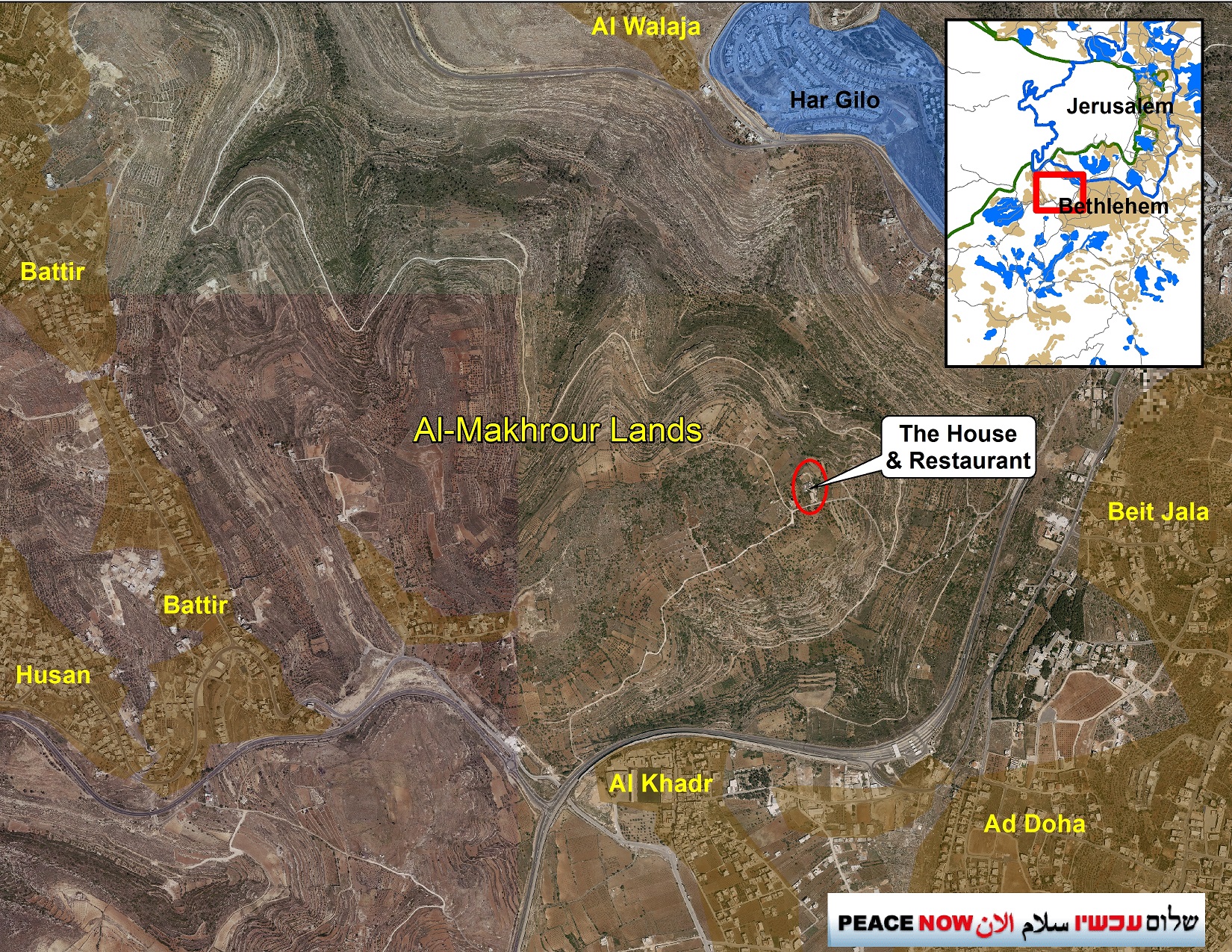
The Cassia family fought against the state and Himunata’s legal assault on their property rights for years, arguing they have lived on the land for decades and never sold the rights to it, and furnishing documents showing the paid property tax on the land from the period when Jordan ruled the West Bank. Nonetheless, on July 29, 2019, the High Court dismissed the family’s latest effort to defend their rights, allowing the demolition to move forward.
Peace Now said in a statement:
“KKL-JNF has become The Fund for the Expulsion of Palestinians. Through greed and cruelty of the JNF, it has thrown its weight its resources to the interests of the settlement agenda. Even if it were true that Himanuta was the owner of the land (which is under dispute), still, it could have come up with different solutions rather than demolition. It could have tried to negotiate with the family about renting or buying the land. The interest of evicting the Palestinian family that has been living in the area for decades, and destroying the restaurant from which it subsists, is not in the interest of the Jewish National Fund and does not reflect the desire of thousands of Jews in the world who donate their money to it.”
Peace Now also notes that this case is part of Himanuta’s long-running campaign to expel Palestinians from their homes in recent years, a campaign which has been reinvigorated over recent years in partnership with other pro-settlement groups including Elad and Regavim. Victories include a November 2018 ruling against Palestinian landowners south of Bethlehem.
Israeli Govt Approves School Trips to Contested West Bank Religious Sites; Settlers Storm Joseph’s Tomb in Violent Celebration
On August 20th, the Israeli Education Ministry announced that it will fund school programs to bring Israeli students (from schools located inside the Green Line) to religious sites – including Joseph’s Tomb and Tel Shiloh, under the control of settlers in the West Bank. Until now, Israeli schools have been prohibited from taking field trips into the occupied West Bank. This shift is part of a growing trend in Israeli policies of formally treating the West Bank as part of Israel.
The same day the decision was announced, the IDF escorted buses of Israeli settlers to Joseph’s Tomb – a site located in Nablus, in an area dotted by violent outposts and settlers. Predictably, the visiting settlers clashed with Palestinians who attempted to prevent their entry to the site; the IDF used live gunfire and tear gas to disperse the Palestinians, injuring several.
Peace Now said:
“the Ministry of Education should not be the information arm of the Yesha Council and the messianic right…We will not let Rafi Peretz [the current Israeli Education Minister] brainwash our kids! Declare that you will not send your children to lend a hand to the occupation.”
Since being appointed to the position in June 2019, Peretz has advanced a controversial agenda, and has begun instituting policy changes called for by the religious right-wing parties. For example, Peretz announced that the Nation-State Law – which last year declared Israel the “national home of the Jewish people” and stated that “the state views Jewish settlement as a national value and will labor to encourage and promote its establishment and development” – will be added to Israeli school curriculums.
Israeli Economic Minister Promises to Compensate Settlements if they are hurt by South Korea FTA
Israel and South Korea signed a free trade agreement on August 21st, ending three years of negotiations over South Korea’s insistence that the deal excludes Israeli settlements in East Jerusalem, the West Bank, and the Golan Heights. Israeli and international media reported that Israel agreed to the South Korean demand, allowing the terms of the trade deal to make a hard legal distinction between businesses located what the international community recognizes as sovereign Israel versus business located in settlements in what the international community views as occupied territory. Since the text has not yet been published, the exact terms of the deal are unclear.
Economic Minister Cohen, a strong advocate for the settlers, initially denied that Israel had agreed to this distinction (“there is no agreement that we sign which includes territorial separation. As far as we are concerned, Judea and Samaria are part of the State of Israel. There is no change in that, period”). He then clarified that if the terms of the deal,did in fact, make any such distinction, “there will be complete compensation by the Israeli government for manufacturers in Judea and Samaria,” and made clear the settlers have already been assured that this is the government’s position.
Surprisingly, Cohen’s statement was publicly endorsed by the Yesha Council, the umbrella group which represents all settlements in the West Bank, which issued a statement saying:
“In a conversation between Economy Minister Eli Cohen and Yesha Council Chairman Hananel Dorani, it was clarified that the agreement makes no mention of a territorial distinction that discriminates or could hurt businesses and entrepreneurs in Judea, Samaria, the Jordan Valley or the Golan Heights, and that the agreement was crafted on the model of existing agreements with the European Union…[Cohen] promised that if South Korea does not grant customs benefits to businesses from Judea, Samaria and the Golan Heights, that the Economy Ministry intends to fully compensate them.”
Why would the Yesha Council be giving the green light for the government to sign an international agreement that distinguishes between Israel and settlements (a position that, when adopted by Europe of anti-occupation activists has consisently been case as anti-Israel, anti-Semitic, similar to the Nazis, and even supportive of terrorist)? Veteran Israeli analyst Akiva Eldar speculates:
“This strange reaction to the agreement that discriminates against the settlements may lie in internal right-wing politics on the eve of the elections. Another possible explanation could lie in the equanimity with which the news was received. Israel has decided on a mechanism — similar to the one it adopted vis-a-vis the free trade deal with the EU — which would compensate exporters from the settlements in the occupied territories. The compensation reflects the difference between the duties paid on their exports and the duties that would have been paid under the beneficial terms of the free trade agreement. This mechanism significantly eases these exporters’ discrimination compared to those exporting goods and services from sovereign Israeli territory.”
Ayelet Shaked Rolls out Campaign Pledge to Build 113,000 New Settlement Units — & Thereby Solve the Israeli Housing Shortage & Erase the Green Line
Speaking at a campaign press conference on August 21st, former Justice Minister Ayelet Shaked – who heads the newly formed Yemina Party – announced a five-year plan to build 113,000 new settlement units in the northern West Bank as a means of solving Israel’s affordable housing shortage and of furthering Israel’s annexation of Area C. If built, the plan envisions bringing an estimated 500,000 new settlers to the West Bank, which would more than double the number of settlers living there currently.
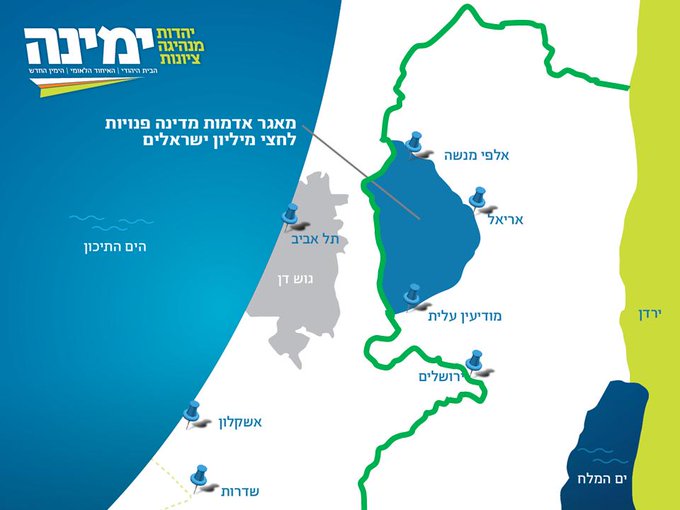
Shaked also promised to extend the length and lanes of Route 5 (called the “Trans Samaria Highway,” which Palestinians have only restricted access to). The road project would allow settlers a short commute to Tel Aviv and would facilitate future settlement growth. Bezalel Smotrich, the third-ranking member of Yemina, boasts that the plan will “erase the Green Line” dividing the West Bank from Israel.
The Democratic Bloc party said in response:
“Shaked and Smotrich have decided to turn the entire population into settlers. Not only [do they want] religious coercion in the education system, but they want to transfer the citizens of the state to live in the settlements where they can re-educate them in the laws of halacha.”
The Peace Now issued a statement:
“Instead of investing in unnecessary settlements and harming the prospect of peace, the State of Israel should focus on addressing actual distress and on strengthening the periphery communities in the Negev and the Galilee.”
Israeli Occupation & the Case of Beit Ur al-Fauqa, where Rep. Tlaib’s Family Lives
Dror Etkes – founder of the Israeli NGO Kerem Navot and long-time settlement watchdog – published the timely analysis of how Israeli settlements have negatively impacted the village of Beit al-Fauqa, the Palestinian village where the family of U.S. Congresswoman Rashida Tlaib is from (and where members of her family, including her elderly grandmother, still live).
Etkes writes:
“…the real story of Beit Ur al-Fauqa is not the settlement of Beit Horon [built nearby on land taken by Israel from the village] but Route 443, a highway built through the West Bank in the early 90s to connect northern Jerusalem and its adjacent settlements to Israel’s coastal area. To pave this road, the Israeli army confiscated 50 acres of the village’s land in the late 80s. Hearing that their land would be confiscated, landowners from Beit Ur al-Fauqa and the neighboring villages petitioned Israel’s High Court of Justice. The High Court would eventually dismiss the petition, accepting instead the IDF claim that the road would also serve the ‘local population,’ who will be able to drive on it faster and more securely.
“When the road was finally paved, 425 acres of Beit Ur al-Fauqa’s cultivated and grazing land were practically disconnected from the village, remaining southwest of Route 443. What about an access road to these 425 acres or a tunnel under the newly-built highway? Not in the West Bank. Once the road was constructed, the villagers were forced to make a seven-kilometer detour to reach their land
“…At the end of 2000, as the violence of the Second Intifada was beginning to unfold, Palestinians were sporadically banned by the IDF from using Route 443. Following several cases of Palestinian gunfire at Israeli vehicles on the road, in which six Israeli citizens and one resident of East Jerusalem were killed, Israel entirely prohibited Palestinians from using the road in 2002. Yet the IDF had officially committed to the High Court’s demand that Palestinians be allowed to use the road. For this, the army uses ‘temporary seizure orders.’
“Between 2005 and 2006, the IDF issued seizure orders for 30 more of the village’s acres in order to pave two ‘fabric of life’ roads — an alternate network of roads and tunnels intended for Palestinian use only — that would serve as Palestinian bypass roads on Beit Ur al-Fauqa’s land. It is true that Beit Ur al-Fauqa does not suffer the worst consequences of Israel’s occupation and its land grabbing enterprise. In many ways, it’s just ‘another village’ — and that’s bad enough.”
Pro-settlement U.S. group Brings GOP Codel to the West Bank
A delegation of four Republican members of Congress recently toured the Hebron and Ariel settlement industrial zones in the West Bank and met with members of the Judea and Samaria Chamber of Commerce. The delegation was hosted by Heather Johnson of the US Israel Education Association (USIEA), a U.S. evangelical group deeply involved in supporting and normalizing settlements, working in partnership with the Israeli government. USIEA is also works with the Family Research Council to lead Congressional delegations to Israel and runs a bible camp in the Ariel settlement.
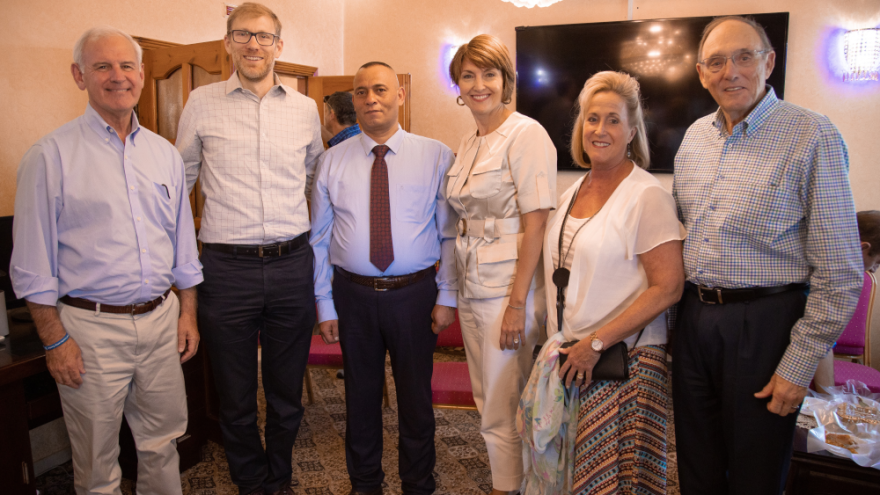
Credit: JS Chamber of Commerce
A darling of the Trump adminstration diplomatic trio, the Judea and Samaria Chamber of Commerce is a group formed by Israeli settlers from Hebron and Palestinian businessman Ashraf Jabari, who has been slammed as a traitor by the Palestinian Authority, shunned and dismissed by his fellow Palestinian business people, and disowned by his family in light of his ongoing role with the committee. As FMEP has repeatedly explained, initiatives like this perpetuate Israel’s economic exploitation of occupied territory (including the local workforce, land, and other natural resources), and that it is Orwellian to label such initiatives as “coexistence” programs, or to suggest that they offer the Palestinians benefits they should welcome.
The Congressional delegation hosted by such a pro-settlement group has not received a hint of criticism from other members of the U.S. Congress. FMEP President Lara Friedmand notes that:
“While folks are still bashing @IlhanMN & @RashidaTlaib for having [the] temerity to try to visit Isr/Pal w/ group other than AIPAC, right-wing media is crowing re: Members visiting ‘Judea & Samaria’ with group devoted to getting Congress to back ‘Greater Israel’ 1-state solution.”
Pro-Settlement Propaganda Continues to Grease Gears for Israeli Annexation of Area C
Two recent articles continue an effort to normalize the concept of Israel’s annexation of land in the West Bank.
The Times of Israel published an op-ed by Andy Blumenthal entitled, “The Coming Annexation.” The piece goes on to outline eight reasons why Israel’s annexation of the West Bank is completely legitimate, including this:
“Reality on The Ground: Israel has around 450,000 settlers in the West Bank in about 130 settlements (the vast majority in Area C) and 300,000 live in East Jerusalem (the later which Israel already annexed in 1967). These Israelis are living in and working the land and building it productively, and many are deeply nationally, religiously and ideologically tied to the biblical Promised Land of the Jewish people that includes the West Bank (and even beyond). It is wholly irrational to think that this multitude of Israeli citizens would be uprooted or abandoned under any circumstance.”
The settler-run outlet Arutz Sheva published analysis of a report by the radical settler group Regavim. The report surveys five years of Palestinian construction in Area C – which Regavim decries – and claims that there have been upwards of 10,000 “illegal” projects undertaken by Palestinians as part of the Palestinian campaign to create a de facto state. The author, Edwin Black, adds commentary that attempts to further paint Palestinian existence in Area C as illegal, ill-intentioned, and a problem that the Israeli government must end.
Bonus Reads
- “[Letter from Silwan] Common Ground: The Politics of Archaeology in Jerusalem” (Harpers Magazine)
- “Ignoring or Downplaying Price of West Bank Annexation Is Playing With Fire” (Haaretz)
- “Palestinian community denied access to water in occupied West Bank” (Middle East Eye)
Welcome to FMEP’s Weekly Settlement Report, covering everything you need to know about Israeli settlement activity this week.
To subscribe to this report, please click here.
February 15, 2019
- Israel Announces Plan to Retroactively Legalize Settlement Units Built on Privately Owned Palestinian Land
- Jerusalem Planning Authorities Are Quietly Advancing Sensitive Settlement Projects in East Jerusalem
- Peace Now Files Appeal Against Settler Land Grab for New “E-2/Givat Eitam” Settlement
- Peace Now Petitions High Court to End Flow of Public Funds to Settler Organization
- AG Paves Way for Ariel Medical School to Open, Despite Rejection by Key Committee
- Following Expulsion of International Observers, Emboldened Settlers Attack Palestinians
- Yitzhar Settlers Attack Palestinian School, So IDF Restricts Palestinian Access to Roads to Allow Yitzhar Settler Protests
- NEW: Ir Amim Publishes 2019 Map of Settlement Projects In and Around Jerusalem’s Old City
- Bonus Reads
Questions/comments? Email kmccarthy@fmep.org
Israel Announces Plan to Retroactively Legalize Settlement Units Built on Privately Owned Palestinian Land
On February 10th, the Israeli government informed the Jerusalem District Court that it plans to invoke the “market regulation” principle in order to retroactively legalize four structures in the Alei Zahav settlement – structures built on land that even Israel acknowledges is privately owned by Palestinians.
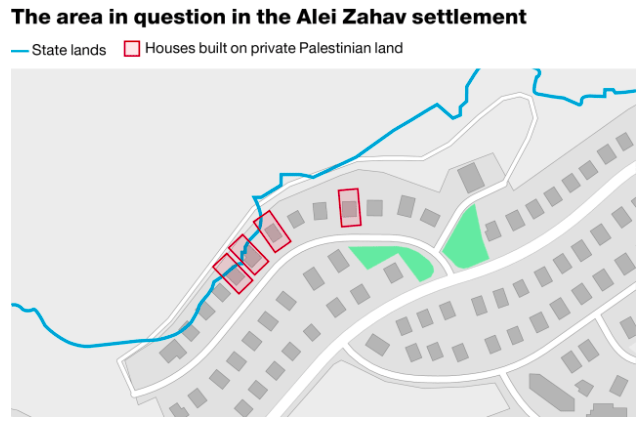
According to Haaretz, a 2016 land survey conducted by the Israeli Civil Administration discovered the existence of privately owned Palestinian land in the settlement, which older Israeli maps had marked as “state land.” After the discovery, settlers went to court to sue the World Zionist Organization (which was allocated the land by the Israeli government), the Israeli Defense Ministry, and the contractor who built the settlement demanding that they fix the situation. The state’s response to the Jerusalem District Court this week freezes the settler’s petition while the government’s plan is implemented.
The “market regulation” principle was identified by Israeli Attorney General Avichai Mandelblit as an alternative to the settlement Regulation Law (the controversial law passed by the Knesset that, in effect, lets the Israeli government suspend the rule of law to seize privately owned Palestinian land for the benefit of settlers). Both the Regulation Law and the “market regulation” principle are designed to give Israel legal cover to retroactively legalize outposts and settlement structures that, because they are built on land that Israel acknowledges is privately owned by Palestinians, the State had been unable legalize under existing Israeli law (despite great efforts to do so). The “market regulation” principle holds that Israeli settlement construction can be retroactively legalized if it was carried out “in good faith” with government support on land that was later discovered to be privately owned by Palestinians.
The Israeli High Court is already considering a petition against the constitutionality of the “market regulation” principle, a case stemming from the State’s first attempt to implement it in order to retroactively legalize the Mitzpe Kramim outpost.
If allowed to proceed on the basis of the “market regulation” principle, the state will first have to publish an official planning scheme for the area, and allow the public (including the Palestinian landowners, as recognized by Israeli) to object. Attorney Alaa Mahajna, who is representing the Palestinian landowners involved in the case, said:
“Even without making use of the vilified expropriation law [aka the Regulation Law], the state still finds ways and uses other routes to attain the same goal, giving its legal imprimatur to robbery of land, with residents who are protected under international law.”
FMEP tracks the ongoing legislative, political, and legal transformations happening in the Israeli government to justify the expropriation of Palestinian land for the settlements in its Annexation Policy Tables.
Jerusalem Planning Authorities Are Quietly Advancing Sensitive Settlement Projects in East Jerusalem
Ir Amim reports that East Jerusalem settlement planning authorities are advancing sensitive settlement projects in East Jerusalem through secretive and expedited processes, thereby limiting the opportunity for stakeholders and the public to challenge the plans.
For example, on February 5th, the Jerusalem Local Planning and Building Committee discussed public objections filed against two settlement plans in Sheikh Jarrah. Both of the plans are being promoted by East Jerusalem settlement impresario and city council member Aryeh King. The committee did not notify those objecting to the plan that these proceedings were planned, and so no one objecting to the plan was present in the February 5th discussion. The plans, which would allow for the construction of two new buildings – one with 10 units and the other with 3 units – would involve the eviction of 5 Palestinian families from buildings that would be demolished.
On February 17th, the Jerusalem District Planning and Building Committee will consider the Glassman Yeshiva project – a plan to build a Jewish religious school, including dormitories, at the entrance to the Sheikh Jarrah neighborhood. Ir Amim reports that it is unclear what the committee will do in considering the plan, since authorities have advanced the plan outside of the normal planning process, even succeeding in have land allocated for the yeshiva despite the fact that the plan was never deposited for public review (meaning stakeholders and the public have had no opportunity to object).
Ir Amim writes:
“Despite their tremendous political and environmental sensitivity, plans are now being fast tracked, some outside of appropriate planning channels and with limited public participation, in service to decidedly political considerations and with the prominent involvement of settler associations. The new map and accompanying map notes detail the numerous projects and eviction cases now advancing.”
For an explanation of how East Jerusalem settlement planning/approval is supposed to work under Israeli law and practice, see Terrestrial Jerusalem’s presentation here.
Peace Now Files Appeal Against Settler Land Grab for New “E-2/Givat Eitam” Settlement
On February 7th, the settlement watchdog group Peace Now and dozens of Palestinian landowners filed a petition with the Israeli Custodian of Government and Abandoned Property demanding the annulment of the allocation of “state land” for the sole declared purpose of building the new “E-2/Givat Eitam” settlement.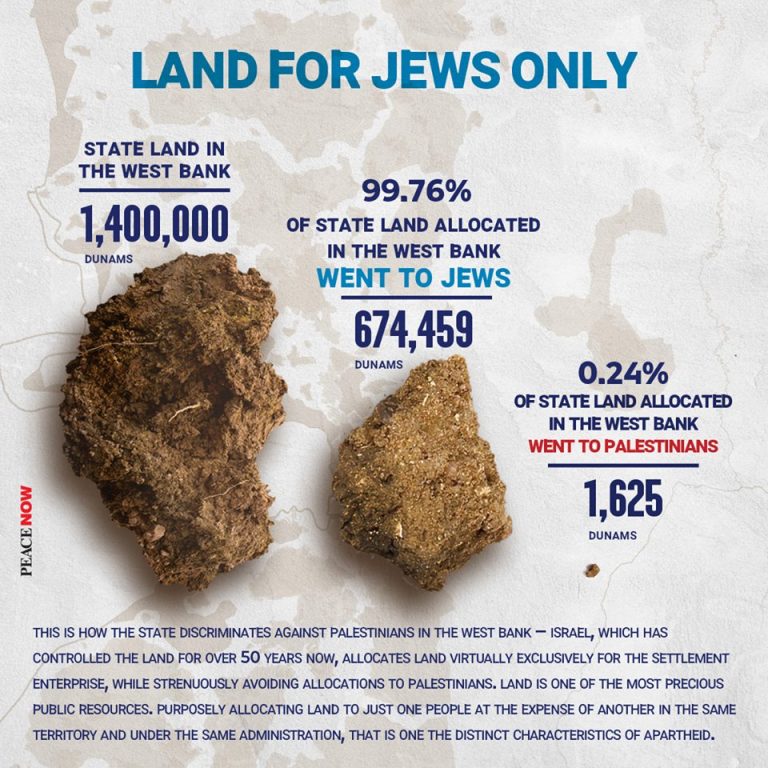 Rather than challenging Israel’s classification of the land as “state land,” the petition asks that the land be allocated instead for Palestinian use, challenging Israel’s discriminatory allocation of “state land” for the settlements. It builds on recent revelations that since 1967, Israel has allocated a jaw-dropping 99.8% of state land in the West Bank to settlements and just 0.2% for Palestinians.
The petition argues that the allocation of state land for the exclusive use of settlements/settlers is illegal both under the Hague Conventions and under domestic anti-discrimination laws in Israel.
Regarding the new petition, Peace Now says:
“Since the 1979 Elon Moreh ruling, no petition has succeeded in undermining the legal infrastructure that enables the ongoing expansion of the settlement enterprise. This initiative and the surrounding public struggle aims to undermine the prevailing view that “state land” in the occupied territories effectively constitutes land available for Israeli use, and to obligate the Supreme Court and the Israeli public, to address this fundamental question.”
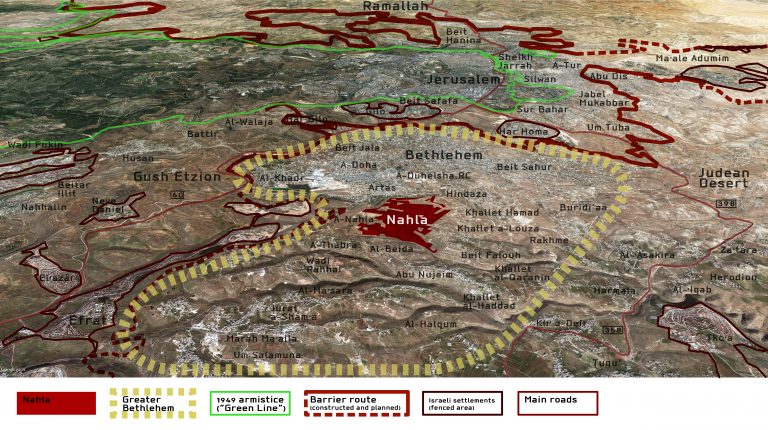
Israel announced on December 26, 2018 that it will draft plans to build as many as 2,500 new settlement units at the Givat Eitam outpost site, creating a new settlement on a strategic hilltop that will cut off Bethlehem from the southern West Bank, completing the encirclement of Bethlehem by Israeli settlements.
Map by Peace Now
The Givat Eitam outpost has been nicknamed “E-2” by settlement watchers for for its resemblance, in terms of dire geopolitical implications, to the infamous E-1 settlement plan. Located east of the separation barrier on a strategic hilltop overlooking the Palestinian city of Bethlehem to its north, the site of Givat Eitam/E-2 is within the municipal borders of the Efrat settlement but is not contiguous with Efrat’s built-up area. As such, Givat Eitam/E-2 would effectively be a new settlement that, according to Peace Now, would:
“block Bethlehem from the south, and prevent any development in the only direction that has not yet been blocked by settlements (the city is already blocked from the North by the East Jerusalem settlements of Gilo and Har Homa, and from the West by the Gush Etzion Settlements) or bypass roads (that were paved principally for Israeli settlers). The planned building in area E2 would likely finalize the cutting off of Bethlehem city from the southern West Bank, delivering a crushing blow to the Two States solution.”
Peace Now Petitions High Court to End Flow of Public Funds to Settler Organization
The settlement watchdog group Peace Now has filed a petition with the High Court of Justice to stop public funding flowing to the radical Amana settler organization, which is a private, for-profit entity engaging in various illegal activities to establish and expand Israeli settlements and outposts across the West Bank.
The new petition is based on Peace Now’s investigative work revealing the substantial amount of money that has been secretly funneled to Amana through settlement regional councils. The settlement regional council budgets obtained by Peace Now revealed that money allocated to support non-profit public welfare groups was instead being used to fund Amana. Funding for Amana in this manner violates Israeli Interior Ministry policies prohibiting public subsidies for private, for-profit entities – and it is this funding that Peace Now is petitioning the High Court to end.
Peace Now’s work is backed up two separate reports of the Israeli Comptroller’s office, one from November 2017 and another from July 2018, which detailed the extent to which the Binyamin Regional Council – the largest settlement regional council – secretly funneled money to organizations engaged in illegal settlement construction. The July 2018 report revealed that the Binyamin Regional Council funneled $10 million to Amana between 2013-2015 alone.
Peace Now said in a statement:
“This grave phenomenon in which taxpayers’ money is transferred to an organization that has specialized in construction violations for decades, is against the law and regulations; an organization that works tirelessly to change reality by illegally establishing unauthorized facts on the ground, is dire and must be stopped. Only a complete cessation of this cash flow will prevent further construction rampages throughout the West Bank, and retain the opportunity for a future agreement.”
AG Paves Way for Ariel Medical School to Open, Despite Rejection by Key Committee
On February 13th, Israeli Attorney General Avichai Mandelblit announced that the vote last week by the Planning & Budgeting Committee of the Council for Higher Education in Israel is a non-binding recommendation, and that the fate of the Ariel settlement’s new medical school will be determined by a final vote to be held by the council’s main body. In so doing, Mandelblit made it possible for the main body of the Council for Higher Education in Israel to vote against its own professional subcommittee, contrary to the normal practice. Indeed, Haaretz columnist Or Kashti even called it “unreasonable.”
Mandelblit said that the Council for Higher Education in Israel should reconvene to vote within the next two months in order to give the medical school, its faculty, and its students, adequate time to prepare. Haaretz reports that Education Minister Naftali Bennett – who serves as the Chairman of the Council for Higher Education in Israel – is expected to delay the vote until he is confident that he has enough votes in favor of approving the medical school.
In addition, Mandelblit also allowed the West Bank arm of the Council for Higher Education – a settler body which oversees and promotes educational institutes located in West Bank settlements (i.e. outside of sovereign Israeli territory) – to take vote on the matter. Unsurprisingly, on Feb. 13th the settler body voted unanimously to approve the medical school. It did so in a vote that was held in the final hours before that settler body was absorbed by Council for Higher Education in Israel, following a law passed by the Israeli Knesset in Feb 2018 that extends the jurisdiction of the Council for Higher Education in Israel to include schools in the settlements (an act of de facto annexation).
Weighing in on the debate, the Haaretz Editorial Board noted that supporters of the Ariel medical school – including Naftali Bennett – lobbied for the settlers’ own Council for Higher Education to be permitted to vote on the matter in an attempt to overrule the Planning & Budgeting Committee’s unfavorable decision. The Board writes:
“In a country governed by the rule of law, the [Planning & Budgeting] committee’s latest vote should have settled the matter. But Ariel University and its supporters, above all Education Minister Naftali Bennett, have ways to circumvent the committee. We will soon find out whether Mendelblit will approve this move, enabling Ariel to overcome the professional objections of the Planning and Budgeting Committee, the opposition of the other universities and Wadmany Shauman’s conflict of interest. This hasty resort to the Council for Higher Education in Judea and Samaria – which has never dealt with budgetary issues, only ideological ones – should set off alarm bells. After the Planning and Budgeting Committee’s previous vote, approving the med school, no one demanded reaffirmation from the council. That’s not how the higher education system should operate. The Planning and Budgeting Committee steers its course, including the disbursal of its 11 billion shekel ($3 billion) annual budget.”
As FMEP has previously reported, Ariel University became an accredited Israeli university in 2012, following significant controversy and opposition, including from Israeli academics. It has since been the focus of additional controversy, linked to what is a clear Israeli government-backed agenda of exploiting academia to normalize and annex settlements. In 2018, the settlement broke ground on the new medical school, with significant financial backing from U.S. casino magnate, settlement financier, and Trump backer Sheldon Adelson. In February 2018, in an act of deliberate de facto annexation, the Israeli Knesset passed a law extending the jurisdiction of the Israeli Council on Higher Education over universities in the settlements (beyond Israel’s recognized sovereign borders), ensuring that the Ariel settlement medical school (and its graduates) would be entitled to all the same rights, privileges, and certifications as schools and students in sovereign Israel.
The Ariel settlement is located in the heart of the northern West Bank, reaching literally to the midpoint between the Green Line and the Jordan border. The future of Ariel has long been one of the greatest challenges to any possible peace agreement, since any plan to attach Ariel to Israel will cut the northern West Bank into pieces.
Following Expulsion of International Observers, Emboldened Settlers Attacks on Palestinians
In the week since Israeli Prime Minister announced that he would not renew the mandate of the Temporary International Presence in Hebron (TIPH) – in effect, expelling international observers from the city – radical, violent settlers have repeatedly harassed and attacked Palestinians, including school children. Thus far the Israeli military has failed to intervene to stop the encounters.
Following the expulsion of the observers, who previously escorted Palestinian school children on their daily commute near settlement enclaves in downtown Hebron, Palestinians formed a volunteer group to escort and protect the children. On February 10th, alarming video footage shows settlers harassing and attacking this new group as it was escorting children. In response, the Israeli army issued an order on Feb. 13th that declared the area as a closed military zone, barring the volunteers from escorting the students.
On the evening of February 12th, a group of settlers attacked Palestinian homes on Shuhada Street, the main street in downtown Hebron which Israel has “sterilized” by preventing all Palestinian vehicles, limiting Palestinian pedestrians, and relegating Palestinian foot traffic to a specific area. One Palestinian resident reported that a settler jumped onto his roof and broke into his home; the IDF had to escort the settler out, and disperse the group of settlers who were chanting anti-Palestinian threats. Video footage captured the scenes.
Yitzhar Settlers Attack Palestinian School, So IDF Restricts Palestinian Access to Roads to Allow Yitzhar Settler Protests
On February 10th, dozens of settlers from the Yitzhar settlement descended from their hilltop neighborhood to violently attack a high school in the Palestinian village of Urif. According to reports, high school students clashed with IDF soldiers who were providing protection for the raiding group of settlers. Ten students reportedly required medical care for tear gas inhalation.
The next day, on February 11th, the Israeli IDF sealed off several roads near the Yitzhar settlement to allow the settlers to assemble to protest against “the deteriorating security situation in the West Bank.”
The anti-settlement group Yesh Din recently published a report, entitled “Yitzhar – A Case Study,” chronicling the violence of the Yitzhar settlement, and how that violence is used as a strategic means to take over Palestinian land.
NEW: Ir Amim Publishes 2019 Map of Settlement Projects In and Around Jerusalem’s Old City
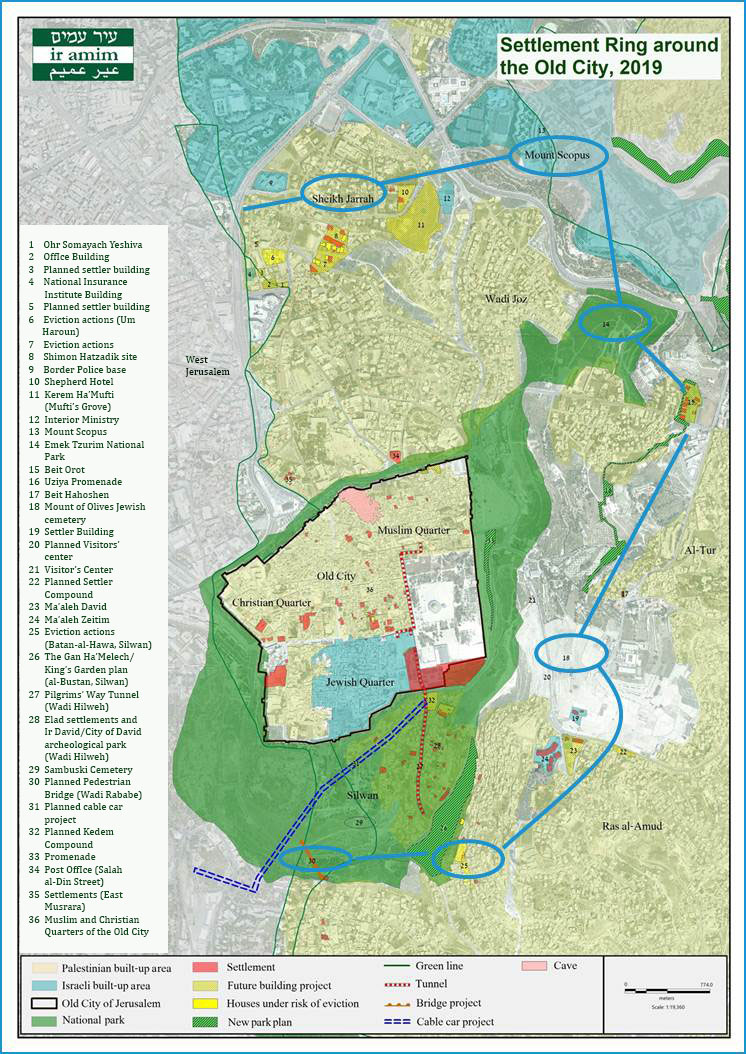 Ir Amim released an updated map showing settler activities around Jerusalem’s Old City.
Announcing the new map, Ir Amim writes:
“Ir Amim’s latest map, ‘Settlement Ring around the Old City, 2019,’ graphically illustrates the accelerated, intensifying chain of new facts on the ground in the most historically contested and politically sensitive part of Jerusalem: the Old City and adjacent ring of Palestinian neighborhoods. In addition to a mounting number of state-sponsored settlement campaigns inside Palestinian neighborhoods – settler initiated evictions of Palestinians, takeovers of their homes, and the expansion of settler compounds – touristic settlement sites function as key points along a ring of tightening Israeli control….These projects – including promenades, national parks and visitor centers – serve manifold purposes: They connect otherwise isolated and relatively small settlement compounds inside Palestinian neighborhoods, creating a contiguous ring of settler controlled areas; They fracture the Palestinian space, disrupting freedom of movement and breaking large neighborhoods into smaller, easier to police enclaves;While the number of ideologically driven settlers living inside Palestinian neighborhoods may still be relatively small, tens of thousands of non-ideological Israeli tourists visiting these sites serves to strengthen the Jewish presence inside Palestinian areas of the city.”
The map can be downloaded here and accompanying detailed notes here.
Bonus Reads
- “Why Residents of Jerusalem’s Sheikh Jarrah Face Eviction” (Al-Monitor)
- “Imminent Eviction of Palestinian family in East Jerusalem” (OCHA)
- “Two Jewish Groups’ Disagreement Over Jewish Law Might Dash Jerusalem’s Dreams (Haaretz)
- “What Kind of Occupation do Israelis Want?” (Ynet)
Welcome to FMEP’s Weekly Settlement Report, covering everything you need to know about Israeli settlement activity this week.
To receive this report via email, please click here.
August 2, 2018
- Israel Launches New Settlement “Heritage Center” in Silwan
- University Heads Challenge Approval of the Ariel Settlement Medical School
- Liberman Promises 400 Settlement Units in Response to Terror
- The Not-So-New Trump Policy on Settlement Travel
- Just Released: 2018 Settlement Map from Peace Now
- Bonus Read
Comments, questions, or suggestions? Email Kristin McCarthy at kmccarthy@fmep.org.
Israel Launches New Settlement “Heritage Center” in Silwan
On August 1st, senior Israeli government officials were on hand to celebrate the beginning of construction on a new settlement complex, under the guise of a cultural center, located in the heart of the Batan al-Hawa section of the Silwan neighborhood in East Jerusalem. The event was heavily guarded by Israeli forces, in an open acknowledgement of the provocative nature of the settler campaign targeting Palestinian homes in Batan al-Hawa, which is located near the walls of the Old City in view of the Temple Mount/Al Aqsa Mosque.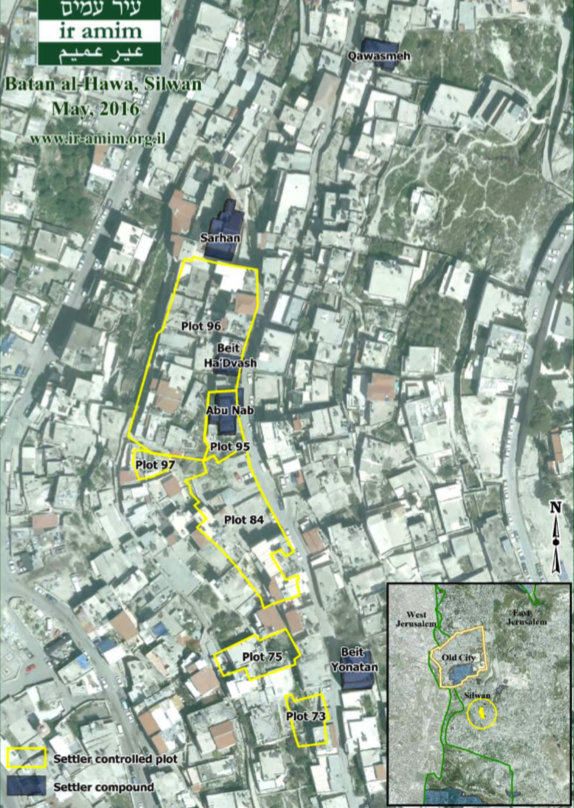
The new settlement initiative is part of a campaign by the Ateret Cohanim settler organization (which works to establish Jewish enclaves inside densely populated Palestinian neighborhoods of East Jerusalem) to exploit the area’s historical connection to Jewish immigrants as a pretext for taking land and establishing Jewish-Israeli control over the area. Israel’s Ministry of Jerusalem Affairs and Ministry of Culture and Sport are contributing an estimated $1.23 million USD to the cost of renovating an old Yemenite synagogue into a settler-run Jewish Yemeni heritage center — in a example of how the government is directly funding extremist settler activity in an area that Ir Amim identifies as “the site of the most substantial settler takeover campaign in Jerusalem since the annexation of East Jerusalem in 1967.”
Attendees at the launch included Cultural Affairs Minister Miri Regev, Jerusalem Affairs Minister Ze’ev Elkin (who is currently campaigning to become the mayor of Jerusalem), former U.S. presidential candidate and governor (and father of the current White House spokeswoman) Mike Huckabee, and former White House Communications Director Anthony Scaramucci (the latter two have been touring Israel and praising the settlements, with Huckabee going so far as to suggest that he might want to have his own home in a settlement someday).
The launch of the project ignores an ongoing legal case before the High Court of Justice that could affect Ateret Cohanim’s ownership claim to the land and building in question. Settlers are acting on the assumption that both are legally owned by the Benvenisti Trust (a historic trust that resettled Jewish Yemenite immigrants in the area in the late 1800s). Ateret Cohanim took control of the Benvenisti Trust in 2001, and in 2002 the Israeli Custodian General transferred land in Batan al-Hawa to the Trust/Ateret Cohanim. Since then, Ateret Cohanim has accelerated its multifaceted campaign to remove Palestinians from their homes, claiming that the Palestinians are illegally squatting on sacred religious land owned by the Trust.
So far, Ateret Cohanim has acquired the deed to six Palestinian homes in Batan al-Hawa, inserting some 20 Israeli Jewish families in place of evicted Palestinian residents. The organization has eviction orders pending against an additional 21 homes, with 800 Palestinians at risk of eviction.
On June 17, 2018, just two months ago, the Israeli High Court of Justice ordered the Israeli government to provide more information regarding its decision to transfer ownership of land in Batan al-Hawa to the Benvenisti Trust/Ateret Cohanim. The Court’s order was in response to a petition filed by Palestinian residents fighting eviction from their homes, and the State’s admission during oral arguments on June 10, 2018 that the land had been transferred to the Benvenisti Trust/Ateret Cohanim without a proper investigation into its legal status. The petitioners argue that the State’s decision to transfer the land was illegal on two fronts: (1) The Benvenisti Trust never owned the land in Batan al-Hawa, but only owned the buildings – all but one of which were demolished in the 1940s; and, (2) the land was transferred without the necessary legal notification to the residents living there.
Yakoub al-Rajabi, a Palestinian resident of Batan al-Hawa, told The Washington Post:
“We know that this was a well-orchestrated plan to force us to leave. And if we stay, it will paralyze us and isolate us in our homes.”
In a 2016 report that covers the Batan al-Hawa situation in detail, Ir Amim and Peace Now underscore the significance of Ateret Cohanim’s efforts, of which the new cultural center would be the crowning jewel:
“If the settlers are successful, Batan al-Hawa is anticipated to become the largest settlement compound in a Palestinian neighborhood in the Historic Basin of the Old City, with the outcome of significantly tightening the emerging ring of settlements around the Old City and severely undermining the possibility of a future two state solution in Jerusalem.”
Ateret Cohanim director Daniel Luria said:
“Every acquisition is very difficult. We’re up against a mobilized Arab world, parts of which are violent. There is huge pressure and millions of dollars are being pumped in to strengthen the Arab hold on the city…[the] biggest problem is trying to get the Jewish world to understand what needs to be done. We have the best relations ever with a US administration. For [US Vice President Mike] Pence and [US Ambassador to Israel David] Friedman and the others, [settling Jews in East Jerusalem] is a no-brainer. What’s our right-wing government waiting for? It’s not about what the US says. It’s about what we do. We are not doing anything to stop the peace process but will not compromise on a millimeter of Jerusalem. You have to show strength of conviction and sovereignty to have peace and coexistence. This can only happen when you live together under Jewish sovereignty.”
Cultural Minister Miri Regev said at the event:
“Look around. We are surrounded by Jewish heritage. The archaeologists won’t find a single Palestinian coin here! We have come home.”
University Heads Challenge Approval of the Ariel Settlement Medical School
The Israeli Committee of University Heads wrote a letter to the Higher Education Council demanding that it reconsider the approval granted to the new medical school in the Ariel settlement, which is already under construction. In a letter addressed to the Chairman of the Planning and Budgeting Committee of the Higher Education Council, Israeli university heads expressed concern that the decision to approve the medical school was tainted by political interference, and was carried out by an “expedited and improper” procedure. A source told Haaretz that the University Heads share a concern “that the Planning and Budgeting Committee [of the Higher Education Council] will be turned into a rubber stamp for [Education Minister Naftali] Bennett.” The signers call on the Planning and Budgeting Committee to hold new hearings on the settlement school to reconsider the data and merits of the proposal.
The letter comes on the heels of claims made publicly last week by three members of the Planning and Budgeting Committee that Education Minister Naftali Bennett interfered in the committee’s work, in order to expedite the approval of the medical school despite the fact that information about the project was missing.
As FMEP has repeatedly covered, the Ariel medical school is part of a government-backed agenda of exploiting academia to normalize and de facto annex settlements. Earlier this year, a part of this effort, the Israeli Knesset passed a law that extends the jurisdiction of the Israeli Council on Higher Education over universities in the settlements (beyond Israel’s self-declared and internationally recognized sovereign borders). This move ensures that the Ariel settlement medical school (and its graduates) are entitled to all the same rights, privileges, and certifications as schools and students in sovereign Israel. The Ariel settlement medical school enjoys the financial backing of American casino magnate, settlement benefactor, and close friend of President Trump Sheldon Adelson.
Liberman Promises 400 Settlement Units in Response to Terror
Defense Minister Avigdor Liberman promised to advance plans for 400 units in the Adam settlement in response to a Palestinian knife attack in the settlement that resulted in the death of one settler and injury to two others. In a tweet, Liberman claimed: “The best answer to terrorism is the expansion of settlements,” continuing, “That’s why I left this morning to promote a plan to build 400 housing units in Adam and approve it in planning institutions in the coming weeks.”
The Times of Israel notes that Liberman’s promise for 400 units is not a new plan but part of an existing plan – for a total of 1,000 units – already being advanced. Liberman’s promise is better understood as a signal to the High Planning Council to expedite the approval of the plan that is already in motion.
The Not-So-New Trump Policy on Visiting Settlements
The Palestinian Authority issued a sharp criticism this week of U.S. Ambassador David Friedman – and U.S. policy – after Friedman traveled to the Adam settlement to pay a condolence call on the widow of a settler murdered in a terror attack. Although Friedman is not the first U.S. Ambassador to visit an Israeli settlement, Friedman has made a habit of it (see here, here, and here for example), leading some observers to point out the self-evident fact that the Trump administration has – without making an official announcement – adopted a concrete change in U.S. policy regarding settlements, and is now not only refraining from criticizing settlement expansion, but is actively engaged in actions that legitimize settlements.
This week the Palestinian Authority said in a statement that the Trump administration and its “religious Zionist staff” were:
“continuing to make a mockery of international law in a bid to impose their positions and policies, which are blindly biased in favor of the Israeli occupation, on the international community with unprecedented arrogance.”
In a rare moment of agreement, settler leaders articulated a similar view of regarding this shift in the Trump Administration’s settlement policy, with the Binyamin Regional Council issuing a statement after Friedman’s visit saying:
“It seems as if we are talking about a change in US policy with respect to the Jewish communities of Judea and Samaria…they are being treated just like the rest of the country.”
Hananel Durani, head of the powerful Yesha Council which advances the interests of the settlements, said:
“I hope the US government will continue to support Israel and the settlements with the same kind of courageous friendship the ambassador demonstrated today.”
Settler leader Oded Revivi, who is head of the Efrat settlement council and foreign envoy for the Yesha Council, commented:
“I want to express my appreciation to Ambassador Friedman who saw fit to visit the settlement of Adam in Binyamin and comfort the bereaved family. This sends an important message to the world regarding strengthening the positive forces and combating the negative forces in the region.”
Just Released: 2018 Settlement Map from Peace Now
Peace Now recently released two 2018 settlement maps, one map the entire West Bank and a second detail map of East Jerusalem. Both are must-have resources for anyone tracking anything related to settlements and the factors that must be addressed in a negotiated solution to the conflict.
Bonus Reads
- “Once Again, Israel Denies the Bedouin What it Grants the Settlers” (Haaretz)
- “Israeli protesters seek return to destroyed West Bank settlements” (Al-Monitor)
- “A rotten system, not rotten apples” (+972 Mag)
- “More than 2,000 trees in West Bank Palestinian Villages Destroyed in Two Months” (Haaretz)